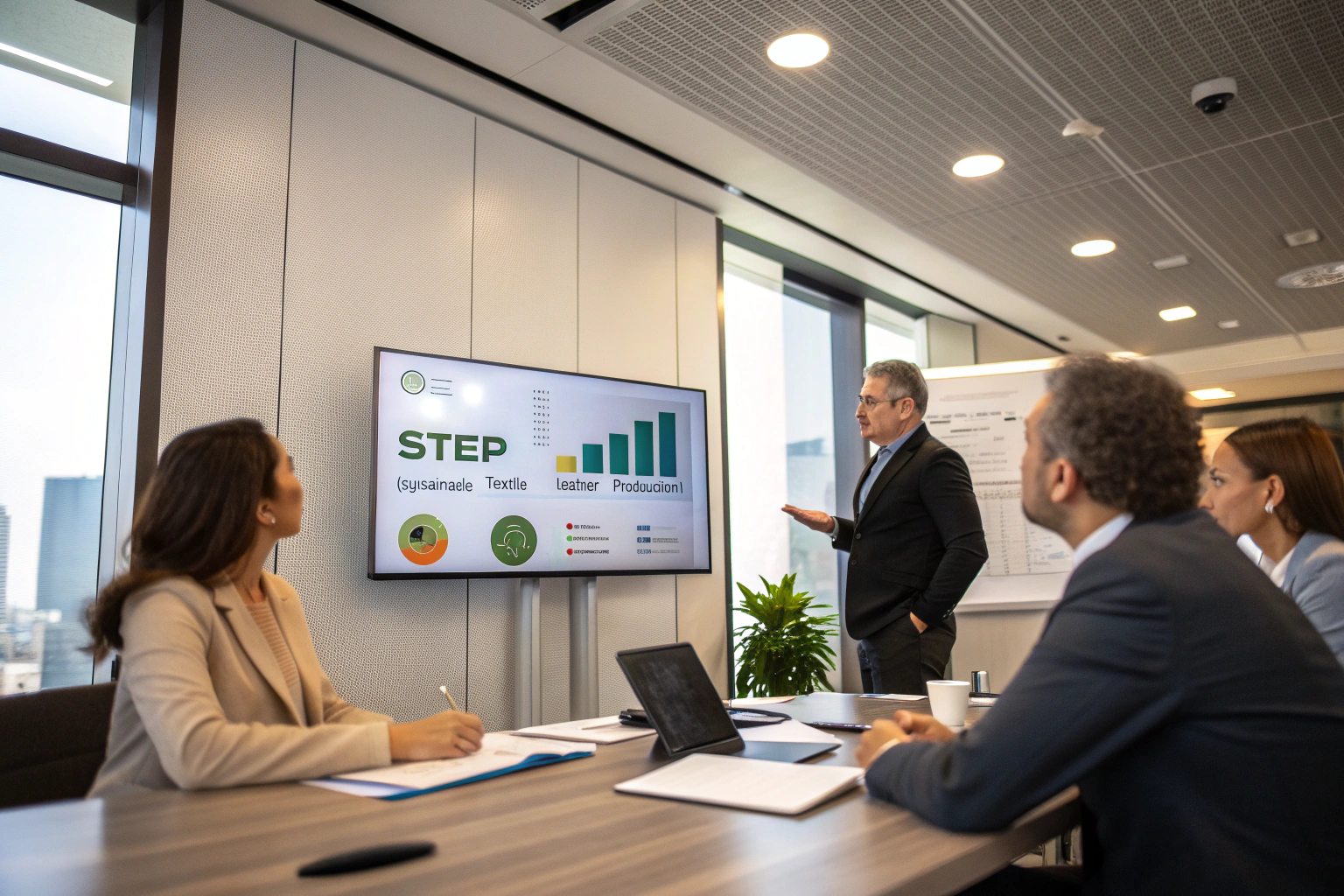
The race for sustainability isn't just about marketing anymore—it's a core business requirement. Buyers worldwide are now demanding proof, not just promises, that their fabrics are produced responsibly. You might have heard of OEKO-TEX® STANDARD 100 for product safety, but when it comes to auditing the entire manufacturing process for environmental and social responsibility, the gold standard is the STeP (Sustainable Textile & Leather Production) certification. Sourcing fabric with true STeP certification, not just supplier claims, is what separates leaders from the crowd in today's competitive market.
Sourcing OEKO-TEX® STeP certified fabric requires a three-phase approach: verification, due diligence, and partnership. First, you must verify the certification is authentic and covers the specific production units you're sourcing from using the official OEKO-TEX® database. Second, conduct deep due diligence that goes beyond the certificate, examining the six STeP modules—Chemical Management, Environmental Performance, Environmental Management, Social Responsibility, Quality Management, and Health & Safety. Third, move from a transactional buyer to a strategic partner with your mill, aligning on continuous improvement goals backed by the STeP framework. This process ensures your supply chain is transparent, responsible, and future-proof.
Navigating this can feel complex, but it's a non-negotiable for brands that want to avoid greenwashing accusations and build long-term resilience. Let's break down exactly how to identify, evaluate, and partner with a genuinely STeP-certified fabric supplier.
What exactly does OEKO-TEX® STeP certification cover?
Many suppliers conflate various certifications. Understanding STeP's specific scope is your first defense against misleading claims. It's not a product certificate; it's a comprehensive site-specific certification for production facilities.
The OEKO-TEX® STeP certification assesses a manufacturing plant's operational sustainability across six defined areas, each with strict criteria. Think of it as an X-ray of the factory's daily practices. Chemical Management evaluates the handling, storage, and use of chemicals, ensuring safer substitutes are prioritized. Environmental Performance measures key outputs like water and energy consumption, wastewater treatment, and air emissions. Environmental Management reviews the systems in place to manage and improve environmental impact. Social Responsibility audits working conditions, wages, working hours, and prohibits child and forced labor, aligning with international standards. Quality Management ensures consistent product quality and defect management systems. Finally, Health & Safety protects workers from occupational hazards. A facility receives a detailed score (Level 1 to 3) in each module, providing a transparent sustainability profile.
Why is STeP certification more robust than a basic "eco-friendly" claim?
"Eco-friendly" is a vague term. STeP replaces it with quantifiable, audited data. For example, a mill might claim to save water, but a STeP report will show you their specific water consumption per kilogram of fabric produced (e.g., 80 L/kg), benchmarked against industry averages, and their documented plan to reduce it. The certification is granted by independent, accredited institutes after an on-site audit and is valid for three years, with annual surveillance audits to ensure compliance. This ongoing verification is key. In 2023, we audited a potential dyeing partner in China who claimed STeP certification. By checking the official OEKO-TEX® database, we found their certificate had expired 8 months prior and hadn't been renewed—a red flag we avoided. Resources like the official OEKO-TEX® buying guide for verifying certifications are essential tools for any sourcing professional.
How do the six modules impact my fabric's quality and ethics?
Each module directly correlates to the risk profile of your order. Strong Chemical Management means fewer harmful residues on your fabric, leading to safer products and fewer compliance issues in your market. High scores in Environmental Performance (efficient dyeing) often correlate with better process control, which translates to more consistent color matching and fabric quality batch-to-batch. Rigorous Social Responsibility practices reduce the risk of supply chain scandals that can damage your brand overnight. When we at Shanghai Fumao pursued STeP certification for our partner dyeing and weaving facilities, the process wasn't just about paperwork. It forced us to upgrade our quality management systems, resulting in a 15% reduction in shade deviation complaints from EU clients within one year. The certification structured our improvement.
How to verify a supplier's STeP certification is real and valid?
In an industry where certificates can be falsified or misinterpreted, verification is your most critical step. Never take a PDF at face value.
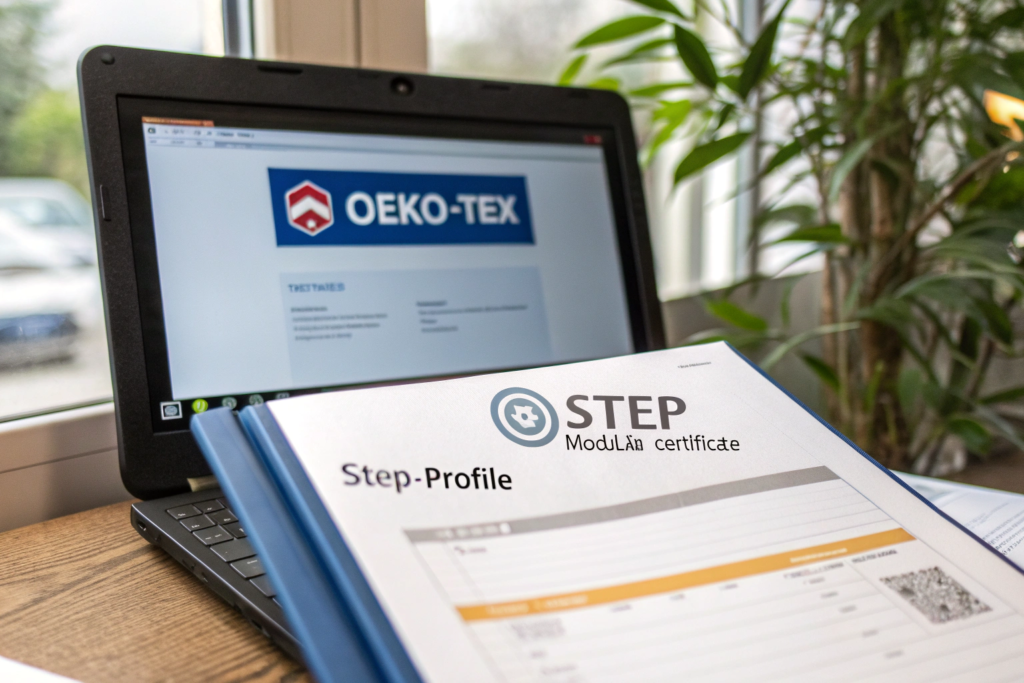
The only reliable source is the official OEKO-TEX® certification database. You will need the supplier's official company name and location. Visit the OEKO-TEX® website, use the "Find Certified Companies" function, and search. The database entry will show you the exact scope of certification (e.g., "woven fabric production, dyeing, and finishing" vs. just "trading"), the certification number, the issuing institute, the valid-from and valid-to dates, and the achieved performance level (1, 2, or 3) for each module. This is your objective evidence. Furthermore, request the supplier's official STeP "Modular Certificate" and the detailed "STeP Profile" document. The profile is a treasure trove of data, showing their scores across all modules. A trustworthy supplier will provide these willingly.
What are the red flags in certificate verification?
Several warning signs should prompt deeper investigation. Red Flag 1: Vague Scope. If the certificate lists only "trading" or "head office," but the fabric is produced in a different, uncertified factory, the certification is not valid for your product. Red Flag 2: Expired Date. Always check the validity. Red Flag 3: Mismatched Company Name. Ensure the legal name on the certificate matches your supplier's business license. Red Flag 4: Reluctance to Share Details. If a supplier hesitates to provide their certificate number or full profile, consider it a major warning. We experienced this with a lace supplier in 2022. They presented a beautiful PDF, but the database search revealed it was for a different entity under the same group, and the specific lace production unit had failed its last audit. Industry forums like Ecotextile News discussions on spotting false claims often highlight similar cases, emphasizing the need for buyer diligence.
What questions should I ask beyond the certificate?
The certificate is the starting point, not the finish line. Use it to ask insightful questions that prove the supplier lives the standards. Ask: "Your STeP profile shows a Level 2 in Chemical Management. What specific green chemistry initiatives are you implementing this year to reach Level 3?" Or, "Your water consumption is X L/kg. What is your target for next year, and what technology investment are you making to achieve it?" Ask to see their chemical inventory list (often called a MRSL - Manufacturing Restricted Substances List) and their procedure for screening new chemicals. Inquire about worker training programs related to the STeP social criteria. Their ability to answer these questions fluently demonstrates embedded practices, not just a one-time audit preparation. This level of engagement transforms your relationship from buyer and seller to partners in sustainability.
What are the key differences between STeP Levels 1, 2, and 3?
OEKO-TEX® awards one of three performance levels for each module, providing a clear, at-a-glance assessment of where a company stands on its sustainability journey. Understanding these levels is crucial for setting your sourcing standards.
The levels represent a scoring system based on audit criteria fulfillment. Level 1: "Awareness & Implementation" means the company meets the basic requirements of the standard. They have systems in place and are compliant. Level 2: "Consistency & Proactivity" indicates the company not only meets requirements but consistently applies them and proactively works on improvements. Their data management is robust. Level 3: "Leadership & Excellence" is the top tier. Companies at this level demonstrate industry-leading practices, often exceeding standard requirements, and have fully integrated sustainability into their core business strategy. Their processes are innovative and highly efficient. When sourcing, a facility with mostly Level 3 ratings is demonstrating best-in-class operations.

Should I only source from Level 3 certified suppliers?
Not necessarily. While Level 3 is ideal, a supplier with a mix of Levels 2 and 3, showing a clear upward trajectory, can be an excellent partner. The most important factor is transparency and commitment to improvement. A supplier openly at Level 1 in Environmental Performance but with a credible, funded plan to reach Level 2 within 18 months may be more valuable than a stagnant Level 2 supplier. For example, when auditing our own cooperative dyeing mill, they scored Level 2 in Environmental Performance. Their detailed action plan included installing a real-time energy monitoring system (completed in Q1 2024) and a pilot project for rainwater recycling. This demonstrable commitment to progress was more compelling to our key EU client than a static high score. Your sourcing strategy should balance current performance with future potential.
How do these levels translate to tangible business benefits?
Higher STeP levels directly correlate with lower risk and often, lower long-term cost. Level 3 in Chemical Management drastically reduces the risk of shipment rejections due to failed substance tests. Level 3 in Environmental Performance (Energy) means the mill has highly efficient machinery, which often leads to more stable production costs, as they are less vulnerable to energy price spikes. Level 3 in Social Responsibility significantly mitigates the risk of supply chain disruption due to labor disputes or negative publicity. For a US-based athleisure brand we work with, their mandate is that all dyeing and finishing must be done in facilities with a minimum of Level 2 in Chemical Management and Social Responsibility. This policy, communicated clearly to suppliers, has streamlined their sourcing and strengthened their brand's ethical positioning. Discussions on platforms like Common Objective regarding the business case for sustainable sourcing validate this approach, linking certified practices to resilience and brand equity.
How to build a strategic partnership with a STeP-certified mill?
Sourcing sustainably isn't a one-off purchase; it's about building a collaborative supply chain. A STeP-certified mill provides the perfect framework for this partnership.
Move beyond the price-per-meter negotiation. Use the supplier's STeP Profile as a collaborative roadmap. Schedule a joint meeting—not just with sales, but with their technical, environmental, and social compliance managers. Discuss how your orders can help them improve their scores. For instance, if they aim to improve their water score, could you consolidate orders to allow for longer, more efficient production runs? Can you commit to longer-term contracts to justify their investment in new, cleaner technology? Share your brand's sustainability goals and see how they can align. This approach fosters loyalty, secures capacity, and drives mutual innovation. At Shanghai Fumao, our most successful relationships are with clients who treat us as an extension of their own sustainability team, co-investing in pilot projects for recycled fibers or low-impact dyes.
What should be included in a contract with a STeP-certified supplier?
Your contract must legally anchor the sustainability commitments. Key clauses include: 1) Certificate Warranty: The supplier warrants that all products are manufactured in the STeP-certified facilities listed in the attached, valid certificate. 2) Continuous Improvement: Agreement on specific, measurable improvement targets (e.g., reduce energy consumption per kg by 5% over the contract period) aligned with their STeP goals. 3) Transparency & Audit Rights: Your right to request annual STeP updates and, potentially, conduct joint audits or third-party verification. 4) Non-Conformance: Clear remedies if the supplier loses certification or fails to meet agreed targets. 5) Chemical Compliance: Reference to a specific MRSL (like ZDHC or brand-specific) that aligns with STeP's chemical module. (Here's a practical tip: we've found that clients who include these clauses get prioritized in our production scheduling because it signals a serious, long-term partnership).
How can joint projects amplify sustainability impact?
True leadership comes from pre-competitive collaboration. Propose projects that benefit both parties and push the industry forward. Examples include: A Closed-Loop Water Pilot: Co-fund a small-scale treatment system to recycle process water for specific dye batches. Renewable Energy Investment: Explore a Power Purchase Agreement (PPA) to fund solar panels on the mill's roof, directly reducing the carbon footprint of your orders. Worker Upskilling Programs: Collaborate on training programs for workers' rights or advanced chemical handling, improving their Social Responsibility score. In 2023, we partnered with a Danish home textiles brand on a project to optimize the recipe for a bio-based softener. The goal was to maintain performance while reducing the product's carbon footprint. The success improved our Chemical Management metrics and gave the brand a unique selling point. This is the future of sourcing. Insights from initiatives like the Textile Exchange's collaborative platforms show how such partnerships drive systemic change.
Conclusion
Sourcing fabric with genuine OEKO-TEX® STeP certification is a meticulous but essential process that moves your brand from superficial green claims to verified, impactful action. It requires moving beyond certificate collection to deep verification, understanding the nuanced levels of performance, and ultimately forging strategic partnerships based on transparent data and shared improvement goals. This approach de-risks your supply chain, future-proofs your business against tightening regulations, and builds a brand story rooted in integrity.
The journey is continuous. The STeP framework itself is designed for progression, not perfection. By aligning with suppliers who are committed to this journey, you invest in a more resilient, responsible, and innovative supply chain.
Ready to source with confidence and make sustainability a tangible part of your product story? Partner with a supplier that embeds these principles at its core. At Shanghai Fumao, we provide not just STeP-certified fabrics but full transparency into the certification of our partner mills. We connect you with production facilities that share your values and can collaborate on achieving your specific sustainability targets. Let's build a more responsible supply chain together. For a detailed discussion on sourcing certified sustainable fabrics, contact our Business Director Elaine at: elaine@fumaoclothing.com.