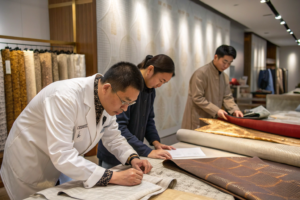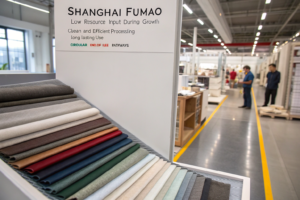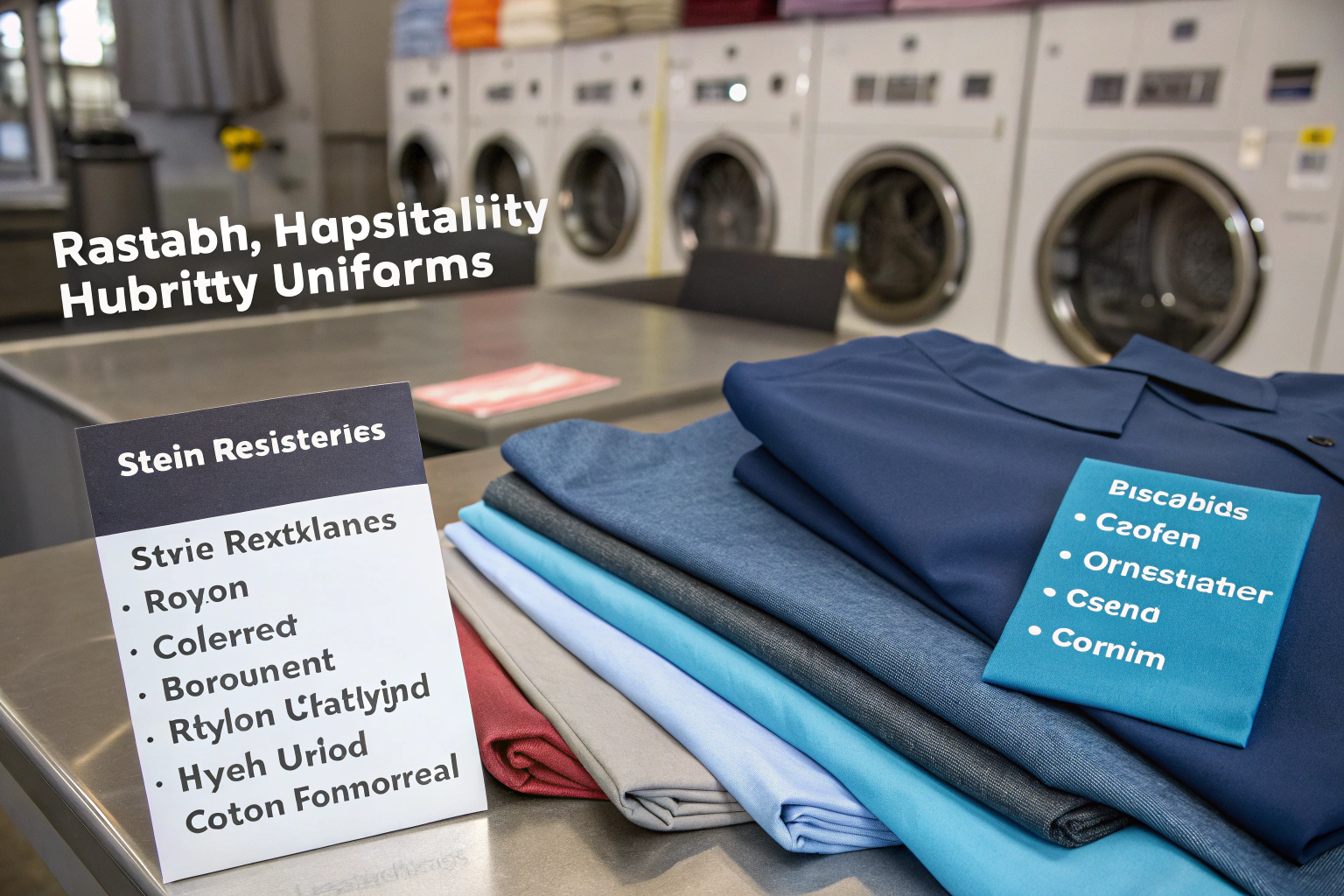
Sourcing fabric for hospitality uniforms is fundamentally different from sourcing for retail fashion or even corporate apparel. A hotel uniform is not just clothing; it is a working tool that must perform flawlessly for 8-12 hours per day, shift after shift, wash after wash, while consistently representing a brand's identity to every guest. The wrong fabric choice leads to faded colors, permanent stains, uncomfortable employees, and a tarnished brand image.
Sourcing fabric for hospitality uniforms requires a strategic focus on durability, stain resistance, colorfastness, comfort, and brand alignment. The best fabrics for this demanding environment are polyester-rayon blends, nylon-spandex blends, solution-dyed polyester, and treated cotton-rich fabrics with advanced stain-release technologies. Successful sourcing also requires close collaboration with laundry services and uniform rental companies to ensure the fabric withstands industrial washing protocols.
Let me walk you through exactly how to evaluate, select, and source fabrics that will keep your hospitality staff looking professional and feeling comfortable, day after day.
What Unique Demands Do Hospitality Uniforms Face?
Hospitality uniforms endure a combination of stresses rarely seen in other apparel sectors. Understanding these demands is the prerequisite to intelligent fabric selection.
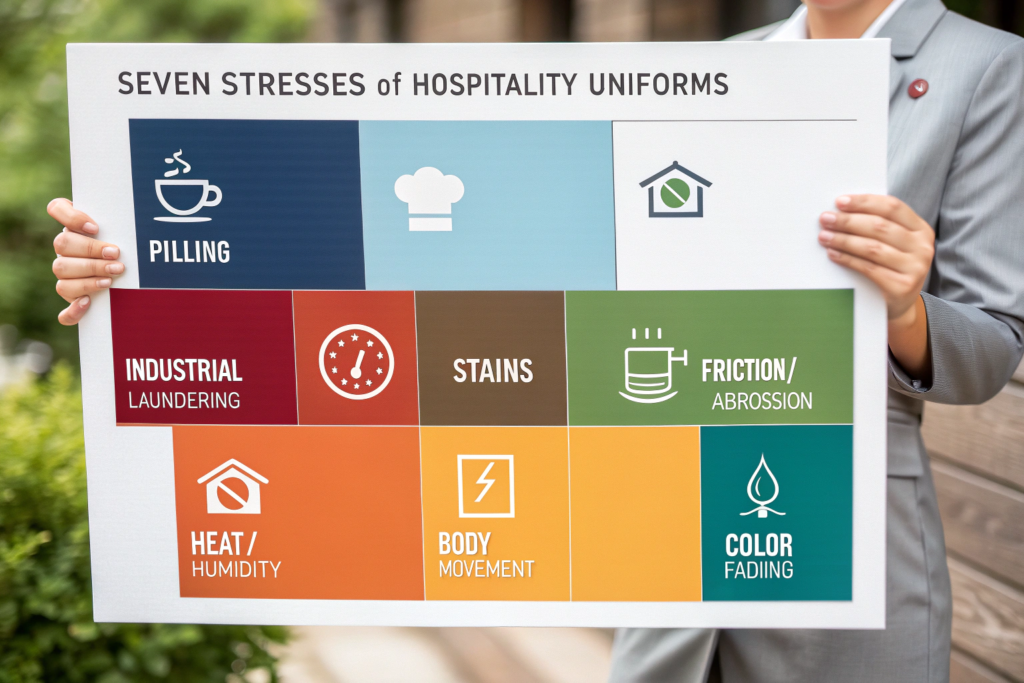
Why Is Industrial Laundry Compatibility Non-Negotiable?
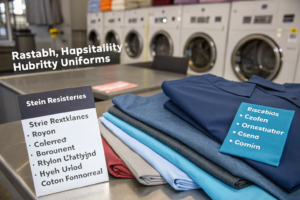
Most hotels and hospitality companies do not launder uniforms at home. They use industrial on-premise laundries (OPL) or uniform rental services that wash garments in high-temperature water (often 160°F/70°C+), strong alkaline detergents, and high-speed mechanical agitation. Fabrics that survive 25 home washes may disintegrate after 25 industrial cycles. Cotton shrinks dramatically. Viscose/rayon loses strength when wet and tears. Standard polyester can yellow or lose finish. You must select fabrics specifically engineered for industrial laundry durability, often carrying certifications from organizations like the Textile Rental Services Association (TRSA) or meeting specific wash test standards (e.g., 50, 75, or 100 industrial washes). This is the single most important technical specification.
What Performance Properties Matter Most for Guest-Facing Roles?
Different roles have different demands, but several properties are universally critical:
- Stain Release: Front-of-house staff encounter coffee, red wine, olive oil, and ink daily. Fabric must release these stains readily in one wash without pre-treating.
- Wrinkle Resistance: A wrinkled uniform signals disorganization and low standards. Fabric must resist creasing during wear and emerge from the dryer needing minimal or no ironing.
- Colorfastness: Deep brand colors—especially black, navy, and red—must not fade or bleed after repeated washing.
- Breathability and Stretch: Staff are on their feet for hours, often in warm environments. Fabrics need moisture management and mechanical stretch for comfort and full range of motion.
What Are the Best Fabric Types for Hospitality Uniforms?
No single fabric suits every role, but several high-performance textile categories have proven their worth across the hospitality industry.
Why Are Polyester-Rayon Blends the Industry Workhorse?
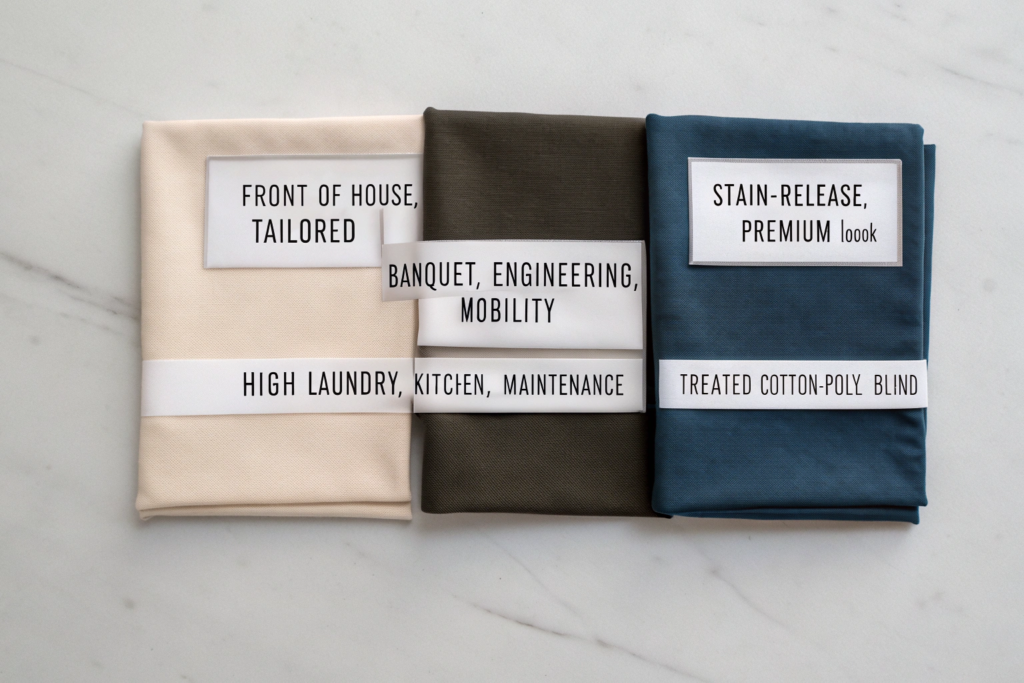
The 65% polyester / 35% rayon blend (and its close cousin 55/45) is the backbone of hospitality uniforms, particularly for blazers, trousers, skirts, and vests. Polyester provides durability, wrinkle resistance, colorfastness, and industrial laundry compatibility. Rayon (viscose) adds softness, breathability, and a more natural, less "synthetic" hand feel and drape. This blend takes dyes beautifully, creating rich, deep colors that represent brand identities accurately. It is also machine washable, tumble dryable, and requires little to no ironing. For front-of-house roles requiring a tailored, professional appearance, this is typically your optimal choice.
When Should You Specify Nylon-Spandex Blends?
For roles demanding maximum mobility and recovery, nylon-spandex blends excel. Nylon is exceptionally strong, abrasion-resistant, and has natural stretch. Adding 5-10% spandex (elastane) creates four-way stretch fabrics ideal for banquet staff, housekeepers, engineers, and any position requiring bending, reaching, or crouching. These fabrics are also quick-drying and wrinkle-resistant. However, nylon is slightly more absorbent than polyester and may not be suitable for the highest-heat industrial laundering. Specify solution-dyed nylon for superior colorfastness in dark shades.
What Is Solution-Dyed Polyester and Why Is It Superior for High-Stress Roles?
Solution-dyed polyester is a technical fabric where color pigment is added to the polymer solution before the fiber is extruded, rather than dyeing the finished fabric. This means the color is part of the fiber itself, not just coated on the surface. The advantages for hospitality are immense:
- Exceptional colorfastness: Virtually no fading, even after hundreds of industrial washes and exposure to harsh chemicals.
- Superior stain resistance: The fiber does not absorb stains readily; many wipe clean with a damp cloth.
- Chlorine resistance: Ideal for spa and pool staff uniforms.
- High heat tolerance: Can withstand the most aggressive industrial laundry protocols.
It is more expensive than standard polyester and has a distinct "technical" hand feel, but for kitchen staff, maintenance teams, and any role where uniforms are heavily soiled and frequently laundered, it is the highest-performing choice.
Are Cotton-Rich Blends Ever Appropriate?
Yes, but only with specific performance treatments. Cotton-rich blends (e.g., 60% cotton / 40% polyester) offer a premium, natural aesthetic and exceptional comfort. However, pure cotton fails catastrophically in industrial laundry. You must specify stain-release finishes (such as Nanotex, 3M Scotchgard, or Invista Teflon) and wrinkle-resistant treatments. Even with these, cotton-rich blends have shorter lifespans than high-polyester blends. Reserve them for executive-level or boutique hotel roles where the premium look justifies more frequent replacement.
How Do You Qualify and Test Fabrics for Hospitality Use?
Selecting the right fabric on paper is only the beginning. Rigorous testing against real-world conditions is essential.
What Standardized Tests Should You Request?
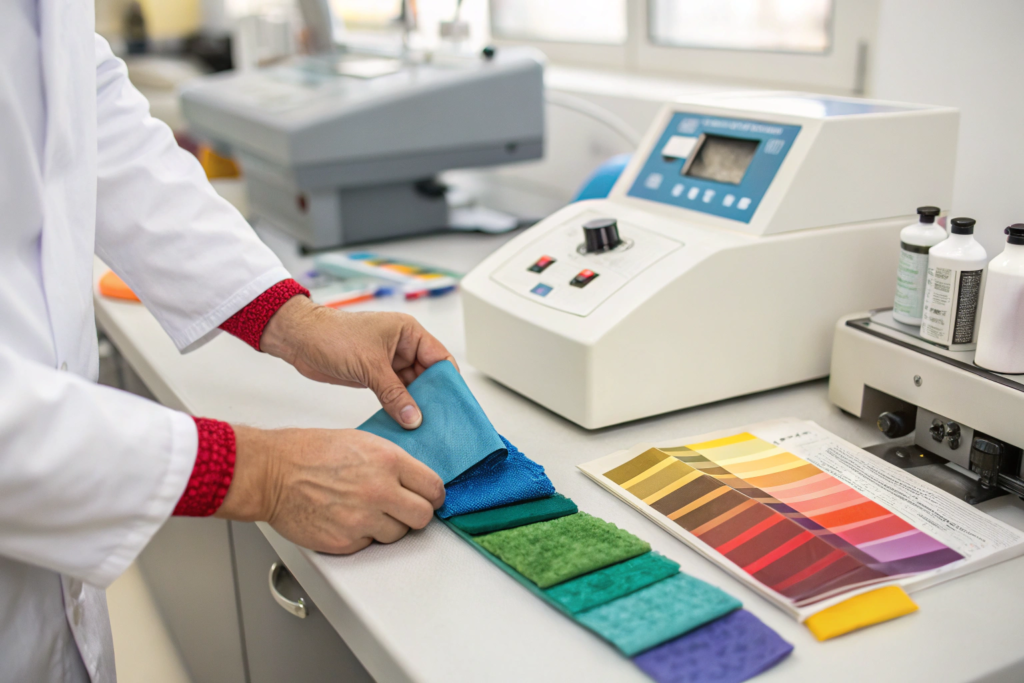
Do not rely on fabric swatches and marketing claims. Request certified test reports from accredited laboratories (e.g., ASTM, AATCC, ISO) for the following:
- Industrial Laundry Durability: Specify cycles (e.g., 25, 50, or 100 industrial wash cycles) and evaluate shrinkage, color change, staining, and physical damage. AATCC Test Method 96 or ISO 5077 are relevant standards.
- Colorfastness: Test to light (AATCC 16, Xenon Arc), crocking/rubbing (AATCC 8), and perspiration (AATCC 15).
- Stain Release: AATCC 130 tests the fabric's ability to release oily stains during home or industrial laundering.
- Physical Properties: Tensile strength (ASTM D5034), tear strength (ASTM D1424), and pilling resistance (ASTM D3512, Random Tumble Pilling).
Why Is a Wear Trial Non-Negotiable?
No lab test perfectly replicates human movement, body chemistry, and the specific conditions of your property. Conduct a wear trial with actual employees in their actual roles for a minimum of 2-4 weeks. Select a representative sample of body types and job functions. Collect structured feedback on:
- Comfort and breathability during a full shift.
- Fit retention—does the garment sag or bag at knees/elbows?
- Stain pick-up in your specific environment.
- Ease of care—does it truly require no ironing?
A fabric that passes every lab test but leaves your employees uncomfortable or constantly stained is the wrong fabric.
How Do You Navigate the Supply Chain for Hospitality Fabrics?
Sourcing hospitality-grade fabric is a specialized procurement activity. Knowing where to look and how to specify your needs is critical.
Should You Source from Mills, Converters, or Uniform Manufacturers?
There are three primary channels:
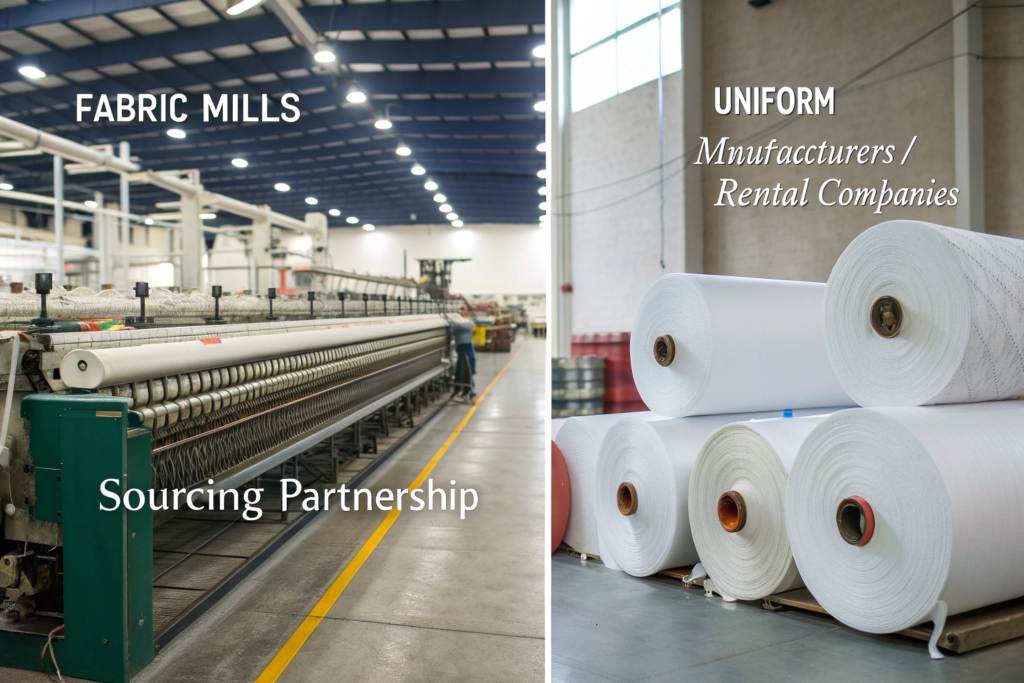
- Direct from Mills: Large hospitality brands or national uniform programs may work directly with vertical mills that produce fabric specifically for the hospitality channel. This offers the lowest cost and greatest quality control but requires very high minimum quantities (thousands of yards per color).
- Fabric Converters: These companies purchase greige (unfinished) fabric from mills and commission the dyeing, finishing, and performance treatments. They offer lower minimums and a wider variety of in-stock options. This is often the best route for regional hotel groups or smaller programs.
- Uniform Manufacturers/Rental Companies: Many large uniform suppliers (e.g., Cintas, UniFirst, Vostok in China) have proprietary fabric specifications developed specifically for their rental and sales programs. They can manage the entire supply chain from fabric sourcing to finished garment. This is turnkey but offers less direct control over fabric selection.
What Information Must You Provide to Suppliers?
To receive accurate quotations and samples, you must articulate:
- End-use role(s) and specific performance demands.
- Target fabric weight (e.g., 180-200 GSM for shirting, 240-260 GSM for trousers).
- Required fiber composition (e.g., 65/35 poly-rayon).
- Color standards (Pantone TPX or TC numbers).
- Industrial laundry certification requirements (e.g., 75-wash cycle certification).
- Budget target per yard or per garment.
The more specific you are, the less ambiguity your supplier has, and the faster you will receive viable options.
Conclusion
Sourcing fabric for hospitality uniforms is a complex, high-stakes procurement discipline. It demands a shift in mindset from "What looks good?" to "What performs flawlessly under industrial conditions for years while looking good every single day?" By prioritizing industrial laundry durability, stain release, colorfastness, and wear-trial validated comfort, and by selecting proven high-performance fabrics like polyester-rayon blends, nylon-spandex, and solution-dyed polyester, you can equip your team with uniforms that elevate your brand and withstand the rigors of daily hospitality operations.
If your hotel group, uniform rental company, or hospitality brand requires a manufacturing partner experienced in producing high-durability, custom uniforms with certified performance fabrics, we are ready to collaborate. At Shanghai Fumao Clothing, we have extensive experience producing hospitality headwear and apparel to the most demanding industrial laundry specifications. For inquiries about developing your uniform program, please contact our Business Director, Elaine, at elaine@fumaoclothing.com. Let us help you present your best face to every guest, every day.