The moment you touch a luxury garment, you know. The weight, the drape, the subtle luster—it speaks before the label. But how do you translate that intangible feeling into a technical specification sheet for a supplier halfway across the world? If you've ever received a "luxury" fabric sample that felt stiff, looked cheap, or pilled after one wear, you know the gap between expectation and reality can be vast. The core problem isn't finding a supplier; it's finding a partner who understands that luxury is built in the microns, the twist, the finish.
Sourcing for luxury is an exercise in precision and partnership. It’s not about buying a fabric; it’s about co-creating a material experience. The best luxury houses don't just source fabrics—they develop them through deep, collaborative relationships with mills that have mastered the alchemy of turning premium fibers into emotive textiles. At Shanghai Fumao, our work with luxury clients has taught us that it hinges on three pillars: exclusivity in design, uncompromising quality control, and a narrative of heritage and innovation.
This guide will walk you through the exact processes used by top-tier brands to secure fabrics that justify their price point and elevate their collections. We'll move beyond generic supplier databases into the world of proprietary weaves, hands-on quality rituals, and the strategic planning that defends against the pitfalls of global production.
What Defines a "Luxury" Fabric Beyond Just Feel?
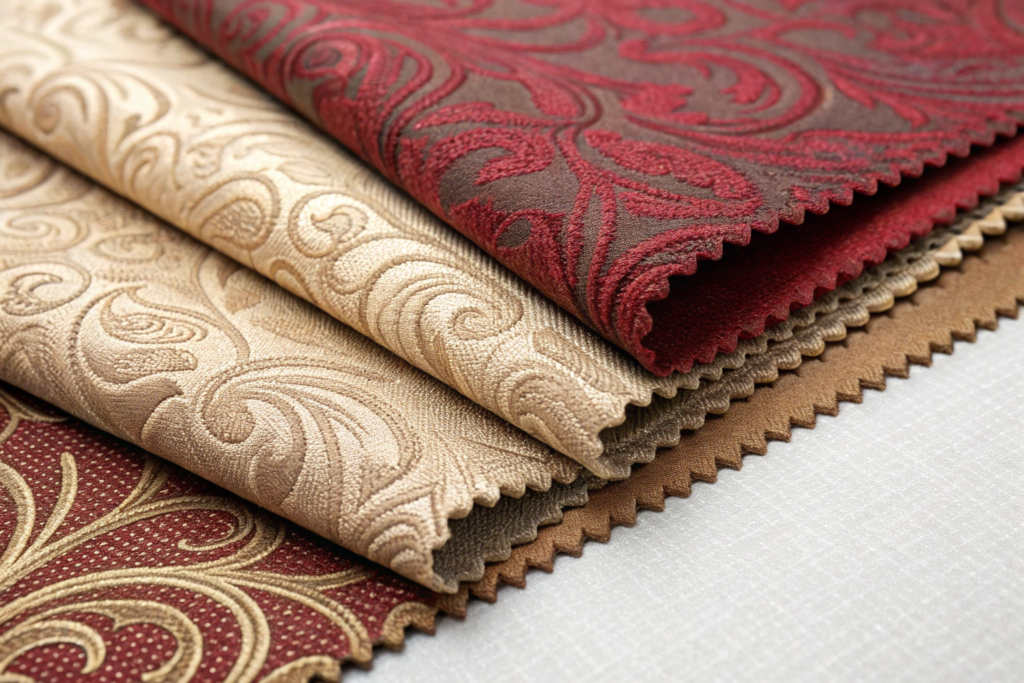
Anyone can say a fabric is "soft." Luxury is quantified. It’s in the thread count of a Sea Island cotton, the grade of mulberry silk, the precision of a jacquard pattern, and the molecular stability of a dye. The feel is the result, not the starting point. A true luxury fabric marries exceptional raw materials with masterful construction and finishing techniques that enhance performance and longevity.
We learned this definitively while developing a 7-gauge double-faced merino wool for an Italian outerwear brand. The brief wasn't just "warm and soft." It specified a maximum fiber diameter of 17.5 microns, a precise weight of 420gsm, and a pill resistance rating of 4+ after 10,000 Martindale rubs. We sourced the wool from a trusted Australian grower, oversaw a specialized spinning process to maintain fiber integrity, and used a gentle, solvent-free finishing process. The result was a fabric with a cloud-like hand-feel and structural integrity that became the hero material of their flagship coat line for three seasons running.
How Do You Specify Technical Parameters for Luxury Materials?
The specification sheet is your bible. It must go far beyond composition and weight. Key parameters include:
- Fiber Origin and Grade: Not just "silk," but "Grade 6A Mulberry Silk from Sichuan." Not just "cashmere," but "Mongolian White Cashmere, 14.5-micron average diameter."
- Yarn Construction: Twist level (TPM - twists per meter), ply (single, two-ply, cable), and spinning method (ring-spun for cotton and wool for superior strength and feel).
- Fabric Construction: Thread count, weave density (ends/picks per inch), and for knits, the gauge.
- Performance Metrics: Colorfastness to light and washing (using AATCC or ISO testing methods), dimensional stability, tensile strength, and pilling resistance. These must be verified by an independent, accredited lab like SGS or Intertek.
Why Is the "Hand" of the Fabric So Critical and How Is It Engineered?
The "hand" or main is the sensory profile—drape, stiffness, smoothness, compressibility. It's engineered through finishing. For a luxury wool gabardine, this might involve a delicate process called decating, where the fabric is steamed under tension to set the weave and enhance luster. For silks, a process called weighting (historically with metallic salts, now ethically with organic polymers) can be used to improve drape. The finishing recipe is often a mill's most guarded secret. To understand these processes deeply, resources like The Sustainable Angle's fabric sourcing guides offer insights into premium, responsible finishing.
Where to Find Mills That Specialize in Luxury Production?
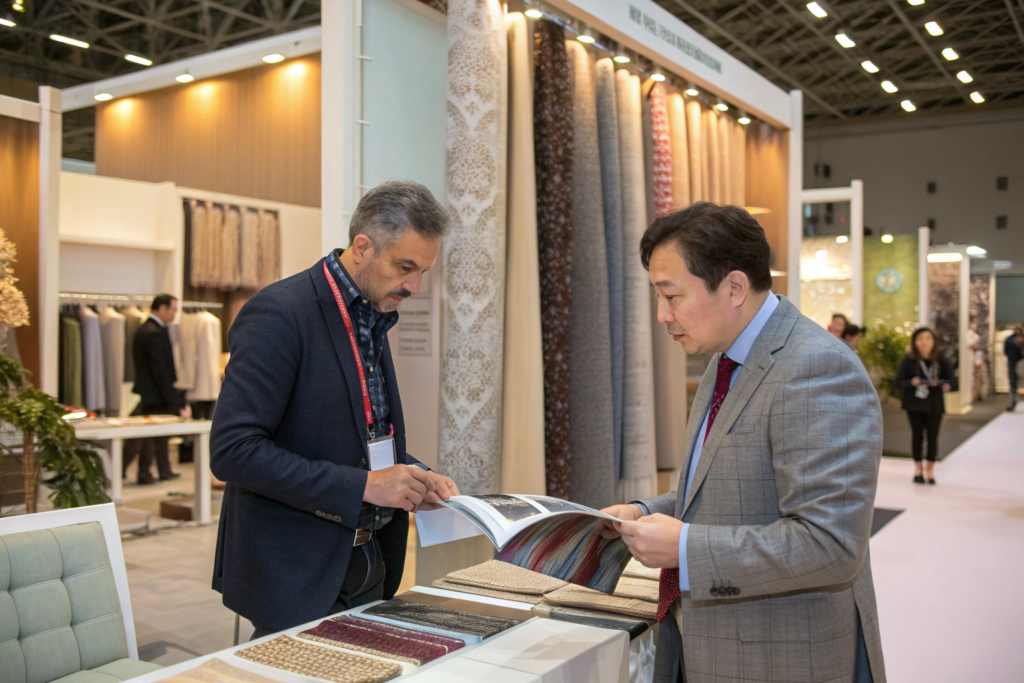
The mills that produce true luxury fabrics are rarely the ones advertising on generic B2B platforms. They are often family-run operations with decades of expertise, or highly specialized divisions of larger conglomerates. Finding them requires a mix of old-school networking, expert intermediation, and attending the right niche trade shows.
Our position in Keqiao gives us access to a curated network of these specialized producers. For instance, we work with a small, third-generation mill in Jiangsu that produces an exceptional hand-loomed linen using antique looms. The output is limited, the selvedge is irregular in a beautiful way, and each batch has a unique character—exactly what a Parisian designer seeking artisan qualities wanted for a limited edition line. We connected them because we knew their capability matched the designer's poetic brief, not just a technical one.
Which Global Trade Shows Are Essential for Luxury Sourcing?
While Intertextile Shanghai is vast, luxury sourcing often focuses on more curated European shows:
- Première Vision (Paris): The pinnacle. It's where trends are set and the most exclusive mills present.
- Milano Unica (Milan): The heart of Italian textile excellence, especially for wools, silks, and high-end shirtings.
- Texworld Evolution (Paris/New York): Has a dedicated "Premium" section for higher-quality suppliers.
The goal at these shows isn't to place an order on the spot. It's to establish relationships, feel the fabrics firsthand, and understand the creative direction for upcoming seasons.
How Does a Sourcing Agent or Partner Unlock Hidden Capabilities?
A knowledgeable partner on the ground in Asia is invaluable. They can:
- Vet for True Specialization: Many mills claim to do everything but excel at nothing. A good partner knows which mill has the best cuprammonium rayon facility versus who excels in wool-silk-cashmere blends.
- Navigate Minimums: Luxury production often involves low MOQs (as low as 200-500 meters for exclusive designs). A partner can consolidate orders or negotiate special runs.
- Facilitate Development: They act as your technical translator, ensuring your design intent is perfectly communicated to the mill's technicians. Forums like The Business of Fashion's sourcing discussions often highlight the value of such partnerships.
How to Manage Quality Control for Luxury Fabric Orders?
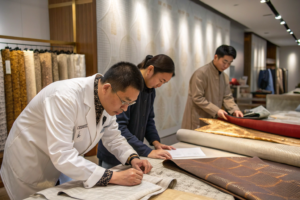
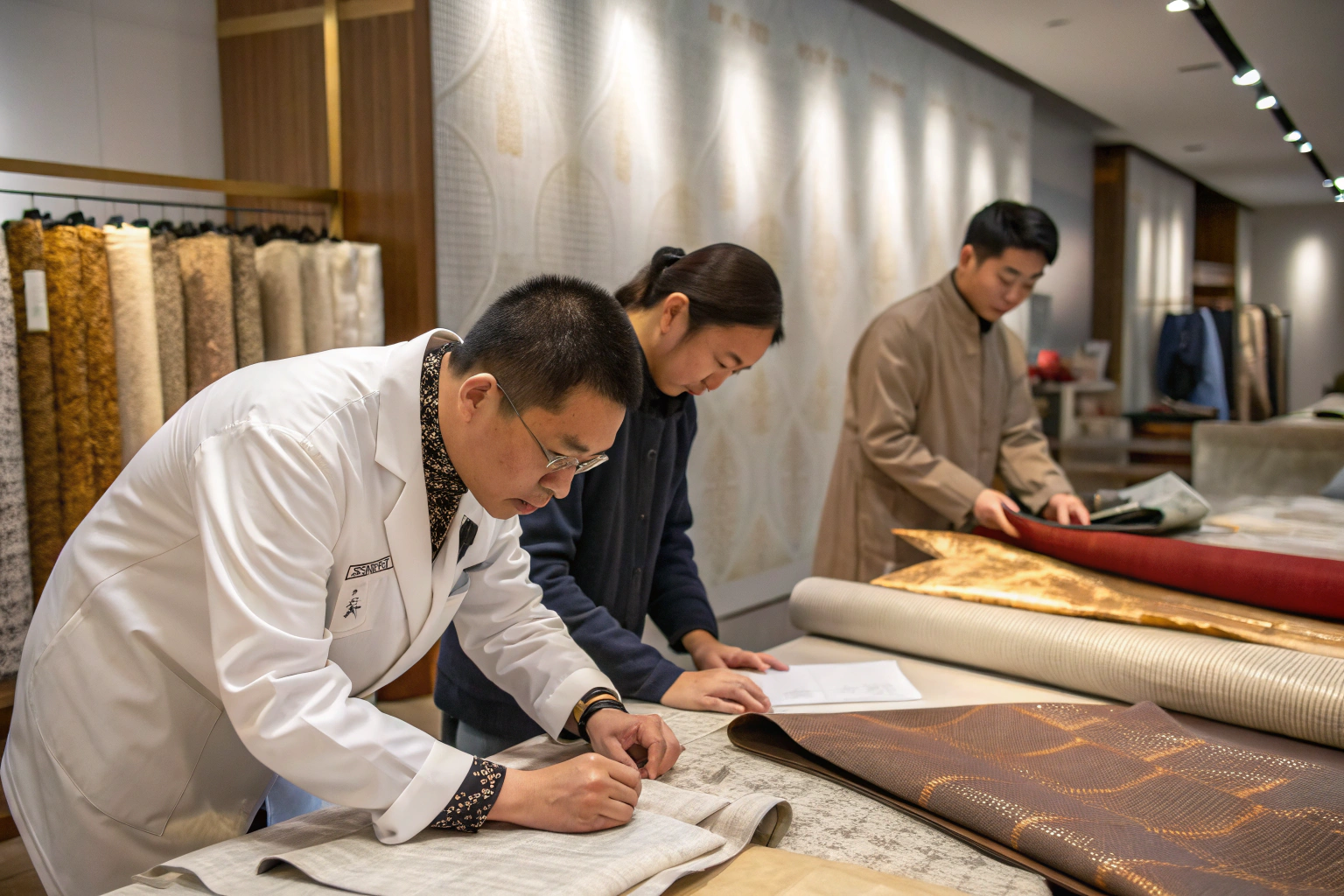
For luxury, QC is not a final checkpoint; it's a philosophy embedded in every stage. It begins at the raw material intake and doesn't end until the fabric is safely in your atelier. The tolerance for defects is effectively zero. A single mis-pick in a jacquard or a subtle shade variation can render an entire batch unusable for a high-value garment.
Our most rigorous QC process was for a Swiss brand producing ultra-high-end performance skiwear. The fabric was a custom-developed, laminated membrane with a cashmere blend face. Our protocol involved: 1) Testing every incoming cashmere bale for micron count, 2) In-process checks during weaving for tension consistency, 3) 100% light-table inspection after finishing for any weaving or coating flaws, and 4) Batch testing for waterproofness (15,000mm+) and breathability. We delivered with a 99.9% acceptance rate, but that 0.1% potential for error is what keeps the process obsessive.
What Does 100% Inspection Really Entail for Luxury Goods?
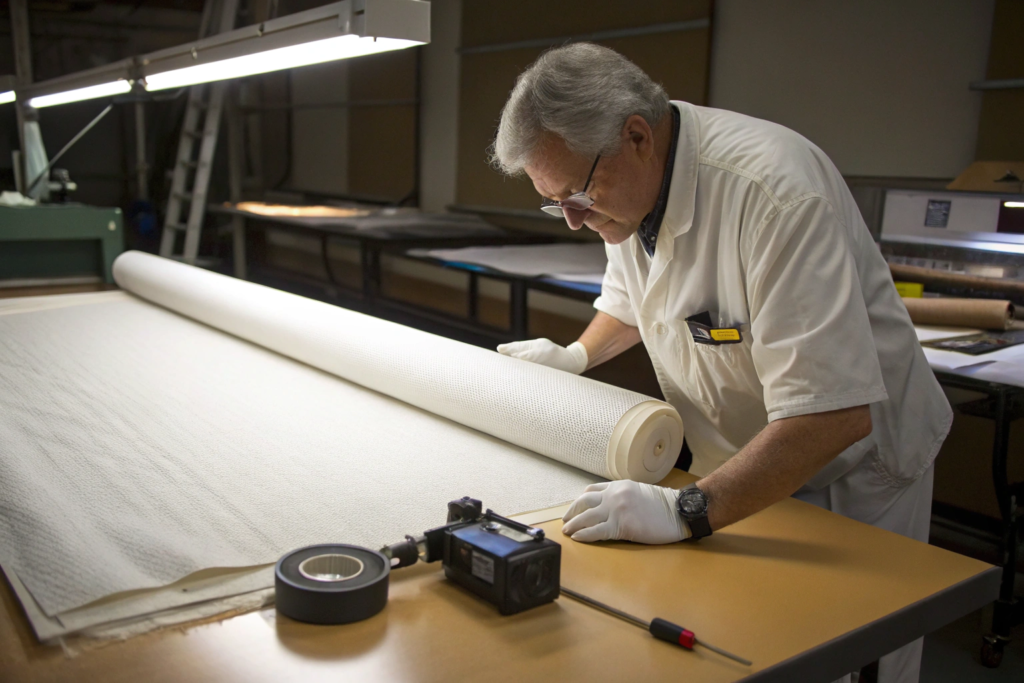
It means every linear meter of fabric passes over a backlit inspection table at a controlled speed. Inspectors are trained to flag:
- Weaving/Knitting Defects: Slubs, mis-picks, holes, loose threads.
- Finishing Defects: Dye streaks, spots, uneven sheen, coating inconsistencies.
- Visual Consistency: Any deviation from the approved master swatch in color or texture.
Each defect is marked, and the roll is graded. For luxury, only "First Quality" is acceptable.
How Do You Handle Color Matching and Batch-to-Batch Consistency?
Color is non-negotiable. The process uses a spectrophotometer to measure the lab dip against the standard under multiple light sources (D65 daylight, TL84 fluorescent). The Delta E (ΔE) tolerance must be extremely tight (often below 0.8). For bulk production, a lot dip is approved before full dyeing commences. To maintain batch consistency, mills must use the same dyestuff batch and strictly control time, temperature, and pH in every dye lot. Resources from datacolor explain the science behind precise color management in textiles.
What Are the Logistics and Planning Considerations for Luxury Sourcing?
Luxury sourcing operates on a different timeline and risk calculus. Air freight for samples or even small bulk runs is common. Production is often scheduled during a mill's "quiet period" to ensure undivided attention. And the entire supply chain must be insulated from the volatility that affects mass-market goods.
A key lesson came from a London-based couture house. They needed a specific hand-embroidered silk organza for a bridal collection. The embroidery alone took 8 weeks in a specialized atelier. We planned backward from their fitting date: securing the base silk 6 months prior, scheduling the embroidery during the artisans' available slot, and then shipping via air in a custom humidity-controlled crate. The cost was high, but the value—an exclusive, flawless material arriving exactly on time for the creation of a $50,000 gown—was indisputable. This is where planning is everything.

How Do You Navigate Long Lead Times and Low MOQs?
Transparency and integrated planning are key. From day one, you must have:
- A Clear Development Timeline: Sample development (2-4 weeks) -> Sampling and approval (2-3 weeks) -> Raw material procurement (4-8 weeks) -> Production (4-6 weeks) -> Shipping (2-5 weeks). For luxury, plan for a 6-8 month total timeline.
- Strategic Order Consolidation: If MOQs are an issue, work with a partner like Shanghai Fumao who can group similar small orders from non-competing brands to meet the mill's minimum, or who has standing contracts for exclusive base cloths that can be customized.
Why Is Supply Chain Transparency and Storytelling Part of the Product?
For luxury, provenance is value. The story of the Zimbabwean cotton farm, the Scottish mill with 200-year-old looms, or the Japanese indigo fermentation vat is marketing gold. Your sourcing partner must provide this narrative chain of custody. Documentation, photos, and even video from the production sites become assets for your brand. Understanding how to build this narrative is discussed in resources like The Ethical Fashion Initiative's sourcing stories.
Conclusion
Sourcing fabric for luxury fashion is a discipline that demands equal parts artistry and analytics. It requires moving from a transactional mindset to a relational one, where your fabric supplier is a guardian of quality and a catalyst for creativity. The fabric is the foundation upon which the entire brand experience is built; it must be flawless, exclusive, and emotive.
The journey involves specifying with scientific precision, partnering with specialized artisans, enforcing uncompromising quality standards, and planning with meticulous care. In a world of fast fashion, this deliberate, detail-oriented approach is what truly defines luxury.
If your brand is built on the promise of exceptional quality and unique design, your fabrics must tell that story from the first touch. Let us help you source or develop the material that will become the signature of your next collection. Contact our Business Director, Elaine, at elaine@fumaoclothing.com to begin a conversation with Shanghai Fumao about your luxury fabric needs.