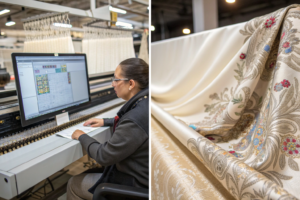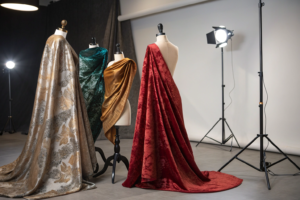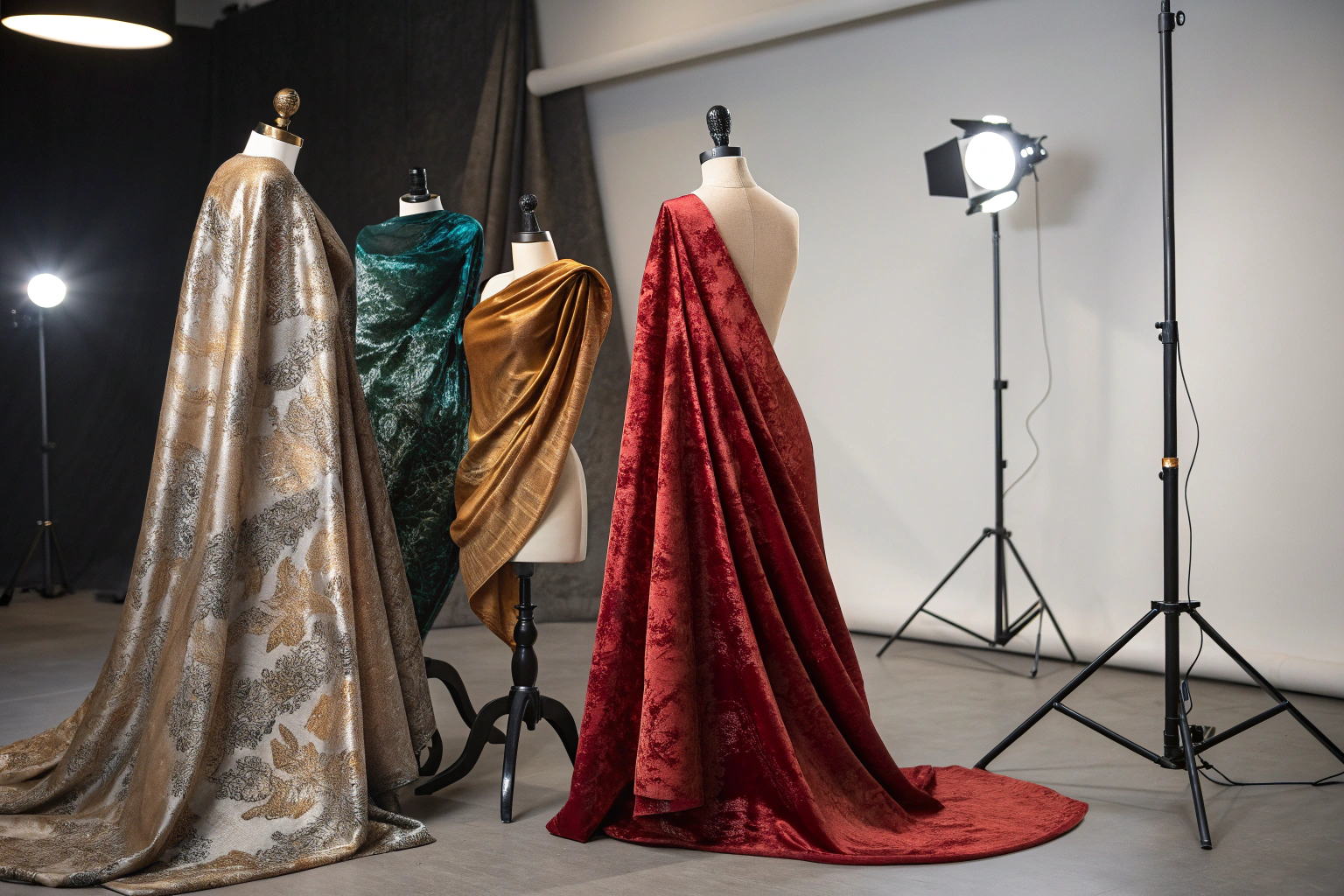
I remember the call that changed our approach to high-fashion clients. It was 2021, and a Paris-based designer, fresh from showing at a major fashion week, needed 200 meters of a specific burnout velvet with a custom metallic finish. Her regular European mills said six months. We did it in four weeks. She flew to Shanghai, stood in our factory, and watched her vision become fabric. That collection later graced magazine covers, and she's been a partner ever since. That's when I realized—China isn't just for basics anymore.
Sourcing fabric for high-fashion runway collections from China requires a strategic approach focused on innovation capability, sampling speed, customization flexibility, and transparent communication about minimums and lead times. The old perception that "made in China" means low quality is outdated. Today, Chinese mills produce some of the most technically advanced and creatively diverse fabrics in the world, often at speeds European suppliers can't match.
Let me be direct with you. If you're a designer or brand building a high-fashion collection, you need partners who understand urgency, confidentiality, and creative collaboration. You can't treat a runway supplier like a commodity vendor. The relationship is different—more intense, more demanding, but also more rewarding. In the sections ahead, I'll walk you through exactly how to find, evaluate, and work with Chinese mills that can deliver the exceptional fabrics your collections deserve.
What innovation capabilities should you look for in a high-fashion fabric supplier?
Runway fashion demands fabrics that stop traffic. Editors, buyers, and influencers have seen everything, so your materials need to surprise them. This means your supplier must do more than weave standard cloth—they need to innovate on demand. The question is how to identify which mills can actually deliver innovation versus those just claiming they can.
The first thing I tell designers is to look at R&D investment. A serious high-fashion supplier will have dedicated development staff, not just production people who occasionally try something new. At Shanghai Fumao, we employ over 20 R&D experts who do nothing but experiment with new fibers, weaves, and finishes. Last year alone, we developed over 1,000 new designs, many of which started as sketches from client mood boards. When a designer emails us at 2 a.m. Shanghai time with a crazy idea—"Can you make a fabric that looks like liquid metal but feels like cotton?"—there's actually someone here who can figure out if it's possible.
How can you assess a mill's ability to execute complex custom developments?
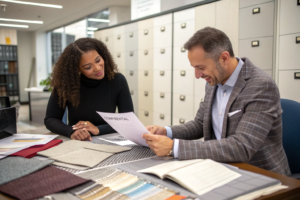
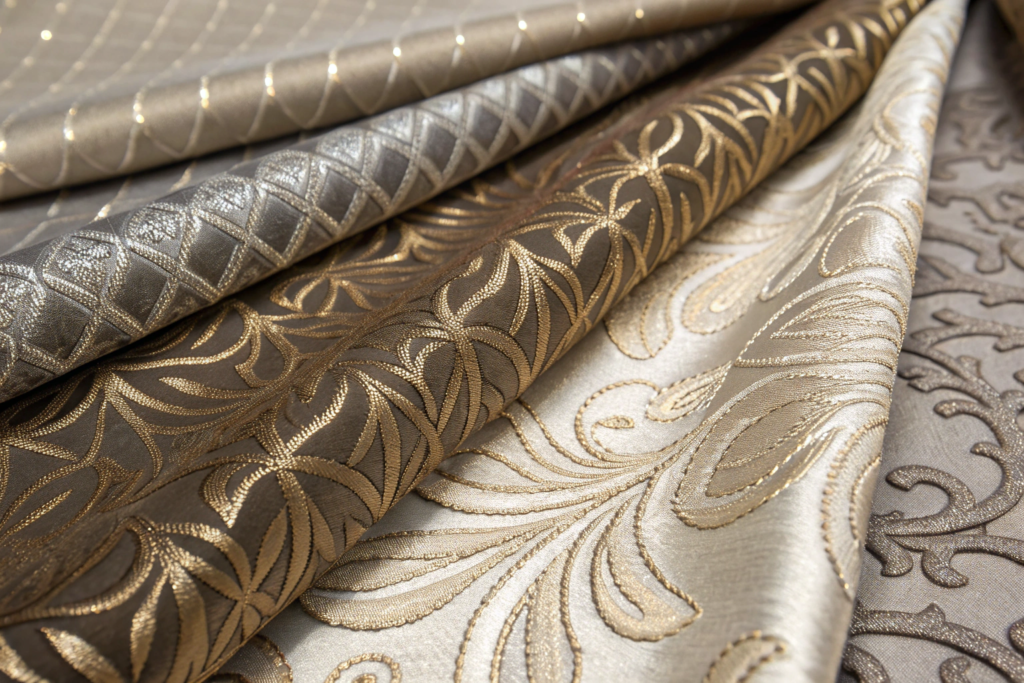
You need to ask specific technical questions and evaluate how they respond. Don't just ask "Can you do custom development?" Ask "How do you approach developing a burnout velvet with a two-color metallic effect on a sustainable base?" Their answer tells you everything.
A capable mill will ask questions back. What weight? What hand feel? What color direction? What's the timeline? They might mention similar projects they've completed or suggest adjustments based on equipment limitations. An incapable mill will just say "Yes, we can do that" with zero follow-up, then struggle to deliver.
In 2022, a New York-based designer approached us with a complex request—a jacquard woven with recycled yarns that created an optical illusion effect when viewed from different angles. Our R&D team spent three weeks developing sample variations, sending photos, and discussing adjustments. The designer later told us she'd approached three other Chinese mills first. Two said yes immediately but never delivered samples. One said no immediately. We got the order because we showed assessing fabric innovation capabilities in Chinese mills we understood the complexity and had a process for addressing it.
What role does sampling speed play in runway development?
Speed is everything in fashion, but for runway, it's existential. You have show deadlines that cannot move. If your fabric arrives late, your collection doesn't show. Period. This is where Chinese suppliers often outperform European counterparts dramatically.
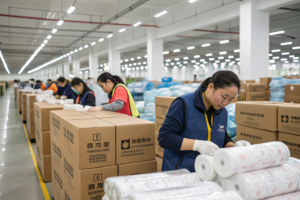
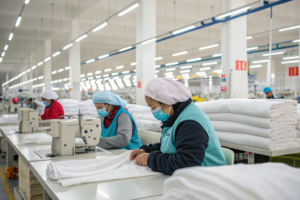
Standard sampling from European mills often takes 4-6 weeks. From us, 48 hours for basic developments, 1-2 weeks for complex custom work. Why the difference? Vertical integration. We control weaving, dyeing, printing, and finishing under one umbrella. There's no waiting for subcontractors to become available, no shipping samples between facilities, no communication delays between separate companies.
For a London-based accessories brand in 2023, this speed saved their collection. They needed a custom coated fabric that matched a specific Pantone for their showpieces. Their Italian mill quoted 8 weeks for sampling—past their deadline. We developed three variations in 10 days, shipped samples, and had production complete in 3 weeks. The rapid sampling for fashion designers in China collection showed on time, and they credited our speed with making it possible. That's the level of responsiveness high-fashion demands.
How do you protect exclusive designs when sourcing from China?
Fear of design theft keeps many designers away from China. I understand this completely. The stories of knockoffs appearing before original collections even launch are real. But here's what I've learned after 20 years—protection is possible, but it requires active partnership, not passive hope. You need suppliers who take confidentiality as seriously as you do.
The foundation of protection is contractual. Every custom development we do starts with a confidentiality agreement that specifies design ownership, restrictions on selling to others, and consequences for violations. But contracts alone aren't enough. You also need to assess a supplier's reputation and client base. A mill that works with major luxury houses has too much to lose by stealing designs. They've built their business on trust, and one leak destroys decades of relationships.
What specific confidentiality measures should a supplier have in place?
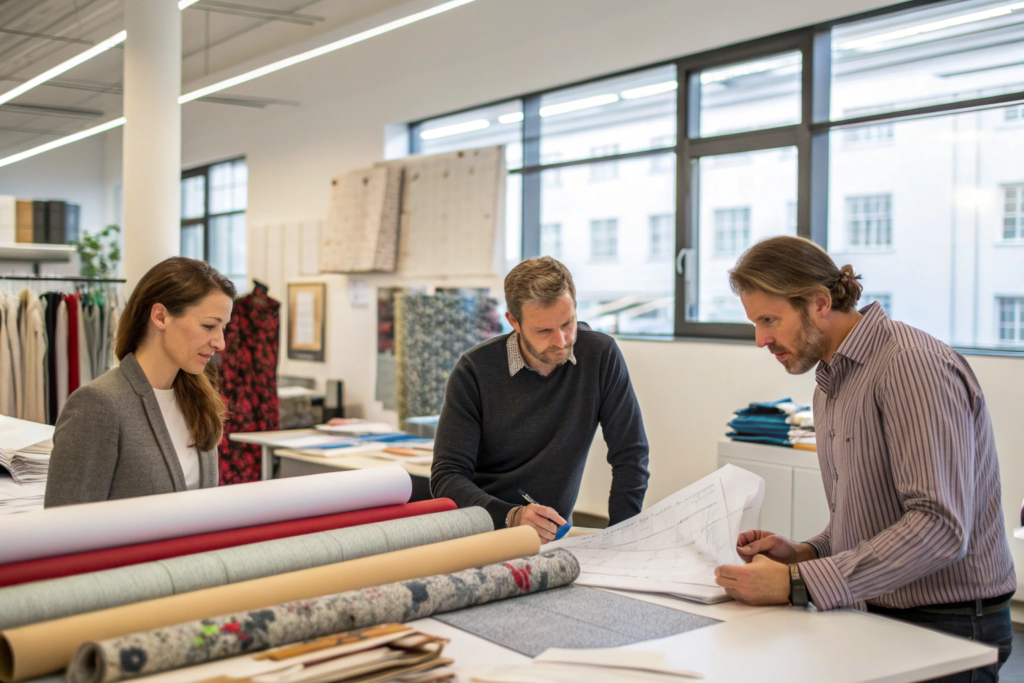
Look for physical and digital security. In our facility, custom developments are handled in restricted areas that only specific staff can access. Digital files are password-protected and tracked. Sample cutting rooms have controlled access. These measures signal that a supplier understands the value of intellectual property.
Ask potential suppliers how they handle proprietary designs. Do they keep samples in locked cabinets? Do they have policies about sharing development work with other clients? Can they provide references from designers who've done exclusive work with them? A reputable mill will answer these questions readily and might even show you their security systems.
In 2020, a Japanese designer visited our facility specifically to audit our confidentiality procedures. She checked our sample storage, asked about our employee training on IP protection, and requested copies of our standard NDAs. She later told us she'd rejected three other Chinese mills because they couldn't describe their intellectual property protection in Chinese textile mills security processes. She's now one of our longest-standing runway clients. The mills that brushed her off lost a valuable partnership because they didn't take confidentiality seriously.
How do you verify a mill won't sell your exclusive designs to competitors?
This requires a combination of contractual restrictions and relationship building. In our agreements, we explicitly prohibit selling any fabric developed exclusively for a client to any other party. Period. But enforcement relies on trust and mutual benefit.
The reality is that a good mill doesn't want to steal your designs. We want long-term partnerships, not one-time sales. Stealing a designer's exclusive fabric might generate a small short-term profit but destroys any chance of ongoing business. That's a terrible trade. When designers understand this, they often feel more comfortable.
We also offer clients the option to purchase exclusivity for a limited period—say, six months or a year—after which we can sell the fabric to others. This gives designers first-mover advantage while allowing us to eventually recover development costs through wider sales. It's a compromise that works for many emerging designers who can't afford permanent exclusivity but need runway protection. The key is preventing design copy in fashion manufacturing discussing these options openly before development starts, not assuming they'll handle it.
What minimum order quantities work for runway and capsule collections?
This is the barrier that stops most emerging designers from considering Chinese suppliers. They hear "China" and assume 10,000-meter minimums. That was true 15 years ago, but not anymore. The market has changed, and mills that want to work with creative clients have adapted. Understanding current MOQ realities opens possibilities many designers never consider.
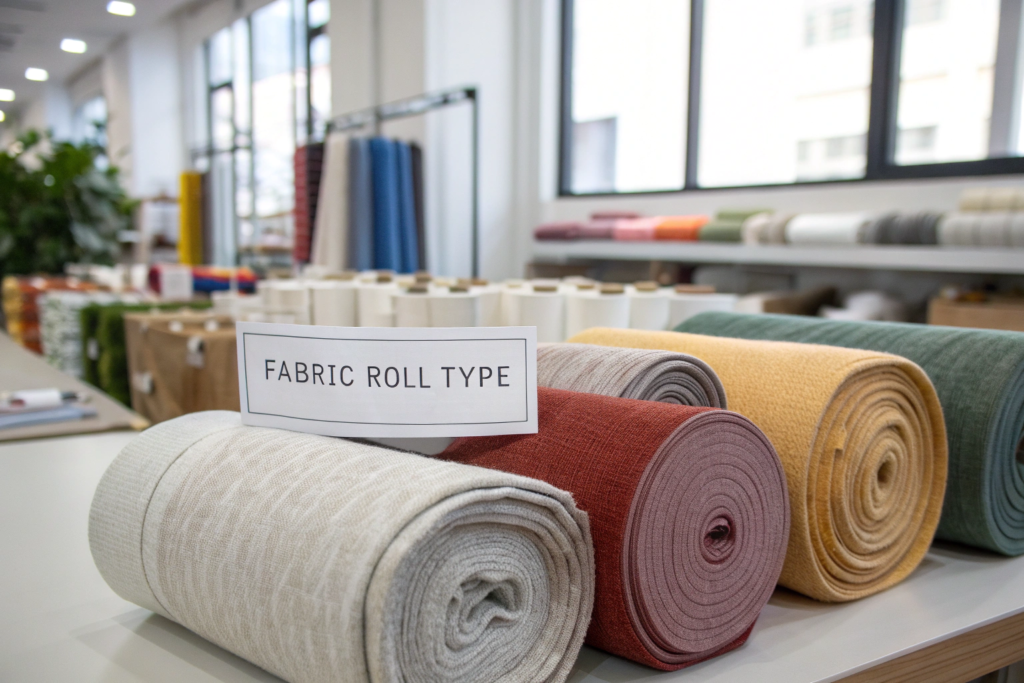
Today, many Chinese mills offer sampling quantities of 10-50 meters for development, with production minimums ranging from 500 to 3,000 meters depending on fabric complexity. For runway collections that might only need 200-500 meters total, this works perfectly. The key is finding mills that have structured their operations to handle smaller orders efficiently, not just those who reluctantly accept them.
How can you negotiate lower minimums without paying exorbitant prices?
Negotiation starts with understanding cost structure. Minimums exist because setting up a weaving or dyeing line has fixed costs—cleaning machines, mixing dyes, programming equipment. These costs are the same whether you produce 500 meters or 5,000 meters. To lower minimums, you need to address these fixed costs somehow.
One approach is accepting standard colors or bases rather than fully custom developments. If you choose a color we already have in stock, minimums drop significantly because we're not mixing custom dye baths. Another approach is sharing production slots. We sometimes combine multiple small orders for different clients into one production run, allocating costs proportionally. This requires flexibility on timing but can dramatically reduce minimums.
For a Berlin-based designer in 2023, we structured an order for 300 meters of custom-coated organic cotton by scheduling it alongside a larger order for a different client using the same base fabric. The designer paid a small premium for the scheduling coordination but got her minimum order quantities for custom fabric from China custom color at a fraction of normal setup costs. Creativity in logistics often solves MOQ problems as effectively as creativity in design.
What stock service options exist for designers needing small quantities?
This is where our business model has evolved significantly. We now maintain inventory of over 30,000 seasonal designs specifically to serve designers and small brands who can't meet custom production minimums. These are fabrics we've developed based on trend forecasting, available for immediate sampling and small-batch cutting.
The advantage of stock service is speed and flexibility. A designer can order 50 meters of several different fabrics, see what works, and reorder in quantities as low as 200 meters. Colors are consistent because they come from continuous production runs. And because we hold inventory, there's no waiting for production slots.
For a Los Angeles-based streetwear brand launching their first collection in 2022, this stock service was essential. They needed eight different fabrics in quantities ranging from 150 to 400 meters. Custom development for eight fabrics would have been prohibitively expensive and slow. Instead, they selected from our inventory, received fabrics within two weeks, and launched on schedule. Their collection sold out, and they're now ordering custom developments for their second season. The stock fabric sourcing for fashion designers in China stock service bridged them from startup to established brand.
How do you manage quality control for small-batch runway productions?
Quality expectations for runway are brutal. A flaw that might be acceptable in mass-market ready-to-wear is catastrophic when editors photograph garments in extreme close-up. This means quality control processes must be more rigorous for small runway batches than for large commercial orders. Understanding how to achieve this without breaking your budget is crucial.
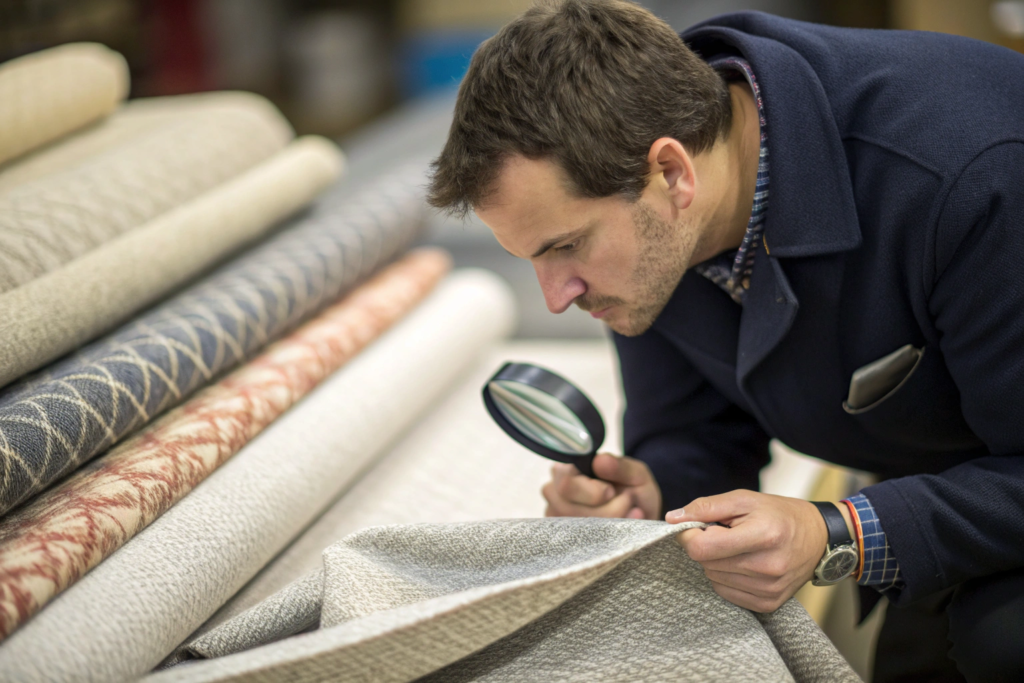
The foundation is working with suppliers who have in-house quality control, not those who rely on third-party inspectors after production. At Shanghai Fumao, our CNAS-accredited lab tests every production batch for color fastness, shrinkage, strength, and appearance. For runway clients, we often add extra inspections—examining every meter for any defect, not just sampling statistically. This costs more but ensures the fabric reaching your atelier is perfect.
What specific quality tests matter most for high-fashion applications?
Standard commercial testing covers basics like color fastness to washing and crocking. For runway, you need more. Ask about light fastness—how quickly will colors fade under show lighting or in photographs? Ask about dimensional stability—will the fabric stretch or shrink during garment construction? Ask about selvage quality—will edges cause issues in cutting?
For a Milan-based designer creating a collection with extensive beading and embroidery, we conducted additional tests on fabric strength after embellishment. The embroidery process involved thousands of needle penetrations per square inch, and weaker fabrics would tear. Our lab simulated the embroidery process on samples, identifying a base fabric that would withstand the treatment. The collection showed without a single fabric failure, and the quality control standards for runway fashion fabrics designer credits that testing with saving her show.
We also recommend clients request "cutting trials" before full production. We'll send 10-20 meters of fabric for the designer's sample room to test in actual garment construction. This reveals issues that laboratory testing might miss—how the fabric drapes, how it responds to pressing, how it behaves on the bias. The feedback from these trials often leads to adjustments before final production, preventing runway disasters.
How do you handle quality issues when they arise?
Problems happen. The question is how your supplier responds. A good supplier will own the issue, investigate thoroughly, and make it right without blaming you or external factors.
In 2021, a London designer received her production fabric and discovered subtle shading differences between rolls—barely visible to untrained eyes but unacceptable for her color-blocked designs. We flew to London, examined the fabric together, confirmed the issue, and reproduced the entire order in three weeks, air-shipping at our expense. The collection showed on time with perfect color matching.
This response cost us significantly in the short term but cemented a relationship that's now generated hundreds of thousands in ongoing orders. The handling quality disputes with Chinese fabric suppliers designer tells everyone about that experience. She trusted us because we responded with action, not excuses. For runway clients especially, this kind of partnership matters more than price.
Conclusion
Sourcing fabric for high-fashion runway collections from China isn't just possible—it's increasingly strategic. The combination of innovation capability, sampling speed, customization flexibility, and evolving minimum order structures makes Chinese mills viable partners for designers at every level. The key is knowing what to look for, what questions to ask, and how to build relationships based on mutual respect and clear expectations.
At Shanghai Fumao, we've spent over 20 years developing exactly these capabilities. Our R&D team thrives on creative challenges. Our sampling speeds rival any mill in the world. Our confidentiality practices protect designer investments. And our quality control ensures runway-ready results every time. We've helped emerging designers launch careers and established houses refresh collections, always with the same commitment to excellence.
If you're a designer or brand ready to explore what's possible with Chinese manufacturing, I invite you to contact our Business Director, Elaine. She understands the high-fashion world and can guide you through our capabilities, answer your questions about minimums and confidentiality, and help you determine if we're the right partner for your vision. Reach Elaine at [elaine@fumaoclothing.com]() to start a conversation about your next collection. Let's create something extraordinary together.