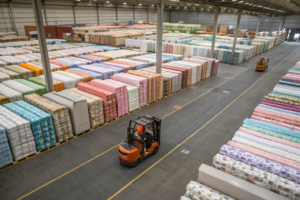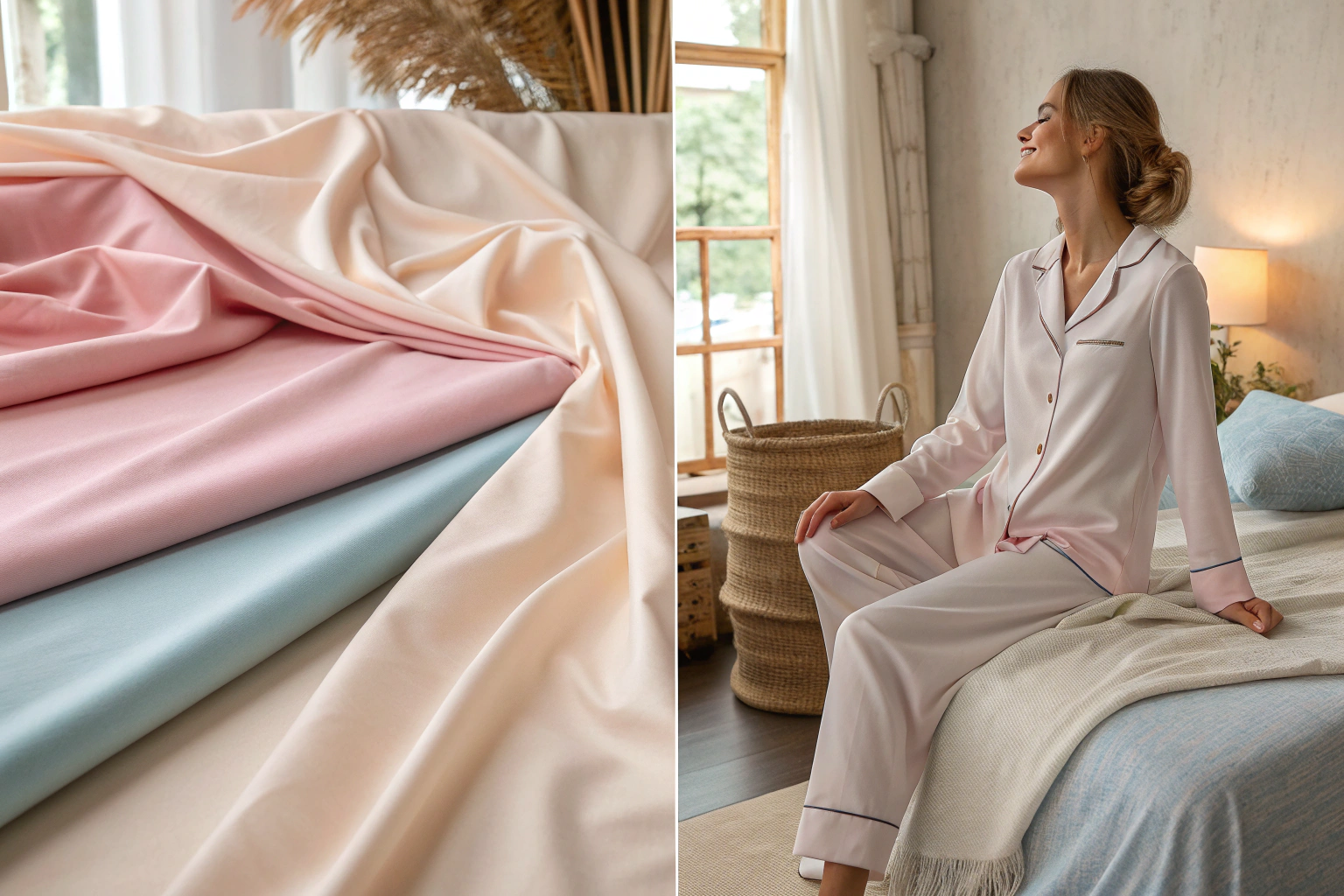
Let me be straight with you: sourcing fabric for sleepwear and loungewear feels straightforward until you're three months into production and your "soft" bamboo jersey starts pilling after the first wash, or your silk shipment gets held up because the customs declaration doesn't match the fiber content. I've watched too many promising sleepwear brands crash against these rocks. Since 2003, right here in Keqiao, I've helped hundreds of clients—from NYC startups to European lingerie houses—navigate this exact maze. The truth? Getting it right isn't about finding the cheapest supplier. It's about understanding the unique personality of skin-contact fabrics.
Here's what most buyers get wrong: they treat sleepwear fabric like any other textile. But sleepwear and loungewear live in a completely different universe. These fabrics touch your customer's skin for 8+ hours every night. They go through the washer and dryer weekly. They need to feel invisible against the body while surviving real life. When you're sourcing from China, you're not just buying material—you're betting on how that fabric will perform in someone's intimate bedtime routine, night after night. And that bet gets complicated fast when you're 7,000 miles away from your supplier.
I remember a Canadian loungewear founder who called me in tears back in 2019. She'd found "incredible" bamboo fabric on Alibaba at 30% below market rate. Six months later, her Instagram was flooded with complaints about fabric stretching out after two wears. Returns hit 22%. Her beautiful brand almost died because she didn't understand that bamboo viscose processing varies wildly between mills. That's the kind of heartbreak I'm here to help you avoid.
What Are the Best Fabric Types for Custom Sleepwear and Loungewear?
The fiber you choose isn't just a line item on your spec sheet—it's the entire personality of your garment. When I sit down with clients in our showroom, this is where we spend 80% of our time. Because fiber choice dictates everything: price point, production timeline, washing instructions, and most importantly, how your customer feels when they slide into bed after a terrible day.
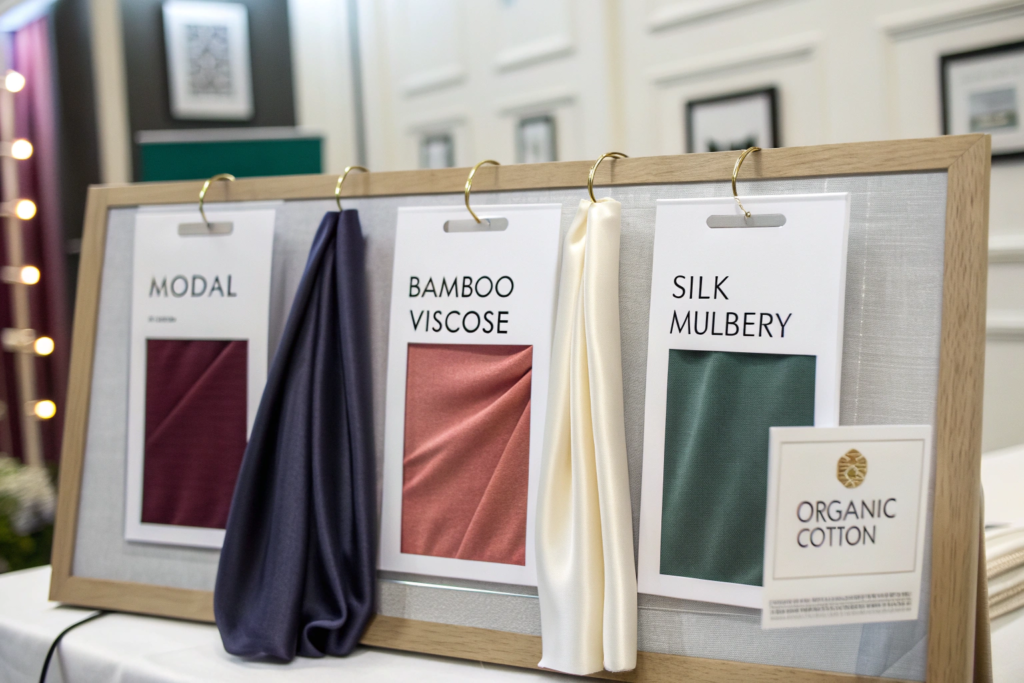
Why should I choose modal or TENCEL™ for my sleepwear collection?
Let's talk about modal and TENCEL™ Lyocell first, because honestly, they're my secret weapon for clients who want luxury without silk's maintenance headaches. These are semi-synthetic fibers made from beech wood or eucalyptus pulp. The closed-loop production process used for TENCEL™ is genuinely more sustainable, but what matters for your customers is the feel: modal is stupidly soft. Like "I didn't know fabric could feel like this" soft.
Here's what the sales sheets won't tell you: modal has incredible moisture management. It absorbs 50% more water than cotton but dries faster, which means your customers stay comfortable through night sweats or hot flashes. We supply a major US sleepwear brand that switched their entire best-selling pajama line from cotton to a modal-spandex blend in 2022. Their return rate for "too hot" complaints dropped from 8% to under 2%.
But you need to be careful. There's a difference between standard modal and premium options like Lenzing Modal or TENCEL™. Standard modal can be inconsistent. We ran a comparison test in our CNAS lab last year between three different modal suppliers. The shrinkage ranged from 3% to 8% after five washes. That's the difference between a garment that fits perfectly and one that's now a crop top. When we work with clients, we always recommend specifying Lenzing fibers by name in your tech pack and requesting the mill's certificate of origin. It adds maybe 5% to your material cost but eliminates the gamble.
Is bamboo viscose really as eco-friendly and soft as everyone claims?
Bamboo fabric has become the darling of the sleepwear world, and for good reason—when it's done right, it's incredibly soft, naturally antibacterial, and thermoregulating. The bamboo we produce for European clients often tests at a 3 on the anti-bacterial scale, which means it naturally resists odor-causing bacteria better than cotton. Perfect for loungewear that might get worn three days in a row (we've all been there).
But here's the thing nobody tells you: "bamboo fabric" is a marketing term, not a fiber type. Almost all bamboo fabric is actually bamboo viscose or bamboo lyocell. The difference matters enormously. Bamboo viscose uses a chemical-intensive process that can be environmentally problematic if the mill cuts corners. Bamboo lyocell uses a closed-loop system that's genuinely greener. Both can be incredibly soft, but bamboo lyocell typically holds its shape better.
I had a Danish client in 2023 who was adamant about "organic bamboo." The problem? "Organic bamboo" doesn't really exist as a certification for the finished fabric because the viscose process changes the chemistry. We spent two weeks educating them on the difference between bamboo fiber certification for the raw material versus finished fabric standards. We ended up developing a custom bamboo lyocell blend with 5% spandex that passed their Oeko-Tex Class 1 requirements for baby sleepwear. They launched last spring and sold out in six weeks. The lesson? Dig deeper than the marketing claims.
What about real silk vs. silk alternatives for luxury sleepwear?
Silk is the queen of sleepwear fabrics, and nothing else quite matches its drape, temperature regulation, and that unmistakable luxurious sheen. But silk is also demanding—for you as a buyer and for your customers. When we produce silk sleepwear for high-end clients, we're typically working with mulberry silk in 19mm to 22mm weights. Lighter than 16mm is too delicate for sleepwear that needs to survive washing; heavier than 25mm starts to feel more like bedding than clothing.
The real decision point with silk is whether to go with 100% silk or a silk blend. Pure silk, especially in charmeuse weave, gives you that iconic slipperiness and sheen. But it requires careful washing—cold water, mild detergent, no dryer—and many customers ignore those instructions. I've seen $300 silk camisoles destroyed in one regular wash cycle.
Silk blends with modal or cotton offer a middle path. They retain some of silk's beautiful drape but add durability and easier care. For a New York-based lingerie designer last year, we developed a custom 60% silk, 40% modal blend specifically for their washable silk collection. The fabric tested to survive 30 machine washes in our lab with minimal color change and no significant shrinkage. They positioned it as "everyday luxury" and doubled their repeat customer rate. The key was finding the right balance between fiber properties and practical performance, which took three sampling rounds to perfect.
How Do I Balance Fabric Quality and Cost When Sourcing from China?
Money conversations with suppliers make everyone uncomfortable. You don't want to seem cheap; I don't want to lose a good client by quoting too high. But here's the reality: sleepwear fabric pricing in China ranges from around $3 per yard for basic cotton jersey to $25+ per yard for premium silk charmeuse. The spread is enormous, and the cheapest option is almost never the best value when you factor in returns, customer satisfaction, and brand reputation.

What's a realistic price range for quality sleepwear fabrics from Chinese mills?
Let me give you real numbers from our current price book, updated March 2024. For cotton sleepwear, expect to pay $3.50 to $6.50 per yard for quality combed cotton jersey or french terry. The lower end gets you basic 30s combed cotton; the higher end includes organic certifications or specialty finishes like anti-bacterial treatments.
For modal and TENCEL™, you're looking at $4.50 to $8.00 per yard. The premium here comes from branded fibers (Lenzing carries a cost) and from finer yarn counts—finer yarns mean softer fabric but more production time.
Bamboo viscose runs $4.00 to $7.00 per yard. If someone quotes you under $3.50 for bamboo, run. They're either using recycled scraps, cutting the fiber content, or skipping essential processing steps. We tested a "bargain" bamboo last year that turned out to be 60% polyester. It felt fine initially but pilled like crazy and didn't breathe at all.
Silk is its own world. Basic 16mm mulberry silk starts around $12-15 per yard. Premium 22mm silk with certified dyes and perfect grading runs $18-25 per yard. And silk prices fluctuate wildly with the cocoon harvest—we saw prices jump 20% in 2023 after a poor silkworm season in parts of China.
(Here's an insider tip: these prices assume you're ordering at least 500-1000 yards per color. Small-batch pricing can be 30-50% higher, which is why we encourage clients to limit color counts when starting out.)
How can I verify fabric quality without traveling to China?
You can't be on a plane to Keqiao every time you need to check a production run. I get it. But you also can't afford to trust blindly. The solution is a verification system that doesn't require you to be here physically.
First, always request pre-production samples, but don't just feel them. Wash them. Our standard protocol for sleepwear clients includes sending three identical 1-meter samples. We ask them to wash one in cold water and hang dry, one in warm water and machine dry, and keep one unwashed as a control. Then compare them. Look for shrinkage, color change, surface pilling, and distortion. This simple test reveals more than any certificate can.
Second, use third-party inspections strategically. For bulk production, we always recommend a mid-production inspection and a final random inspection. Companies like SGS or QIMA can send inspectors to our factory unannounced. They check against your quality standards—fabric weight, color consistency, defect rates—and send you a report with photos within 24 hours. It costs a few hundred dollars but has saved countless clients from accepting substandard goods.
Third, leverage video technology. We do regular virtual walkthroughs for clients during production. Last month, I spent an hour on video with a Melbourne-based sleepwear designer walking through their entire production run—from the fabric on the cutting table to the finished garments being packed. She spotted a minor shading issue between two rolls that our QC team had missed. We fixed it immediately, and 2,000 units shipped perfectly. You can't be here, but you can be present.
What payment terms protect both me and the Chinese supplier?
Payment terms cause more anxiety than almost anything else in sourcing. You're worried about sending a deposit and never seeing fabric. I'm worried about producing thousands of yards and never seeing final payment. The key is finding terms that balance risk for both sides.
Standard industry practice for first-time clients is 30-50% deposit to start production, with the balance due before shipment or against copy of documents. This protects me because I have material costs covered, and protects you because you don't pay in full until the fabric exists. For established relationships, we often move to more flexible terms—sometimes letters of credit, occasionally net 30 for trusted partners.
The important thing is clarity. Every payment term, every deadline, every penalty for delay should be in your contract. I learned this the hard way in 2018 with a client who insisted on verbal agreements. When their fabric was delayed because of a dye house problem (our fault, we owned it), they claimed we'd promised a penalty of 5% per day. We hadn't. The argument damaged our relationship permanently. Now everything is written, signed, and scanned.
For US buyers specifically, be aware that [tariff classifications can affect payment timing](https://www.trade.gov/ textiles-and-apparel). If your fabric might be subject to Section 301 tariffs, we need to document the HTS code correctly upfront. Getting this wrong can mean your fabric sits in customs for weeks while you pay demurrage charges. We've helped clients navigate this by providing detailed commercial invoices with correct classification codes before shipment.
When Should I Start Sourcing to Hit My Sleepwear Launch Deadlines?
Timing is everything in fashion, and sleepwear is no exception. You need fabric in hand with enough time for cutting, sewing, sampling, photography, and marketing before your launch date. Miss that window and your beautiful summer sleepwear collection arrives in September, destined for the clearance rack. Understanding China's production calendar isn't optional—it's survival.
How do Chinese holidays affect sleepwear fabric production?
Let me give you the calendar that every smart buyer marks in red. Chinese New Year shuts down everything for 3-4 weeks—factories, dye houses, shipping offices. The actual dates change yearly, but the impact is constant. Production stops completely. If your fabric isn't finished before CNY, it won't move until after. We had a UK client in January 2023 who needed 5,000 yards of bamboo jersey for a Mother's Day launch. They'd assumed we could produce during the holiday. We couldn't. They missed their launch completely and sat on inventory for six months.
Golden Week in early October is another 7-day shutdown, though some factories work overtime before and after to catch up. May Day holidays add another week of disruption. Smart buyers plan their production around these breaks. For CNY, we recommend having all fabric finished at least two weeks before the holiday starts. For Golden Week, plan to have orders placed by mid-September to lock in production slots.
The flip side is that savvy timing can work in your favor. June-July and November-December are slower periods in Chinese textile manufacturing. Factories have capacity. We've offered faster turnaround and sometimes better pricing during these months because we want to keep our lines running. A German sleepwear startup came to us in November 2022 needing fabric in six weeks for a spring capsule. Normally that's tight. But because it was our slow season, we shifted resources and delivered in five. They launched on schedule and sold out.
What's a realistic timeline from fabric order to delivery?
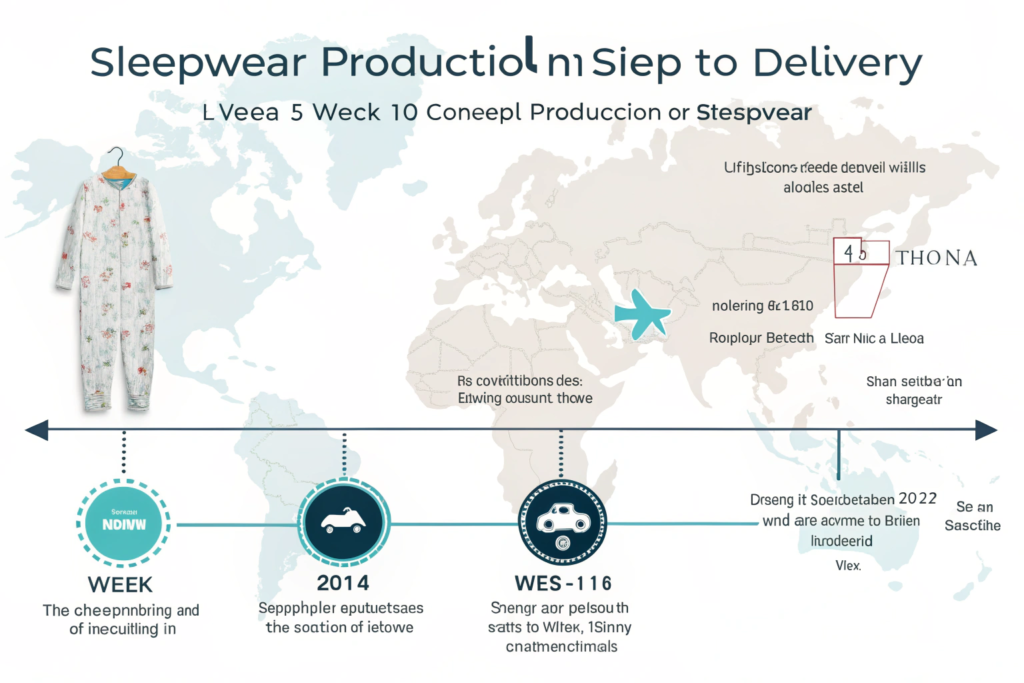
Here's the honest timeline for sleepwear fabric, assuming everything goes right. Week 1-2: sampling and lab dips. We develop your strike-off, you approve color and hand feel. Week 3-4: yarn ordering and preparation. If we need custom-dyed yarn, this stage extends. Week 5-8: bulk weaving or knitting production. Week 9: finishing—dyeing, compacting, sanforizing, whatever your fabric needs. Week 10: final inspection and packing. Week 11-14: shipping to US or Europe by sea. Air freight cuts shipping to 1-2 weeks but multiplies your cost by 5-10x.
Total: 14-16 weeks from order to your warehouse for a first order. Repeats can be faster—8-10 weeks—because the development work is done.
But here's what I tell every client: add a buffer. Something always goes wrong. The dye house might need an extra run to match your color perfectly. A typhoon might close Shanghai port for three days. The ship might get stuck in congestion at Long Beach. Building in 2-3 weeks of cushion separates successful brands from stressed-out ones.
We worked with a Swedish sleepwear brand in 2023 that built a perfect timeline: order placed February 1, production scheduled for March, ship April, arrive May, launch June. Then their lab dip came back slightly too bright. They rejected it. Second lab dip took another week. Suddenly they were a week behind and staring at Golden Week in May. Because they'd built buffer, we adjusted, ran production through the holiday prep period, and still made their June launch. That buffer saved their season.
How Do I Navigate Testing and Certifications for Sleepwear Fabrics?
Certifications feel like paperwork until the moment they're not. Until your shipment gets held at customs because your "organic cotton" doesn't have the right documentation. Until a competitor reports you for false advertising claims. Until a customer has an allergic reaction and your liability insurance asks for your testing records. Then certifications become your best friend. Sleepwear, especially, faces scrutiny because it's next-to-skin.
Which certifications actually matter for US and European sleepwear markets?
Let's cut through the alphabet soup. For the US market, flammability testing is mandatory for sleepwear. The Consumer Product Safety Commission requires all sleepwear for sizes 9 months to 14 years to be either flame-resistant or snug-fitting. This isn't optional. Your fabric must pass 16 CFR 1615/1616, which measures flame spread time. We test every batch of children's sleepwear fabric in our CNAS lab and provide the documentation. Skip this and you're not just risking returns—you're risking lawsuits.
For Europe, Oeko-Tex Standard 100 is the gold standard. Class 1 certification is for baby products and requires the strictest limits on chemicals and heavy metals. Class 2 is for next-to-skin products like adult sleepwear. Most of our European clients require Oeko-Tex certification before placing orders. We provide it with every shipment.
Organic certifications add another layer. GOTS (Global Organic Textile Standard) is the most recognized worldwide. It covers both the organic fiber content and the processing standards. USDA Organic labels require additional documentation. The key insight? Certifications cascade. You can't just certify the finished fabric—you need certified yarn, from certified fiber, processed in certified facilities. We maintain separate production lines for GOTS orders to prevent contamination from conventional materials.
A US client came to us in 2022 wanting "organic cotton" sleepwear for a major retailer. They assumed we could just say it was organic. We spent two months helping them understand the documentation chain, source certified organic yarn, and schedule production in our GOTS-approved block. The result? They landed the retail placement and paid a 30% premium for certified fabric that retailed at double their previous line's price point.
How do I test for pilling, shrinkage, and colorfastness before bulk production?
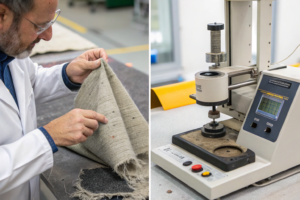
Lab tests tell you what fabric will do over time. Without them, you're guessing. And guessing gets expensive.
For sleepwear, the critical tests are:
Washing shrinkage (AATCC 135 or ISO 6330). We cut measured fabric samples, wash them according to your care label instructions, and remeasure. Shrinkage under 3% in both directions is good for most sleepwear. Above 5% causes problems with fit and sizing.
Colorfastness to washing (AATCC 61 or ISO 105-C06). This measures dye loss. We grade from 1-5, with 4 or higher being acceptable for most markets. We had a French client reject an entire batch because the colorfastness grade was 3.5. It looked fine initially but would have faded noticeably after 5-10 washes.
Colorfastness to perspiration (AATCC 15 or ISO 105-E04). This matters for sleepwear because people sweat at night. Acidic and alkaline perspiration tests simulate different body chemistries. We run both.
Pilling resistance (ASTM D3512 or ISO 12945). Fabrics are tumbled in a box with abrasive material, then graded from 1-5. Grade 3 or higher is acceptable for most markets. Grade 2 means your $80 pajamas will look like they're five years old after three wears.
For a major Australian sleepwear launch in 2023, we ran all these tests plus additional checks for tensile strength and seam slippage. The client paid about $800 for the full test battery. When their first production run sold out in three weeks and reorders came in, that $800 looked like the best investment they'd made.
The reality of sourcing sleepwear fabric from China is this: it's complicated, it requires patience, and it demands attention to detail that most people don't expect when they're dreaming of soft, beautiful pajamas. But it's also incredibly rewarding. Every time I see one of our fabrics in a beautiful lookbook, or get a photo from a client of their best-selling sleepwear collection, I remember why I've spent 20 years in this industry.
The fabrics we produce touch people in their most vulnerable, restful moments. They comfort after hard days. They celebrate lazy Sunday mornings. They accompany travelers to strange hotel rooms, providing a piece of home. Getting that right—getting the softness perfect, the durability tested, the certifications verified—is work worth doing.
Conclusion
Sourcing fabric for custom sleepwear and loungewear isn't just about finding a supplier who can ship you rolls of material. It's about finding a partner who understands that skin-contact fabrics live a different life than any other textile. The right fabric feels invisible, performs consistently, and makes your customers feel cared for every single night. The wrong fabric generates returns, destroys brand trust, and turns your dream collection into a clearance rack nightmare.
You've learned the key decisions: choosing between modal's reliability, bamboo's softness, and silk's luxury. You understand the realistic pricing landscape and how to verify quality without boarding a plane. You know the calendar traps to avoid and the certifications that protect your brand. Now comes the hard part: actually doing it.
At Shanghai Fumao, we've been helping sleepwear brands navigate this journey for over two decades. Our 40-person team includes specialists who do nothing but develop next-to-skin fabrics. Our CNAS-accredited lab tests every batch against international standards. Our production lines run everything from budget-friendly cotton basics to luxury silk collections bound for Paris department stores. We understand the US market's flammability requirements, Europe's chemical restrictions, and Australia's unique biosecurity rules.
If you're ready to stop worrying about fabric sourcing and start building your sleepwear collection, I invite you to reach out. Contact our Business Director, Elaine, directly at elaine@fumaoclothing.com. Tell her about your vision, your timeline, your target price points, and your biggest concerns. She'll connect you with the right technical person on our team. We'll send you samples, talk through options, and help you develop something beautiful that actually works in the real world.
Because at the end of the day, great sleepwear isn't about fabric—it's about how that fabric makes people feel. And we've spent 20 years learning how to make people feel amazing.