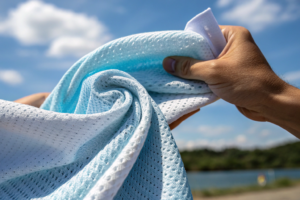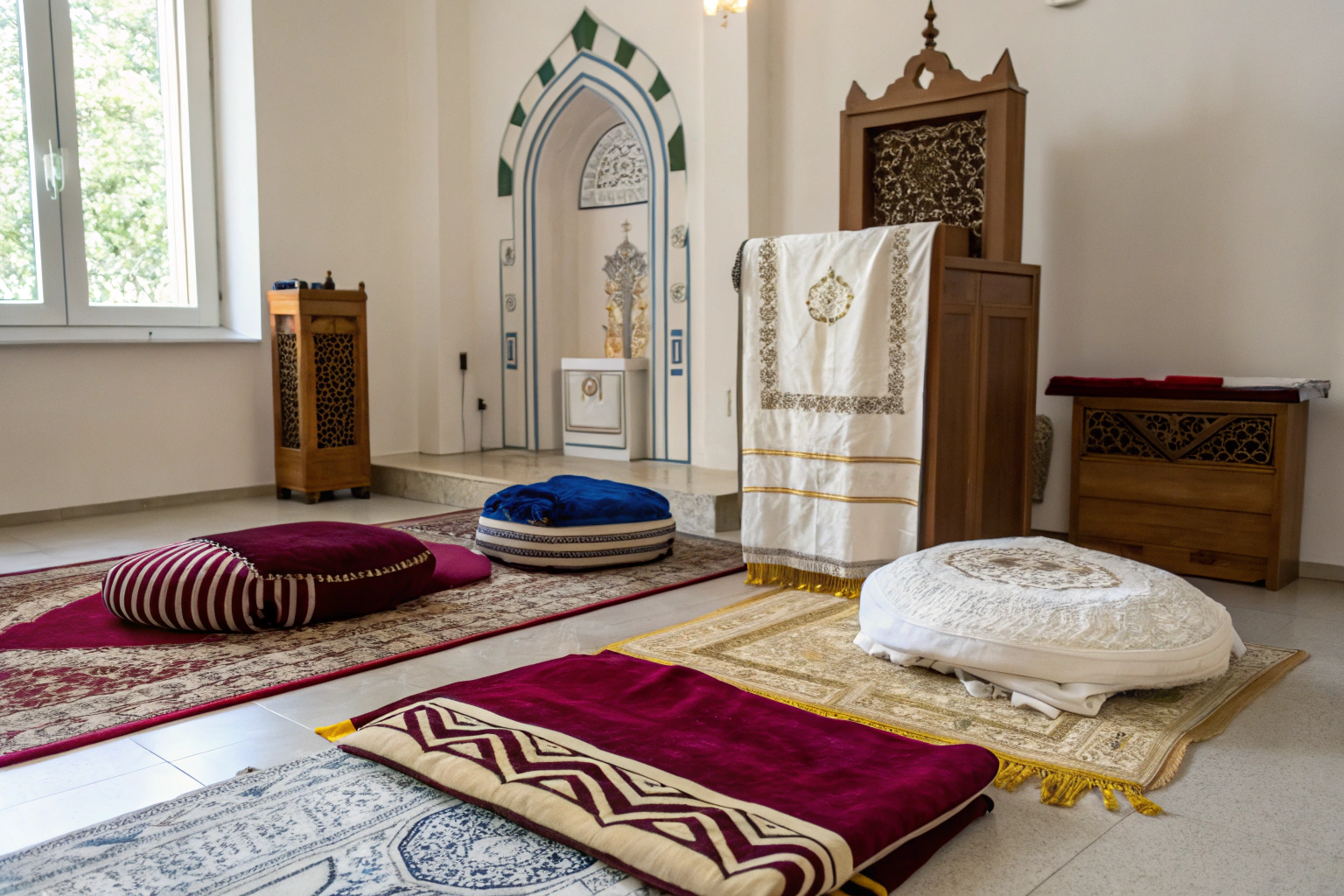
I never expected to become an expert in religious textiles. But here I am, 20 years in, and I have helped supply fabric for mosques in Saudi Arabia, synagogues in New York, temples in Thailand, and churches in Italy. It started in 2015. A Muslim businessman from Dubai contacted me. He needed 10,000 prayer mats. Not just any mats. They had to be soft, durable, washable, and with a specific design: the mihrab arch pointing to Mecca. I thought, "How hard can it be?" I learned quickly. Religious textiles are different. They carry meaning. They are used in sacred spaces. They must meet not just physical standards, but spiritual and cultural expectations. Get it wrong, and you are not just losing an order. You are disrespecting someone's faith.
So, how do you source fabric for custom prayer mats and religious textiles? The answer is not just about fiber and weave. It is about understanding the user's needs, the cultural symbols, the cleaning rituals, and the emotional connection people have with these items. In this guide, I will share what we have learned over the years supplying religious textiles to clients worldwide. From the softest velvet for Islamic prayer mats to the purest wool for Jewish tallits, and from durable polyester for mass-produced mats to luxury silk for altar cloths. If you are sourcing for a religious community, this is for you.
What are the specific requirements for Islamic prayer mats (Sajjadah)?
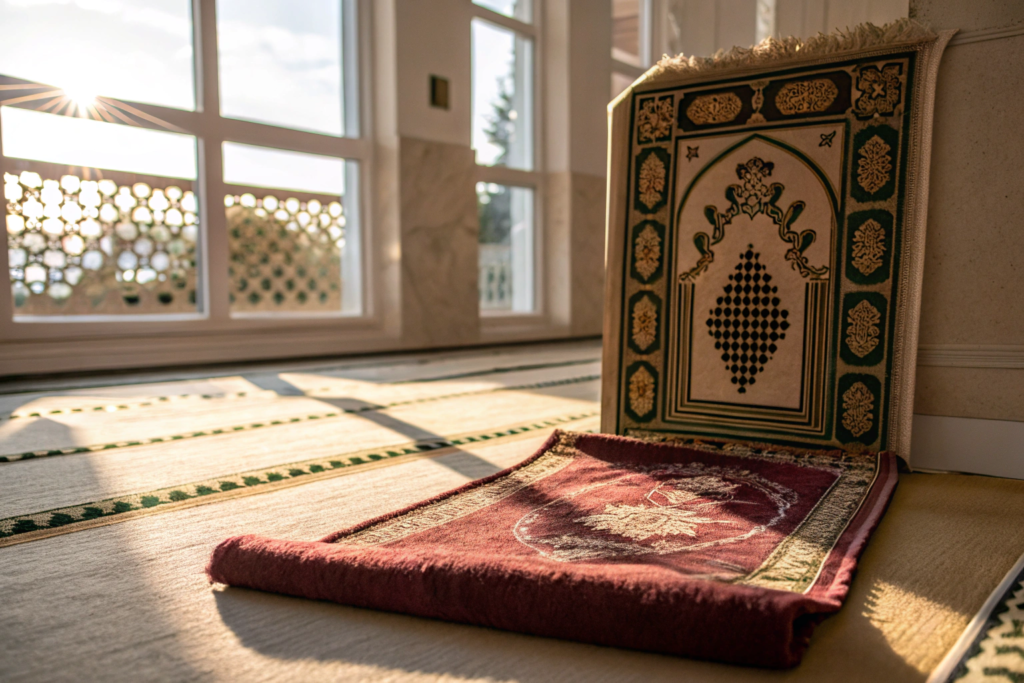
Islamic prayer mats, also called Sajjadah or Janamaz, are used daily by millions. They provide a clean surface for prayer. They also have symbolic elements. The most important is the mihrab design: an arch shape at the top that points towards Mecca. When the worshipper prays, their head touches the ground at the arch. So the fabric must be soft enough for forehead contact, but durable enough for daily use.
Fabric type: The best prayer mats use a plush pile fabric. Velvet is traditional. But real silk velvet is expensive and hard to clean. So today, most are made from polyester velvet or plush. Polyester is durable, stain-resistant, and holds color well. It also does not absorb moisture, so sweat does not damage it. We supply a lot of polyester velvet to Middle Eastern clients. It feels soft, looks rich, and lasts for years.
Pile height and density: The pile should be dense, around 2 to 4 mm high. Too short, and it feels hard on the forehead. Too long, and it traps dirt. We test pile density with a compression test. A good mat should spring back after kneeling.
Backing: Prayer mats need a non-slip backing. Otherwise, they slide on smooth floors during prostration. We use a non-woven fabric backing with latex dots. The dots grip the floor. A client from Egypt had problems with slipping. We added more latex dots. Problem solved.
Washability: Muslims wash before prayer (wudu). But the mat itself also needs cleaning. It must withstand regular washing. Polyester velvet can be machine washed cold and air dried. Cotton velvet shrinks. So for washability, polyester wins.
Design and color: Traditional colors are green, burgundy, navy, and gold. Green is especially significant in Islam. Designs often include geometric patterns, arabesques, and the mihrab arch. We can weave these designs using jacquard looms. For simpler designs, we print. But woven lasts longer.
Directionality: The mat must have a clear top (mihrab end). When cutting, we must maintain orientation. We mark the fabric clearly. A Saudi client once rejected a batch because the mihrab was on the wrong end. Now we double-check.
What about mass-produced vs premium prayer mats?
There is a market for both. Mass-produced mats for mosques or charity are often simple, durable, and affordable. We use high-volume polyester velvet, printed designs, and standard backing. MOQs are lower, prices are competitive. A Turkish charity ordered 50,000 mats for refugees. We delivered in 8 weeks.
Premium mats are different. Handmade, silk, with gold thread embroidery. These are for home use or gifts. We work with embroidery partners in India and Pakistan for these. The fabric is often silk or high-density viscose velvet. The backing is soft cotton. These mats cost 10 times more. A client from Kuwait orders these for high-end gifts. He sells them for $200 each.
What fabrics are used for Jewish religious textiles (Tallit, Torah covers)?
Jewish religious textiles have their own traditions. The most well-known is the Tallit, the prayer shawl. But there are also Torah covers, bimah covers, and challah covers. Each has fabric requirements.
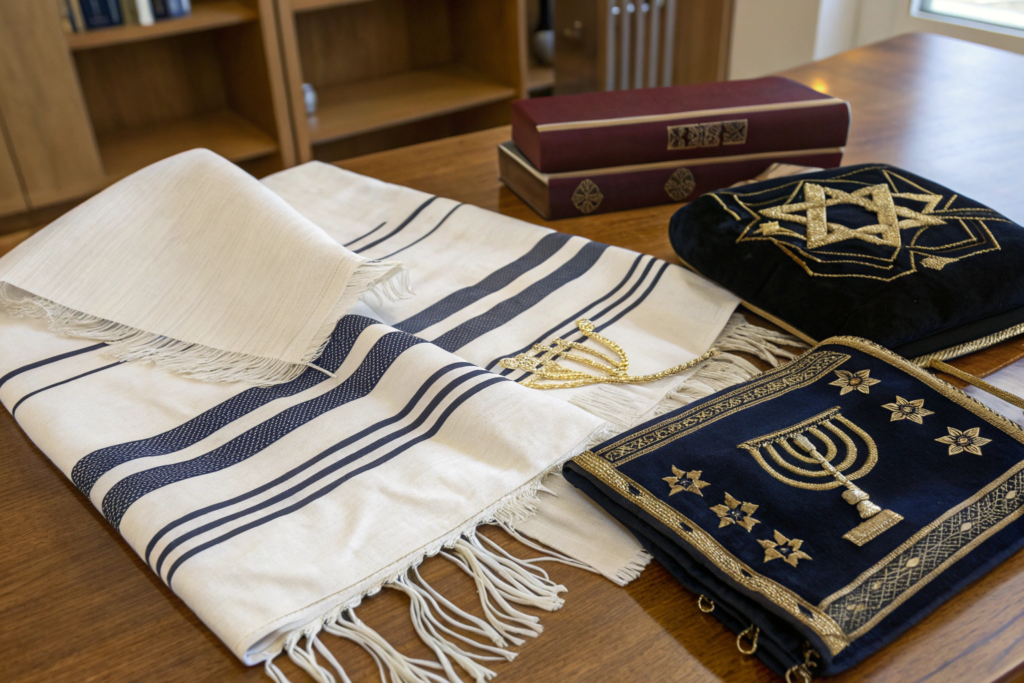
Tallit (prayer shawl): Traditionally, the Tallit is made from wool or linen. But the Torah prohibits mixing wool and linen (shatnez). So it is either 100% wool or 100% linen. Most are wool. The wool should be soft and warm, but not heavy. We use merino wool or fine lambswool. The fabric is usually woven, not too thick. The classic design is white with black or blue stripes. The stripes are woven in, not printed. Fringes (tzitzit) are attached at the corners. For a US client, we developed a machine-washable wool tallit fabric. It was a hit.
Linen tallit: Some prefer linen, especially in warm climates. Linen is breathable and crisp. But it wrinkles. We supply high-count linen for these. A client from Israel buys linen tallit fabric from us. He says it is popular for summer weddings.
Torah covers: These are often made from velvet, brocade, or silk. They are richly decorated with embroidery, metallic threads, and Jewish symbols. The fabric must be heavy enough to drape well but not too heavy for the Torah scroll. We use polyester velvet for affordability, or silk velvet for premium. Embroidery is done by hand or machine. A New York synagogue ordered Torah covers in burgundy velvet with gold embroidery. We coordinated with an embroidery house in Brooklyn. They came out beautiful.
Bimah covers and curtains: Similar to Torah covers. Often matching sets. We supply fabrics and coordinate production.
Challah covers: These are smaller, often made from embroidered satin or cotton. They are used on Shabbat. We have standard designs or custom.
What about kosher certification for textiles?
This is a niche but important point. Some strictly observant Jews require that textiles not come from certain sources. For example, wool from sheep that were not properly treated might be problematic. We had a client from London who asked for "Cholov Yisroel" of fabrics. That is a dairy kosher term, not applicable. We learned they actually meant they needed a rabbinical certification that the wool was not from mixed sources. We worked with a certifier. It added cost and time, but we delivered. Now we ask all Jewish clients: "Do you need any special certification?" Better to ask than assume.
What fabrics are used in Buddhist and Hindu religious textiles?
Asian religious textiles are a world of color and symbolism. We have supplied fabric for temples in Thailand, Sri Lanka, India, and Nepal. The requirements vary, but some patterns emerge.
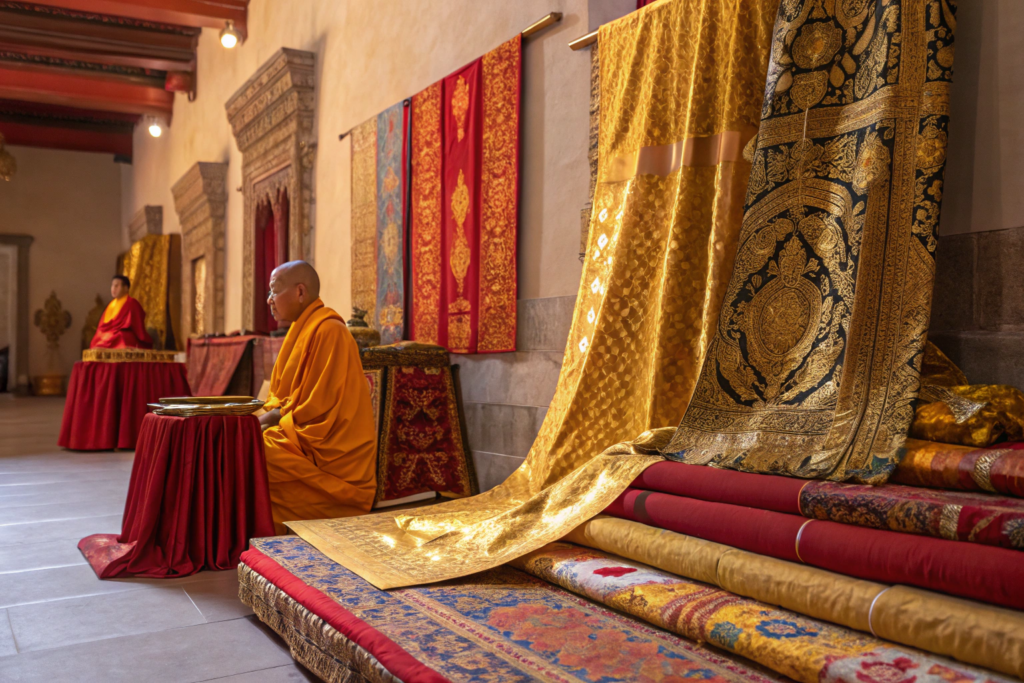
Buddhist robes (Kasaya): Monks wear robes in specific colors: saffron, orange, brown, or maroon depending on tradition. The fabric should be simple, natural, and durable. Cotton is common. In warmer countries, lightweight cotton. In colder, thicker cotton or wool blends. The robes are often unstitched or simply stitched. We supply plain weave cotton in traditional colors to a monastery in Sri Lanka. They sew the robes themselves.
Buddhist altar cloths: These are often rich brocades in gold, red, and yellow. They cover altars and shrines. The fabric should be luxurious but not too heavy. Polyester brocade is common because it is affordable and bright. Silk brocade is for special occasions. We have a Thai client who orders thousands of meters of gold brocade every year for temple festivals.
Hindu deity clothing: In Hindu temples, statues of deities are dressed in fabric. This is a big deal. The fabrics are often silk, with rich embroidery and zari (metallic thread). Colors are bright: red, green, gold, pink. The fabric must be changed regularly, so there is constant demand. We supply Bangalore silk and Kanchipuram-style silks to a temple in Chennai. They order every month.
Hindu prayer cloths and banners: For festivals, large banners and prayer cloths are used. These can be printed cotton or polyester. Bright colors, religious imagery. We do digital printing for these. A client from Mumbai orders 5,000 meters of printed polyester before each festival season.
Meditation cushions (Zafu): These are used in Zen meditation. They are round cushions filled with kapok or buckwheat. The cover fabric should be durable, natural, and often dark colors. Cotton duck or canvas works well. We supply a US meditation center with organic cotton canvas. They sew the cushions themselves.
What about natural vs synthetic for these applications?
There is a debate. Some traditions prefer natural fibers (cotton, silk) for purity. Others accept synthetics for durability and cost. We guide clients based on their community's expectations. For a high-end Hindu temple, silk is expected. For a community center, polyester brocade is fine. We always offer both options.
How do you incorporate religious symbols and designs correctly?
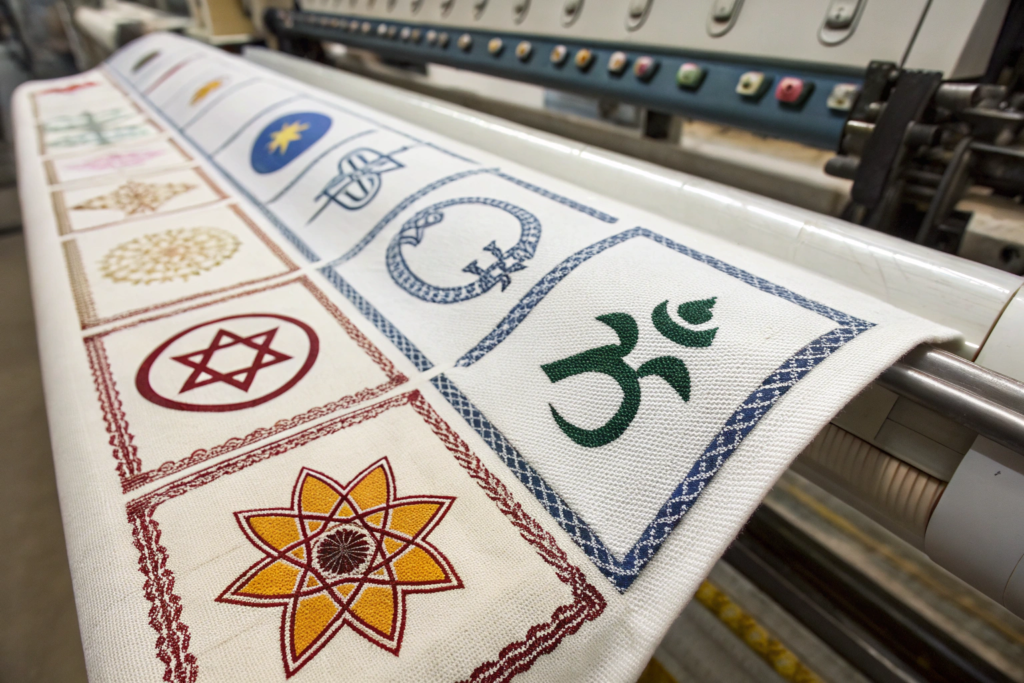
This is the most sensitive part. Religious symbols are not just decoration. They carry meaning. Getting them wrong can be offensive. We have learned to be very careful.
Symbol accuracy: The symbol must be exactly right. For example, the Islamic mihrab arch has specific proportions. The Star of David must have two overlapping triangles. The Buddhist lotus has a specific number of petals. We work from approved artwork. We do not guess. A client from Pakistan sent us a drawing of the Kaaba for a prayer mat design. We had to adjust the proportions three times before it was approved.
Direction and orientation: Many religious textiles have a direction. Prayer mats have a top (mihrab). Torah covers have a front. We mark everything. We communicate clearly to cutters. In 2018, we made a batch of prayer mats where the design was printed upside down on half the rolls. The client rejected them. We now have a "direction check" in our QC process.
Color symbolism: Colors have meaning. Green in Islam. Blue in Judaism (for some items). Saffron in Buddhism. Red in Hinduism (for weddings). We ask clients about color significance before finalizing. A client from India wanted red for a deity cloth. We asked: "Which red?" There are many. They sent a sample.
Avoiding offensive combinations: Some combinations are taboo. For example, using a sacred symbol on a floor covering might be disrespectful in some cultures. We ask about intended use. A client once wanted to print Buddhist sutras on a meditation cushion. We advised against it because sitting on sacred text is inappropriate. They agreed and changed the design.
Approval process: We always send digital proofs and physical samples for approval. We ask the client to have their religious authority review it. This adds time but prevents disasters. A synagogue in Chicago approved a sample, then the rabbi saw it and said the Hebrew lettering was stylized incorrectly. We fixed it. No harm done.
What about copyright and community ownership?
Some designs are traditional and community-owned. They are not copyrighted by an individual. But copying them without permission from the community can be problematic. We advise clients to ensure they have the right to use a design. For a specific mosque's carpet, the design was owned by the mosque. They provided it to us. That was fine. For a generic design, it is usually safe. But we do not copy another supplier's custom design.
How do you ensure fabric durability for frequent use and cleaning?
Religious textiles get used a lot. Prayer mats are knelt on daily. Torah covers are handled weekly. Altar cloths are changed and washed frequently. So durability matters.
Abrasion resistance: For prayer mats, we test with the Martindale method. We aim for 50,000 cycles minimum. For heavy use (mosques), we recommend 100,000 cycles. Polyester velvet usually passes. Cotton velvet might fail earlier.
Pilling resistance: Pilling is when little balls of fiber form on the surface. It looks bad. We test with a pilling tester. Anti-pill polyester is best. Some velvets are treated to reduce pilling.
Colorfastness to light: Religious textiles often sit in places with light. Sunlight through windows. Temple lights. We test with a xenon arc lamp (simulated sunlight). We require a rating of 4 or 5 (1 to 5 scale). For a synagogue in Florida (lots of sun), we used solution-dyed polyester. It does not fade.
Colorfastness to washing: Many religious textiles are washed or cleaned. We test to AATCC 61. For a client in Saudi Arabia, we tested at 60°C wash. The fabric passed. For silk items, we recommend dry cleaning only. We label accordingly.
Tear strength: If the fabric gets a small tear, will it rip? We test with the Elmendorf tear test. For heavy-use items, we require high tear strength. For a Torah cover, the fabric must hold the weight of the scroll without tearing at the seams.
Flammability: Some religious settings use candles. We offer flame-retardant treatments for altar cloths and curtains. A church in Italy required this. We treated the fabric with a non-toxic FR finish. It passed their test.
What about special treatments for religious textiles?
Sometimes we add treatments:
- Anti-microbial: For items that get handled a lot, to reduce germs.
- Stain-resistant: For prayer mats that might get dirt or water.
- Mothproof: For wool tallits stored for long periods.
- Wrinkle-resistant: For travel-friendly prayer mats.
We discuss these with clients. Not everyone needs them. But for some, they are essential.
What are the sourcing and MOQ considerations for religious textiles?
Religious textile sourcing often involves custom designs, specific colors, and sometimes smaller quantities. Here is how we handle it.
Custom designs: If you need a custom woven design (jacquard), MOQs are higher. Usually 3,000 to 5,000 meters per design. This covers the cost of creating the jacquard cards or electronic files. For printed designs, MOQs can be lower. Digital printing: 500 meters per design. Screen printing: 1,500 meters per color.
Stock designs: We have a library of common religious designs. Islamic geometric patterns, Jewish motifs, Buddhist symbols. If you choose from stock, MOQ can be as low as 100 meters per color. A mosque in Malaysia ordered 200 meters of a stock geometric design. They got it in 3 weeks.
Custom colors: If you need a specific color, we can dye to match. MOQ for dyeing is usually 1,000 meters per color. For smaller quantities, we might have stock colors close to what you need.
Embroidery: If you need embroidered designs, we work with embroidery partners. MOQ depends on design complexity. Simple embroidery: 100 pieces. Complex: 500 pieces. We coordinate.
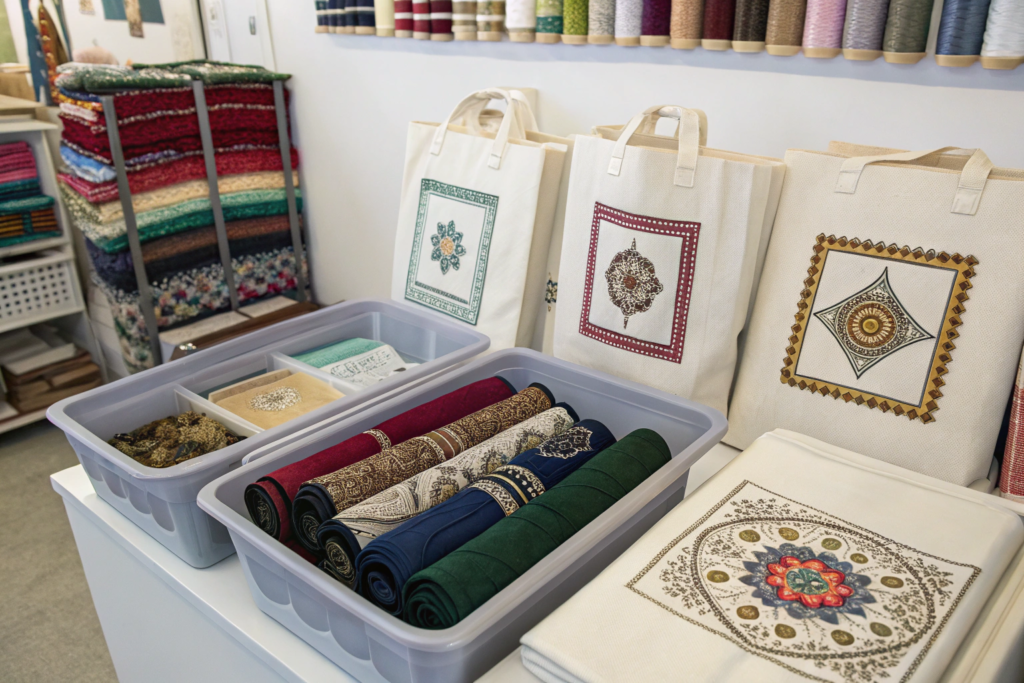
Combined orders: If you need multiple items (prayer mats, bags, covers), we can combine them in one container. This saves shipping costs. A client from the UK ordered prayer mats, storage bags, and wall hangings. We consolidated everything.
How do we handle religious holidays and peak seasons?
Religious textiles have peak seasons. Ramadan for Islamic items. High Holy Days for Jewish items. Diwali for Hindu items. Christmas for Christian items. We advise clients to order early. For Ramadan, orders should be placed by January for March delivery. For Christmas, by August. A client from the US waited until October for Christmas altar cloths. We could not make it in time. They learned. Now they order in July.
Conclusion
Sourcing fabric for religious textiles is not like sourcing for fashion. It is deeper. It carries meaning. It serves communities. It must be right. At Shanghai Fumao, we have spent years learning the nuances. We know that a prayer mat is not just a piece of fabric. It is a place of connection. A tallit is not just a shawl. It is a garment of prayer. An altar cloth is not just decoration. It is part of worship.
We have the experience. We have the mills. We have the partners for embroidery and finishing. We have worked with clients from every major religion. We know the symbols, the colors, the directions, and the sensitivities. We ask questions. We listen. We deliver.
If you are sourcing for a religious community, a mosque, a synagogue, a temple, or a church, contact our Business Director, Elaine, directly. She has handled many religious textile projects and understands the care required. Email her at elaine@fumaoclothing.com. Tell her about your project, your community's needs, and your timeline. She will guide you through the process, from design to sample to production to shipping. And with our logistics support, we can handle customs and tariffs smoothly, whether you are in the US, Europe, or anywhere else. Because at Shanghai Fumao, we believe in serving all communities with respect and quality. Your sacred textiles deserve nothing less.