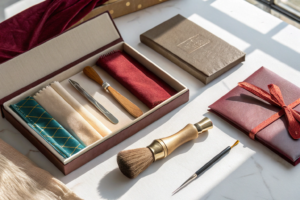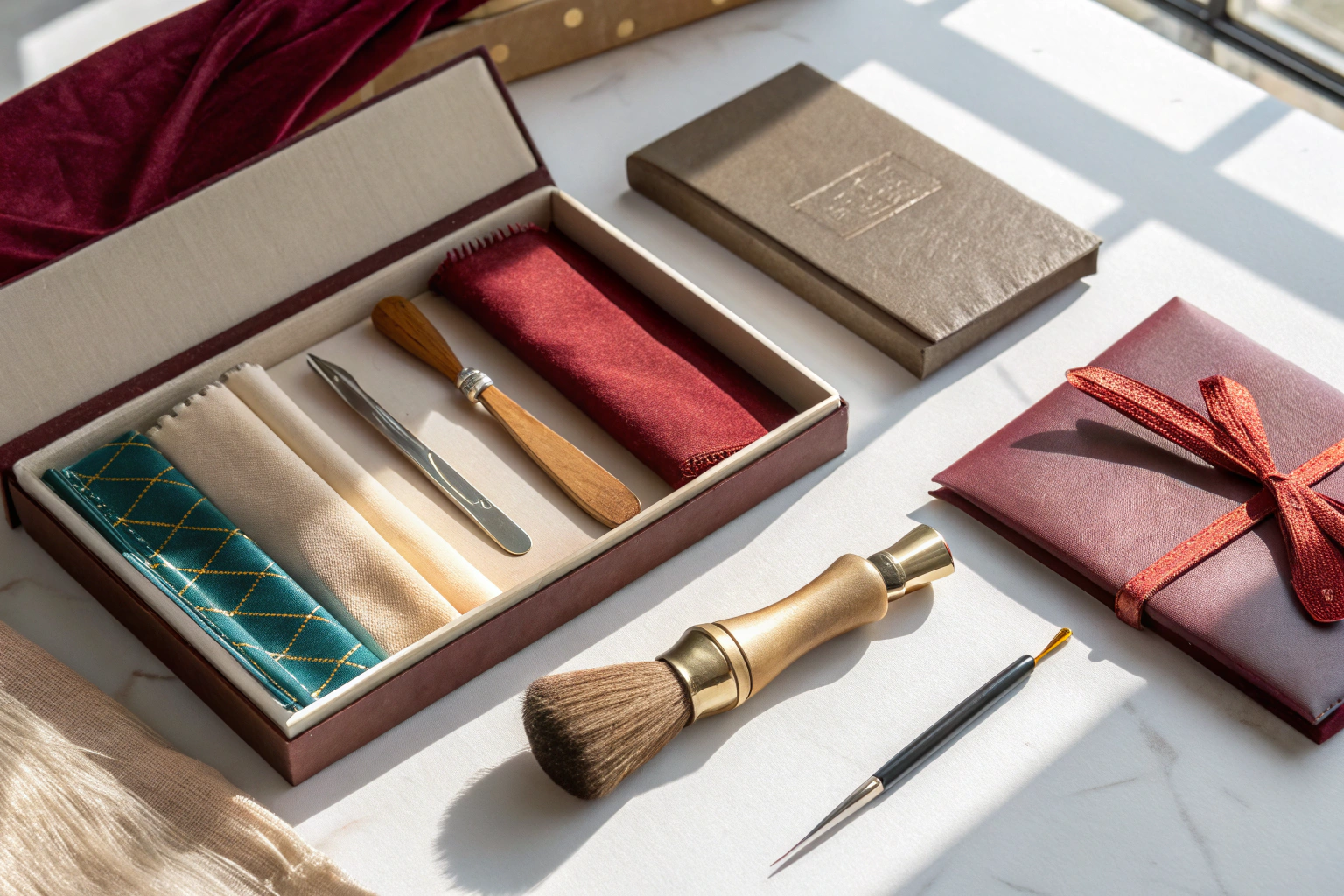
Last year, a luxury stationery brand from London reached out to me in a panic. They had designed a limited edition journal series—leather-like covers, foil stamped, with a ribbon marker. Their usual Italian leather supplier quoted them 18 weeks and a minimum order of 5,000 meters. They only needed 800 meters for their run. They were about to cancel the project. They asked me: "Can you make fabric look and feel like leather, but actually let us order a smaller batch?"
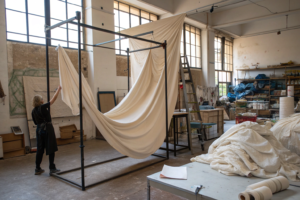
The answer was yes, but it required us to think completely differently about how we construct a "book cloth." For most fashion buyers, fabric is about drape and hand feel. For bookbinding, it's about rigidity, adhesion, and how well it takes foil stamping. It's a different ball game. At Shanghai Fumao, we've been supplying the packaging and bookbinding industry for about eight years now, quietly. We make the fabric for rigid boxes, presentation folders, and journal covers that end up in department stores like Harrods and Bloomingdale's.
Here's the thing: sourcing fabric for this sector isn't like buying shirting fabric. You can't just pick a color from a Pantone book and hope it works. You have to consider the paper backing, the stiffness of the weave, and the heat resistance of the dye. The fabric has to survive being wrapped around hard board, glued down, and then potentially stamped with hot foil at 120°C. If the fabric melts, bubbles, or the color changes, you've wasted thousands of units.
In this post, I'll walk you through exactly how we do it. I'll cover the technical specs you need to ask for, the common mistakes I see designers make, and how to actually get a small batch produced without breaking the bank. Whether you're a bookbinder, a packaging designer, or a brand owner looking for that perfect unboxing experience, this is for you.
What Technical Specs Actually Matter for Book Cloth?
When a fashion buyer asks me for fabric, they talk about GSM (grams per square meter) and thread count. When a bookbinder asks me for fabric, they talk about "peel strength" and "dimensional stability." It's a completely different vocabulary. If you get the specs wrong, your fabric will wrinkle when glued, or the foil stamping won't stick.
The most critical spec is the backcoating. For bookbinding, fabric is rarely used raw. We apply a thin layer of acrylic or starch-based coating to the back. This does two things: it stops the glue from bleeding through to the face of the fabric, and it locks the yarns in place so they don't shift when you cut and wrap the board.
Why is grain direction critical for book covers?
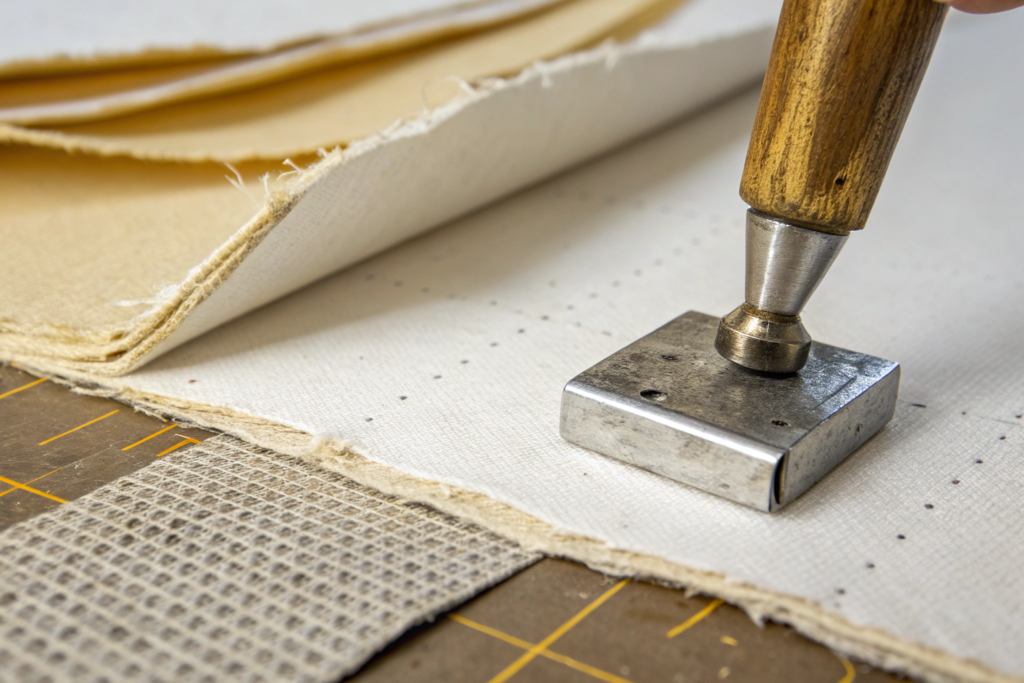
This is mistake number one I see from designers who are new to packaging. Fabric has a grain, just like paper. If you cut the fabric against the grain for a book cover, it won't wrap around the edges smoothly. It will "bridge" or bubble. I remember a client from New York in 2022 who sent us a pattern for a rigid gift box. They specified a beautiful heavy linen. We cut the first sample following their pattern, which had the grain running the short way around the box. When we wrapped it, the corners looked terrible—all puckered. We recut it, rotating the pattern 90 degrees to follow the grain direction, and it was perfect. We always test this in our sample room now before we cut bulk. For rigid box construction, the grain must run parallel to the spine or the longest fold. Check out this guide on fabric grain and its effect on bookbinding to understand why it's non-negotiable.
What is the right GSM for wrapping rigid boxes?
Too thin, and the board shows through. Too thick, and you can't fold it cleanly around the corners. For most rigid boxes (like iPhone boxes or high-end chocolate tins), we recommend a finished weight between 180 and 220 GSM. But here's the nuance: the fabric weight is only half the story. The backcoating adds weight and stiffness. A 150 GSM linen with a 50 GSM acrylic backcoating gives you 200 GSM finished weight. We recently supplied a French perfume house with a 190 GSM cotton sateen for their limited edition gift set. We had to adjust the backcoating formula because their standard water-based glue was too aggressive and was soaking through. We switched to a hotter, faster-drying acrylic coating. It solved the bleed-through issue instantly. For technical details on adhesion standards for bookbinding fabrics, it's worth looking at the TAPPI testing methods.
How Do You Source Small Batches Without High MOQs?
The luxury packaging world is brutal for minimum order quantities (MOQs). Most big fabric mills want 3,000 meters per color. But a bookbinder might only need 500 meters for a whole project. So how do you bridge that gap? You have to look for suppliers who specialize in "sampling runs" or who have a greige goods (grey fabric) stock that they can finish to order.
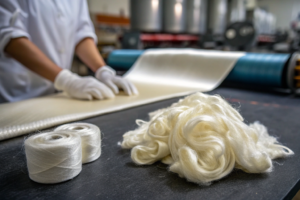
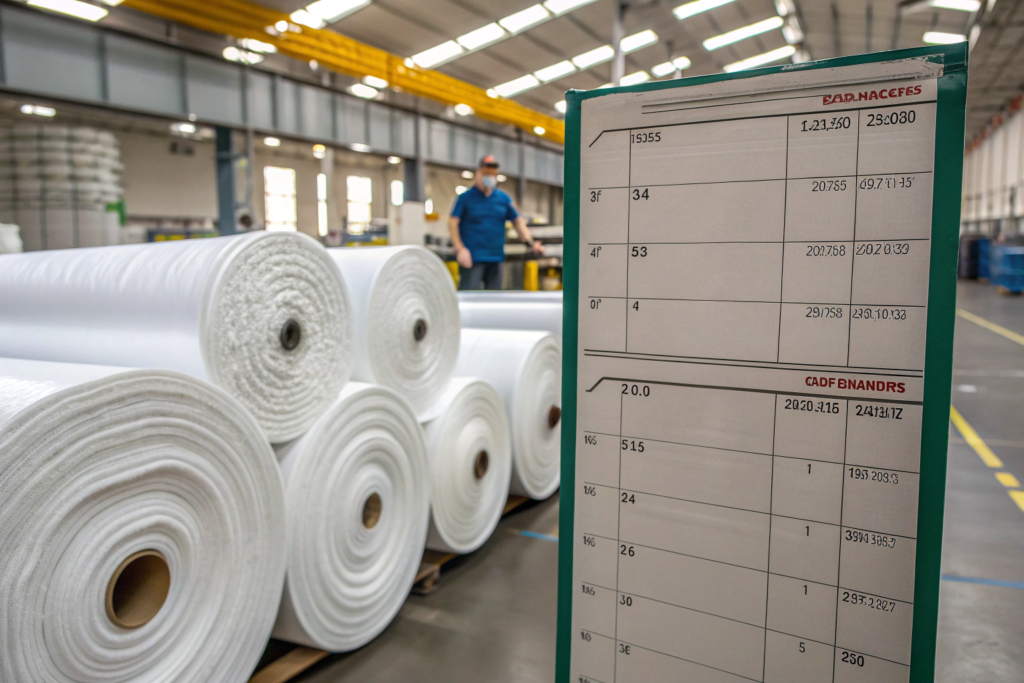
We built our business model around this pain point. We keep about 50,000 meters of undyed base fabrics—linens, cottons, and blends—in our warehouse. When a packaging client comes to us, we don't make the fabric from scratch. We take the greige goods and send them to our partner dyeing and coating houses. This cuts the lead time from 8 weeks to 3 weeks, and the MOQ from 3,000 meters to 600 meters.
Can you get custom colors for packaging runs under 1,000 meters?
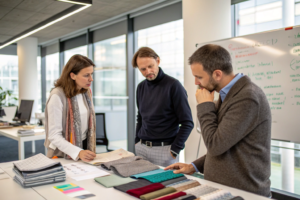
Yes, but you have to be smart about it. You can't ask for a specific Pantone color on 300 meters of fabric and expect the dyer to be happy. It's just not economical for them to mix a custom dye recipe for a tiny vat. Our solution is to offer "lab dip matching" but from a limited color palette. We have 48 stock colors always in process. If a client needs something bespoke, we ask them to choose from our "quick ship" color card. It has about 120 shades that we know the dye houses can reproduce perfectly because they've done them before. For a German publishing house last year, we matched a specific "oxblood" red for their 800-meter order. We charged a small lab dip fee ($150) to cover the cost of the sample dyeing, and we ran the batch with another client's larger order of black fabric to save on costs. It's called "co-loading" and it's how we keep prices fair. You can read more about small batch fabric dyeing strategies in industry publications.
What base fabrics work best for foil stamping and debossing?
If you plan to put foil on your packaging, do not pick a fabric with a loose weave or a heavy slub (textured yarn). The foil needs a relatively flat surface to transfer evenly. We tested a beautiful raw silk noil for a Japanese client. It looked amazing, but when we ran the hot foil stamping, the foil only touched the high points of the fibers, leaving the low spots uncovered. It looked like a bad print job. We switched to a fine cotton twill, which has a smooth, uniform surface. The foil adhered perfectly. For debossing (pressing a design in), you need a fabric with some "memory" or body. A flimsy viscose will just crush and stay crushed. A polyester-cotton blend with a stiff backcoating will hold the debossed shape. We have a specific article in our archive about choosing fabrics for hot foil stamping that goes into the science of heat transfer and fiber melt points.
What Are the Common Failures in Fabric-Covered Boxes?
I've seen beautiful, expensive projects fail because of three things: fraying, glue bleed, and UV fade. The client spends months designing the perfect box, and then three months later, the fabric is lifting at the corners or the color on the shelf display has turned orange. It's heartbreaking, but it's totally preventable with the right testing.
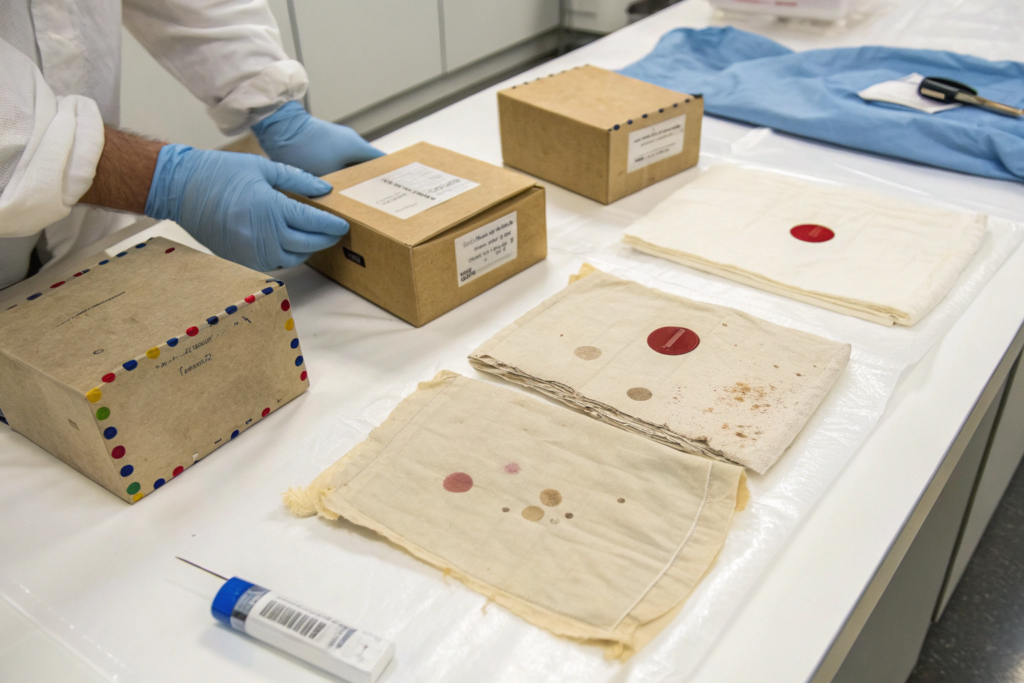
We test every new packaging fabric against a "worst-case scenario" checklist. We wrap samples and put them in our Xenon arc chamber (which simulates 2 years of sunlight in 2 weeks). We soak wrapped corners in water to see if the glue fails. We even use a rub tester to see if the fabric pills when handled repeatedly.
How do you prevent fraying on raw edges?
On a book cover, the raw edges of the fabric are folded over the board to the inside. That's fine. But on some rigid box designs, there is an exposed edge where two pieces of fabric meet, or a window cut-out. That's where fraying happens. To fix this, we use laser cutting instead of die-cutting for the smaller parts. The laser slightly melts and seals the edge of synthetic blends, preventing fraying. For 100% cotton, we apply a liquid edge sealant (basically a thin, flexible glue) along the cut lines before we cut. We learned this trick from a client who makes high-end game boards. Their cardboard game boards are wrapped in fabric, and they have to punch holes in the middle for pieces. They had a 15% reject rate due to fraying before they switched to our pre-sealed fabric. For natural fiber options, we often recommend a selvedge-edge finish, but for packaging, the sealant is the most reliable method.
Why does glue sometimes bleed through the next day?
This is a nightmare. The fabric looks perfect when it comes off the wrapping machine. You ship it to the client. 48 hours later, dark spots appear on the surface. That's the glue migrating through the fibers. It usually happens because the glue solvent is too aggressive for the fabric's backcoating, or because the fabric wasn't backcoated evenly. We had a case with a Swedish brand in 2023. They wanted an uncoated, "natural hand feel" linen for their chocolate boxes. We warned them, but they insisted. The first production run came back with glue stains on 30% of the units. We had to strip the boxes, re-cover them with a lightly coated linen, and eat the cost. Now, we have a strict policy: we won't ship packaging fabric without a backcoating unless the client signs a waiver. We also run a simple "glue test" before bulk production. We take a sample of the actual glue the box maker uses, apply it to the fabric, and let it sit for 72 hours under pressure. If it bleeds, we change the coating formula. For more on adhesive compatibility with textiles, the Adhesives and Sealants Council has good resources.
How Do Tariffs and Logistics Work for Packaging Materials?
Here's an advantage most people don't think about: fabric for bookbinding and packaging is often classified under different HS codes than apparel fabric. This can change your duty rates significantly. When you import "book cloth" or "technical coated fabrics," you aren't paying the same tariffs as you would for a polyester dress.
We help our US clients navigate this all the time. Because we are a full-service company, we handle the classification. We make sure the commercial invoice says "Coated Textile Fabric for Bookbinding" (HS Code 5901) rather than "Woven Fabric" (HS Code 52xx or 54xx). For our clients, this has meant the difference between a 12% duty and a 2.5% duty. It adds up fast on a 40-foot container.
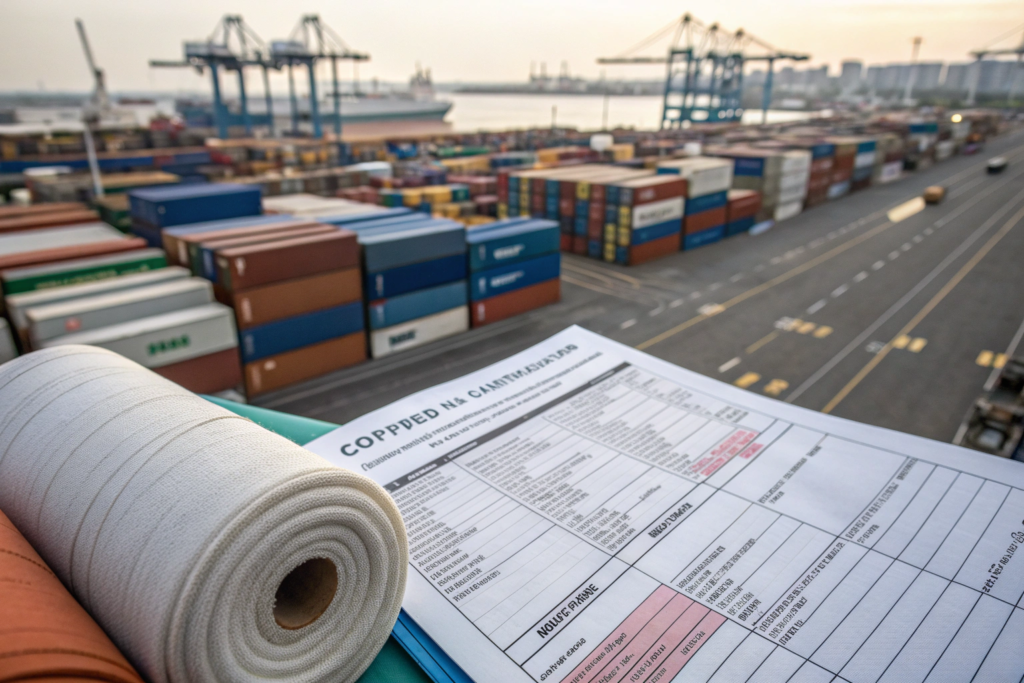
What HS code classification avoids US tariff hikes?
The US tariff war on Chinese goods hit a lot of apparel hard. But Chapter 59 (Impregnated, Coated, Covered or Laminated Textile Fabrics) was often treated differently, especially if the fabric is for technical or industrial use. Bookbinding fabric falls perfectly into this category because of that acrylic backcoating. We recently shipped 20,000 meters to a client in Chicago. Their freight forwarder initially classified it under apparel, which would have added a 25% Section 301 tariff. We caught it, provided the technical data sheet proving the coating was >10% of the weight, and re-filed under 5901. The client saved over $4,000 on that one container. It's a bit of paperwork, but it's worth it. You can check the US International Trade Commission's Harmonized Tariff Schedule to see the difference between 5901 and 5407.
How do you ship large format rolls without creasing?
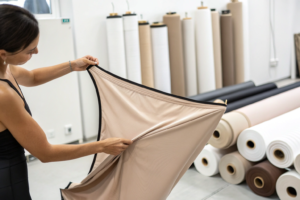
Packaging fabric is often wider than apparel fabric. Book cloth can be 60" or 64" wide to accommodate larger boards without seams. The problem is, if you fold or roll these wide fabrics incorrectly, you get creases that won't steam out. You can't iron a crease out of a stiff, backcoated fabric. It's permanent. We learned this the hard way with a client in Melbourne. We shipped the rolls tightly wound on small tubes to save freight costs. When they unrolled them, there were "pipe wrinkles" running the entire length. We had to air-freight a replacement at our expense. Now, we ship all packaging fabric on heavy-duty 6-inch cardboard tubes, and we use "roll suspension" boxes so the rolls don't touch the sides of the container during transit. It costs a little more, but it guarantees zero transit damage. For tips on proper textile roll packing for ocean freight, Freightos has some good basic guidelines.
Conclusion
Sourcing fabric for bookbinding and luxury packaging isn't just about finding a pretty cloth. It's about engineering a material that can survive the conversion process—the gluing, the cutting, the stamping, and the folding. It's about understanding grain direction, backcoating weights, and tariff classifications. It's a niche within a niche, but it's one we've been working in for a long time.
At Shanghai Fumao, we don't just ship you a roll of fabric. We ask you about your board thickness, your glue type, and your stamping temperature. We run samples through our own packaging simulation tests before we cut bulk. We've done it for diaries, for perfume boxes, for rigid gift sets, and for art books.
If you're working on a project—whether it's a small run of 500 hand-bound books or a mass production of 50,000 luxury boxes—and you need a partner who understands the technical side, reach out. We can help you pick the right base cloth, match the color, apply the correct backcoating, and ship it to your door with the right paperwork to save you money on duties.
Contact our Business Director, Elaine, directly. She handles our specialty packaging clients and can walk you through our stock fabric options and custom development process. Her email is elaine@fumaoclothing.com. Let's build something that feels as good as it looks.