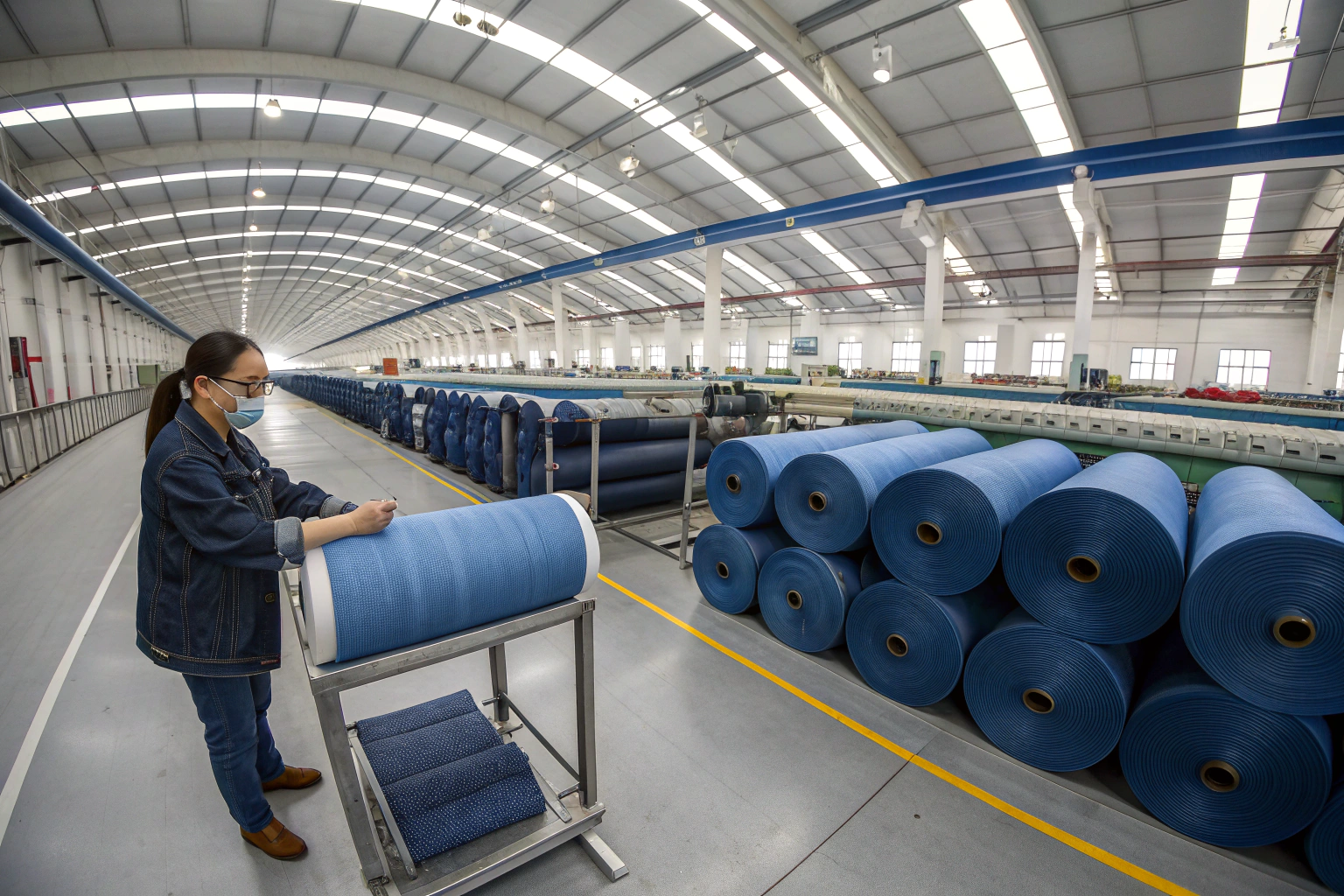
If you're launching a denim line or refreshing your collection, your fabric choice isn't just a material decision—it's the foundation of your brand's identity, comfort, and price point. And right now, chances are high that foundation, no matter where your garment is finally sewn, starts with fabric from China. Specifically, from a place like Keqiao, where I’ve been in the textile business for over 20 years. Every day, I see brands from Los Angeles to London navigate this sourcing journey. Some find a perfect partner and build a bestselling line; others get stuck with inconsistent quality, missed deadlines, and hidden costs that eat their margin. The difference isn't luck. It's knowing how to source strategically.
So, how do you successfully source denim fabric from China for your brand? The key is to move beyond treating it as a commodity purchase and approach it as a technical partnership. Success hinges on three pillars: clearly defining your product DNA (weight, stretch, wash effect), meticulously vetting suppliers for true manufacturing capability (not just trading), and mastering the logistics and compliance timeline. It’s about aligning your creative vision with industrial reality. For example, an Australian startup we worked with in Q3 2023 wanted a heavy, 14-oz non-stretch selvedge denim with a specific slub yarn character for a premium workwear line. By collaborating directly with our weaving factory on yarn sourcing and involving our wash lab early, we replicated a vintage Japanese denim sample at a 40% lower cost, delivering the first bulk roll within 7 weeks.
This guide will walk you through the entire process, from defining your specs to getting the fabric on your production line. We’ll decode denim jargon, show you how to identify a real factory from a middleman, and provide a realistic timeline that accounts for Chinese holidays and peak seasons. Let’s turn your denim vision into a tactile, profitable reality.
What Are the Key Denim Specifications You Must Define?
Before you contact a single supplier, you need to speak the language of denim. Walking into a sourcing conversation saying "I want blue jeans fabric" will immediately mark you as an amateur and open you up to being misled. Your specifications are your blueprint and your shield. They ensure you get what you pay for and allow for accurate comparison between suppliers. The core specs break down into four categories: composition and weight, construction and look, physical performance, and finish.
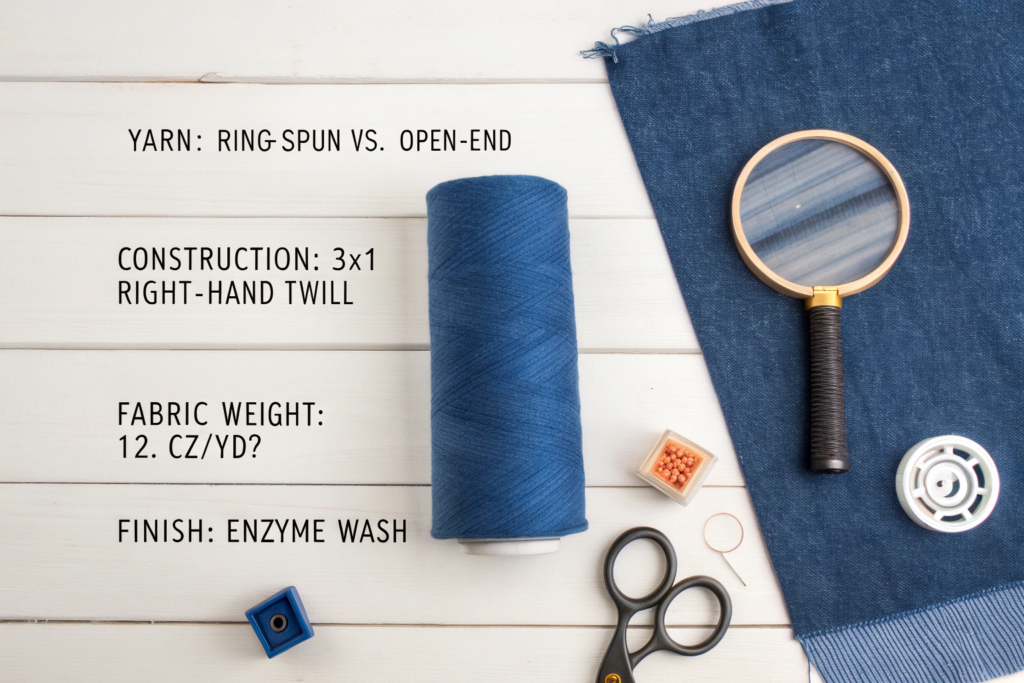
Think of it like building a house. The composition (e.g., 98% cotton, 2% spandex) is your foundation material. The weight (in ounces per square yard) is the thickness of your walls—9 oz. is light for summer shirts, 14 oz. is heavy for durable workwear. The construction (like a 3x1 right-hand twill) defines the fabric's diagonal rib pattern and hand feel. Finally, the finish (enzyme wash, sandblasting, whiskers) is the interior design that gives the final character. A US-based sustainable brand came to us last year asking for a "soft, eco-friendly denim." Through questions, we pinpointed their need to a 10-oz., Tencel™ and organic cotton blend denim in a broken twill construction, finished with a light enzyme wash for immediate softness. This precision allowed us to provide a perfect sample on the first try.
How Do You Choose Between Cotton, Stretch, and Eco-Friendly Blends?
This is your first and most critical choice. It dictates cost, comfort, performance, and your marketing story.
- 100% Cotton: The classic. It offers superior breathability, authentic vintage character, and develops unique fades over time. However, it has little recovery, can be stiff initially, and may shrink. It's ideal for selvedge, raw, and premium fashion denim where break-in and personalization are selling points.
- Cotton + Stretch (Spandex/Lycra): The modern workhorse. Adding 1-3% spandex provides essential comfort, shape retention, and mobility. It’s a must for skinny fits, athleisure-inspired denim, and markets prioritizing comfort. The challenge is ensuring the spandex quality is high to avoid bagging out or losing elasticity after washes. We always recommend testing for garment wash durability testing standards like AATCC 135.
- Eco-Friendly Blends: This is where the market is explosively growing. Options include:
- Organic Cotton: Grown without synthetic pesticides. Requires GOTS certification for verification.
- Recycled Cotton/Post-Consumer Waste: Reduces water and waste. Often blended with virgin cotton for strength.
- Tencel™/Modal: Adds a super-soft, drapey feel and moisture-wicking properties. Excellent for "luxe comfort" denim.
- Recycled Polyester (rPET): Often used in the stretch component, turning plastic bottles into performance.
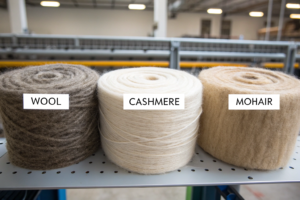
For a German streetwear label, we developed a blend of 70% recycled cotton and 30% Chinese-made Tencel lyocell fabric, which gave them a compelling "circular economy" story and a uniquely soft hand-feel that stood out at their trade show booth.
What Do Fabric Weight, Construction, and Finish Really Mean?
Let's translate the technical terms into on-jeans effects.
- Weight (oz/yd²):
- Light (5-9 oz.): Chambrays, denim shirts, summer dresses. Drapes easily.
- Medium (10-13 oz.): The sweet spot for most jeans. Balances durability and comfort.
- Heavy (14+ oz.): Selvedge, workwear, trucker jackets. Very durable but stiff; requires breaking in.
- Construction (Weave):
- Right-Hand Twill (RHT): The most common. Creates a familiar diagonal line from lower left to upper right. Durable and versatile.
- Left-Hand Twill (LHT): Softer hand-feel from the start. Used by many Japanese premium brands.
- Broken Twill: Developed to reduce leg twist. Has a unique zig-zag pattern. Often used in high-quality Western wear.
- Selvedge (Self-edged): Woven on old-style shuttle looms, creating a tight, finished edge (often with a colored "id" line) inside the outseam. It’s a mark of premium, small-batch production. Be wary of "fake" selvedge, which is simply a tape sewn on.
- Finish: This is the artistry. It can be done by your garment factory, but discussing it with your fabric supplier is crucial. A good supplier, like Shanghai Fumao, will have a partnered wash lab or know the fabric's wash potential. Common finishes include enzyme wash (for softness and minor fading), stone wash (for more abrasion), sandblasting (for localized high-wear looks), and laser etching (for precise, water-saving patterns).
How to Find and Vet a Reliable Chinese Denim Supplier?
The internet is flooded with suppliers. Alibaba, Google, trade shows—it's overwhelming. The biggest mistake is choosing based on price alone. The real cost is in delays, failed quality checks, and lost sales. Your goal isn't to find the cheapest seller; it's to find the most capable and transparent partner for your specific needs. A true factory will have in-depth knowledge of yarn sourcing, dyeing processes, and weaving parameters. A trader might offer a lower price but less control and transparency when problems arise.
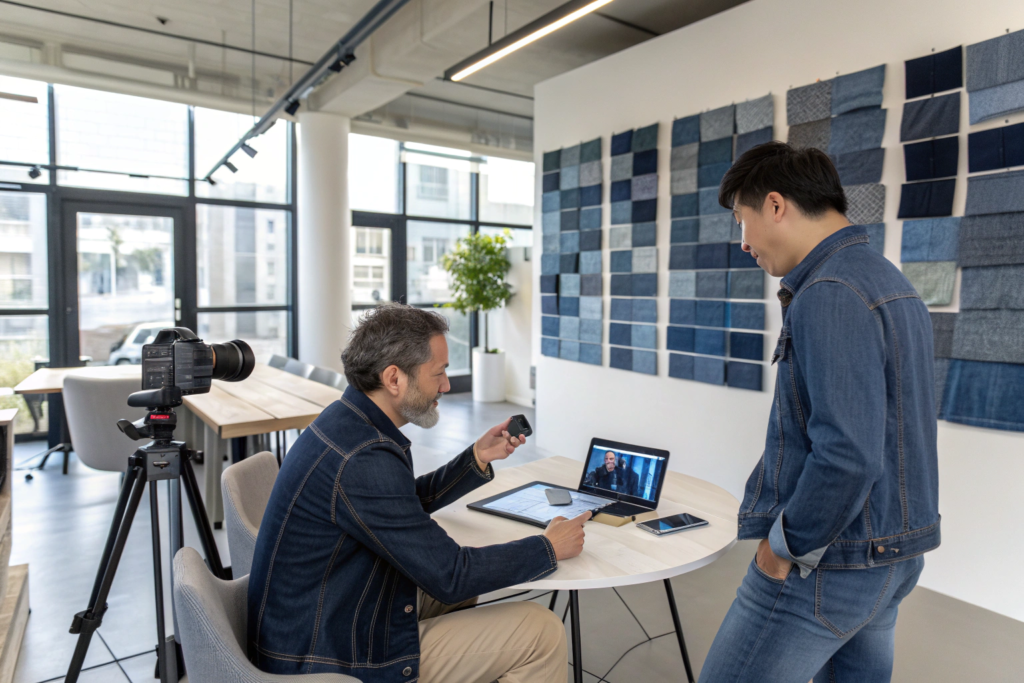
Start by filtering for manufacturers with clear evidence of production capability: videos of their looms, details of their dyeing vats, and photos of their lab. Then, initiate a technical conversation. Ask specific questions: "Can you produce a 12-oz. slub denim with a sulphur top/bottom dyeing process?" or "What is your shrinkage control standard for piece-dyed denim?" The depth and speed of their response will tell you more than any website. (Here's a tip from our side of the table: we respect buyers who ask smart, detailed questions—it shows they're serious.)
What's the Difference Between a Factory, a Trading Company, and a Sourcing Agent?
Understanding this landscape is crucial to managing expectations and cost.
- Factory (Manufacturer): They own the machinery (looms, dyeing ranges) and produce the fabric. Pros: Direct control over production, potentially lower cost, deep technical expertise. Cons: Often higher MOQs, may have less experience with international logistics/export documentation, English communication can be a barrier. They are ideal for established brands with larger, standard orders.
- Trading Company: They buy from factories and sell to you. Pros: Often have lower MOQs, aggregate products from multiple factories, provide smoother communication and export services. Cons: You pay a markup, less direct control over production, potential for opacity in the supply chain.
- Sourcing Agent: They act as your local representative, finding and managing factories on your behalf for a fee. Pros: Handles everything from sourcing to QC, saves you time, navigates cultural/linguistic barriers. Cons: Additional cost, you must fully trust their integrity.
Shanghai Fumao operates a hybrid model. We have our own large-scale weaving factory for core denim production, giving us direct control and cost advantage. We then partner with dedicated dyeing, washing, and finishing specialists in the Keqiao cluster. This allows us to offer the technical depth of a factory with the service flexibility and comprehensive solution of a trading company, perfect for brands that want quality without managing multiple suppliers.
What Are the Must-Ask Questions and Red Flags During Vetting?
Turn your supplier inquiry into an audit. Here’s a checklist:
Must-Ask Questions:
- "Can you provide a denim fabric specification sheet for this product?" It should list yarn count, composition, weight, width, shrinkage, etc.
- "What is your process for color matching and lab dip approval?" (This should involve sending you physical swatches).
- "What are your standard MOQ for custom development and for stock items?" (For custom, expect 3000-5000 yards per color/weight).
- "What in-house or partner wash/finish facilities do you have? Can you provide wash development samples?"
- "Which international quality and compliance tests can you provide?" (e.g., SGS for AZO dyes, formaldehyde, pH value, colorfastness).
Critical Red Flags:
- Unrealistically low prices: If it's much cheaper than the market, quality or corners are being cut.
- Vague or slow technical answers: Indicates a lack of direct factory knowledge.
- No request for your detailed specs: A serious manufacturer needs details to quote accurately.
- Refusal to provide a company video call or factory tour: Transparency is key.
- Pressure to pay 100% upfront: Standard terms are 30% deposit, 70% before shipment.
Always, always request and physically check bulk fabric samples before shipment. A client from the UK once avoided a disaster because we sent them a 5-meter cutting from the beginning of the production run. They found a consistent weaving flaw we had missed, and we halted production immediately to fix it before the entire order was run.
What Does the Realistic Sourcing Timeline and Process Look Like?
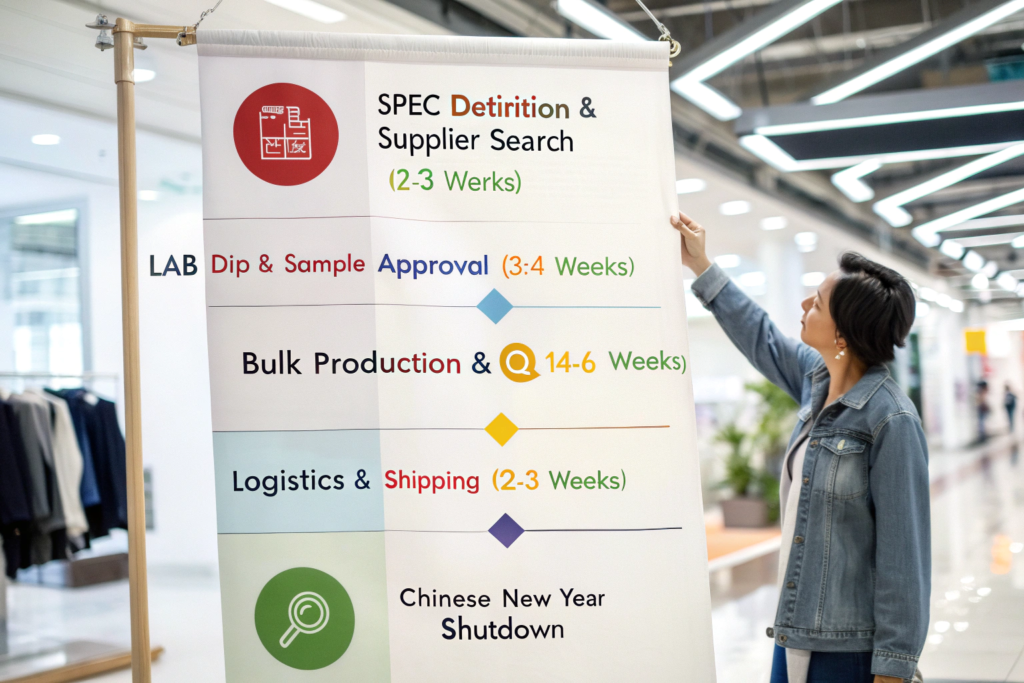
Forget "fast fashion" speed when developing custom denim. Quality fabric sourcing is a marathon, not a sprint. A typical timeline from initial contact to fabric on a ship is 10-14 weeks for a custom development, and 4-6 weeks for a stock fabric order. This timeline is heavily influenced by two major factors: Chinese public holidays (plan for a complete 3-4 week shutdown around Chinese New Year) and industry peak production seasons (March-May and August-October), which can add 1-2 weeks of lead time.
The process isn't linear; it's a cycle of sampling, feedback, and revision. Rushing any stage leads to costly mistakes in bulk. For instance, skipping the lab dip stage to save two weeks might result in a bulk fabric color that is irreparably different from your pantone, forcing you to either accept it or pay for a re-run—costing you months. A savvy Swedish brand we work with plans their entire collection calendar backwards from Chinese New Year, ensuring all fabric development and orders are placed by early December.
What Are the Stages from Lab Dip to Bulk Shipment?
- RFQ & Initial Samples (1-2 weeks): You send detailed specs. A good supplier sends you existing stock samples that match your request. At Shanghai Fumao, we can often dispatch stock samples within 48 hours.
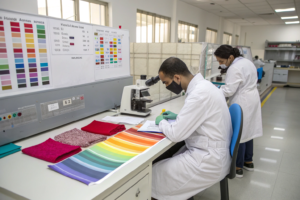
- Lab Dip Development & Approval (2-3 weeks): This is critical for color. The factory dyes small swatches to match your standard. You must approve a physical lab dip under correct lighting (use a lightbox!). Multiple rounds may be needed.
- Handloom/Prototype Sample (2-3 weeks): For complex custom denim (e.g., specific slub, nep), the factory will weave a small batch on a sample loom. This confirms the yarn, weave, and hand-feel before bulk weaving.
- Bulk Production (4-6 weeks): Once all samples are approved, the factory schedules and runs the bulk order. A professional supplier will conduct in-process quality checks.
- Pre-Shipment Sample & Inspection (1 week): Before shipping, the supplier should send you cuttings from the bulk fabric for final approval. You or a third-party inspector (like SGS) can also visit to check the entire lot against your specs.
- Shipping & Logistics (2-3 weeks): Fabric is packed, documents are prepared, and the goods are shipped via sea (most common) or air. Your supplier or a forwarder handles customs clearance.
How to Manage Quality Control and Logistics Effectively?
Quality Control: Don't leave it to the end. Implement checks at three stages:
- During Production (DUPRO): Have the supplier send photos/videos of the fabric on the loom and after dyeing.
- Pre-Shipment Inspection (PSI): This is mandatory. Either visit yourself, hire a third-party inspection company, or rely on a trusted supplier's detailed inspection report. Check for consistent color, weight, width, defects (holes, stains, weaving errors), and shrinkage.
- Test Reports: Ensure the supplier provides certified test reports for key compliance points relevant to your market (e.g., US CPSC, EU REACH).
Logistics:
- Incoterms: Clearly agree on terms. FOB (Free On Board) Shanghai/Ningbo is most common. This means you own the goods once they're on the ship and are responsible for the main freight and insurance. The supplier handles everything up to that point.
- Documentation: Ensure you will receive a clean, professional set of docs: Commercial Invoice, Packing List, Bill of Lading, and Certificate of Origin (often needed for tariff considerations).
- Tariffs: Be clear on the HS code and duty rate for your imported denim fabric. Working with an experienced supplier like us helps, as we have experience shipping to RCEP and "Belt and Road" countries and can advise on the optimal routing. A key advantage is that fabric itself is not typically affected by the same US tariffs as finished garments, but always verify with your customs broker.
Conclusion
Sourcing denim fabric from China is a detailed, strategic process that rewards preparation and partnership. It begins with you, the brand owner, becoming fluent in the language of denim specs. It succeeds by partnering with a supplier whose capabilities and transparency match your ambitions—whether that's a cutting-edge eco-blend or a classic selvedge. And it finishes on time and on budget by respecting the realities of manufacturing timelines and building rigorous quality checks into every step.
Remember, the lowest price per meter often carries the highest risk. The right partnership, like the ones we build at Shanghai Fumao, delivers value through reliability, innovation, and co-creation. We don't just send you fabric; we help you build the foundation of your brand's signature look.
Ready to develop the denim that defines your brand? Stop scrolling through endless online listings. Connect with a partner who has the factory depth and market expertise to guide you. Contact Elaine, our Business Director, to discuss your denim project. She can connect you with our denim specialists and provide actionable insights and quotes. Start the conversation at elaine@fumaoclothing.com.