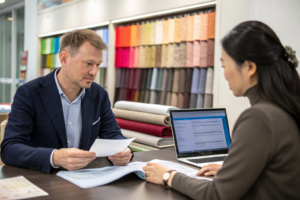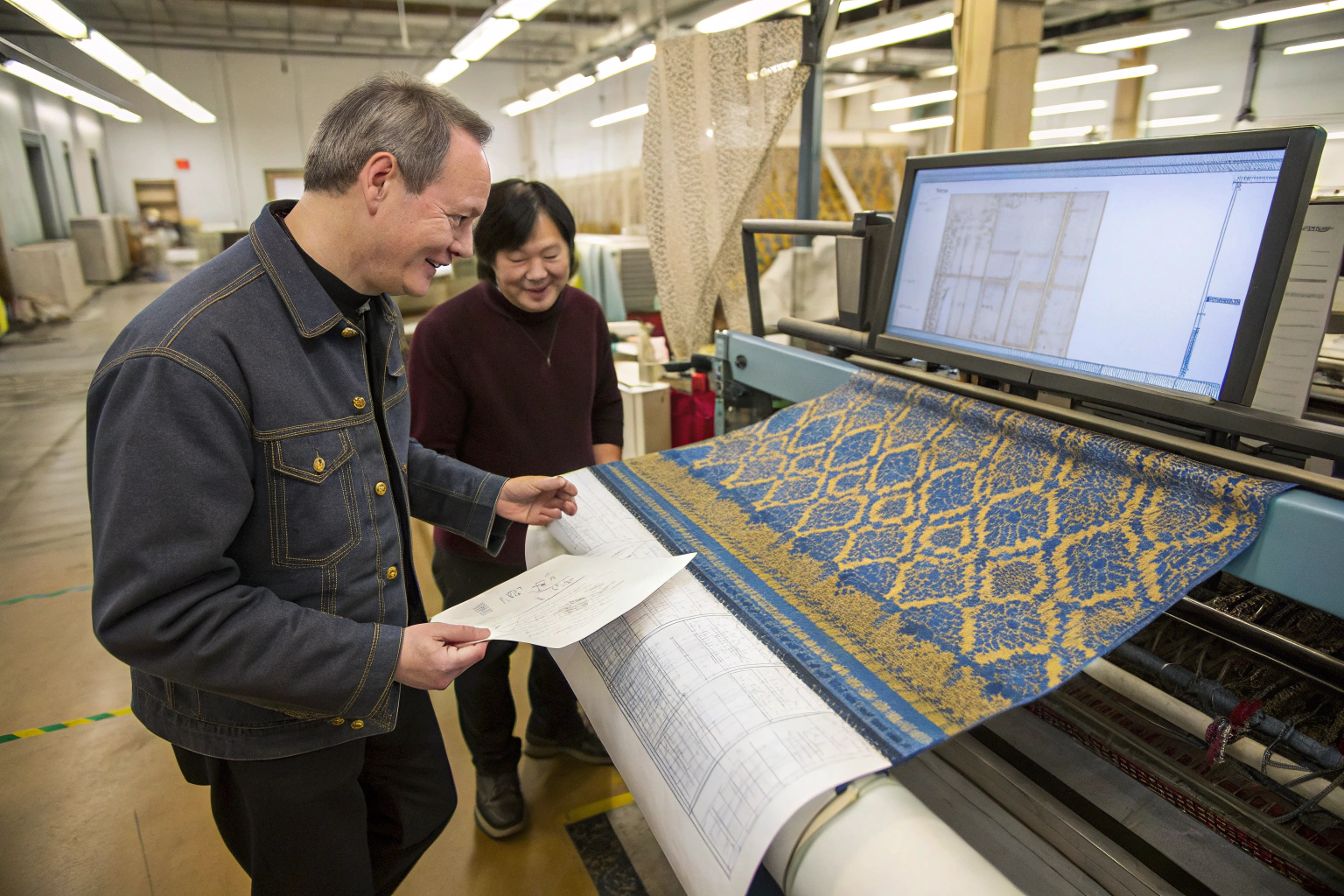
I get this question at least once a week. A new brand owner or a startup designer finds me on LinkedIn or Alibaba. They love the look of our jacquard fabrics—the raised patterns, the intricate florals, the tone-on-tone damasks. They know it screams "luxury." They know it sets their brand apart from the sea of printed jersey out there. But then they get to the part where they have to explain what they want. And they freeze. "Elaine, I can't draw a straight line with a ruler. I don't have Illustrator files. I don't know what a 'repeat' is. Can I still do this?"
Yes. Absolutely yes. You do not need to be a textile designer to source custom jacquard fabric. You need to be a Curator and a Communicator. The heavy lifting—the pixel-perfect weaving file, the yarn selection, the loom setup—that's what we do here at Shanghai Fumao. Your job is to provide the Direction. Think of yourself as the movie director, and I'm the cinematographer. You don't need to know how to operate the $200,000 camera; you just need to know the mood you want, the story you're telling, and maybe show me a reference photo from another movie you liked.
Jacquard weaving is ancient technology (invented in 1804) married to modern digital software. The barrier to entry for custom design has never been lower. Let me walk you through the three paths you can take—from zero design files to a finished, woven masterpiece.
How to Turn a Simple Sketch or Photo into a Jacquard Design?
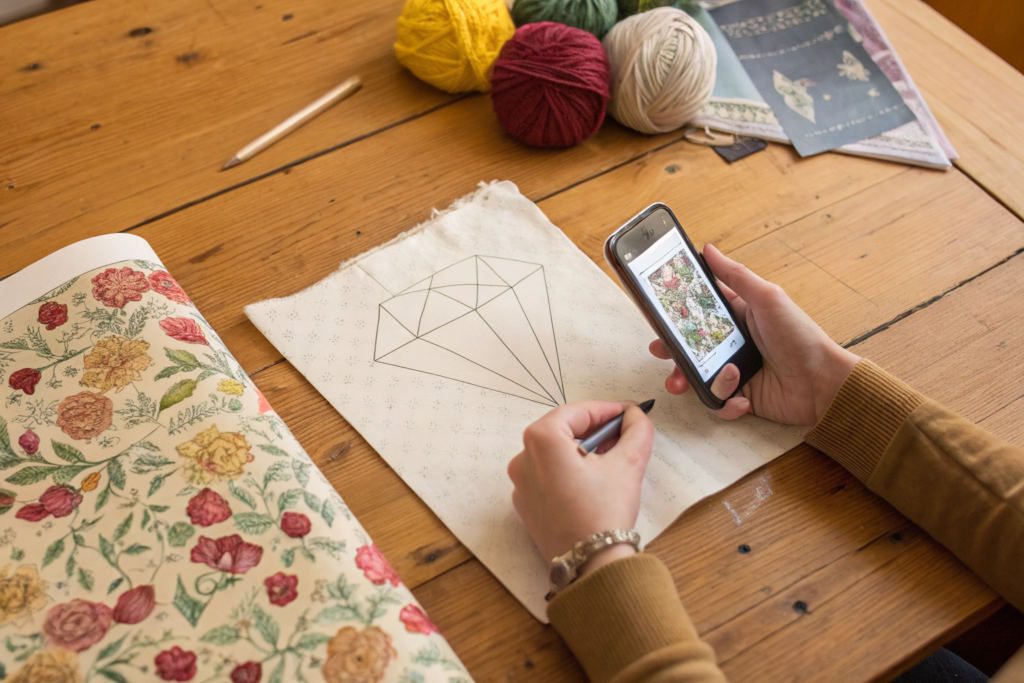
The biggest myth in custom fabric is that you need a "Tech Pack." For jacquard, you don't need a graded spec sheet with seam allowances. You need Inspiration. In my 20 years at Shanghai Fumao, the best custom jacquard projects have started with the simplest inputs: a photo of an antique tile floor, a leaf from a walk in the park, a screenshot of a 1920s wallpaper pattern.
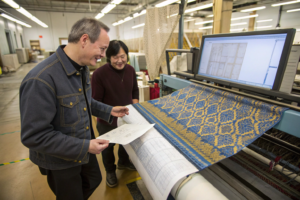
The process of turning that napkin sketch into a woven fabric is called Digitizing. And it's a service we offer in-house. You send us the image. Our CAD (Computer-Aided Design) specialist traces it, cleans it up, and converts it into a Weave File. This file tells every single hook on the Jacquard loom whether to lift the warp yarn or leave it down. It's like a piano roll for fabric.
The key is understanding that a loom has limitations. It can't do a photographic gradient with 50 shades of grey. It works in Flat Colors and Textures. So the conversation shifts from "Can you weave this exact photo?" to "Can we interpret this mood into yarn?"
How to Use Pinterest and Mood Boards for Weave Direction?
Look, I'm going to say something that might shock you. Pinterest is the single most useful sourcing tool for custom jacquard. I love it when a client sends me a Pinterest board link. It saves me 20 emails of back-and-forth trying to decipher words like "vintage but modern" or "subtle but bold."
Here is the exact protocol I give my clients at Shanghai Fumao for building a Jacquard Mood Board:
Step 1: The "Hero" Image.
Find one image that captures the Scale and Motif you like. Is it a large, oversized paisley? Is it a tiny, all-over geometric? Pin it. I don't care if it's a photo of a rug or a Gucci dress. I just need to see the Density of the pattern.
Step 2: The "Color" Image.
Find an image that captures the Color Vibe. It doesn't even have to be fabric. It can be a sunset, a painting, a car interior. I need to see: Is it high contrast (Black/White) or low contrast (Navy/Black)?
Step 3: The "Texture" Image.
This is where you tell me about the Hand Feel without knowing the words. Pin an image of:
- For Shine: Satin sheets, glossy paint, wet stones.
- For Matte: Linen pants, dry clay, sanded wood.
- For Slub: Raw silk dupioni, handmade paper.
I had a client last year—a menswear brand from Texas. He sent me a board with: A photo of a vintage cowboy boot (for the intricate stitching pattern), a photo of a dusty desert at sunset (for the terracotta/rust color palette), and a photo of a burlap sack (for the dry, nubby texture). We translated that into a Slub Yarn Cotton Jacquard with a Western filigree pattern in a matte finish. He didn't know the word "slub." He just knew it felt "rough and authentic." We nailed it on the first strike-off. This is a great resource for learning the language: how to use Pinterest to communicate textile design ideas with a manufacturer. And for the technical side of what a loom can actually reproduce, this overview of digital jacquard weaving capabilities and limitations is very helpful.
What Are the Limitations of Converting Photos to Woven Fabric?
(Here's where I have to manage expectations.) A loom is not an inkjet printer. It does not print. It Interlaces Yarns. This is a critical distinction.
What a Loom CANNOT Do:
- True Photorealism. You cannot weave a portrait of your dog with shading under the eyes. You can weave a stylized, posterized version of it.
- Millions of Colors. A standard Jacquard loom has 8 to 12 Filling Insertions (color changes in the weft). That means you get 8-12 colors in the design. That's it. If your photo has 200 colors, we have to Posterize it. We reduce it to 6-8 solid blocks of color.
- Gradients (Ombre). A smooth transition from dark blue to light blue is difficult. We can simulate it with Hatching (tiny dots or lines), but it won't be smooth like a print.
What a Loom DOES BEAUTIFULLY:
- Texture and Relief. A print is flat. A jacquard is Sculptural. The pattern sits on top of the ground fabric. You can feel it with your fingers. That's the magic.
- Tone-on-Tone. This is the superpower of jacquard. We use Matte Yarn and Shiny Yarn of the exact same color. The pattern appears and disappears depending on how the light hits it. You cannot do this with a print.
I had a client who wanted to weave a photo of a galaxy (stars and nebula) into a bomber jacket lining. I had to explain that the loom would turn that beautiful blur into a messy, blocky pixel art. We pivoted to a Star Map design—clean, geometric, flat colors. It looked incredible because it played to the loom's strengths. Understanding this difference is key, and this article explains it well: digital printing vs jacquard weaving for custom fabric patterns. And for a visual guide, this comparison of photographic print quality versus woven jacquard detail is very clear.
What Is a Dobby and How Does It Lower the Cost of Custom Weaves?
Now, let's talk about money. Custom Jacquard is expensive. The setup costs (the loom programming and the harness setup) can run $500 - $1,500 depending on the complexity. And the minimum order quantity (MOQ) for a custom jacquard is usually 1,000 - 2,000 meters. Why? Because you have to warp the entire loom beam with yarn. You can't just weave 10 meters and stop.
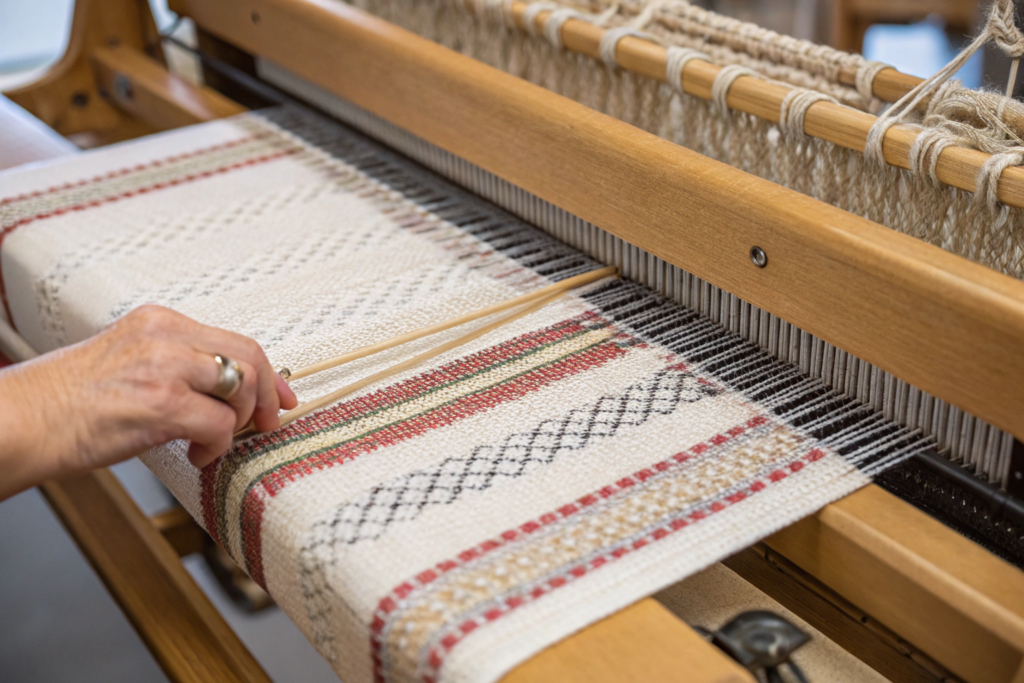
But what if you want a custom weave on a 500-meter budget? That's where Dobby Weaves come in. Dobby is Jacquard's little brother. It's a mechanism that controls the warp yarns, but it's limited to Small, Geometric Repeats—stripes, checks, dots, tiny diamonds.
The Rule of Thumb:
- Dobby Loom: Pattern repeat is usually Under 2 Inches. (Think: Oxford shirt stripes, micro-diamonds).
- Jacquard Loom: Pattern repeat can be Over 2 Inches up to Full Width of the fabric. (Think: Large floral tapestry, intricate brocade).
Because the Dobby mechanism is simpler and the patterns are smaller, the setup is faster and the MOQ can often be negotiated down to 500-800 meters. Let's break down the cost difference.
How Does Dobby Offer a Low MOQ Alternative to Jacquard?
Let's put some real numbers on this from our Shanghai Fumao pricing structure for a Cotton Blend Shirting Fabric.
| Feature | Custom Dobby Weave | Custom Jacquard Weave |
|---|---|---|
| Design Complexity | Stripes, Checks, Simple textures. | Figurative, Floral, Large Medallions. |
| Setup Fee (Digitizing/Loom) | $150 - $300 | $500 - $1,500 |
| Typical MOQ | 500 - 800 Meters | 1,200 - 2,000 Meters |
| Cost Per Meter | $3.50 - $5.00 | $6.00 - $12.00+ |
| Best Use | Dress shirts, basic suiting, subtle branding. | Statement outerwear, luxury upholstery, high-end dresses. |
I worked with a startup shirt brand in Brooklyn. They wanted a "custom fabric" for their signature button-down. They had a small Kickstarter budget—only enough for 600 meters. A full custom jacquard floral was out of the question. But we designed a Custom Dobby Stripe. We used a specific sequence of colored yarns (navy, white, and a thin gold accent) to create a stripe that was unique to their brand. Because it was a Dobby loom, the MOQ was 500m. The setup fee was $200. They got a custom, exclusive fabric for their brand without the jacquard price tag. That's smart sourcing. For a deeper technical dive, this is a great explanation: the difference between Dobby and Jacquard weaving mechanisms and their design limitations. And for a more commercial perspective, this guide to minimum order quantities for custom woven fabric is helpful.
When Should You Choose a Small Repeat Over a Large Motif?
This is a design decision with huge cost implications. A Large Motif (say, a 24-inch wide floral) requires a Big Jacquard Loom with a massive harness. It's expensive. A Small Repeat (a 1-inch geometric diamond) can be done on a Dobby loom or a smaller Jacquard.
But it's not just about cost. It's about Garment Construction. Large motifs are a nightmare for the cutting room. If you have a 24-inch floral, and you're making a size 8 dress, you might only get One Flower on the front bodice. If the pattern placement is off, it looks like a mistake. You need Engineered Printing/Layout which is another layer of cost.
Small repeats (2-4 inches) are Forgiving. They look like a "texture" from a distance. You can cut pattern pieces anywhere on the fabric and it looks consistent. No one notices if the diamond is cut in half at the side seam.
I advised a client making a-line skirts to switch from a 12-inch paisley to a 3-inch diamond lattice. The fabric cost dropped 30%. The cutting room waste dropped 15%. And the skirts looked more "refined" and less "craft project." The smaller repeat looked more expensive because it was consistent across the seams. This is a design principle worth understanding: how to design textile repeats for garment construction and pattern matching. And this is a practical guide to calculating fabric yield and waste for large print versus small repeat patterns.
How Do You Choose the Right Yarn for a Jacquard Pattern?
You've got the design. You've chosen Dobby or Jacquard. Now comes the part that really determines the look and the cost: The Yarn. This is where you can make a $6 fabric look like a $20 fabric, or vice versa.
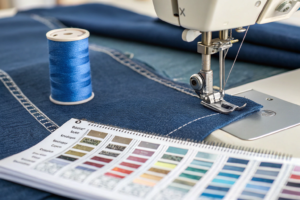
Jacquard weaving is all about Contrast. The pattern is visible because the Ground Yarn looks different from the Figure Yarn. That contrast can be Color (Blue on White) or Texture (Shiny on Matte) or both. The most common mistake I see from non-designers is specifying "All Cotton." A 100% Cotton Jacquard can look Flat and Muddy because there's no light reflection difference. The pattern gets lost.
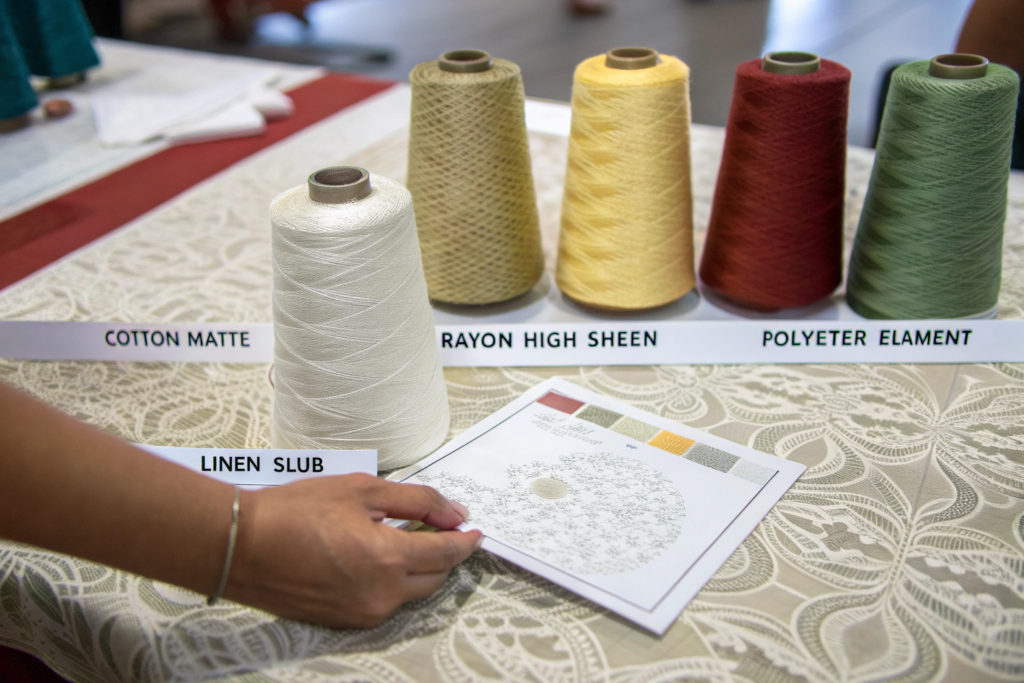
Let me give you my three favorite yarn combination "recipes" that we use at Shanghai Fumao to guarantee a beautiful, legible jacquard pattern every time.
What Is the Difference Between Warp and Weft in Jacquard Texture?
I'm going to keep this simple. Warp is the yarn that runs Lengthwise (the long way down the roll). Weft is the yarn that runs Widthwise (across the roll, inserted by the shuttle).
In a Jacquard loom, the Warp is Raised and Lowered to create the pattern. The Weft is Hidden inside the structure most of the time.
The Secret to Texture:
- For a Raised Pattern (Figure): Use Thick Weft Yarn or Shiny Rayon Weft. When the loom lifts the warp, this thick/shiny yarn sits on the surface.
- For a Recessed Background (Ground): Use Fine Warp Yarn or Matte Cotton Warp. The eye sees this as the base.
Yarn Combination Examples (Shanghai Fumao "Greatest Hits"):
- The "Brocade" Look (Luxury):
- Warp: Fine Matte Polyester (invisible grid).
- Weft (Figure): Viscose Rayon Filament (High shine).
- Weft (Ground): Cotton Chenille (Soft, fuzzy).
- Result: The pattern glows like silk against a velvet background.
- The "Modern Texture" Look (Subtle):
- Warp: Cotton Slub (irregular thickness).
- Weft: Cotton Slub (same yarn).
- Result: The pattern is visible only by the Shadow of the raised yarns. It's tone-on-tone but with a lot of surface interest.
I had a client who wanted a "Baroque" look but on a budget. We used a Poly Warp / Rayon Weft combination. The poly kept the fabric stable and cheap. The rayon gave the pattern the necessary shine to pop. It looked expensive. It wasn't. This is a foundational concept explained well here: understanding warp and weft yarns in jacquard weaving for pattern definition. And for the visual results of different yarn choices, this gallery of jacquard fabric textures and the yarns used to create them is very helpful.
Why Does Yarn Dyed Fabric Create a More Durable Pattern?
You have two ways to get color in a Jacquard.
- Piece Dyeing: You weave the fabric with White Yarns. Then you throw the whole roll of fabric into a dye bath. This is cheap.
- Yarn Dyeing: You dye the Individual Cones of Yarn before you weave them. This is expensive.
Why Yarn Dyeing is Worth the Extra 20-30% Cost:
- Color Saturation: The dye penetrates the yarn completely. The colors are richer and deeper.
- Colorfastness: Yarn-dyed fabric Does Not Fade like printed or piece-dyed fabric. It's the same color all the way through the thread. If the surface abrades slightly over years of wear, the color is still there.
- Crisp Pattern Definition: In piece dyeing, the dye might not take evenly in the thick raised areas vs. the flat areas. You get a slightly "blurry" pattern. In yarn dyeing, the edge between the blue figure and the white ground is razor sharp.
For any premium brand, I Insist on Yarn Dyed Jacquard. It's the difference between a fabric that looks good on the hanger and a fabric that looks good after 20 washes. We do a lot of yarn-dyed shirting jacquards for European clients. The MOQ is higher because we have to dye 50 kilos of yarn minimum per color, but the result is heirloom quality. You can learn more about the technical process here: yarn dyeing vs piece dyeing in woven fabric production. And this article explains the impact of yarn dyeing on the colorfastness and durability of jacquard patterns.
How to Approve a Jacquard Strike-Off When You Can't Visit the Mill?
Okay, the loom is warped. The yarn is dyed. We're ready to weave your custom jacquard. But we're not going to weave 2,000 meters right away. First, we weave a Strike-Off (also called a Handloom or Sample Blanket). This is a 12-inch x 12-inch swatch of the actual fabric made on the actual production loom.
This strike-off is the Contract. It says: "This is what the bulk will look like." But you're in New York, and I'm in Keqiao. You can't touch it. You can't feel the weight. How do you approve it remotely without making a $20,000 mistake?
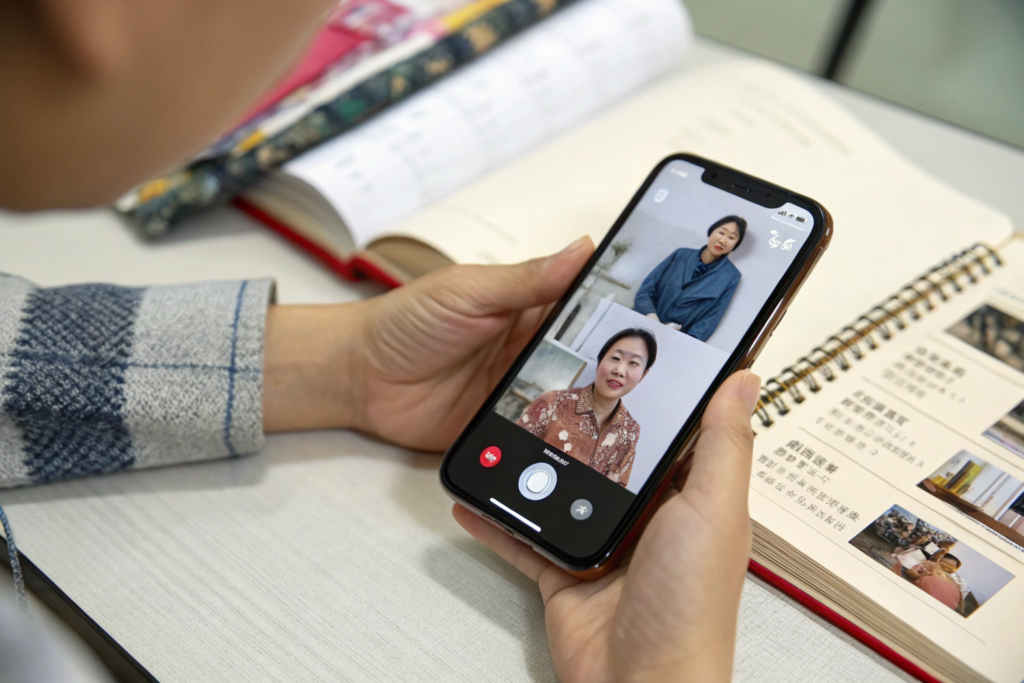
We use a combination of High-Tech Video and Low-Tech Courier. The strike-off gets FedExed to you. That's non-negotiable. But while you're waiting the 3 days for shipping, we do a Live Video Review to catch 90% of the issues immediately.
What Should You Look for in a Digital Photo of a Woven Sample?
When I email you a photo of the strike-off, don't just look at the pretty pattern. You need to look for Manufacturing Defects that are specific to jacquard. Here is the checklist I walk my Shanghai Fumao clients through over the phone.
The Digital Photo QC Checklist for Jacquard Strike-Off:
-
Long Floats Check (The "Snag Test"):
- What to look for: Look at the Back Side of the fabric. Do you see long, loose threads (longer than 0.5 cm / 1/4 inch) bridging across the back of the pattern?
- Why it matters: Those long floats will Snag. A fingernail, a zipper, a piece of jewelry will catch them and pull the pattern out of shape. This is the #1 failure of cheap jacquard. We want floats to be short or Stitched Down (tied into the ground fabric).
-
Selvedge Curl:
- What to look for: Look at the left and right edges of the swatch. Are they rolling up tightly?
- Why it matters: Jacquard weaves often have unbalanced tension. If the edge curls more than 1 inch, it's a nightmare for the cutting table. It adds labor cost.
-
Pattern Distortion (The "Funhouse Mirror" Effect):
- What to look for: Is the circle perfectly round? Or is it an oval?
- Why it matters: If the loom tension is wrong, the pattern stretches out in length (looks tall and skinny) or width (looks short and fat). We fix this by adjusting the Reed and Take-Up Speed.
I review these photos with clients via Zoom. I hold a Coin or a Ruler next to the fabric for scale. "See this float here? That's 8mm. Too long. I'll have the weaver tighten that up." It takes 15 minutes and saves weeks of rework. This is a great guide to understanding what can go wrong: common jacquard weaving defects and how to identify them in a strike-off sample. And for a visual reference, this glossary of woven fabric faults with photo examples is excellent.
Why Is a Physical Handloom Swatch Still Essential for Final Sign-Off?
I'm a tech guy. I love digital. But I will die on this hill: You cannot approve jacquard without touching it. The camera cannot capture Compressibility. The camera cannot capture Drape.
Here is what the physical swatch tells you that the 4K video does not:
- The "Scrunch Test": Crumple the swatch in your fist for 10 seconds. Let go. Does it bounce back smooth? Or does it stay wrinkled? This tells you how it will look after sitting in a suitcase or on a store shelf.
- The "Crispness" Factor: Jacquard should have Body. It shouldn't feel like a limp rag. The weight of the yarn and the density of the weave give it that luxury structure. You can't feel that on a screen.
- Color in Real Light: I can send you a spectro reading (Delta E < 1.0), but your eye in your office with your specific windows is the final judge. Is the gold too yellow? Is the navy too purple?
The Protocol We Use:
- I send Three Versions of the strike-off if we're unsure about color: Standard, Slightly Warmer, Slightly Cooler.
- The client receives them via DHL.
- They Sign and Date the back of the approved swatch with a Sharpie.
- They Return that signed swatch to Shanghai Fumao (or email a photo of the signed swatch).
- That swatch goes into the Production File. It is the Legal Standard. If the bulk doesn't match that swatch, we re-dye it or we don't ship it.
I had a client in London who signed off based on digital photos. The fabric arrived and it was "too stiff." It was exactly the stiffness we had woven in the sample. The hand feel was lost in translation. We had to re-run the batch with a Softer Finish (extra wash cycle). It cost us $800 and 10 days. Now, I don't give clients the option to skip the physical swatch sign-off. It's mandatory. This is a great resource on the process: why a physical lab dip and handloom strike-off are non-negotiable for custom textiles. And this article explains the importance of the 'hand feel' in luxury textiles and how to communicate it.
Conclusion
Sourcing custom jacquard fabric without a design degree is not only possible—it's how 70% of our clients at Shanghai Fumao operate. You don't need to know how to draw a paisley. You need to know how to Curate References. You need a Pinterest board with a Hero Image, a Color Image, and a Texture Image. You need to understand the cost difference between a simple Dobby stripe (500m MOQ) and a complex Jacquard floral (1200m MOQ). And you need to trust the process of the Strike-Off—review the digital photos for long floats, but wait for the physical swatch to feel the drape in your own hands.
The loom is just a tool. Your eye is the design. By combining your brand's aesthetic with our technical expertise in yarn selection and weave structure, we can create a fabric that is exclusively yours. It's a collaborative process, not a technical barrier. You bring the story; we bring the technology.
If you've been holding back on a custom weave project because you think you lack the skills, let's talk. Send me a photo of a rug you like or a leaf you found on the sidewalk. We'll translate it into yarn. Reach out to our Business Director, Elaine, at elaine@fumaoclothing.com. Let's make something you can't buy off the shelf.