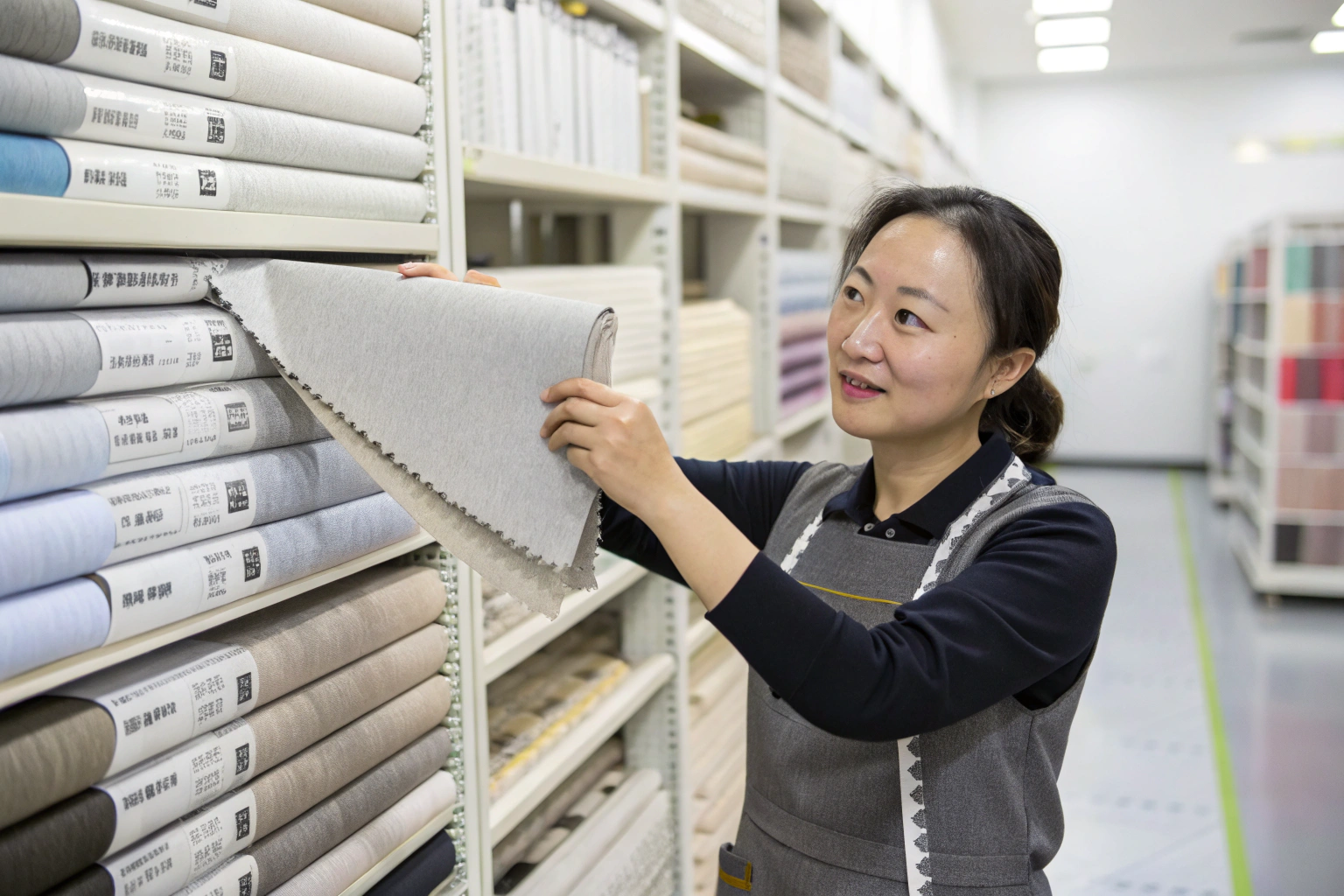
When you’re building a clothing line, everything starts with the sample. Not the sketch. Not the tech pack. The actual fabric in your hands. You need to feel the drape. You need to see how it stretches. You need to hold it up to the light and know—yes, this is the one. But for so many of our international clients, especially those new to sourcing from China, the sample request process feels like a black box. You send an email. You wait. Maybe you get something, maybe you don’t.
I’ve been in this industry for over 20 years, right here in Keqiao, Zhejiang. I’ve seen how the sample process can make or break a collection. And I’ve seen how a messy sample system can kill a buyer’s trust in a supplier. That’s why at Shanghai Fumao, we built a sample system that’s fast, transparent, and designed for the way you actually work. Whether you need a single swatch of organic cotton jersey or a full set of lab dips for a 20,000-yard order, we want you to know exactly how to get it, and how to get it right.
Let me walk you through exactly how to request samples of knitted fabric from us, what to expect on our end, and how to set yourself up for success from the very first email.
What Information Do You Actually Need to Provide for a Sample?
I’ll be honest with you. The single biggest reason sample requests go wrong is incomplete information. We get emails all the time that just say, “I need a sample of cotton jersey.” And I have to reply with a dozen questions. What weight? What construction? What color? What finishing? It creates this back-and-forth that can take days. And in the fast-paced world of fashion, days matter.
Let me share a story from 2023. A startup from Austin, Texas, reached out. They were launching a new line of basic t-shirts. They sent an email asking for “a sample of your best cotton.” That was it. Our team wrote back asking for specifics. They said they wanted a fabric similar to their competitor’s. That was still too vague. We sent them three options anyway—a 180gsm single jersey, a 200gsm combed cotton jersey, and a 220gsm slub jersey. They got them, loved one, and placed a small order. But the whole process took nearly three weeks. Three weeks of shipping samples back and forth. If they had given us the right details upfront, we could have cut that time in half.

What Are the Key Details We Need for a Knitted Fabric Sample?
So here’s exactly what we need. Save this list. Use it like a checklist when you email us or message us on Alibaba.
| Detail | Why It Matters | Example |
|---|---|---|
| Fiber Composition | This determines the feel, cost, and care instructions. Be specific about blends. | 100% cotton, 95% cotton/5% spandex, 100% recycled polyester |
| Weight (GSM) | Grams per square meter. This tells us if the fabric is light (summer) or heavy (winter). | 150gsm, 240gsm, 320gsm |
| Construction | Knits vary a lot. Single jersey, interlock, rib, fleece, French terry? | Single jersey, 1x1 rib, terry loopback |
| Width | We need the finished width after finishing. | 60 inches, 70 inches |
| Color | Pantone number or a physical reference. “Red” is not enough. | Pantone 19-1664 TPX (True Red) |
| Finishing | Any special treatments? | Softener, anti-pilling, wicking, enzyme wash |
(Here I need to pause and say something important. We actually prefer when you send us a photo of a similar fabric. Even a bad phone photo helps. Our team has been doing this for decades. We can look at a picture and tell you, “That’s a 200gsm combed cotton jersey with a silicone softener.” It’s like a superpower, honestly.)
When you provide these details upfront, we can skip the guessing game. Our team can immediately pull a stock sample from our 30,000+ designs or, if it’s a custom request, start developing it in our R&D lab. The timeline goes from “we’ll see” to “you’ll have it in 3-5 days.”
How Should You Send Your Sample Request?
We’ve made this as simple as possible. You can reach us through any of our channels—our website, Alibaba, or even Instagram. But here’s the method that gets the fastest response: email our dedicated sample team directly. And here’s a template you can use:
Subject: Sample Request – [Your Company] – [Fabric Description]
Body:
Hi Fumao Team,
I’d like to request a sample for a new collection.
- Fiber: 100% organic cotton, GOTS certified preferred
- Weight: 180gsm
- Construction: Single jersey
- Width: 60 inches finished
- Color: Pantone 11-0601 TCX (Bright White)
- Finishing: Standard softener
- Quantity: A4 size swatch for handfeel
If you have something similar in stock, I’m open to recommendations.
Please let me know the cost and shipping to Portland, Oregon.
Thanks,
[Your Name]
When you send a request like this, our sample coordinator can pull it and have it ready in hours, not days. We’ve processed over 500 sample requests this year alone using this exact method. And for our regular clients, we even have a digital form on our website where you can upload your tech pack directly.
How Fast Can You Actually Get a Knitted Fabric Sample from China?
Speed is everything. I know that. If you’re a buyer in New York or a designer in London, waiting two weeks for a sample feels like an eternity. Your deadline is breathing down your neck. Your factory in Vietnam is asking for confirmation. And you’re sitting there, refreshing your email, waiting for a tracking number from China.
We’ve built our entire sample system around one number: 48 hours. That’s our standard promise for in-stock samples. And for custom developments, we push to get something in your hands in 7-10 days. But let me be transparent—how fast you get it depends on a few factors. I want you to understand exactly how we work so you can plan accordingly.
What’s Our Realistic Turnaround for Different Types of Samples?
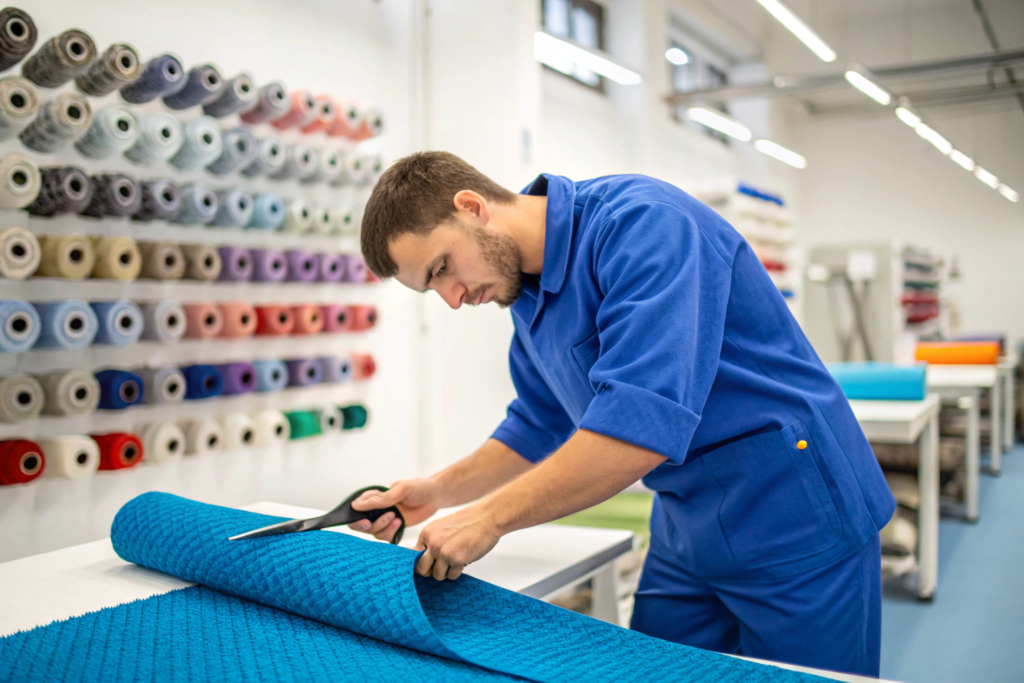
We categorize sample requests into three buckets. Each has a different timeline, and knowing which bucket your request falls into will help you set realistic expectations.
Bucket 1: In-Stock Stock Samples (24-48 Hours)
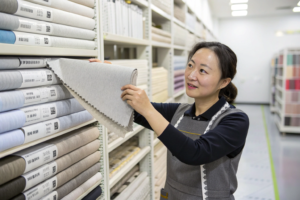
If you’re requesting a sample from our existing inventory of 30,000+ seasonal designs, this is the fastest route. Our warehouse team has these organized by fiber, weight, and construction. We can pull, cut, and pack your sample within a few hours of receiving your request.
Last month, a client from London reached out on a Tuesday morning (their time). She needed a 240gsm cotton fleece sample for a hoodie collection. She had the Pantone number ready. Our team pulled the sample, packed it, and shipped it via DHL by Tuesday evening (China time). She had the sample in her hands by Thursday morning. That’s 48 hours from request to delivery in London. She placed a 5,000-yard order the following week.
Bucket 2: Custom Development Samples (7-10 Days)
This is where our R&D lab shines. If you need something that’s not in our stock—a specific blend, a custom stripe, a unique finish—we move to development mode. Our 20+ R&D experts will work with our yarn suppliers and dyeing partners to create exactly what you need.
We had a client from Australia in early 2024. They needed a moisture-wicking polyester-spandex blend for activewear. They had the exact blend ratio and target GSM. We didn’t have it in stock. So our team sourced the yarn, programmed our knitting machines, and ran a small batch for sample cutting. We also tested it in our CNAS-accredited lab for wicking performance. The whole process took 10 days. They got the sample, tested it in their own lab, and confirmed the order for 15,000 yards. That’s the speed of having an integrated supply chain from yarn to finished fabric.
Bucket 3: Lab Dips and Strike-Offs (3-5 Days)
For color development, we operate separately. A lab dip is a small piece of fabric dyed to your specified color. We can do these fast because we work closely with two local dyeing factories. When you send us a Pantone number, we can usually have a lab dip ready in 3-5 days.
Here’s a concrete example from last year. A client in Toronto needed a color match for their brand’s signature teal. They sent us Pantone 18-4434 TPX. Our dyeing partners ran the lab dip on their base fabric (a 200gsm combed cotton jersey). We approved it, sent it to them, and they gave us the green light. The whole color approval process took less than a week. No back-and-forth. No “that’s not quite right” delays.
What Affects Shipping Time for Samples?
Once the sample is ready, shipping time is the next variable. We use DHL, FedEx, and UPS as our primary couriers. From Keqiao to:
- USA (East Coast): 3-4 business days
- USA (West Coast): 2-3 business days
- Europe: 2-4 business days
- Australia: 3-5 business days
We’ve negotiated preferential rates with these carriers because we ship so many samples. We pass that savings on to you. For a standard A4-sized swatch, shipping to the US is usually around $25-35. For a full set of lab dips or a larger sample yardage, it might be $50-80.
We also have clients who ask us to hold samples and ship them together to save cost. If you’re requesting multiple fabrics for a collection, we can consolidate them into one shipment. We did this for a client in Berlin last spring. They requested 12 different knitted fabric samples over two weeks. We held them all and shipped them together in one box. They paid one shipping fee and got everything at once.
What Should You Do After You Receive Your Sample?
Getting the sample is just the beginning. I’ve seen too many clients receive a sample, say “looks good,” and then run into problems when they scale to bulk production. The sample tells you about handfeel and color. But it doesn’t always tell you about shrinkage, pilling, or how the fabric will perform after 10 washes. That’s why we built a rigorous testing process into our system.
How Should You Inspect and Test Your Sample?
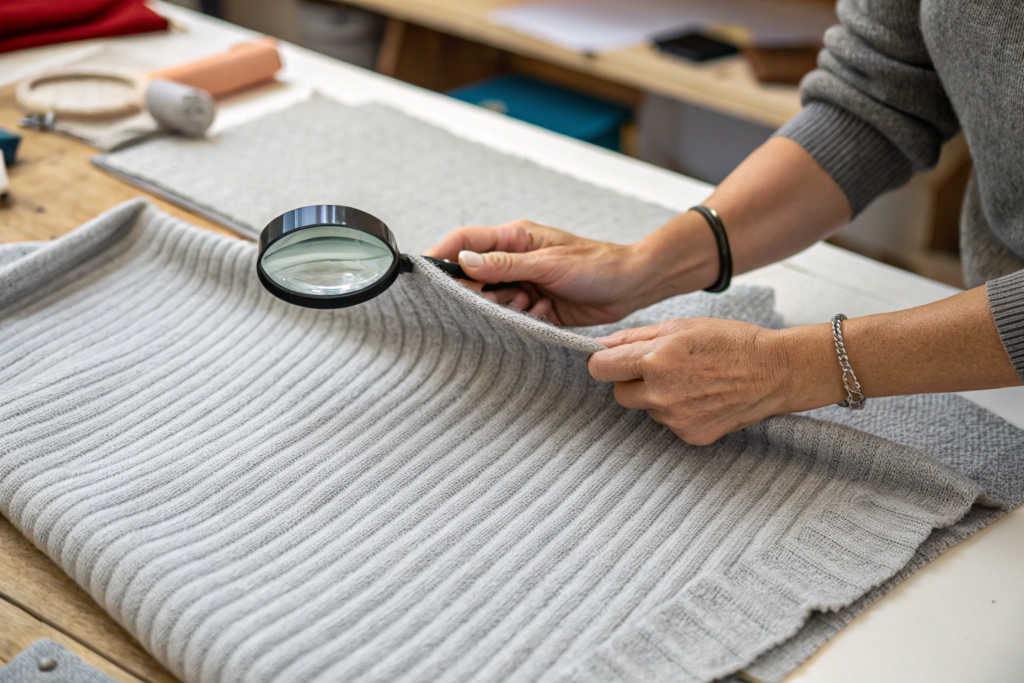
When you get a sample from us, here’s what we recommend you check. We do these tests in our own CNAS-accredited lab, but we encourage our clients to do their own as well.
First, the handfeel. Does it match what you expected? For knitted fabrics, this is about softness, drape, and stretch. If you ordered a 180gsm single jersey for a summer t-shirt, it should feel light and breathable. If it feels heavy or stiff, something’s off.
Second, stretch and recovery. This is critical for anything with spandex. We had a client from Brazil who ordered a 95/5 cotton-spandex rib for a fitted dress. The sample felt great. But when they started cutting their bulk order, the recovery was inconsistent. The fabric stretched out and didn’t bounce back. We tracked it back to a batch of spandex yarn that had inconsistent tension during knitting. Now, for any spandex blend, we run a stretch-recovery test on every batch. We measure the elongation at a standard load and the percentage of recovery. If it’s below 90% recovery, we reject it.
Third, shrinkage. This is a huge pain point for knit fabrics. We test for shrinkage in our lab using AATCC 135 or ISO 6330 methods. For most cotton knits, we aim for less than 3% shrinkage in both length and width. If you’re making a garment that needs to hold its shape after washing, ask us for the shrinkage report.
Fourth, colorfastness. We test for colorfastness to washing, light, and rubbing. Our lab uses standard grey scales to rate the results. For export to the US or EU, we usually target Grade 4 or higher on all tests. If your fabric is going to be used for children’s wear or high-end fashion, these certifications matter.
A client from South Africa in 2023 learned this the hard way. They ordered a bright red cotton jersey from another supplier. The sample was perfect. But when they received the bulk order, the red faded badly after one wash. They lost an entire season of sales. When they came to us, we showed them our testing process. Now, for every red or dark-colored fabric, we run an extra wash-fastness test before bulk production starts. We won’t ship anything that doesn’t meet our standards.
What Happens When You’re Ready to Move from Sample to Bulk?
Once you approve the sample, the real work begins. But here’s the key: the approved sample becomes our production reference. We call it the “gold sample.” We keep it in our lab. Every bulk roll we produce is compared against this gold sample for color, handfeel, and construction.
We use a QR code tracking system for every order. When you place a bulk order, we assign a unique QR code. You can scan it and see:
- Yarn sourcing status
- Knitting schedule
- Dyeing and finishing timeline
- Inspection results
- Shipping details
A client in Chicago told me last year that this QR system changed their business. They used to spend hours on calls and emails just getting updates. Now, they scan the QR code every morning and see exactly where their fabric is. They can plan their production in Mexico with confidence.
We also offer pre-production services. If you need help with grading, marking, or even just advice on how to cut a tricky knit fabric, our team can help. We’ve been doing this long enough to know that a small adjustment in your pattern can save you 5% in fabric waste. Over a 20,000-yard order, that’s real money.
What About Custom Knitted Fabric Development?
Not every brand wants standard fabric. Some of our most exciting projects are custom developments. Maybe you want a unique blend of Tencel and recycled polyester. Maybe you need a specific anti-bacterial finish for an athleisure line. Maybe you’re working on a sustainable collection and need a fabric that meets strict EU eco-certifications.
This is where our 20+ years of experience and our integrated supply chain really come into play. We’re not just selling fabric; we’re building it with you.
How Does Custom Development Work from Start to Finish?
Let me walk you through a real project from early 2024. A client in Sweden, a sustainable outdoor brand, approached us. They wanted a fabric for a new line of hiking shirts. The requirements were specific:
- 70% Tencel, 30% recycled polyester
- 140gsm single jersey construction
- Anti-microbial finish (silver-ion based)
- UV protection rating of UPF 50+
- Must pass Oeko-Tex Standard 100 certification
We didn’t have this exact fabric in stock. So we started from scratch. Here’s how it went:
Step 1: Yarn Sourcing (Week 1)
We worked with our Tencel supplier to get the licensed Lyocell fibers. For the recycled polyester, we sourced from a certified supplier in Taiwan. We spun the yarn to the exact blend ratio.
Step 2: Knitting (Week 2)
Our knitting technicians programmed a single jersey machine for the target weight. We ran a small batch to check the construction. The first run was a little heavy—145gsm instead of 140. We adjusted the machine tension and got it perfect.
Step 3: Dyeing and Finishing (Week 3)
This was the tricky part. Applying an anti-microbial finish without affecting the handfeel of the Tencel. Our dyeing partners ran three trials. The third trial hit the mark. We also added a UV-blocking agent during finishing.
Step 4: Lab Testing (Week 4)
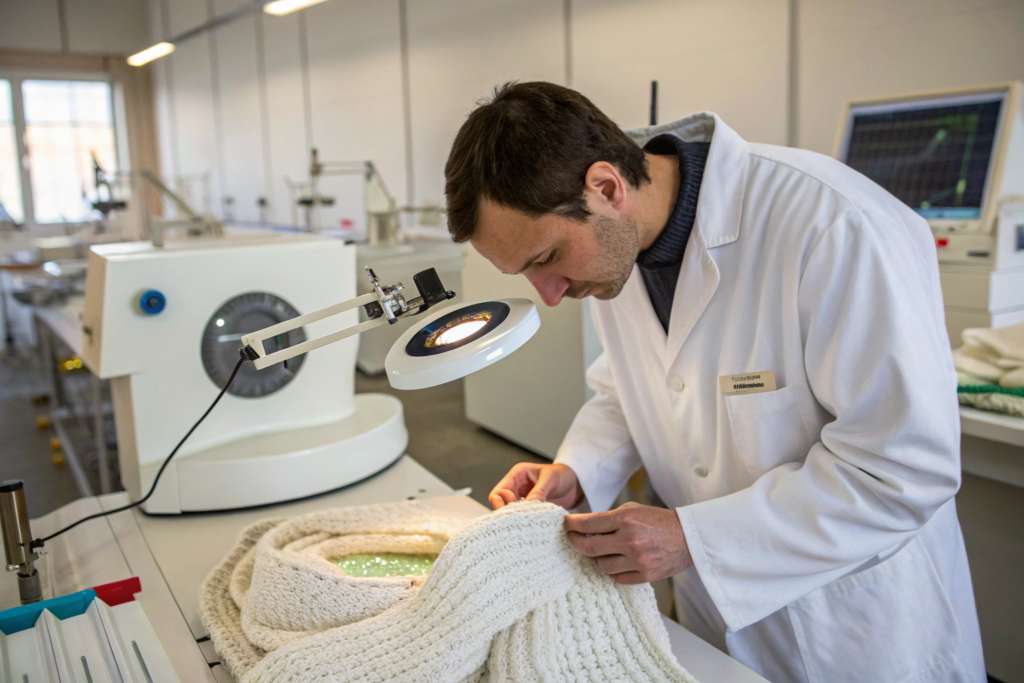
We sent the finished fabric to our CNAS-accredited lab. We tested for:
- Tencel/polyester blend ratio (verified)
- Anti-microbial efficacy (99.9% reduction after 50 washes)
- UPF rating (UPF 50+)
- Oeko-Tex Standard 100 (passed)
- Shrinkage (less than 2%)
- Colorfastness (Grade 4+)
Step 5: Sample to Client (Week 5)
We shipped the full test report and a 10-meter sample roll to Sweden. They tested it in their own lab. Everything matched.
They placed a 12,000-yard order. The fabric is now in production for their Fall 2024 collection. That’s the power of having a vertically integrated supply chain. We didn’t have to coordinate with five different factories. We owned or controlled every step.
What’s the Minimum Order Quantity for Custom Development?
This is a question we get all the time. For stock fabrics, we can do as little as 500 yards. For custom development, we usually require a minimum of 1,000 yards per color. Why? Because custom yarn has to be spun. Custom dyes have to be mixed. The machine setup takes time.
But we make exceptions for startups and small brands. If you’re launching a new collection and need a custom fabric but can’t commit to 1,000 yards, talk to us. We’ve worked with designers on 300-yard custom runs. We might charge a slightly higher per-yard price to cover the setup costs, but we’ll find a way to make it work.
We have a client in Los Angeles who started with a 500-yard custom run of a recycled nylon-spandex blend. That was two years ago. They’ve since grown into a 10,000-yard-per-season account. We grow with our clients.
Conclusion
Requesting a knitted fabric sample from China doesn’t have to be complicated. But it does require clarity, communication, and a supplier who treats your sample like the beginning of a partnership, not just a transaction. At Shanghai Fumao, we’ve spent over 20 years refining this process. We’ve seen what works and what doesn’t. We’ve learned from our mistakes and, more importantly, from the successes of our clients.
The key takeaways are simple:
-
Give us the details upfront. Fiber, weight, construction, color. The more specific you are, the faster we can move.
-
Understand our timelines. In-stock samples in 48 hours. Custom development in 7-10 days. Plan your production schedule around these realities.
-
Test your sample thoroughly. Check handfeel, stretch, shrinkage, and colorfastness. Ask us for our lab reports. We have them for every fabric we produce.
-
Use our QR code tracking. When you move to bulk, stay in control. Know where your fabric is at every stage.
-
Think long-term. The best relationships we have are with clients who treat sampling as an investment. They test. They refine. They build collections that stand out.
We’re here to help you build those collections. Whether you need a single swatch of organic cotton jersey or a fully custom-developed technical fabric, we have the infrastructure, the expertise, and the team to make it happen.
So, what are you waiting for? Reach out to our Business Director, Elaine, at elaine@fumaoclothing.com. Tell her what you’re working on. She’ll connect you with the right person on our sample team, and we’ll get started. Let’s turn your ideas into fabric you can feel.