You’ve done the hard part. You found the right fabric. You approved the samples. You paid the deposit. Now you’re waiting. And waiting. And waiting. The container was supposed to sail last week. Your freight forwarder says there’s a delay at the port. Your factory in Mexico is calling every day asking where the fabric is. Your retail partner is asking if you’ll hit the launch date.
I’ve seen this scenario play out hundreds of times. I’ve been the supplier on the other end of those panicked emails. And I’ve learned that most shipping delays are not random acts of fate. They’re predictable. They follow patterns. And with the right planning, they can be prevented or minimized.
At Shanghai Fumao, we ship fabric to over 100 countries. We’ve learned every shipping trick, every bottleneck, every seasonal pattern. We’ve made our own mistakes and learned from them. And we’ve built systems to help our clients avoid the most common shipping pitfalls.
Let me walk you through exactly how to prevent shipping delays when ordering knitted fabric from China. I’ll cover the planning you need to do before you place your order, the production tracking that keeps things on schedule, the logistics decisions that affect transit time, and the contingency plans that save you when things go wrong.
What Planning Can You Do Before Placing Your Order to Avoid Delays?
The best way to prevent shipping delays is to plan for them before you even place your order. I know that sounds obvious. But I can’t tell you how many clients come to us in January and say, “I need this fabric shipped by February 10th.” And February 10th is right in the middle of Chinese New Year when everything is closed for three weeks. If they had planned six weeks earlier, we could have made it work.

How Do Chinese Holidays Affect Shipping Timelines?
This is the single biggest factor that new buyers underestimate. Chinese New Year is the big one. The entire country shuts down for three to four weeks. Factories close. Freight forwarders close. Customs offices close. Nothing moves.
Golden Week in October is a one-week shutdown. It’s not as disruptive as Chinese New Year, but it still creates a backlog. Ships leave before the holiday, and then there’s a rush after. That rush creates its own delays.
Here’s how we advise our clients to plan around the holidays:
| Holiday | Typical Dates | When to Order for Pre-Holiday Shipment | When to Expect Post-Holiday Shipment |
|---|---|---|---|
| Chinese New Year | Late Jan to mid-Feb | Order by December 15 | Order after March 1 |
| Golden Week | October 1-7 | Order by September 10 | Order after October 20 |
A client from Canada learned this in 2023. They placed an order in mid-January. They assumed we would produce and ship by early February. We had to explain that the factories were closing in two weeks. We rushed the production, but we couldn’t get the fabric onto a vessel before the holiday. It sailed in late February. They missed their production window. Now they plan all their orders around the Chinese New Year cutoff. They tell us, “We treat December 15 like a hard deadline. If we miss it, we just wait until March.”
What About Peak Production Seasons?
Holidays are predictable. Peak production seasons are less predictable but equally disruptive. From March to May and August to October, the textile industry in Keqiao runs at full capacity. Every factory is busy. Every dyeing line is booked.
If you place an order during these peaks without planning ahead, you face longer lead times. What normally takes 4 weeks might take 6 or 7 weeks. And if something goes wrong—a machine breaks, a yarn shipment is delayed—the buffer is gone.
We tell our clients: if you know you need fabric for a summer collection, order it in January or February, before the spring peak. If you need fabric for a winter collection, order it in June or July, before the autumn peak. Use the slower months to get ahead.
In 2023, a client from the UK took this advice. They needed fabric for their Fall 2024 collection. They placed the order in June 2023, during the slower summer period. We produced it in 4 weeks. They had their fabric in July, six months before they needed it. When their competitors were scrambling during the autumn peak, they were already cutting and sewing.
How Does Your Order Complexity Affect Lead Time?
Not all orders are equal. A basic 180gsm cotton jersey in a standard color can be produced quickly. A custom jacquard with a special yarn blend and a complex finish takes longer.
We break orders into categories to help clients plan:
- Stock fabric orders: Fabric we have in inventory. Lead time is typically 1-2 weeks, plus shipping.
- Standard custom orders: Common yarns, standard weaves, stock colors. Lead time is typically 3-4 weeks, plus shipping.
- Complex custom orders: Specialty yarns, custom weaves, custom colors, special finishes. Lead time is typically 6-8 weeks, plus shipping.
If you’re ordering a complex custom fabric, you need to build that longer lead time into your schedule. A client from Australia learned this in 2024. They ordered a custom jacquard with a specialized water-repellent finish. They allowed 4 weeks for production. We told them we needed 8 weeks. They didn’t believe us. We produced it in 8 weeks. They missed their launch window. Now they ask us for lead time estimates before they finalize their collection calendar.
How Can You Track Production to Catch Delays Early?
Once your order is in production, you need visibility. The worst feeling is waiting until the scheduled ship date to find out that something went wrong two weeks ago. By then, it’s too late to fix without delaying your schedule.
What Production Tracking Systems Should You Expect?
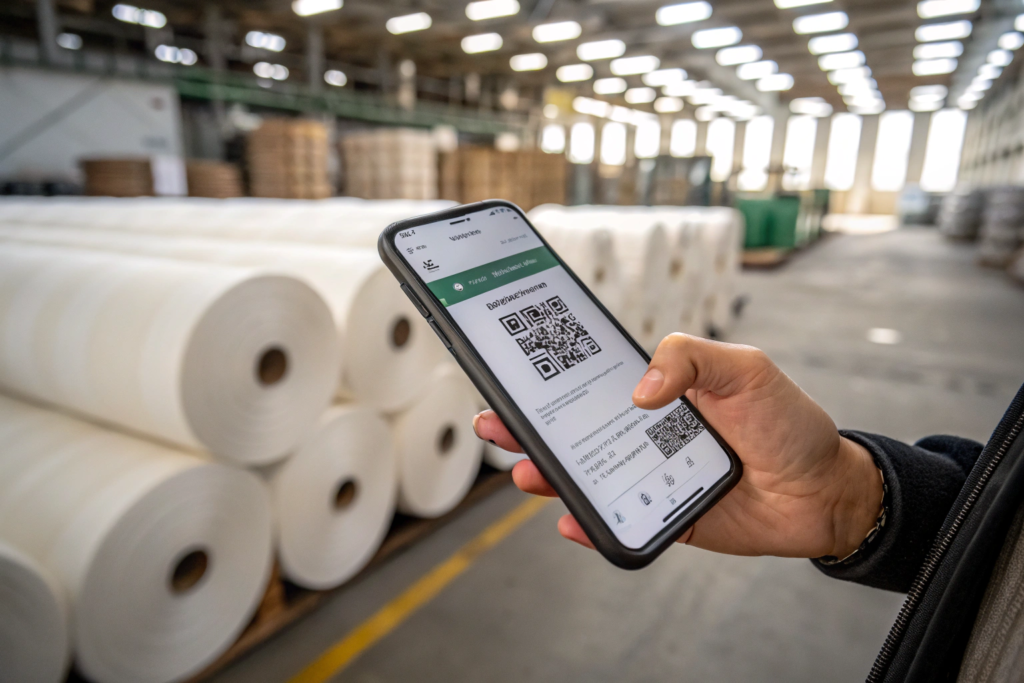
At Shanghai Fumao, we use a QR code tracking system that gives our clients real-time visibility. Every order gets a unique QR code. When you scan it, you can see:
- Yarn status: Has the yarn been sourced? Is it in our warehouse? Has it been tested?
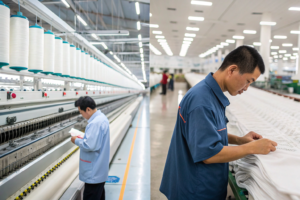
- Knitting status: Is the fabric on the knitting machine? How many rolls have been produced?
- Dyeing status: Has the fabric moved to dyeing? What’s the batch status?
- Finishing status: Is finishing complete? Have the test results come back?
- Inspection status: Has the fabric been inspected? What’s the pass rate?
- Packaging status: Is the fabric rolled and packed? Ready for shipping?
- Shipping status: Has the container been loaded? Has it departed? What’s the estimated arrival?
A client from New York told me in 2023, “I used to email my suppliers every day for updates. Now I scan the QR code every morning. I can see exactly where my fabric is. I don’t need to bother you. And when my boss asks, I have the answer in seconds.”
If your supplier doesn’t offer this level of tracking, you need to establish a regular update schedule. Ask for weekly production reports with photos. Ask to see the fabric on the machines. Ask for test results as they come in. A good supplier will provide this without hesitation.
What Milestones Should You Monitor?
If you’re tracking production yourself, here are the key milestones to watch:
Yarn Sourcing (Week 1-2)
This is where delays often start. If the yarn isn’t in stock, it needs to be ordered from a mill. That can take 1-2 weeks. Ask for confirmation that the yarn has been ordered and a delivery date.
Knitting Start (Week 2-3)
Once the yarn is in, knitting should begin. Ask for a photo of the fabric on the knitting machine. This confirms that production has actually started.
Knitting Completion (Week 3-4)
The fabric should be off the machines and ready for dyeing. Ask for the total yardage produced. Compare it to your order quantity. If there’s a shortfall, you need to know now.
Dyeing Start (Week 4)
The fabric should be in the dyeing factory. Ask for lab dip approval confirmation if it’s a custom color.
Dyeing and Finishing (Week 4-5)
This is where most technical problems happen. Color matching issues. Finish application problems. Ask for test results as they come in.
Inspection (Week 5-6)
The finished fabric should be going through inspection. Ask for the inspection report. If the defect rate is high, you need to know.
Packaging (Week 6)
The fabric should be rolled and packed. Ask for photos of the packed rolls. Confirm the number of cartons and the total weight.
Shipping (Week 6-7)
The container should be loaded and on its way to the port. Ask for the container number and the vessel name. Track it yourself.
A client from Germany used this milestone approach in 2023. They were ordering a complex custom fabric. At the knitting completion milestone, they saw that the yardage was 5% short. They asked us about it. We discovered a machine had broken during knitting. We adjusted the schedule and still shipped on time. If they hadn’t asked, they would have been surprised at the end.
What Should You Do When a Delay Happens?
Delays happen. Machines break. Yarn shipments get held up. Dyeing batches fail. The key is catching them early and having a plan.
If a delay is minor—a few days—we usually absorb it. We work overtime. We expedite the next step. We make up the time.
If a delay is significant—a week or more—we tell the client immediately. We explain what happened. We give a new timeline. And we offer options. Sometimes we can air freight a portion of the order to keep their production running while the rest comes by sea.
In 2023, we had an order for 15,000 yards of a specialty knit for a client in the US. During dyeing, one of the batches failed the colorfastness test. It needed to be re-dyed. That added 10 days. We told the client immediately. They had a factory in Mexico waiting. We air freighted 2,000 yards to keep their line running while the rest was re-dyed and shipped by sea. They were annoyed about the delay, but they appreciated the transparency and the solution.
What Logistics Decisions Affect Shipping Timelines?
Once your fabric is produced and packed, the shipping process begins. This is where many buyers think their job is done. But the decisions you make at this stage can add weeks to your timeline or save them.
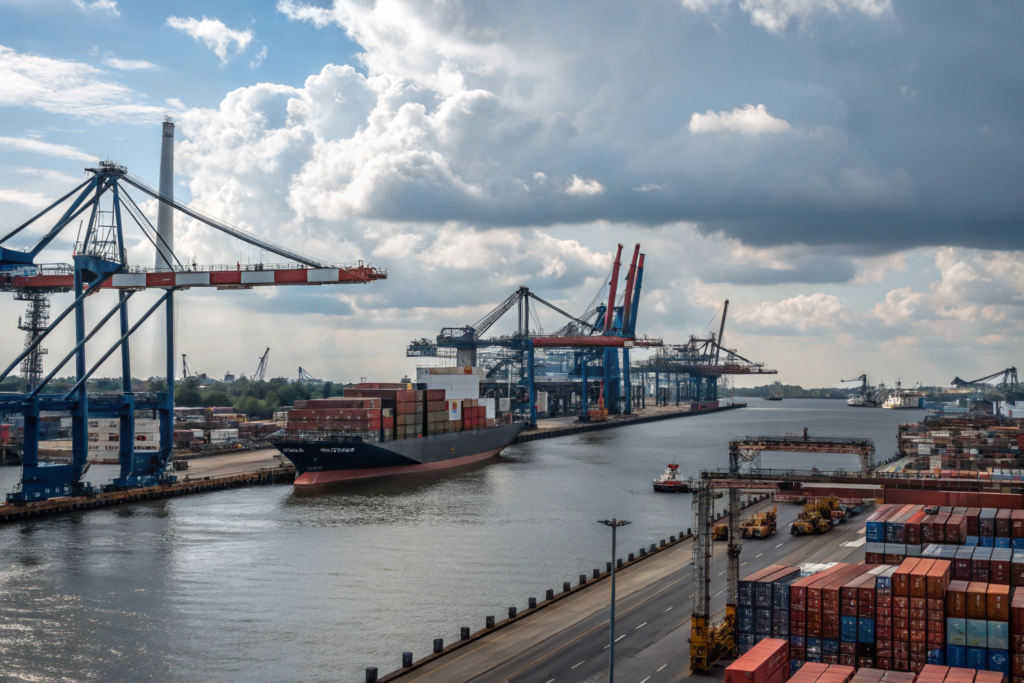
How Do You Choose Between Sea Freight and Air Freight?
This is the biggest decision. Sea freight is cheaper but slower. Air freight is faster but expensive.
Here’s the breakdown:
| Shipping Method | Transit Time to US West Coast | Transit Time to US East Coast | Transit Time to Europe | Typical Cost for 1,000kg |
|---|---|---|---|---|
| Sea Freight (LCL) | 18-22 days | 25-30 days | 25-35 days | $800-$1,200 |
| Sea Freight (FCL) | 16-20 days | 22-28 days | 22-30 days | $3,000-$5,000 per container |
| Air Freight | 3-5 days | 3-5 days | 3-5 days | $6,000-$8,000 |
For most of our clients, sea freight is the default. It’s cost-effective. But if you’re in a rush—if you missed your production window, if your factory is waiting, if your launch date is fixed—air freight can save you.
A client from Texas learned this in 2024. They placed their order late. By the time we finished production, they had two weeks before their factory in Vietnam needed the fabric. Sea freight would have taken three weeks. They paid for air freight. It cost them $7,000 more. But they hit their launch date. They told me, “The $7,000 was painful. But missing the launch would have cost us $50,000 in lost sales. It was worth it.”
What’s the Difference Between FCL and LCL?
FCL stands for Full Container Load. LCL stands for Less than Container Load.
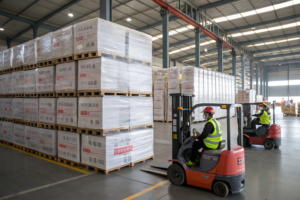
If you’re ordering enough fabric to fill a 20-foot or 40-foot container, FCL is usually faster. The container goes directly from the factory to the vessel. There’s no consolidation, no waiting for other shipments.
If you’re ordering less than a full container, LCL means your fabric gets consolidated with other shipments at a warehouse. Then it gets loaded onto a vessel. At the destination, it gets deconsolidated. This adds time—usually 3-7 days on each end.
A client from the UK always orders in full container quantities for this reason. They told me, “I could order less and save on inventory cost. But the extra time and handling with LCL always causes problems. I’d rather order more and have control.”
If you’re ordering smaller quantities, you need to factor the consolidation time into your schedule. Ask your freight forwarder how long consolidation typically takes. Some ports are faster than others.
How Do You Choose the Right Port?
This matters more than you might think. Not all ports are equal. Some are more congested. Some have better customs clearance. Some have more vessel options.
For the US, the West Coast ports—Los Angeles, Long Beach, Oakland—are the busiest. They also have the most congestion. During peak seasons, vessels can wait days or weeks to unload.
East Coast ports—New York, Savannah, Charleston—are often less congested. But transit time is longer from China.
For Europe, Rotterdam is the largest port. But Hamburg, Antwerp, and Felixstowe are also popular. Each has its own congestion patterns.
We advise our clients to work with a freight forwarder who has strong relationships at the destination port. A good forwarder can navigate congestion, expedite clearance, and get your fabric to your door faster.
In 2022, a client from the US had a container stuck in Los Angeles for 10 days waiting to unload. Their factory was waiting. They lost production time. Now they ship to the East Coast whenever possible. The longer ocean transit time is predictable. The port congestion is not.
What Documentation Do You Need to Avoid Customs Delays?
Customs clearance is where many shipments get held up. Missing paperwork. Incorrect classifications. Discrepancies between the commercial invoice and the packing list.
Here’s the documentation we provide for every shipment:
- Commercial invoice: Shows the value, quantity, and description of the goods.
- Packing list: Shows the number of cartons, the weight, and the dimensions.
- Bill of lading: The contract between the shipper and the carrier.
- Certificate of origin: For tariff purposes.
- Fabric test reports: To verify quality and composition.
- Certifications: GOTS, GRS, Oeko-Tex, if applicable.
We provide all of this digitally before the vessel departs. Your freight forwarder should have everything they need to clear customs the day the vessel arrives.
A client from Canada told me in 2023, “My previous supplier always sent the paperwork late. The container would arrive, and we’d be scrambling to get the documents. With you, everything is ready before the vessel even sails. My customs broker loves it.”
What Contingency Plans Should You Have in Place?
Even with the best planning, things can go wrong. Vessels get delayed. Ports close. Customs holds shipments. Having a contingency plan means you’re not caught off guard.
What’s Your Buffer Time?
The most important contingency is time. We tell all our clients: build buffer into your schedule.
If you need fabric by a certain date, work backward and add buffer. Here’s a realistic timeline for a standard order:
- Production: 4 weeks
- Buffer: 2 weeks
- Sea freight: 3 weeks
- Customs clearance: 1 week
- Inland transport: 1 week
That’s 11 weeks from order to delivery. If you need fabric in 8 weeks, you’re cutting it close. If you need it in 6 weeks, you’re in rush territory.
A client from Australia learned this in 2023. They planned their collection with a 6-week lead time. The fabric was late by 2 weeks. They had to air freight part of the order to keep their production line running. Now they plan with a 12-week lead time. They told me, “I’d rather have the fabric early and store it than be late and panic.”
What’s Your Split Shipment Plan?
If you’re ordering a large quantity, consider splitting the shipment. Send a portion by air freight to cover immediate production needs. Send the rest by sea freight.
This is a common strategy for our clients who are launching new collections. They need the fabric to start production, but they don’t need all of it at once.
In 2024, a client from the UK ordered 10,000 yards for a new collection. We shipped 2,000 yards by air freight and 8,000 yards by sea freight. The air freight arrived in 5 days. Their factory started cutting immediately. The sea freight arrived 3 weeks later, just as they were finishing the first run. They had no downtime. The extra cost of air freight was offset by the savings from avoiding production delays.
What’s Your Backup Supplier?
This is controversial, but I’ll say it anyway. Having a backup supplier is smart. Not because you don’t trust your primary supplier. But because things happen. A fire at a factory. A strike at a port. A global pandemic. We’ve seen all of these.
We don’t take it personally when clients have backup suppliers. We have backup suppliers for our own raw materials. It’s just good business.
If you’re working with a primary supplier, maintain relationships with one or two others. Not for every order. But for when things go wrong. A client from Germany told me, “I have three suppliers for my core fabrics. I use you for 80% of my volume. But if something happens, I can shift production to another factory within a week. That peace of mind is worth the extra relationship management.”
Conclusion
Shipping delays are a fact of life when sourcing from China. But they don’t have to be a crisis. With the right planning, tracking, logistics decisions, and contingency plans, you can prevent most delays and manage the ones that happen.
At Shanghai Fumao, we’ve built our business around helping clients avoid these pitfalls. We track production with QR codes so you always know where your fabric is. We plan around Chinese holidays and peak seasons so you’re not caught off guard. We provide all the documentation you need for smooth customs clearance. And when things go wrong—because they sometimes do—we tell you immediately and work with you to find a solution.
I’ve been in this industry for over 20 years. I’ve seen the best and worst of shipping. I’ve learned that the difference between a stressful delay and a manageable one is communication and planning. A supplier who keeps you in the dark is a liability. A supplier who brings you into the process is a partner.
That’s the kind of partner we strive to be. We’re not just here to sell you fabric. We’re here to help you get that fabric to your factory on time, every time.
If you’re planning an order and you want to make sure it ships on schedule, I want you to reach out to our Business Director, Elaine, at elaine@fumaoclothing.com. Tell her your timeline. Tell her your quantity. Tell her your destination. She’ll walk you through our production planning and help you build a schedule that works.
We’ve shipped fabric to over 100 countries. We know the routes. We know the seasons. We know the pitfalls. Let us help you avoid them.