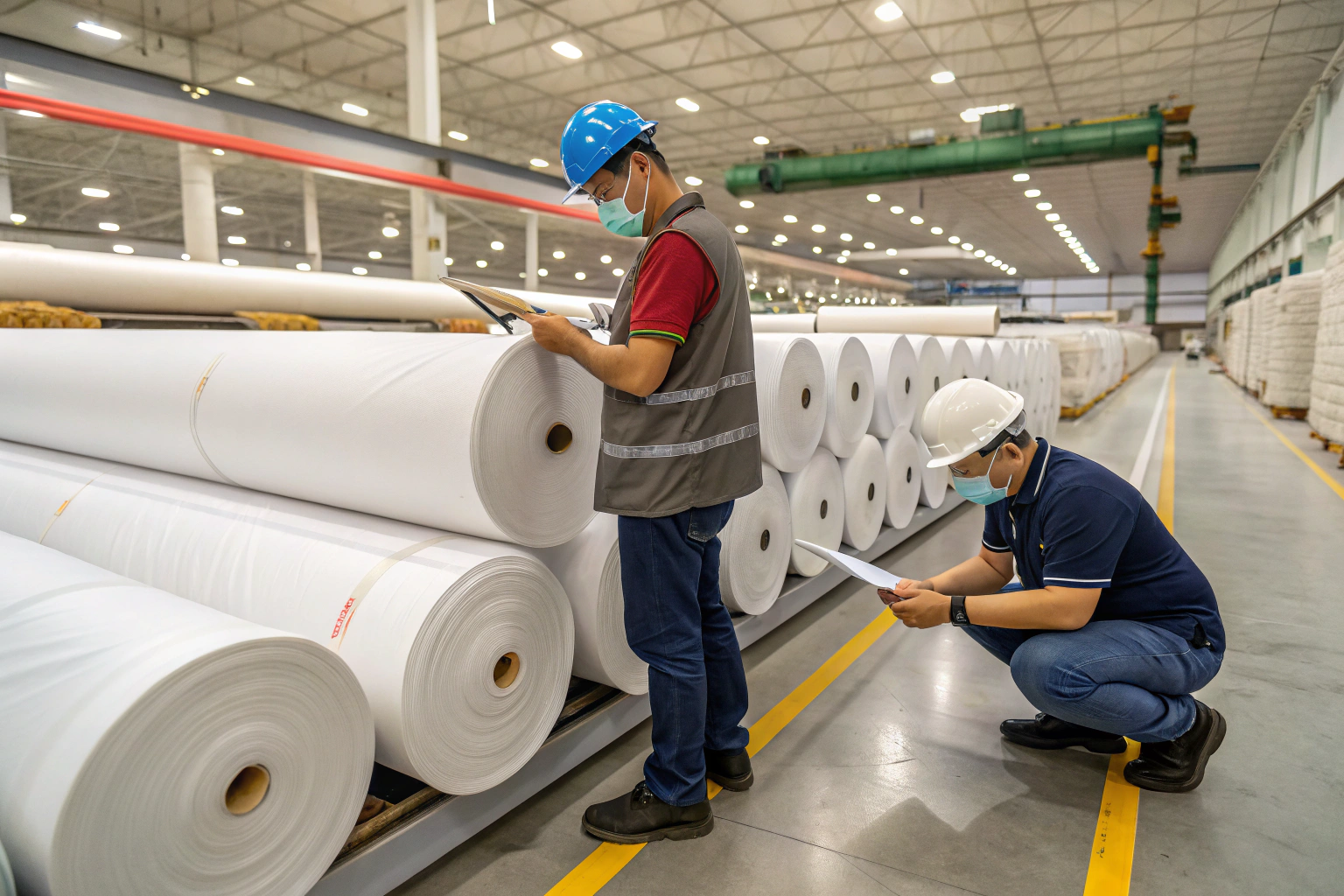
You've placed your fabric order overseas. The initial sample was perfect, but when the bulk shipment arrives, the color is off, the width is wrong, and there are flaws every few meters. Your production line stops dead. Chargebacks loom. The time and money lost feel catastrophic. This nightmare is avoidable, but preventing it requires moving beyond hope and into a system of proactive, documented control.
The most effective way to prevent quality issues when ordering fabrics overseas is to implement a rigorous, multi-stage quality management protocol that spans from supplier vetting to pre-shipment inspection. It hinges on clear communication, standardized testing, and on-the-ground verification. Success isn't about finding a perfect supplier; it's about building a process that catches and corrects imperfections before they ever leave the factory.
At Shanghai Fumao, we've been both the manufacturer and the quality gatekeeper for global brands for over 20 years. I've seen every kind of quality failure, and more importantly, I know exactly what stops them. Let me walk you through the actionable system that will protect your orders, your timeline, and your brand reputation.
Why is the "Golden Sample" and Spec Sheet Your First Defense?
The root of most quality disputes is a mismatch in expectations. What you imagine and what the factory produces can be worlds apart if not anchored to an irrefutable standard. Your first line of defense isn't an inspector; it's a perfectly defined benchmark.
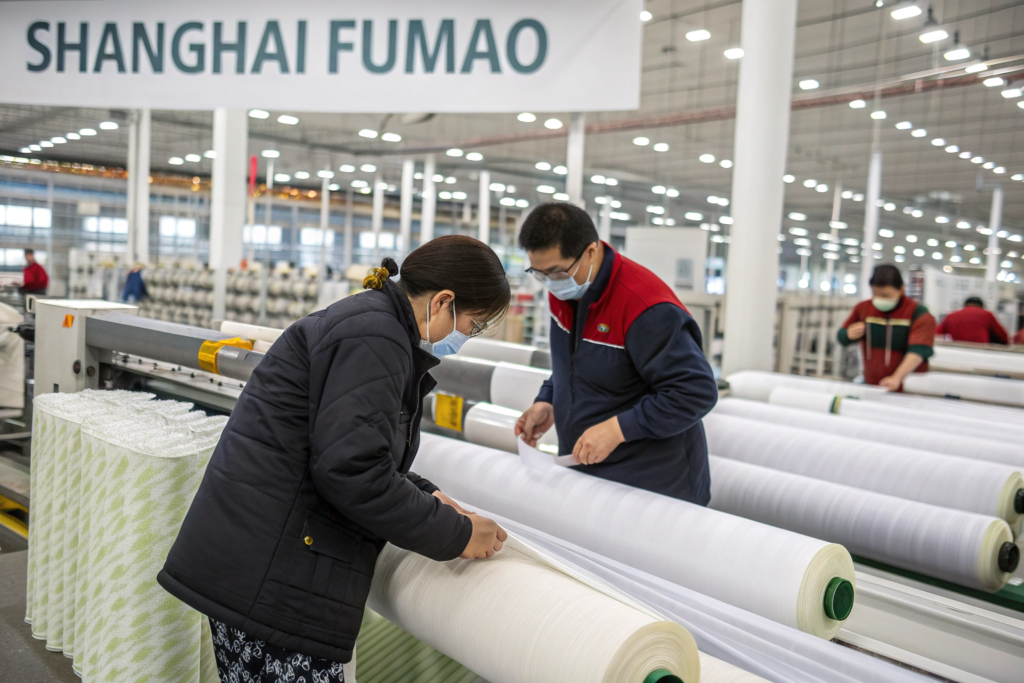
How do I create a bulletproof reference for the factory?
Your reference package must be so clear that it leaves zero room for interpretation. It consists of three non-negotiable elements:
-
The Approved Physical Sample (The "Golden Sample"): This is not just a sample; it's THE sample. It should be signed, dated, and sealed by both you and the supplier. Physically attach a label with critical info: fabric code, composition, GSM, and your approval date. Keep one, send one to the factory. This sample is the absolute standard for hand feel, color, and aesthetic appearance.
-
The Detailed Technical Specification Sheet: The spec sheet translates the sample into measurable data. It must include:
- Full Composition: Not just "cotton blend," but "55% Combed Organic Cotton, 45% Recycled Polyester (rPET), GS-4B322 Certificate."
- Weight & Dimensions: Grams per Square Meter (GSM), fabric width (in cm/inches, specify if finished or usable width).
- Construction: Yarn count (e.g., 40/1), weave type (plain, twill, satin), threads per inch (TPI).
- Color Standard: Provide Pantone codes, Lab Dip approval records, or digital color files. State the acceptable Delta E tolerance (e.g., ∆E < 2.0 under D65 light).
-
The Testing Protocol Agreement: Before production starts, agree on which international testing standards the fabric must pass. Common ones include:
- Colorfastness: AATCC 61 (washing), AATCC 16 (light)
- Dimensional Stability: AATCC 135 (shrinkage)
- Physical Performance: ASTM D5034 (tensile strength), ASTM D4966 (abrasion)
- Safety: OEKO-TEX Standard 100, REACH SVHC compliance
We had a client from Germany who, in early 2023, ordered a performance twill for workwear. By providing a golden sample and a spec sheet that mandated a hydrostatic pressure test of 3000mm (AATCC 127) and a tear strength over 15N (ASTM D1424), the bulk production matched the sample exactly. There were no surprises because everything was quantified upfront. For complex orders, using a comprehensive fabric specification template is invaluable.
What common mistakes destroy this first defense?
- Approving a "Close Enough" Sample: If the lab dip is 90% there, don't approve it. The bulk will be worse. Hold the line.
- Using Vague Language: Terms like "good quality," "soft hand feel," or "dark blue" are meaningless. Replace them with data.
- Not Including Tolerances: Specify acceptable tolerances for weight (±3%) and shrinkage (±5%). This prevents disputes over natural manufacturing variances.
When you provide this level of clarity, you separate professional suppliers from amateur ones. A good factory, like ours at Shanghai Fumao, welcomes detailed specs—it protects both of us.
How Does In-Process Quality Control (IPQC) Stop Defects Early?
Waiting to inspect fabric only after the entire 10,000-meter order is complete is a recipe for disaster. By then, the cost of correction is astronomical. In-Process Quality Control (IPQC) is about catching errors at each production stage, when they can be fixed with minimal waste and delay.

What key stages should be monitored during production?
A robust IPQC system checks the fabric as it moves through the pipeline:
| Production Stage | What to Check For | Who Should Check |
|---|---|---|
| Yarn/ Raw Material Incoming | Yarn count, strength, evenness, and certification for claimed attributes (e.g., organic, recycled). | Factory QC / Your Agent |
| Weaving/Knitting | Density (ends/picks per inch), width, visual defects like holes, slubs, or wrong draw. | Factory Loom Operator & QC |
| Dyeing & Finishing | Color matching vs. approved lab dip, shade uniformity side-to-side and end-to-end, pH value, and application of functional finishes. | Factory Lab & QC |
| Final Inspection (Pre-Shipment) | Comprehensive 4-point or 10-point system inspection for all visual and measurable defects. | Independent Third-Party Inspector |
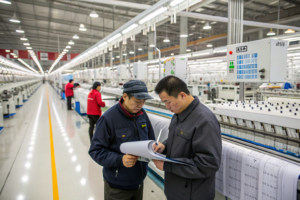
For example, a U.S. client ordering a printed velour had our IPQC team on-site during the brushing process. We caught that the brushing pressure was uneven, which would have led to inconsistent pile height and color absorption. The machine was adjusted mid-batch, saving the entire order from being rejected later. This is the power of intervention.
Why is a Pre-Shipment Inspection (PSI) non-negotiable?
The Pre-Shipment Inspection is your final gate. Never skip it. An independent inspector (not the factory's QC) should perform this against the AQL (Acceptable Quality Level) standard, usually AQL 2.5 for major defects and AQL 4.0 for minor defects for garments.
The PSI report will tell you:
- The defect count and whether it passes the AQL.
- Measurements of weight, width, and color.
- On-site test results (like a simple shrinkage test).
- Photos of defects and packaging.
In late 2022, a PSI for a UK client's organic cotton sateen order revealed a recurring weaving flaw (barre) that the factory's final inspection had missed. Because we caught it before shipment, the factory was responsible for replacing the faulty rolls. If it had been caught at the client's warehouse, the blame game and cost would have been a nightmare. A reliable guide to AQL inspection for textiles is a must-read for any buyer.
How Can Technology and Clear Contracts Enforce Quality?
In today's world, relying solely on human checks and paper documents is risky. Leveraging technology and legally clear agreements creates an objective, traceable quality framework that holds everyone accountable.

What digital tools provide transparency and proof?
- QR Code Tracking: At Shanghai Fumao, we're implementing QR codes on every roll. Scanning it reveals the fabric's birth certificate: composition test report, dye lot number, inspection report, and shipping details. This traceability is priceless.
- Digital Color Matching Spectrophotometers: These devices measure color objectively, giving a Delta E number. Insist that lab dip and bulk production reports include this data. It removes subjective "it looks okay" judgments.
- Cloud-Based Collaboration: Use platforms to share inspection reports, photos, and comments in real time. This creates a single source of truth and an audit trail.
Why must your contract protect you on quality terms?
Your purchase contract must explicitly detail quality protocols and recourse. Key clauses should cover:
- Approval Rights: You have the right to approve lab dips, pre-production samples, and bulk samples before full production runs.
- Inspection Rights: You or your designated third party have the right to conduct IPQC and PSI at the factory. The factory must provide access.
- Rejection & Remedies: Clearly state that goods failing PSI or not meeting spec are rejectable. Specify remedies: rework at the factory's cost, discount, or order cancellation with full refund.
- Warranty: The supplier warrants that the goods are free from defects and meet all specifications.
A strong contract turns your quality requirements from requests into binding obligations.
What Are the Human and Partnership Factors in Quality Assurance?
Ultimately, quality is delivered by people. The relationship you build with your supplier can determine whether they go the extra mile to fix a minor issue or hide it from you.

How does supplier selection and relationship building impact quality?
Choosing the right partner is 80% of the quality battle. Look for:
- Vertical Integration: Factories like ours that control weaving, dyeing, and finishing have better command over the process.
- Investment in Lab Equipment: A factory with its own CNAS-accredited lab (like ours) is serious about self-policing.
- Transparent Communication: Do they respond openly to questions, or do they get defensive?
Build the relationship by being a good partner yourself: pay on time, give realistic lead times, and communicate clearly. Visit the factory if possible. Seeing their operation builds mutual respect. We remember the clients who treat us as a strategic partner, and we prioritize their quality.
When should you consider using a sourcing agent or inspection company?
If you cannot manage this process remotely:
- Use a Reputable Sourcing Agent: A good agent based in the region acts as your eyes and ears. They understand local practices and can conduct unannounced checks. Their fee is insurance.
- Hire a Professional Inspection Company: For PSI, companies like SGS, Bureau Veritas, or Intertek provide globally recognized reports. Their neutrality is key.
A client from Australia, new to sourcing, used a local agent to manage their first order of linen blends. The agent conducted three in-process checks, negotiated corrections, and delivered a flawless PSI report. The client paid a fee but slept soundly, avoiding costly beginner mistakes. Understanding the role of sourcing agents in quality control can be a game-changer for SMEs.
Conclusion
Preventing quality issues in overseas fabric sourcing is not a matter of luck; it's a disciplined, process-driven endeavor. It starts with crystalline specifications, is enforced through vigilant in-process and pre-shipment inspections, is bolstered by technology and strong contracts, and is ultimately sustained by choosing and nurturing the right supplier partnership.
The goal is to move from fire-fighting defects to building a system where quality is engineered into the order from the first conversation. This proactive approach saves not only money and time but also protects your brand's most valuable asset—its reputation for reliability.
Implementing this system might seem daunting, but you don't have to do it alone. At Shanghai Fumao, our integrated model and CNAS-certified lab are designed to provide this level of quality assurance inherently. We invite you to partner with a supplier that understands quality from the inside out. To discuss how we can build a transparent and reliable quality protocol for your next fabric order, contact our Business Director, Elaine. Let us show you how a true partnership can eliminate quality worries. Reach Elaine at elaine@fumaoclothing.com.