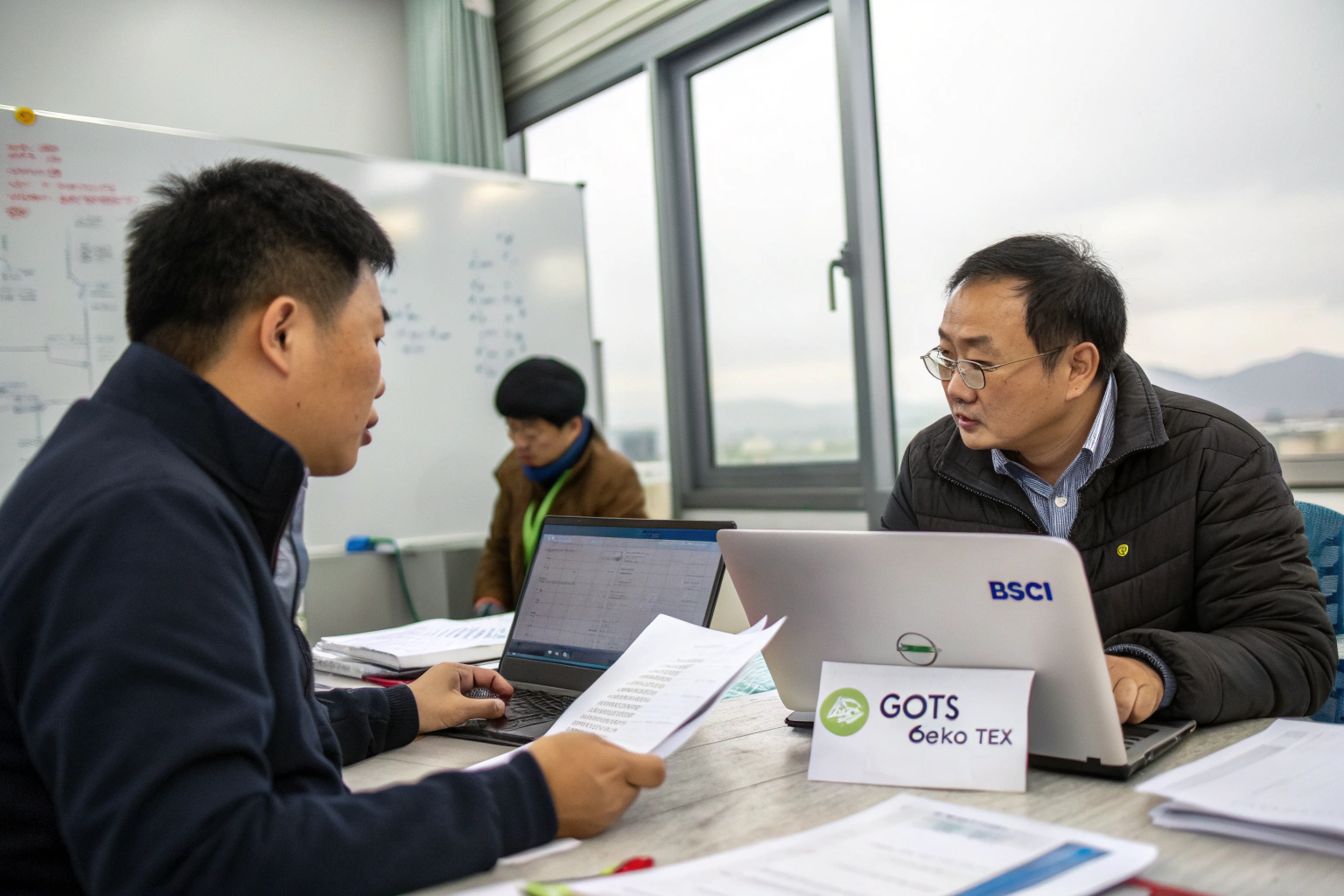
You've found a certified manufacturer with great samples. Their price quote lands in your inbox, and your heart sinks. It's 25% over your target FOB. Your instinct is to hit reply and type, "Your price is too high. Can you do better?" Stop. That email will get you nowhere, or worse, a cheap substitute that blows up later. Negotiating with a certified, capable manufacturer isn't about haggling over pennies; it's about structuring a partnership where both sides win on value, not just price. The old-school bully tactics will only get you relegated to their "problem client" list. So, how do you unlock better terms, prioritize your orders, and build leverage when they clearly hold the technical cards? You negotiate like a partner, not a predator.
The foundational truth is this: certified manufacturers (GOTS, OEKO-TEX®, BSCI, etc.) have real, auditable costs that uncertified factories do not. They pay for third-party audits, premium certified raw materials, wastewater treatment, and higher wages. A 10% price cut demand often translates directly to them swapping your GOTS cotton for conventional, or skipping a safety test. Your goal isn't to crush their margin, but to help them reduce the cost of serving you while protecting their legitimate profit. This shifts the conversation from adversarial "you vs. me" to collaborative "how can we." It's the difference between being a transactional buyer and becoming a strategic client they invest in.
From our boardroom at Shanghai Fumao, I can tell you we have a simple internal classification: "Price Buyers" and "Value Partners." Price Buyers get our standard quote and the bare minimum service. Their orders are the first to be delayed during peak season. Value Partners get our cost engineers involved early, enjoy payment term flexibility, and their projects are prioritized on the production line. The irony? Over a 12-month period, the Value Partner often achieves a lower total cost of ownership through fewer delays, zero quality disasters, and operational efficiencies we co-create. That's the real negotiation win.
How Does Understanding Their Cost Structure Build Your Leverage?
Walking into a negotiation blind to your supplier's cost drivers is like negotiating in the dark. A certified manufacturer's cost isn't just "fabric + labor + profit." It's a detailed structure of Certified Material Costs, Compliance Overhead, and Complexity Surcharges. When you understand these, you can make intelligent requests that save them money, which they can then share with you, instead of just demanding a discount that erodes their viability.
Break down their quote. For a GOTS-certified organic cotton T-shirt, the major cost buckets are:
- GOTS Organic Cotton Yarn: 15-30% more expensive than conventional, depending on the season and origin.
- GOTS-Approved Dyes & Chemicals: More expensive and often have lower color yield.
- Certification & Audit Fees: Annual fixed costs for maintaining the certificate.
- Wastewater Treatment: Mandatory for environmental compliance.
- Social Compliance Costs: Fair wages, safe dormitories, etc., verified by BSCI/Sedex audits.
When you ask for a 10% discount, you're asking them to cut from these real, verified costs. A smarter approach is to ask: "Looking at this quote, which area has the most flexibility if we adjust our specs or timeline?" This shows expertise and opens a constructive dialogue.

Where Are the Hidden Cost Drivers in Complex Orders?
For orders beyond basic tees, complexity is the silent cost multiplier. Your negotiation leverage increases if you can identify and potentially simplify these complexities:
- Fabric Sourcing Lead Time: A custom-dyed, jacquard fabric from scratch has a 45-day lead time. Using a stock GOTS fabric from their inventory can cut 30 days.
- Trim & Component Multiplicity: 10 different button types vs. 2. Each extra SKU adds sourcing, QC, and handling cost.
- Packaging Complexity: Individual polybags, folded vs. flat pack, custom hangtags—each adds labor.
- Testing & Inspection Frequency: Requiring an SGS test on every single color vs. a random selection of 3.
In a recent negotiation with a German activewear brand, they had 12 different colorways for the same legging style. We proposed reducing it to 8 core colors for the first order, offering a 3% price reduction and a 2-week faster delivery. They agreed and used the savings to upgrade the fabric's moisture-wicking finish. This is value engineering, not discounting. Understanding apparel cost drivers from a factory perspective is crucial for this dialogue.
How Can Your Order Pattern Lower Their Operational Costs?
Factories have two major cost sinks: machine setup time/downtime and administrative overhead. You can negotiate better pricing by aligning your orders to reduce these.
- Consolidate Orders: Instead of placing ten 500-piece POs throughout the year, commit to a 5,000-piece forecast with staggered delivery dates. This lets them buy materials in bulk and plan production efficiently.
- Standardize Development: Use their existing block patterns or fabric libraries where possible. A completely new pattern from scratch can cost $200-$500 in engineering time.
- Streamline Communication: Appoint one point of contact on your side and agree to weekly update calls. This reduces the back-and-forth emails that drain their project manager's time.
We offer a loyalty discount tier specifically based on annual order volume and forecast commitment. It's not a secret; it's transparently shared with clients who ask about long-term partnerships. Articles on strategic sourcing vs. transactional purchasing explain this shift in mindset.
Why Is Timing Your Negotiation Critical for Maximum Concessions?
In manufacturing, timing is everything. The same request made at the wrong time gets a flat "no." Made at the right time, it gets a "yes, and here's what else we can do." Your leverage fluctuates dramatically with the factory's production calendar and internal capacity. Negotiating terms right after they've delivered a perfect order for you is powerful. Negotiating while they're fighting a fire for another client is useless. You need to understand their rhythm.
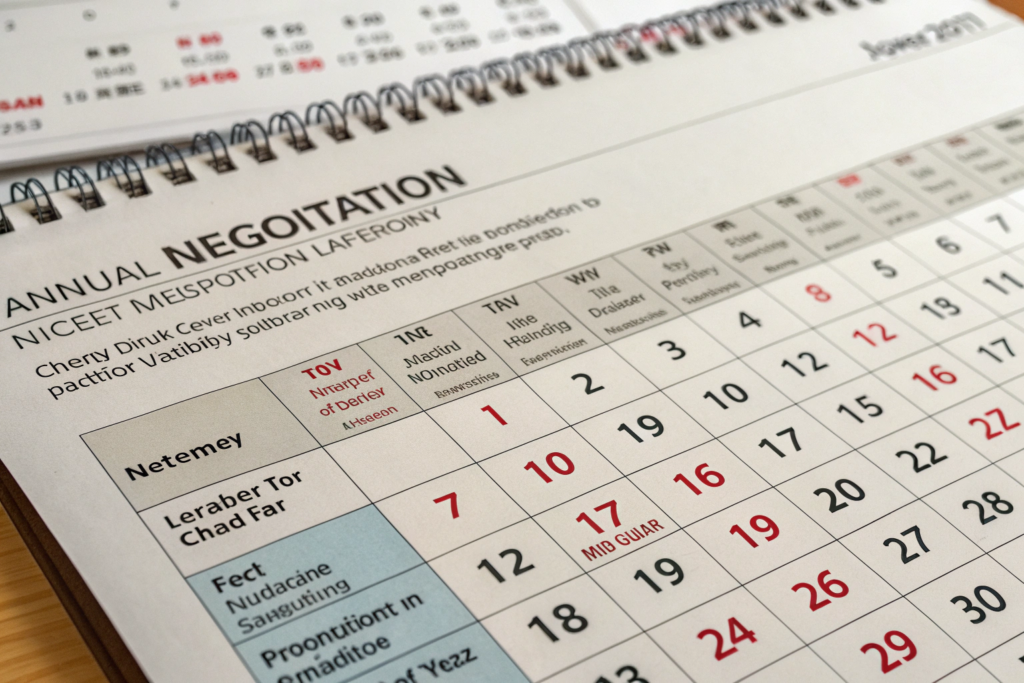
The annual negotiation calendar of a Chinese factory looks like this:
- Highest Leverage (Best Time to Negotiate):
- November - December: Post-Canton Fair, pre-Chinese New Year (CNY). Factories are securing orders for Q1 to keep workers busy after the holiday. They are motivated.
- June - July: The summer lull between Spring and Fall peaks. Capacity is open.
- Lowest Leverage (Worst Time to Negotiate):
- March - May & August - October: Peak production seasons. Every line is booked. Your threat to walk away is meaningless; ten others are in line.
- 1 Month Before CNY: Pure chaos. Everyone is rushing. No one has mental space for negotiation.
How to Use the Production Cycle to Your Advantage?
Align your negotiation with their order intake cycle. When you receive a quote, ask about their current production load. If they say they're busy until October, and it's August, you have little leverage on lead time or price. Instead, say: "I understand you're at peak capacity. If we plan this for a November production slot, can we work on the cost structure now?" This shows respect for their business and moves you to the front of the queue for the next cycle, where you can negotiate from a position of strength. We often reserve "development capacity" during peaks for strategic partners who plan with us, while pushing transactional buyers to the back. A post on understanding Chinese factory production cycles can provide more seasonal insights.
What Concessions Are Most Obtainable During Slow Periods?
When a factory has idle capacity, their cost of taking your order is lower. They are more likely to offer concessions that utilize fixed resources (like their sewing lines) without increasing variable costs. These can include:
- Lower Minimum Order Quantities (MOQs): They'd rather run a small order than have the line sit empty.
- Waived Sample Fees: Normally $150-$300 per sample, these can be waived or credited against your first bulk order.
- More Favorable Payment Terms: Instead of 50% deposit, they might accept 30%.
- Value-Added Services at Cost: Like offering a free wear-and-wash test on prototypes.
In Q4 of last year, a promising startup approached us with a complex technical jacket but a tiny MOQ. Because it was our slower period and their design had high potential, we agreed to a pilot run of 300 pieces at near-cost, in exchange for a first-right-of-refusal on their Series A production. That startup is now a top-5 client. This is strategic negotiation. Forums like Maker's Row often discuss MOQ negotiation strategies.
How to Use Long-Term Partnership as Your Strongest Bargaining Chip?
The most powerful word in your negotiation vocabulary is "future." A factory's biggest fear is idle capacity; their biggest desire is predictable, growing business from a low-maintenance client. If you can credibly present yourself as that client, you unlock concessions a one-off buyer can only dream of. This isn't about empty promises; it's about presenting a credible business case for partnership.
Frame the negotiation around a 12-month rolling forecast, not a single PO. Show them your product roadmap. Say: "This first order is for 2,000 units. If the quality and partnership are solid, our forecast for this style alone is 10,000 units over the next 12 months across 4 colors. What terms can you offer us to grow this together?" This changes their calculus immediately. You're no longer a cost; you're an investment.

What Tangible Benefits Can a Partnership Unlock?
When you negotiate as a partner, you can ask for and receive:
- Cost-Plus Pricing Models: Instead of fixed FOB, some factories will agree to "material cost + agreed margin % + labor cost." This ensures transparency and fairness as raw material prices fluctuate.
- Joint Investment in Tooling: Splitting the cost of a custom mold for plastic components or a special pressing machine.
- Dedicated Production Line or Team: Ensuring consistency and priority for your orders.
- Integrated Planning: Their production planner attends your seasonal line review meetings (virtually).
At Shanghai Fumao, our top 20% of clients (by partnership value, not just volume) have access to our open-book costing for key projects and a dedicated account management team that includes a production engineer. We negotiate with them on how to hit a target cost, not against them on a quoted price. Studies on supplier relationship management (SRM) in apparel quantify the benefits of such deep partnerships.
How to Structure a Formal Partnership Agreement?
Move beyond the PO. Propose a simple Master Services Agreement (MSA) or Annual Framework Contract. This document can stipulate:
- Pricing Review Mechanism: e.g., Quarterly reviews based on raw material indices.
- Volume-Based Rebate Tiers: e.g., 2% rebate on total annual spend over $500,000.
- Key Performance Indicators (KPIs): On-time delivery rate, first-pass quality yield. Agree on bonuses/penalties.
- Conflict Resolution Process.
Having this framework makes every new PO negotiation faster and builds immense trust. It signals you're serious. You can find templates for apparel manufacturing framework agreements through industry legal resources.
What Are the Non-Price Terms You Should Always Negotiate?
Focusing solely on FOB price is rookie mistake. Often, the most valuable concessions cost the factory little but save you tremendously. Smart negotiators prioritize terms that de-risk their business and improve cash flow. These are often easier for a good factory to grant than a straight price cut.
Always negotiate these key terms:
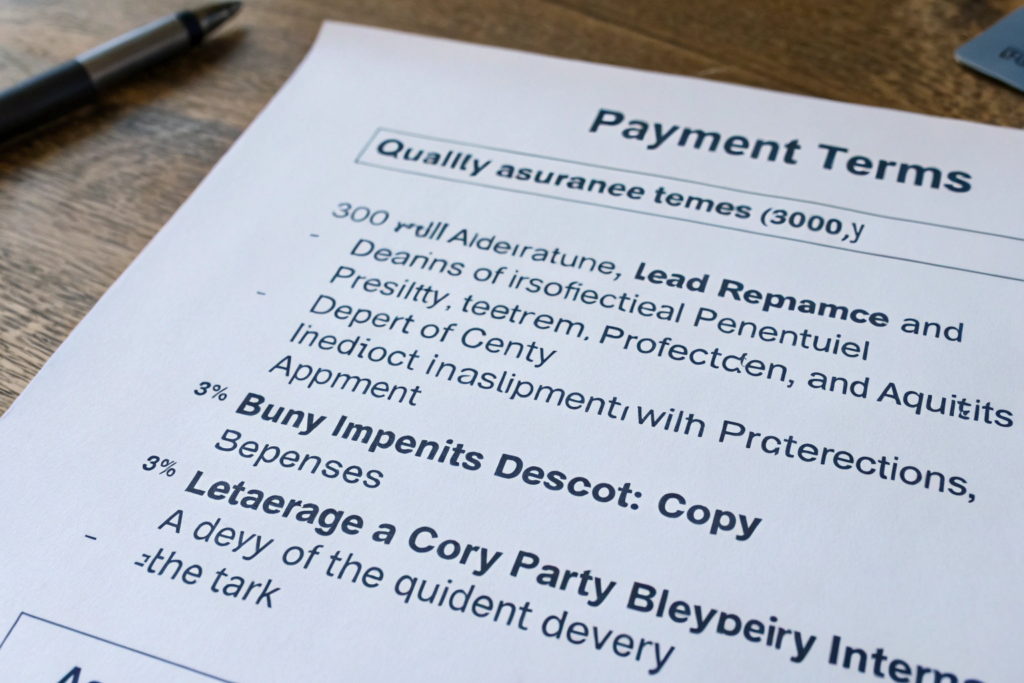
- Payment Terms: The standard is 30% deposit, 70% before shipment. Try for 30/70 against copy of Bill of Lading, which gives you leverage until goods are actually shipped. For repeat orders, aim for 30% deposit, 70% net 30 days after shipment.
- Quality Assurance & Rejection Rights: Define the AQL (Acceptable Quality Level) standard (e.g., 2.5 for major defects) and the process for rejecting defective goods. Negotiate the right to a third-party pre-shipment inspection at the factory's cost if the order fails your AQL.
- Lead Time and On-Time Delivery Penalties/Bonuses: Tie a small percentage (0.5-1%) of the order value to on-time delivery. A bonus for early delivery can be more effective than a penalty.
- Intellectual Property (IP) Protection: A clause stating that your designs, tech packs, and patterns are your sole property and cannot be used or reproduced for others.
Why Are Flexible Payment Terms a Win-Win?
Extended payment terms improve your cash flow conversion cycle. For the factory, if they are financially stable, offering net 30 to a trusted partner is a cost of doing business, much lower than giving a 5% discount. It builds loyalty. We often offer net 15 or net 30 terms to partners after 3 successful orders. It's a sign of trust that is almost always reciprocated with more business and smoother cooperation. A guide on negotiating payment terms in international trade is essential reading.
How to Negotiate Iron-Clad Quality Protections?
Don't just accept "quality will be good." Negotiate the specific remedy. A powerful clause: "If more than [X]% of units fail to meet the agreed AQL standard upon inspection, Buyer has the right to (a) reject the entire shipment at Supplier's cost, or (b) require 100% sorting and rework at Supplier's cost, with a delay penalty." Having this in your contract gives you peace of mind. It also signals to the factory that you are serious about quality, making them more vigilant from the start. Refer to AQL standards and how to apply them in garment inspections for the technical backbone of this clause.
Conclusion
Negotiating with a certified manufacturer isn't a battle to be won; it's a bridge to be built. The most successful brands we work with understand that their goal is to secure the best total value: a combination of fair price, guaranteed quality, reliable timing, and a partner who will help them innovate and de-risk their supply chain. They negotiate by bringing insight, respect for the manufacturer's constraints, and a vision for shared growth.
By understanding cost structures, timing your asks, leveraging the promise of partnership, and mastering the non-price terms, you transform from a replaceable buyer into a valued client. You stop negotiating over slices of a pie and start working together to bake a bigger one.
Ready to negotiate a partnership, not just a price? Let's discuss your next project with transparency and a focus on mutual value. Contact our Business Director, Elaine, at elaine@fumaoclothing.com to schedule a strategic sourcing consultation. Bring your target costs and challenges—let's engineer a solution together.