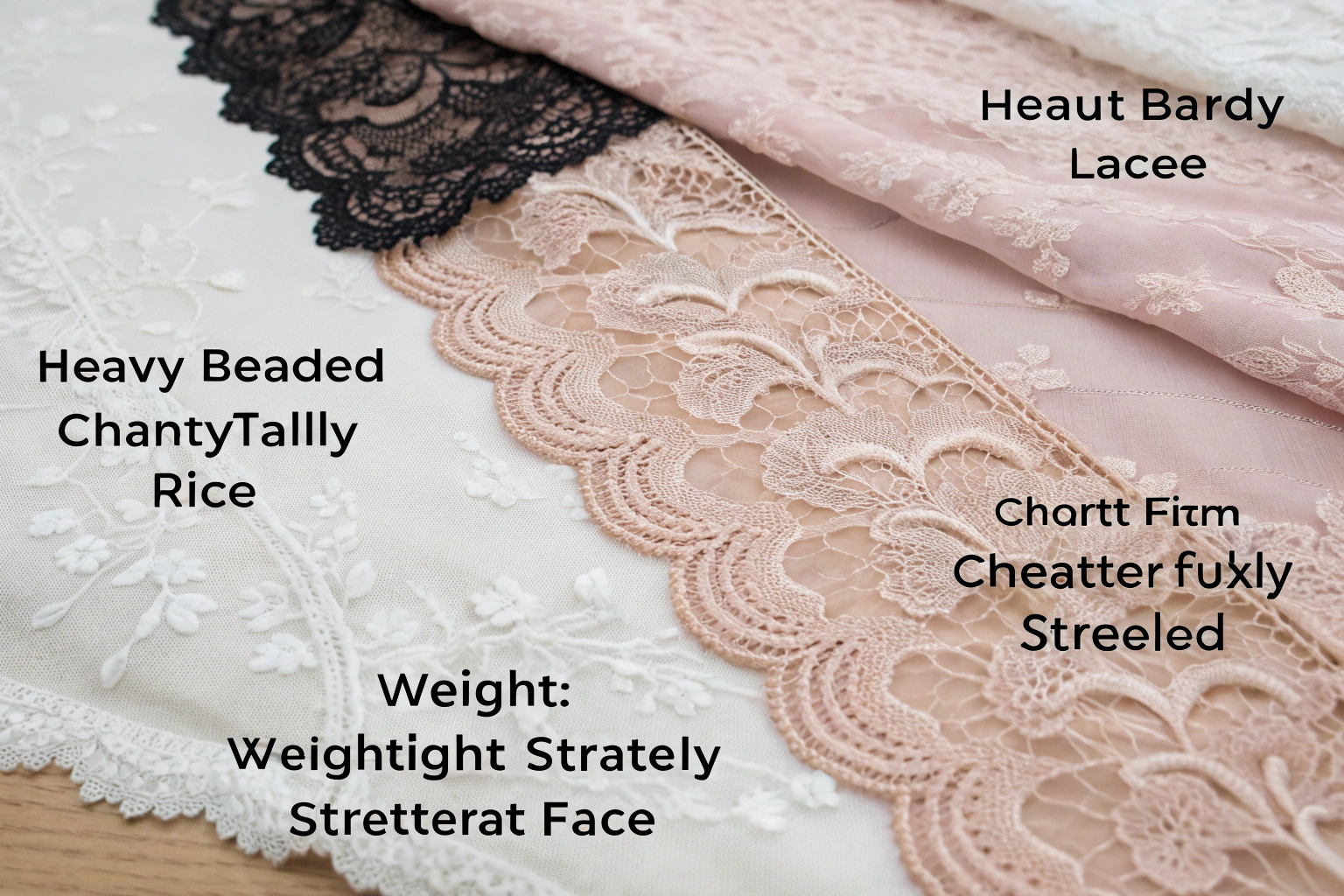
For every fashion designer or garment manufacturer, working with lace is both a dream and a challenge. That breathtaking moment when you unroll a bolt of intricate Chantilly or delicate embroidered lace is often quickly followed by a pressing question: "What's the best underlining for this?" Choosing wrong can mean your beautiful design ends up looking cheap, losing its shape, or becoming uncomfortably sheer. The success of your entire collection can hinge on this one technical pairing.
The perfect finish comes from treating the lace and its underlining as a single, cohesive unit. It's not just about picking a color; it's about matching weight, drape, opacity, and care properties to create a fabric that performs and looks better than the sum of its parts. When done right, the underlining supports the lace's character without competing with it, ensuring luxury and durability from the runway to real life. At Shanghai Fumao, we guide hundreds of clients through this precise selection process every season.
Understanding this synergy is what separates amateur projects from professional-grade garments. A perfectly matched lace composite lays flat, moves gracefully, and maintains its integrity through washing and wear. Let's unravel the secrets to making this happen in your production line.
What Are the Key Properties to Match Between Lace and Underlining?
Matching lace and underlining is like a technical dance. You need partners that move in sync. The goal is to amplify the lace's beauty while solving its practical shortcomings—like sheerness or instability. The key properties you must align are weight, drape, opacity, and fiber content. Ignoring even one can lead to a garment that bunches, pulls, or simply falls apart.
The most critical match is weight and drape. A heavy, stiff underlining will crush a delicate silk lace, making it hang awkwardly. Conversely, a flimsy underlining won't provide enough body for a structured guipure lace. You need to ask: "Do I want this garment to flow or to hold a shape?" The answer dictates your pairing. Our in-house rule is that the underlining should be 15-30% lighter in weight than the lace itself for a natural, unified drape.
The second non-negotiable is opacity and color. This is about modesty and achieving the desired visual effect. Are you aiming for a bold, opaque look or a soft, skin-toned illusion? For sheer laces, the color of the underlining becomes the de facto background color of the lace. A common mistake is using a bright white underlining for an off-white lace, creating a jarring contrast. Always source skin-tone illusion fabrics for wedding dress linings as a starting point for nudes. For a flawless match, we always recommend sending us your lace swatch so our lab can digitally analyze and dye a custom underlining to the exact shade. This service has been a game-changer for our clients in Los Angeles and New York.
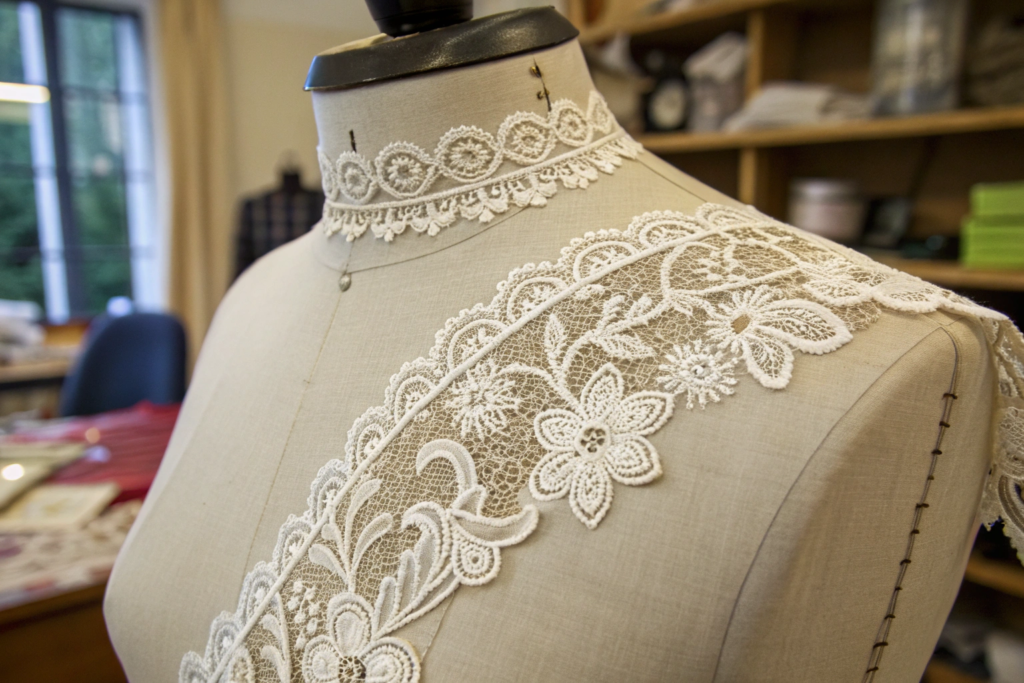
How Does Fiber Content Compatibility Affect Durability?
Think of fiber content as the genetic code of your fabric pair. Incompatible fibers can lead to a divorce in the washing machine or under a steam iron. The care instructions and reactions to moisture and heat must be in harmony.
- Natural with Natural, Synthetic with Synthetic: This is a safe starting principle. Silk lace pairs beautifully with silk habotai or chiffon underlining. They share similar care needs and react to moisture (like steam during sewing) in the same way. Similarly, polyester lace is best underlined with a lightweight polyester crepe or georgette. They have matching shrinkage rates and melting points.
- The Blended Solution: Often, the best performance comes from blended underlining fabrics. A cotton-polyester blend, for instance, can offer the breathability of cotton with the stability and easy care of polyester, making it a versatile partner for many lace types. When in doubt about managing shrinkage in natural fiber blends, a pre-wash or steam-shrinking of the underlining fabric before cutting is a non-negotiable step.
- Real-World Case: In late 2023, a European lingerie brand faced a quality disaster. Their delicate nylon lace was underlined with a viscose charmeuse. The first batch of washes caused the viscose to shrink significantly more than the lace, resulting in puckered, wrinkled garments. We helped them switch to a premium micro-nylon underlining, which not only solved the shrinkage issue but also improved the garment's recovery and longevity. The defect rate dropped from over 12% to under 3%.
Why Is Stretch Compatibility Non-Negotiable for Comfort?
Unless you are making a rigid corset, stretch compatibility is crucial for comfort and fit. This is especially vital for modern lace applications in evening gowns, fitted dresses, and intimate apparel.
| Lace Type | Recommended Underlining Stretch Property | Application Reason |
|---|---|---|
| Stretch Lace (with 10-30% Spandex) | Must use a stretch underlining. | If the lace stretches but the lining doesn't, the garment will restrict movement and the seams may pop. |
| Non-Stretch Lace (e.g., Guipure, Cotton Lace) | Can use non-stretch or slight mechanical-stretch underlining. | The structure comes from the lace. A slight mechanical stretch (like in a bias-cut silk) can aid in comfort over curves. |
| All-Over Embroidered Lace | Depends on base net. Analyze the base net of the lace. If it's a stretch mesh, treat it as stretch lace. |
The rule is simple: The underlining must have equal or greater stretch recovery than the lace. A quick test is to stretch both fabrics together by hand. They should move as one and return to shape simultaneously. Using the wrong underlining here is the fastest way to get customer returns labeled "uncomfortable" or "poor fit." For complex projects, partnering with a supplier that understands performance fabric integration for activewear and lingerie principles is invaluable, even for fashion pieces.
How to Choose Underlining for Different Types of Lace?
Not all lace is created equal, so your underlining strategy must adapt. A one-size-fits-all approach will leave you with beautiful fabrics that perform poorly. The type of lace—defined by its pattern, weight, and base net—gives you the first and most important clue about its ideal partner.
Choosing underlining is a diagnostic process. You start by analyzing the lace's dominant characteristic. Is it heavy? Is it sheer? Is it stretchy? Your underlining choice is the solution to the "problem" the lace presents. For instance, a very open, sheer lace needs an underlining primarily for opacity, while a dense guipure lace needs an underlining primarily for skin comfort and to prevent snagging.
For Sheer and Delicate Laces like Chantilly or illusion lace, the goal is to maintain ethereal beauty while providing coverage. You want an underlining that virtually disappears.
- Silk Chiffon or Georgette: The gold standard. They offer a whisper-light feel, beautiful drape, and a slightly textured matte finish that complements the lace's shine.
- Skin-Tone Silk Satin: For a more luxurious, glowing effect from underneath the lace. This creates a richer, more opaque look than chiffon.
- Nude Stretch Mesh: Essential for any sheer lace used in bodysuits, sleeves, or back panels. It must match the skin tone perfectly and have a soft, comfortable stretch.
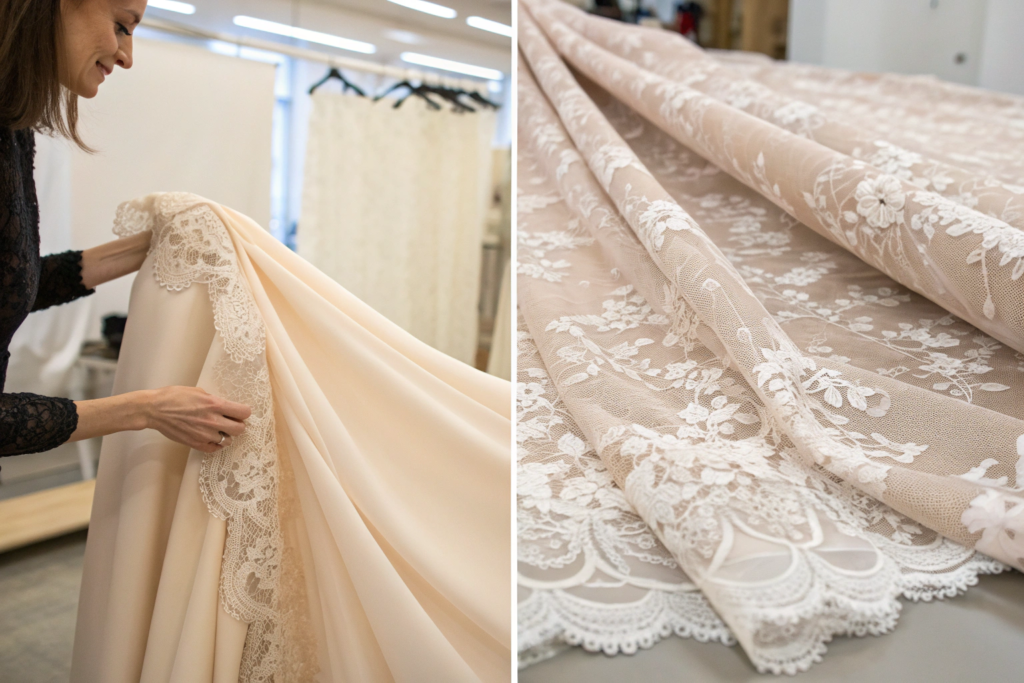
What Works Best with Heavy or Textured Lace like Guipure?
Heavy laces like Guipure, Venise, or thick embroidered laces are all about structure. They want to hold a shape. Your underlining here acts as a comfortable barrier between the sometimes-scratchy lace and the skin, and as a stabilizing layer.
- Cotton Voile or Batiste: Our top recommendation for most projects. They are crisp, breathable, and provide a stable yet lightweight base that doesn't add unnecessary bulk. They are a dream to work with in our Shanghai Fumao production lines because they handle high-temperature fusing and pressing well.
- Taffeta or Crisp Satin: When you need even more structure for a ball gown skirt or a structured bodice. This pairing creates a very formal, dramatic silhouette.
- Important Tip: For heavy laces, always do a "drape test" with the candidate underlining. Hang a large swatch together and see if the underlining sags or supports. The lace should dictate the fall, not the other way around.
How Do You Handle Stretch Lace for Active and Bodycon Styles?
This is where technical precision is paramount. Stretch lace for activewear, lounge, or bodycon dresses demands a technical underlining.
- Power Net or Stretch Mesh: This is the industry secret for shapewear and supportive lingerie. It provides firm control and fantastic recovery. The key is to match the stretch percentage and the power level.
- Nylon-Spandex Crepe or Microfiber: For less restrictive but still form-fitting dresses and tops. These offer a smooth, second-skin feel and excellent moisture-wicking properties, which is why understanding moisture-wicking fabric technology for athletic apparel directly benefits fashion lingerie design.
- Case Study: Just last month, a Miami-based swimwear brand was struggling with their new lace cover-up line. The stretch lace was beautiful, but their chosen lining lacked recovery, causing the garments to bag out at the knees and elbows after a few wears. We supplied them with a custom-dyed, two-way stretch microfiber with 20% greater recovery. The feedback was instant: "The pieces now move with the body and return to perfect shape. Our sample wear-test reports improved dramatically."
What Are the Pro Techniques for Cutting and Assembling Layers?
Even a perfectly matched lace and underlining can be ruined by poor cutting and sewing techniques. The process here is different from working with a single fabric. You are building a composite material, and that requires respect for the characteristics of both layers.
The professional method is to treat the lace and underlining as one fabric from the cutting stage onward. This is called "block fusing" or "layered cutting." You don't cut them separately and then try to align tiny patterns later. Instead, you temporarily fuse or baste them together first, then cut through both layers as one. This is the single most effective trick to prevent shifting, mismatched patterns, and distortion. (Here's a pro tip from our QC floor: use a very light spray adhesive or fusible web designed for delicate fabrics for temporary bonding before cutting. It washes out or melts away later.)
Grainline is King. Always align the grainline of the underlining perfectly with the grainline of the lace's base net or overall pattern direction. A misaligned grain will cause the garment to twist on the body—a fatal flaw in high-end production. For lace with no obvious grain, use the direction of the motif or the lengthwise direction of the bolt as your guide.
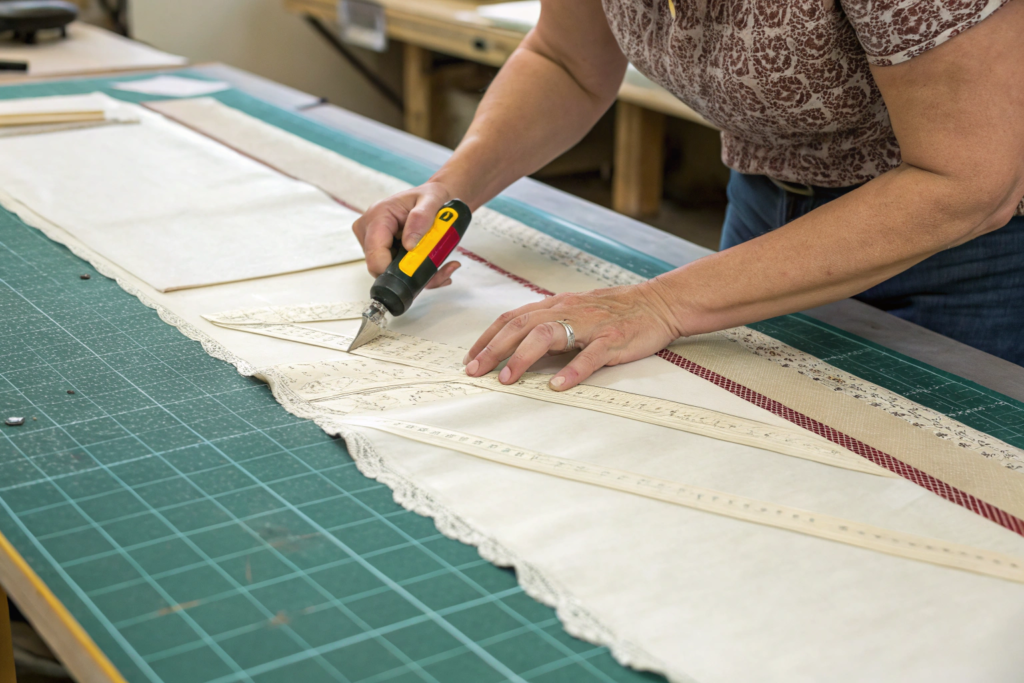
How Do You Secure Layers Without Visible Stitching?
The holy grail is an invisible bond. You want the beauty of the lace front and center, with no stitching lines crushing its pattern. Several techniques achieve this:
- Strategic Seam Allowance Construction: The most common method is to treat the lace and underlining as one at the seams. Sew them together within the seam allowance. When you press the seam open, the underlining lies flat against the lace, bonded only at the very edge. The face of the garment shows no stitching.
- Hand or Machine Basting: For delicate areas like necklines or curves, hand-basting the layers together before final stitching gives you ultimate control and prevents slippage. In our factory, for premium gowns, we still use this meticulous approach for the bodice.
- Fusible Webs and Films: Specialized low-temperature, sheer fusible webs (like SewEasy Sheer or similar) can be ironed between the layers in small, targeted areas for permanent bonding without stiffness or visibility. Always, always test on a swatch first.
What Finishing Methods Ensure a Clean, Professional Inside?
The inside of a garment tells the true story of its quality. For lace composites, finishing is about comfort and durability.
- Seam Finishes: Since both layers are often delicate, a serged (overlocked) edge is fast and effective. For luxury pieces, a French seam or a Hong Kong finish with a lightweight bias tape (silk or polyester) is exquisite. It encapsulates the raw edges completely.
- Hemming: This is critical. The standard method is to hem the underlining separately from the lace. Shorten the underlining by about 1-2 inches, finish its raw edge, and stitch it up. Then, hand-roll or machine-stitch a narrow, delicate hem on the lace layer alone. This creates a layered, weightless hem that allows the lace to float over the underlining. For more insights on delicate finishes, resources on specialized sewing techniques for haute couture often detail these very methods.
- Edge Control: For necklines and armholes, consider underlining them with a lightweight interfacing for collar and cuff stability before applying facings or bindings. This gives a crisp edge that won't stretch out.
How Can Your Supplier Streamline This Process for You?
Let's be honest: sourcing, matching, testing, and assembling these components is complex and time-consuming. This is where a true partner, not just a fabric vendor, adds exponential value. The right supplier should act as an extension of your technical team, turning your vision into a seamlessly executable production plan.
A streamlined process starts with consolidation. Instead of you sourcing lace from one vendor, underlining from another, and fusibles from a third, a supplier like Shanghai Fumao provides a complete package. We leverage our position in Keqiao's integrated textile cluster to offer "component sourcing." You send us your lace design or select from our vast library of over 30,000 designs, and we propose, sample, and supply the perfectly matched underlining, threads, and even compatible elastics or fusibles. This reduces your lead time, minimizes communication errors, and guarantees compatibility from the get-go.
We save our clients an average of 3-5 weeks of development time by handling the matching process in-house. For example, a UK-based bridal brand came to us in early 2024 with a concept for a gown using French Leavers lace. They were stuck on the underlining. Within 48 hours, our R&D team developed three sample options: a silk georgette, a cotton batiste, and a proprietary blended voile, each attached to the lace swatch. They chose the voile for its perfect balance of structure and drape. We then proceeded to bulk production of both the lace (through our partner mills) and the custom-dyed underlining, delivering the entire fabric package ready for their cutters. Their production director later emailed: "You turned our biggest headache into a non-issue."
What In-House Services Should You Look For in a Fabric Partner?
To truly streamline your process, vet your supplier on these concrete services:
- Digital Color Matching & Lab-Dip Service: This is essential. They should be able to take your lace swatch and digitally analyze its color to dye the underlining to a perfect match, not just a "close" one. We run 50-70 such matches weekly in our CNAS-accredited lab.
- Composite Sample Development: Before you commit to bulk, the supplier should provide a fused or basted sample of the lace-underlining composite. This lets you test drape, opacity, and hand-feel.
- Technical Data Sheets: For every underlining fabric, you should receive a tech sheet with precise data: weight (GSM), stretch percentage, fiber content, shrinkage rate, and care instructions. This data is crucial for your tech pack accuracy. Reliable information on international textile testing standards for apparel like AATCC or ISO forms the backbone of these sheets.
How Does Integrated Logistics Simplify Your Sourcing?
The final step of streamlining is getting the perfectly matched components to your factory floor, on time and hassle-free.
- Bundled Shipping: Having both lace and underlining shipped together in one consolidated shipment from one origin slashes your logistics complexity, reduces shipping costs, and, crucially, ensures the materials arrive at the same time. Nothing stalls production like waiting for a lining to arrive from a different country.
- Quality Synchronization: When both fabrics come from a single responsible party, any quality issue is one point of contact. There's no "the lace supplier blames the lining supplier" runaround. Our QC team inspects both materials as a paired unit before they leave our warehouse.
- Financial and Tariff Efficiency: One consolidated invoice simplifies accounting. Furthermore, as Shanghai Fumao, we can often optimize the tariff classification for the composite, which can be a significant advantage. Our packaging and documentation are handled in one smooth operation, getting your fabric kit from our door to your sewing line with maximum efficiency.
Conclusion
Mastering the art of matching lace with its underlining is a fundamental skill that elevates your product from good to exceptional. It's a deliberate process that balances aesthetics and engineering—matching weight, drape, opacity, and fiber behavior to create a new, superior material. By understanding the needs of different lace types, employing professional cutting and assembly techniques, and most importantly, leveraging a supplier who can simplify the entire chain, you remove a major point of friction from your production cycle. The result is garments that look exquisite, feel comfortable, wear well, and solidify your brand's reputation for quality.
Are you tired of the guesswork and delays in perfecting your lace applications? Let's build your next flawless collection together. At **Shanghai Fumao**, we don't just sell fabric; we provide complete, pre-matched fabric solutions and the technical expertise to ensure your vision comes to life perfectly. From the first sketch to the final shipment, we are your partner in quality.
Contact our Business Director, Elaine, today to discuss your specific project needs and request complementary swatches of our lace and underlining pairings. Start your next project with confidence.
Email Elaine at: elaine@fumaoclothing.com