I got a call from a client in Los Angeles at 9 PM China time last year. He was frantic. His supplier had just told him that his knitted fabric wouldn't ship for another three weeks. His production line was scheduled to start in 10 days. He had 20,000 garments committed to a major retailer. If he missed the window, he would lose the contract and pay penalties. He asked me, "Can you make 8,000 meters of jersey in 12 days and get it to my factory in Mexico?"
I looked at our production schedule. We were running at 85% capacity. I told him, "I can do it. But it's going to cost more, and you need to move fast." He said, "Just make it happen."
That order shipped in 11 days. His production line started on time. He kept the contract. That experience taught me that urgent orders are not impossible. They just require a different approach. I've handled dozens of urgent knitted fabric orders over the years. Let me walk you through exactly how to manage logistics when you need fabric fast.
What Makes Knitted Fabric Different for Urgent Orders?
When a client needs fabric fast, the first question is always, "Can you speed up production?" But for knitted fabric, speed isn't just about the knitting machines. The whole process is different from woven. I've learned the specific bottlenecks.
How Fast Can Knitting Actually Be?
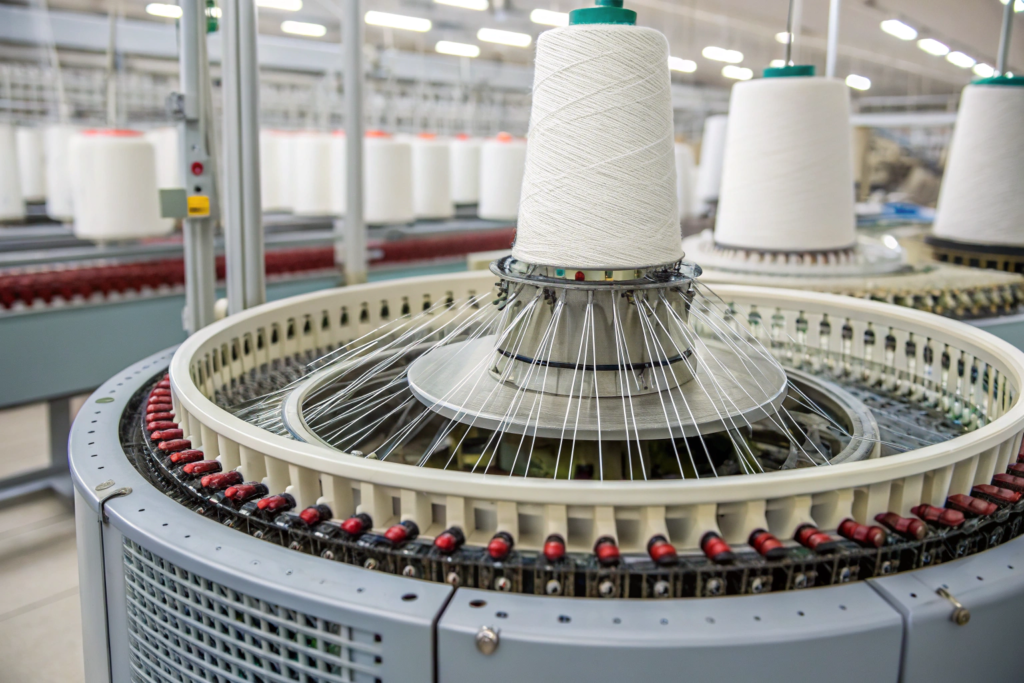
Knitting is faster than weaving. That's the first advantage. A circular knitting machine can produce fabric much faster than a loom. For a standard single jersey, we can knit 200-300 meters per hour on a modern machine. For a more complex structure like interlock or rib, the speed drops, but it's still faster than most woven structures.
In 2023, we had a client from Chicago who needed 5,000 meters of 2x2 rib in 10 days. The rib knitting speed is about half of jersey. But we had open machines. We ran the order on three machines simultaneously. We finished knitting in 4 days. The bottleneck wasn't the knitting. It was the finishing and the dyeing.
If you need urgent knitted fabric, ask your supplier about machine availability. If they have open capacity, they can run your order on multiple machines. That's the fastest way to accelerate knitting.
What Are the Real Bottlenecks in Urgent Knit Production?
The knitting is the easy part. The bottlenecks are elsewhere.
Yarn availability. If the yarn is in stock, we can start immediately. If we need to order yarn, that adds 5-10 days. For urgent orders, I always ask the client if they can use yarn from our inventory. Standard colors, standard counts. That's the difference between 10 days and 20 days.
Dyeing capacity. Dyeing is often the bottleneck. Dyehouses run 24/7. If they're booked, your order waits. For urgent orders, we need to reserve dyeing space before we start knitting. That means committing to a color and quantity upfront.
Finishing. After dyeing, the fabric needs finishing. For knitted fabrics, that often means compaction for shrinkage control. Compaction machines are also in high demand. If you skip compaction, the fabric will shrink. For urgent orders, we sometimes do a light compaction to save time, but we tell the client the shrinkage will be higher.
In 2024, a client from Vancouver needed 3,000 meters of jersey in 7 days. We had the yarn in stock. We reserved dyeing space before we started knitting. We knitted in 2 days, dyed in 1 day, finished in 1 day. The fabric was on a plane on day 7. The client paid a premium for the expedited dyeing, but they made their production window.
If you're placing an urgent order, ask about dyehouse capacity. A good supplier will tell you if they can reserve space. If they can't, your order will sit in a queue.
How Do You Choose the Right Shipping Method for Urgent Orders?
Once the fabric is ready, you need to get it to your factory. The shipping method is the biggest decision. I've seen clients pay for air freight when ocean freight would have worked, and I've seen clients miss their deadlines because they chose the wrong method.
When Should You Use Air Freight?
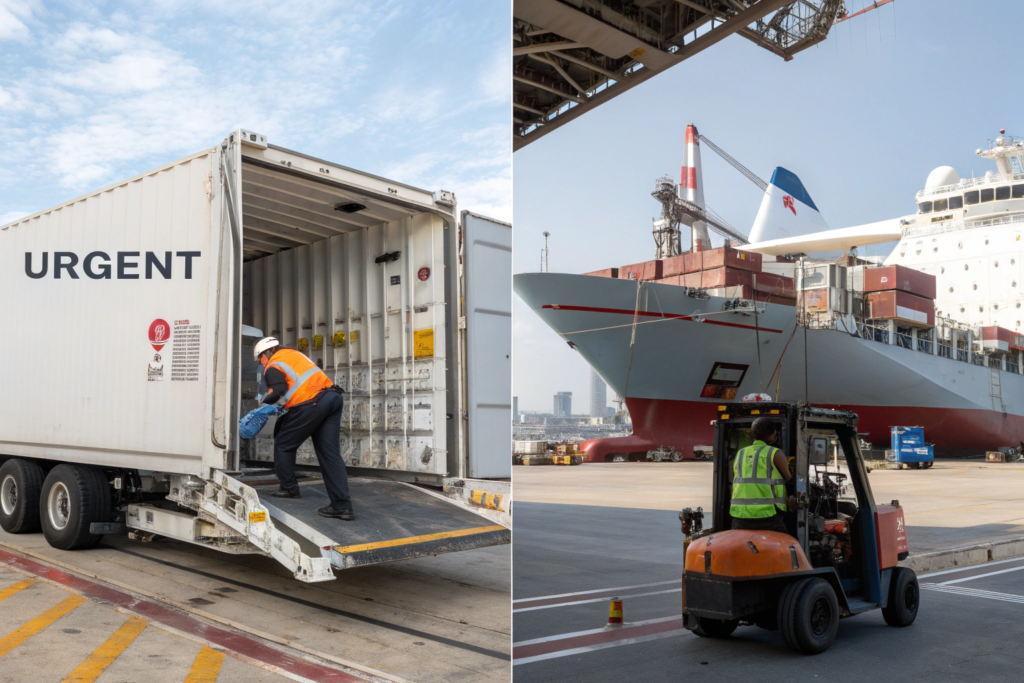
Air freight is expensive. But sometimes it's the only option. Here's when I recommend it.
When the timeline is under 2 weeks. Ocean freight from China to North America or Europe takes 2-4 weeks. If you need fabric in less than 2 weeks, air freight is your only choice.
When you have a small volume. Air freight is priced by weight. For a small order—under 500 kg—the cost difference between air and ocean might be manageable. For a large order, the cost can be prohibitive.
When you missed the ocean freight cutoff. If your fabric is ready but the next vessel doesn't sail for 10 days, air freight might be the only way to meet your deadline.
In 2023, a client from Texas needed 800 meters of jersey in 10 days. The fabric was ready in 7 days. The next vessel to Houston was 12 days out. We air freighted the fabric. It cost $3.20 per kg—about $2,500 total. The client paid the premium and made their production run. They told me the alternative was canceling the order, which would have cost them $15,000.
If you're considering air freight, ask for a door-to-door quote. The air freight cost is just the beginning. There are pickup fees, export clearance, import clearance, and delivery. We can handle all of this for you. But you need to know the total cost.
For current air freight rates, there’s a resource on air freight cost trends from China to North America . It updates regularly and helps you budget.
How Can You Accelerate Ocean Freight?
If your timeline allows 3-4 weeks, ocean freight is the better choice. But you can still accelerate it.
Book space early. Don't wait until the fabric is ready. As soon as you have a production timeline, book vessel space. We work with freight forwarders who can reserve space weeks in advance.
Choose the right port. Some ports are faster than others. From Shanghai, vessels to Los Angeles are frequent. Vessels to less common ports may sail only once a week.
Use expedited customs clearance. Standard customs clearance can take 3-5 days. Expedited clearance can be done in 24-48 hours. It costs more, but it can save days.
Consider transloading. If your factory is inland, you can transload the container at the port and send the fabric by truck. It's faster than waiting for rail.
In 2024, a client from Atlanta needed fabric in 25 days. We booked vessel space 3 weeks before the fabric was ready. The fabric finished on a Tuesday. The vessel sailed on Friday. We used expedited customs clearance in Savannah. The fabric arrived at the factory on day 23. The client was thrilled.
If you're shipping ocean freight, ask your supplier about vessel schedules. We track the schedules weekly. We can tell you exactly which vessel your fabric will sail on and when it will arrive.
How Do You Manage Quality When Speed Is Critical?
The biggest risk with urgent orders is quality. When you rush, things can go wrong. I've seen clients accept lower quality to meet deadlines, and then regret it. Here's how to maintain quality when you need speed.
What Quality Tests Can You Accelerate?
Some tests take time. Others can be accelerated. You need to know which are critical.
Shrinkage test. This takes time. The fabric needs to be washed and dried. For urgent orders, we sometimes run a rapid shrinkage test using a lab washer and dryer. It's not as precise as a full wash test, but it gives us a good indication.
Colorfastness. This takes 24-48 hours. There's no shortcut. If you need colorfastness results before shipping, you need to build that time into your timeline.
Fiber composition. This is fast. We can test fiber composition in a few hours using chemical analysis. For urgent orders, we always run this test before shipping.
Fabric weight and width. This is instant. We measure every roll. There's no reason to skip this even on urgent orders.
In 2023, we had a client who needed fabric in 10 days. We skipped the full shrinkage test and ran a rapid test. The fabric tested at 3% shrinkage—within spec. The client accepted. When they did their own wash test, the shrinkage was 4.5%—slightly higher than the rapid test predicted. The garments still worked, but the client learned that rapid tests are estimates, not guarantees.
If you're accepting urgent fabric, ask about which tests were run. A good supplier will tell you what was tested and what was skipped. You can then decide if the risk is acceptable.
How Do You Inspect Fabric When There's No Time for a Full Audit?
The ideal inspection is a full audit with defect tracking. But when you're rushing, you may not have time. Here's what we do.
Online inspection. We inspect fabric as it comes off the finishing line. Defects are marked and removed immediately. This is faster than a separate inspection step.
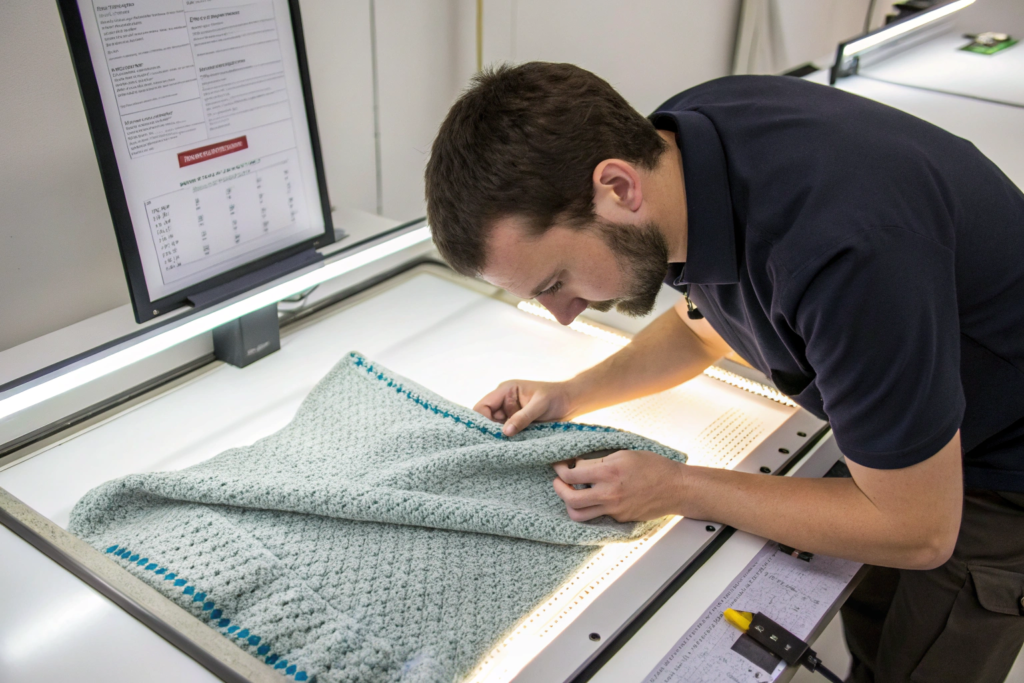
Spot checking. For urgent orders, we inspect 100% of the fabric but on the machine, not on a separate inspection table. It's not as thorough, but it catches major defects.
Customer inspection. If you have time, send someone to inspect before shipment. If you don't, we can send video of the fabric being inspected. We do this for many urgent clients.
In 2024, a client from Denver needed fabric in 12 days. There was no time for a third-party inspection. We inspected the fabric on the machine and sent him videos. He approved based on the videos. The fabric arrived and passed his factory's inspection. He told me, "I was nervous, but the videos gave me confidence."
If you can't inspect in person, ask for videos of the inspection. A good supplier will show you the fabric running over the lightbox. It's not as good as being there, but it's better than nothing.
What Should You Do to Prepare for Urgent Orders?
The best way to manage urgent orders is to be prepared before you need them. I've worked with clients who have systems in place for rush orders. They're always the ones who succeed when things get tight.
What Information Should You Have Ready?
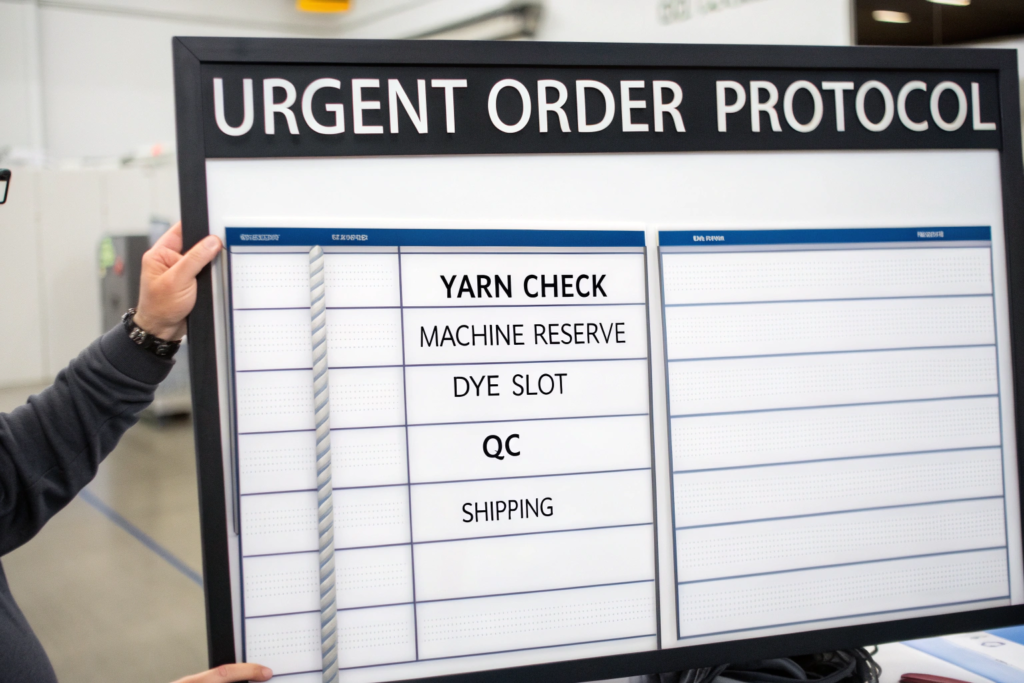
When you call for an urgent order, every minute counts. Have your information ready.
Fabric specifications. Fiber content, weight, structure, color. Have the exact specs. Don't say "jersey." Say "180 GSM 100% combed cotton single jersey, color black, Pantone 19-4006."
Quantity. Be exact. Not "about 5,000 meters." Is it 5,000? 5,200? 4,800? The exact number matters for yarn ordering and machine setup.
Drop-dead date. When is the absolute latest you can receive the fabric? Be honest. If you need it in 10 days, say 10 days. Don't say 14 days and then call on day 12 asking where it is.
Shipping destination. Where is it going? Factory address, zip code, contact. Have it ready.
In 2023, a client from Miami called with an urgent order. He had all the information ready. I was able to give him a quote and a timeline in 30 minutes. He placed the order. The fabric shipped on time. He told me later, "I had that information saved in a document for exactly this situation."
If you might need urgent orders, create a template. Fill it out with your standard specs. When you need to rush, you're ready.
How Can You Build Relationships That Help with Urgent Orders?
This is the most important factor. When a supplier knows you, they'll move mountains for you. When you're just another order, you're in the queue.
Be a good customer. Pay on time. Be clear in your communication. Don't change specs after production starts. Suppliers remember.
Order consistently. If you order regularly, the supplier knows your volume, your quality standards, your preferences. When you need something fast, they know how to work with you.
Visit the factory. If you can, visit. Meet the people who make your fabric. When they know your face, you're not just an order number.
Be honest about your timelines. If you need something fast, say so. Don't pretend it's routine and then push. We appreciate honesty. We'll tell you what's possible.
In 2024, a client from Seattle had an urgent order. She had been ordering from us for 3 years. She had visited our factory twice. We knew her standards. When she called, I told my team, "This is for Sarah. She needs it in 12 days. Make it happen." We did. She told me later, "That's why I stick with you. You know me, and you make it work when it matters."
If you're looking for a supplier who can handle urgent orders, look for one who values relationships. That's the difference between a vendor and a partner.
Conclusion
Managing urgent knitted fabric orders is about speed, but it's also about planning. Knitting is fast, but the bottlenecks are yarn, dyeing, finishing, and shipping. If you can use stock yarn, reserve dyeing space, and choose the right shipping method, you can get fabric in 10-14 days. If you have a relationship with your supplier, they'll prioritize your order when it matters.
At Shanghai Fumao , we handle urgent orders regularly. We keep standard yarns in stock for common knits. We work with dyehouses that can reserve space for our clients. We track vessel schedules weekly and can tell you exactly when your fabric will sail. And we have a QC team that inspects fast without cutting corners.
I’ve helped clients get fabric in 10 days when they thought it was impossible. I’ve watched them breathe a sigh of relief when the shipment arrived and their production line started on time. That’s what we do. We make the impossible possible.
If you’re facing an urgent order, or if you want to be prepared for the next one, let’s talk. My business director, Elaine, handles all our urgent order logistics. She knows the timelines, the shipping options, and the quality shortcuts you can take and the ones you can’t. She can help you get the fabric you need, when you need it.
Contact Elaine directly: elaine@fumaoclothing.com
Tell her you need fabric fast. Let her show you how it’s done.