Importing fabric from China is a cornerstone of the global apparel industry, offering U.S. brands access to diverse materials at competitive prices. However, the prospect of navigating U.S. tariffs can be daunting, adding unexpected costs that threaten profit margins. Many importers seek strategies to minimize or legally avoid these duties to maintain a competitive edge.
It is not legally possible to import commercial goods into the United States without paying any applicable tariffs. However, experienced importers legally minimize or eliminate tariff payments by utilizing specific Harmonized Tariff Schedule (HTS) classifications that carry a 0% duty rate, sourcing from tariff-excluded product categories, and leveraging special trade programs like the Section 321 de minimis exemption for low-value shipments. The goal is not evasion, but strategic compliance.
This article will guide you through the legal pathways to reduce your fabric import costs. We will break down the U.S. tariff system, explore duty-free classifications, and explain practical strategies that brands use today.
What U.S. Tariff Classifications Offer 0% Duty on Chinese Fabrics?
The U.S. International Trade Commission (USITC) maintains the Harmonized Tariff Schedule (HTS), a vast list where every product, including fabrics, has a specific code. The duty rate is attached to this code. The first step to reducing costs is finding a code with a favorable rate.
To find fabrics with 0% duty, you must meticulously research the HTSUS Chapter 50-60 (Textiles) for specific classifications that carry "Free" rates. Common examples include certain technical nonwovens, specific industrial fabrics, and some natural fiber fabrics in their greige (unbleached) state. The key is precision; a slight variation in fiber content, weight, or finish can change the code and the duty.
How do I find the correct HTS code for my fabric?
You cannot rely on your supplier's generic description. You must determine the exact fiber composition (e.g., 65% polyester, 35% cotton), weight in grams per square meter (GSM), whether it's knit or woven, and if it's printed, dyed, or finished. Use the U.S. Customs and Rulings Online Search System (CROSS) to see how Customs has previously classified similar fabrics. For definitive protection, consider applying for a Binding Ruling Letter from U.S. Customs and Border Protection (CBP). This legal document guarantees your classification for future shipments. We assisted a client importing a unique moisture-wicking knit by compiling technical specs and previous rulings, securing a binding classification that confirmed a 0% duty rate for their specific construction.
Which fabric types are most likely to be duty-free?
While always verify with current HTS, some categories have historically had "Free" rates. These often include:
- Certain Nonwovens: Used in technical applications like interlinings or medical fabrics.
- Greige Goods: Unbleached, undyed woven fabrics of cotton or linen (e.g., 100% cotton canvas in its natural state). The moment it's dyed, a duty usually applies.
- Specific Industrial Fabrics: Like glass fiber fabrics or some bulked continuous filament (BCF) yarns for carpet backing.
Important Note: Fabrics classified under these duty-free headings are still subject to the same Rules of Origin requirements. If your fabric is made in China, it will be marked as a product of China, regardless of the duty rate.
Can the Section 321 De Minimis Rule Eliminate Tariffs for Small Shipments?
For small businesses or brands testing new fabrics, the Section 321 de minimis rule is a powerful tool. It allows for the informal entry of low-value shipments without paying duties or taxes.
The Section 321 de minimis rule allows shipments with a fair retail value in the country of shipment of $800 or less to enter the U.S. free of duty and tax, with minimal formal entry procedures. This is per shipment, per day, per importer. It's designed for low-volume, low-value imports and is not intended for breaking up larger commercial shipments to avoid duties (which is illegal "splitting").

What are the strict limits and conditions for using de minimis?
The $800 limit is the total fair retail value of the goods in China, not their wholesale cost. This includes the cost of the fabric, plus packing, and it's the value you would sell it for in China. The shipment must be imported by one person on one day. Multiple packages arriving for the same importer on the same day will be aggregated, and if the total exceeds $800, the entire shipment becomes subject to duty. The goods must also be non-restricted (fabrics are generally fine) and not from a sanctioned country or entity. Using a reputable express courier like DHL, FedEx, or UPS is standard for these shipments, as they handle the simplified entry.
How can brands practically use this for fabric sourcing?
This rule is perfect for:
- Sourcing Sample Yardage: Ordering 50-100 meters of a new fabric for prototyping and testing.
- Limited-Run Production: Manufacturing a small capsule collection of under 200 units where the total fabric value per shipment stays under the limit.
- Replenishing Low-Inventory Items: Quickly shipping small amounts of fabric for urgent repairs or minor production top-ups.
A Critical Warning from Our Experience: A client once tried to import 15 separate boxes of the same fabric, each valued at $790, over three days. CBP flagged this as a deliberate scheme to avoid duties. All shipments were held, aggregated, and assessed full duties and penalties. Shanghai Fumao helps clients plan sample and small-batch orders to legitimately utilize de minimis without risking penalties.
Do First Sale for Export and Duty Drawback Programs Offer Relief?
For larger commercial shipments that don't qualify for de minimis, two advanced programs can provide significant duty savings: First Sale for Export and Duty Drawback. These require more documentation and planning but offer substantial financial benefits.
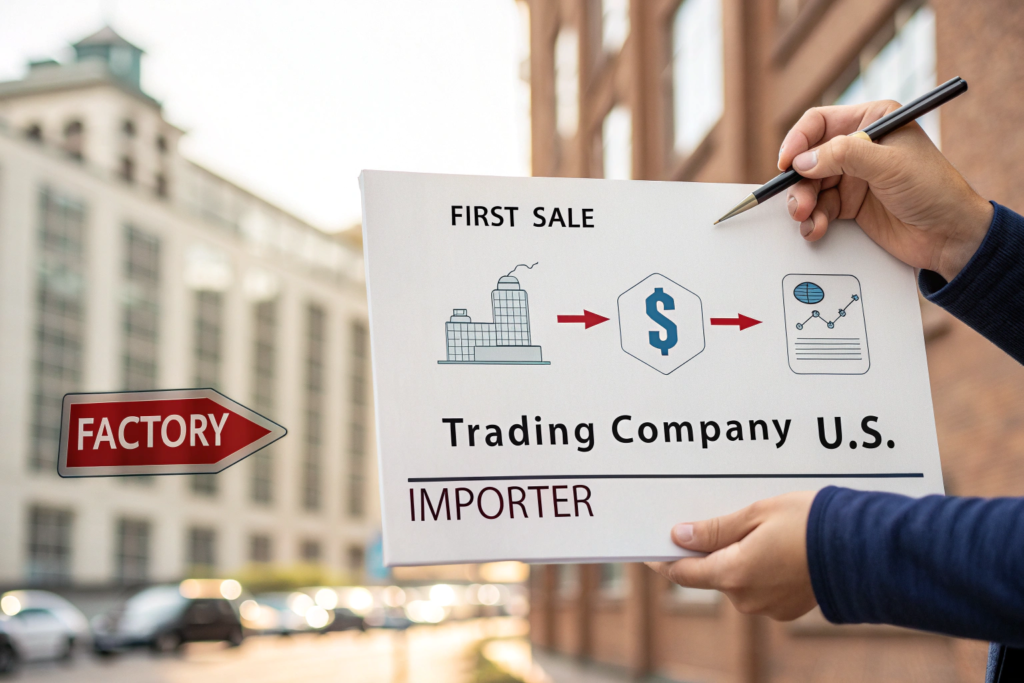
First Sale for Export allows you to base your import value on the price paid by the middleman (e.g., a trading company) to the manufacturer, rather than the price you pay the middleman, often lowering the dutiable value. Duty Drawback allows for a 99% refund of duties paid on imported goods that are later exported from the U.S. as part of a finished product. Both are fully legal but administratively complex.
How does First Sale for Export work in a typical fabric transaction?
In a common three-tier chain: a Chinese mill sells fabric to a Chinese trading company, which then sells it to you, the U.S. importer. Normally, you declare the price you paid the trading company. Under First Sale, if you can document the lower price the trading company paid the mill (the "first sale" for export to the U.S.), you may use that value for duty calculation. This requires a transparent supply chain and legally binding agreements between all parties showing the transactions are at arm's length. Working with a manufacturer like Shanghai Fumao, which operates as a factory directly, often simplifies this by providing a clear, single-source transaction.
Is Duty Drawback a viable option for apparel brands?
Yes, but it's primarily for brands that both import and export. Here’s a simplified example:
- You import $10,000 worth of Chinese polyester fabric, paying 16% duty ($1,600).
- You manufacture athletic jackets in the U.S. using that fabric.
- You then export those finished jackets to Canada or Europe.
- You can file a Duty Drawback claim with CBP to recover 99% of the $1,600 duty you originally paid on the imported fabric.
The process is paperwork-intensive and often outsourced to specialized drawback broker firms. It's most valuable for companies with high duty expenditures and a consistent export business.
How Can Sourcing from Vietnam or Other Countries Avoid China Tariffs?
Due to the Section 301 tariffs imposed on many Chinese goods, some fabrics from China can face additional duties of 7.5% to 25% on top of the normal HTS rate. One strategic response is to diversify sourcing to countries not subject to these additional tariffs.
Sourcing fabrics from countries with which the U.S. has Free Trade Agreements (FTAs) or normal trade relations, such as Vietnam, Pakistan, or Indonesia, can allow you to import those fabrics under their respective HTS classifications without the additional Section 301 tariffs that apply to China-origin goods. This is a legitimate supply chain diversification strategy.
What are the key considerations when switching sourcing countries?
You cannot simply trans-ship Chinese fabric through a third country; CBP enforces strict Rules of Origin. The fabric must be "substantially transformed" in the new country. For example, Vietnamese fabric must be made from yarn spun and fabric woven/knit in Vietnam. You will need a Certificate of Origin from the Vietnamese chamber of commerce or relevant authority. Quality consistency, lead times, and minimum order quantities (MOQs) will differ from China. In 2023, we helped a brand establish a dual-source strategy, using our Shanghai Fumao network to connect them with a vetted mill in Vietnam for their basic cotton knits (avoiding tariffs), while we continued to produce their complex technical outerwear in China, managing the blended duty cost effectively.
Does this strategy completely eliminate all duties?
No. It eliminates the additional Section 301 tariffs. The fabric will still be subject to its standard HTS duty rate based on its classification. For example, a cotton knit from Vietnam classified under a heading with a 10% duty will pay that 10%. The same fabric from China would pay 10% + an additional 7.5% (or more) Section 301 tariff. The savings, however, can be significant. Always consult the U.S. Trade Representative (USTR) website for the latest lists of products and countries subject to Section 301 actions.
Conclusion
Legally avoiding full U.S. tariffs on fabric imports from China requires knowledge, strategy, and meticulous compliance. There is no single magic solution. The most effective approach combines tactical use of duty-free HTS classifications for qualifying materials, leveraging the de minimis rule for samples and small batches, exploring advanced value programs like First Sale for Export, and considering strategic sourcing from alternative countries to mitigate Section 301 tariffs. The foundation of all these strategies is accurate classification, transparent documentation, and a clear understanding of the rules of origin.
Success in importing is built on partnership with experts who understand both the material and the regulatory landscape. If you are looking to optimize your fabric sourcing strategy for cost and compliance, partnering with a seasoned manufacturer can provide immense value. At Shanghai Fumao, we don't just produce garments; we guide our clients through the complexities of global trade, from selecting the most cost-effective and compliant fabrics to managing the logistics of delivery. Let us help you build a smarter, more resilient supply chain. For a detailed consultation on your specific needs, please contact our Business Director, Elaine, at elaine@fumaoclothing.com.