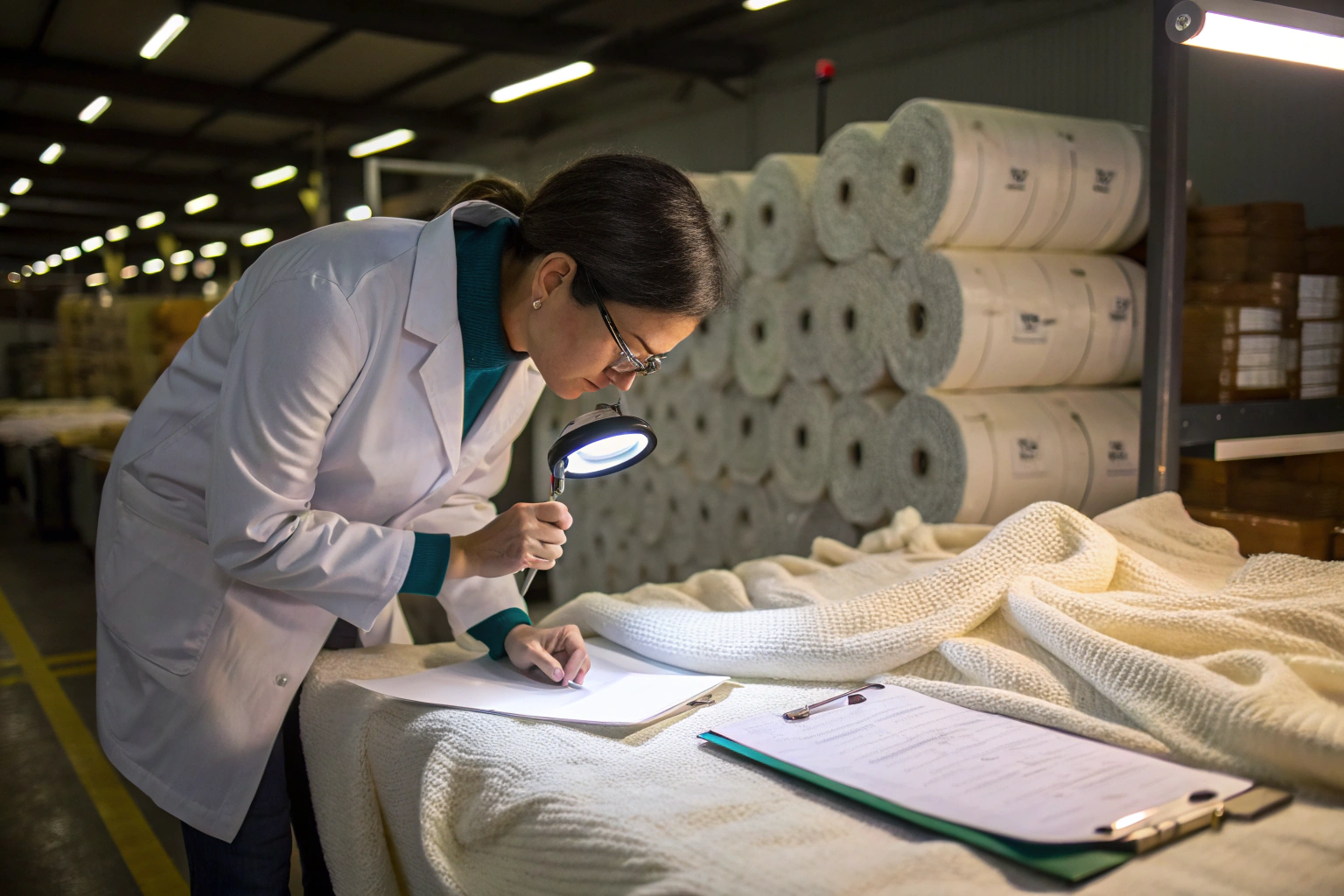
I remember the call like it was yesterday. A client in Vancouver had just received 12,000 meters of what was supposed to be premium organic cotton jersey. They were thrilled—until their cutter opened the first roll and found visible barre marks running across the fabric. Then the second roll showed the same issue. By the time they'd checked five rolls, they knew they had a problem. The supplier was 8,000 miles away, the money had been paid, and their production line was stopping.
That call taught me something I've never forgotten: quality control issues aren't just about the fabric—they're about what happens next. The difference between a disaster and a manageable problem is how you handle it.
Let me walk you through exactly how to handle quality control issues with imported knitted fabric. From inspection to documentation to resolution, these steps will protect your business and often preserve supplier relationships.
What Quality Control Steps Should Happen Before Fabric Arrives?
The best time to catch quality issues is before fabric ships. Once it's on a vessel, resolution becomes harder and slower.
Third-party inspection before shipment is your strongest protection. Hire an independent inspection company (SGS, Bureau Veritas, QIMA) to visit the factory when production is complete. They'll inspect a statistically valid sample of rolls against your specifications and AQL standards.
The inspection should verify:
- Visual defects: holes, stains, barre, uneven dyeing
- Physical measurements: weight (GSM), width, roll length
- Hand feel against approved samples
- Color consistency within and between rolls
- Shrinkage and recovery if specified
The inspector provides a report with photos and measurements. You decide whether to accept, request rework, or reject before shipment.
In-house video inspection is an alternative. Some buyers ask factories to video the inspection process, showing each roll unrolled, examined, and measured. This isn't as reliable as third-party inspection but better than nothing.
Approved samples from production (not just lab dips) provide a reference. Before bulk production, request a "top of production" sample—fabric from the actual run, not a specially prepared sample. Approve this before full production continues.
A German client requires third-party inspection for every order over $10,000. They've caught issues that would have cost them months of delays. The inspection cost is a fraction of what they've saved.

What AQL Standards Apply to Knitted Fabric?
AQL (Acceptable Quality Level) standards provide objective acceptance criteria.
For most knitted fabric applications, AQL 2.5 for major defects and 4.0 for minor defects is standard. This means you accept lots where the defect rate doesn't exceed these levels.
Major defects are those that would affect garment appearance or performance: holes, oil stains, wrong color, incorrect weight, severe barre. These justify rejection.
Minor defects are those that might not affect the final garment: slight shading within tolerance, small slubs in natural fabrics,轻微的 irregularities that can be cut around.
The inspection sample size depends on lot size. For a typical order of 50 rolls, an inspector might examine 8-10 rolls thoroughly. If defects exceed acceptable levels in the sample, the entire lot may be rejected or subject to 100% inspection.
Different applications may require different AQL levels. Luxury brands often specify AQL 1.5 for major defects. Basics brands may accept AQL 4.0. Know your market and set standards accordingly.
A Swedish brand specifies AQL 1.0 for their premium line—they accept almost no defects. Their suppliers know this and adjust pricing accordingly.
What Documentation Should You Request Before Shipment?
Documentation provides evidence if problems arise.
Inspection report from third-party inspector, with photos of defects found.
Packing list showing roll numbers, lengths, weights. This helps you verify shipment matches order.
Test reports for any specified properties: shrinkage, colorfastness, pilling, etc. These should be from an accredited lab.
Certificate copies if required: GOTS, GRS, OEKO-TEX. Verify they apply to your order.
Photos of production and packing if you've requested them.
A French client requires all documentation before shipment. They've caught discrepancies—wrong weights, missing certificates—that would have caused problems later.
How Do You Inspect Fabric When It Arrives?
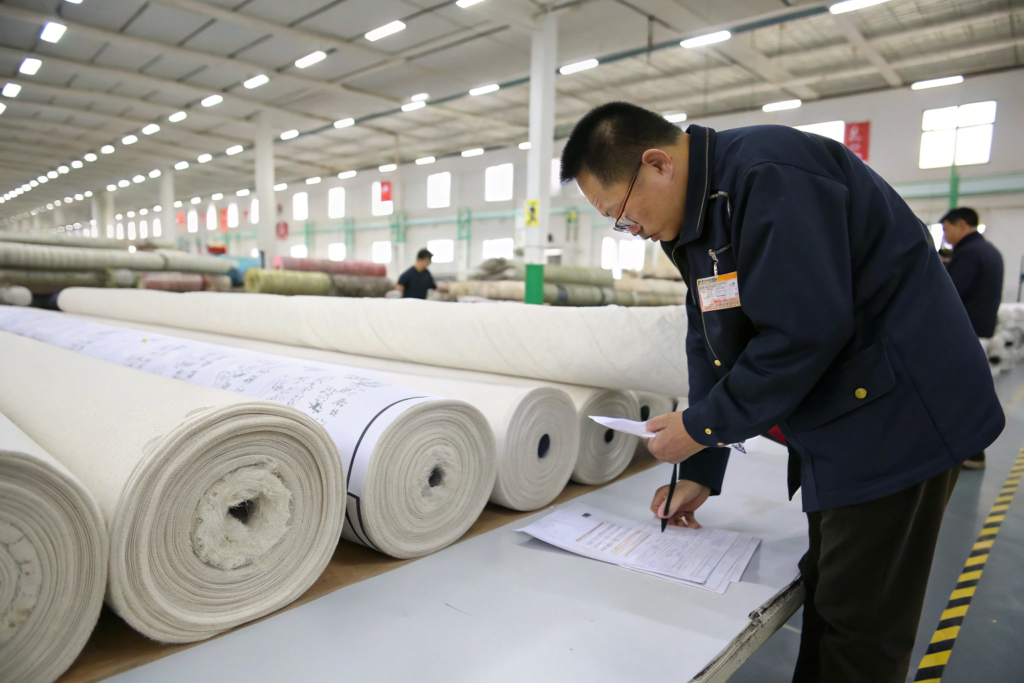
Even with pre-shipment inspection, you must inspect when fabric arrives. Transit can cause damage, and pre-shipment inspection may miss issues.
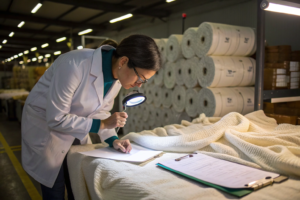
Prepare your inspection area. You need a clean, flat surface with good, consistent lighting. Ideally, use a dedicated inspection table with overhead light. If not, a clean floor with portable lighting works.
Establish your inspection protocol. Decide what percentage of rolls to inspect. For trusted suppliers, 10-20% may suffice. For new suppliers or if pre-shipment inspection showed issues, inspect 100%.
Check each roll for:
- Visual defects as you unroll: holes, stains, uneven dyeing, barre
- Width consistency: measure at beginning, middle, end
- Weight (GSM) if you have a scale and cutter
- Hand feel against approved samples
- Color consistency: compare beginning to end, roll to roll
Mark defects clearly. Use stickers or chalk to mark problem areas. Document each defect with photos and notes.
Measure roll lengths if you have equipment. Short rolls mean you paid for fabric you didn't receive.
A Canadian brand assigns a dedicated inspector for every arrival. They've found that the same person, doing consistent inspection, catches more issues than rotating staff.
What Defects Are Common in Knitted Fabric?
Knowing what to look for helps you find it.
Barre (horizontal streaks) indicates uneven knitting tension. It shows as lighter or darker stripes across the fabric width. In solid colors, barre is unacceptable for most applications.
Holes and snags are obvious defects. They may be small but will affect garment cutting. Mark them and calculate density.
Oil stains appear during knitting if machines aren't properly maintained. Some can be washed out; some can't. Test a sample.
Needle lines are vertical streaks where a damaged needle created a consistent defect. They run the length of the fabric and may be acceptable in some applications, not in others.
Slubs and neps are thick places in yarn. In natural fabrics, some are expected. Excessive slubbing indicates poor yarn quality.
Color variation between rolls or within rolls will cause matching problems in garment production. Compare roll ends side by side.
Shrinkage issues show after washing. If you have time, wash a sample from each roll to verify shrinkage meets specifications.
A Portuguese manufacturer trains all inspectors with a "defect library"—photos and samples of common issues. New inspectors learn faster and catch more.
How Do You Document Findings for Supplier Communication?
Good documentation is essential for resolution.
Take photos of every defect type. Show the defect clearly, and include something for scale (a ruler, a coin). Multiple angles help.
Record measurements. Where in the roll did the defect occur? How far from the edge? How large is the affected area?
Count defects. For visual defects, calculate defects per roll, per meter. This quantifies the issue.
Photograph the roll label and any markings. This proves which roll you're reporting.
Create a summary report. List each roll inspected, defects found, and your assessment. Include photos as evidence.
Compare to standards. If possible, show the defect next to an approved sample to demonstrate the difference.
A US client sends defect reports with photos, measurements, and a clear statement of what they expect: replacement, discount, or return. Suppliers appreciate the clarity.
How Do You Communicate Quality Issues to Suppliers?
How you communicate determines whether resolution is collaborative or confrontational.
Contact immediately. As soon as you identify an issue, notify the supplier. Waiting makes resolution harder and suggests the issue wasn't serious.
Be factual, not emotional. Present the evidence: photos, measurements, comparison to standards. Avoid accusations like "your fabric is defective." Instead, say "we've found these issues and need to understand how to resolve them."
Ask questions, don't demand conclusions. "Can you help us understand how this happened?" invites collaboration. "You need to fix this" invites defensiveness.
Propose a path forward. Based on the severity, suggest options: replacement, discount, return. Be open to discussion.
Set reasonable timelines. Give suppliers time to respond and propose solutions. Immediate demands create pressure that rarely helps.
Document all communication. Save emails, record calls if possible. If disputes escalate, documentation protects you.
A Dutch brand has a policy: always sleep on it before sending an angry email. They've found that 24 hours of cooling down leads to more productive conversations.

What Tone Works Best in Quality Disputes?
Professional, factual, and firm but fair.
Start with appreciation for what worked. "The fabric arrived on time, and most rolls look good. However, we've found some issues with..." This sets a collaborative tone.
State facts, not interpretations. "Roll 7 has 12 visible oil stains" is fact. "Your quality control is terrible" is interpretation. Facts are harder to dispute.
Express impact, not just problem. "These defects will affect our garment yield" helps suppliers understand why it matters.
Be open to their perspective. There may be factors you don't know—shipping damage, misunderstanding of specifications. Listen before concluding.
Focus on resolution, not blame. The goal is to get fabric you can use, not to win an argument.
A Swedish brand's quality manager is known for being firm but fair. Suppliers respect her because she's consistent, factual, and solution-oriented. Disputes rarely escalate.
When Should You Escalate the Issue?
Escalation should be deliberate, not automatic.
Escalate when initial contact gets no response. If a week passes with no reply, follow up more formally.
Escalate when responses are evasive. "We'll look into it" repeated without action suggests avoidance.
Escalate when proposed solutions are inadequate. A 5% discount for 30% defective fabric isn't reasonable.
Escalate when deadlines pass without resolution. If you agreed on a response timeline and it's missed, escalation is appropriate.
Escalate to higher management if your contact can't authorize solutions. Sometimes salespeople lack authority; going to their manager gets action.
Escalate to third parties if necessary. Payment disputes may require bank involvement. Certification issues may require certifying bodies.
A French client escalates systematically: first to salesperson, then sales manager, then director, then finally to legal if needed. Most issues resolve before the third step.
What Resolution Options Are Available?
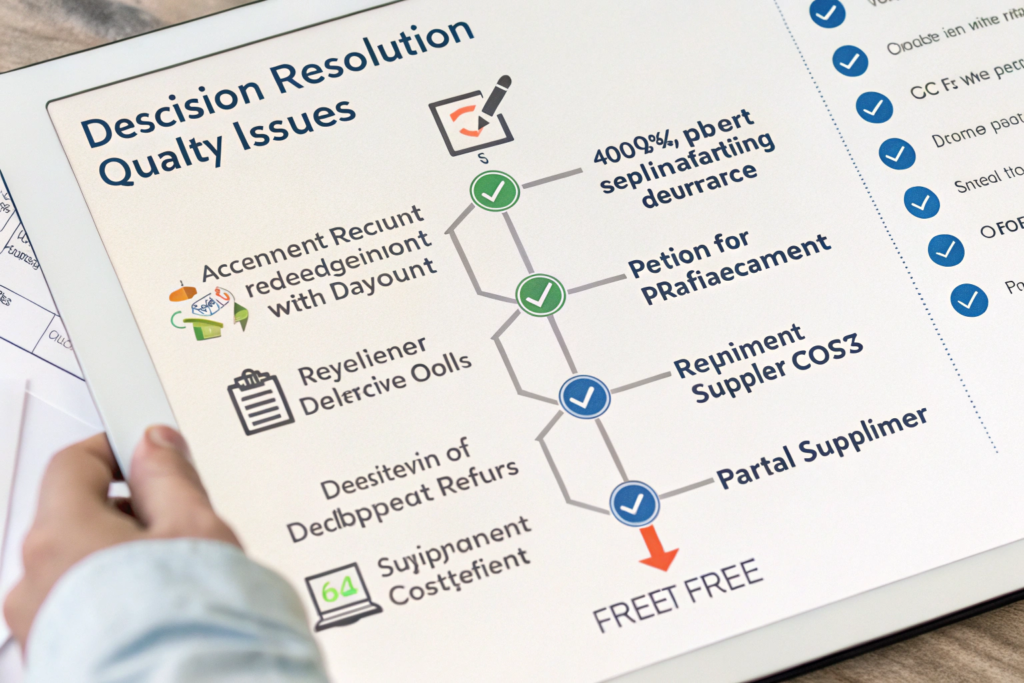
When quality issues arise, you have options. The right choice depends on severity and your needs.
Acceptance with discount works for minor issues. If defects are within tolerance but you want compensation, negotiate a credit. Typical discounts range from 5-20% depending on severity. You keep the fabric, production continues, and you recover some cost.
Replacement of defective rolls works when the issue is isolated. The supplier ships new rolls to replace bad ones. You may need to wait, but you get the quality you paid for. Shipping costs should be theirs.
Return for refund is for major issues. If fabric is unusable, return it at supplier expense and get your money back. This is the cleanest break but takes time and may leave you without fabric.
Rework at supplier cost works for certain issues. Fabric that's too stiff can be re-finished. Off-shade fabric can be re-dyed. Not all fabrics can be reworked, but when possible, it solves the problem.
Partial acceptance works when some rolls are good, some bad. Accept good rolls for immediate production; resolve bad rolls separately. This keeps your line moving while addressing problems.
A Spanish client once received fabric with minor color variation. They negotiated a 15% discount, used the fabric for a different style where variation wasn't noticeable, and saved weeks of delay. Creative resolution saved the season.
How Do You Calculate Fair Discounts for Defects?
Discounts should reflect actual impact, not just frustration.
Calculate defect density. If 10% of rolls have issues that make them unusable, a 10% discount is baseline.
Add inconvenience costs. You've spent time inspecting, documenting, communicating. Add 2-5% for administrative burden.
Consider yield impact. If defects force you to cut around problems, your fabric yield drops. Calculate the loss and add to discount.
Factor in delay costs. If you're waiting for resolution, your production may be delayed. These costs are real.
Be reasonable. Demanding 50% discount for 5% defects damages relationships. Fair resolution builds trust for future.
A German brand calculates discounts using a formula: defect percentage + 5% administrative + actual yield loss. Suppliers accept because it's transparent and fair.
What Happens If You Can't Reach Agreement?
Sometimes resolution isn't possible. Have a plan.
Review your contract. What dispute resolution process did you agree to? Follow it.
Consider mediation. A neutral third party can help both sides find common ground. Less expensive than legal action.
Involve payment mechanisms. If you paid by letter of credit, your bank may hold funds pending resolution. If by Trade Assurance, file a claim.
Document everything. If legal action becomes necessary, your documentation is your evidence.
Evaluate the relationship. Is this a one-time problem with a good supplier, or a pattern with a bad one? The answer guides your next steps.
Know when to walk away. Sometimes accepting a loss and finding a new supplier is better than prolonged dispute.
A UK client once spent six months fighting a $20,000 dispute. Legal fees ate half the recovery, and the stress wasn't worth it. Now they choose suppliers more carefully and resolve disputes faster.
How Do You Prevent Future Quality Issues?
Every quality issue is a learning opportunity. Use them to prevent recurrence.
Update your specifications. Were they clear enough? Did any ambiguity contribute to the problem? Make specs more precise.
Improve your approval process. Should you require bulk samples before production? Should you inspect earlier?
Enhance your supplier communication. Did you assume they understood requirements that weren't explicit? Clarify for next time.
Adjust your supplier selection. Does this supplier have the capability for your quality level? If not, find one that does.
Build quality history. Track which suppliers consistently deliver quality and which have issues. Use data for future decisions.
A Japanese brand maintains a "supplier scorecard" tracking quality, delivery, and communication for every order. They use it to decide who gets more business and who gets phased out.

What Should Be in Your Quality Agreement?
A formal quality agreement prevents misunderstandings.
Product specifications: Fiber content, weight, width, construction, finish. Every measurable property.
Tolerance ranges: Acceptable variation for each specification. Be realistic but clear.
Sampling requirements: Lab dip approval, bulk sample approval, pre-production samples.
Inspection standards: AQL levels, inspection methods, acceptable defect definitions.
Documentation requirements: Test reports, certificates, inspection reports, packing lists.
Remedies for non-conformance: Discount formulas, replacement terms, return rights.
Dispute resolution process: How disagreements will be handled.
A Canadian client includes a 5-page quality agreement with every purchase order. It seems excessive, but they've never had a quality dispute that wasn't quickly resolved.
How Do You Build Relationships with Reliable Suppliers?
The best prevention is working with suppliers who share your quality commitment.
Visit when possible. Face-to-face relationships build trust that survives problems.
Pay promptly. Suppliers prioritize clients who pay on time.
Communicate clearly. Vague requirements produce variable results. Be specific.
Give feedback, both positive and negative. Good suppliers want to improve. Tell them what works and what doesn't.
Grow together. As your needs evolve, give trusted suppliers the chance to grow with you.
A US client has worked with the same three suppliers for over a decade. They've grown from a startup to a major brand together. When problems arise, they solve them as partners.
Conclusion
Quality control issues with imported knitted fabric are inevitable at some point. The difference between successful brands and struggling ones isn't whether problems occur—it's how they're handled.
The key principles:
- Inspect before shipment when possible
- Inspect thoroughly when fabric arrives
- Document everything with photos and measurements
- Communicate professionally and factually
- Seek fair resolution that works for both sides
- Learn from every issue to prevent recurrence
Remember that most suppliers want to deliver quality. Problems usually come from misunderstanding, not malice. Approaching issues as opportunities to improve communication and processes builds stronger relationships than approaching them as battles to win.
At Shanghai Fumao, we've handled quality issues for over two decades—on both sides. We know what it feels like to receive fabric that doesn't meet expectations. We also know what it takes to resolve issues fairly and keep relationships strong.
Our approach is simple: we want you to get the fabric you ordered. If something goes wrong, we want to fix it. We respond quickly to quality reports, investigate thoroughly, and propose fair solutions. We've replaced fabric, issued discounts, and reworked production—whatever it takes to make things right.
We also work to prevent issues before they happen. Clear specifications, thorough sampling, in-process monitoring, and final inspection catch most problems before fabric ships. When they don't, we handle the rest.
Whether you're dealing with a current issue or planning to prevent future ones, we're here to help. Good suppliers become partners in quality, not just vendors.
Contact our Business Director, Elaine, today to discuss your quality control needs. She and her team will explain our processes, answer your questions, and ensure you get the quality you expect. Email her directly at: elaine@fumaoclothing.com. Let's build a quality partnership.