In 2020, a Swedish wearable tech startup founder contacted me with a problem that was literally shocking his customers. His company had developed beautiful heated jackets for winter sports—premium materials, sleek design, excellent battery life. But the conductive fabric they'd sourced kept failing. Some jackets wouldn't heat evenly. Others developed hot spots that burned wearers. A few actually short-circuited completely. The supplier had promised "conductive fabric" but delivered material with inconsistent resistance that made reliable performance impossible. That conversation taught me that conductive fabrics aren't like regular textiles—they're precision engineered materials where small variations create big problems.
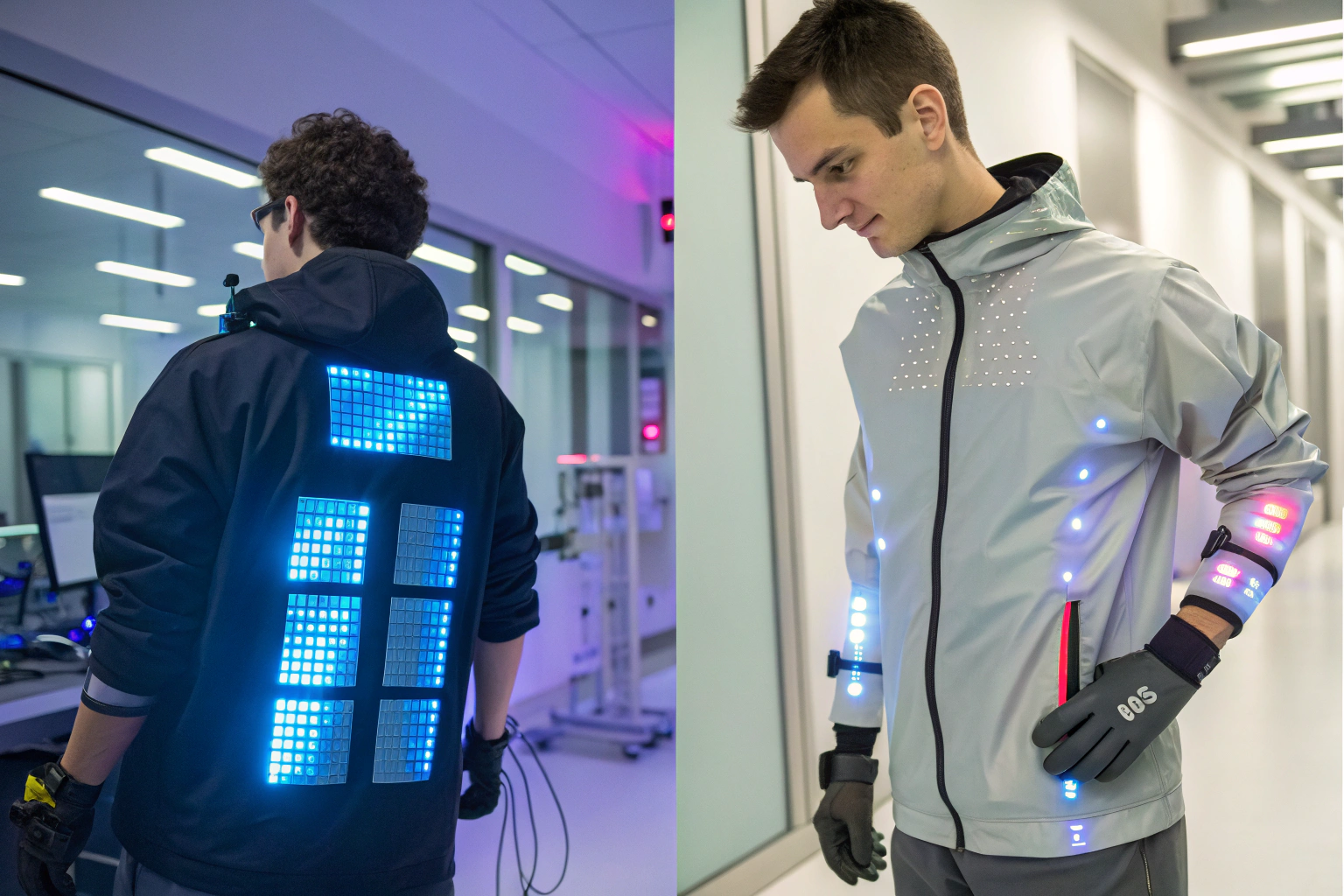
Conductive fabrics are textiles that conduct electricity. They're the foundation of wearable technology—heated garments, smart clothing with integrated sensors, flexible electronics, medical monitoring devices, and even fashion with embedded lights. Unlike traditional fabrics where consistency matters for appearance, conductive fabrics must deliver consistent electrical performance across every square centimeter.
At Shanghai Fumao, we've developed conductive fabrics for clients ranging from military contractors to medical device companies to high-tech fashion brands. The requirements are unlike anything in conventional textiles. Let me walk you through how to find a supplier who can actually deliver what they promise.
What Are Conductive Fabrics and How Do They Work?
Conductive fabrics enable electricity to flow through textile structures. They're made by incorporating conductive materials into fibers, yarns, or fabric finishes. Understanding the technology helps you evaluate supplier capabilities.
What materials make fabrics conductive?
Conductive fabrics achieve conductivity through several approaches:
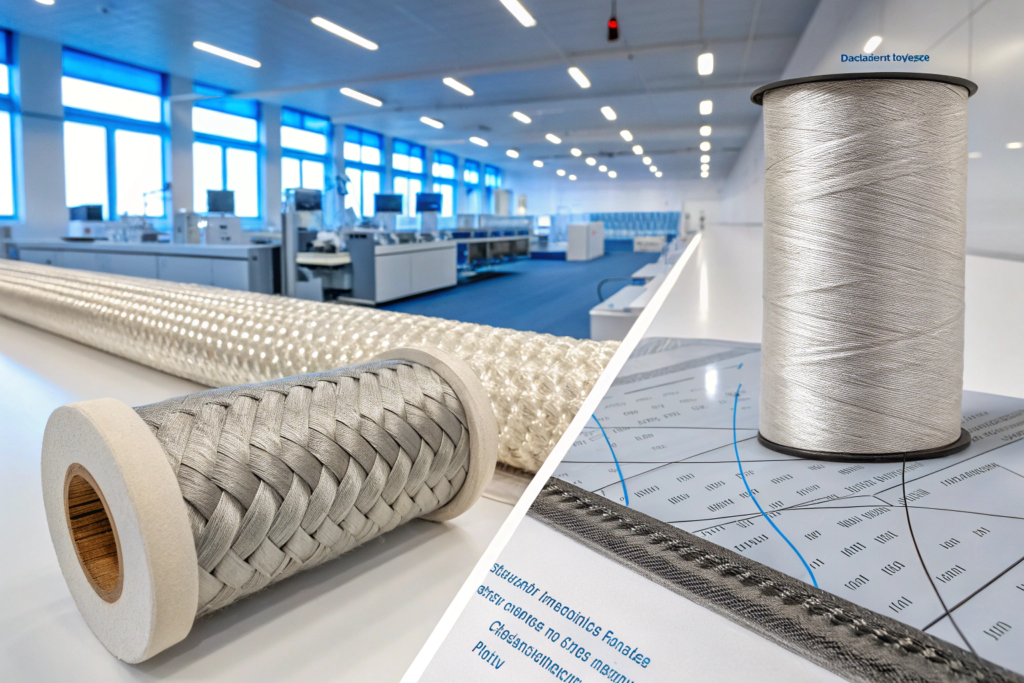
Metal fibers: Stainless steel, copper, silver, or other metal fibers blended with conventional fibers. Stainless steel is durable and inexpensive but stiff. Silver offers excellent conductivity but high cost. Metal fibers can be as fine as 8-12 microns—thinner than human hair.
Metal-coated fibers: Conventional fibers (nylon, polyester) coated with metal, typically silver or copper. The coating provides conductivity while the core provides textile properties. Silver-coated nylon is the most common conductive fabric material.
Inherently conductive polymers: Specialized polymers that conduct electricity without metal. These are rare, expensive, and used only in specialized applications.
Printed conductive traces: Conductive inks printed onto fabric surfaces. Used for circuits and connections rather than whole-fabric conductivity.
For a US military client developing smart uniforms, we specified silver-coated nylon yarns because they combine excellent conductivity (silver) with textile durability (nylon). The yarns are woven into fabric at specific intervals to create conductive pathways. Material choice affects conductivity, durability, and cost.
How is conductivity measured in fabrics?
Conductive fabric performance is measured in several ways:
Surface resistivity (ohms per square): Measures how easily electricity flows across the fabric surface. Lower numbers mean better conductivity. Typical ranges:
- <1 ohm/square: Highly conductive (silver-coated fabrics)
- 1-10 ohms/square: Conductive (stainless steel blends)
- 10-100 ohms/square: Semi-conductive (some coated fabrics)
-
100 ohms/square: Static-dissipative (not suitable for power transmission)
Resistance per length (ohms per meter): For conductive yarns or traces, this measures resistance along the length. Critical for designing circuits where voltage drop matters.
Contact resistance: How well the fabric connects to electronic components. High contact resistance creates heat and signal loss.
Uniformity: Variation in resistance across the fabric. Inconsistent fabrics create hot spots in heating applications and unreliable signals in sensors.
For a German automotive client (heated car seats), we specify maximum 5% resistance variation across any 10cm square area. This ensures even heating without hot spots. Uniformity is as important as absolute conductivity.
What are the limitations of conductive fabrics?
Conductive fabrics aren't magic—they have real limitations:
Durability: Conductivity can decrease with flexing, washing, and abrasion. Silver coatings can oxidize, reducing conductivity over time.
Washability: Many conductive fabrics can't be washed conventionally. Those that can often require special handling.
Connection challenges: Connecting fabric to electronics is difficult. Standard connectors aren't designed for textiles.
Cost: Conductive materials cost significantly more than conventional textiles.
Hand feel: Conductive elements can make fabric stiffer, heavier, or less comfortable.
For a Canadian outdoor brand developing heated gloves, we had to balance conductivity (needs enough to generate heat) with flexibility (needs to bend with fingers) and washability (gloves get dirty). The solution was a hybrid: silver-coated nylon in the palm and back, standard fabric in between. Understanding limitations prevents over-promising.
What Applications Use Conductive Fabrics?
Different applications need different conductive fabric properties. Understanding your specific use case helps you find the right supplier.
How are conductive fabrics used in heated clothing?
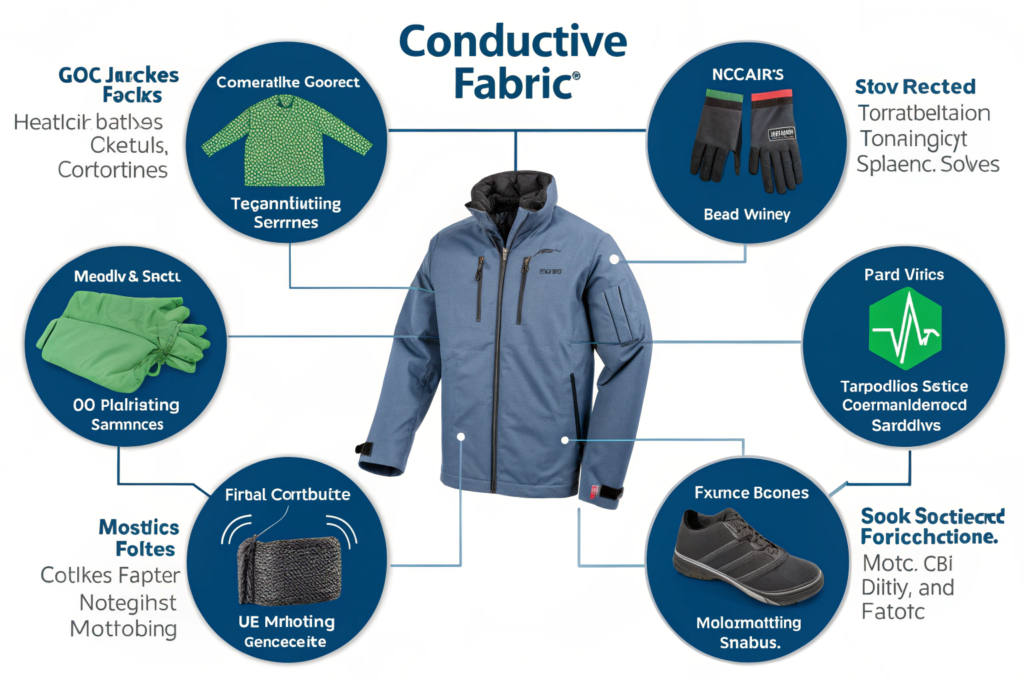
Heated clothing is the largest commercial application for conductive fabrics. Requirements include:
Resistance matching: The fabric must have specific resistance to generate the right amount of heat at the right voltage. Too low resistance draws too much current; too high doesn't generate enough heat.
Uniform heating: Resistance must be consistent across the heated area to prevent hot spots.
Flexibility: Fabric must bend with body movement without breaking conductive paths.
Connection points: Areas where wires connect to fabric must handle current without overheating.
For a Norwegian outdoor brand, we developed a heated vest using silver-coated nylon fabric with resistance of 2 ohms per square at 12V. The vest heats to 45°C in 2 minutes, maintains temperature within ±2°C across the entire heating zone, and has survived 50 wash cycles in testing. Heating applications demand precision.
What role do conductive fabrics play in medical monitoring?
Medical wearables use conductive fabrics for biosignal monitoring:
ECG monitoring: Conductive fabric electrodes detect heart signals through clothing. Requires consistent skin contact and stable electrical properties.
Respiratory monitoring: Conductive fabrics integrated into chest bands detect breathing by measuring stretch-induced resistance changes.
Posture monitoring: Conductive fabrics detect bending for posture correction.
The requirements differ from heating applications:
- Lower currents (microamps, not amps)
- Signal quality matters (noise must be minimal)
- Skin contact must be comfortable for hours
- Medical certifications required
For a Swiss medical device company, we developed a conductive fabric ECG shirt with silver-coated yarns positioned at specific electrode locations. The fabric maintains signal quality through 100 wash cycles and passed ISO 10993 biocompatibility testing. Medical applications have the strictest requirements.
Can conductive fabrics transmit data?
Yes, conductive fabrics can replace wires for data transmission in smart clothing:
Fabric bus systems: Conductive traces woven into fabric carry data between sensors, processors, and displays.
Capacitive touch sensing: Conductive fabrics detect touch for user interfaces.
Proximity sensing: Conductive elements detect nearby objects or people.
Data transmission requires controlled impedance (consistent electrical properties at high frequencies) and shielding from interference—more demanding than simple power transmission.
For a Japanese consumer electronics client, we developed a fabric data bus for a smart jacket that connects sensors in sleeves to a processor in the back. The fabric carries both power and data at speeds up to 1 Mbps, replacing 12 individual wires. Data-capable fabrics enable complex wearables.
How Do You Evaluate Conductive Fabric Suppliers?
Finding the right supplier for conductive fabrics requires different criteria than conventional textiles. Technical capability, testing rigor, and application expertise matter more than price.

What technical capabilities should you look for?
When evaluating suppliers, ask about:
Material options: Do they offer multiple conductive technologies (metal fibers, coated yarns, printed traces)? One-size-fits-all suggests limited expertise.
Customization capability: Can they adjust resistance, pattern conductive areas, or integrate with specific connectors?
Testing equipment: Do they have in-house testing for conductivity, uniformity, and durability? Third-party testing is fine, but in-house capability suggests deeper understanding.
R&D support: Will they help you develop solutions for your specific application, or just sell you off-the-shelf products?
Quality systems: ISO 9001 certification indicates systematic quality management. For medical applications, ISO 13485 may be required.
For a UK defense contractor, we provided detailed documentation of our quality system, test equipment calibration records, and engineer biographies. They needed confidence that we could deliver consistent performance for critical applications. Technical capability should match application criticality.
What testing should conductive fabrics undergo?
Comprehensive testing includes:
Electrical testing:
- Surface resistivity mapping (uniformity across fabric)
- Resistance per length (for yarns and traces)
- Contact resistance (to connectors)
- Current-carrying capacity (maximum safe current)
Mechanical testing:
- Flex testing (conductivity after repeated bending)
- Abrasion testing (conductivity after wear)
- Tensile testing (strength of conductive elements)
Environmental testing:
- Wash testing (conductivity after repeated laundering)
- Temperature cycling (conductivity after hot/cold exposure)
- Humidity testing (conductivity in moist conditions)
- Oxidation testing (silver tarnish effects)
Safety testing:
- Temperature rise under load (hot spots)
- Flammability
- Biocompatibility (for skin contact)
For a French aerospace client (heated flight suits for pilots), we conducted 500 hours of accelerated aging, 100 wash cycles, and -40°C to +70°C temperature cycling. The fabric maintained conductivity within 10% of original through all tests. Testing proves performance claims.
What certifications matter for conductive fabrics?
Certifications vary by market and application:
General:
- ISO 9001 (quality management)
- OEKO-TEX Standard 100 (chemical safety)
Medical:
- ISO 13485 (medical device quality)
- ISO 10993 (biocompatibility)
- FDA registration (for US medical devices)
Military:
- MIL-SPEC compliance (various standards)
- ITAR compliance (for defense applications)
Consumer electronics:
- RoHS compliance (restriction of hazardous substances)
- REACH compliance (EU chemical regulation)
- CE marking (EU conformity)
For a US medical device startup, we provided full documentation of ISO 13485 certification, ISO 10993 test reports, and FDA establishment registration. Their regulatory submission required all three. Certifications open regulated markets.
What Are the Practical Challenges of Working with Conductive Fabrics?
Conductive fabrics behave differently than conventional textiles throughout the supply chain. Understanding these differences prevents production surprises.
How do you handle and store conductive fabrics?
Conductive fabrics require special care:
Storage: Silver-coated fabrics must be stored in dark, low-humidity conditions to prevent oxidation. Some require vacuum sealing.
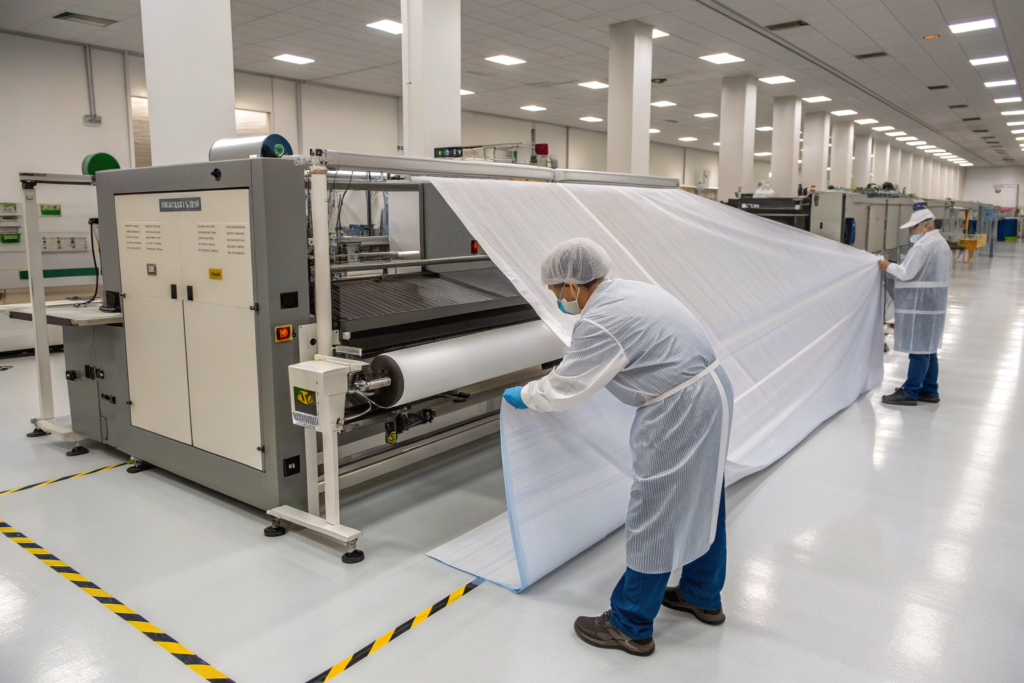
Handling: Conductive fabrics can't be folded (creases damage conductive paths). They must be rolled on large-diameter cores.
Cutting: Standard cutting can short conductive paths. Laser cutting or ultrasonic cutting is often required.
Winding: Tension control is critical—too much tension stretches fabric and changes resistance.
For a Danish wearable tech brand, we developed specialized packaging: fabric rolled on 150mm cores (prevents creasing), wrapped in anti-tarnish paper (prevents oxidation), and sealed in moisture-barrier bags. The fabric arrives at their factory in perfect condition for cutting and assembly. Proper handling preserves performance.
How do you connect electronics to conductive fabrics?
Connection is the hardest part of working with conductive fabrics. Options include:
Sewing with conductive thread: Simple but creates high-resistance connections. Works for low-current applications.
Crimped connectors: Metal connectors crimped onto fabric. Good for permanent connections but requires specialized tools.
Conductive adhesives: Silver-loaded epoxies bond wires to fabric. Creates reliable connections but adds process steps.
Snap fasteners: Modified metal snaps connect to fabric. Good for detachable electronics (like battery packs).
Ultrasonic welding: Bonds conductive materials without additional components. Clean but requires specialized equipment.
For a German automotive client, we developed a connection system using ultrasonically welded tabs that mate with standard automotive connectors. The connection resistance is under 0.1 ohms and survives 10,000 insertion cycles. Connection engineering is as important as fabric engineering.
What are realistic lead times and MOQs?
Conductive fabric production differs from conventional textiles:
Sample development: 2-4 weeks for standard materials, 4-8 weeks for custom developments
Bulk production: 6-12 weeks after sample approval (specialized materials may require longer)
Minimum order quantities:
- Standard conductive fabrics: 500-1,000 meters
- Custom developments: 2,000-5,000 meters (spreads development cost)
- Printed conductive traces: 100-500 pieces (lower MOQ possible)
Cost range:
- Basic conductive fabrics: $15-30 per meter
- Silver-coated fabrics: $30-60 per meter
- Custom engineered fabrics: $50-100+ per meter
For a US startup with limited budget, we recommended starting with a standard silver-coated fabric (off-the-shelf, $35/meter) and designing their product around its specifications. Custom development would have cost 3x as much and taken 4 months longer. Match investment to stage of business.
The conductive fabric market is growing rapidly as wearable technology expands from niche to mainstream. New materials, improved durability, and lower costs are making conductive textiles accessible to more applications. But the fundamental requirements remain: consistent electrical performance, reliable connections, and proven durability.
Conclusion
Finding a supplier for conductive fabrics requires understanding the technology, evaluating technical capabilities, and preparing for the unique challenges of working with electrified textiles. Conductive fabrics achieve conductivity through metal fibers, metal-coated yarns, or printed traces. Applications range from heated clothing to medical monitoring to data transmission. Supplier evaluation should include technical capabilities, testing rigor, and relevant certifications. Practical challenges—handling, connection, lead times—require advance planning.
The difference between conductive fabrics that work and those that fail is in the details: resistance uniformity, wash durability, connection reliability. Working with suppliers who understand these details protects your product and your brand.
If you're developing wearable technology and need conductive fabrics you can trust, I invite you to reach out to us at Shanghai Fumao. We've supplied conductive textiles to clients across medical, military, automotive, and consumer applications. We understand the materials, the testing, and the connection challenges. Contact our Business Director, Elaine, directly at elaine@fumaoclothing.com. Tell her about your application—heating, sensing, data transmission, or something entirely new. She'll connect you with our conductive textiles specialists, and we'll help you develop fabrics that perform reliably, wash after wash.
Because in wearable technology, the fabric isn't just the garment—it's the electronics. And it needs to work every time.