You have a brilliant, unique design in mind, but the market only seems to cater to mass production. Every large factory you approach quotes astronomical MOQs or simply ignores your small-batch request. This is the classic “small order dilemma” that stifles countless independent designers and startups. You’re stuck: you need custom, high-quality fabric to bring your vision to life, but you can’t commit to 10,000 meters. The frustration is real—it feels like the entire manufacturing system is built against innovation at a human scale.
The good news? The landscape has shifted. Finding a manufacturer for small-batch custom fabric is entirely possible if you know where to look and how to approach them. The key is targeting specialized suppliers within industrial clusters (like our home in Keqiao, China), who have agile systems and see value in nurturing growing brands. You need a partner that operates more like a creative workshop than a monolithic plant. For instance, a Los Angeles-based sustainable streetwear startup came to us in early 2023 needing only 800 meters of a custom-developed, heavy-weight organic cotton jacquard with a geometric pattern. By leveraging our flexible, small-loom capabilities and in-house sample development, we delivered the finished fabric in 6 weeks, enabling their limited capsule collection which sold out in 48 hours.
This guide will walk you through the exact steps, from identifying the right type of supplier to negotiating terms that work for small volumes. We’ll demystify the process so you can move from sketchbook to sample with confidence.
Where should you look for small-batch fabric suppliers?
Your search must be strategic. Traditional B2B directories filled with mass producers will lead to dead ends. Instead, focus on platforms and regions that celebrate agility and specialization. The goal is to find partners whose business model is built on flexibility, not just volume. They are often embedded within larger industrial ecosystems but operate as nimble, service-oriented units.
Concentrate your search on specialized B2B platforms and specific geographic clusters known for their diversified supply chains. Alibaba can work, but you must use advanced filters for “small MOQ,” “sample service,” and “OEM.” Even better are platforms like Global Sources or Made-in-China, which sometimes feature smaller workshops. However, the most effective method is targeting the epicenters of textile innovation itself, such as the Keqiao district in Shaoxing, China. Here, thousands of specialized mills, dye houses, and finishing factories coexist, creating a network where a small-batch order can be efficiently routed. A client from Berlin, searching for a custom-milled, GOTS-certified linen-blend fabric for a 500-piece run, found us not through a generic search, but by researching “Keqiao small batch textile R&D.” Our integrated setup allowed us to handle the entire process from spinning to finishing under one coordinated umbrella, saving them months of liaising between separate factories.
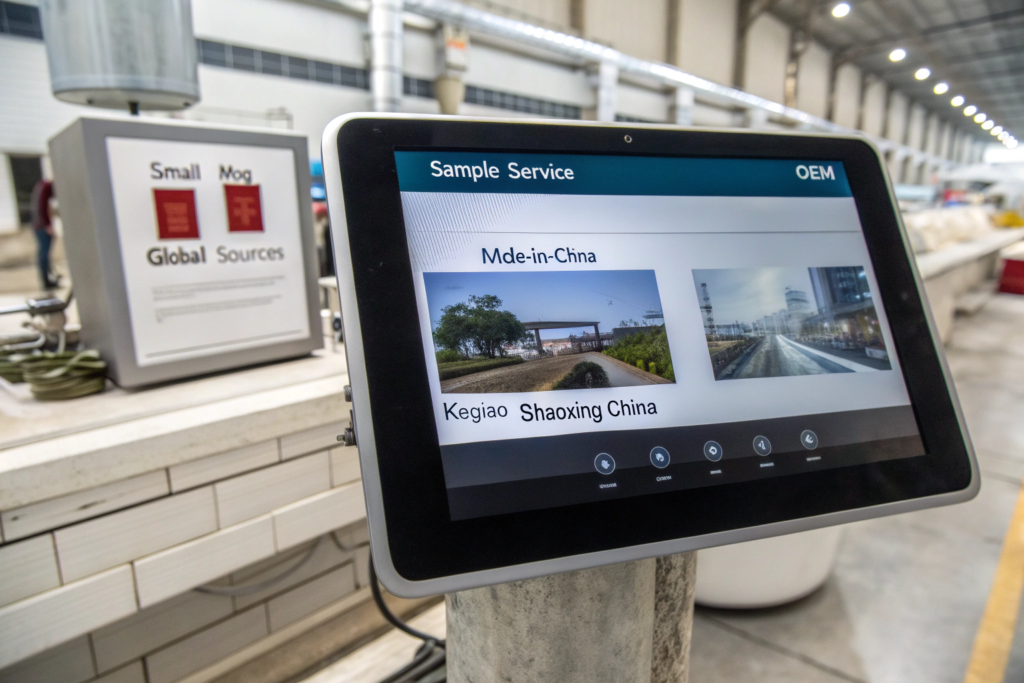
Are online B2B platforms effective for finding low-MOQ partners?
Yes, but with critical caveats. Online platforms are a starting point, not a solution. Their effectiveness depends entirely on your filtering skills and verification diligence.
- Use Precise Filters: Always select “Trade Assurance,” “Sample Available,” and “Low MOQ” or “Small Orders Accepted.” Sort suppliers by “Transaction Level” and look for those with a high number of repeat customers, which indicates reliability.
- Decode the Listings: A supplier offering “1-100 meters” for samples is different from one whose bulk MOQ starts at 100 meters. Read the product details meticulously.
- Prioritize Communication: Immediately initiate a chat. Ask directly: “What is your minimum order quantity for custom development of [your fabric type]?” Gauge their responsiveness and willingness to answer detailed questions. A supplier’s patience at this stage is a strong indicator of their service orientation for small clients.
For a deeper dive into vetting suppliers on these platforms, the community-driven advice on how to verify a Chinese textile supplier before your first order can be invaluable. Remember, at Shanghai Fumao, our online presence clearly states our small-batch capabilities because we’ve built our service model around them.
Why are industrial clusters like Keqiao ideal for custom small batches?
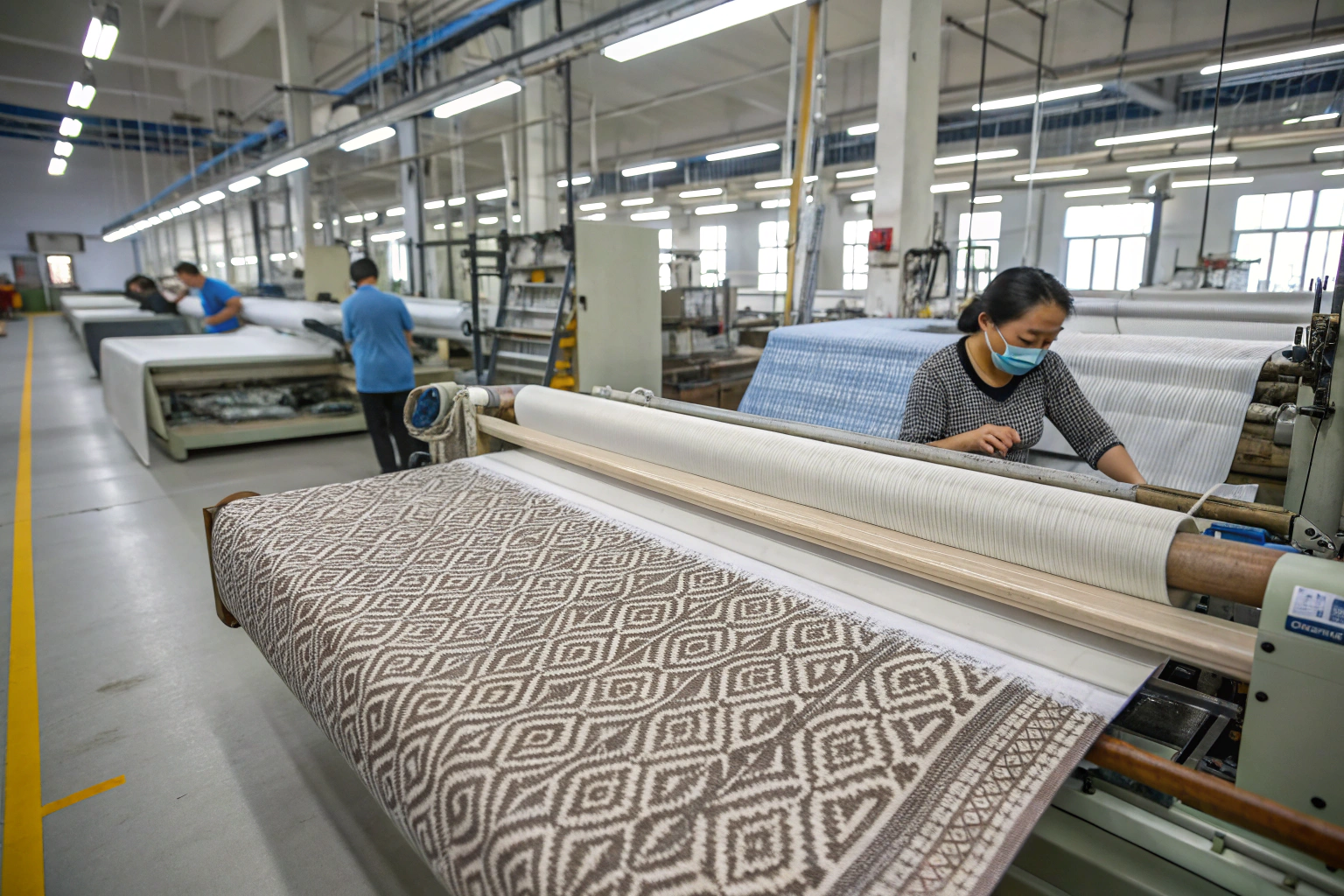
Industrial clusters are ecosystems, not just collections of factories. In Keqiao, the world’s largest textile hub, the entire supply chain—from yarn traders and weaving mills to dyeing houses, printing facilities, and finishing experts—is within a 20-kilometer radius. This density is your greatest advantage for small batches.
- Speed and Agility: Prototypes move between facilities in hours, not days. Decisions are made quickly.
- Unmatched Specialization: Need a specific type of circular knit, a rare dye technique, or a custom coating? There’s a specialist factory for that. You access world-class expertise without needing massive volume.
- Network Effect: A competent sourcing agent or a one-stop supplier (like us) within the cluster can manage the entire complex process for you. They know which dye house accepts tiny lots or which weaving mill has spare capacity on smaller looms.
Think of it as having access to a world-class culinary district instead of one giant frozen food plant. You get artisan quality, even for a small dinner party. To understand the power of this model, explore articles on leveraging the Keqiao textile cluster for niche product development.
What questions must you ask a potential supplier?
Initial communication is your quality control checkpoint. The questions you ask separate the professional, small-batch-friendly partners from the factories merely tolerating your order. You need to assess their capability, flexibility, and transparency. Go beyond “What’s your MOQ?” and dig into processes.
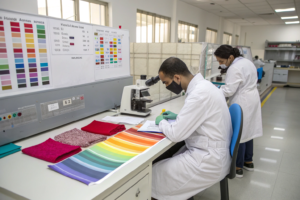
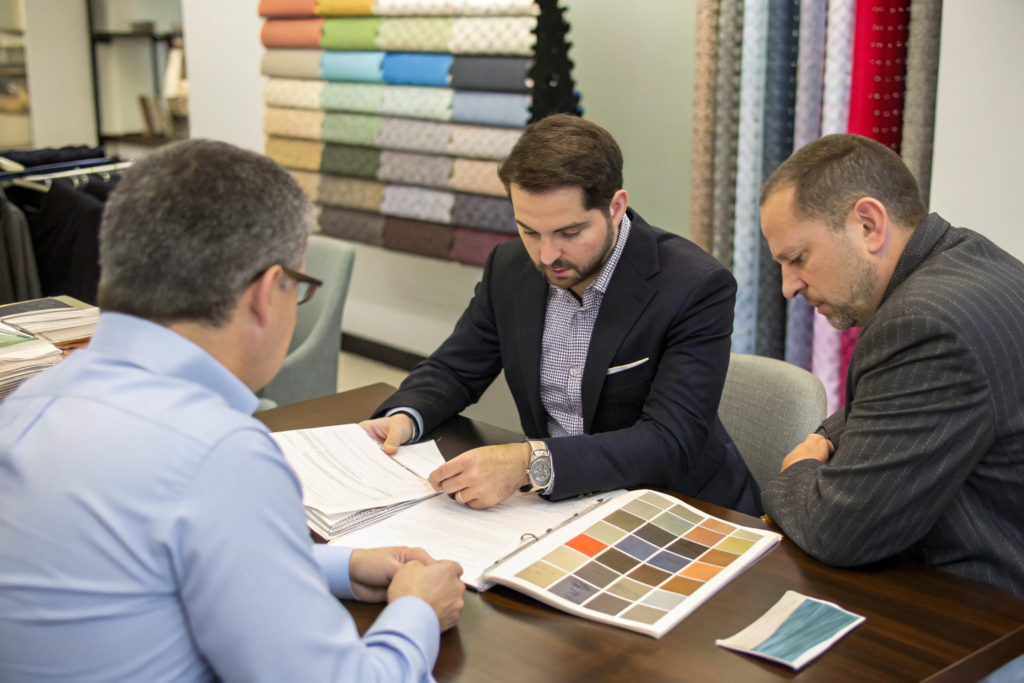
Focus on questions that reveal their infrastructure for handling small, complex orders. Ask about their sample process, development fees, production scheduling flexibility, and quality control protocols for limited runs. In my experience, a supplier’s willingness to detail these steps is a positive sign. For example, when a Montreal-based designer approached us for a custom, color-shifting taffeta for a luxury eveningwear line, we didn’t just quote a price. We outlined a four-step sample process: 1) Lab dip development on three base materials, 2) Weave structure sampling, 3) First-article finishing sample, 4) Pre-production approval sample. This clear roadmap built immediate trust.
What are the specifics of their sampling and development process?
This is the most critical area. The sample process is the product for small batches.
- Cost Structure: Is there a flat development fee? Are sample costs deductible from the final bulk order? (This is standard practice for reputable suppliers).
- Timeline: How long for initial lab dips? For a strike-off (sample swatch)? For a bulk sample (3-5 meters)?
- Revisions: How many rounds of color or texture revision are included in the development fee? What is the cost for additional revisions?
- Communication: How will they share progress? (e.g., photos, video, express shipping of samples). Will you have a dedicated project manager?
A transparent supplier will provide a Sample Development Agreement. This document protects both parties and sets clear expectations. If they are vague or resistant to providing a structured sample plan, consider it a red flag. For insights on navigating this phase, the Fashion Incubator has an excellent guide on negotiating fabric sampling fees and terms with mills.
How do they handle quality control for limited production runs?
Never assume QC is automatic for small orders. In fact, it can be more prone to error as it’s often done manually off the main production line. You must ask:
- Inspection Method: Is it 100% yard-by-yard inspection, or spot-checking? For small batches of high-value fabric, 100% inspection is not unreasonable to request.
- Standards: What specific defects are they checking for? (e.g., weaving flaws, dye spots, width consistency, color evenness). Can they provide an inspection report based on international standards like the 4-point system?
- Your Involvement: Can you approve a pre-production sample (“golden sample”) that becomes the benchmark for the entire batch? Can you or a third-party inspector visit during production or before shipment?
At Shanghai Fumao, our small-batch QC is arguably more rigorous than for large runs. Each meter is examined on a backlit inspection table, and we provide a digital QC report with photos of any minor issues found, giving the client full visibility and the choice to accept or reject. This level of detail is what you should seek.
How can you make your small order attractive to a manufacturer?
You must reframe the relationship. You’re not a nuisance; you’re a potential long-term partner with valuable, innovative projects. The goal is to minimize the supplier’s perceived risk and administrative burden while maximizing the value you bring. This is about business psychology as much as it is about textiles.
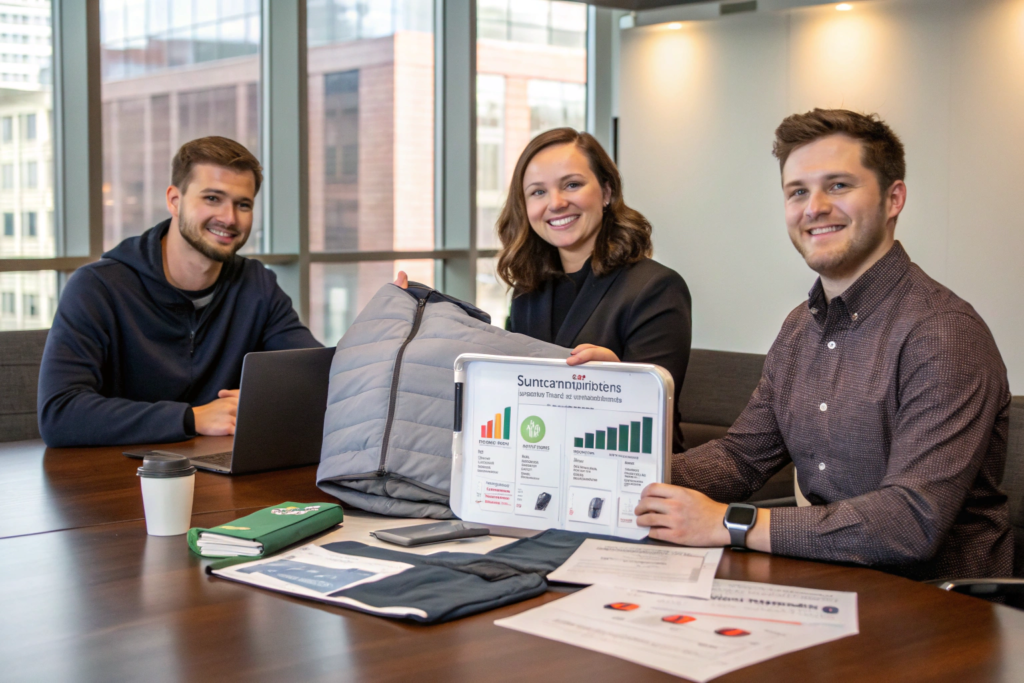
Position your project as a partnership with growth potential. Be professional, prepared, and easy to work with. This dramatically increases your chances of securing a willing and enthusiastic manufacturer. Show them you are serious and organized. We consistently prioritize clients who provide clear tech packs, communicate effectively, and pay samples promptly. A startup from Sydney won our team’s full attention by presenting a meticulously organized tech pack for their recycled PET fleece with custom antimicrobial finish, along with a realistic 3-year growth forecast. They showed respect for our time and expertise, so we invested our best resources in their project.
How does a professional tech pack benefit your small order?
A comprehensive tech pack is your single most powerful tool. It transforms you from an “idea person” to a professional client. It reduces back-and-forth, minimizes errors, and shows the supplier you understand the manufacturing process.
A strong tech pack for fabric development should include:
- Concept & Target Use: Mood board, end garment photos.
- Detailed Fabric Specs: Target weight (GSM), width, composition (e.g., 85% Organic Cotton / 15% Spandex).
- Color Standards: Pantone codes, physical color swatches if possible.
- Performance Requirements: Wash care, shrinkage limits, colorfastness standards, any functional needs (e.g., UPF 50+, moisture-wicking).
- Reference Samples: Swatches of similar fabrics for hand feel, drape, or visual effect.
Providing this upfront saves the supplier countless hours of guessing and clarification. It makes their job easier, which makes your small order more profitable for them in terms of efficiency. Resources like The Tech Pack Studio’s guide to creating a bulletproof fabric specification sheet offer excellent templates.
What negotiation strategies work for low MOQs and fair pricing?
Be realistic and transparent. You will pay a premium per meter compared to bulk orders—this covers setup costs and overhead. The goal is not to get bulk pricing, but to get fair small-batch pricing.
- Understand Cost Drivers: Ask for a basic cost breakdown. What are the components? (Yarn cost, weaving/dyeing setup fee, labor, profit margin). This builds trust.
- Bundle and Plan: Can you order multiple colorways of the same fabric to meet a higher total meterage? Can you schedule your next order in advance to secure better pricing on a repeat?
- Offer Concessions: To get a better unit price, be flexible on payment terms (e.g., higher deposit), or lead time. Offer to pay for sample costs upfront without deduction.
- Focus on Total Relationship Value: Emphasize your plans for future collections, your commitment to quality, and your efficient communication style. A reliable, low-maintenance client is valuable.
The conversation should be, “We understand the premiums involved. How can we structure this first order to be efficient for you and set us up for a successful long-term partnership?” This collaborative approach is how Shanghai Fumao builds its most successful client relationships.
What are the hidden pitfalls in small-batch fabric sourcing?
Enthusiasm can lead to oversight. The pitfalls in small-batch production are often subtler than in large orders but can be just as devastating. They revolve around communication gaps, logistical complexities at a small scale, and the assumption that “small” equals “simple.” Forewarned is forearmed.
The major hidden risks include inconsistent quality across the mini-batch, unexpected and proportionally huge shipping/logistics costs, and intellectual property protection for your unique design. A client from Seattle learned this the hard way in 2022 when they sourced a beautiful custom-printed silk twill from a small workshop through an agent. The first 50 meters were perfect, but the remaining 150 meters had a slight but consistent color shift. Without a clear, contractually defined QC standard and rejection clause, they were forced to accept the flawed goods, incurring significant losses. The problem wasn’t the size of the order, but the lack of formalized safeguards around it.
How can you protect your fabric design intellectual property (IP)?
This is a paramount concern when developing custom fabrics. Your unique jacquard pattern or proprietary finish is your competitive advantage.
- Use a Non-Disclosure Agreement (NDA): Have a simple, enforceable NDA signed before sharing detailed tech packs or sending unique sample materials. Any reputable supplier should be willing to sign one.
- Contractual Clauses: Your purchase order or manufacturing agreement should explicitly state that all designs, patterns, and specifications are your exclusive intellectual property. It should prohibit the supplier from selling, replicating, or sharing the design with any other party.
- Practical Control: Work with suppliers who have a reputation to uphold. Consider splitting production processes if possible (e.g., have the base fabric woven in one place and the unique printing done in another under strict confidentiality).
While no method is 100% foolproof, these steps create a legal and ethical framework for protection. For more on this sensitive topic, see discussions on strategies for IP protection when manufacturing custom products in Asia.
Why are logistics and shipping disproportionately challenging for small batches?
A 200-kg fabric roll doesn’t fill a 20-foot container. Therefore, you’ll likely use Less than Container Load (LCL) shipping or air freight. This introduces complexity and cost volatility.
- LCL Shipping: Your goods share a container with other shipments. This means multiple handling points, higher risk of damage or loss, and longer transit times due to consolidation/deconsolidation.
- Cost Structure: You pay by volume (cubic meter), not just weight. Packaging efficiency matters. Port fees and handling charges become a larger percentage of your total cost.
- The Solution – Consolidation Services: Partner with a supplier, like us, who offers door-to-door shipping with consolidated logistics. We group multiple small client shipments into full containers, negotiate bulk freight rates, and handle all customs clearance. This turns a major headache into a simple, predictable line item. Understanding these nuances is key, as explained in resources about managing LCL shipping costs for small business imports.
Conclusion
Finding a manufacturer for small-batch custom fabric is a journey of targeted search, precise communication, and strategic partnership. It requires moving away from the mass-production mindset and engaging with agile, service-oriented suppliers in specialized industrial ecosystems. By asking the right questions, presenting yourself as a professional partner, and proactively managing the unique risks of small-scale production, you can unlock access to the same quality and innovation as the largest brands.
Your unique vision deserves to be realized in material form, not compromised by outdated manufacturing constraints. The suppliers exist; your task is to find and collaborate with them intelligently.
If you’re ready to develop that unique fabric for your next collection without the burden of impossible minimums, let’s talk. At Shanghai Fumao, small-batch customization is our specialty. We’ve built our processes around turning innovative concepts into tangible, high-quality fabrics, meter by meter. For a consultation on your specific small-batch fabric project, contact our Business Director, Elaine. She specializes in guiding startups and designers through a smooth and successful development process. Reach her at: elaine@fumaoclothing.com. Let’s weave your idea into reality.