You have found a fabric supplier with the perfect materials, competitive pricing, and seemingly good communication. You are ready to place a significant order. But a nagging question remains: will this company still be in business three months from now when your shipment is due? For apparel brands and manufacturers, a supplier's sudden closure can mean delayed production, breached contracts, and lost revenue that takes months to recover.
Evaluating a fabric supplier's financial stability requires a systematic approach combining direct financial documentation, third-party credit reporting, operational due diligence, and reputational intelligence. You need to verify their credit history, assess their payment behavior with other mills, understand their ownership structure and years in business, and observe tangible signs of operational health during factory visits or video calls. A financially unstable supplier poses one of the greatest risks in your supply chain.
The cost of verifying stability is minimal compared to the cost of a failed partnership. Here is exactly how to protect your business.
What Financial Documents Should You Request and Review?
A financially healthy supplier should be willing and able to provide specific documents that verify their economic standing. Hesitation or refusal to share basic financial information is a significant red flag.

What Is a Business License and Why Does It Matter?
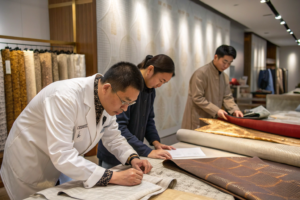
In China and most manufacturing countries, a business license is the fundamental proof of legal existence. This document tells you the supplier's registered legal name, date of establishment, registered capital, and business scope. A company established for over a decade with registered capital of several million RMB has different stability indicators than a company founded six months ago with minimal capital. Verify that the business scope explicitly includes fabric production, trading, or importing/exporting. Mismatches between the legal name on the license and the trading name they use commercially warrant immediate questioning. You can often verify business licenses directly through local government registration portals.
Why Are Bank Reference Letters and Credit Reports Essential?
A bank reference letter from the supplier's primary banking institution confirms they have maintained accounts in good standing for a specified period. It indicates no history of bounced checks, defaults, or irregular transactions. This is a simple but effective validation step. For deeper insight, purchase a third-party credit report from agencies like Sinosure in China, Dun & Bradstreet, or CreditSafe. These reports provide credit scores, payment histories with other suppliers, legal judgments, and ownership structures. They reveal if a supplier pays their own raw material vendors on time—a strong predictor of whether they will pay you back for quality issues or honor deposit protections.
What Operational Indicators Reveal Financial Health?
Numbers on paper can be curated. Physical operations often tell a more honest story about a supplier's true financial state.
How Does Inventory Level Signal Stability or Distress?
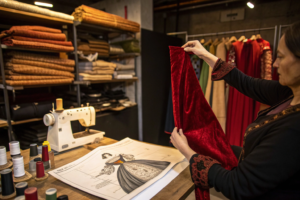
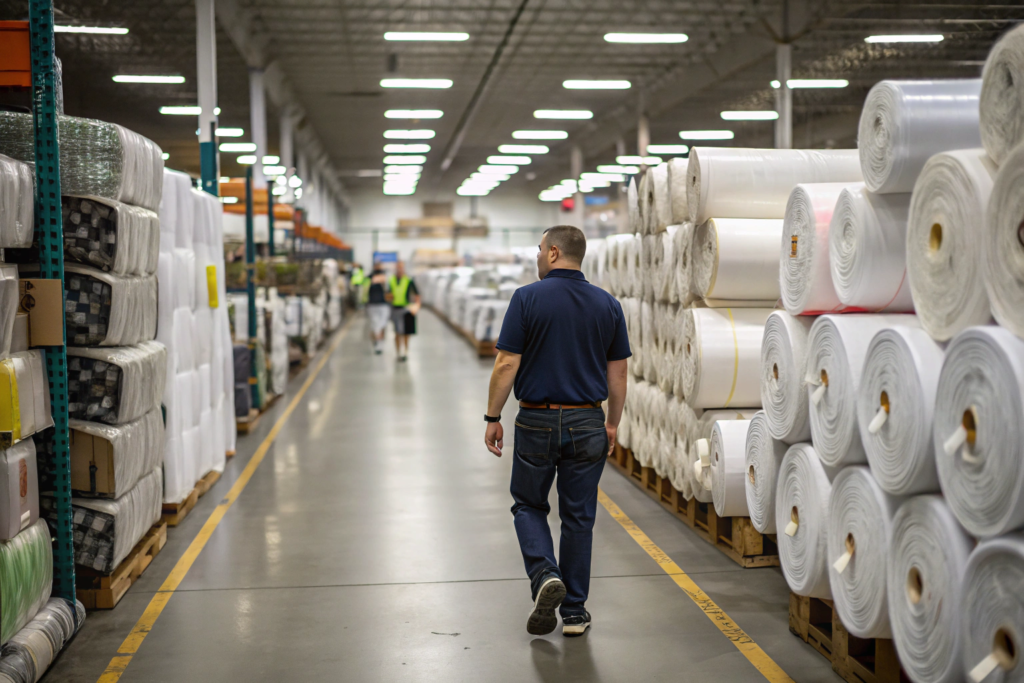
Fabric suppliers require significant working capital to stock inventory. During an in-person visit or a live video tour, observe their warehouse stock levels. A healthy supplier typically maintains 30-60 days of moving inventory—enough to fulfill orders promptly but not so much that capital is trapped unsold. Excessive, dust-covered rolls of outdated fabrics that never move indicate poor cash conversion. Conversely, an empty warehouse is the most dangerous sign. It suggests the supplier is operating hand-to-mouth, ordering fabric only after receiving your deposit because they lack the capital to stock raw materials. This makes them highly vulnerable to any delay in your payment or their upstream supply.
What Do Factory Activity and Staff Morale Tell You?
A financially stable factory hums with controlled activity. Machines are running, workers are present and focused, and finished goods are being packed for shipment. During visits, note the general atmosphere. Are senior managers accessible, or do they seem distracted by pressing problems? Have key sales or production personnel departed recently? High turnover, particularly in leadership, often precedes financial collapse. Engage with mid-level staff if possible; their candid observations about order volumes and payment timeliness can be more accurate than executive reassurances.
How Do Payment Terms and Trade Credit Reflect Stability?
The payment terms a supplier offers and requests are direct reflections of their financial strength and confidence.
What Payment Terms Indicate a Healthy Supplier?
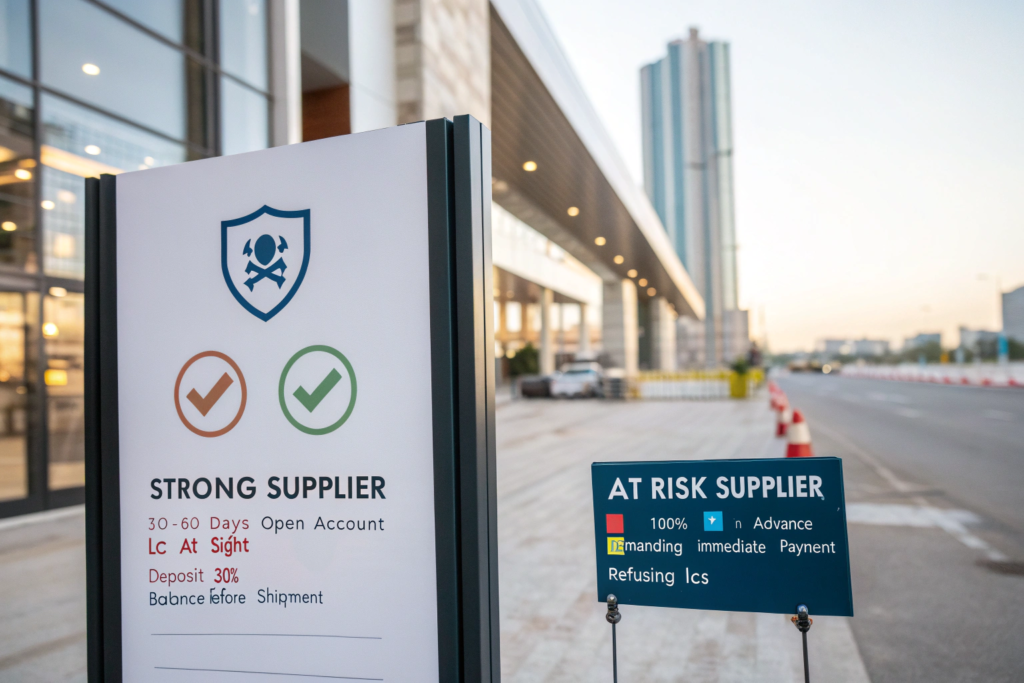
Suppliers with solid financial footing and strong banking relationships can offer favorable terms. They may accept letters of credit (L/Cs) , which shift payment risk to banks. They may extend open account terms of 30, 60, or even 90 days to trusted long-term buyers. At minimum, a stable supplier typically requests a 30% deposit with the 70% balance paid against scanned shipping documents. This structure protects both parties. A supplier who insists on 100% payment in advance via TT (telegraphic transfer) , particularly for a first order, is signaling one of two things: either they have been badly burned in the past, or they desperately need your cash to fund their next operation. The latter is a stability risk.
Why Should You Verify Their Own Payment Reputation?
A supplier's financial stability is not just about their bank balance; it is about their behavior in the supply chain. Credit reports reveal whether they pay their own greige fabric mills and yarn suppliers on time. A supplier who habitually pays late upstream is being propped up by their vendors and is one credit cutoff away from collapse. Speak with their raw material suppliers if you can identify them. Ask, "How long have you worked with this customer, and what are their payment terms with you?" This upstream due diligence provides a powerful, unbiased perspective on your potential partner's true financial discipline.
What Are the Hidden Red Flags in Supplier Communication and Behavior?
Beyond formal documents and physical tours, subtle behavioral cues often precede financial failure. Learning to recognize these patterns is a critical buyer skill.

What Communication Changes Should Worry You?
Be alert to shifts in communication patterns. A previously responsive supplier who becomes difficult to reach, delays responding to emails, or provides vague answers about order status may be managing crises behind the scenes. Similarly, frequent changes in bank account details or requests to send payments to third-party personal accounts rather than the corporate account are serious red flags. These behaviors often indicate creditors have frozen their primary accounts or they are attempting to evade tax authorities. Legitimate, stable suppliers maintain consistent banking information and transparent communication channels.
Why Do Unusually Low Prices Signal Potential Instability?
Aggressively low pricing below prevailing market rates is rarely a sustainable gift. It often indicates a supplier is dumping inventory to generate immediate cash flow to meet payroll or debt obligations. Once that cash runs out and the inventory is gone, they may not have the margin to continue operations. A supplier who cannot price their goods to cover costs and earn a reasonable profit is, by definition, financially unstable. Sustainable partnerships are built on fair, market-aligned pricing that allows your supplier to invest in their business, maintain quality, and remain your reliable partner for years.
Conclusion
Evaluating a fabric supplier's financial stability is not an act of distrust; it is an act of professional diligence that protects both your organization and the potential partnership. By systematically requesting and reviewing business licenses, bank references, and credit reports, observing operational health through inventory and activity levels, analyzing payment terms as stability signals, and remaining alert to behavioral red flags, you can separate fundamentally strong suppliers from those precariously positioned for failure.
This process requires effort and sometimes uncomfortable conversations, but the alternative—discovering a supplier's insolvency while your deposit funds their final weeks of operation—is far more costly.
If you are seeking a fabric or apparel manufacturing partner with demonstrated long-term financial stability and transparent operations, we invite your inquiry. At Shanghai Fumao Clothing, we have maintained continuous operations and banking relationships for over two decades. For a discussion about your sourcing needs and a transparent review of our capabilities, please contact our Business Director, Elaine, at elaine@fumaoclothing.com. We believe stability is the foundation of trust.