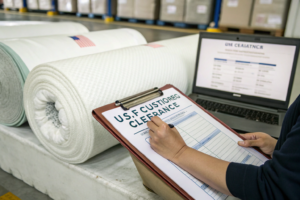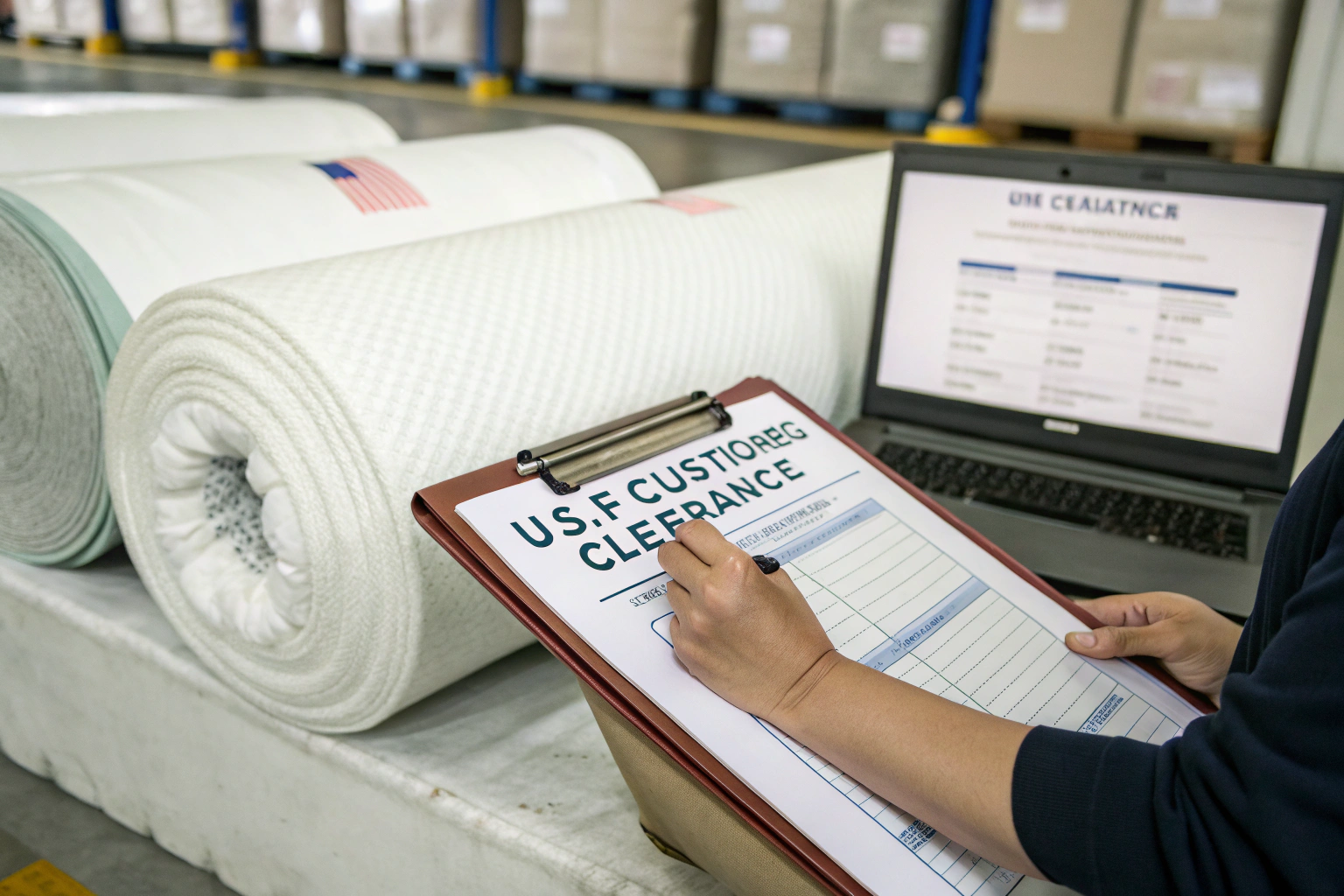
I’ll never forget the phone call from a client in Los Angeles in early 2023. He had just received a letter from US Customs. His entire container of fabric had been flagged for inspection. The testing came back: the fabric contained a banned flame retardant that hadn’t been used in the US for over a decade. His shipment was seized. He lost $85,000 in fabric costs, plus another $30,000 in production delays. The supplier he had used for two years had switched to a cheaper chemical finish without telling him.
That client now sources from us. And every time we ship to the US, I send him the test reports before the container even leaves Shanghai.
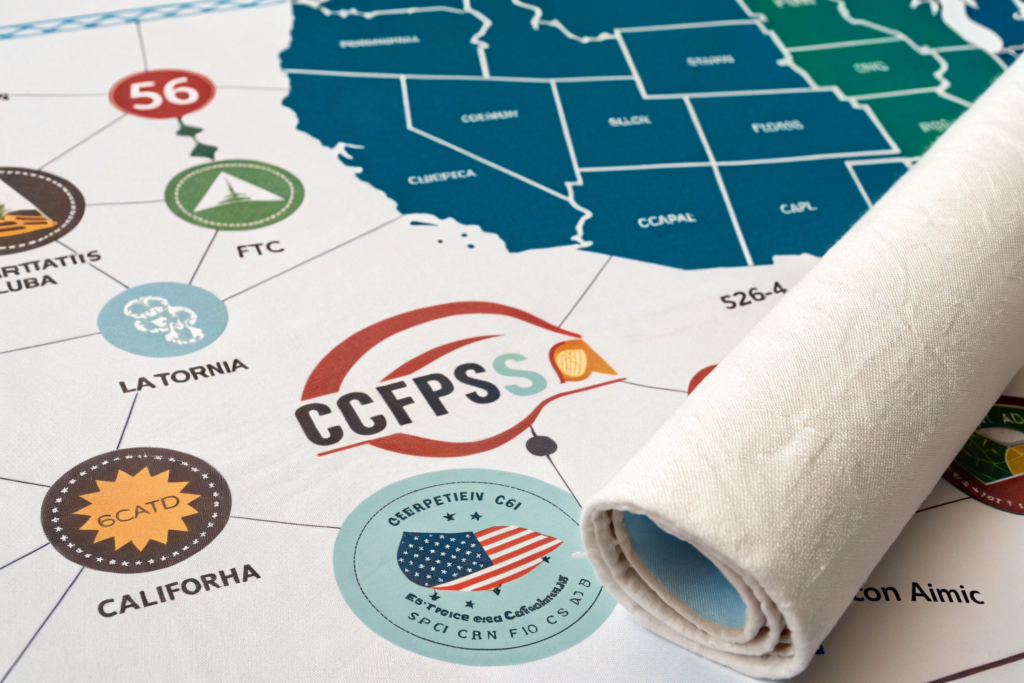
The US market has some of the strictest fabric standards in the world. Between the Consumer Product Safety Commission (CPSC) regulations, the Federal Trade Commission (FTC) labeling requirements, and individual state laws like California’s Proposition 65, the landscape is complex. I’ve spent years learning these requirements the hard way. Let me share what I’ve learned so you don’t have to make the same mistakes.
What US Regulations Actually Apply to Imported Fabrics?
When I talk to new buyers, they often assume that fabric regulations are simple. They’re not. There’s a web of federal and state requirements that you need to navigate. I’ve had shipments held up because a supplier didn’t understand a specific California rule that applied to a shipment going to New York. The fabric didn’t reach California, but the rules still applied because the shipment entered through the Port of Los Angeles.
What Does the CPSC Require for Fabric Safety?
The Consumer Product Safety Commission is the main federal agency that oversees textile safety. For fabrics, the key regulations are around flammability and lead content. I’ve learned these rules inside and out because one mistake can cost you an entire shipment.
In 2022, we had a client from New York who wanted a run of flannel for children’s pajamas. The CPSC has a specific standard for children’s sleepwear: the fabric must either be tight-fitting (so there’s no air gap to support combustion) or it must pass a stringent flammability test. Our client wanted the loose-fitting style, so we had to ensure the fabric passed the 16 CFR Part 1615 test.
We ran the test in our CNAS-accredited lab. The first sample failed. The fabric burned too quickly. We went back to the mill and adjusted the finishing process. We added a flame-retardant treatment that was CPSC-approved. The second sample passed. We documented everything—the test results, the treatment used, the batch numbers. When the shipment arrived in the US, the CPSC audited the client. He had our documentation ready. The shipment cleared without issue.
If you’re sourcing fabric for children’s products, for upholstery, or for any application where flammability is a concern, ask your supplier about CPSC compliance. A good supplier will know which tests apply to your product and will provide the test reports.
For a complete guide to CPSC fabric regulations, there’s a detailed resource on the federal flammability standards for textiles . It’s the official government site, and I reference it regularly.
How Does FTC Labeling Affect Your Fabric Shipments?
The FTC requires that all textile products sold in the US have accurate fiber content labels. This sounds simple, but I’ve seen suppliers get this wrong repeatedly.
In 2023, a client from Texas showed me a sample from another supplier. The label said “100% Cotton.” I burned a thread. It melted. I tested it in our lab. The fabric was actually 65% polyester and 35% cotton. The supplier had been mislabeling for years. The client had no idea.
The FTC’s Textile Fiber Products Identification Act requires that labels show the common fiber names, the percentage of each fiber, and the country of origin. If your supplier mislabels the fiber content, you’re responsible. The FTC can fine you, and retailers can reject your products.
When you source from us, we provide a FTC-compliant label with every roll. But more importantly, we provide the test reports that back up the label. We test every batch for fiber composition in our lab. If we say it’s 100% cotton, we have the test results to prove it.
If you’re working with a new supplier, ask for fiber composition test reports. Not just a label. The test report should come from an accredited lab. If they can’t provide it, that’s a risk you’re taking.
For the official FTC guidelines, there’s a comprehensive resource on how to comply with textile labeling requirements . It’s dense but essential reading.
How Do You Verify That Your Supplier’s Testing Is Legitimate?
I’ve seen suppliers hand buyers test reports that looked official but were completely fabricated. A client from Chicago showed me a “test report” from a supplier. The report had a letterhead that looked real. But when I looked at the test methods, they didn’t match US standards. The supplier had created the report themselves.

What Does an Accredited Lab Test Report Look Like?
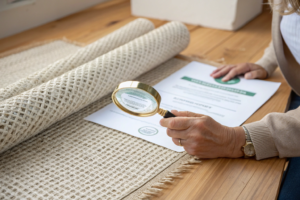
This is where experience matters. I can spot a fake test report in about 30 seconds. But for buyers who don’t look at these documents every day, it’s harder.
An accredited test report should have:
- A clear accreditation mark from a recognized body like CNAS, AATCC, or ISO
- A test method reference that matches US standards (like AATCC 61 for colorfastness or ASTM D3776 for fabric weight)
- A date that shows when the test was performed
- The batch number or lot number that ties the report to your specific fabric
- A signature from the lab technician
In 2024, a client from Florida sent me a report from his supplier. The report had a CNAS logo, but the logo was slightly off—the spacing was wrong. I looked up the lab in the CNAS database. The lab existed, but the certificate number on the report didn’t match the one in the database. The report was fake. The client canceled the order.
When you receive a test report, take five minutes to verify it. Go to the accreditation body’s website and search for the lab. If the lab isn’t listed, or if the certificate number doesn’t match, don’t accept the report.
For a directory of accredited labs, there’s a resource on how to find and verify accredited testing laboratories . A2LA is a major accreditation body, and their directory is searchable.
Should You Require Third-Party Testing or Rely on Supplier Reports?
This is a question I get from every new client. My honest answer: for critical orders, do both.
Supplier reports are useful for ongoing quality control. We provide test reports with every shipment. But for a first order, or for an order going to a major retailer, I recommend independent third-party testing.
In 2023, a client from Boston was launching a line of organic cotton shirts with a major department store. The store required third-party testing from a specific lab in the US. We worked with the client to send samples directly from our production line to that lab. The lab tested for everything—fiber composition, shrinkage, colorfastness, lead content, and restricted substances. Everything passed. The client got their purchase order, and the shirts are still on the shelves.
Third-party testing costs money—usually $200 to $500 per test, depending on what you’re testing. But compared to the cost of a rejected shipment or a product recall, it’s cheap insurance.
If you’re sourcing from us, we can work with whatever third-party lab you choose. We’ll send samples directly from production, and we’ll provide all the documentation they need. It’s an extra step, but it gives you complete confidence.
What Are the Hidden Risks in US Import Compliance?
The regulations I’ve talked about so far are the big ones. But there are hidden risks that catch buyers off guard. I’ve seen shipments held up for reasons that most buyers never think about. Let me walk you through them.
How Does California Proposition 65 Affect Non-California Shipments?
California’s Proposition 65 is a law that requires warnings about chemicals that cause cancer or reproductive harm. Here’s the catch: if your product enters the US through California, or if it’s sold anywhere in California, it must comply. But because California is such a large market, many retailers require Proposition 65 compliance for all their products, regardless of where they’re sold.
I had a client from Washington state in 2022. His fabric was shipped to Seattle, not California. But his retailer—a national chain with stores in California—required Proposition 65 compliance. His previous supplier had no idea. The fabric contained trace amounts of lead in the zippers. The retailer rejected the entire order. The client lost $50,000.
Now I ask every US client: “Will this product be sold in California?” If the answer is yes, or if they’re not sure, we test for Proposition 65 chemicals. The list is long, but the common ones in textiles are lead, cadmium, and certain phthalates. We run the tests in our lab before the fabric leaves the factory.
If you’re sourcing fabric that will be used in products sold in California, ask your supplier about Proposition 65 compliance. A good supplier will know what tests are required.
For the official list of Proposition 65 chemicals, there’s a resource on the California Office of Environmental Health Hazard Assessment’s database . It’s updated regularly, so check it before you place orders.
What Documentation Should You Keep for Customs Audits?
US Customs can audit your shipments for years after they arrive. If you can’t produce the documentation, you can face fines and your shipments can be flagged for future inspections.
I’ve developed a checklist for our US clients. Here’s what you should keep for every shipment:
First, keep the test reports. Not just the supplier’s internal reports, but any third-party reports you’ve commissioned. Store them digitally and physically.
Second, keep the transaction certificates. If you’re importing organic or recycled fabrics, keep the GOTS, OEKO-TEX, or GRS certificates. Customs sometimes asks for these to verify sustainability claims.
Third, keep the commercial invoice and packing list. These should show the fiber composition, the country of origin, and the Harmonized Tariff Schedule (HTS) code. The HTS code determines the duty rate. If you use the wrong code, you can be audited.
In 2024, we shipped a container of recycled polyester to a client in Oregon. The client’s customs broker used the wrong HTS code—they used the code for virgin polyester instead of recycled. The duty rate was higher. The client overpaid by $2,000. We caught it, corrected the paperwork, and they got a refund. But it took three months.
If you’re handling your own customs clearance, work with a broker who understands textiles. The HTS code system is complex. There are dozens of codes for different fabric types, weights, and constructions. One wrong digit and you’re either overpaying or risking an audit.
For a guide to textile HTS codes, there’s a resource on the USITC’s Harmonized Tariff Schedule for textiles . It’s the official government database, and you can search by fabric type.
How Do You Build a Compliance-First Relationship with Your Supplier?
Compliance isn’t something you check at the end. It needs to be built into the relationship from the start. I’ve worked with clients who treat compliance as an afterthought, and I’ve seen the consequences. Let me share what works.

What Compliance Questions Should You Ask Before Ordering?
I’ve developed a list of questions that I wish every buyer would ask. If you ask these upfront, you’ll separate the serious suppliers from the ones who are cutting corners.
First, ask: “What US regulations do you test for?” A good supplier will name specific standards: CPSC flammability, FTC labeling, Proposition 65, etc. If they say “we meet all standards” without naming them, they probably don’t know.
Second, ask: “Can I see your most recent test reports?” Not for a sample you’re requesting, but for a recent shipment to the US. Look at the report. Is it from an accredited lab? Does it have a batch number? Does it match the product they’re selling you?
Third, ask: “What’s your process for handling non-compliant shipments?” If they say “it never happens,” they’re not being honest. Every factory has issues. The question is how they handle them. We have a clear process: if a shipment fails a test, we re-test, identify the cause, and if necessary, re-produce the fabric at our cost.
In 2023, a client from New York asked me these questions before we started working together. He told me later that four other suppliers couldn’t answer them. One supplier actually hung up on him. He chose us, and we’ve shipped to him every quarter since.
How Do You Structure Contracts to Protect Against Compliance Failures?
A good contract won’t prevent compliance failures, but it will protect you when they happen. I’ve seen too many buyers sign standard purchase orders that don’t address compliance at all.
Here’s what I recommend including in your purchase contract:
First, a compliance clause. This should state that the fabric must meet all applicable US federal and state regulations. It should name specific standards if you know them. It should require the supplier to provide test reports from an accredited lab.
Second, a liability clause. This should state that the supplier is responsible for all costs associated with non-compliance, including testing, re-shipment, and any fines or penalties. We include this in our contracts. If we ship non-compliant fabric, we fix it.
Third, a documentation clause. This should require the supplier to provide all compliance documentation—test reports, transaction certificates, origin statements—with the shipment. Without these documents, you can’t clear customs.
I’ve had clients who used our contract template with their previous suppliers. One client told me that when he presented the contract, his supplier tried to negotiate out of the liability clause. He walked away. That supplier later had a shipment seized by customs. He was glad he trusted his gut.
For a template contract that addresses compliance, there’s a resource on how to structure supply agreements for textile imports . It’s from a legal perspective, and it covers the key clauses you need.
Conclusion
US import compliance isn’t optional. It’s a requirement that can make or break your business. I’ve seen brands thrive because they built compliance into their supply chain from day one. And I’ve seen brands fail because they trusted a supplier who didn’t understand the rules.
At Shanghai Fumao , we’ve been shipping to the US for over a decade. We know the CPSC standards. We know the FTC labeling requirements. We know Proposition 65. We test every shipment in our CNAS-accredited lab, and we provide the documentation you need to clear customs without delays.
But more importantly, we build compliance into our process. We don’t treat it as an afterthought. When you place an order with us, we know from day one which tests it needs to pass. We track the batch numbers. We keep the documentation organized. And if something goes wrong, we fix it.
If you’re sourcing fabric for the US market, you need a supplier who understands the rules. My business director, Elaine, handles all our US client inquiries. She knows the regulations, the test protocols, and the documentation requirements. She can walk you through the compliance process and make sure your shipments arrive without surprises.
Contact Elaine directly: elaine@fumaoclothing.com
Tell her about your US collection. Let her help you build a supply chain that meets every standard.