I am going to start with a confession. In 2017, I lost a client and nearly lost my export license because I assumed a fabric was safe. The order was 28,000 meters of printed viscose challis for a German fashion house. Our ink supplier had reformulated their pigment binder without telling us. The new formulation contained a phthalate—DINP—that was restricted under REACH Annex XVII. We did not test. We shipped. The client's third-party lab in Hamburg found 0.19% DINP in the print paste. The shipment was seized. The client's finished garments were recalled from retail. The penalty was €87,000. The client never ordered from us again.
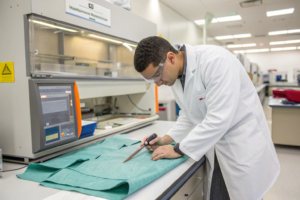
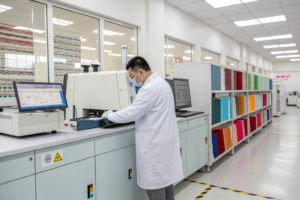
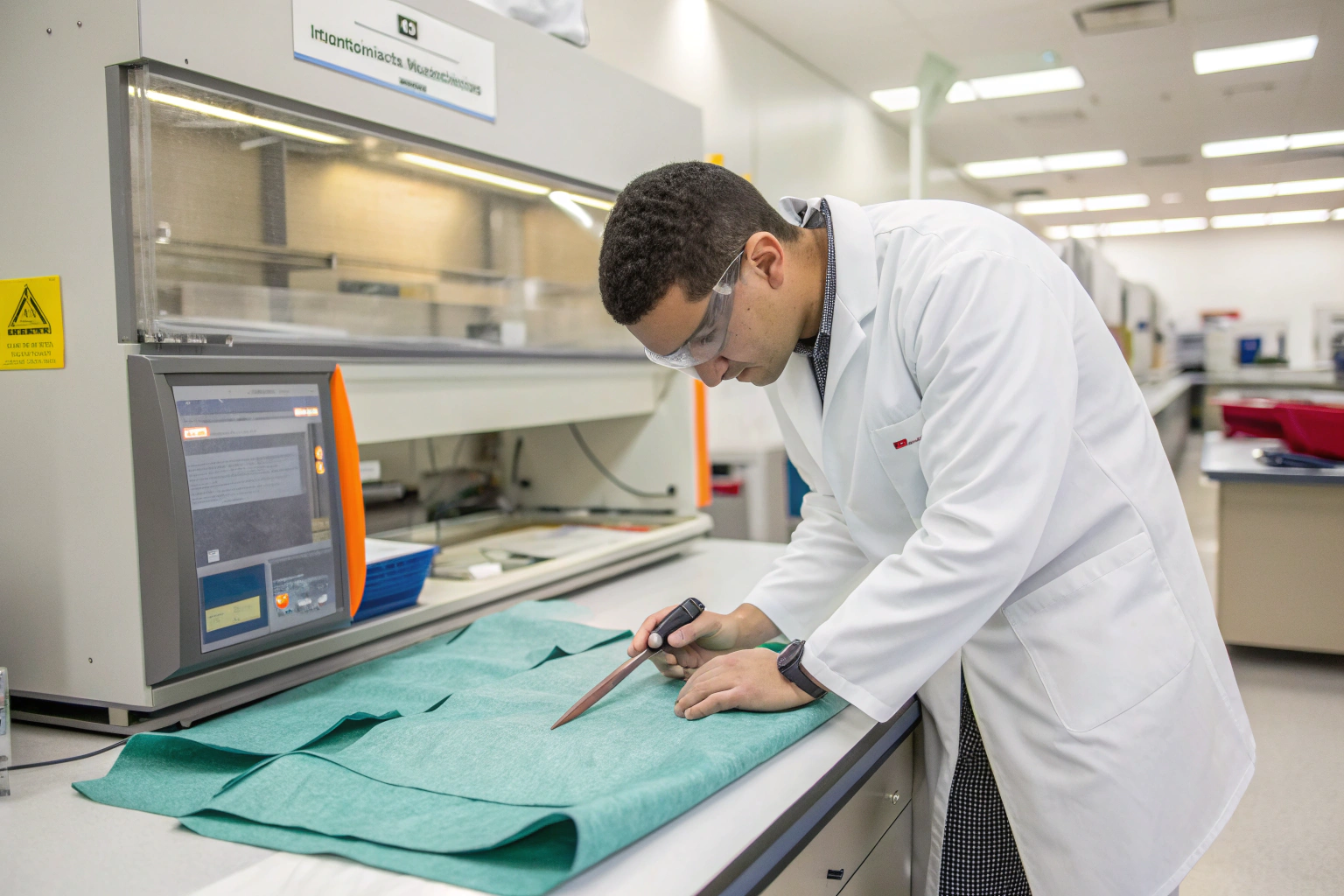
That failure reshaped our entire approach to compliance. Today, we operate one of the most rigorous safety testing protocols in Keqiao. We test every production batch, not just every style. We maintain a restricted substance list (RSL) that updates quarterly. We have a full-time compliance officer whose only job is to track regulatory changes in 14 export markets. And we still make mistakes—but we catch them before the fabric leaves our warehouse, not after it is seized at Rotterdam.
If you are buying fabric from China, you cannot assume compliance. You cannot accept a supplier's verbal assurance. You cannot rely on a two-year-old test report. The regulatory landscape is shifting faster than ever: PFAS bans are spreading, lead limits are tightening, and China's own domestic environmental laws are creating ripple effects in global supply chains. This article will give you the practical, step-by-step system we use to certify that every meter we ship meets CPSIA, REACH, and a dozen other acronyms that keep sourcing managers awake at night.
What Specific Substances Are Restricted Under CPSIA and REACH for Textiles?
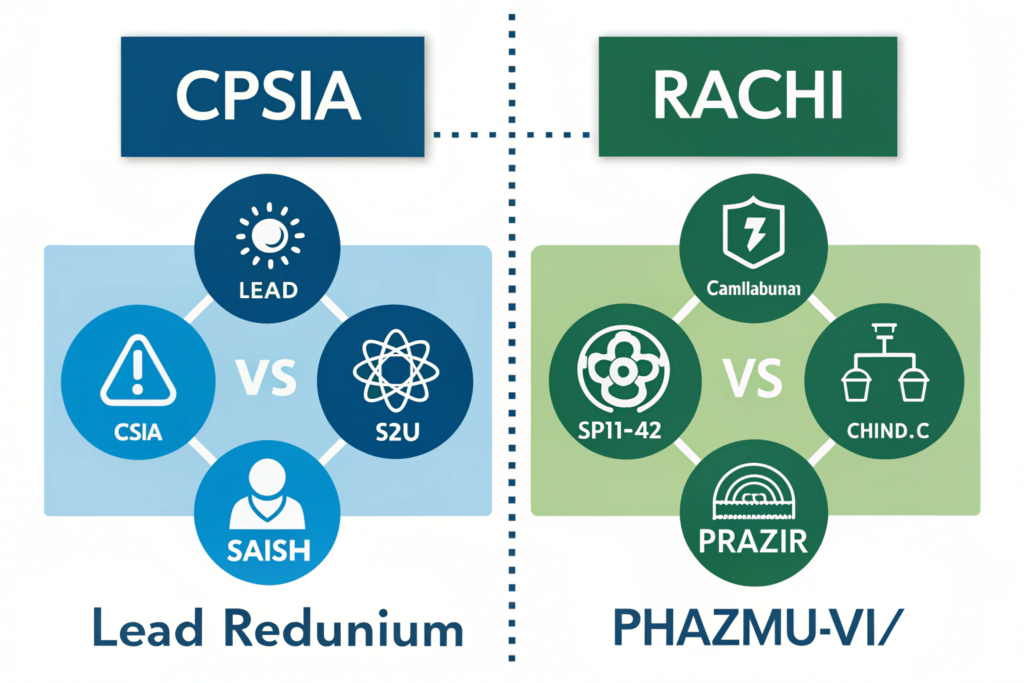
Let me clarify the scope immediately. CPSIA (Consumer Product Safety Improvement Act) is US law. REACH (Registration, Evaluation, Authorisation and Restriction of Chemicals) is EU law. They are different statutes with different lists, different test methods, and different enforcement mechanisms. Do not assume compliance with one means compliance with the other.
For CPSIA, the primary textile concerns are:
-
Total lead content: Children's products (12 and under) must have less than 100 ppm (parts per million) total lead in accessible substrate. This includes fabric, thread, zippers, buttons, and prints. This is a very low limit. Many metal snaps and zippers fail this test. Some pigment colors, particularly yellows and reds, can contain lead-based pigments.
-
Total cadmium: Less than 75 ppm in paint and surface coatings; also restricted in substrate for certain children's products.
-
Phthalates: For children's toys and child care articles, the limit for 8 specific phthalates (DEHP, DBP, BBP, DINP, DIDP, DnOP, DnHP, DIBP) is 0.1% (1000 ppm) each. This applies to plasticized components—this includes some plastisol prints, PU coatings, and certain synthetic leather finishes.
For REACH, the relevant restrictions are spread across multiple annexes, but the most frequently triggered for textiles are:
-
SVHC (Substances of Very High Concern): The Candidate List currently has over 240 substances. If any SVHC is present above 0.1% by weight of the article, you have a communication obligation. Some common textile SVHCs include certain phthalates, formaldehyde-releasing biocides, PFCs (used in durable water repellents), and certain azo dyes.
-
Annex XVII, Entry 72: Restricts C9-C14 PFCAs and related substances in textiles for water, stain, and oil repellency. This is effectively a ban on most conventional durable water repellent (DWR) finishes. The limit is 25 ppb for PFOA, 1 ppb for longer-chain PFAS. This is extraordinarily low.
-
Annex XVII, Entry 43: Restricts azo dyes that can cleave to specific aromatic amines. 22 aromatic amines are banned at 30 ppm in the finished article or in the dyed parts thereof.
-
Annex XVII, Entry 47: Restricts chromium VI in leather and textiles containing leather parts.
-
Annex XVII, Entry 63: Restricts lead and its compounds in articles supplied to the public.
-
Annex XVII, Entry 51-52: Restricts certain phthalates, overlapping with CPSIA but with different scopes.
I am not listing these to overwhelm you. I am listing them so you understand: compliance is not a single checkbox. It is a matrix of substance, concentration, matrix, and end use. A fabric that is perfectly safe for a 40-year-old's blouse may be illegal for a 4-year-old's pajamas. A fabric that passes REACH for general apparel may fail California Prop 65 if sold in that state without a warning label. The European Chemicals Agency (ECHA) website has a searchable database of all REACH restrictions, and the US Consumer Product Safety Commission (CPSC) provides similar resources for CPSIA. Bookmark both. Use them.
What is the difference between 'restricted' and 'banned'?
This is not just semantics. Banned means zero tolerance, or effectively zero given the detection limit of available test methods. Certain azo dyes that cleave to carcinogenic amines are banned. You cannot use them at any concentration.
Restricted means a specific maximum concentration is permitted. For example, formaldehyde is restricted in textiles under various ecolabels and certain national regulations (Japan Law 112, for instance). Limits range from 16 ppm for babywear to 300 ppm for outerwear. You can use formaldehyde-releasing resins, but you must control the residual level.
Some substances are banned in some applications but restricted in others. Lead is banned in accessible substrates of children's products above 100 ppm, but adult apparel has no federal lead limit (though some US states have their own restrictions).
Understanding this distinction helps you allocate testing resources. A banned substance requires process elimination—you cannot simply 'dilute' it below a threshold. You must remove the source entirely.
Does REACH apply to fabric shipped to the UK after Brexit?
Yes, but the mechanism changed. The UK has retained REACH as a standalone statute (UK REACH). The substance restrictions are currently aligned with EU REACH, but divergence is possible over time. UK REACH requires registration with the UK Health and Safety Executive (HSE), not ECHA.
For fabric suppliers, the practical implication is paperwork. We now maintain separate technical files for EU-bound and UK-bound shipments. The substance limits are identical, but the chain of custody documentation and the responsible entity differ. If you are shipping to both markets, ensure your supplier can issue declarations specific to each jurisdiction. The UK HSE website provides guidance on UK REACH for importers, and the transitional provisions are complex but navigable.
How Do I Verify That a Fabric Supplier's Test Reports Are Legitimate?
This is the most common failure point I see from buyers. A supplier emails a PDF that says 'SGS Test Report' at the top. The buyer looks at the 'PASS' stamp and proceeds. The report is often fake, expired, or irrelevant to the actual shipment.
Fake reports are distressingly common. Unscrupulous traders photoshop a supplier name onto a genuine report from another company, or they fabricate an entire document with a counterfeit logo. In 2022, we were asked to bid on a project where the incumbent supplier had provided 17 'SGS reports' for various fabrics. Our compliance officer noticed that the report numbers followed an impossible sequence. We contacted SGS. None of the 17 reports were authentic. The buyer had been paying a premium for 'certified' fabric for three years.
Expired reports are more common and often unintentional. A test report is a snapshot of a specific production lot on a specific date. It does not guarantee that the same fabric made six months later, with a different batch of dye, from a different roll of greige, will have the same chemical profile. We require fresh testing for every production order unless the client has a formal continuous monitoring agreement with defined periodic testing.
Irrelevant reports are the most frequent. The report tests the base fabric only, but the restricted substance is in the coating. The report tests for lead but not phthalates. The report uses a US test method when the destination is the EU. The report is from a non-accredited lab with no recognized quality system.
Here is our verification protocol:
-
We check the laboratory accreditation. Is the lab ISO 17025 accredited by a recognized signatory (ILAC, APLAC, CNAS)? We only accept reports from accredited labs. We verify the lab's scope of accreditation on the CNAS website or the ILAC database. Some labs are accredited for metal testing but not organic chemistry. Their lead test may be valid, but their phthalate test may not be.
-
We contact the issuing lab. This is simple. We email the lab with the report number and request confirmation. SGS, BV, ITS, TÜV, and most major labs have automated verification portals. We use them. If a supplier hesitates to provide a verifiable report, we stop the negotiation.
-
We require batch-specific testing. For any restricted substance that is process-dependent (azo dyes, phthalates in coatings, PFAS in finishes), we test the actual production lot, not a historical sample. The cost is $200-$500 per test. On a 10,000-meter order, this is $0.02-$0.05 per meter. It is the cheapest insurance you will ever buy.
-
We audit the supply chain. The test report may be for the finishing plant, but the fabric was woven elsewhere, and the yarn was spun elsewhere. We require declarations from each stage, or we test at the final stage and hold the entire chain accountable.
In 2023, a US-based uniform brand asked us to verify a competitor's test report for a flame-retardant polyester fabric. The report looked perfect: 100,000 Martindale, passed CAL TB 117, passed NFPA 701. The lab was accredited. The report number was valid. But the test date was 14 months prior. We tested the current production. It failed NFPA 701 by 30%. The supplier had changed their FR chemical formulation to a lower-cost alternative and had not re-qualified. The client moved the program to us. The ISO/IEC 17025:2017 standard is the global benchmark for testing laboratory competence, and any lab claiming accreditation should be able to provide their current scope of accreditation on request.

What is a 'declaration of conformity' and is it legally binding?
A declaration of conformity (DoC) is a document signed by the supplier stating that the product meets specified requirements. It is not a test report. It is a statement. It is legally binding in the sense that signing a false declaration can expose the signer to liability for fraud and negligence. However, it is not proof of compliance.
We issue DoCs for every shipment. They reference the specific test reports that support the declaration. The DoC alone, without supporting test data, is of limited value. Some buyers accept DoCs from their suppliers as sufficient evidence. This is a risk-based decision. For high-risk products (children's sleepwear, waterproof outdoor gear), we strongly recommend third-party testing regardless of the supplier's DoC.
The EU has formalized the DoC for certain product categories under the General Product Safety Directive and various harmonized standards. For textiles, a formal EU Declaration of Conformity is required for products covered by specific regulations (e.g., PPE, medical devices). For general apparel, it is less formalized but still common practice. The European Commission's guidance on product compliance documentation explains the requirements for different product categories.
How often should I retest a standard fabric that I order monthly?
This depends on the stability of your supply chain. If you order the same fabric construction, from the same mill, using the same dye recipe, with the same finishing formulation, every month, you do not need to test every batch. But you need a surveillance testing plan.
Our standard recommendation is:
-
Base fabric only, no chemical finish: Test annually. The risk is low. The fiber and yarn sources are stable. We still recommend an annual spot check.
-
Dyed fabric, no chemical finish: Test every 6-12 months, depending on volume. Dye chemistry can change. A new batch of reactive dye from a different supplier may contain different trace metal impurities.
-
Printed fabric: Test every production order for azo dyes and phthalates in plastisol prints. Pigment binders are frequently reformulated.
-
Coated or laminated fabric: Test every production order for restricted substances relevant to the coating (phthalates, PFAS, organotins). Coating formulations change frequently based on raw material availability and cost pressure.
-
Children's products: Test every production lot. The risk tolerance is zero. We maintain a separate QC protocol for children's wear that includes 100% lot testing for lead, phthalates, and azo dyes, regardless of supplier history.
In 2024, we implemented a risk-based testing matrix for a large US retailer. We categorized all fabrics into three risk tiers. Tier 1 (baby, children's sleepwear): 100% lot testing. Tier 2 (adult apparel with finishes): 25% of lots, rotating. Tier 3 (basic adult apparel, no finish): 10% of lots. The retailer reduced their annual testing spend by 34% while maintaining full compliance. The CPSC's testing and certification policy for children's products requires a 'reasonable testing program'—this matrix approach satisfies that requirement.
What Specific Testing Do I Need for Children's vs. Adult Apparel?
This is the sharpest distinction in safety compliance. Children's apparel is regulated like a hazardous product. Adult apparel is regulated like... fabric.
For adult apparel, there is no federal mandatory third-party testing requirement in the US. You can self-certify compliance based on reasonable testing. Many retailers require testing as a contractual condition, but it is not a statutory mandate. The primary risk is chemical restrictions under state laws (California Prop 65) and the general prohibition on importing 'adulterated' or 'misbranded' textiles, which is rarely enforced for chemical content.
For children's apparel, the rules are dramatically stricter.
CPSIA requires:
-
Third-party testing by a CPSC-accepted laboratory. You cannot self-certify. You cannot accept a supplier's in-house test. The test must be performed by a lab specifically accredited by the CPSC for the relevant test method.
-
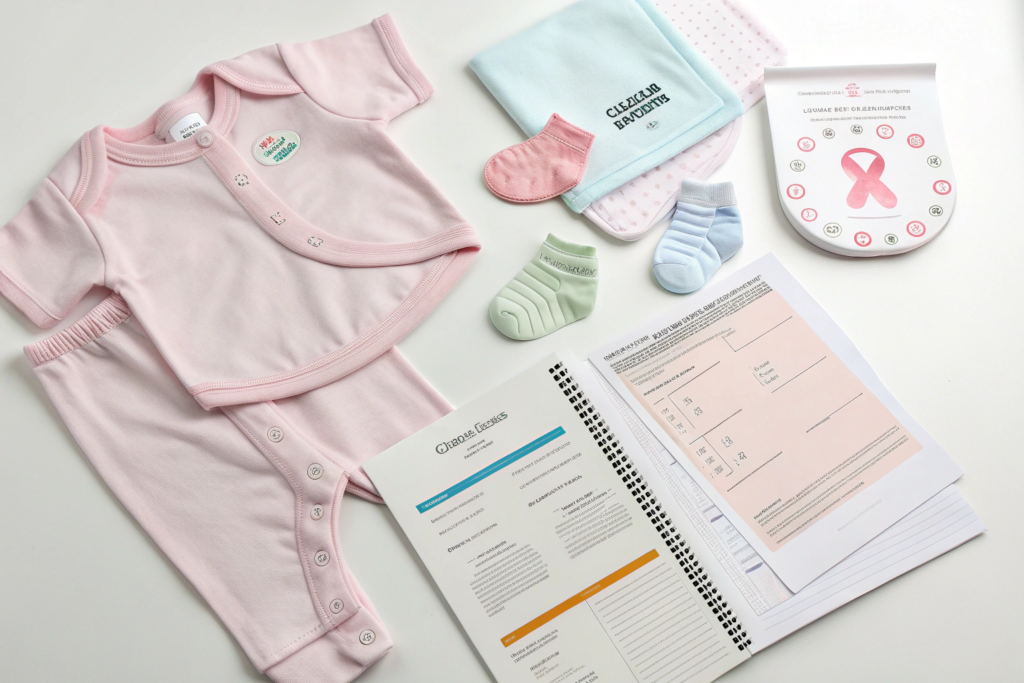
Children's Product Certificate (CPC). This document must accompany every shipment. It certifies that the product has been tested by a CPSC-accepted lab and meets all applicable children's product safety rules. The CPC must include the product description, the specific regulations met, the lab's identification, the date and place of manufacture, and the contact information for the responsible party (usually the US importer or manufacturer).
-
Tracking labels. Children's products must have permanent, distinguishing marks on the product and packaging that allow the manufacturer to track the date and place of production, batch or run number, and other identifying characteristics.
For REACH, children's apparel is not categorically different, but the risk assessment is different. A substance restricted at 0.1% in any article is restricted at 0.1% regardless of the user's age. However, some EU member states have additional national restrictions for children's products. France has specific limits for certain phthalates in children's wear. Germany has strict limits for formaldehyde in textiles that contact skin.
The practical implication: If you are sourcing children's apparel fabric from China, your supplier must be prepared to:
-
Hold valid GOTS or Oeko-Tex Standard 100 certification (Class I for baby, Class II for children). This is not legally required, but it is the most efficient way to demonstrate compliance.
-
Provide batch-specific test reports from a CPSC-accepted lab for lead, phthalates, and flammability (if applicable). We use BV and SGS for this.
-
Issue a CPC with the correct responsible party information. Many Chinese suppliers do not understand that the CPC must list a US-based company or individual as the responsible party. The manufacturer or importer of record must be identified.
-
Maintain traceability records for 5+ years. If the CPSC investigates a defect or violation, the manufacturer must be able to trace the product back to the specific production batch.
In 2021, we lost a bid for a major children's wear program because we initially proposed GOTS certification as sufficient. The buyer explained: GOTS is excellent for chemical management, but it is not a CPSC-accepted testing protocol. They required CPSIA-specific testing regardless of GOTS status. We adjusted our compliance package and won the next bid. The CPSC's database of accredited third-party testing laboratories is publicly searchable, and you should verify that any lab your supplier uses is on this list for the relevant test methods.
Does Oeko-Tex Standard 100 guarantee compliance with CPSIA?
No. This is a dangerous misconception. Oeko-Tex Standard 100 is a voluntary product safety certification. It tests for hundreds of regulated and non-regulated substances. It is an excellent tool for chemical management. It is not a legal declaration of compliance with CPSIA or REACH.
Oeko-Tex limits for lead in accessories are 90 ppm for baby articles (Class I). CPSIA limit is 100 ppm for total lead content in accessible substrate. These are similar but not identical. More importantly, Oeko-Tex certification is based on a defined testing frequency (usually once per article, annually). CPSIA requires batch-specific testing for children's products. An Oeko-Tex certificate from 2023 does not prove that a specific production lot from 2024 meets CPSIA lead limits.
We treat Oeko-Tex certification as a supplier qualification tool, not a shipment release tool. If a mill is Oeko-Tex certified, we know they have a functioning chemical management system. We still test the specific shipment for the specific restricted substances that apply to the end use and jurisdiction.
The Oeko-Tex website clearly states that their certification does not replace legal compliance verification. Read the fine print.
What is the difference between Prop 65 warning and substance prohibition?
California Proposition 65 (the Safe Drinking Water and Toxic Enforcement Act of 1986) is unique. It does not ban substances. It requires warnings before exposure to listed chemicals.
If your fabric contains a Prop 65-listed chemical (lead, cadmium, phthalates, certain flame retardants, bisphenol A, many others) above a 'safe harbor' level, you must provide a 'clear and reasonable' warning to the consumer. This warning can be on the product label, on a hang tag, at the point of sale, or via digital channels.
For many apparel companies, the commercial risk of a Prop 65 warning label is higher than the legal risk of the chemical itself. Consumers see a cancer warning and avoid the product. Therefore, most brands enforce Prop 65 compliance as a de facto ban. They require their suppliers to certify that no listed chemical is present above the safe harbor level, even though the law technically only requires a warning.
Prop 65 is enforced primarily through private litigation. Law firms send '60-day notices' to companies whose products contain listed chemicals without warnings. These lawsuits are expensive to defend. The plaintiff's attorneys settle for remediation and attorneys' fees. The product is often pulled from sale regardless of merit.
We test for Prop 65 listed chemicals when shipping to California retailers. The limits are often lower than CPSIA. For lead in accessories, Prop 65's safe harbor level for a warning is 0.3 µg/day exposure. This translates to approximately 90-100 ppm in the substrate, similar to CPSIA. For cadmium, the limit is more complex. For phthalates, the limits are similar to CPSIA. The California Office of Environmental Health Hazard Assessment (OEHHA) maintains the Prop 65 list and the safe harbor levels.
How Do I Manage Compliance for Complex Products with Multiple Components?
A fabric is rarely just fabric. It has thread. It may have a zipper, buttons, rivets, or a woven label. It may have a coating, a laminate, or a print. Each component has its own supply chain and its own compliance risk profile.
This is where most compliance failures occur. The fabric passes testing. The thread passes testing. But the zinc alloy zipper pull contains 35,000 ppm lead. The shipment fails. The buyer rejects the entire order.
Our system for multi-component compliance:
-
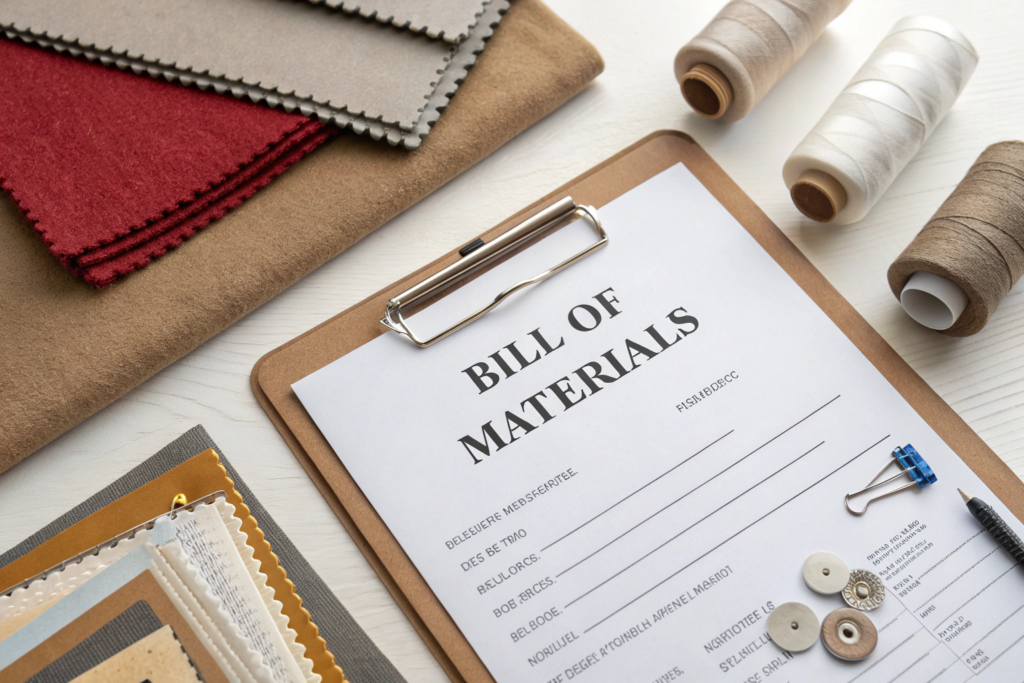
Bill of Materials (BOM) declaration. We require every supplier in our chain to declare the exact composition and origin of every component. This is not a one-time declaration. It is a per-order declaration with batch numbers where applicable.
-
Risk-based component testing. We do not test every component on every order. That is prohibitively expensive. We categorize components by risk. Metal components (zippers, snaps, rivets) are high-risk for lead. We test 100% of metal components for children's products. For adult products, we test per production lot. Coatings and prints are high-risk for phthalates and azo dyes. We test per production lot. Thread is low-risk. We test annually.
-
Supplier qualification. We maintain an approved supplier list for critical components. Not every zipper factory is qualified to supply for children's wear. We audit our zipper suppliers for their own quality systems and material certifications.
-
Incoming inspection. When components arrive at our factory, we verify them against the BOM declaration. We visually inspect for correct materials and markings. We retain samples for traceability.
In 2020, this system caught a failure before shipment. Our BOM declared nickel-free brass snaps. Our incoming inspection team noticed the snaps had a magnetic response. Brass is non-magnetic. We tested the snaps. They were nickel-plated steel with a brass-colored coating. The coating contained 1,800 ppm lead. We rejected the entire batch of 120,000 snaps, sourced a compliant alternative, and shipped two weeks late. The client never knew. The Consumer Product Safety Commission's guidance on multi-component children's products requires that each component be tested or covered by a component part testing certificate.
Who is legally responsible if a component fails compliance—the fabric supplier or the component supplier?
This is determined by your contract and the specific regulations. Under CPSIA, the importer of record (the entity that brings the product into the US) is generally the responsible party. They are required to issue the Children's Product Certificate and maintain the testing records. They can seek indemnification from their suppliers, but the CPSC looks to the importer first.
Under REACH, the producer or importer of the article has the legal obligation to ensure compliance. If you are a brand importing fabric from China, you are the importer. You are responsible.
Our contracts with clients specify that we will provide test reports and declarations for the fabric and our direct components. We do not manufacture zippers or buttons. We pass through the certifications from our approved component suppliers, and we provide chain of custody documentation. If a client chooses to source their own trims and send them to us for assembly, they retain responsibility for those components.
We strongly recommend that brands maintain a single point of accountability. If you buy fabric from Supplier A, trims from Supplier B, and assembly from Supplier C, and a failure occurs, each supplier will blame the others. The CPSC does not care. They will hold the importer responsible. We prefer to act as the consolidated supply chain manager, sourcing all components and providing a single compliance package. This is not self-serving; it is risk management.
What is the 'China ROHS' and does it affect textiles?
China ROHS (Restriction of Hazardous Substances) is Regulation SJ/T 11364-2014, primarily targeting electronic and electrical products. It restricts lead, mercury, cadmium, hexavalent chromium, PBB, and PBDE in applicable products. It generally does not apply to textiles.
However, there is increasing discussion in China about expanding ROHS-style restrictions to other consumer goods. The GB 18401-2010 (National General Safety Technical Code for Textile Products) is China's domestic textile safety standard. It restricts formaldehyde, pH value, azo dyes, and colorfastness. It is not as comprehensive as REACH or CPSIA, but it is mandatory for products sold in the Chinese domestic market.
If you are sourcing fabric in China for export, your supplier should be familiar with GB 18401, but it is not a substitute for REACH or CPSIA compliance. Some buyers mistakenly assume that a factory certified for the Chinese domestic market is qualified for export compliance. This is incorrect.
Conclusion
Compliance is not a competitive advantage. It is a license to operate. One failed shipment, one recall, one 60-day notice can destroy years of relationship building and cost hundreds of thousands of dollars in penalties and legal fees.
At Shanghai Fumao, we learned this through painful experience. The 2017 phthalate failure changed our company. We built a compliance system that is probably over-engineered for 90% of our orders. But for the 10% that go to children's wear or regulated contract markets, that system is the difference between a trusted partnership and a terminated contract.
Today, our compliance protocols are part of our sales pitch. We do not hide from regulation. We lead with it. When a new client asks about REACH compliance, we do not say "Yes, we can do that." We say: "Here is our RSL. Here is our testing frequency. Here is our list of CPSC-accepted lab partners. Here are the Transaction Certificates from our last five GOTS shipments. Here is the contact information for our compliance officer. What else do you need?"
If you are tired of chasing test reports, verifying certificates, and worrying about hidden liability, I invite you to work with a supplier who treats compliance as a core competency, not an afterthought. Send us your destination market and your end-use category. We will send you a compliance plan tailored to your specific risk profile.
Contact Elaine, our Business Director, to discuss your compliance requirements. Elaine oversees our regulatory affairs team and has successfully managed compliance programs for clients in 27 countries. Elaine’s email is: elaine@fumaoclothing.com. Tell her what markets you are shipping to, and she will ensure your fabric arrives with the paperwork you need.