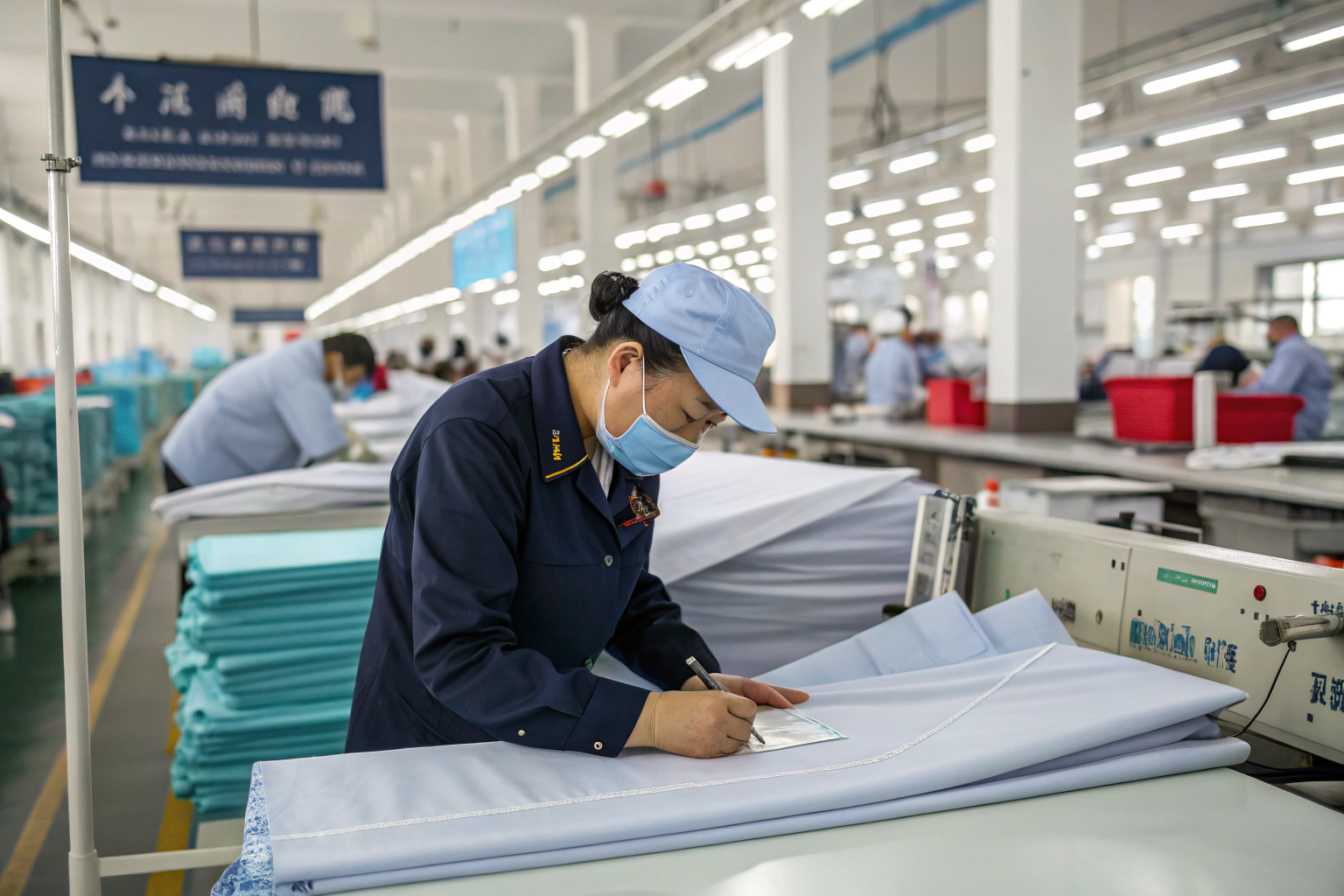
You've invested time and money into designing a custom clothing line. The samples looked perfect. But when the bulk order arrives, you find loose threads, inconsistent sizing, and fabric flaws. Now you’re facing delays, angry customers, and damaged brand reputation. This nightmare scenario is a direct result of poor quality control (QC) during manufacturing. So, how can you, as a brand owner, ensure QC isn't just a promise but a guaranteed outcome?
Ensuring quality control in custom clothing manufacturing requires a proactive, multi-stage system implemented by your supplier, not just a final inspection. It involves defining clear specifications upfront, conducting in-process checks at critical production stages, and performing rigorous pre-shipment audits. Partnering with a manufacturer like Shanghai Fumao, which embeds QC into every step from fabric inspection to packing, transforms quality from a hopeful outcome into a predictable, managed process.
Let's break down this system. Effective QC is not a single event but a series of checkpoints designed to catch and correct issues early, when they are still cheap and easy to fix.
What Are the Critical Stages for In-Process Quality Control?
Many buyers make the mistake of treating quality control as a final "go/no-go" gate at the end of production. By then, it's too late. Discovering a critical flaw after 10,000 pieces are sewn means massive rework or total loss. The real power lies in catching errors while production is still on the line.
The critical stages for in-process QC are Fabric & Trim Inspection, Cutting Approval, During Sewing (Pilot Run & Line Checking), and Finishing & Washing Monitoring. Inspecting at these stages prevents a single error from replicating across the entire order, saving you from catastrophic losses and ensuring consistent output.
Each stage has a specific focus and methodology. Skipping any one increases risk exponentially.
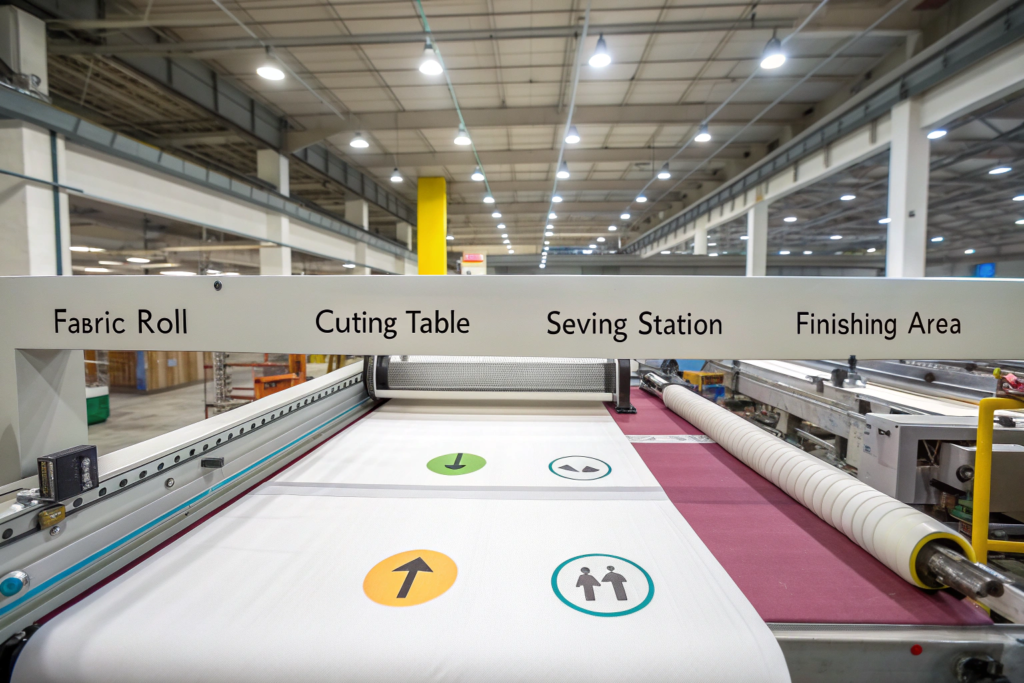
Why is fabric inspection before cutting non-negotiable?
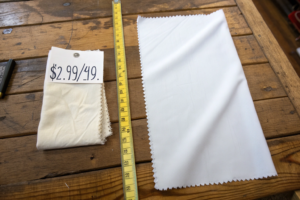
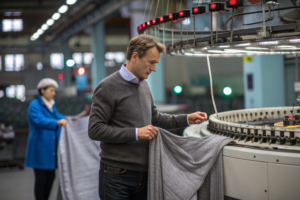
Fabric defects like holes, stains, color variations, or inconsistent weaving can ruin finished garments. A professional fabric inspection machine measures defects per linear yard. At Shanghai Fumao, we operate on a "4-point system" and reject any roll exceeding the acceptable defect score. Last year, for a client's premium linen shirt order, we rejected 15% of the incoming fabric rolls due to weaving slubs and dye streaks. This upfront rejection, while costing us time, saved the client from an estimated 40% defect rate in finished goods, preventing a total loss on a $50,000 fabric investment.
What happens during the "During Sewing" or pilot run check?
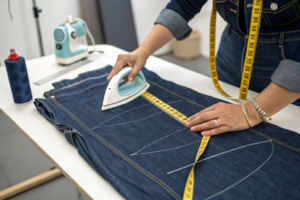
Before full-scale sewing begins, the first 50-100 pieces (the pilot run) are assembled. Our QC team dissects these garments, checking:
- Stitch quality and seam strength
- Accuracy of assembly against the tech pack
- Fit on live models or mannequins
For a recent activewear order for a yoga brand, the pilot run revealed that the flatlock stitches on the leggings were too tight, reducing elasticity. We adjusted the machine tension immediately. This early correction, done on 100 pieces, prevented a flaw from affecting the remaining 4,900 pieces, ensuring the product's performance met the brand's functional promise.
How to Create a Bulletproof Tech Pack for QC Reference?
Ambiguity is the enemy of quality. If your instructions are vague, the final product will be inconsistent. The foundation of all QC is a crystal-clear, comprehensive tech pack. It is the contract that defines "quality" for your specific order.
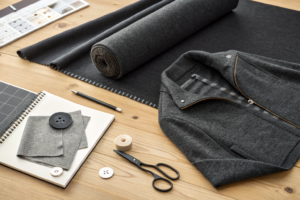
A bulletproof tech pack for QC must include: Detailed Garment Specs with Tolerance, Clear Construction Details, Precise Material Specifications, and Defined Quality Standards. It translates your design vision into measurable, inspectable criteria that your manufacturer's QC team can enforce objectively at every stage.
A common mistake is omitting acceptable tolerances or assuming "standard" practices. What is standard for one factory may not be for another.
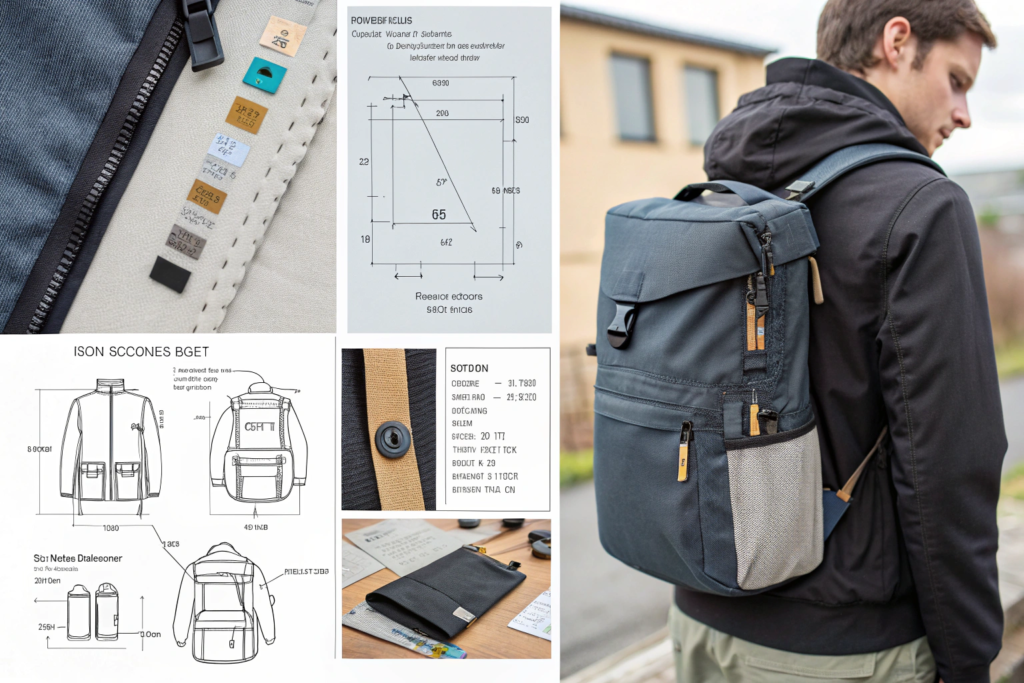
What are the most commonly missed details in a tech pack?
- Stitch Per Inch (SPI) Specification: e.g., "12 SPI for topstitching." Without this, stitch density can vary, affecting durability and appearance.
- Seam Allowance: Clearly marked on patterns. An error here changes the garment fit.
- Tolerance for Measurements: e.g., "Chest: 40" ± 0.25"." This defines the acceptable range.
- Color Standards: Providing Pantone codes or lab-dip approvals for all materials (fabric, thread, prints).
- Press and Finishing Requirements: How should the garment be pressed? What packaging folds are used?
We once received a tech pack from a new client that lacked SPI details. Our QC team proactively requested clarification before cutting. This simple question prevented a batch of trousers from being sewn with an overly loose stitch that would have compromised seam strength.
How can digital tools improve tech pack accuracy and communication?
Static PDFs can lead to version confusion. We now encourage clients to use cloud-based product development platforms or at a minimum, shared live documents. For a collaborative outerwear project with a brand in Germany, we used a shared online spec sheet. When they updated the pocket placement by 1cm, the change was instantly visible to our pattern and QC teams, eliminating the risk of using an outdated drawing. This real-time synchronization reduced pre-production errors by an estimated 30%.
What Should a Comprehensive Pre-Shipment Inspection (PSI) Cover?
The pre-shipment inspection is your last line of defense before goods leave the factory. A proper PSI is a statistical audit, not a glance at a few pieces. It determines if the entire batch meets the agreed standard and is ready to carry your brand's name.
A comprehensive PSI must cover Product Integrity, Measurement Compliance, Workmanship & Aesthetics, Functionality, Packaging & Labeling, and Quantity Verification. It follows the AQL (Acceptable Quality Level) sampling standard to provide a statistically valid assessment of the entire order's quality level, giving you a data-driven decision to ship or hold.
The AQL standard (like ANSI/ASQ Z1.4) is key. It defines how many pieces to randomly sample from the order size and how many defects are allowable for the batch to pass.
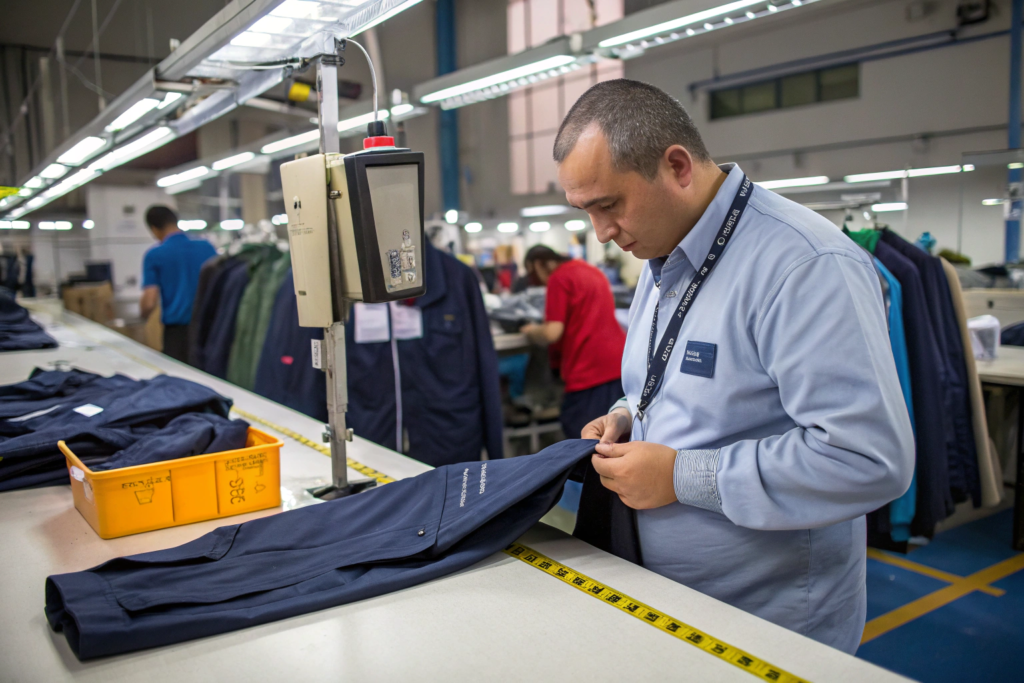
How does the AQL sampling process work in practice?
For a standard order of 2,000 pieces with a "Major" defect AQL of 2.5, the sampling plan would dictate checking 200 randomly selected garments from the packed cartons. If the number of major defects (e.g., broken stitch, hole, wrong color) found in those 200 pieces is below a certain limit (e.g., 10 defects), the batch passes. If it exceeds, the batch fails and requires 100% sorting or rework. At Shanghai Fumao, we perform this AQL audit for every order. For a client's 5,000-unit knitwear order, our PSI caught a consistent armhole sizing deviation in 8% of the sampled units. We halted shipping, isolated the issue to a pattern grading error, and rectified it before a single flawed garment left our warehouse.
Beyond the garment, what packaging checks are vital?
Packaging is part of the product experience. The PSI must verify:
- Polybag thickness and safety holes (for children's wear).
- Accuracy of hangtags, care labels, and size stickers.
- Carton weight and dimensions for correct shipping quotes.
- Overall presentation (folding, tissue paper).
A client once received goods where the cartons were under-taped and burst open in transit. Since then, our PSI protocol includes a carton drop test simulation and tape adhesion check. This attention to logistics integrity ensures your product arrives in sellable condition.
How to Choose a Manufacturer with a Reliable QC System?
You can have the best tech pack and inspection checklist, but if your manufacturer lacks the discipline and systems to execute them, you will fail. The manufacturer's ingrained QC culture is your ultimate safeguard.
Choose a manufacturer with a reliable QC system by verifying their: Structured QC Department, Use of Standardized Procedures (like AQL), Investment in QC Tools and Training, and Transparency & Willingness to Share Data. A manufacturer like Shanghai Fumao, which views QC as a core competitive advantage, will openly discuss their process, share inspection reports, and involve you in key checkpoints.
Look for evidence of a system, not just people. Anyone can hire a few inspectors; building a system requires investment and management commitment.

What questions should you ask a potential manufacturer about their QC?
Move beyond "Do you have QC?" Ask:
- "Can you walk me through your in-process QC checkpoints for an order like mine?"
- "What AQL level do you typically use for final inspection, and can I choose a stricter one?"
- "How do you handle and document fabric and trim inspections?"
- "Can you provide examples of QC reports you generate for clients?"
- "What happens when a batch fails an internal PSI?"
Their answers will reveal depth. When a potential client asked us these questions, we arranged a virtual tour showing our fabric inspection machine, in-line checking stations, and final audit area. This transparency secured the partnership for a large, complex uniform contract.
What are the red flags of a weak QC system?
Be wary if a supplier:
- Resists your request for third-party inspection or is vague about their own process.
- Cannot provide sample QC reports.
- Promises an unrealistically low defect rate (0% is a fantasy; even the best systems have minor defects).
- Has no dedicated QC team or relies solely on line workers to check their own work.
- Communicates poorly about issues until it's too late.
A sportswear brand shared with us that their previous supplier hid a fabric shading issue until the day of shipment. Our policy at Fumao Clothing is to report any anomaly within 24 hours of discovery, with photos and a proposed solution. This proactive communication is a cornerstone of our QC partnership.
Conclusion
Ensuring quality control in custom clothing manufacturing is a strategic process, not a hopeful afterthought. It requires a partnership with a manufacturer who has embedded QC into their DNA—from fabric arrival to final carton sealing. By defining quality in a bulletproof tech pack, demanding in-process checks, insisting on a statistical pre-shipment audit, and choosing a partner with a transparent system, you transform quality from your biggest worry into your most reliable asset.
Remember, the cost of prevention through a rigorous QC system is always a fraction of the cost of correction after a failed shipment. It protects your investment, your timeline, and most importantly, your brand's reputation.
If you are seeking a manufacturing partner whose commitment to quality control is as unwavering as your own, let's connect. At Shanghai Fumao, our multi-stage QC system is the engine of our full-package manufacturing promise. We ensure your vision is realized with consistency and excellence, order after order. Contact our Business Director, Elaine, to discuss how we can build quality into your next collection from the ground up. Email her at: elaine@fumaoclothing.com.