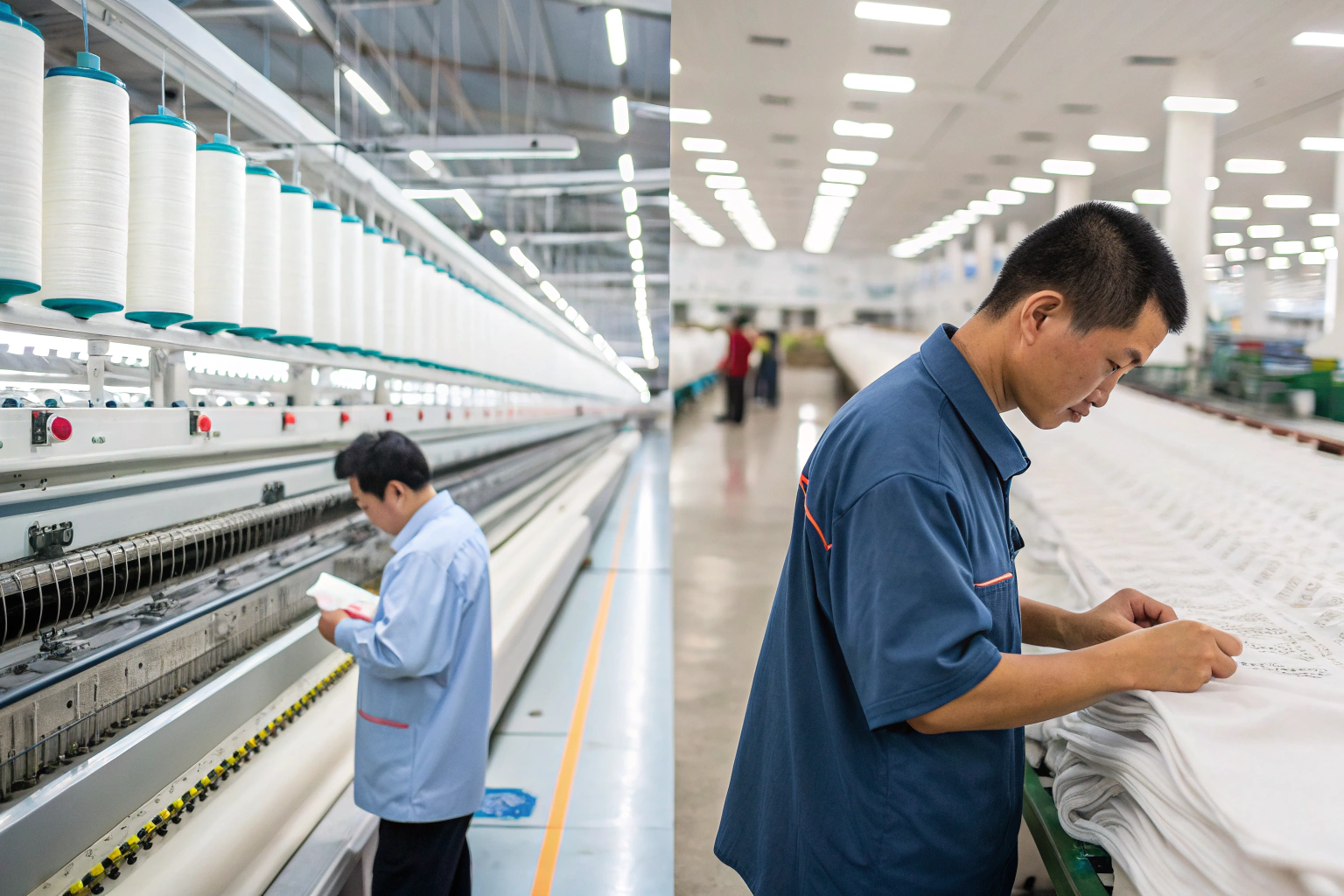
If you're sourcing knitted fabric for your clothing line, you've probably asked yourself this question. Should I stick with China or shift to Vietnam? I hear this from our clients all the time. A buyer from New York calls me and says, "My boss wants me to look at Vietnam because of tariffs." Or a designer from London emails, "I heard Vietnam is cheaper now. Is the quality the same?"
Let me be honest with you. I've been in this industry for over 20 years, right here in Keqiao, Zhejiang. I've watched Vietnam grow as a textile hub. I've seen clients try both. And I've had clients come back to us after trying Vietnam because the quality wasn't what they expected. But I've also seen clients who found the right partner in Vietnam and made it work.
At Shanghai Fumao, we don't hide from competition. We welcome it. It makes us better. And I want you to make the best decision for your brand. So let me walk you through exactly how to compare knitted fabric quality between China and Vietnam. I'll share real data, real experiences, and the specific things you need to look for that most people don't talk about.
What Are the Real Differences in Yarn Quality Between China and Vietnam?
Yarn is where fabric quality starts. You can have the best knitting machines in the world, but if the yarn is inconsistent, your fabric will be inconsistent. And this is one area where the difference between China and Vietnam is significant. But it's not as simple as "one is better." It depends on what you're making.
Where Does the Yarn Actually Come From?
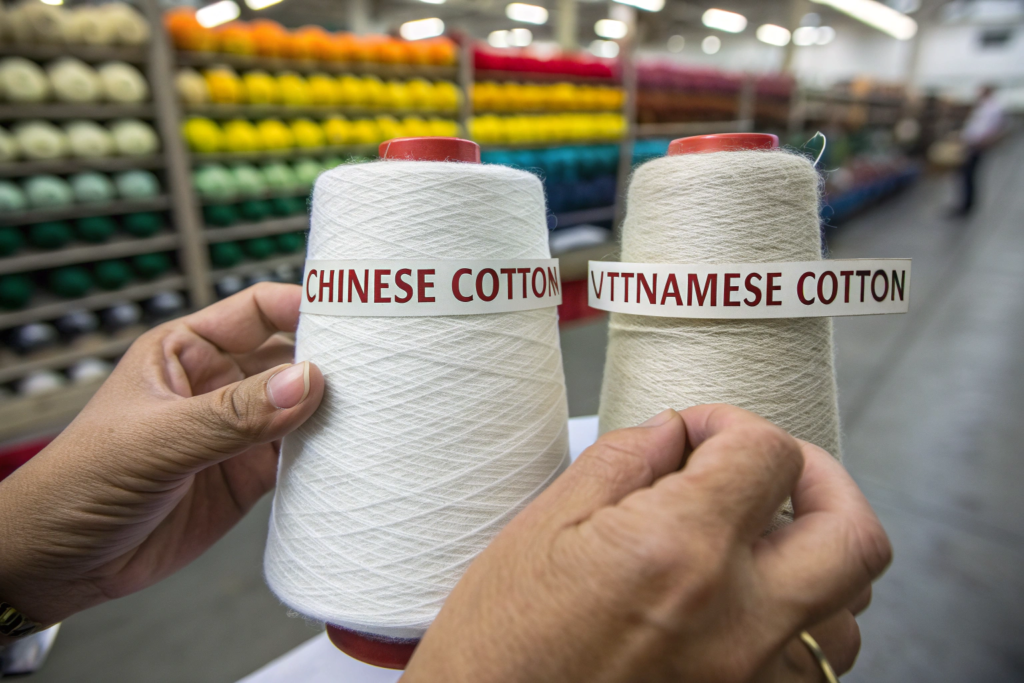
Here's something most buyers don't realize. When you buy knitted fabric from Vietnam, a lot of the yarn actually comes from China. I learned this firsthand in 2022. I visited a large knitting factory in Ho Chi Minh City. They were producing beautiful single jersey for a European brand. I asked the owner where they sourced their cotton yarn. He pointed to a stack of boxes. The labels said "Xinjiang Cotton, Spun in Zhejiang."
Vietnam has a growing textile industry, but their upstream supply chain is still developing. They import a significant portion of their yarn from China, India, and Indonesia. That means when you compare fabric quality, you're often comparing Chinese yarn knitted in Vietnam versus Chinese yarn knitted in China. The difference comes down to the knitting and finishing, not the raw material.
For specialty yarns, the gap is even wider. If you need GOTS-certified organic cotton, recycled polyester, or Tencel™ blends, China has a much more developed supply chain. We have suppliers who have been producing these yarns for decades. Vietnam is catching up, but the options are more limited.
A client from Sweden learned this in 2023. They wanted a knitted fabric made from 100% recycled polyester with a specific ocean-waste certification. They tried to source from Vietnam. The only supplier who could provide the certified yarn was in China. So the Vietnamese factory quoted them a price that included shipping the yarn from China. The cost was higher, and the lead time was longer. They ended up working with us directly. We sourced the yarn locally and produced the fabric in 5 weeks.
How Do Yarn Consistency and Breakage Affect Your Fabric?
This is a technical point, but it matters for your final product. Yarn consistency is measured in something called Uster evenness. Basically, it's how uniform the yarn thickness is. Inconsistent yarn causes streaks, slubs, and weak spots in your knitted fabric.
Chinese yarn mills have invested heavily in modern spinning equipment over the past decade. The large mills in Zhejiang, Jiangsu, and Shandong use Swiss and German machinery. Their Uster evenness ratings are world-class. Vietnam has newer mills too, but the scale is different. The largest Vietnamese yarn mills produce maybe 50,000 tons per year. The largest Chinese mills produce over 500,000 tons. That scale allows for more investment in quality control.
I remember a client from Brazil in 2022. They were making high-end t-shirts with a very fine 60s combed cotton jersey. They tried a Vietnamese supplier first. The fabric looked good on the surface. But when they started cutting and sewing, they had high breakage rates. The needles were breaking because there were hard spots in the yarn. They lost 5% of their fabric to defects. When they came to us, we showed them our yarn test reports. We test every batch of yarn for evenness, strength, and contamination before it goes to knitting. We reduced their defect rate to under 1%.
That said, Vietnam has strengths too. For basic yarns like 30s or 40s carded cotton, Vietnamese mills can produce good quality at competitive prices. If you're making basic t-shirts or simple sweatshirts and you don't need specialty certifications, Vietnam can be a viable option.
What About Specialty and Sustainable Yarns?
This is where China has a clear advantage right now. The demand for sustainable fabrics has exploded. And China responded early.
We have over 1,000 new sustainable fabric designs annually. Our recycled polyester comes from certified sources. Our organic cotton is GOTS-certified. Our Tencel™ is licensed from Lenzing. Our bamboo silk (BAMSILK) is produced under strict environmental controls.
In Vietnam, the sustainable yarn market is smaller. You can find organic cotton and recycled polyester, but the variety is limited. If you want something specific—say a blend of Tencel™ and hemp with a specific recycled content—you'll likely need to source the yarn from China anyway.
A client from California who runs a sustainable activewear brand told me last year, "I want to support Vietnam because of the trade agreements. But every time I try to source a sustainable fabric there, I end up having to bring the yarn from China. At that point, why not just produce the fabric in China?" That's a fair question. And it's one that more buyers are asking.
How Do Knitting and Finishing Capabilities Compare?
Yarn is the foundation. But knitting and finishing are where the fabric gets its final character. This is where experience and scale really matter. And this is where the difference between China and Vietnam is most visible in the final product.
What Types of Knitted Fabrics Can Each Country Produce?
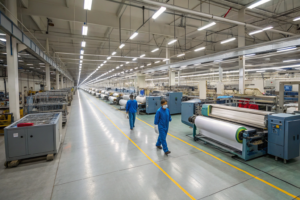
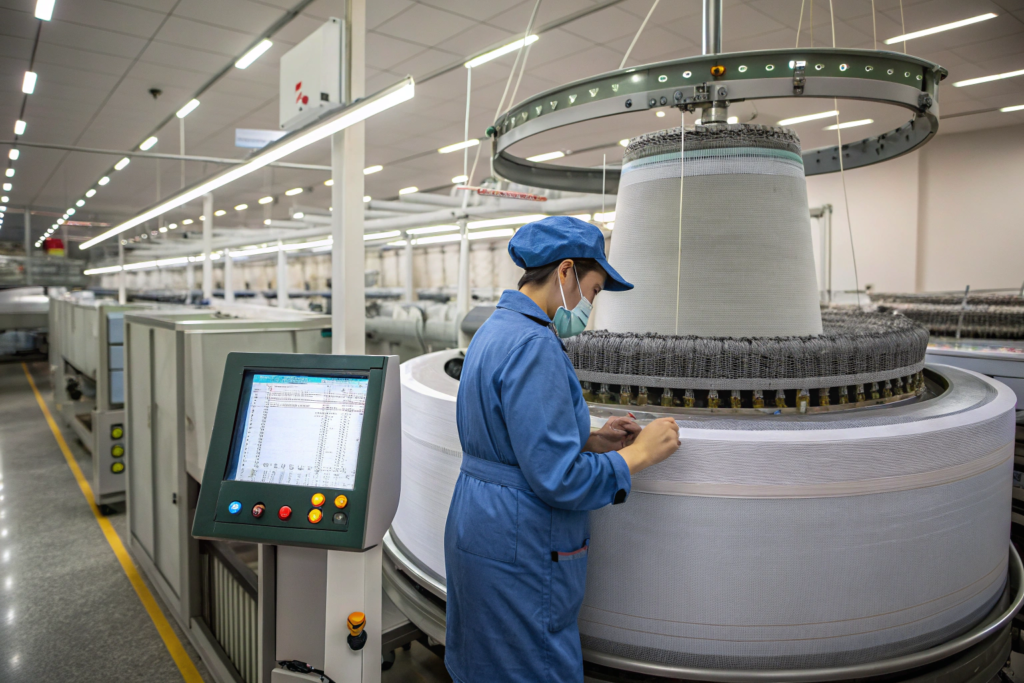
China has every type of knitting machine you can imagine. Circular knitting for jersey and rib. Flat knitting for panels. Warp knitting for tricot and raschel. We have machines that can handle fine gauges down to 40 needles per inch for lightweight performance wear. And we have machines that can handle coarse gauges for heavy fleece.
Vietnam's knitting industry is strong on basics. They have a lot of circular knitting machines for single jersey and fleece. For a basic t-shirt fabric, Vietnam can produce excellent quality. But when you move into more complex knits, the options narrow.
Let me give you a specific example. In 2023, a client from Germany came to us with a request for a jacquard knitted fabric. It had a complex geometric pattern with three colors. They had tried a Vietnamese supplier first. The supplier said they could do it, but they only had two-color jacquard machines. They would have to outsource the three-color pattern to another factory. The quality was inconsistent, and the lead time was 12 weeks.
We did it in-house. We have 20+ jacquard knitting machines that can handle up to six colors. We ran the fabric, inspected it, and shipped it in 6 weeks. The client told me later, "I wanted Vietnam to work. But for something like this, China is still the place."
For basic knits, Vietnam is competitive. For complex knits, specialty structures, or anything with pattern, China has the edge.
How Does Finishing Quality Compare?
Finishing is where fabric becomes garment-ready. Softener application. Anti-pilling treatment. Moisture-wicking finishes. Compaction for shrinkage control. This is a craft. It requires experienced technicians who know how to dial in the machines for each fabric.
I've visited finishing factories in both countries. The equipment is often the same—Italian or German machines. The difference is the people running them. In Keqiao, we have generations of finishing experience. Our dyeing factory manager has been in the industry for 30 years. He can look at a fabric and tell you exactly what temperature and speed to run for the perfect handfeel.
Vietnam is building that experience. They have good technicians. But the depth of experience is not the same yet. This showed up in a project we did for a client in Canada in early 2024.
The client wanted a French terry with a very specific soft handfeel. They had a sample from a Vietnamese supplier. The handfeel was good, but the shrinkage was inconsistent. Some pieces shrank 5%, others shrank 8%. That's a disaster for garment production. You can't have consistent sizing if your fabric shrinkage varies.
We ran the same fabric. Our finishing team adjusted the compaction machine to control shrinkage to under 3% across the entire batch. We also added an anti-pilling treatment because the client didn't realize their fabric would pill after washing. That's the value of experience. We anticipate problems before they happen.
What About Certifications and Lab Testing?
This is critical for brands selling to the US or EU. You need certifications. Oeko-Tex Standard 100. GOTS. Global Recycled Standard. BCI. These certifications require rigorous testing and documentation.
China has a well-developed certification infrastructure. Our CNAS-accredited lab can run all the tests in-house. We test for composition, shrinkage, colorfastness, pilling, and harmful substances. We issue the certificates with every order.
Vietnam has testing labs too. But the infrastructure is newer. For some specialized tests, Vietnamese factories may need to send samples to labs in China or Singapore. That adds time and cost.
A client from Australia told me in 2023, "I don't care where the fabric is made as long as I have the certifications. But with Vietnam, I always have to wait an extra 10 days for the test reports. With your lab, I get them with the shipping documents."
That's a real operational difference. If your brand requires full certification for every batch, you need a supplier with in-house testing capability. Not all Vietnamese factories have that.
What About Labor Costs, Tariffs, and Supply Chain Maturity?
Let's talk about the things that aren't directly about fabric quality but affect your total cost and reliability. Labor costs. Tariffs. Supply chain maturity. These factors can make one source more attractive even if the fabric quality is similar.
How Do Labor Costs Compare?
Vietnam has lower labor costs than China. That's a fact. The average textile worker in Vietnam earns about 30-40% less than a comparable worker in China's coastal regions. That savings can show up in your price.
But here's what I've observed. The labor cost advantage is most significant for basic, high-volume production. If you're ordering 100,000 yards of basic fleece, the labor savings add up. For smaller orders or complex fabrics, the labor cost difference is a smaller percentage of the total cost. Yarn, dyeing chemicals, and overhead are often similar or higher in Vietnam.
We had a client from Texas who switched a basic jersey order to Vietnam in 2023. They saved about 8% on the fabric cost. They were happy. Then they tried to switch a complex jacquard order. The Vietnamese factory quoted a price that was actually higher than ours. Why? Because they didn't have the right machines. They had to outsource the jacquard knitting. The cost of outsourcing ate up any labor savings.
So the labor advantage is real, but it's not universal. For basic knits, Vietnam can be cheaper. For complex knits, China is often still more cost-effective because of the existing infrastructure.
What About Tariffs and Trade Agreements?
This is a huge factor for US buyers. Vietnam has free trade agreements with the EU and preferential access to the US market under various trade programs. Chinese fabrics face additional tariffs when entering the US.
I won't pretend this doesn't matter. For a US brand importing 20,000 yards of fabric, the tariff difference can be thousands of dollars. We've lost some business to Vietnam on this basis. And we understand. Our clients have to manage their costs.
But here's what I tell my US clients. Look at the total landed cost, not just the tariff. A Vietnamese supplier might charge $2.50 per yard with no tariff. We might charge $2.40 per yard plus 15% tariff. That's $2.76 landed. Vietnam looks cheaper. But if the Vietnamese supplier has to import yarn from China, their lead time might be longer. If their quality control is less consistent, you might have higher defect rates. If they don't have in-house testing, you might face delays getting certifications.
A client from New York ran this analysis in 2023. They compared a Vietnamese supplier and us for a 15,000-yard order of organic cotton jersey. The Vietnamese price was $2.90 per yard. Our price was $2.70 per yard plus 12% tariff, landing at $3.02. Vietnam was slightly cheaper on paper. But the Vietnamese supplier required a 12-week lead time. We could do 6 weeks. The client chose us because the faster lead time meant they could get their collection to market earlier. They made up the cost difference in sales.
How Reliable Is the Supply Chain?
This is the intangible factor that can break your business. A supply chain is more than a factory. It's yarn suppliers, dye houses, finishers, testing labs, logistics providers. China's textile supply chain is the most mature in the world. Everything is connected. Everything is close.
In Keqiao, I can walk from my office to a yarn supplier in 10 minutes. I can drive to our dyeing partner in 20 minutes. Our testing lab is in the same building. This proximity means speed and reliability. When something goes wrong, I can be on-site in minutes.
Vietnam's supply chain is developing. The major textile zones around Ho Chi Minh City and Hanoi have good clusters. But they're not as integrated as Keqiao. If a Vietnamese factory needs a specific dye that's not in stock, they might wait days for delivery. In Keqiao, every chemical and accessory is available within hours.
I saw this play out in 2022. A client from the UK was producing in Vietnam. Their dyeing partner had a machine breakdown. The spare part had to be shipped from Japan. The factory was down for 10 days. The client missed their shipping window. They lost their retail placement. They came back to us for their next collection.
That's not to say Vietnam can't be reliable. They can. But the maturity of the supply chain matters when things go wrong. And things will go wrong. The question is how quickly they get fixed.
How Do You Actually Evaluate Quality Before Committing?
I've given you a lot of information. Now let me give you a practical framework. When you're comparing knitted fabric quality between China and Vietnam, here's exactly what you should do. I've used this framework with dozens of clients, and it works.
What Tests Should You Run on Samples?
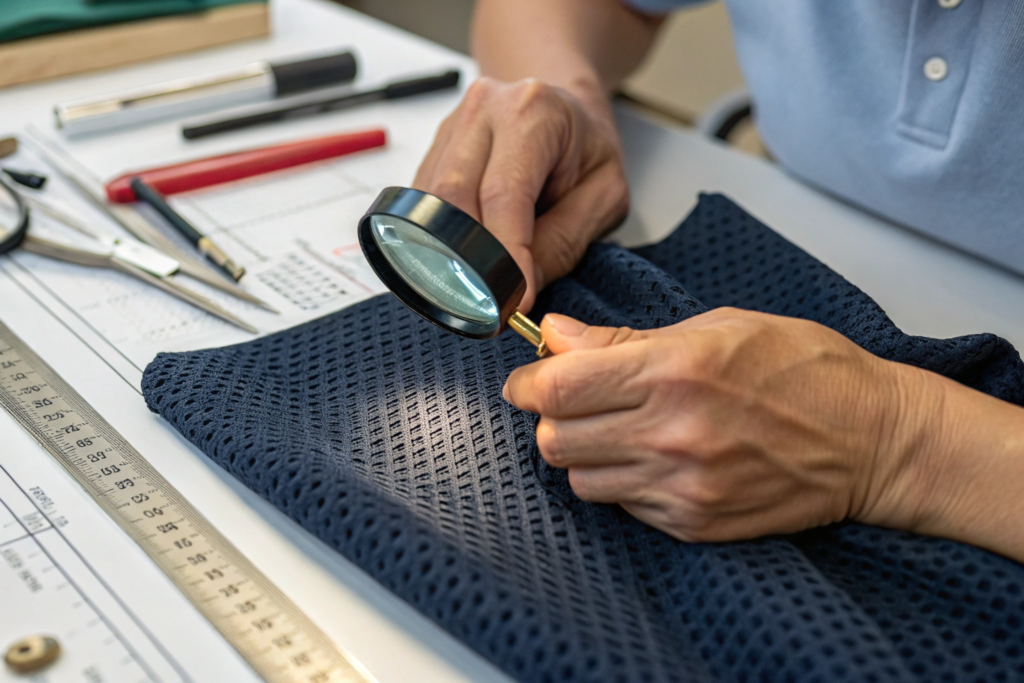
Don't just look at the sample. Test it. Here's my checklist:
Test 1: Shrinkage
Take a sample, measure it, wash it in warm water, dry it on medium heat, measure again. Good knitted fabric should shrink less than 5% in length and width. Great fabric shrinks less than 3%. Ask your supplier for their shrinkage test report. If they don't have one, that's a red flag.
Test 2: Pilling
Rub the fabric against itself or against a rough surface. How quickly does it pill? For basic knits, pilling should be minimal after 20 rubs. For performance fabrics, it should resist pilling even longer. A good supplier will have Martindale pilling test results.
Test 3: Colorfastness
Wash the fabric with a white cloth. Does the color bleed? Rub a wet white cloth on the fabric. Does the color transfer? Good fabric should have colorfastness of Grade 4 or higher on the grey scale.
Test 4: Stretch and Recovery
If your fabric has spandex, stretch it 50% and release. Does it bounce back? Good recovery is over 90%. Poor recovery means your garment will bag out after wearing.
Test 5: Weight Consistency
Weigh a square meter of the sample. Then weigh another square meter from a different part of the roll. Are they within 5%? Inconsistent weight means inconsistent quality.
I did this with a client from Chicago in 2023. They had samples from three Chinese suppliers and two Vietnamese suppliers. We ran all five tests. One Vietnamese sample failed the pilling test badly. Another Vietnamese sample had inconsistent weight. The Chinese samples all passed, but one had higher shrinkage than claimed. The client ended up choosing us because our test results were the most consistent across all five metrics.
What Questions Should You Ask the Supplier?
Test results tell you about the sample. But the sample might not represent the bulk. You need to ask questions about their production process. Here are the questions I recommend:
- Where do you source your yarn? If they can't tell you the mill name, be careful.
- Do you have in-house testing? If not, who does your testing and how long does it take?
- What is your defect rate? A good supplier will tell you. We target under 2%. If they say "zero," they're lying.
- How do you handle color matching? Do they use spectrophotometers or just visual matching? Visual matching is risky.
- Can you provide certifications for the bulk production? Not just for the sample. For the actual batch.
- What happens if there's a quality issue? Do they have a claims process? A good supplier will.
I remember a client from Australia who asked all these questions of a Vietnamese supplier. The supplier said they had in-house testing. When the client asked for the lab accreditation, the supplier couldn't provide it. The client visited the factory. The "lab" was a desk with a magnifying glass. The client walked away.
Should You Visit the Factory?
If you're making a significant investment, yes. You should visit. I know it's expensive. I know it takes time. But nothing replaces seeing the factory floor with your own eyes.
When you visit a factory in China or Vietnam, here's what to look for:
- Cleanliness. A clean factory is a sign of discipline. If the floor is dirty, the quality control is probably sloppy.
- Organization. Are yarn cones stacked neatly? Is there a system for labeling work in progress? Organization matters.
- Machinery condition. Are machines well-maintained? Look for oil leaks, dust buildup, worn parts. Poor maintenance leads to quality issues.
- Quality control stations. Do they have dedicated QC checkpoints? Are inspectors actually checking, or just watching?
- Worker demeanor. Do workers look engaged or bored? Engaged workers produce better quality.
I had a client from Texas visit us in 2023. He had been sourcing from Vietnam for two years. He said, "I wanted to see what I was missing." He walked through our weaving factory, our dyeing partner's facility, and our lab. He saw the QR code tracking system in action. He watched our QC team inspect fabric under bright lights. He told me afterward, "Now I understand why your quality is consistent. You have systems. Vietnam had machines, but no systems."
That client switched his entire production to us after that visit. Not because of price. Because of confidence.
Conclusion
Comparing knitted fabric quality between China and Vietnam is not about declaring a winner. It's about finding the right fit for your brand. Vietnam has lower labor costs and favorable trade agreements. For basic knits and simple constructions, Vietnam can be a good choice. The industry is growing, and the quality is improving.
But China has depth that Vietnam cannot match yet. The yarn supply chain is mature. The range of knitting machines is wider. The finishing expertise is deeper. The testing infrastructure is established. And the supply chain integration in places like Keqiao means faster response times and more reliable delivery.
At Shanghai Fumao, we've built our business on this foundation. We have the yarn relationships. We have the machines. We have the finishing expertise. And we have the CNAS-accredited lab to prove it all. When you work with us, you're not just buying fabric. You're buying 20 years of accumulated knowledge and a supply chain that has been refined through millions of yards of production.
I'm not going to tell you that Vietnam is bad. That wouldn't be true. But I will tell you that if you need complex knits, specialty yarns, consistent quality, or reliable certifications, China is still the best place to source. And if you want a partner who will stand behind every yard, we're here.
If you're ready to compare for yourself, I invite you to reach out to our Business Director, Elaine, at elaine@fumaoclothing.com. Tell her what you're making. She'll send you samples. She'll share our test reports. She'll answer all the questions I listed above. And if you want to visit our factory in Keqiao, we'll welcome you. See for yourself what 20 years of experience looks like.