You’ve made the smart investment. You’ve sourced OEKO-TEX® certified fabrics for your collection. Your supply chain is secure, and you know the science behind it. But now you’re staring at a blank marketing page, wondering: “How do I explain this to my customers without sounding like a chemistry textbook?” If you just slap the label on your hangtag and say “certified,” you’re leaving 90% of its value on the table. The real challenge isn’t getting the certification—it’s translating its technical assurance into an emotional, compelling reason to buy. Your customers don’t buy test reports; they buy trust, comfort, and a story that aligns with their values. So, how do you bridge that gap?
Communicating OEKO-TEX® certification effectively means moving from technical jargon to tangible benefits. It’s about showing, not just telling. The most successful brands use it as a cornerstone of their brand story, weaving it into product descriptions, social proof, and educational content that answers one core customer question: “What’s in it for me?” This transforms a complex standard into a simple promise of safety, quality, and peace of mind that resonates at the point of purchase.
Think of the certification not as a finish line, but as the starting pistol for your most powerful marketing narrative. It’s a unique asset that can differentiate you in a crowded market, justify your price point, and build fierce loyalty. But you need a strategy. Let me walk you through the exact frameworks we’ve seen work for our clients at Shanghai Fumao, from the language you use to the channels that deliver the biggest impact.
How Do You Translate "OEKO-TEX" into Customer-Friendly Language?
The first rule: never lead with the acronym. Your customer’s eyes will glaze over. Start with the benefit, then use the certification as the credible proof. Swap out technical terms for the outcomes people actually experience. For example, instead of “OEKO-TEX® STANDARD 100 certified for harmful substances,” say “Independently certified for skin safety and comfort.” You’re selling the result, not the process.
Here’s a practical translation guide we provide our clients at Shanghai Fumao:
- Technical Term: “Tested for over 100 harmful substances.”
- Customer Language: “We test every material so you never have to worry about hidden irritants against your skin.”
- Technical Term: “Compliance with strict limit values for chemicals.”
- Customer Language: “Made with a cleaner process for purer comfort, from the first wear to the fiftieth wash.”
- Technical Term: “Product Class II (skin contact).”
- Customer Language: “Perfectly safe for all-day wear, right next to your skin.”
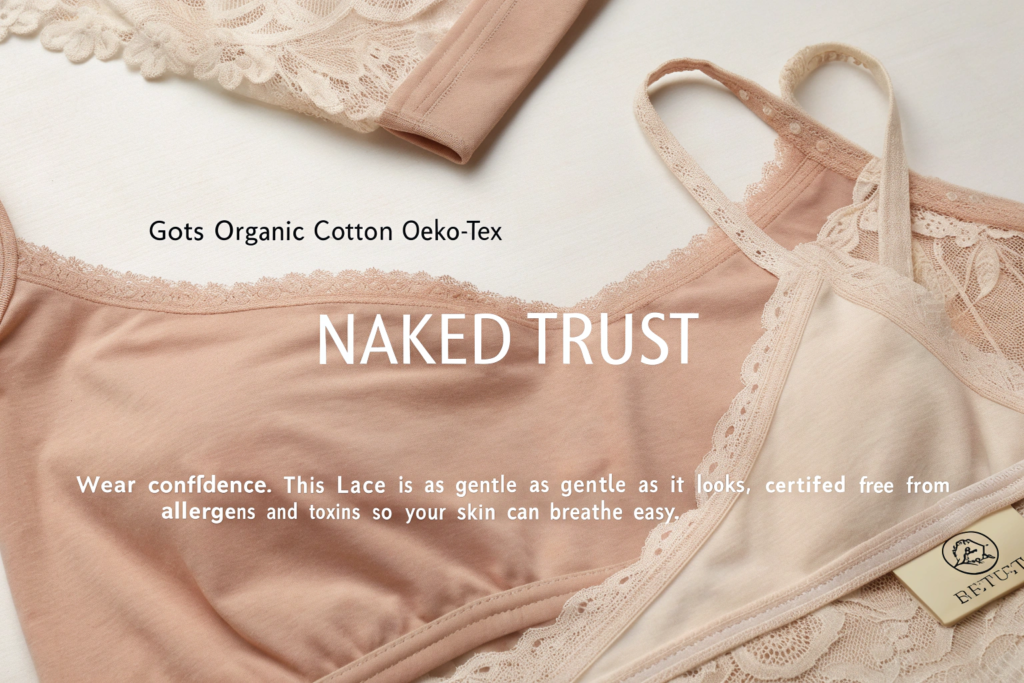
A French lingerie brand we worked with in early 2024 used this approach masterfully. They launched a line using our GOTS organic cotton with OEKO-TEX® certification. Their campaign tagline was “Naked Trust.” Their product descriptions didn’t list chemical names; they said: “Wear confidence. This lace is as gentle as it looks, certified free from allergens and toxins so your skin can breathe easy.” Their conversion rate for that line was 35% higher than their standard collection. They used the certification to answer an unspoken anxiety in their market.
Where should the certification label and message be placed?
Visibility is key, but context is king. The label must be present at every major decision point:
- On the Product & Hangtag: This is non-negotiable. The official OEKO-TEX® label should be physically on the hangtag or care label. It’s your in-hand credibility.
- Product Title/Header Online: Don’t bury it. Incorporate it early. E.g., “The Organic Cotton Tee - OEKO-TEX® Certified for Safety.”
- Key Product Bullet Points: The first 3-5 bullet points should include a benefit-driven certification statement. This is often the only part people read.
- Dedicated “Our Materials” Page: This is where you go deeper. Create a permanent page that explains what OEKO-TEX® means, why you chose it, and link to it from every product page.
- Checkout & Packaging: A small icon or line in the checkout cart (“All items are safety certified”) reduces last-minute doubt. Include a thank-you note in the packaging that reiterates the value of their certified purchase.
Research on effective e-commerce product page structures consistently shows that trust signals placed high on the page significantly reduce bounce rates.
What are the common pitfalls to avoid in communication?
The biggest mistake is assuming knowledge. Avoid these traps:
- Pitfall 1: Using Only the Logo. A logo without explanation is just a mysterious badge. Always pair it with a short, benefit-driven phrase.
- Pitfall 2: Greenwashing Overstatement. Don’t call it “100% eco” or “completely non-toxic.” OEKO-TEX® is about regulated harmful substances. Use precise language like “certified free from known harmful substances” or “independently verified for skin safety.”
- Pitfall 3: Isolating the Message. Don’t confine it to a sustainability page. Integrate it into your core value proposition—it’s about quality and care as much as it is about ethics.
- Pitfall 4: Being Boring. Dry, technical copy loses people. Tell a story. “We chose this certification because we believe what touches your skin should care for it, not just cover it.”
For ongoing inspiration on authentic storytelling, follow industry discussions on sustainable fashion communication.
How Can You Use Storytelling to Make the Certification Relatable?
Facts tell, but stories sell. The story of OEKO-TEX® in your brand isn’t about a lab in Switzerland; it’s about your why. Why did you, as a brand, decide this was non-negotiable? Was it after becoming a parent and worrying about what your kids wore? Was it a customer’s question about allergies? That human origin story is your hook.
We helped a US-based baby apparel brand, a client of ours, craft their story. The founder was a new mother who couldn’t find cute, affordable clothes she trusted. Her “Our Story” page didn’t start with certification; it started with her holding her newborn, talking about her fear of hidden chemicals. Then she introduced OEKO-TEX® as the solution she discovered and vowed to use for every piece. The certification became a character in her brand’s journey—a hero that solved a real problem. They even did a short video showing a gentle close-up of the fabric next to a baby’s skin, with a soft voiceover explaining the “peace of mind” certification. Their email open rates for storytelling content were double their promotional blasts.

What types of content formats work best for this story?
Different formats reach people at different stages of their journey:
- Short-Form Video (TikTok/Reels/Shorts): A quick, 15-second video with text overlay: “What does this label on our clothes mean? It means we tested it for you. #SafeFashion #OEKOTEX.” Show the label, then show someone comfortably wearing the garment.
- Blog Post / FAQ Deep-Dive: Write a post titled “Why ‘Safe to Wear’ is Our First Design Principle.” Explain the certification in simple terms, use analogies (e.g., “It’s like a food safety standard, but for your clothes”), and answer common questions.
- Infographics: A simple, shareable graphic breaking down the “What, Why, How” of the certification. Visuals like a shield over a garment, or a flowchart of the testing process, are highly effective.
- Email Series: A welcome or post-purchase email series that educates new customers on what makes your product special. “Welcome to the family! Here’s one thing you should know about how we make your clothes...”
A great example is a Dutch outdoor brand that used an animated infographic on their site to show how their certified membrane kept rain out while letting skin breathe, all without harmful PFCs. They made the technical benefit visual and understandable. You can find templates and ideas for creating such engaging visual content for brand stories on design platforms.
How do you leverage user-generated content (UGC) and social proof?
Your customers are your best marketers. Encourage them to share their “why.” Run a campaign asking: “What does wearing clothes you trust feel like?” Feature photos and stories of real customers enjoying your certified products. This social proof validates your claims more powerfully than any advert.
You can also share behind-the-scenes content from your supply chain. With permission from partners like us at Shanghai Fumao, you can show clips of fabric testing in our lab, or the certified dyeing process. This builds incredible transparency. A post saying “This is where your dress was tested for safety” with a video of a pH test is far more engaging than a static certificate photo. Look at how leading brands use transparent supply chain content on Instagram for inspiration.
How Should Messaging Differ Across Marketing Channels?
A one-size-fits-all message fails. The channel dictates the depth. Think of it as a funnel: broad awareness at the top, detailed trust-building in the middle, and reassurance at the bottom (point of purchase).
Social Media (Top of Funnel - Awareness): Here, it’s about vibe and value alignment. Use eye-catching visuals of the product and lifestyle. The caption should connect the certification to a feeling. Instagram Post Idea: A beautiful photo of someone in your loungewear, caption: “Sunday reset, in fabric certified for pure comfort. Because relaxation shouldn’t come with worries. #CleanComfort #OEKOTEX”
Email Marketing & Blogs (Middle of Funnel - Consideration): This is where you educate. Send a newsletter titled “5 Things You Didn’t Know About What’s In Your Clothes.” Write a blog comparing certified vs. non-certified production. Share customer testimonials that mention peace of mind. This is where you build the rational case for your brand’s higher standards.
Product Pages & Checkout (Bottom of Funnel - Conversion): This is prime real estate for trust signals. Use clear, concise language focused on removing final barriers to purchase.
- On the Product Page: Have a dedicated “Fabric & Care” tab with the OEKO-TEX® logo, a brief explanation (“Independently certified for skin safety”), and a link to your deeper “Our Materials” page.
- In the Shopping Cart: A small badge or line of text: “✔ All items are OEKO-TEX® safety certified.”
- Checkout Page: A final reassurance: “You’re choosing products made with safer materials.”

What is the role of influencers and ambassadors?
Choose them wisely. Micro-influencers in your specific niche (e.g., sustainable living, sensitive skin care, mindful parenting) are gold. Provide them with simple talking points. Don’t ask them to recite the standard; ask them to share their personal experience. A parenting influencer might say: “As a mom with a kid with eczema, I’m picky about fabrics. I love that [Brand] certifies their clothes, so I don’t have to decode the label myself.” This is authentic advocacy. For finding the right voices, platforms that analyze authentic influencer marketing in niche communities can be a resource.
How do you handle customer questions and objections?
Be prepared for questions like, “Is this just marketing?” or “Why is this more expensive?” Train your customer service team with clear, benefit-driven responses.
- Objection: “This seems expensive.”
- Response: “We invest in certified materials to ensure exceptional quality and safety. It means better comfort, longer-lasting wear, and peace of mind that what you’re wearing is good for you. It’s an investment in your wardrobe and well-being.”
- Question: “What does OEKO-TEX actually mean?”
- Response: “Great question! It’s one of the world’s strictest standards for testing fabrics. An independent institute checks every material we use for over 100 regulated substances that could be harmful. We do it so you can be confident in what touches your skin. You can learn more on our ‘Our Materials’ page here!”
How Can You Measure the Impact of Your Certification Communication?
You can’t manage what you don’t measure. Track specific metrics to see if your storytelling is working:
-
Website Analytics: Use Google Analytics to track:
- Page Views & Time on Page for your “Our Materials” or dedicated certification page.
- Click-Through Rate (CTR) from product pages to your materials page.
- Set up a Goal for conversions (purchases) where users visited the materials page first. This shows if the education leads to sales.
-
E-commerce Metrics:
- Compare Conversion Rates between product pages where certification is prominently featured vs. older pages where it wasn’t.
- Monitor Return Rates & Reason Codes. A successful communication should reduce returns due to “quality” or “skin irritation” concerns.
- Track Average Order Value (AOV) for customers who engage with certification content.
-
Customer Feedback:
- Analyze Reviews and Q&A. Are customers mentioning “soft,” “safe,” “quality,” or “certification”?
- Send Post-Purchase Surveys: Ask “What was the main reason you chose our product?” and see if “material quality/safety” is a rising factor.
A Scandinavian home textiles brand we supply provided a clear case. After revamping their product pages to highlight OEKO-TEX® certification with videos and infographics, they saw a 22% decrease in cart abandonment on those pages and a 15% increase in “positive material mention” in reviews within one quarter. The data proved the communication was paying off. For brands starting out, guides on measuring content marketing ROI are essential reading.

What are the long-term brand equity benefits?
This goes beyond quarterly sales. Consistent, authentic communication about your certified standards builds what we call “Rational Trust.” This isn’t fleeting brand affinity; it’s a concrete reputation for integrity and responsibility. It makes your brand more resilient to crises, more attractive to ethical investors and stockists, and gives you a non-discountable brand pillar. In the long run, it turns customers into advocates who defend your brand and justify your price because they understand the value, not just the cost.
Conclusion
Communicating your OEKO-TEX® certification is not an administrative task—it’s your most powerful opportunity to connect with the conscious consumer. It’s the thread that weaves together your product quality, your ethical stance, and your customer’s desire for trust. By translating technical assurance into human benefit, telling a relatable story, tailoring your message across channels, and measuring the impact, you transform a supply-chain decision into your brand’s definitive advantage.
Remember, the certification is the proof. Your communication is the promise. And a promise kept is the foundation of every great brand. Ready to make your certified materials the hero of your story? At Shanghai Fumao, we provide not only the certified fabrics but also the marketing insights and real-world case studies to help you communicate their value powerfully. Let’s build a narrative that sells. Contact our Business Director Elaine to begin: elaine@fumaoclothing.com.