I have been in the textile industry for over 20 years. And I can tell you one thing for sure: miscommunication kills deals faster than bad quality.
You send an email asking for "blue cotton." I think you mean navy blue, 20s carded cotton. You actually wanted sky blue, 40s combed cotton. Two weeks later, you get the wrong fabric. Now we are both frustrated.
This happens every single day. Not because anyone is careless. But because fabric is complex. And email is a terrible tool for describing texture, hand feel, and color.
I run Shanghai Fumao. Our sales team handles over 200 inquiries every week from buyers in the US, Europe, and Southeast Asia. The difference between a smooth order and a nightmare? Communication.
The short answer is: To communicate effectively with Shanghai Fumao's sales team, send a structured message with these five items: 1) Fabric type or reference photo, 2) Target weight (GSM), 3) Required width, 4) Quantity in meters or yards, and 5) Your desired delivery date. Then follow up with a WeChat or WhatsApp voice message for complex details. Avoid long emails. Use bullet points. And always confirm your quality standards upfront.
Let me show you exactly how to do this. I will share real examples from our buyers in New York, London, and Melbourne.
What information must you prepare before contacting a fabric supplier?
Most buyers rush. They see a fabric on our website, send a message saying "How much for this?", and expect a quote in five minutes. But I cannot give you a price without knowing your quantity, quality level, and destination.
Let me fix that for you.
Why does fabric weight (GSM) matter more than you think?
GSM stands for grams per square meter. It tells you how thick or thin a fabric is. A summer shirt needs 120-150 GSM. A winter jacket needs 300-400 GSM. If you do not specify GSM, I might quote you for a 200 GSM fabric when you actually need 350 GSM. Then the price doubles.
Real example: In March 2024, a British streetwear brand asked for "heavy cotton hoodie fabric." I quoted our standard 280 GSM fleece. They agreed. When the fabric arrived, they said it was too light. They needed 380 GSM. We had to re-run the order. They lost 3 weeks and paid $2,800 in air freight.
Now we always ask: What GSM do you need? If you do not know, send us a photo of your sample next to a ruler. Or better, cut a 10cm x 10cm square and weigh it on a kitchen scale. That gives you GSM.
Here is a simple GSM calculator for fabric buyers that one of our Australian clients shared. Bookmark it.
How to describe fabric construction without technical jargon?
You do not need to be a textile engineer. But you do need to answer three questions:
- Is it woven or knit? Woven is like a button-up shirt (less stretch). Knit is like a t-shirt (more stretch).
- What is the fiber? Cotton, polyester, nylon, or a blend?
- What is the finish? Soft? Stiff? Waterproof? Brushed?
If you cannot answer these, send a photo. A clear picture of your target fabric next to a coin (for scale) tells me 80% of what I need.
Real example: A Canadian lingerie brand wanted "soft stretch mesh." That could mean 10 different fabrics. Instead of guessing, they sent a photo of their old sample next to a loonie (Canadian dollar coin). We matched it to our nylon/spandex power mesh, 150 GSM, 4-way stretch. Perfect match. First sample approved.
Here is a visual guide to identifying knit vs woven fabrics that we send to all new buyers. It saves weeks of back-and-forth.
Which communication channel works best for fabric orders (Email, WeChat, WhatsApp)?
Different channels for different jobs. Email is for records. WeChat and WhatsApp are for speed. Phone calls are for emergencies.
Let me break down how we actually use each one.
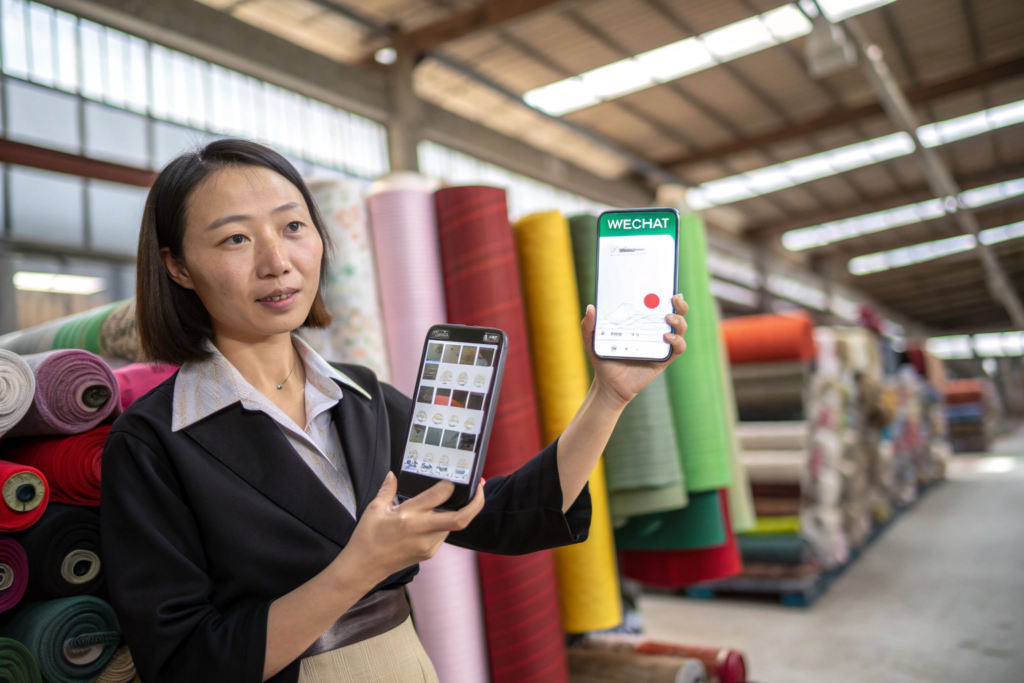
Why does WeChat dominate Chinese textile communication?
WeChat is not just a messaging app in China. It is how we run business. We share photos, videos, PDFs, and even make voice calls. Over 90% of our Chinese and Asian buyers use WeChat.
For international buyers, WhatsApp is more common. But here is the trick: both work fine. What matters is how you use them.
Real example: A Polish buyer sent me 15 individual WhatsApp messages asking for "price of polyester." I had no idea which polyester. Then a Turkish buyer sent one message with a screenshot of our product page, the item code, and the quantity. I replied with a price in 4 minutes.
The difference? Structure.
When you message us on WeChat or WhatsApp, include:
- A photo or screenshot of the fabric
- The quantity in meters
- Your country (for freight calculation)
Do not send "hi" and wait for a reply. That wastes both our time.
Here is a guide to using WeChat for international sourcing from a US importer who buys $2M in fabric annually. He shares his exact template.
When should you switch from email to a voice call?
Email is great for confirming details. But it is terrible for solving problems.
If you have a complex requirement—like a custom color match, a special finish, or a tight deadline—ask for a voice call. Our sales team speaks English. We can jump on a 5-minute WeChat or WhatsApp call to clarify everything.
Real example: In July 2024, an Australian workwear brand needed flame-resistant cotton. They sent a 500-word email with three attachments. I was confused. So I called them. In 7 minutes, I learned they needed 140 GSM FR-treated cotton twill, navy blue, with a tear-away label. The email missed all of that.
After the call, I sent a confirmation message repeating the key points. That is our rule: voice call to clarify, email to confirm.
Here is a template for requesting a supplier call that gets a fast response. Use it.
How to avoid common miscommunication pitfalls with Chinese suppliers?
Misunderstandings happen. But most are preventable. Let me show you the three biggest mistakes I see from international buyers.
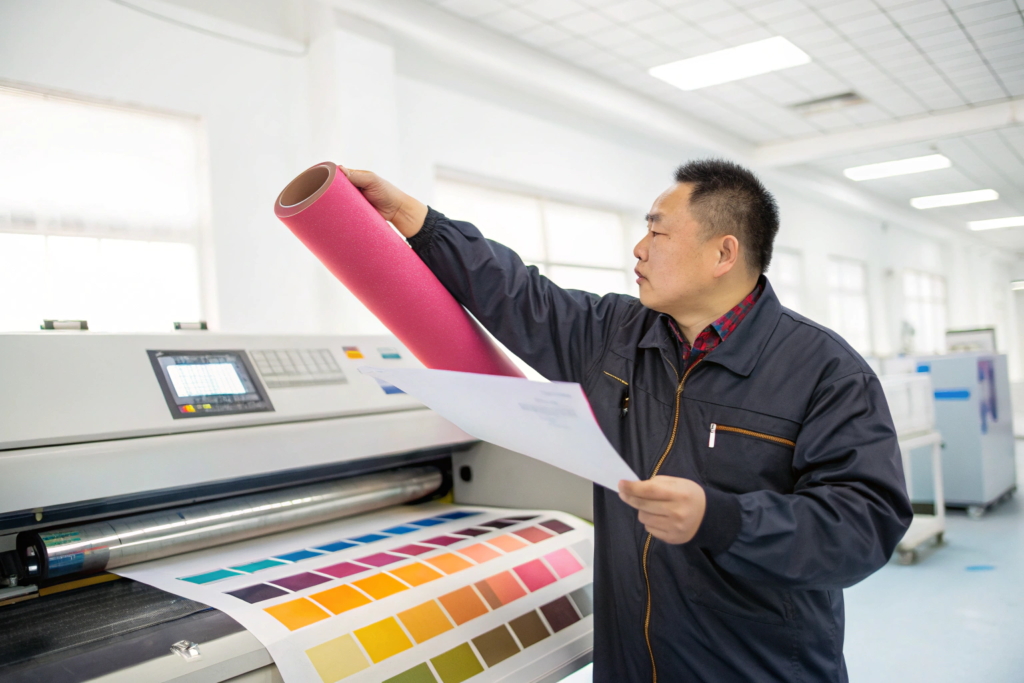
Why does "same as sample" mean different things to different people?
You send me a 2cm x 2cm swatch and say "make this." I make 5,000 meters. You receive it and say "the color is off."
But here is the truth: a tiny swatch does not show shade variation across a full roll. And your office lighting is different from my factory lighting.
The fix: Always ask for a lab dip (a small piece of dyed fabric, about 30cm x 30cm) and approve it under your own lighting. We charge $50-$100 for lab dips. That is cheap insurance.
Real example: A Japanese home textile company rejected a $45,000 order of linen-cotton blend sheeting because the color looked different in their Tokyo showroom. But they had approved a lab dip. The problem? They approved it under warm LED lights. Their showroom had cool fluorescent lights. We split the loss 50/50. Painful for both sides.
Now we always ask: What light source will you use to check the fabric? Tell us D65 (daylight), TL84 (cool white), or U30 (warm white). We will match it.
Here is a standard color matching guide for textile buyers that explains light sources. Share it with your quality team.
How to specify acceptable quality limits (AQL) in your purchase order?
AQL stands for Acceptable Quality Limit. It is the maximum number of defects you will accept in a batch.
Many buyers skip this. Then they complain when 2% of the fabric has small flaws. But in woven fabric, 2% to 3% defects is actually standard for most commercial grades.
The fix: State your AQL clearly in your purchase order. For example:
- "AQL 1.5% for major defects (holes, stains)"
- "AQL 4.0% for minor defects (slubs, uneven dyeing)"
Real example: A German automotive upholstery buyer required AQL 0.65% for their fabric. That is very strict. We charged them 15% more for extra inspection. But they agreed because they knew their standard upfront. No surprises.
We inspect every roll in our in-house QC facility using 4-point system. You can request a video of your fabric being inspected. Just ask.
Here is a free AQL calculator and table download that one of our Swedish clients uses. Plug in your batch size and get your sample size.
What questions should you ask before placing your first fabric order?
A good buyer asks questions. A great buyer asks the right questions before sending money.
Let me give you my checklist.
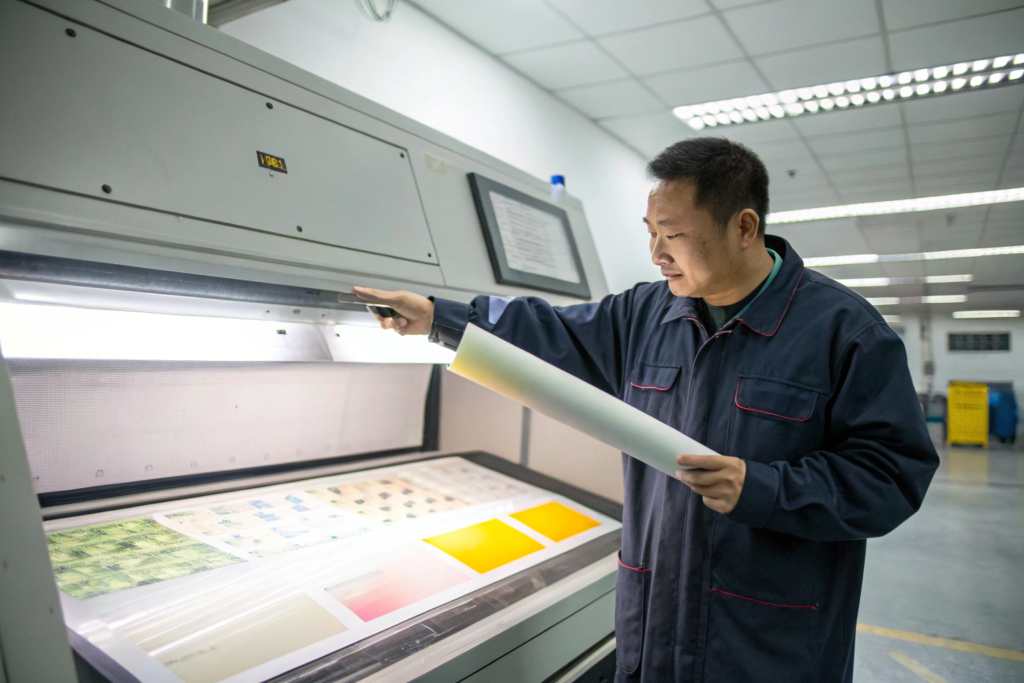
Can you provide third-party test reports for colorfastness and shrinkage?
Never trust "our quality is good." Ask for test reports.
We test every batch in our CNAS-accredited lab. Our standard tests include:
- Colorfastness to washing (ISO 105-C06): Grade 4-5 out of 5
- Colorfastness to rubbing (ISO 105-X12): Grade 4 for dry, 3-4 for wet
- Shrinkage (ISO 6330): Less than 3% for most knits, less than 2% for wovens
Real example: A Brazilian swimwear brand asked for our test reports before ordering 8,000 meters of nylon/spandex tricot. We sent PDFs from December 2023. They matched the reports to their own lab tests. Everything passed. They placed the order the next day.
If you need special tests—like antibacterial, UV protection, or flame resistance—tell us upfront. Those add 5-7 days and extra cost.
Here is a list of common textile test methods and standards to help you decide what you need.
What is your policy on production over-runs and under-runs?
Fabric production is not exact. If you order 10,000 meters, we might produce 9,800 or 10,200 meters. This is normal.
Most suppliers, including us, ship between 97% and 103% of the ordered quantity. You pay for what we ship. But you need to agree on this upfront.
Real example: A French lingerie brand ordered 5,000 meters of stretch lace. We produced 5,150 meters (3% over). They expected to pay only for 5,000 meters. Their budget was tight. We agreed to split the extra 150 meters at 50% cost. Now we put the over-run policy in every contract.
Ask us: "If you produce over 2%, do I have to buy it?" Our answer: "Up to 5% over, you buy at full price. Over 5%, we discount or keep it."
Here is a forum discussion about fabric over-run policies from buyers sharing their experiences. Read it before you sign anything.
Conclusion
Effective communication with our sales team comes down to one word: clarity.
Do not assume we know what you want. Send photos, specify GSM, state your AQL, and choose the right channel for the job. Use email for records and WeChat or WhatsApp for quick updates. When things get complex, jump on a 5-minute voice call. It is faster than 15 emails.
Remember the five must-haves for every inquiry:
- Fabric type or reference photo
- Target weight (GSM)
- Required width
- Quantity in meters or yards
- Desired delivery date
Add your quality standards and test requirements. And always confirm the over-run policy.
We have been shipping fabric to over 100 countries from Keqiao, China. Our 40+ sales and support team members speak English and understand international shipping, customs, and quality expectations. We are not just a fabric supplier. We are your production partner.
Ready to start your fabric order the right way? Contact our Business Director, Elaine, at elaine@fumaoclothing.com. Tell her you read this guide. She will assign you a dedicated sales representative who will send you a checklist to fill out. That checklist alone will save you 2-3 weeks of back-and-forth.
Let us get your fabric right the first time.