Every meter of lace you buy must turn into profitable garments. That's the bottom line. But when you're working with intricately patterned lace—think floral jacquards, geometric repeats, or directional motifs—standard fabric yield formulas fail you. The question is urgent: how do you calculate the actual, usable fabric yield from a patterned lace roll to control costs and avoid last-minute shortages? Misjudge this, and your entire production line stalls, eating into margins you thought were safe.
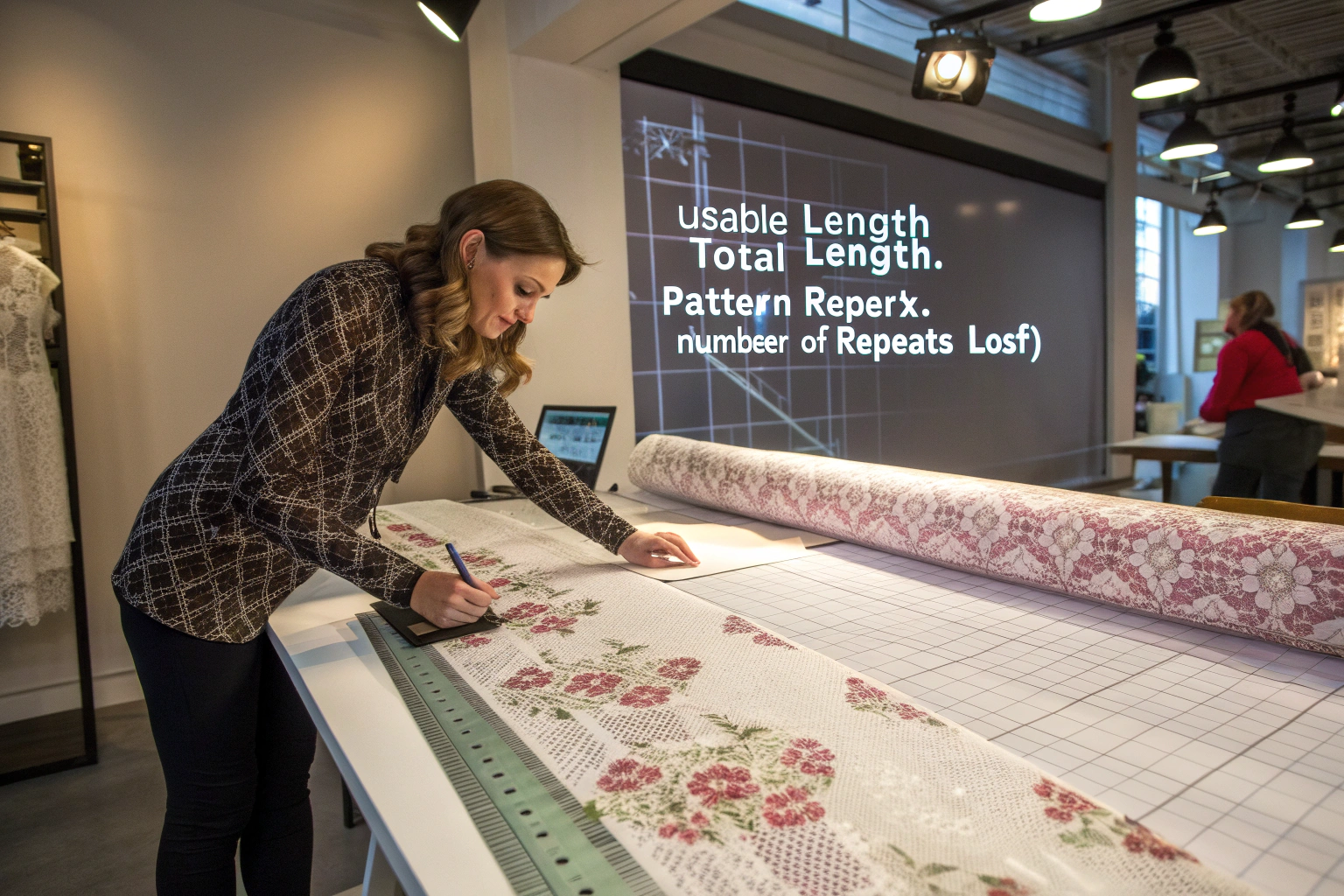
Calculating fabric yield for patterned lace isn't just about width and length; it's a strategic puzzle of pattern repeat alignment, motif directionality, and cutting efficiency. The core principle shifts from maximizing square meterage to minimizing pattern waste. Unlike plain fabrics, you must factor in the pattern repeat size (both length and width) and the garment's grainline requirements to determine the true "net usable" fabric from every "gross" meter you purchase. For a directional lace with a large 30cm floral repeat, your yield could be 15-20% lower than with a small, all-over polka dot lace of the same width.
This calculation is the difference between a smooth production run and a financial surprise. It affects your fabric consumption planning, cost per unit accuracy, and minimum order quantity (MOQ) negotiations with mills. Let's break down the variables and formulas you need to master this critical skill.
What Are the Key Variables in Patterned Lace Yield Calculation?
You can't control what you don't measure. For patterned lace, four specific variables dictate your final yield. Ignoring any one of them is like trying to budget without knowing the price. These variables interact constantly, and understanding each one's role is the first step to precise planning.
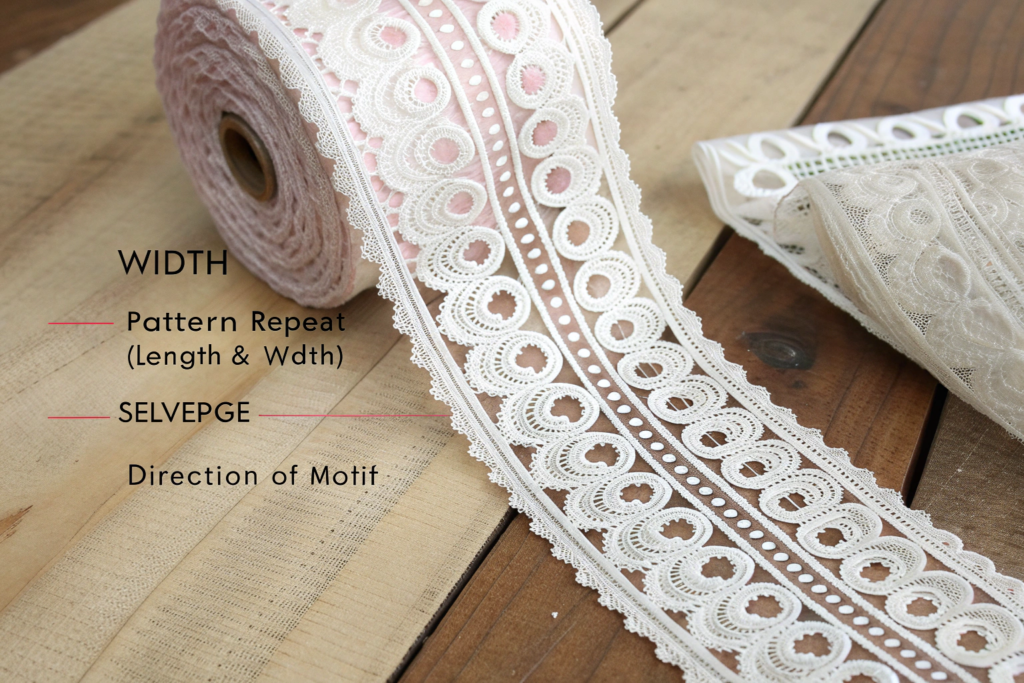
The primary variables are: 1) Fabric Width, 2) Pattern Repeat Size, 3) Garment Pattern Placement, and 4) Fabric Defect Allowance. Fabric width is straightforward, but for lace, the usable width is often less than the total width due to unfinished or fragile selvedges that must be trimmed. The pattern repeat size—the vertical and horizontal distance before the motif repeats—is the most critical factor. A larger repeat means you need more fabric length to align patterns across multiple garment pieces. Garment pattern placement refers to whether your cutting markers require specific motifs to be placed on certain parts of the garment (e.g., a central flower on the bodice). This "key motif alignment" can drastically increase waste. Finally, a standard defect allowance must be added; patterned lace, especially intricate ones, may have small flaws that need to be cut around.
How Do You Measure Pattern Repeat and Directionality Accurately?
This is a hands-on process. Don't rely on the supplier's spec sheet alone; always verify with a physical sample.
- Measuring Repeat Size: Lay the lace flat. Identify a distinctive point in the pattern (e.g., the tip of a specific leaf). Mark this point with a pin. Move vertically along the length (warp direction) until you find the exact same point in the next cycle of the pattern. Measure this distance—this is the lengthwise pattern repeat. Do the same horizontally across the width (weft direction) to find the widthwise repeat. For our clients, we often provide a Technical Data Sheet with these measurements confirmed by our QC team, which includes the repeat for both the base net and the embroidered motif if they differ.
- Assessing Directionality: Determine if the pattern is non-directional (looks the same from any rotation, like polka dots), one-way directional (has a clear top/bottom, like a vertical vine), or two-way directional (has a specific alignment both vertically and horizontally). A one-way directional lace requires all pattern pieces to be cut in the same orientation on the fabric, increasing waste compared to a non-directional lace. A great resource for understanding these textile fundamentals is the The Creative Curator's guide to fabric grain and direction, which breaks down the impact on cutting.
Why is Marker Making Crucial for Lace Yield?
The marker (the digital or physical layout of all garment pieces on the fabric) is where theory meets reality. You can have perfect measurements, but a poor marker will destroy your yield.
For patterned lace, marker making becomes an art of pattern matching. The goal is to place the pattern pieces so that the motifs align seamlessly at garment seams (like the side seam of a dress). This often requires "walking" the pattern pieces along the length of the fabric within the marker software to find the optimal alignment, which consumes extra length. Software like Gerber AccuMark or Lectra has advanced pattern matching functions, but they still require inputting the exact repeat measurements you obtained. The general rule is: the larger the repeat and the more seams that require matching, the lower your fabric utilization efficiency. For a lace with a 50cm repeat requiring center front and back matching, your utilization might drop to 70-75%, whereas with a small 5cm repeat, you could achieve 85-90%.
What is the Step-by-Step Formula to Calculate Yield?
Let's move from concepts to calculation. Here is a practical, step-by-step formula we use with our clients at Shanghai Fumao to project yield. We'll walk through a real-world scenario.
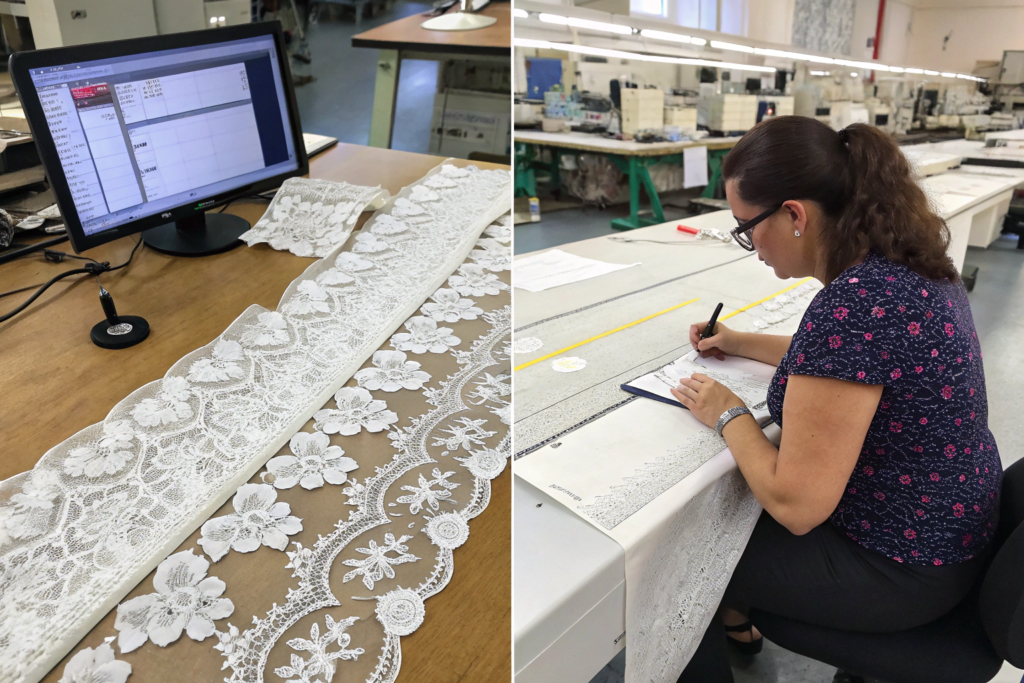
Scenario: You are producing a lace evening gown. The lace has a usable width of 150cm (after trimming selvedges) and a lengthwise pattern repeat of 30cm. Your marker, after accounting for pattern matching at key seams, requires a fabric length of 200cm to cut one gown. You plan to order 1000 meters of lace.
Step 1: Calculate Gross Fabric Required Per Garment.
This is simply the length from your marker. From our scenario: 200 cm per gown.
Step 2: Account for Repeat Loss.
This is the hidden waste. When you cut the first gown, the pattern starts at a random point on the lace. To begin cutting the next gown with the pattern aligned correctly, you may need to "advance" the fabric to the start of the next full repeat. This lost length is between 0 and 1 full repeat.
- Average Repeat Loss = (Pattern Repeat Length) / 2
- In our case: 30 cm / 2 = 15 cm of average waste between garments.
Step 3: Calculate Net Fabric Consumption Per Garment.
- Net Consumption = Gross Fabric per Garment + Average Repeat Loss
- Calculation: 200 cm + 15 cm = 215 cm per garment.
Step 4: Calculate Total Fabric Needed & Yield.
- Total Fabric Needed = Net Consumption per Garment × Number of Garments
- For 100 gowns: 215 cm/gown × 100 gowns = 21,500 cm or 215 meters.
- Fabric Yield (Garments per Meter) = 100 garments / 215 meters = ~0.465 garments per meter.
- Conversely, from your 1000-meter order: Yield = 1000 meters × 0.465 garments/meter = 465 garments.
This reveals the gap: without calculating repeat loss, you'd think 1000 meters yields 500 gowns (200cm each). Factoring in the pattern, you get 465 gowns—a 7% reduction in yield directly impacting your cost per unit.
How Can You Create a Practical Yield Estimation Table?
A quick-reference table can help during initial sourcing and costing. Below is a simplified model based on common repeat sizes. (Note: Assumes a base garment consumption of 2.0m of 150cm wide fabric with moderate pattern matching requirements).
| Pattern Repeat Length | Estimated Avg. Repeat Loss | Adjusted Consumption per Garment | Yield Reduction vs. Plain Fabric |
|---|---|---|---|
| Small (5-10 cm) | 2.5 - 5 cm | ~2.03 - 2.05 m | 1.5% - 2.5% |
| Medium (20-30 cm) | 10 - 15 cm | ~2.10 - 2.15 m | 5% - 7.5% |
| Large (40-60 cm) | 20 - 30 cm | ~2.20 - 2.30 m | 10% - 15% |
| Very Large (80cm+) | 40 cm+ | ~2.40 m+ | 20%+ |
Disclaimer: This table is a starting point. Always run a test marker with your specific pattern pieces for an accurate figure. The Kornit Digital blog on optimizing fabric utilization often shares advanced insights on digital patterning that can be applied to manage waste.
What Are Common Mistakes in Lace Yield Calculation?
Based on 20 years of troubleshooting with clients, here are the top pitfalls:
- Ignoring Widthwise Repeats: If your lace has a bold widthwise stripe or panel, and your garment is wider than a single repeat panel, you'll need to seam fabric widths together, doubling your consumption. Always check widthwise repeats.
- Forgetting Defect Allowance: Patterned lace, especially embroidered or burnt-out styles, can have minor flaws. Industry standard is to add 2-5% to your total order length to allow for cutting around defects. Our QC team's pre-shipment inspection helps minimize this, but it's a necessary buffer.
- Miscommunication with the Factory: You must provide the lace pattern repeat specs to your cutting factory explicitly. A common disaster is the factory treating it like plain fabric, ruining pattern alignment for hundreds of pieces. In 2021, a client in Los Angeles faced this exact issue; we helped mediate by providing bilingual technical sheets directly to their cutter, saving a 5,000-unit order.
How to Minimize Waste and Maximize Yield?
Calculating yield is one thing; improving it is where true cost savings happen. Proactive strategies in fabric selection, design, and communication can dramatically boost your utilization rate, turning potential waste into profit.
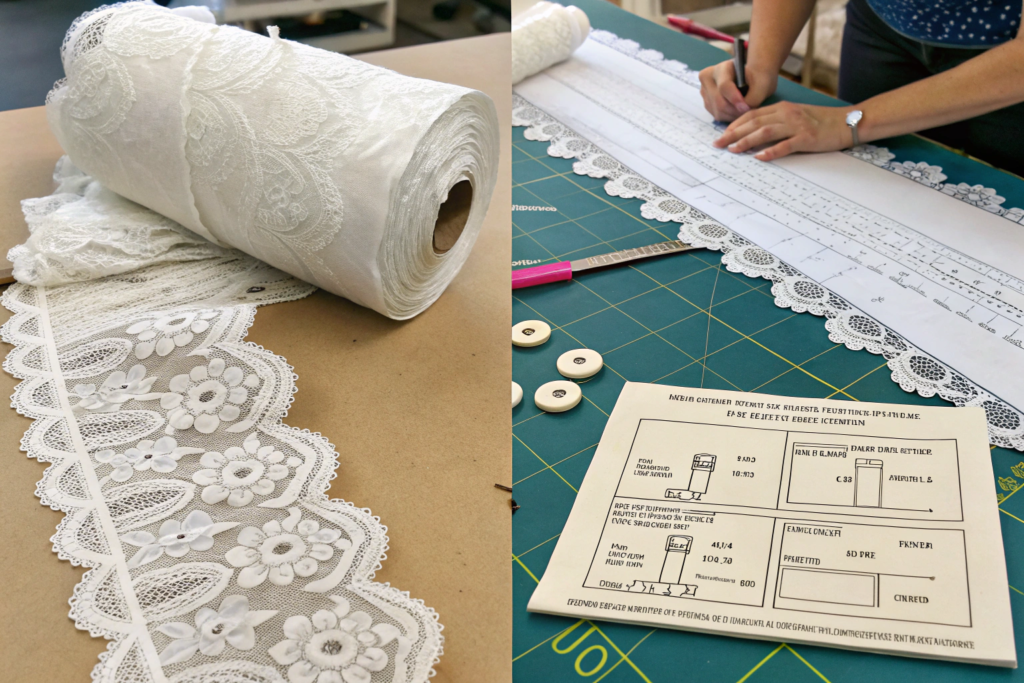
The most effective lever is designing with the fabric in mind. This means collaborating with your fabric supplier during the design phase. At Shanghai Fumao, when a client brings us a sketch, our R&D team can suggest adjustments—like modifying a seam line slightly to better fit a common repeat multiple or recommending a similar lace from our stock with a smaller, more yield-friendly repeat. This co-development approach can improve yield by 5-10% before a single meter is cut.
What Fabric Choices Lead to Better Yield?
Your initial sourcing decision sets the ceiling for yield potential.
- Choose Smaller, All-Over Repeats: This is the single biggest factor. A lace with a 5cm all-over, non-directional pattern will always yield better than one with a 50cm directional bouquet.
- Consider Pattern Scale vs. Garment Size: A large motif on a small garment (like a bra) creates massive waste as you try to position the motif. Scale the pattern to the product.
- Opt for Continuous/Non-Stop Patterns: Some laces, like raschel knits, can be engineered with a continuous pattern that has no distinct vertical repeat, vastly simplifying cutting.
- Verify Usable Width: Always ask for the trimmed, usable width. A lace sold as "150cm" might only have 145cm of pristine, stable pattern area. We always state the usable width in our quotes to prevent this issue.
How Can Smart Cutting and Order Planning Help?
Technology and strategy are your allies here.
- Invest in a Digital Test Marker: Before placing the bulk order, pay your factory or use a service to create a digital marker with your actual pattern pieces and the exact lace repeat specs. This gives you a true, data-backed consumption figure for negotiation and costing. It's an upfront cost that prevents massive downstream waste.
- Consolidate Orders and Use Lay Planning: If you have multiple styles using the same lace, combine them into a single cutting lay. The varied shapes can nest together more efficiently, utilizing the "gaps" left by one style's pattern pieces.
- Utilize Remnants Strategically: Plan for smaller items (e.g., sleeves, gussets, accessories) that can be cut from the remnants of larger pieces. This "value engineering" of your product line turns waste into revenue.
For example, a swimwear brand from Australia we work with uses our stretch lace for both main suits and coordinating cover-ups. By providing them with a nested marker that includes pieces for both, we helped them increase their overall yield from 82% to nearly 90%, effectively reducing their fabric cost by almost 10%. Resources like the Sustainable Fashion Forum often discuss strategies for zero-waste cutting, which, while idealistic, provide excellent practical inspiration for maximizing yield.
What Should You Discuss with Your Lace Supplier?
Your supplier should be a partner in yield optimization, not just an order taker. The right conversations upfront can unlock solutions and prevent assumptions that lead to shortages.
Initiate a technical dialogue. Don't just ask for price and MOQ. Provide your garment pattern sketches (or at least dimensions) and ask: "Based on this lace's repeat, what is the estimated fabric consumption per piece?" A reputable, experienced supplier like Shanghai Fumao will have the expertise to give you a realistic ballpark or even run a preliminary marker simulation. This shows you're a professional buyer and sets the stage for accurate planning.

What Key Information Must You Get from the Supplier?
To plug into your yield calculations, you need these data points:
- Exact Pattern Repeat Dimensions (Length & Width): Get this in writing, verified from a bulk production sample, not just a development swatch.
- Usable Fabric Width: Confirm the width after any necessary trimming.
- Directionality: Is the pattern one-way, two-way, or non-directional?
- Potential Defect Rate: Ask for their standard AQL (Acceptable Quality Level) for the lace type. This informs your defect allowance.
- Minimum Cutting Length: Some mills have MOQs per color/design, but also check if there's a minimum cutting length per order that affects how efficiently you can use partial rolls.
How Can a Supplier's Services Directly Improve Your Yield?
Leverage your supplier's value-added services:
- Pre-production Sampling with Actual Fabric: Order a few meters of the exact bulk lace to make a production prototype. Cut and sew one complete garment. This reveals real-world matching issues and consumption before you commit thousands of meters.
- Technical Collaboration: Can the supplier's team suggest a slight alteration to the repeat to better suit your needs? For a major client in 2023, we adjusted the pitch of a geometric lace pattern by 2cm at our weaving stage to align perfectly with their dress panels, saving them an estimated 8% in fabric.
- Integrated QC and Roll Tracking: Suppliers who offer detailed roll reports (length per roll, defect tagging) enable your factory to plan cuts more efficiently, grouping shorter rolls for smaller lays and using pristine rolls for large, critical pieces.
Conclusion
Calculating fabric yield for patterned lace is a non-negotiable skill for profitable fashion production. It transforms an often-overlooked technical detail into a powerful lever for cost control and supply chain reliability. Remember, the formula goes beyond simple arithmetic—it's a blend of accurate measurement (repeat, width), intelligent design (pattern scale, directionality), and strategic planning (marker making, remnant use).
The goal is to move from uncertainty to precision. By understanding the key variables, applying the step-by-step calculation, and implementing waste-minimization strategies, you turn patterned lace from a sourcing risk into a competitive advantage. It ensures that the beauty of the lace translates seamlessly into the beauty of your balance sheet.
Mastering this process requires a partner who understands it as deeply as you do. At Shanghai Fumao, we don't just sell lace; we provide the technical data, collaborative design input, and pre-production support you need to calculate yield with confidence and maximize every meter. From our CNAS-certified lab measurements to our experienced production planners, we are here to ensure your lace procurement is efficient, predictable, and successful. Ready to optimize your next lace order with precision? Let's connect. For a technical consultation on your specific project and to request lace samples with detailed specification sheets, please reach out to our Business Director, Elaine. She can connect you with our technical team. Contact her at: elaine@fumaoclothing.com.