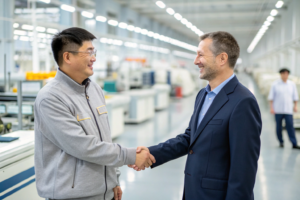
I've been on the other side of this table for over 20 years.
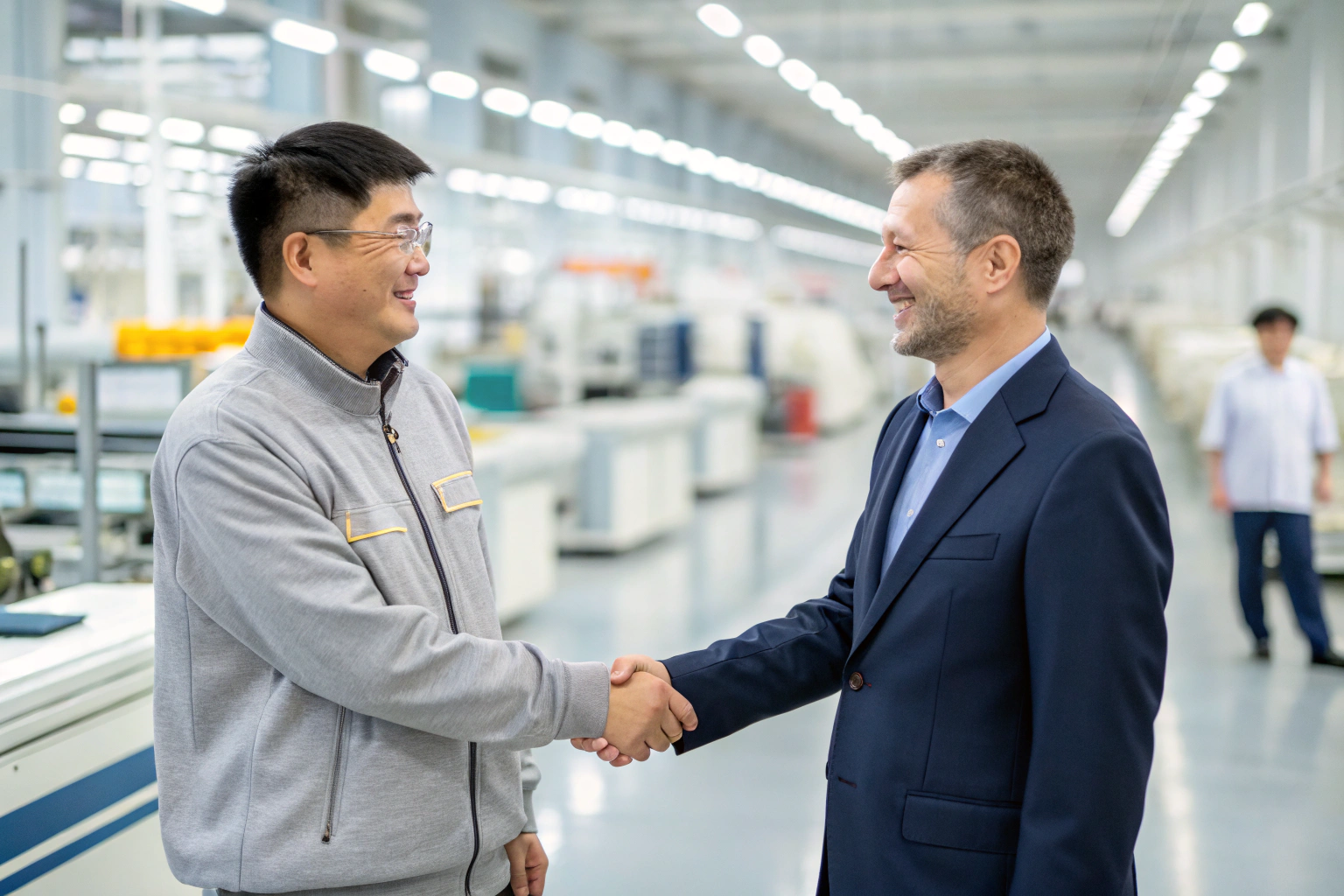
I've sat across from buyers from New York, London, Berlin, and Sydney. I've watched them walk into our factory gates for the first time—nervous, skeptical, wondering if they're about to make the biggest mistake of their careers.
And honestly? I don't blame them.
I've heard the horror stories. The supplier who took a 50% deposit and disappeared. The factory that shipped fabric that failed every test. The agent who promised one thing and delivered something completely different.
Building trust with a factory in China isn't just about finding a supplier. It's about building a partnership that can survive production delays, quality issues, and the inevitable problems that come with manufacturing on the other side of the world.
Let me share what I've learned from both sides of this relationship. I'll tell you what works, what doesn't, and how you can build the kind of trust that turns a one-time order into a decade-long partnership.
How Can I Verify a Factory's Credentials Before Visiting?
I'm going to tell you something that might surprise you.
A factory's website can be beautiful. Their Alibaba page can have five stars. But until you verify their credentials, you don't know who you're really dealing with.
What Documents Should I Request Before Sending a Deposit?
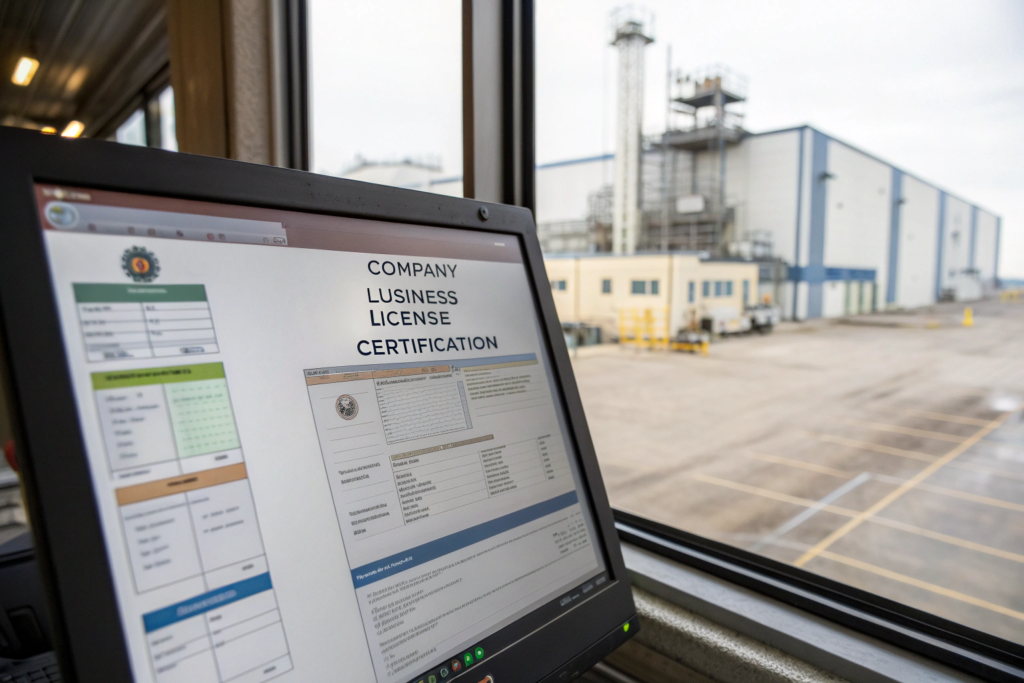
Let me give you a checklist. And I want you to understand that any legitimate factory will provide these documents without hesitation.
1. Business License
This is the most basic document. In China, every registered company has a business license issued by the Administration for Market Regulation. It shows the company's legal name, registered address, legal representative, registered capital, and business scope.
Here's the key thing to check. Does the business scope include textile manufacturing or trading? Some companies are registered as trading companies but present themselves as factories. There's nothing wrong with trading companies—many are excellent—but you need to know what you're actually getting.
2. Customs Registration Certificate
If a factory exports directly, they must have a customs registration number. This is issued by the General Administration of Customs. Without this, they can't export under their own name. They'd have to go through a trading company, which adds another layer of complexity.
3. Third-Party Audits
This is where you separate the real factories from the middlemen.
A factory that works with major international brands will have third-party audits. Look for reports from:
- BSCI (Business Social Compliance Initiative) — this is the most common social compliance audit in Europe
- SMETA (Sedex Members Ethical Trade Audit) — widely accepted in the UK and Europe
- WRAP (Worldwide Responsible Accredited Production) — more common for US brands
- ISO 9001 — quality management certification
In 2023, a Canadian sportswear brand approached us. They'd been burned by two previous suppliers. The first factory took their deposit and never delivered. The second sent fabric that failed their chemical testing.
Before they even visited, they asked for our BSCI report, our ISO 9001 certificate, and our customs registration. We sent everything within 24 hours. They checked the BSCI database online and verified that our certificate was valid and current.
That verification took them about 15 minutes. And it gave them more confidence than any sales pitch could have.
How Do I Use China's Business Credit Systems?
This is a tool that most international buyers don't know about.
China has a national credit system. Companies are rated based on their compliance with tax laws, labor regulations, and environmental standards.
You can look up a company's credit rating through the National Enterprise Credit Information Publicity System. It's a government website. It's in Chinese, but you can use a browser translation tool.
What you're looking for:
- Operational status — is the company active or "cancelled"?
- Administrative penalties — has the company been fined for labor violations, environmental issues, or tax problems?
- Annual reports — are they filing reports on time?
A US-based children's wear buyer taught me this trick in 2022. She was considering a factory in Guangdong. She checked their credit record and found three administrative penalties for environmental violations in the previous two years. She walked away.
Six months later, that factory was shut down for three months for environmental non-compliance. Her competitor had placed an order there and lost their entire summer collection.
What Should I Look for During a Factory Visit?
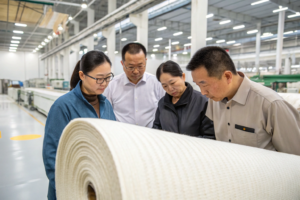
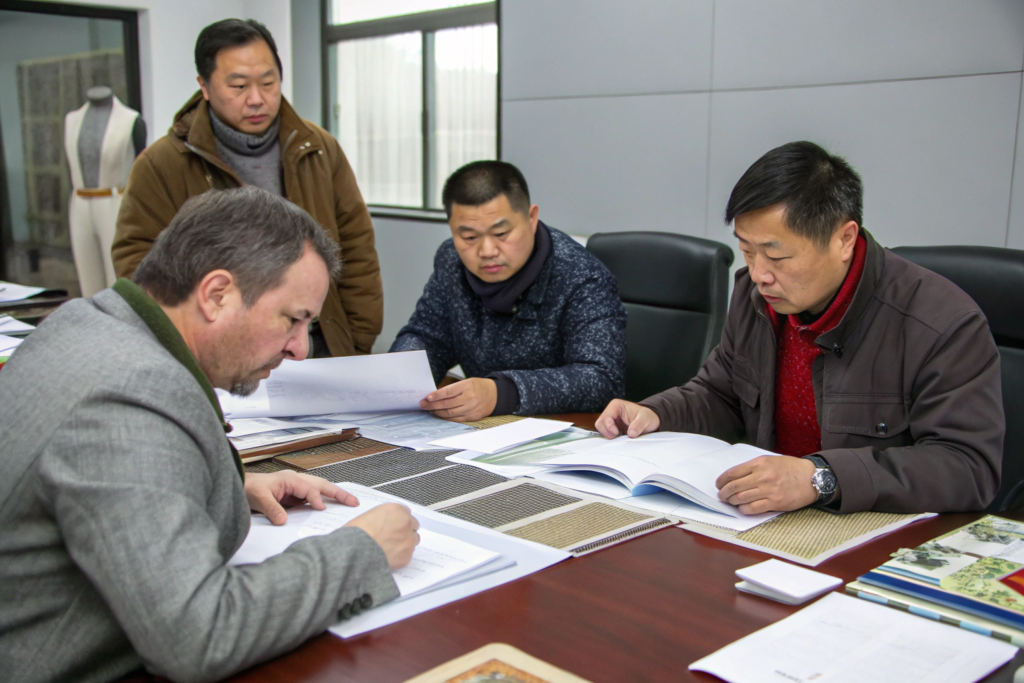
I've hosted hundreds of factory visits. The best buyers don't just walk through with a checklist. They look, they ask, and they pay attention to the things that aren't in the brochure.
What Do the Production Floors Actually Tell Me?
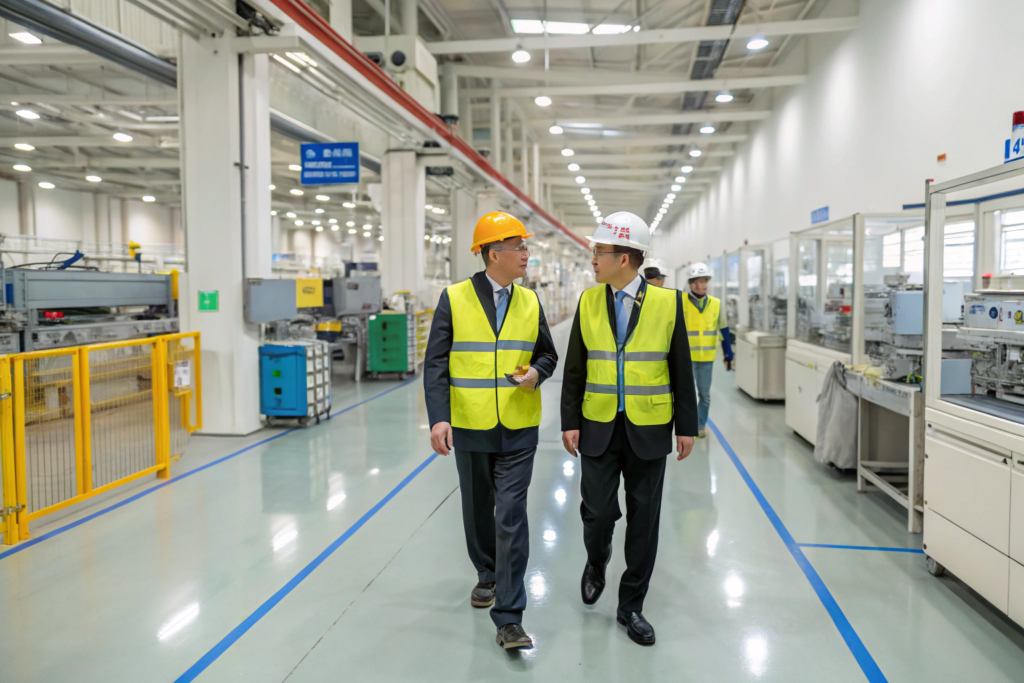
Let me tell you what I look for when I visit other factories. And I do visit other factories—I want to see what our competitors are doing, what new equipment is available, what technologies are emerging.
1. Organization and Cleanliness
This sounds basic, but it tells you everything.
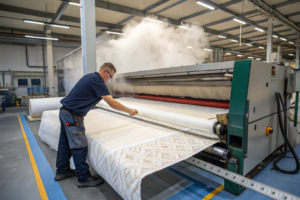
A factory that keeps its production floor clean and organized is a factory that has systems in place. Tools are where they should be. Raw materials are labeled and stacked properly. Waste is contained, not scattered.
If the floor is a mess—fabric scraps everywhere, unlabeled rolls, workers stepping over things—it's a sign that nobody is in charge of basic systems. And if they can't manage basic organization, how will they manage your complex order?
2. Machinery Condition
I'm not saying a factory needs brand-new machines. Some of the best fabric in the world comes from well-maintained older machines.
But look at the machines. Are they clean? Are they oiled? Are there maintenance logs posted nearby?
In 2023, a German automotive textile buyer came to visit us. He walked straight to our weaving machines and started checking the maintenance tags. He told me, "I don't care how old your machines are. I care that you take care of them."
He was right. A well-maintained machine produces consistent quality. A machine that's neglected produces rejects.
3. Worker Conditions
This is where a lot of factory visits miss the mark.
A good factory visit isn't a parade where the management shows you what they want you to see. You need to talk to workers. Ask them how long they've been there. Ask them about training. Ask them about overtime.
High turnover is a red flag. If workers are constantly leaving, there's a reason. And that reason usually affects quality.
I remember a buyer from Sweden who came to visit us in 2022. She didn't want the big tour. She asked to see the canteen. She looked at the food. She asked workers if they got hot meals. She checked the dormitories.
That told her more about how we treat our people than any audit report could. And how you treat your people is how you treat your customers.
What Questions Should I Ask About Quality Control?
This is the most important part of any factory visit.
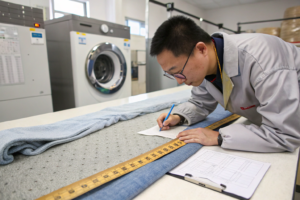
Ask to see their QC process.
Not the brochure. Not the presentation. The actual process.
At our facility, we have a dedicated QC team that inspects every roll of fabric before it's packed. Every roll gets a QR code that links to the test report for that batch. We can show you exactly how it works.
A good factory will have:
- Incoming material inspection — do they test raw materials before production?
- In-process inspection — do they check quality at each stage, or only at the end?
- Final inspection — what percentage of finished goods are inspected? AQL (Acceptable Quality Limit) standards?
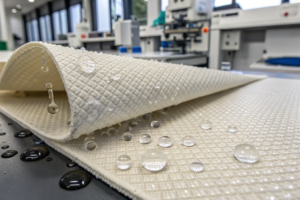
In 2024, a US-based footwear brand came to evaluate us for a new project. They didn't just want to see our lab. They asked to see our rejected rolls. They wanted to see what we considered "not good enough."
I took them to our rejected fabric storage area. They saw rolls with slight color variations, minor weaving defects, small stains. And they saw our QC team's notes on why each roll was rejected.
That was the moment they decided to work with us. They told me, "Anyone can show us their good fabric. Showing us what you reject proves you have standards."
How Do I Establish Clear Communication Channels from Day One?
Communication is where most supplier relationships break down.
It's not about language. It's about expectations, processes, and the simple fact that you're 12 time zones away and your questions come in at 3am our time.
Who Should Be My Main Contact at the Factory?
Let me give you a piece of advice that comes from experience.
Don't just talk to the salesperson.
A good salesperson is valuable. They're your entry point. They manage your expectations and your timeline. But they're not the ones running the machines, checking the quality, or making the decisions about your order.
You need to know who your real contacts are.
The Production Planner
This person schedules your order. They know when your yarn arrives, when your weaving slot is, when your dyeing is scheduled. They're the one who can tell you honestly whether your timeline is realistic.
The QC Manager
This person decides what passes and what fails. If you have quality concerns, this is the person you need to talk to. And you need to establish a relationship with them so they understand your standards, not just the factory's standard.
The Factory Owner or General Manager
You don't need to talk to the owner every day. But you need to know that they know who you are and that your order matters to them.
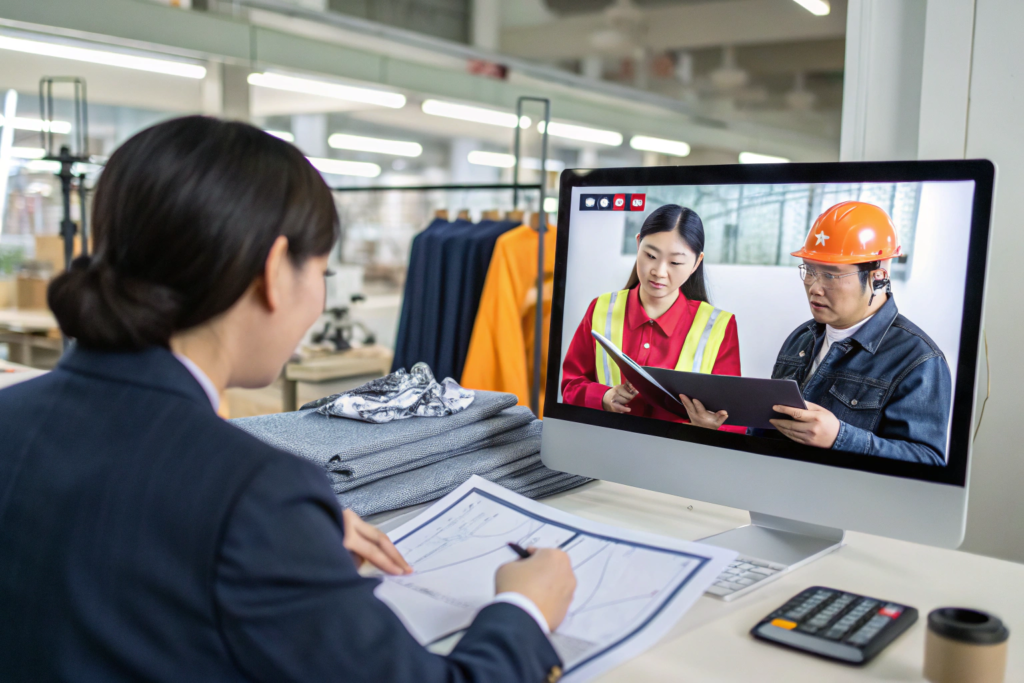
In 2023, we had a client from Australia who insisted on having a weekly video call with our production planner. Not the salesperson—the production planner.
At first, our sales team thought this was unusual. But it worked. The client understood exactly where their order was at every stage. When there was a delay in yarn arrival, they knew about it immediately. They could make decisions about air freight or production adjustments in real time.
That order shipped on time. And the client has been with us for three years.
How Do I Handle Sample Approvals and Technical Specifications?
This is where I see the most mistakes.
A sample is not just a sample. It's a contract. Once you approve a sample, the factory assumes you've agreed to everything about that sample—the color, the handfeel, the weight, the shrinkage.
Let me give you a specific process that works.
Step 1: Written Specifications
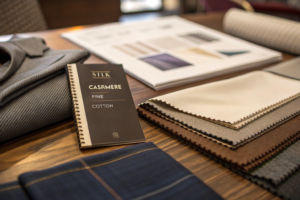
Before we knit a single meter, we agree on written specifications. Fiber content. Yarn count. Construction. Weight. Width. Color standard. Shrinkage target. Every measurable parameter.
Step 2: Lab Dips
For colors, we start with lab dips. We'll dye small swatches and send them for approval. We usually send three shades—lighter, target, darker—so you can choose exactly what you want.
Step 3: Handloom or Strike-Off
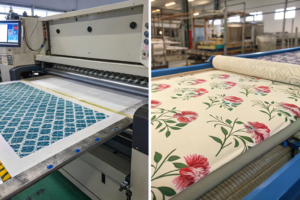
For woven fabrics, we'll weave a small sample on a handloom or sample loom. This shows you the construction, the pattern, the texture. It's not the same as production fabric—the tension is different—but it confirms the design.
Step 4: Bulk Sample
Once we have approved lab dips and construction, we'll run a small quantity on production machines. This is your real sample. This is what the bulk order will look like.
Step 5: Bulk Approval
We'll send you a piece from the first meters of production. You approve it, and we continue. If there's an issue, we stop and fix it before we've made 10,000 meters.
A UK-based brand used this exact process with us in 2024. Their first bulk sample had a slight variation in the twill line angle. It was subtle—most people wouldn't notice. But their technical designer caught it.
We stopped production. We adjusted the loom settings. We ran another sample. The second sample was perfect.
If they hadn't caught that early, they would have had 15,000 meters of fabric with a visible flaw. Instead, they had a 5-day delay and a perfect order.
What Payment Terms Build Trust Without Exposing Me to Too Much Risk?
Let's talk about money.
Because at the end of the day, trust is about money. You're sending thousands or hundreds of thousands of dollars to a company on the other side of the world. You need to know that money is safe.
What's the Standard Payment Structure for New Relationships?
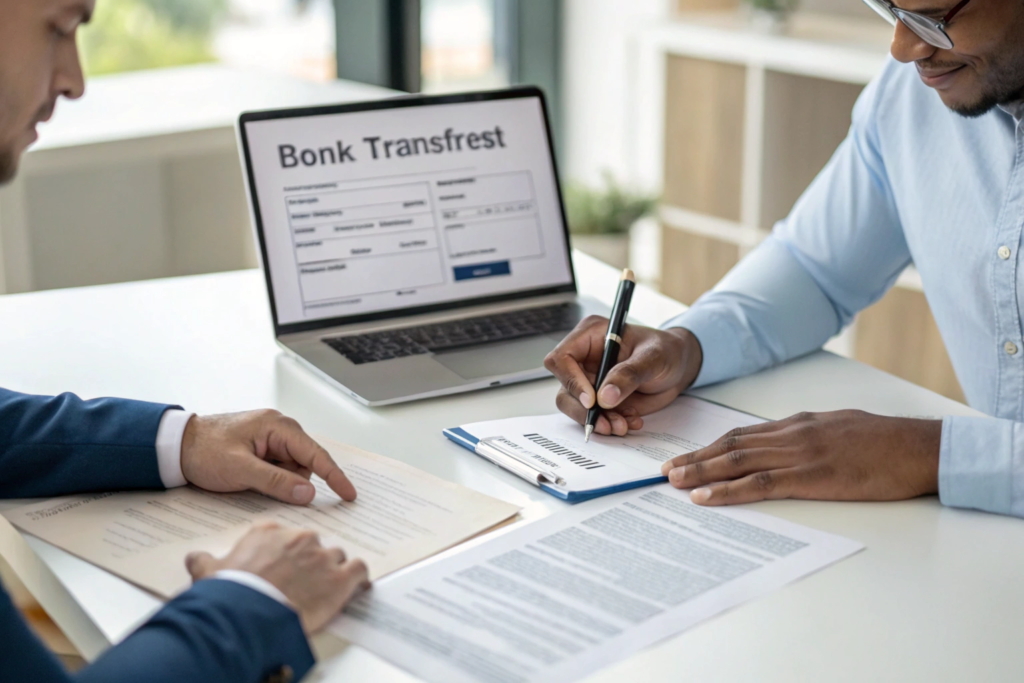
I'm going to be completely transparent about how we structure payments and what's reasonable for a new relationship.
For a new client with no history, the standard is:
- 30% deposit to start production
- 70% balance before shipment or against copy of Bill of Lading
Is there risk in this? Yes. The deposit is at risk if the factory doesn't deliver.
But here's the thing. A 30% deposit is standard across the industry. A factory that asks for 50% or 100% upfront is a red flag. And a buyer who insists on 100% after shipment for a new relationship is also unrealistic—the factory has no guarantee you'll pay.
What we offer new clients is this:
- 30% deposit
- 50% against inspection approval — you or a third-party inspector confirms the goods are ready and meet specifications
- 20% before shipment
This structure protects both sides. You have confirmation that the goods are ready before you pay the majority. We have confirmation that you're committed before we ship.
In 2022, a startup from Los Angeles came to us with no manufacturing history. They were nervous about sending a deposit to a factory they'd never worked with.
We did a small first order. 500 meters. 30% deposit. Balance after they inspected the goods at our facility. They flew someone to Keqiao, inspected the fabric themselves, and paid the balance on the spot.
That first order built the trust. Now they send us 50,000 meters a year. And they pay 30% deposit, balance against Bill of Lading. No inspection required.
How Do Letters of Credit Work for China Sourcing?
An LC, or Letter of Credit, is a common way to reduce risk for both parties.
With an LC, the buyer's bank guarantees payment to the factory once certain documents are presented—usually the Bill of Lading, packing list, and inspection certificate. The factory knows they'll get paid if they ship the goods. The buyer knows they won't pay until the goods are shipped.
The challenge with LCs is that they're expensive. Bank fees, confirmation fees, amendment fees. And they require perfect documentation. One error on a document can delay payment for weeks.
For a first order, an LC can be a good way to build trust. It's like training wheels. Once you've done a few orders smoothly, you can switch to wire transfers, which are faster and cheaper.
We have a client from France who insisted on LCs for their first three orders. Every document had to be perfect. It was a pain—I'm not going to lie. But by the third order, we had our processes dialed in. They trusted us. We trusted them. Now they pay by wire transfer, and we've never had a single issue.
How Do I Handle Problems When They Inevitably Arise?
Here's the truth.
Problems will happen.
A machine will break. A shipment will be delayed. A color won't match. A fabric will test differently than expected.
The question isn't whether problems will happen. The question is how you and your factory handle them.
What's the Right Way to Raise a Quality Issue?
I've seen this happen a hundred times.
A client receives fabric. They find a problem. They send a furious email. They demand a refund. They threaten to cancel all future orders.
And the factory? The factory gets defensive. They point to the approved sample. They say the problem isn't their fault. The relationship fractures, and everyone loses.
Let me tell you a different approach.
In 2024, a client from New York received a shipment of fabric that had a color variation between rolls. It wasn't huge—maybe a 0.5 Delta E difference—but it was visible when the rolls were laid side by side.
Instead of sending an angry email, they called our QC manager directly. They sent photos. They sent measurements. They said, "Here's the problem. How do we fix it?"
We reviewed their photos. We checked our records. We found that the variation was from a batch where one of the dye jets had been running slightly off. It had passed our inspection because the variation was within the standard tolerance, but for their application—large panels where rolls would be used together—it was a problem.
We offered to replace the affected rolls. We expedited the replacement by air at our cost. The client's production was delayed by one week, but they were able to meet their retail deadlines.
That client is now one of our biggest customers. They didn't get a perfect order. They got a factory that took responsibility and fixed the problem. And that's what they valued.
How Do I Balance Being Firm with Being Fair?
This is a skill that takes time to develop.
You need to be firm about your standards. You approved a sample. The bulk should match. If it doesn't, that's a problem.
But you also need to be fair. Mistakes happen. And a factory that knows you'll work with them to solve problems will go much further for you than a factory that's afraid of your next angry email.
Here's how I suggest you think about it.
When a problem arises, ask yourself:
- Is this a one-off issue or a systemic problem?
- Can this be fixed for this order, or does it need a process change for future orders?
- What's the cost of fixing it versus the cost of living with it?
A Swedish home textile client taught me this. In 2023, they had an issue with a jacquard fabric where the pattern alignment was slightly off on a small percentage of the order.
They could have rejected the whole order. Instead, they worked with us to identify which rolls were affected. They accepted the good rolls for their main collection. They used the slightly off rolls for a secondary product where the pattern alignment wasn't critical.
We discounted the off-spec rolls. They got usable fabric at a lower price. We didn't have to scrap 10,000 meters. And the relationship got stronger, not weaker.
Conclusion
Building trust with a factory in China isn't complicated. But it does take work.
It takes verification before you send a deposit. It takes a factory visit where you look beyond the showroom. It takes clear communication and documented specifications. It takes payment structures that protect both sides. And it takes a commitment to solving problems together when things go wrong.
I've been on this side of the table for over 20 years. I've worked with hundreds of clients. And I can tell you that the ones who succeed are the ones who treat the relationship like a partnership, not a transaction.
They don't just ask for a price. They ask about our process.
They don't just demand faster delivery. They ask how they can help us plan better.
They don't just complain when something goes wrong. They ask how we can fix it together.
That's the kind of client I want to work with. That's the kind of partner we want to be.
At Shanghai Fumao, we've built our business on these kinds of relationships. Over 20 years, 40+ dedicated professionals, a CNAS-accredited lab, and a commitment to transparency that starts with our QR code tracking system and ends with our willingness to show you everything—our good rolls and our rejected ones.
If you're looking for a fabric partner in China, I invite you to reach out. Come visit our facility in Keqiao. Walk our production floors. Talk to our QC team. See for yourself how we work.
And if you can't visit in person? Let's start with a video call. Let's talk about your needs. Let's test some samples. Let's build the kind of trust that turns a first order into a decade-long partnership.
Ready to start a trusted partnership? Contact our Business Director, Elaine, directly at elaine@fumaoclothing.com. She'll guide you through our verification process, arrange a factory tour, and help you get started with confidence.