I've been in this industry for over two decades. I've seen sourcing relationships that lasted a single order and partnerships that spanned twenty years. The difference between the two isn't luck. It's intentionality.
Here's what I've learned from working with hundreds of clients across the US, Europe, and beyond. A long-term partnership with your garment factory is built on mutual investment, transparent communication, shared planning, and treating the relationship as a collaboration rather than a transaction. When you get this right, your factory becomes your competitive advantage. They prioritize your orders during peak seasons. They share market intelligence. They solve problems before you even know they exist.
At Shanghai Fumao, we don't just supply fabric. We partner with garment factories across China and Southeast Asia who work with major global brands. I've watched the partnerships that succeed and the ones that fail. This guide comes from that experience. I'll walk you through exactly how to build relationships with your factories that last.
How Do You Start the Relationship on the Right Foot?
The first order sets the tone for everything that follows. How you handle the initial engagement tells the factory how you'll operate for years to come.
What Should You Communicate Before the First Order?
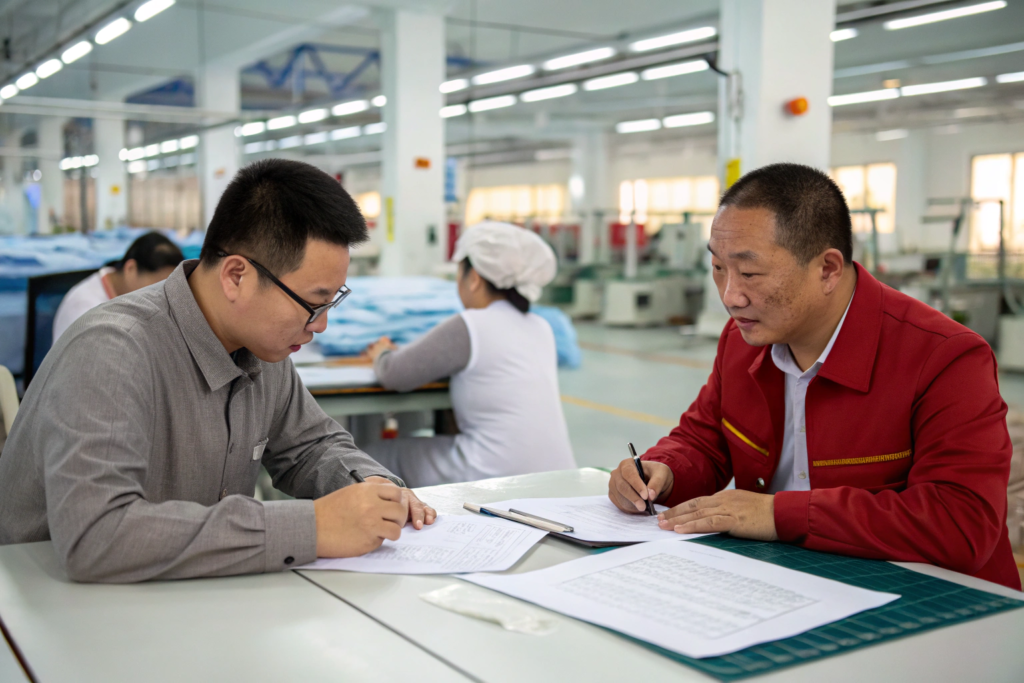
Clarity upfront prevents confusion later. Before you place that first order, share everything the factory needs to understand your business.
Tell them your quality standards. Don't just say "high quality." Show them. Share your AQL standards. Send them samples of the quality you expect. Show them examples of what you consider a defect. A factory can't meet your standards if they don't know what your standards are.
Tell them your communication preferences. How quickly do you expect responses? What's the best time of day to reach you? Who is the primary contact? Do you want daily updates or weekly summaries? A factory that knows your communication style will meet you where you are.
Tell them your payment terms and credit needs. If you need net 30 or net 60, say so upfront. A factory that knows your payment terms can plan their cash flow accordingly. Surprising them with extended terms after the order is placed is a sure way to damage trust.
A US client placed their first order with us in 2022. Before we even quoted a price, they sent us a 20-page document. It covered their quality standards, their testing protocols, their packaging requirements, their communication expectations, and their payment terms. It was a lot to read. But we appreciated it. We knew exactly what they needed. We quoted accordingly. We've done over 20 orders with them since, and we've never had a single quality dispute. That document set the expectation from day one.
How Do You Handle the First Sample Round?
The first sample round is your chance to prove you're serious. A factory will judge you by how you handle samples. If you're disorganized, slow to approve, or constantly changing your mind, they'll assume your production orders will be the same.
Send your tech pack before you ask for the sample. A complete tech pack includes fabric specifications, measurements, construction details, trim information, and packaging requirements. The more detail you provide, the closer the sample will be to what you want.
When you receive the sample, respond quickly. Don't let samples sit on your desk for two weeks. A factory that sees you respond within 48 hours knows you're on top of your business. They'll prioritize your future orders accordingly.
Be specific in your feedback. Don't say "the fit is off." Say "the chest is 1 inch too wide, and the sleeve length needs 0.5 inches added." Clear feedback leads to faster corrections and fewer sample rounds.
I had a European client who went through five sample rounds on their first style. Each time, their feedback was vague. "Something's not quite right." We kept guessing. After the fifth round, we had a conversation about what they really wanted. It turned out they had changed their design direction three times during the sampling process but never told us. If they had been clear upfront, we could have done it in two rounds. That first order took three months longer than it should have. The relationship started on a frustrating note, and it took a year to rebuild that trust.
Why Does the First Production Order Set the Pattern?
The first production order is your trial run. The factory is learning how you operate. You're learning how they operate. How you handle this order will influence how they treat your future orders.
Pay on time. This is the most important thing you can do. A factory that gets paid on time for the first order will trust you for the next. A factory that has to chase payment will remember that.
Be reasonable about minor issues. No production run is perfect. If there's a minor defect that doesn't affect the garment's wearability, accept it. If you reject an order over a tiny issue, the factory will build that into future quotes to protect themselves. That means higher prices for you.
Share feedback after delivery. What went well? What could be improved? A factory that gets constructive feedback will improve. A factory that gets silence assumes everything was fine.
A Canadian client placed their first order with us for 3,000 meters of organic cotton twill. The shipment arrived with a slight shade variation between two rolls. It was within industry standards, but noticeable under certain lighting. They called us to discuss it. We worked out a solution—a discount on the affected rolls and a quality check procedure to prevent it in future orders. They paid on time, accepted the resolution, and moved on. That first order set the tone. We've been working with them for four years now. They're one of our best clients.
What Systems Keep the Partnership Strong Over Time?
Good intentions aren't enough. You need systems. Systems create consistency. Consistency builds trust.
How Do You Establish Clear Communication Channels?
Communication is where most partnerships break down. It's not that people don't want to communicate. It's that they don't have a system for it.
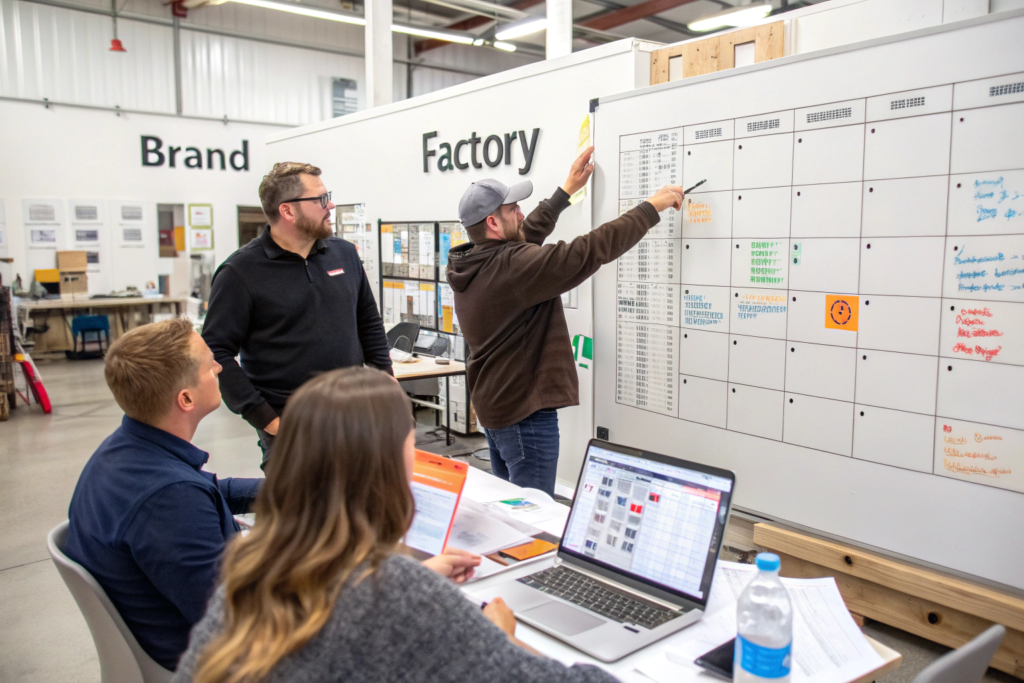
Set a regular meeting cadence. Weekly for active production. Monthly for strategic planning. Put it on the calendar. Don't cancel. Even if there's nothing urgent to discuss, a 15-minute check-in maintains the connection.
Designate single points of contact. You should have one person on your side who handles factory communication. The factory should have one person on their side. When communication goes through multiple people, things get lost.
Use shared tools. A shared spreadsheet for order tracking. A shared folder for tech packs and specs. A shared calendar for production milestones. Tools create transparency and reduce the back-and-forth of "where's that file?"
A UK client uses a shared project management tool with us. Every order has its own page. Tech packs, sample approvals, production photos, test reports, shipping documents—all in one place. They don't email us asking for status. They look at the tool. We update it daily. The tool has cut our email volume by 70% and eliminated the "what's the status of my order" questions entirely.
What Information Should You Share About Your Business?
A factory that understands your business can serve you better. Share your forecast. Not just the order you're placing today, but what you expect to order in the coming months. A factory that knows your forecast can reserve capacity, buy materials in advance, and plan production efficiently.
Share your calendar. Tell them about your key deadlines—trade shows, retail launches, peak seasons. A factory that knows your deadlines will prioritize your orders accordingly.
Share your challenges. If you're facing cash flow issues, tell them. If your shipping costs are eating your margins, tell them. A factory that understands your constraints can work with you. We've extended payment terms for long-term clients during slow seasons. We've consolidated shipments to reduce freight costs. We've done these things because clients were honest with us about what they needed.
A US client had a tough year in 2023. Their sales were down, and they were struggling with cash flow. Instead of disappearing or delaying payments without explanation, they called us. They explained the situation. They asked if we could extend their payment terms from net 30 to net 60 for the next six months. We agreed. They got through the tough period. Their business recovered. Now they're ordering more than ever, and they pay us on time every time. Their honesty built trust that will last for years.
How Do You Handle Problems When They Arise?
Problems will happen. Machines break. Materials arrive late. Quality issues appear. How you handle these moments defines the partnership.
Don't assign blame. Blame solves nothing. Focus on solutions. What's the problem? What's the impact? What's the fix? Who needs to do what by when?
Be proportionate. A two-day delay on a shipment that's not time-sensitive is not a crisis. Don't treat it like one. A quality issue that affects 2% of the order is not a reason to reject the whole shipment. Work with the factory to find a fair resolution.
Document everything. When problems are resolved, document what happened and how it was fixed. Use that documentation to prevent recurrence.
I remember a shipment we sent to a European client that had a shrinkage issue. The fabric was shrinking 5% instead of the specified 3%. The client's production manager called me, not to yell, but to understand what happened. We traced the issue to a finishing machine that had drifted out of calibration. We recut the affected fabric for their smaller sizes, where the shrinkage was less noticeable, and discounted the rest. The client accepted the resolution. Six months later, they placed their largest order with us ever. They told me later that they stayed with us because of how we handled that problem. Anyone can be good when things go well. It's how you handle the tough moments that matters.
How Do You Grow the Partnership Beyond Transactional Orders?
Transactional relationships are about the next order. Partnerships are about the next collection, the next year, the next five years.
How Do You Involve the Factory in Development?
Your factory has expertise you don't have. Use it. Involve them early in the development process.
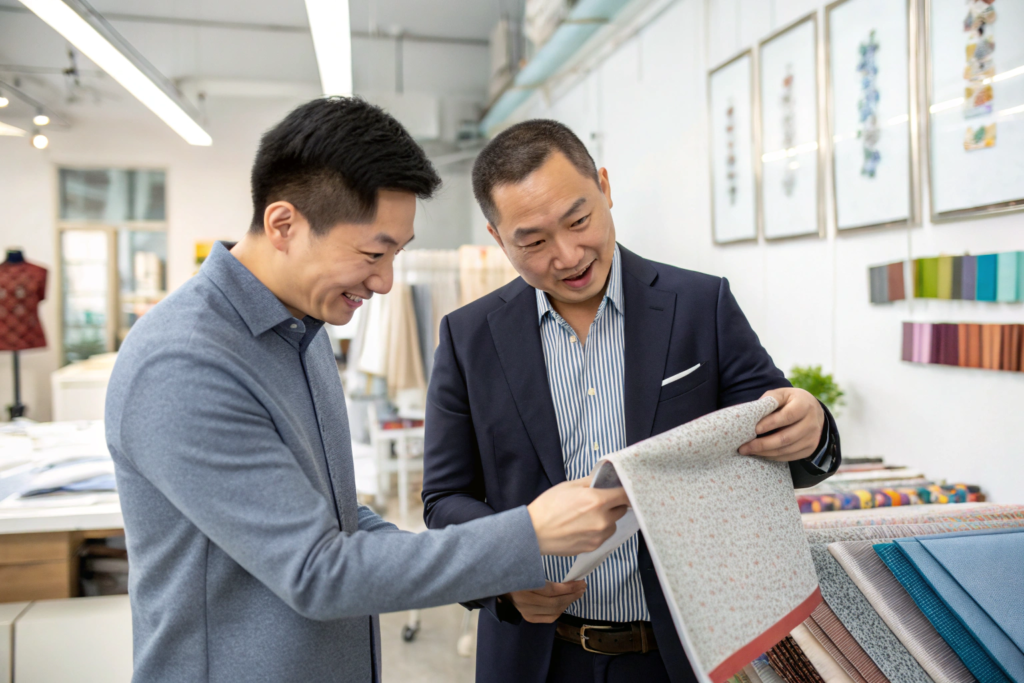
Share your design concepts early. A factory that sees your sketches can tell you what's technically feasible and what's not. They can suggest construction methods that will save you money. They can identify potential quality issues before you've committed to a design.
Ask for their input on materials. A factory that works with fabrics every day knows what performs well and what doesn't. They can recommend alternatives to expensive materials that still deliver the look and feel you want.
Give them time to prototype. A factory that gets a tech pack three weeks before production can't help you optimize. A factory that gets it three months before production can run tests, refine the construction, and work out the kinks before you're under pressure.
A US activewear client started sending us their design sketches six months before production. We'd review them and give feedback. "That seam placement will create stress points." "That pocket construction will add $2 to your cost—here's an alternative." "That fabric won't hold up to the stretch you need—try this blend instead." Their product quality improved. Their costs went down. Their development cycle shortened. All because they involved us earlier.
What Does Mutual Investment Look Like?
Partnerships require investment from both sides. What are you investing in the relationship? What is the factory investing?
On your side, invest in timely payments, clear communication, and consistent volume. A factory that knows you'll be there next season and the season after can plan capacity, hire workers, and buy materials efficiently.
On the factory's side, look for investment in your business. Are they holding safety stock for your key fabrics? Are they training their team on your specific quality standards? Are they investing in new equipment to serve your needs better?
A Japanese client has been with us for seven years. They send us a rolling 12-month forecast updated quarterly. We hold yarn inventory for their key fabrics. We've trained our QC team on their specific inspection standards. We've invested in new finishing equipment to achieve the exact hand feel they want. In return, they've grown from 10,000 meters a year to over 200,000. They pay on time, communicate clearly, and treat us as a partner, not a vendor. That's mutual investment.
How Do You Align on Long-Term Goals?
What do you want from the partnership in three years? What does the factory want? If you don't know, you're just drifting.
Have a conversation about the future. Not every week. Not every month. But at least once a year, sit down (virtually or in person) and talk about where you're going.
Share your growth plans. If you're planning to double your volume in two years, tell them. They need to plan capacity.
Ask about their plans. Are they adding new equipment? Expanding their facility? Developing new capabilities? Their plans might align with your needs.
A European client and I have an annual meeting every January. We review the past year. We talk about what worked and what didn't. We discuss their plans for the coming year and their forecast. We talk about what we're investing in. By the end of the meeting, we have a clear picture of what the partnership will look like for the next 12 months. That clarity prevents surprises and builds confidence.
What Are the Warning Signs a Partnership Is Failing?
Not every relationship is meant to last. Sometimes it's better to recognize the signs and move on rather than drag out a failing partnership.

What Communication Patterns Signal Trouble?
Communication changes before the relationship fails. Watch for these patterns.
Response times slow down. A factory that used to respond within hours now takes days. That's a sign they're prioritizing other clients or they're avoiding a difficult conversation.
Answers get vague. "We'll check" becomes a standard response. Follow-up questions go unanswered. A factory that's avoiding accountability will give you vague answers.
Meetings get canceled. Regular check-ins get postponed. Calls go to voicemail. A factory that's pulling away will make themselves less available.
A US client had been working with a factory in Vietnam for three years. Suddenly, their contact stopped responding to emails. The production manager's phone went to voicemail. When they finally got through, the answers were vague. "Production is on track" but no photos, no updates. Two weeks later, they found out the factory had taken on a huge order from a major brand and was prioritizing that over everyone else. Their order was delayed by two months. The relationship never recovered.
What Quality Trends Should You Watch?
Quality doesn't fail overnight. It trends downward.
Inspection pass rates drop. If your AQL pass rate was 95% and now it's 85%, something changed. Maybe the factory added new workers. Maybe they're rushing orders. Maybe they're cutting corners.
Defects change patterns. If you're suddenly seeing a defect you've never seen before, something changed in the production process. A good factory will investigate. A factory in decline will ignore it.
Samples stop matching production. If the production shipment doesn't match the approved sample, the factory has lost control of their process. This is a serious red flag.
A European client noticed their defect rate had crept up from 2% to 5% over six months. The defects were inconsistent—sometimes shrinkage issues, sometimes stitching problems. They asked for an explanation. The factory blamed the workers. No investigation. No corrective action plan. The client started looking for another factory. Within a year, they had moved all their production. The old factory called them six months later asking for more orders. By then, it was too late.
When Is It Time to Move On?
Sometimes you need to walk away. Here's when.
When trust is broken. If the factory lies to you—about capacity, about quality issues, about timing—the relationship is over. You can't rebuild trust once it's gone.
When the factory stops investing. If they're not maintaining equipment, not training workers, not improving processes, they're declining. Your business will decline with them.
When your business no longer matters to them. If you've been a small client and they've grown into big clients, you may no longer be a priority. That's not necessarily their fault, but it means the partnership is over.
A Swedish client had been with a Chinese factory for eight years. The factory grew from a small operation to a major supplier for European brands. The Swedish client's orders, once significant, became a small part of the factory's volume. Service declined. Quality slipped. The client tried to rebuild the relationship, but the factory's attention was elsewhere. Eventually, they moved to a smaller factory where they mattered more. It was a hard decision after eight years, but it was the right one.
Conclusion
Building a long-term partnership with your garment factory is one of the smartest investments you can make in your business. A strong partnership gives you priority during peak seasons, faster problem-solving when issues arise, and access to expertise that improves your products. It turns your factory from a vendor into a competitive advantage.
The foundation of a strong partnership is set early—clear communication, thorough preparation, and professional handling of the first order. Systems keep the partnership strong over time—regular communication, shared information, and fair handling of problems. Growth comes from mutual investment, early involvement in development, and alignment on long-term goals. And sometimes, recognizing when a partnership has run its course is the most important decision you can make.
At Shanghai Fumao, we've been building partnerships with garment factories across China and Southeast Asia for over 20 years. We understand what makes these relationships work because we're in them ourselves. We know that trust is earned over years, not days. We know that clear communication and fair dealing matter more than any contract.
Whether you're sourcing fabric from us or looking for guidance on building better relationships with your own factories, we're here to help. Our experience on the supplier side gives us a perspective that can help you navigate the complexities of manufacturing in China.
If you're ready to build partnerships that last, let's talk.
Contact our Business Director, Elaine, to discuss how we can support your manufacturing partnerships.
Email: elaine@fumaoclothing.com