In my 20 years running a fabric factory in Keqiao, I’ve seen it all. The worst call? A client from Milan who had to cancel his entire summer collection because the fabric arrived two weeks after his shipping deadline. That’s not just lost revenue. It’s a broken trust that takes years to rebuild. For global brands, missing the selling season is a death sentence. But here’s the truth: most delays are predictable. And preventable.
The key to avoiding a production shutdown isn’t just finding a fast supplier. It’s understanding the rhythm of Chinese manufacturing. We have our peak production periods, our mandatory holiday shutdowns, and our slower windows where we can give your order the white-glove treatment it deserves. When you plan with these cycles, instead of against them, you turn a potential bottleneck into a strategic advantage.
Don’t let a fabric delay decide your fate. Let’s walk through the exact timeline patterns I use to help my clients—from European fashion houses to US-based startups—hit their launch dates, every single time.
Why Do Chinese Factories Have Two Major Production Peaks?
You might think a factory runs at full speed all year. I wish that were true. But our industry has a heartbeat. In Keqiao, the entire textile ecosystem—from the yarn spinners to the coating lines—pulses to two main beats. I’ve had clients who placed a standard order in early April, assuming it would be a simple 4-week job. They didn’t know that every other brand in the Northern Hemisphere was doing the same thing. That order got pushed to 7 weeks, and they missed their window for the fall season.
What Are the Specific Peak Production Dates in China?
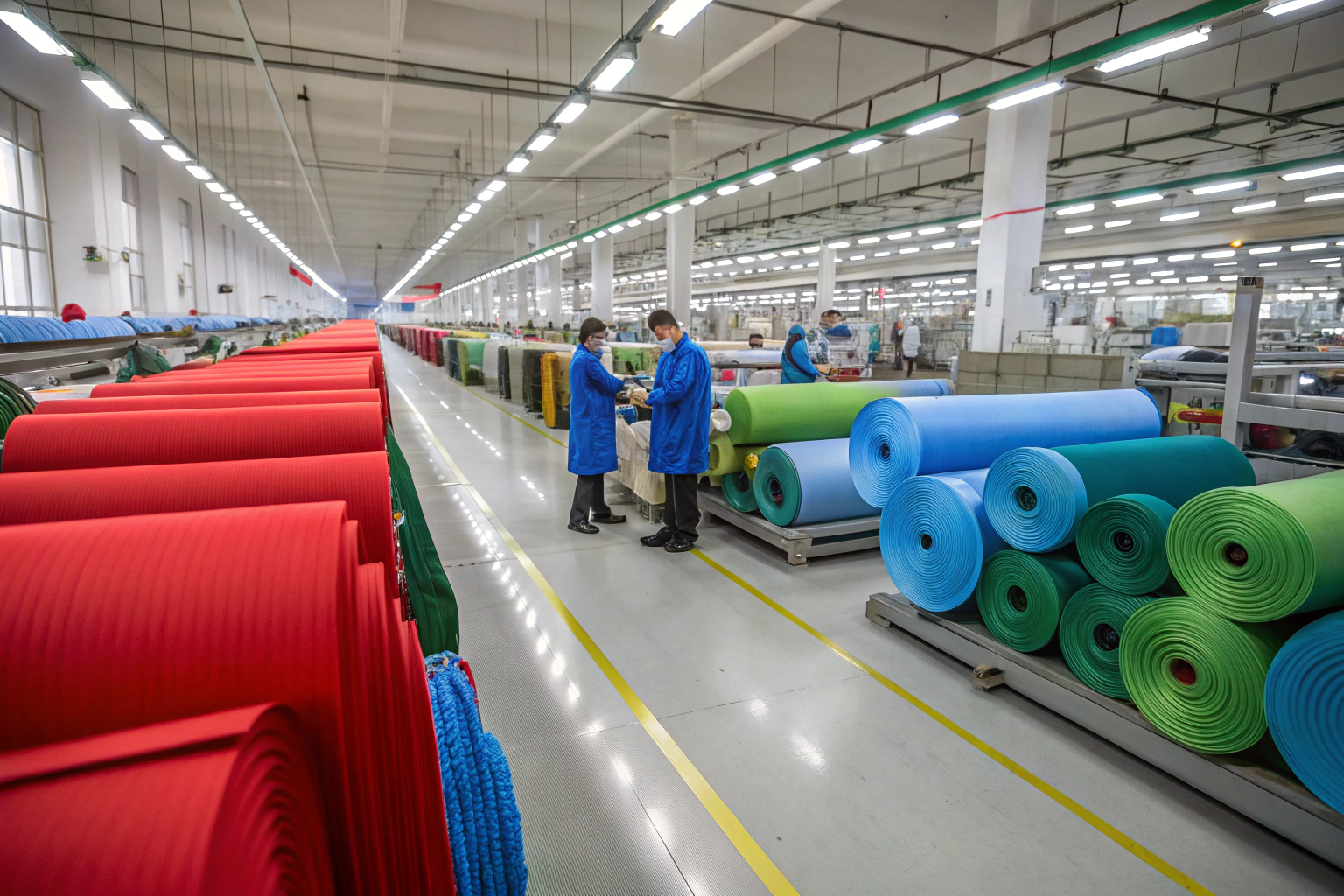
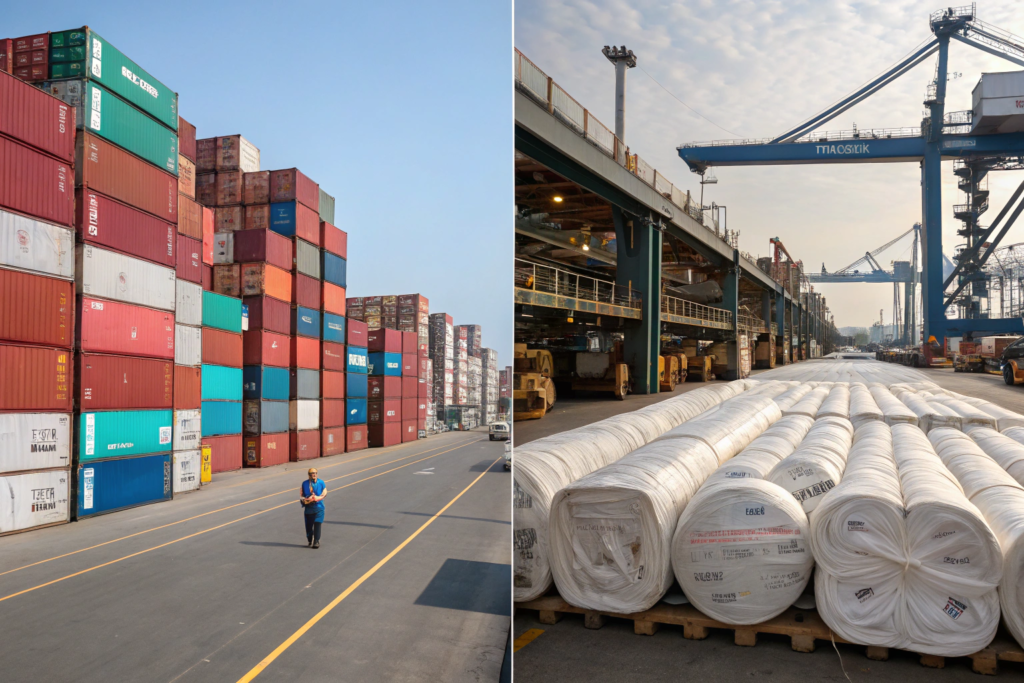
In my experience, the first peak runs from March to May. Why? Because everyone is gearing up for the Spring/Summer and early Fall deliveries. The second, and often more intense peak, runs from August to October. This is for the Winter and Holiday collections. During these windows, our weaving machines run 24/7. The dyeing vats never cool down.
For a European fashion brand, missing the August-October slot is a nightmare. I remember a situation in September 2023. A buyer from a UK-based sportswear company needed a rush order of moisture-wicking recycled polyester for a January launch. They contacted me in late August. Our cooperative dyeing factory was already booked solid. We had to pay overtime and shuffle the schedule for smaller clients to squeeze them in. It worked, but the cost was 15% higher than if they had ordered in July. We had to air-freight half the order just to hit their production deadline. That’s an expense you can’t pass on to the customer.
When you’re in a peak period, adding 1 to 2 weeks to a standard lead time is not a worst-case scenario. It’s the norm. For a standard woven cotton fabric that usually takes 25 days, I’d quote 35-40 days during these months to be safe. And that’s if everything goes perfectly.
How Do I Check If My Fabric Order Falls Into a Peak Period?
The easiest way is to simply ask. But a better way is to look at your own calendar. If you need fabric delivered to your factory in the US or Europe in July, you need to be booking production in China in April or May. That’s right in the middle of the first peak.
I tell my clients to reverse-engineer their timeline. Start with your “in-hands” date—the day you need the fabric on your cutting table. Subtract 2 weeks for ocean freight and customs (or 5-7 days for air freight). Then, subtract your production time. If you’re ordering a complex fabric—say, a how to source custom jacquard woven fabric from China for high-end fashion—you need to account for 30-40 days during the peak. That means you should be placing your order in February for a May delivery. Many brands get this wrong because they think in terms of “days from order” without considering the factory’s existing load.
To really get a handle on this, I suggest you look at real-time production capacity reports from Chinese textile hubs. While not official, these forums often have insights from buyers on the ground that can warn you about upcoming slowdowns.
(Here’s a pro tip: During peaks, I always ask for a “color commitment” earlier in the process. If you approve your lab dips two weeks before the order is scheduled to start, we can prepare the dyes and reserve the machines. It saves precious days.)
What’s the Real Impact of Chinese Holidays on My Supply Chain?
This is where I see the biggest mistakes. A new client from Texas called me in January 2023, frantic. He had placed an order for organic cotton canvas with another supplier in mid-January. He assumed it would ship in February. He didn’t know about the Chinese New Year shutdown. The factory closed for three weeks. His order didn’t even start until mid-February. By the time it arrived, his production line in Mexico had already been idle for two weeks. He lost thousands in labor costs.

How Should I Plan for the Chinese New Year Shutdown?
Chinese New Year (CNY) is not a long weekend. It’s a 3 to 4 week shutdown of the entire industrial base. In Keqiao, it’s a ghost town. Workers go home to their villages. Factories are locked. Nothing moves.
The smartest brands plan for this with military precision. They know that the key is to be “first in line” when the factories reopen. That means completing all pre-production work—fiber selection, yarn sourcing, lab dips, strike-offs, and even booking production slots—before the holiday starts.
A European fashion brand we work with has a fantastic system. They set a hard deadline for their fabric order: complete all pre-production 6 weeks before the holiday. For 2024, CNY was in February. They had their tech packs, their color approvals, and their strike-offs finalized by mid-December. Their order was loaded into our production system with a “Holiday First” tag. When we reopened on February 15th, our machines were running their fabric on the very first shift. They had their goods in their warehouse before the competition even had their lab dips approved. That’s how you turn a shutdown into a competitive advantage.
Is There a “Quiet Period” That Gives Me an Advantage?
Yes, and this is where you can win. The slower periods are June-July and November-December. During these months, the frantic pace slows down. Our production capacity isn’t maxed out. This is the time to bring your most complex projects.
In July 2022, a US-based startup founder came to us. She needed a small-batch run of a technical blend of Tencel and recycled polyester with anti-bacterial coating for a new athleisure line. It was a challenging order with multiple finishing steps. If she had come in August, during the peak, it would have been a nightmare to schedule. But in July, we had the space. Our R&D team spent extra time with her, tweaking the coating formula to get the exact feel she wanted. We delivered the full order in 28 days, which was 10 days faster than her original timeline. She launched on time and came back for her next order. During slower periods, we can give you the attention and speed that’s just not possible when we’re juggling ten other rush orders.
Can You Really Guarantee Quality When Speeding Up Production?
This is the million-dollar question. When I tell clients we can hit a tight deadline, they often worry about quality. And they’re right to be concerned. Speed without control is just a fast way to make junk. But here’s what I’ve learned in over two decades: a good factory has processes that enable speed without sacrificing standards.
What Specific Quality Checks Speed Up, Not Slow Down, Production?
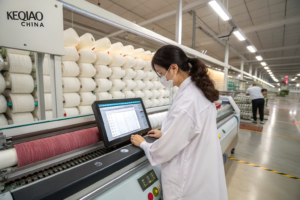
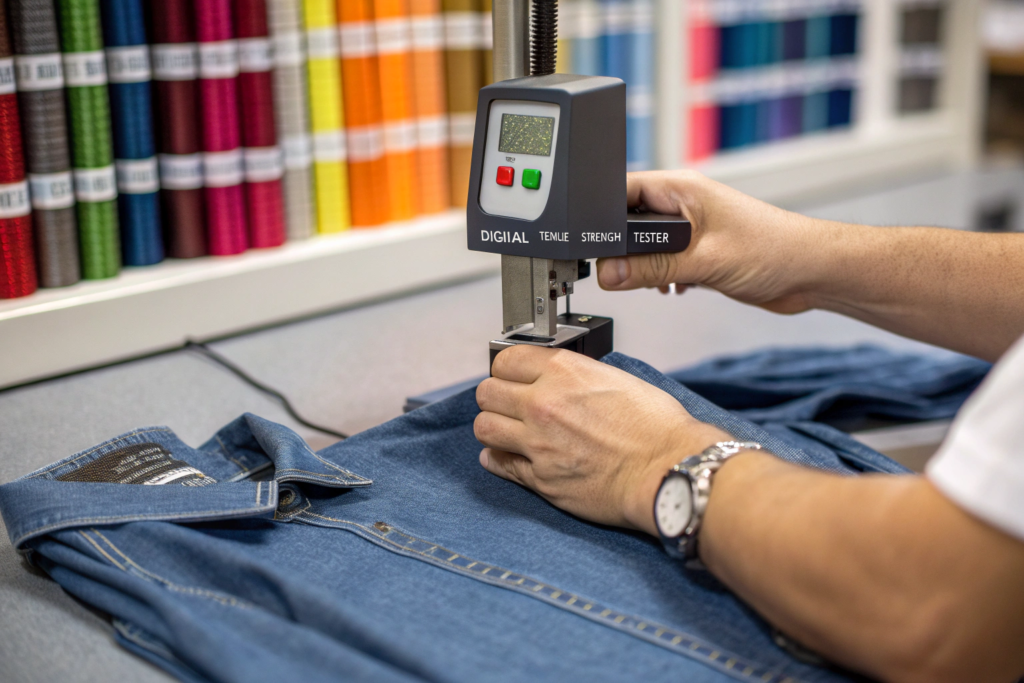
We’ve built our system around speed and control. Our CNAS-accredited testing center is key. It’s not an external lab we have to wait a week for. It’s right next to our weaving mill. We test every batch of yarn for tensile strength before it even goes to the loom.
Here’s a real example from March 2024. We were producing a large order of stretch denim for a US brand. Our inline QC team flagged a slight variation in the weft tension on one of our air-jet looms. It was a small issue that wouldn’t have been noticeable in a final visual inspection. But our automated system caught it in real-time. We stopped the loom, adjusted the tension, and re-started within 20 minutes. That batch of fabric, if it had gone through, would have caused a 5% shrinkage issue during washing. By catching it instantly, we saved a week of potential rework and avoided a costly quality complaint. We have advanced QR code tracking that lets us trace every roll back to the exact machine, operator, and shift. That’s not just for your peace of mind; it’s a tool for us to prevent problems before they start.
How Do You Handle Quality Control for Small-Batch, Fast-Turnaround Orders?
Small-batch is a different challenge. It’s harder to maintain consistency when you’re running 500 meters versus 50,000. But this is where our agility as a vertically integrated supplier in Keqiao shines. Since we have our own weaving and cooperative dyeing and printing, we don’t have to wait in line at a giant mill.
For a small-batch order of custom-printed bamboo silk (BAMSILK) for a client in Singapore, we were able to do something unique. We used our digital printing facility. Instead of traditional screen printing, which takes days to set up, we printed directly onto the fabric from a digital file. This allowed us to produce the order in 7 days, including shipping. But we still ran a full set of tests: colorfastness to washing (we simulate 5 washes in our lab), crocking (rubbing), and even a pilling test to ensure the bamboo fibers held up. Speed doesn’t mean skipping the test. It means having the testing equipment and the skilled team right there, so the test takes 30 minutes, not 3 days.
I always tell new clients: “You can have it fast, good, or cheap. Pick two.” But I’ve found that with our setup, you don’t have to choose between fast and good. You just have to trust the process. We have a 98% client pass rate on first inspection for a reason. It’s not luck. It’s a system.
What Are the Hidden Costs of Not Understanding Production Timelines?
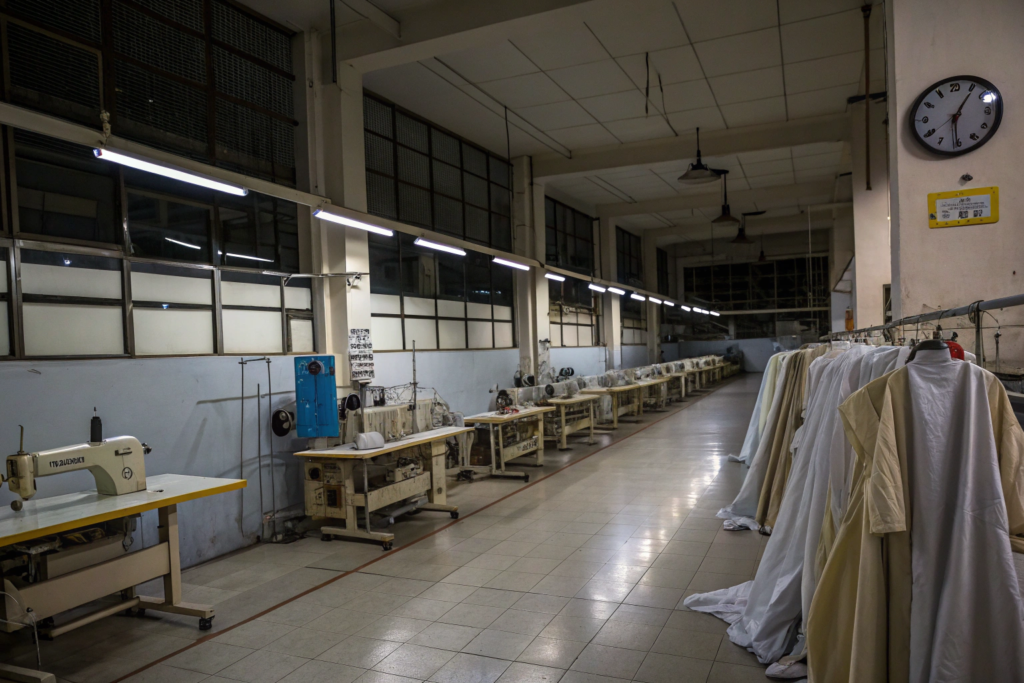
You see the price per meter on a quote. But the real cost of a fabric delay is invisible. I’ve seen it add up to tens of thousands of dollars, often more than the fabric itself. It’s not just about the material; it’s about the whole machine stopping.
How Do Tariff Costs and Logistics Interact with Timing?
This is a new layer of complexity. US tariffs on Chinese goods are a reality. But the impact on your timeline is huge. Let’s say you order a fabric that is subject to a 25% tariff. You have a choice: ship by ocean freight (cost-effective, 2-3 weeks) or ship by air freight (expensive, 3-5 days). If your fabric is delayed by two weeks from the factory, you now have to choose between missing your production window and paying a massive premium for air freight.
I had a client in Los Angeles in 2023 who ordered a large quantity of recycled nylon for a capsule collection. They placed the order expecting a standard 30-day production, but they didn’t account for our August peak. When the delay pushed them past their shipping deadline, they had to air-freight 40% of the order to meet their retail launch date. The air freight cost alone was nearly 50% of the total fabric cost. The tariff was applied to the fabric value, so the cost of the delay was effectively the air freight bill.
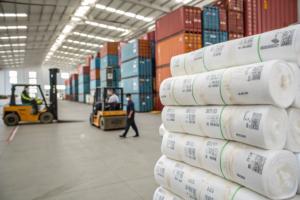
This is why we work with clients to consolidate orders and use our overseas warehousing options. If we know your timeline is tight, we can hold the fabric in our warehouse and ship it in smaller, faster batches to keep your line moving. It’s more work for us, but it saves you from that devastating air freight bill.
Does Faster Development Mean I Sacrifice Innovation?
I’ve heard this fear. “If we rush the development, we’ll just end up with a commodity fabric.” That’s not true if you’re working with the right partner. A factory that is integrated—from weaving to finishing—can develop fast because they have the tools in-house.
Take our R&D team. They’re not just salespeople. They’re textile engineers. When a sustainable performance fabric startup came to us with a concept for a biodegradable, moisture-wicking blend, we didn’t say “send us a tech pack.” We sat with them. We discussed yarn sourcing, knit structures, and finishing agents. Because we have our own sample looms and a small-scale dyeing machine, we turned their concept into a physical strike-off in 48 hours. That speed allowed them to iterate. They tested five different finishing formulas in two weeks. A traditional mill would have taken a month just to get to the first sample.
The secret is vertical integration. When we control the process from fiber to finish, the communication is instant. There’s no waiting for an email from a yarn supplier in a different city. When you’re ready to scale from a sample to a bulk order, the development data we collected is already in our system. We can quote you accurate lead times and prices immediately. This is how a European fashion brand, who we’ve worked with for years, goes from a sketch to a bulk fabric order in under 30 days. They use our slower periods to develop, and our peak periods to produce. They never miss a season.
Conclusion
The fabric supply chain isn’t just a series of transactions. It’s a dance with time. The peaks, the holidays, the quiet windows—they are all predictable if you know the music. My team and I have spent over two decades learning every rhythm of this industry in Keqiao, the heart of the world’s textile trade.
We’ve seen the panic in a client’s eyes when a delay threatens their entire season. And we’ve felt the pride when a perfectly timed shipment lands, and their collection launches to rave reviews. That’s the difference between treating your supplier as a vendor, and treating them as a partner who understands your business as much as their own.
At Shanghai Fumao, we don’t just sell meters of fabric. We help you build a production timeline that works. Our end-to-end control—from weaving and dyeing to our in-house CNAS-certified lab—means we don’t have to outsource quality or speed. We can tell you, with confidence, when your order will be ready, and we have the integrated setup to make it happen.
If you’re tired of guessing when your fabric will arrive, or you want to build a supply chain that’s resilient to the Chinese holiday shutdowns, let’s talk. My business director, Elaine, is the person who makes the complex simple. She has helped everyone from startup founders with a sketch to major fashion houses with complex specifications. She can map out a production plan that aligns with your calendar, not the other way around.
Contact Elaine directly: elaine@fumaoclothing.com
Tell her what you’re building. We’ll help you make sure it gets built on time.