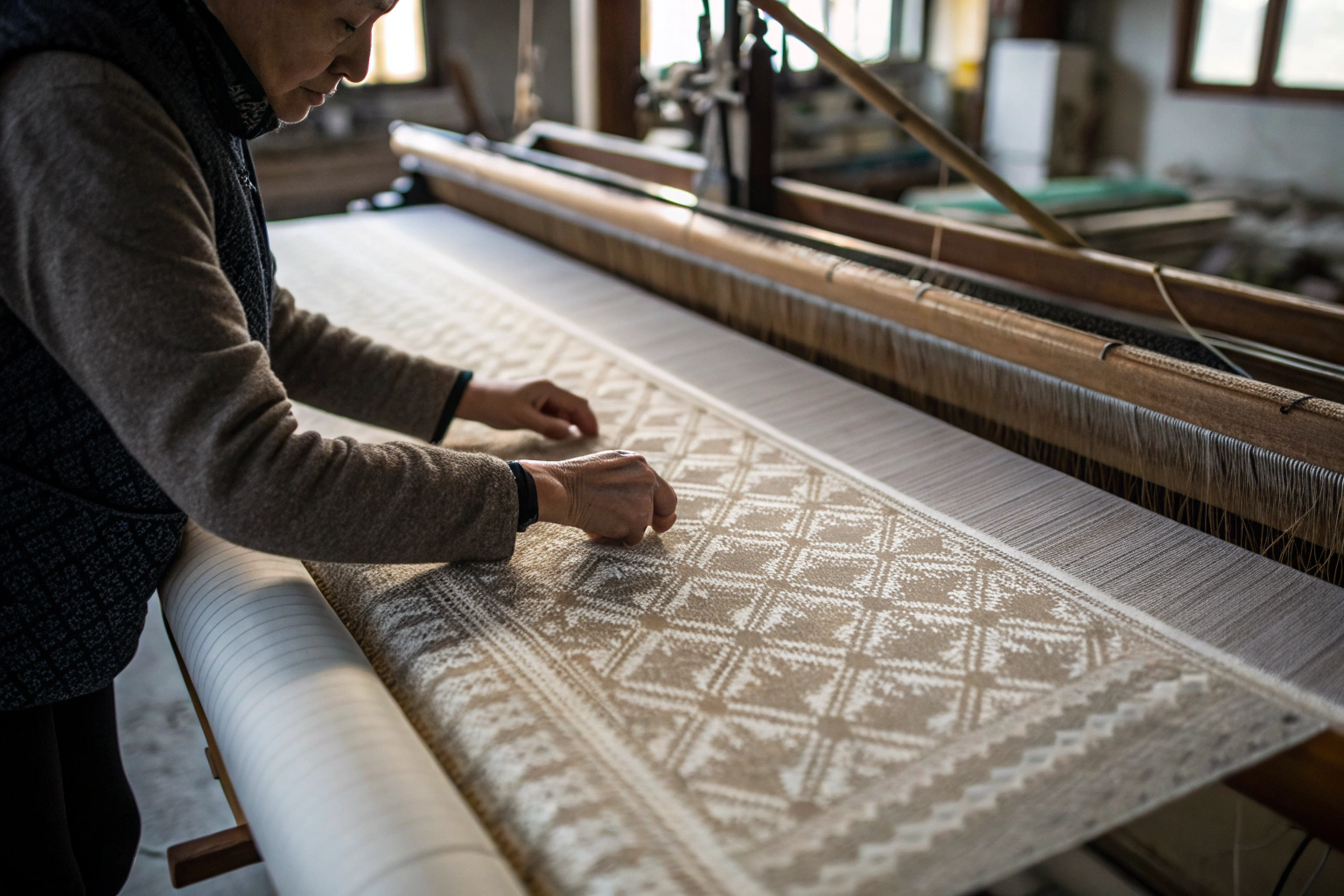
I’ve been in this business long enough to see the cycles. Every few years, the market gets flooded with the same plain jersey, the same basic twill, and everyone starts competing on price. It becomes a race to the bottom. But the brands that truly stand out—the ones that command a premium and build a loyal following—they figured out something different. They realized that a garment is more than just a shape. It’s a feeling. And nothing creates that feeling faster than a fabric with a texture you can’t resist touching.
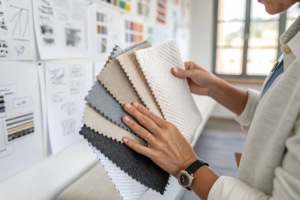
Here in Keqiao, surrounded by the world’s largest textile cluster, I’ve had the privilege of working with mills that produce some of the most extraordinary woven textures on the planet. These aren’t the fabrics you find in every shopping mall. We’re talking about intricate jacquards, lustrous brocades, structured matelassé, and soft, velvety surfaces that transform a simple dress or jacket into a statement piece. Adding these rare woven textures to your garments isn’t just about aesthetics; it’s a strategic move to elevate your brand, justify higher price points, and create pieces that your customers will treasure.
At Shanghai Fumao, we believe that the right texture can be your secret weapon. It’s the difference between a commodity and a must-have. Over the next few minutes, I’m going to share some of the insights we’ve gathered from two decades of helping global brands tap into the power of texture, from the technical challenges to the incredible opportunities.
What Makes a Woven Texture “Rare” and Desirable?
When I talk about rare woven textures, I’m not just talking about something that looks pretty. There’s a whole world of complexity behind it. A truly special texture comes from a combination of things: the complexity of the weave structure, the uniqueness of the yarns used, and the finishing processes that bring it all to life. It’s a craft that requires serious expertise.
How Does Jacquard Weaving Create Three-Dimensional Patterns?
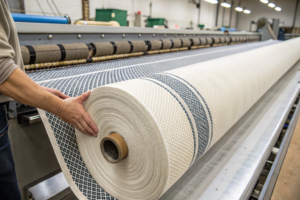
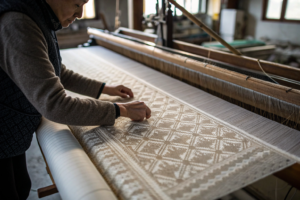
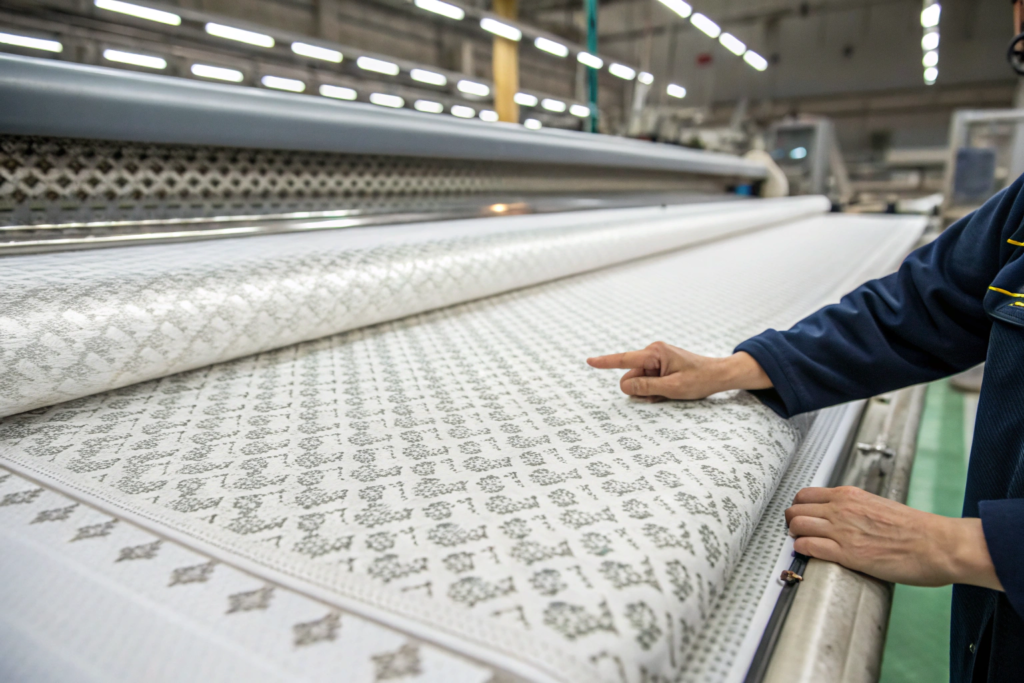
You’ve probably heard the term “jacquard.” It sounds fancy, and honestly, it can be. But let me explain what it actually means. A jacquard loom is a special type of loom that can control each individual warp yarn independently. Think of it like a super high-resolution printer, but instead of ink, it’s weaving threads. This allows us to create incredibly detailed, complex patterns directly into the fabric structure itself. The pattern isn’t printed on top; it’s woven in. This creates a texture that has depth and dimension.
We worked with a luxury home textile brand from Italy last year. They wanted a fabric for a new line of decorative pillows that would have a velvety, floral pattern that felt almost sculptural. They had tried printed velvet, but it lacked that tactile depth. We developed a jacquard velvet for them. The base was a fine cotton, and we used a specialized weaving technique to create a raised pile only in the areas of the floral design. The result was a fabric where the flowers literally stood up from the surface.
This required meticulous planning. Our design team spent three weeks perfecting the weave file, which had over 20,000 individual weave points. The client was thrilled. They told us that the fabric’s unique texture allowed them to price their pillows at a 40% premium over their standard line. It wasn’t just a pillow anymore; it was a piece of textile art. For a deeper look into how different jacquard structures affect fabric drape and durability, there’s a great discussion on this textile engineering forum where experts break down the technical differences between dobby and jacquard weaving.
Why Do Yarn Selection and Finishing Matter So Much for Texture?
You can have the most complex weave structure in the world, but if you use the wrong yarns, it’s wasted potential. The texture is ultimately a product of the materials. A chunky wool yarn will give you a rugged, tweed-like feel. A fine, twisted silk will give you a crisp, lustrous surface. A matte, slubby linen will give you a casual, organic texture. The yarn is the voice; the weave is the song.
Then comes the finishing. This is the step that often gets overlooked, but it’s where the magic really happens. A plain woven fabric can be turned into a soft, brushed flannel through a mechanical finishing process. A stiff, raw silk can be washed to achieve a gorgeous, crinkled texture. We have a coating factory in our network that does some incredible things with surface treatments.
A few months ago, a streetwear brand from Los Angeles came to us with a specific request. They wanted a fabric that had the look of a classic herringbone wool but with the breathability of cotton, and they wanted it to have a slight, waxy hand feel. We sourced a unique blend of cotton and a small amount of elastane for stretch. We wove it in a herringbone pattern on our dobby looms. Then came the finishing. We worked with our coating partners to apply a very light, water-resistant wax finish. The final fabric had a subtle sheen, a crisp hand feel, and a texture that was visually complex but surprisingly soft. They used it for a line of jackets that sold out in two weeks. It was the texture that did it. If you’re curious about the different types of fabric finishes and how they impact performance, this blog from a finishing specialist goes into detail about mechanical vs. chemical finishing for woven fabrics.
This is the kind of work we love at Shanghai Fumao—taking a concept, combining the right yarn with the right weave and the perfect finish, and creating something that truly stands out. It’s not just about making fabric; it’s about creating value.
How Can Rare Textures Solve Common Fashion Brand Problems?
It’s easy to think of texture as purely an aesthetic tool. And it is a powerful one. But in my experience, the right textured fabric can solve some of the most persistent operational problems that fashion brands face. It can hide manufacturing imperfections, extend a product’s lifecycle, and even help with inventory management.
Can a Textured Fabric Mask Sewing Imperfections?
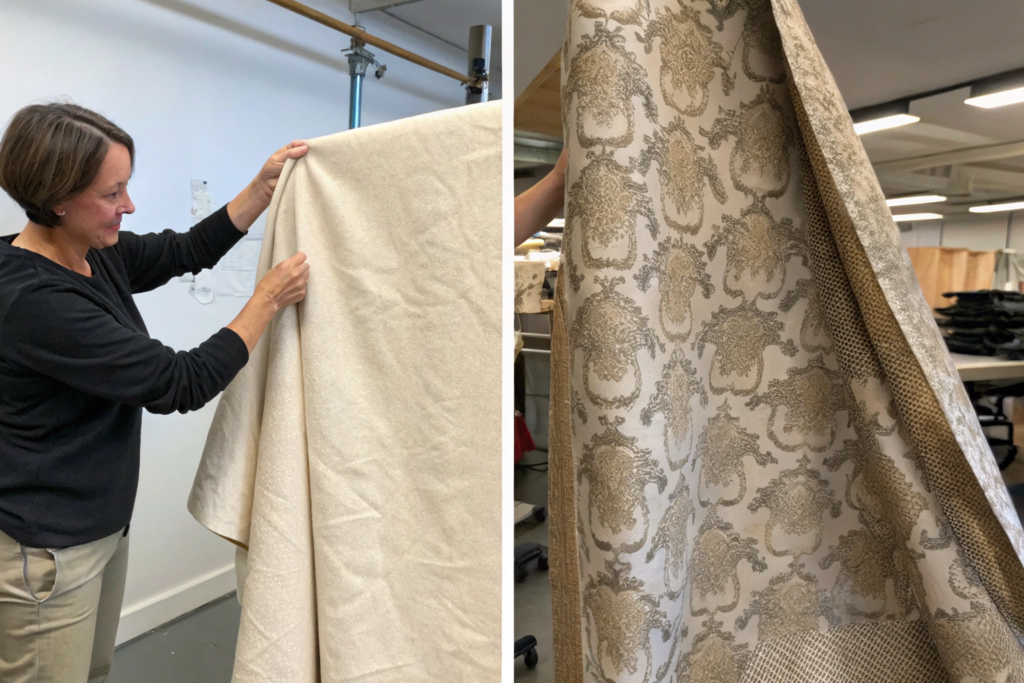
Let’s be real for a second. No garment production is perfect. Even the best factories have occasional issues with stitching tension, slight puckering at the seams, or minor variations in the cut. With a plain, solid-colored fabric, these tiny imperfections are like a spotlight on a stage. They stand out, and they can lead to costly seconds or even full rejections.
A textured fabric, on the other hand, is incredibly forgiving. The visual complexity of a jacquard, the depth of a velvet, or the irregular surface of a slub weave acts like a camouflage pattern for small flaws. A slightly wavy seam that would be a disaster on a silk charmeuse is barely noticeable on a structured matelassé.
I remember a project with a fast-fashion retailer in the UK about two years ago. They were launching a new line of blazers and were struggling with the quality control rate on a plain, lightweight wool suiting. Their reject rate was hovering around 8%, mostly due to minor seam puckering around the armholes. They were losing money. We suggested switching to a textured wool bouclé. It had a similar weight and drape but a looped, nubby surface. The result was astonishing. The reject rate on the blazers dropped to under 2%. The bouclé texture absorbed the visual impact of the minor seam variations. The blazers looked more expensive, and the brand saved tens of thousands of dollars in rework and wasted materials. The texture wasn’t just a design choice; it was a quality solution.
How Do Textured Fabrics Extend a Product’s Lifecycle?
Another hidden benefit of texture is its durability. A fabric with a complex weave or a high-twist yarn is often inherently more resistant to wear and tear than a simple plain weave. The structure of the fabric itself adds strength. Think of a plain cotton poplin versus a textured cotton pique. The pique, with its honeycomb-like structure, is much more resistant to creasing and will hold its shape better over time.
This is a huge selling point for customers. They’re increasingly looking for pieces that last, not just for one season but for years. A garment made from a high-quality textured fabric feels more substantial and will look better for longer. We’ve seen this firsthand with our denim clients. A simple, lightweight denim will show wear and tear quickly. But a heavier, textured denim with a slubby yarn and a deep twill weave not only looks more interesting but also holds up to repeated washing and wear.
A sustainable brand in Amsterdam that we work with specifically chooses our textured fabrics for this reason. They build their entire brand philosophy around “buy less, buy better.” They use our heavy textured linens and structured organic cotton jacquards for their core collection. They’ve told us that their customer return rate on these items is incredibly low because the fabric’s performance and texture exceed expectations. The garment doesn’t lose its shape, and the texture only gets better with age. For a consumer perspective on how fabric texture impacts garment longevity, you can find threads on fashion forums where users discuss their favorite durable and textured clothing items. That kind of loyalty is worth more than any quick sale.
What Are the Hidden Costs and Lead Times for Custom Textured Fabrics?
Let’s talk about the practical stuff. Everyone loves the idea of a unique, custom-woven textured fabric. But the biggest hesitation I hear from buyers, especially ones like Ron, is the cost and the time. They worry that it will blow their budget and delay their collection by months. And yes, there are challenges. But they’re manageable if you know what you’re doing. We’ve spent 20 years figuring out how to make the complex simple and affordable.
Why Is There a Minimum Order Quantity (MOQ) for Custom Weaves?
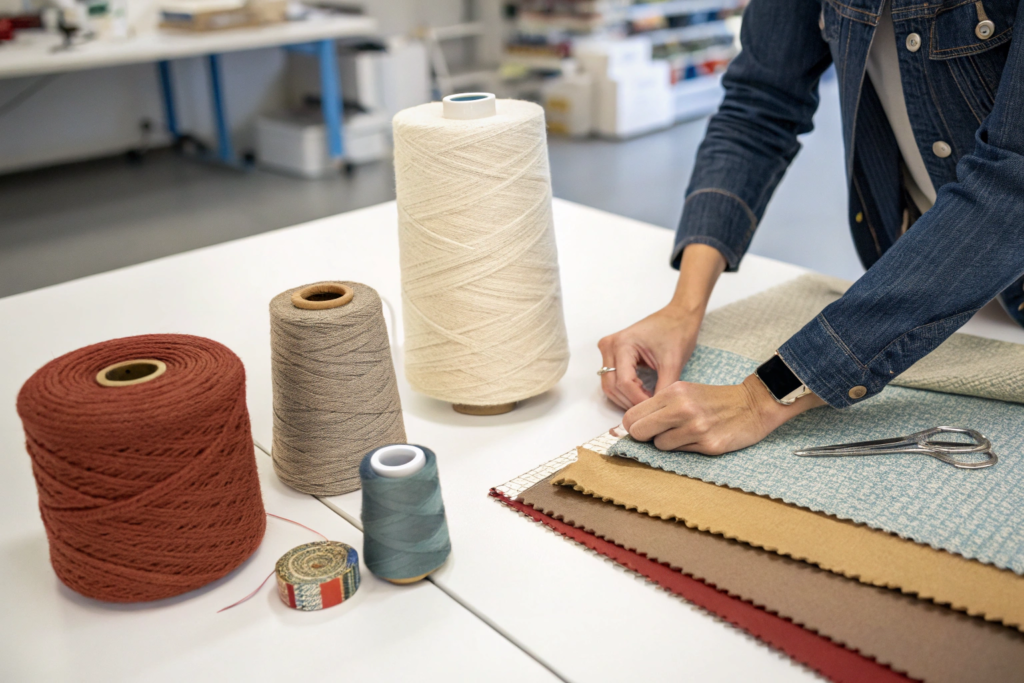
This is the number one question I get. “Why can’t I just order 500 meters of this amazing custom jacquard?” The answer comes down to the economics of setting up a loom. A standard loom running a basic fabric can be set up in an hour. A jacquard loom for a custom pattern? It’s a different beast.
The setup involves creating the intricate weave file, which can take our design team days or even weeks. Then, the loom itself needs to be “dressed” with the specific warp yarns. This process of loading thousands of individual threads onto the beam and threading them through the heddles and the jacquard harness is incredibly time-consuming. It can take a skilled team of two or three people an entire shift just to set up one loom. After all that work, the mill needs to run the machine for a certain amount of time to make the setup economically viable. That’s what the MOQ covers.
I’ll give you a concrete example. A startup from Berlin came to us with a fantastic idea for a unisex shirt jacket. They wanted a custom geometric jacquard in a blend of organic cotton and recycled polyester. They initially asked for a MOQ of 800 meters. We explained the setup costs and showed them that to make that small quantity, the per-meter price would be extremely high, nearly triple what it would be for a 3,000-meter run. We worked with them to adjust their plan. Instead of doing the jacquard across the entire garment, we suggested using it as a contrasting panel on the collar and placket. This allowed them to order 500 meters of the custom jacquard for the details, and a high-quality, coordinating plain weave for the main body from our stock. They got the unique texture they wanted, stayed within their budget, and their MOQ was met. It’s about smart application, not just blanket rules.
How Do You Plan Production Around Chinese Holidays for Textured Orders?
If you’re ordering a standard fabric from stock, lead times are simple. But for a custom textured fabric, you’re dealing with a more complex supply chain, and that means planning is everything. You can’t just place an order in late January and expect it to ship in early February. That’s Chinese New Year, and the whole industry shuts down.
The key is to understand the rhythm. For custom projects, we advise clients to finalize their design and technical specifications at least six to eight weeks before a major holiday like Chinese New Year. This allows us to complete all the pre-production work—yarn sourcing, creating the weave file, scheduling the loom—before the shutdown. Then, as soon as the factories reopen, we are ready to start production immediately.
A European fashion brand we work with has this down to a science. They plan their entire year around Chinese holidays. For their Spring/Summer collection, which uses a lot of our textured linens and jacquards, they complete all their pre-production work in December. That’s six weeks before the Chinese New Year shutdown. When our factories reopen in late February, they are first in line. Their production starts immediately, and they get their fabric shipped in early April, perfectly timed for their May production run in Portugal. They avoid the bottleneck that catches other brands off guard. It’s this kind of proactive planning that turns a potential supply chain headache into a competitive advantage. For a real-time look at how industry calendars are affected by global events, sourcing professionals often share insights on platforms like the Sourcing Journal’s supply chain forum, where you can see how others are navigating lead times.
How Can a Small Brand Compete with Big Players Using Texture?
This is probably my favorite part of what we do. I love working with the underdogs. The small startups, the independent designers, the online entrepreneurs who have a vision but not the massive order book of a Zara or H&M. They often feel like the world of custom textiles is closed to them, reserved for the giants. But that’s not true. There are ways to play the game and win.

Can You Get Unique Textures Without High MOQs?
Absolutely. You just have to be strategic. The trick is to not try to reinvent the wheel for your very first collection. Instead of commissioning a completely new, custom jacquard pattern from scratch, we work with smaller brands to tap into the “exclusive stock” of our partner mills.
These mills, some of which we’ve worked with for over a decade, have thousands of archived weave patterns. They have looms that are already set up for certain designs, or they have the weave files ready to go. For a small brand, we can say, “Okay, we have this beautiful, subtle herringbone jacquard that’s already in the mill’s library. The warp is already on the beam. We can run a much smaller MOQ for you because the setup is already partially done.”
We did this for a swimwear brand in Australia. They wanted a textured, quick-drying fabric for a new line of resort wear. They couldn’t afford a 5,000-meter MOQ. We went through our network’s archive and found a textured dobby weave that had been developed for a previous client. The pattern was a small, honeycomb-like structure that was perfect for their needs. Because the weave file was ready, we could run a 1,500-meter order for them at a price that fit their budget. They got a unique, high-quality textured fabric that set their line apart from every other swimwear brand using the same old nylon spandex. They launched with a distinct product and have since grown to the point where they now commission their own custom patterns. It’s a journey, and we help them take the first step.
Where Can You Find Inspiration for Your Next Textured Fabric?
Sometimes the hardest part is knowing what’s possible. You might have a vague idea of a “textured fabric” in your head, but you don’t know the technical name for it. Or you’re not sure if your vision can actually be produced. That’s where we come in as a resource.
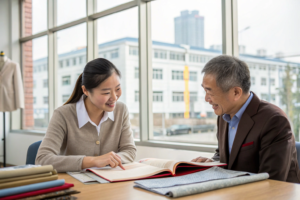
Inspiration can come from anywhere, but I’ve found that the best collaborations start with a conversation. A designer might send us a photo of a vintage textile they love, a picture of a stone wall, or even just a mood board with colors and feelings. Our team then translates that into a technical specification.
A few years back, a menswear designer from New York came to our booth at a trade show. He was frustrated. He had been searching for a fabric that had the look of a classic, rugged tweed but was lightweight enough for a summer blazer and had a soft, almost cashmere-like hand feel. He was convinced it didn’t exist. We sat down with him and our R&D director. We started pulling yarns and discussing weave structures. We ended up developing a fabric that used a fine, air-spun wool blend for the warp and a matte, slubby linen for the weft. The resulting texture was complex and had that tweed-like visual depth, but the fabric was incredibly lightweight and breathable. It became the signature fabric for his summer collection. The inspiration came from his need, and our technical expertise made it a reality.
If you’re a brand looking to add value to your garments, don’t feel like you have to have all the answers. The best designers come to us with problems, and we find the textile solution. It’s a partnership. At Shanghai Fumao, we have the technical knowledge, the access to rare looms, and the experience to turn your most ambitious textural dreams into a tangible, high-quality fabric.
Conclusion
Adding value with rare woven textures is about more than just picking a pretty pattern. It’s about understanding that texture is a multi-dimensional tool. It can elevate the perceived value of a garment, allowing you to command a higher price point and build a brand that stands for craftsmanship and quality. It can solve practical manufacturing problems, masking small imperfections and extending the life of the product, which ultimately saves you money and builds customer loyalty.
Yes, there are unique considerations when working with custom textures. You have to understand the economics of MOQs, which are driven by the skilled labor and time required to set up complex looms. You have to be smart about production planning, especially around major holidays like Chinese New Year, to avoid delays. But these are not insurmountable barriers; they are simply part of the process of creating something special.
What I’ve learned is that the barriers to entry are lower than most people think. You don’t have to be a global giant to access this world. Small brands can compete by being strategic—tapping into existing weave archives, working with experienced partners who can guide them, and starting with smaller, smart applications of texture that make a big impact without requiring massive orders. The key is finding a partner who is willing to sit down with you, understand your vision, and use their technical expertise to find a path forward.
We’ve been that partner for hundreds of brands over the past 20 years. From the fashion capitals of Milan and New York to the innovative startups in Berlin and Melbourne, we’ve helped designers translate their ideas into fabrics that tell a story. The world of rare woven textures is vast and exciting, and we’d love to help you explore it.
If you’re ready to move beyond basic fabrics and create garments that truly stand out, let’s talk. Whether you have a clear technical specification or just a mood board and a dream, our team can help you navigate the possibilities. Let’s co-create something textured, valuable, and uniquely yours.
Contact our Business Director, Elaine, directly to start the conversation.
Email: elaine@fumaoclothing.com
We’re here to help you weave your brand’s story, one beautiful texture at a time.