So, you've got your fabric designs finalized and your production order ready to roll. You've calculated your costs, factored in your margins, and now you're staring at the shipping timeline, wondering if your optimistic delivery date is about to collide with hard reality. If you're sourcing from China in 2025, understanding the real transit time for sea freight isn't just about looking at a carrier's schedule; it's about decoding a complex symphony of seasonal rushes, factory holidays, port congestion, and global logistics quirks. Getting it wrong can mean empty shelves, missed sales, and furious customers.
The real door-to-door sea freight time from China to the USA in 2025 typically ranges from 30 to 55 days. This isn't a single number because the journey is broken into distinct, variable phases: factory-to-port inland logistics (3-7 days), origin port processing and loading (3-10 days), actual ocean transit (14-25 days), destination port clearance and unloading (5-15 days), and final inland delivery in the USA (3-7 days). The single biggest factor that can stretch this timeline isn't the ocean crossing—it's aligning your production schedule with China's manufacturing calendar and navigating port bottlenecks.
Let's pull back the curtain. As someone who's been in the textile hub of Keqiao for over two decades, I've seen shipping timelines act like an accordion, expanding and contracting based on factors most buyers only discover the hard way. A European client once planned a tight launch, only to have their fabric stuck at the port because their production finished right at the start of the Golden Week holiday—a completely avoidable delay. In this guide, we'll move beyond the basic "2-4 weeks" Google answer and dive into the 2025-specific variables that will make or break your supply chain schedule, giving you the insider knowledge to plan with confidence.
What are the key phases of sea freight from China to the USA?
You see a "25-day transit" quote from a forwarder and think that's your total shipping time. That's where the first mistake happens. The ocean transit is just one movement in a longer logistical ballet. Missing any of the other steps can derail your entire timeline.
The complete sea freight process involves five critical, sequential phases: 1) Inland transportation and origin terminal handling, 2) Origin port departure procedures, 3) Ocean transit, 4) Destination port arrival and customs clearance, and 5) Final inland delivery in the USA. Each phase has its own variables, and delays in any one stage cascade down the line. For fabric shipments, which often require container stuffing at the factory (like our Fumao warehouse) rather than a port warehouse, the first phase is especially crucial.
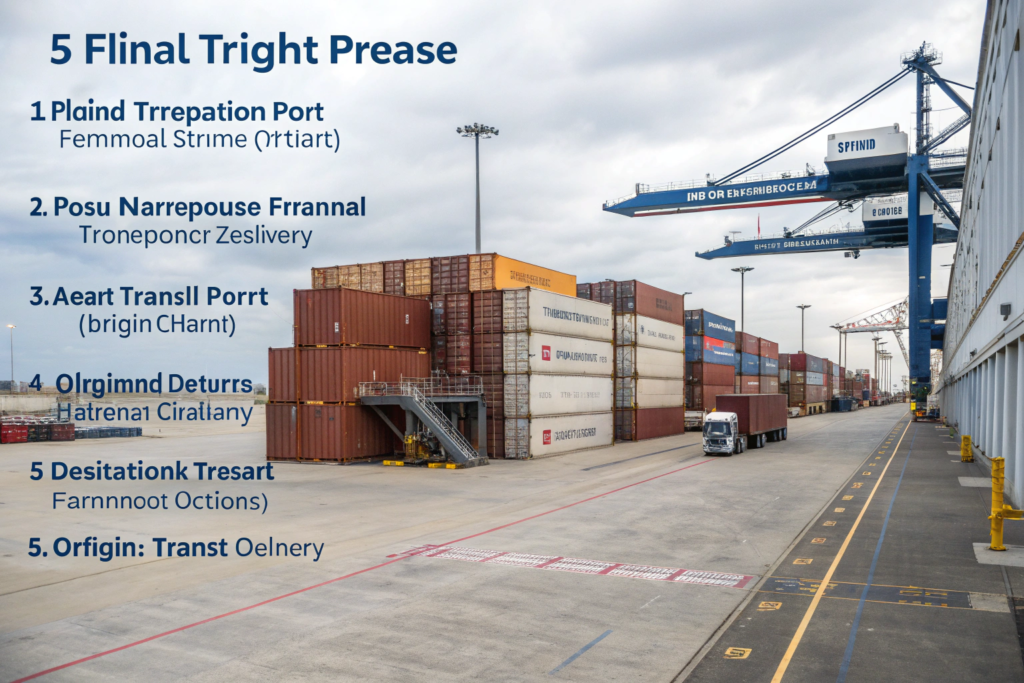
How long does pre-carriage and origin handling really take?
This phase covers getting your goods from our factory gate to the vessel at the Chinese port. For a company like Shanghai Fumao with integrated logistics, this starts the moment your fabric passes our final QC and is packed. If your cargo is FCL (Full Container Load), the container is often delivered to our facility. We then have a 1-2 day window for loading and sealing the container—this must be perfectly synced with the trucking schedule. Trucking from an inland hub like Keqiao to Shanghai or Ningbo port can take 1-3 days depending on road traffic and permits.
Then comes origin terminal handling. This is where seasonal peaks hit hard. During busy periods (March-May, August-October), container yards are packed, and getting your container a "gate in" appointment and then loaded onto the ship can take 5-10 days. In slower times, it might be 3-5 days. A practical tip we give clients is to explore how to book reliable drayage services from Chinese inland cities to secure smoother inland transit. Furthermore, ensuring your supplier provides accurate and complete documentation before the container arrives at the port is non-negotiable. Incomplete paperwork is a prime cause of "roll-overs," where your container misses its intended vessel. We mitigate this at Shanghai Fumao by having a dedicated logistics team that pre-checks all commercial invoices, packing lists, and bills of lading.
What determines the actual ocean transit time?
The ocean leg is the most predictable phase, yet it's not fixed. The standard transit time from Shanghai to Los Angeles (LAX) is about 14-16 days, while to New York (NYC) via the Panama Canal is around 25-28 days. However, "vessel delays" are now a common phrase. In 2025, factors like seasonal weather (typhoon season in the Pacific from July to October), ongoing geopolitical adjustments to shipping routes, and occasional port congestion at either end can add 3-7 days of buffer.
The choice between "express" and "economy" services from shipping alliances also matters. An express service might cost 15-20% more but guarantees priority loading and potentially a faster route. For time-sensitive fashion fabrics, this can be worth it. Also, the impact of the Panama Canal draft restrictions on Asia-US East Coast shipping schedules remains a consideration in 2025, sometimes causing vessels to take longer routes. We constantly monitor these routes for our clients. For instance, in late 2023, we advised a Miami-based activewear brand to switch their shipment from East Coast to West Coast ports due to canal delays, saving them nearly two weeks. They then used cross-country rail, which was more predictable at the time.
How do Chinese production cycles impact shipping schedules?
This is the secret lever that savvy importers pull. Your shipping timeline doesn't start when the goods are ready; it starts when you place the production order. Aligning with—not fighting against—China's manufacturing calendar is the ultimate hack for reliable deliveries.
Chinese factories operate in pronounced seasonal rhythms. The two peak production periods are Spring (March-May) and Autumn (August-October). During these months, factories are at full capacity, which can extend production lead times by 1-2 weeks. More critically, port logistics are stretched thin as everyone tries to ship simultaneously. The two major holiday shutdowns are Chinese New Year (3-4 weeks in Jan/Feb) and National Day Golden Week (1 week in October). Planning around these is not optional; it's essential. Then there are the slower, advantageous periods: June-July and November-December, where factories have more capacity and ports are less congested.

Why is Chinese New Year the most critical planning date?
Chinese New Year (CNY) is the single largest disruptive event in the global supply chain from Asia. Factories completely shut down for 3-4 weeks as workers travel home. The ripple effects are massive. Production slows for weeks before as factories rush to complete pre-holiday orders, and it takes 2-3 weeks after for operations to fully resume.
The key is to work backwards from the CNY closure. A European fashion brand we work with now follows this golden rule: All pre-production (fabrics, trims, approvals) must be completed at least 6 weeks before the holiday. This allows production to start immediately after the factory reopens. If your fabric order is placed after the CNY rush begins, you're looking at a minimum 8-10 week delay. In January 2024, a US client needed urgent Tencel™ jersey fabric for a summer line. Because they came to us late, all nearby dyeing mills were fully booked pre-CNY. We leveraged our partnership with a mill in a different province with a later holiday schedule to fulfill the order on time—a move only possible with deep, established networks.
Can you actually get faster shipping during slow production periods?
Absolutely. This is the counter-intuitive advantage. In the traditional lulls of June-July and November-December, factory capacity opens up. This means your production might be completed faster than standard lead times. More importantly, ports and freight forwarders are less busy.
During these periods, you can often secure more favorable freight rates and guaranteed space on vessels with shorter cut-off times. The inland logistics chain also moves faster. We advise clients planning for Q1 launches to target production in November-December. While there's a slight risk of holiday delays around Christmas/New Year in the US, the overall predictability from China's side is significantly higher. For example, exploring strategies for leveraging low season freight rates from China during these windows can substantially lower your total landed cost. A client in November 2023 shipped a full container of organic cotton knits and saved nearly $800 on ocean freight compared to their October shipment, and the container was loaded onto the first available vessel without delay.
What are the hidden bottlenecks at US ports in 2025?
Your container has sailed across the Pacific. The hard part is over, right? Not quite. The journey from the ship's hull to your warehouse door in the USA is fraught with its own, often less predictable, challenges. Understanding these is what separates professionals from amateurs.
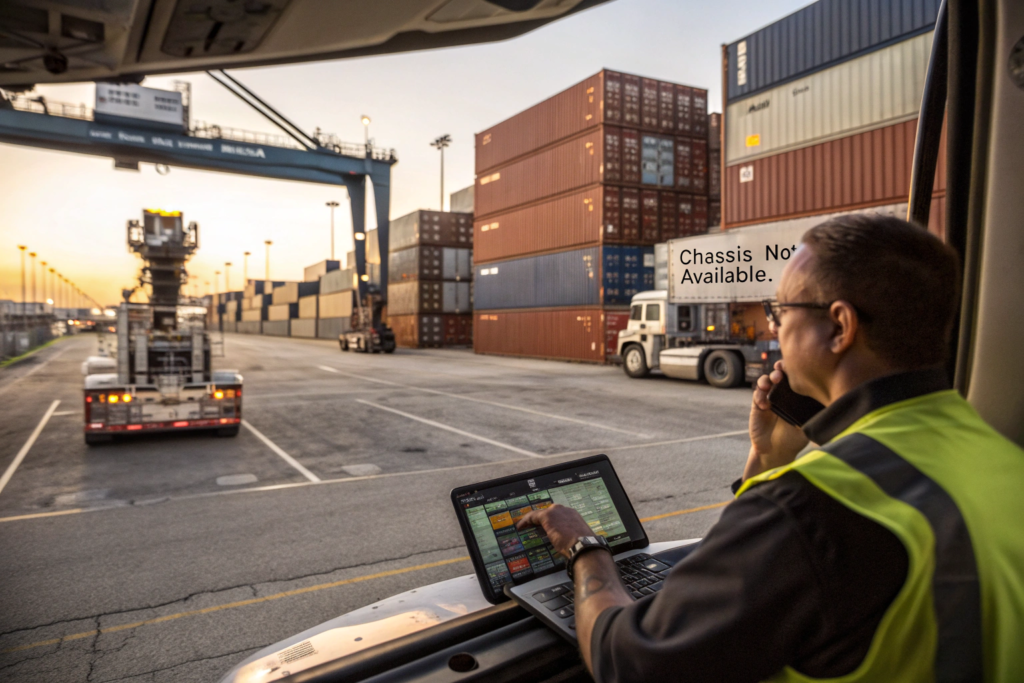
In 2025, US West Coast ports like LA/Long Beach have largely recovered from the historic backlog of 2021-2022, but operational volatility remains. Labor negotiations, although currently stable, can always introduce uncertainty. The bigger, persistent issues are chassis availability, trucker shortages for drayage, and rail intermodal congestion. East Coast and Gulf Coast ports have gained volume but face their own capacity constraints and are still adapting to the larger vessels now calling there.
How does customs clearance affect my delivery date?
Customs clearance is the mandatory gate your shipment must pass through. For fabric imports, proper documentation is your passport. The US Customs and Border Protection (CBP) primarily reviews your entry summary (ISF filed 24 hrs before loading) and commercial documents. Routine clearance can take 24-72 hours after the vessel's arrival. However, if your shipment is selected for a physical examination (a "Customs Hold"), this can add 5-10 business days easily.
Examinations are more likely if your documentation is inconsistent (e.g., value discrepancies) or if your commodity (like certain dyed fabrics) raises flags. Using an experienced customs broker is non-negotiable. We provide our clients with meticulously prepared documents, including detailed product descriptions and harmonized tariff codes. A common pitfall is underestimating the importance of understanding HS code classification for textile imports to the USA to avoid delays. In 2023, a client importing a new blended fabric with moisture-wicking properties incorrectly classified it, triggering a lab test and a 7-day delay. We now include a recommended HS code on all our invoices to prevent this.
What causes demurrage and detention charges, and how can I avoid them?
Demurrage (port storage fees) and Detention (container hold fees) are the painful "hidden taxes" of shipping delays. They accrue daily after a set number of "free days" granted by the shipping line. In 2025, with ports aiming to keep containers moving, free days are often limited.
The primary causes are delays in picking up the container from the port (due to lack of trucker appointment or chassis) or delays in returning the empty container. The post-peak season congestion in the US can make securing a trucker appointment within the free time window challenging. To avoid these fees, you need a cohesive plan: ensure your US-based freight forwarder or drayage company has appointments booked in advance, and have your inland transportation (to warehouse) ready to receive and unload promptly. Resources like port trucker appointment systems demystified can be very helpful for importers managing their own logistics. We integrate with our clients' nominated forwarders to provide real-time updates on container availability, helping them streamline this last mile. For one of our regular clients, we implemented a shared digital tracking sheet that updates when the container is gated out in China, giving their US team a precise 14-day advance notice to book drayage.
How can I build a realistic timeline for my 2025 shipments?
Now that we've dissected all the variables, how do you synthesize this into a single, actionable plan? It's about moving from reactive hope to proactive buffer-building and continuous communication. The goal isn't to eliminate all risk—that's impossible—but to manage it so effectively that surprises are minimized.
Building a realistic timeline is a four-step process: 1) Backward Planning: Start with your latest acceptable in-warehouse USA date and work backwards through every phase, adding buffers. 2) Buffer Strategy: Add strategic contingency days at each high-risk phase (origin port during peak, US port clearance). 3) Supplier Integration: Choose a supplier who is transparent and proactive about logistics, not just production. 4) Monitor & Communicate: Use tracking and maintain open lines with all parties.

What is the step-by-step formula for calculating total lead time?
Let's make this concrete. Here is a formula you can use for a typical FCL fabric shipment from Keqiao to Los Angeles, aiming for a warehouse receipt in Q3 2025 (peak season).
| Phase | Standard Duration (Days) | Peak Season Buffer (Days) | Realistic 2025 Timeline (Days) |
|---|---|---|---|
| A. Production Lead Time | 25 | + 10 | 35 |
| B. Inland to Port & Origin Handling | 5 | + 5 | 10 |
| C. Ocean Transit (Shanghai to LAX) | 16 | + 3 | 19 |
| D. US Port Clearance & Unloading | 5 | + 5 | 10 |
| E. Inland Delivery in USA | 4 | + 2 | 6 |
| TOTAL DOOR-TO-DOOR | 55 | + 25 | 80 |
Calculation: Start with your target USA warehouse date (e.g., October 1). Subtract the Total Realistic Timeline (80 days). This means production must start by July 13. Now, factor in the pre-production time (sampling, approvals, etc.), which can be another 4-6 weeks. This pushes your engagement with your fabric supplier back to early June. This math highlights why late summer/fall deliveries require spring planning. For a deeper dive into these calculations, industry forums often have robust discussions on building a dynamic lead time calculator for imports.
Why is choosing the right fabric supplier a logistics decision?
Your fabric supplier is your first and most important logistics partner. A supplier with an integrated operation, like Shanghai Fumao, controls more of the chain. We're not just weavers; we manage dyeing, finishing, and packing under coordinated schedules. This reduces the "internal handoff" delays common when dealing with a trader who must coordinate between multiple independent factories.
A supplier's location matters immensely. Being in the Keqiao textile cluster means we're surrounded by all ancillary services. If an embroidery factory is behind schedule, we have three others we can call within a 10km radius to split the order and meet the deadline. This local agility is impossible to replicate from afar. Furthermore, a professional supplier will have a dedicated logistics and QC team that understands documentation and container optimization. They will proactively warn you about upcoming holidays and peak seasons. (Here's a truth from the factory floor: a good supplier will sometimes tell you "no, that deadline is too risky" rather than take your order and fail.) When you partner with us, you're not just buying fabric; you're buying decades of embedded supply chain intelligence that smooths every step of the journey, from loom to loading dock.
Conclusion
Navigating sea freight from China to the USA in 2025 demands a shift from wishful thinking to strategic, calendar-aware planning. The real timeline is a sum of interconnected parts: production cycles that ebb and flow with Chinese holidays, an ocean crossing subject to nature and geopolitics, and port systems on both sides of the Pacific working through their own operational rhythms. The key takeaway is that the quoted "transit time" is merely one piece of the puzzle. True reliability comes from building buffers, aligning your production kick-off with factory capacity, and partnering with suppliers who are transparent navigators of this complex landscape.
By internalizing the rhythms of Chinese manufacturing—planning backwards from Chinese New Year, exploiting the advantages of slower seasons, and anticipating bottlenecks at US ports—you transform shipping from a stressful variable into a managed process. This knowledge lets you promise accurate delivery dates to your customers with confidence, protecting your brand's reputation and your bottom line. Remember, in global trade, time is not just money; it's inventory, sales, and customer trust.
If you're tired of unexpected delays and want a fabric partner who treats your timeline as seriously as you do, let's talk. At Shanghai Fumao, we combine high-quality fabric development with deep, practical logistics expertise to ensure your goods move from our mill to your manufacturing floor predictably and efficiently. Ready to optimize your next fabric order's journey? Reach out to our Business Director, Elaine, to discuss how we can build a production and shipping plan that works for your 2025 calendar. Contact Elaine at: elaine@fumaoclothing.com. Let's weave reliability into your supply chain.