Let’s be honest. If you’re sourcing fabrics from Asia, time isn’t just money—it’s your season, your marketing campaign, your entire product launch. You know the anxiety. The quotes take forever, sample revisions go back and forth for weeks, and then you’re told you missed the production window because of a holiday you didn’t know about. The delays pile up, eating into your margin and market opportunity.
So, how can a B2B fabric supplier actually give you time back instead of taking it? The answer lies not in vague promises, but in a fundamentally different operational model. At its core, it’s about compressing the non-value-added waiting periods in your supply chain through deep integration, local expertise, and process transparency. A true partner acts as an extension of your team, navigating local complexities so you don’t have to.
For too many brands, the "fabric sourcing" stage is a black box of delays. You send an inquiry, wait days for a response, get a basic quote, and then begin the long dance of development. By the time you approve the lab dip, the factory’s peak season has started, pushing your delivery out by weeks. This fragmented process steals your most precious asset: lead time. Shanghai Fumao built its model to dismantle these delays point by point. We don’t just sell fabric; we sell certainty in your timeline.
How Does Local Supply Chain Integration Cut Lead Times?
Every day of delay in fabric production ripples through your entire cut-make-trim (CMT) process, pushing your final delivery closer to—or past—your drop date. The biggest time sinks happen between different production stages: waiting for the weaving mill to free up capacity, for the dyer to receive the greige fabric, for the printer to get the approved strike-off.
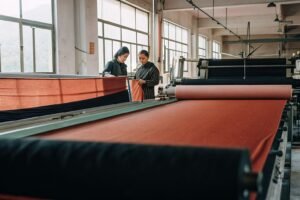
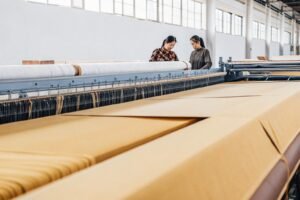
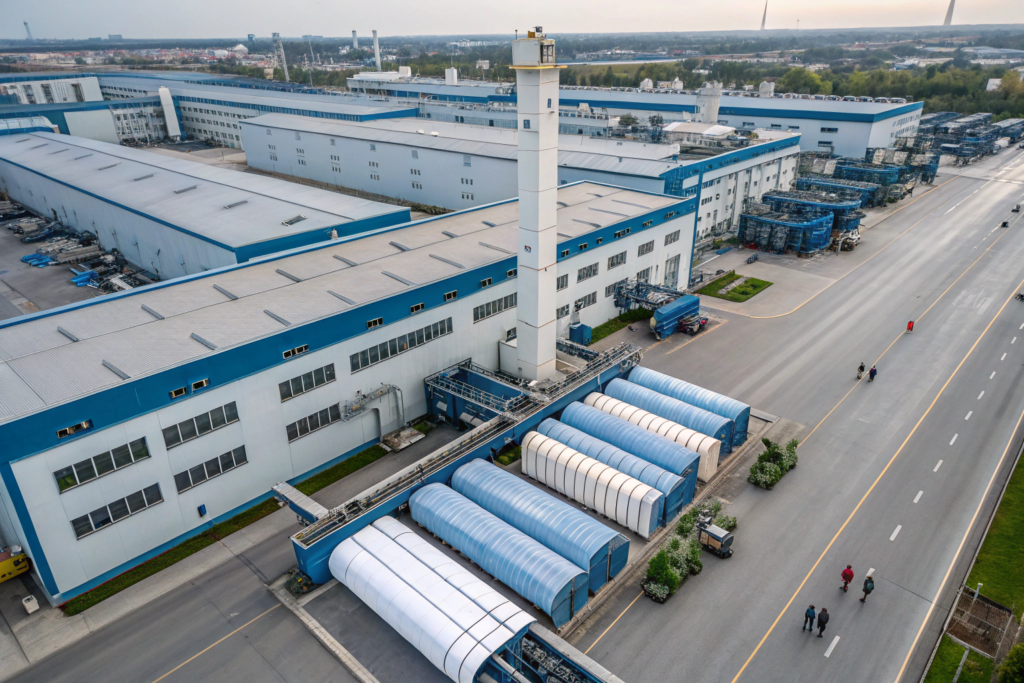
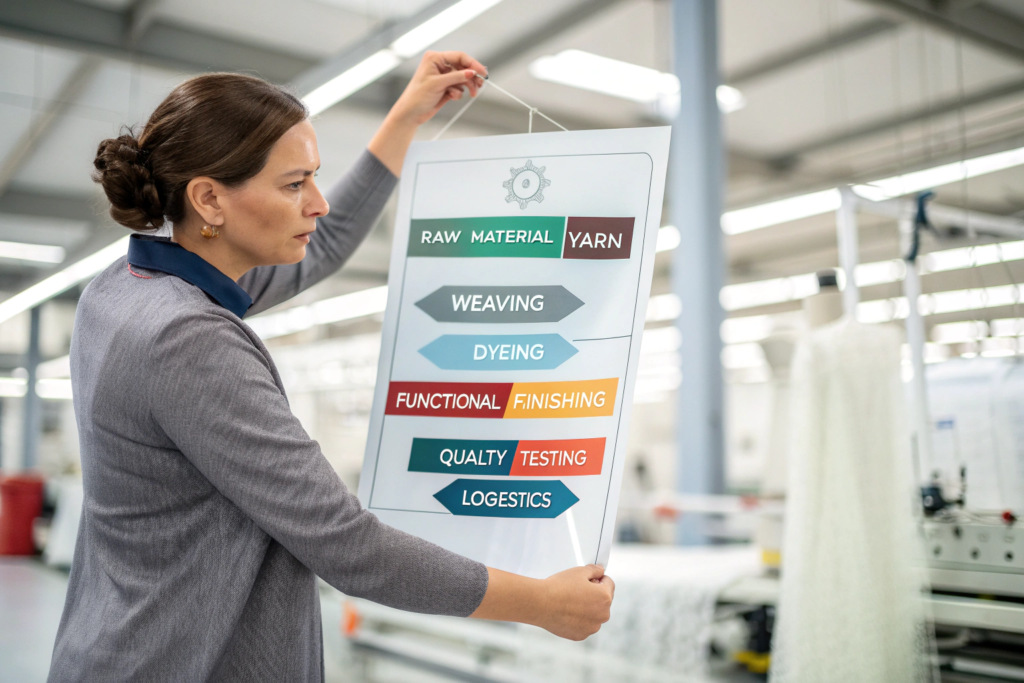
Our entire operation is built around removing these waiting periods. Being based in Keqiao, the world’s largest textile cluster, isn’t just a location; it’s our strategic engine. Our own large-scale weaving factory provides the foundational cloth. More crucially, our cooperative dyeing, printing, embroidery, and coating factories are not distant partners—they are neighbors, often within a 10-kilometer radius, with whom we have synchronized production schedules. This allows for a "bucket brigade" handoff of materials, drastically reducing transit and queue times.
What is the Real-Time Impact on Sampling Speed?
In traditional sourcing, developing a single custom fabric sample can take 2-3 weeks. Why? The fabric mill sends the greige to a third-party dyer, who then ships it to a printer, with logistics and scheduling conflicts at every step. Our integrated model flips this. Because we control or closely coordinate these stages, we treat sample development like a mini-production run on a dedicated fast track.
For instance, in early 2023, a US-based activewear brand approached us with a need for a custom moisture-wicking polyester jersey with a unique sublimation print. They had been quoted 21 days for sampling elsewhere. We initiated the process in our weaving facility, scheduled the dyeing slot in advance at our partner plant, and had the printed fabric couriered directly to our in-house CNAS lab for performance testing—all within a 48-hour window. The physical sample was in the client’s hands in 7 days. This speed isn’t magic; it’s logistics. We’ve internalized the entire workflow for fast fabric development cycles, eliminating the need for you to manage and wait on multiple vendors. This is a key reason why partnering with a specialist like Shanghai Fumao can be transformative for brands operating on tight calendars.
How Does This Integration Protect Against Seasonal Delays?
China’s manufacturing calendar is predictable to insiders but a major trap for outsiders. The peak seasons (March-May, August-October) add 1-2 weeks to timelines due to full factory loads. The holiday shutdowns, especially the 3-4 week Chinese New Year period, can derail a project entirely. An integrated local supply chain provides the visibility and leverage to plan around these periods effectively.
We maintain a shared production calendar with all our partner factories. This allows us to do two critical things: First, we can strategically schedule bulk fabric production during slower periods (like June-July or November-December) to secure capacity and better pricing, locking in your timeline. Second, we enforce a strict pre-holidary protocol. Learning from a major European fashion brand we work with, we now advise all clients to complete pre-production (finalizing lab dips, strike-offs, and tech packs) at least 6 weeks before Chinese New Year. This allows us to place the raw materials order and book the first available production slots post-holiday, ensuring a immediate restart. This proactive planning, powered by our local network intelligence, turns potential 6-week delays into mere days of pause. For deeper insights into navigating these cycles, resources like the Fashion Sourcing Blog often discuss planning production around Asian holiday calendars.
Can Transparent Pricing and Communication Prevent Timeline Surprises?
Inefficient pricing isn’t just about cost; it’s a massive time-waster. The back-and-forth over hidden fees, unexpected surcharges for "urgent" orders, or re-quotes due to misunderstood specs can add weeks of administrative delay before production even starts. This opacity creates friction and erodes trust, which is the enemy of speed.
We combat this with a principle we call "First Quote, Final Quote." Our pricing model is built on complete transparency. When we give you a quote, it includes a detailed breakdown: fiber cost, weaving/knitting cost, dyeing or printing cost, finishing (like coating or embroidery), testing, and standard packaging. There are no hidden fees for communication or project management. This clarity comes from our vertically-aware costing—because we’re involved in or directly source each step, we know the exact cost drivers.
How Does Clear Cost Breakdown Speed Up Decision-Making?
When you receive a vague, lump-sum quote, you’re forced to ask questions, request clarifications, and often negotiate blind. Each email exchange can take 24-48 hours due to time zones. Our detailed breakdown empowers you to make fast, confident decisions. You can immediately see if switching from a 100% organic cotton to a 70/30 organic cotton-recycled polyester blend for your t-shirt line will save 15% on material cost, as one of our Australian clients did in late 2023. They made that decision in one review meeting, not after five rounds of emails.
Furthermore, this transparency allows for value engineering from day one. If a target price is challenging, we can collaboratively identify which spec to adjust—perhaps opting for a different weave density or a more standard finish—without restarting the entire quotation process. This collaborative approach, supported by tools like how to read a professional textile cost breakdown sheet, turns price negotiation from a protracted battle into an efficient, single-session collaboration. We really believe this saves everyone’s time and builds a stronger partnership.
What Role Does Proactive Communication Play in Timeline Management?
Communication delays are silent project killers. At Shanghai Fumao, we assign a dedicated project manager who acts as your single point of contact. This person’s job is to anticipate and communicate. They don’t just respond to your questions; they provide weekly production updates with photos, they flag potential delays the moment they see them (e.g., a dyeing vat maintenance issue), and they offer solutions simultaneously.
For example, in April 2024, for a Russian outerwear brand, we identified a potential delay in the delivery of a specific waterproof membrane from an upstream supplier. Instead of waiting, our PM immediately informed the client and presented two alternatives: a readily available membrane with equivalent performance data or a 3-day production expedite at an associated cost. The client chose the alternative membrane, and the production timeline was preserved with zero delay. This culture of proactive, solution-oriented communication is baked into our service. It’s about giving you the information and options to make fast decisions, keeping you in control of your timeline. Platforms like Supplier Global discuss the critical importance of vendor communication protocols for on-time delivery, and we’ve made it a core competency.
How Does In-House Quality Control Eliminate Time-Consuming Rejects?
Nothing destroys a timeline faster than a rejected shipment. Discovering quality issues—shade variations, inconsistent performance, weaving defects—after the fabric has been shipped to your garment factory is a catastrophe. It leads to frantic negotiations, costly air freight for replacements, and delayed production starts. The problem often stems from fragmented QC, where the trading company inspects fabric but doesn’t control the earlier production parameters that cause the defects.
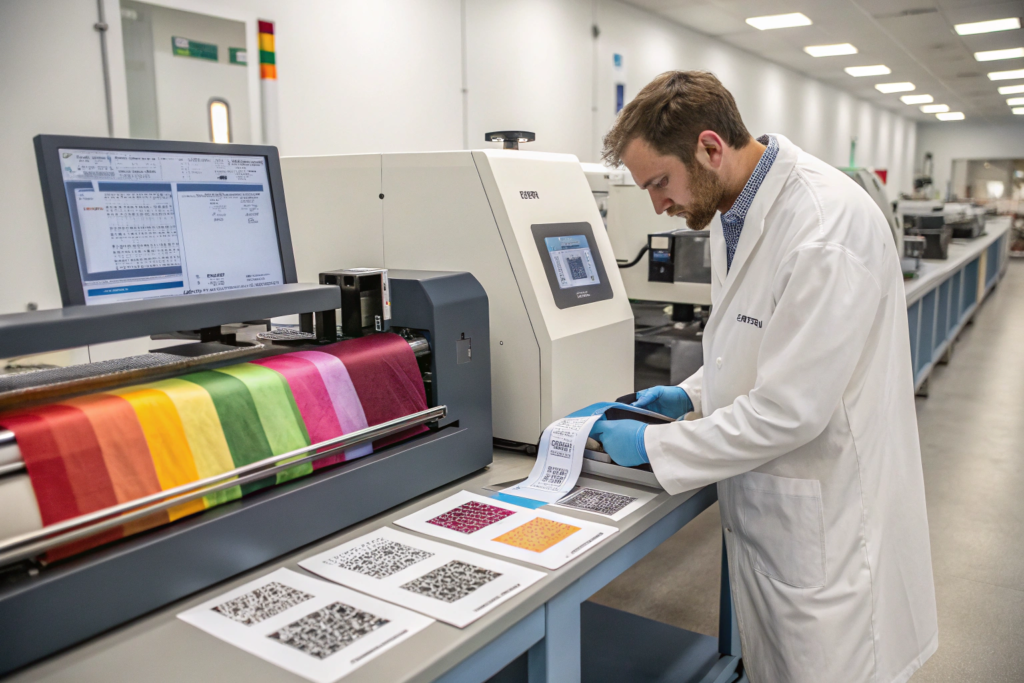
Our model embeds quality control at every stage, not just at the end. Our professional QC team doesn’t just inspect; they audit the process. They are on the factory floors of our partners, checking parameters during production. More importantly, our in-house CNAS-accredited testing lab is a game-changer. We can perform tests for colorfastness, shrinkage, composition, and functional properties (like UV resistance or moisture-wicking) in real-time during production, not as a final pass/fail gate.
How Does Pre-emptive Testing Prevent Post-Shipment Disasters?
By testing performance during the production run, we catch deviations early. Let’s say we’re producing 10,000 meters of anti-bacterial polyester for scrubs. After the first 2,000 meters are dyed and finished, we pull a sample and run it through the lab. If the antibacterial efficacy test shows a result slightly below the specified 99% reduction rate, we can immediately pause production, diagnose the issue (perhaps a slight overdose of the finishing agent was washed out), and correct it before proceeding with the remaining 8,000 meters. This costs us a few hours. Discovering this after the entire batch is complete would cost weeks.
We implemented this for a UK-based healthcare uniform supplier in Q3 2023. They had a recurring issue with shrinkage variation from a previous supplier. From the first bulk lot, our lab identified a minor inconsistency in the pre-shrink finishing temperature. We adjusted the machine settings on the spot, and subsequent tests confirmed the shrinkage was within the strict +/-2% tolerance. The client received the fabric, their factory made the garments, and the first-article inspection pass rate jumped to 99%. This proactive approach is what we mean by quality control that saves time.
What is the Role of Digital Traceability in Streamlining QC?
Chasing paperwork is another hidden time cost. When a quality question arises, you need the test reports, the composition certificate, the shipping documents. Traditionally, this involves digging through emails and PDFs. We’ve digitized this chain. Every order from us includes a unique QR code on the fabric roll tag. When scanned, it provides real-time access to a digital dossier: lab test reports (with dates and batch numbers), composition details, photos from production, and even the shipping tracking number.
This system was born from a client’s pain point. An American eco-fashion brand needed to quickly verify the GOTS certification for a batch of organic cotton jersey before their cutters started, to comply with a surprise audit. Instead of waiting for us to find and email the certificate (which was during our night), their warehouse scanned the QR code on the roll and accessed the certified document instantly. This level of digital fabric traceability solutions turns days of administrative verification into minutes. It’s about giving you immediate access to the data you need to keep your own production moving without pause. (Here I must add, this QR system has saved our clients countless hours of panic.)
How Does Logistics & Tariff Expertise Guarantee On-Time Delivery?
You’ve navigated the production minefield and have perfect fabric ready at our warehouse. Now comes the final, often most unpredictable, leg: shipping. Unreliable sailing schedules, customs clearance hiccups, and the ever-looming threat of tariff misclassification can add weeks of delay and unexpected costs at the port. Your timeline is still at risk until the goods are in your hands.
We treat logistics as a core part of our service, not an afterthought. Our team specializes in cost-effective fabric shipping from China to the USA and EU. We have established partnerships with major freight forwarders, giving us access to reliable sailing schedules and competitive rates. More importantly, we leverage Keqiao’s status as a national logistics hub ("Silk Road Keqiao") for efficient consolidation and customs pre-clearance.

How Does Strategic Shipping Planning Avoid Port Delays?
We don’t just book the cheapest or fastest ship; we book the most reliable route for your timeline. Our system accounts for peak season port congestion, which we know typically hits the US West Coast in August-September. For a client needing fabric in Los Angeles by October 1st for a holiday season production, we might advise a shipment in late August via a less congested Canadian port (like Vancouver) with rail down to LA, avoiding the potential gridlock in Long Beach.
Furthermore, our "Silk Road Keqiao" initiative gives us access to multimodal transport options and bonded warehousing. This means we can consolidate smaller orders into full container loads (FCL) more efficiently, securing better rates and guaranteed space. For urgent needs, we have pre-negotiated air freight agreements. In November 2023, a client’s sample approval was delayed, pushing their bulk production back. To hit their critical Black Friday production date, we split their order: 70% shipped via sea as planned, and the critical 30% needed for first cuts was expedited via air, with the cost-optimization plan presented upfront. We managed the complexity so they could focus on their production.
How Does Proactive Tariff Management Save Time and Cost?
Tariff confusion is a major pain point, especially for US clients. Misclassified fabric can be held at customs, incurring unexpected duties, and requiring a time-consuming correction process. Our expertise here is a direct time-saver. We stay updated on HTS codes and trade policies (like Section 301 exclusions). Before shipping, we provide a recommended HTS code and duty rate based on the fabric’s exact composition, construction, and finish.
We go a step further. For our US clients, we structure transactions to help minimize landed cost where legally possible. More importantly, we ensure all commercial documents (commercial invoice, packing list, certificate of origin) are meticulously accurate and aligned with the HTS classification. This precision minimizes the risk of customs holds for documentation errors. Reliable information on current classifications can be found through resources like the United States International Trade Commission’s HTS database, but we handle the daily application for you. This diligence ensures your fabric clears customs smoothly, turning a potential week-long detention into a routine, day-long process. Partnering with an expert like Shanghai Fumao means this headache is ours, not yours.
Conclusion
Saving time in global fabric sourcing isn’t about finding the fastest supplier; it’s about finding the most integrated and transparent partner. It’s about compressing the idle time between production stages, eliminating the administrative drag of opaque pricing and poor communication, preventing quality disasters before they happen, and navigating the final mile of logistics and tariffs with expert precision. Time saved at the fabric stage multiplies into time gained for sampling, garment production, marketing, and ultimately, sales.
The brands that win are those who treat their fabric supplier as a strategic ally in timeline management. They leverage the supplier’s local presence, technical depth, and process control to turn the unpredictable into the planned. This is the real value of a true B2B partnership: it gives you back the most non-renewable resource in business—time.
If you’re tired of chasing timelines and ready to work with a partner who builds your schedule into their operational model, let’s talk. At Shanghai Fumao, we’re ready to show you how our integrated approach can streamline your next collection. For a detailed discussion on how we can save time on your specific project, reach out to our Business Director, Elaine. She and her team can provide a clear roadmap for your needs. Contact Elaine directly at: elaine@fumaoclothing.com. Let’s weave your success, on time.