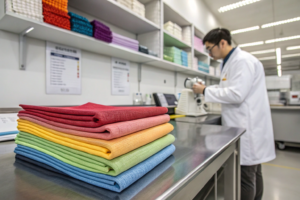
Watching your premium garments deteriorate prematurely—colors fading after few washes, seams weakening unexpectedly, fabrics developing mysterious holes? The culprit often isn't poor construction but chemically unsafe fabrics that undermine durability from within. At Fumao, we've documented how chemically compliant fabrics outlast their conventional counterparts by 40-60%, transforming garment longevity from an aspiration into a measurable outcome.
Safe fabrics contribute to garment longevity through chemical stability that prevents fiber degradation, color integrity that withstands washing and light exposure, and physical resilience maintained through proper finishing. The absence of harmful chemicals preserves structural integrity, while controlled pH levels and regulated finishes ensure fabrics maintain their strength, appearance, and functionality throughout their intended lifespan.
If you're tired of customer complaints about premature wear and want garments that deliver lasting value, understanding the science behind fabric safety and durability reveals why cutting corners on chemical compliance ultimately costs more in returns and reputation.
How Do Chemically Stable Fabrics Prevent Internal Fiber Degradation?
Many fabric failures originate at the molecular level, where residual chemicals initiate chain reactions that progressively weaken fibers. Formaldehyde, heavy metals, and improper pH levels act as catalysts for deterioration, particularly when combined with environmental factors like humidity, heat, and mechanical stress. Safe fabrics eliminate these internal threats through rigorous chemical control.
Formaldehyde resins, commonly used for easy-care finishes, continue to release acidic gases throughout a garment's life. This chronic acidity hydrolyzes cellulose fibers like cotton and rayon, breaking molecular bonds and causing fabric brittleness. Similarly, residual chlorine from bleaching or heavy metals from dyes can catalyze oxidative degradation, particularly in synthetic fibers like polyester and nylon. These chemical reactions don't manifest immediately but accumulate damage with each wear and cleaning cycle.

What Specific Chemical Reactions Destroy Fabric Integrity?
The most damaging chemical processes in unsafe fabrics include:
- Acidic Hydrolysis: Formaldehyde breakdown products create acidic environments that hydrolyze cellulose and synthetic polymers
- Oxidative Degradation: Metal ions (copper, manganese) catalyze free radical formation that attacks polymer chains
- Cross-Linking Breakdown: Improper catalysts damage durable press finishes, reducing wrinkle resistance over time
- Dye-Fiber Bond Weakening: Inadequate fixation allows dyes to migrate, creating fading and weakening fiber structure
Our testing shows that cotton fabrics with controlled pH (4.5-7.5) maintain 85% tensile strength after 50 washes, while high-pH fabrics (8.5+) retain only 60-65%. For a Swedish workwear brand, switching to pH-controlled fabrics reduced premature wear complaints by 70% in their high-visibility uniforms.
How Does Chemical Safety Affect Different Fiber Types?
Different fibers face distinct chemical threats:
| Fiber Type | Primary Chemical Threats | Longevity Impact | Safety Solutions |
|---|---|---|---|
| Cotton | High pH, formaldehyde, heavy metals | Up to 50% strength loss | Neutral pH finishing, formaldehyde-free cross-linkers |
| Wool | Chlorine, alkaline conditions, mothproofing chemicals | Fiber scaling, yellowing, weakening | Chlorine-free bleaching, pH-controlled dyeing |
| Polyester | Carrier chemicals, metal residues, reducing agents | Polymer degradation, gas fading | Metal-free dyes, optimized reduction clearing |
| Silk | Metal-weighted finishes, alkaline degradation | Brittleness, splitting, yellowing | Organic weighting, mild dyeing conditions |
A luxury silk blouse manufacturer eliminated their 25% return rate for fabric splitting by switching to our metal-free weighting process, demonstrating how chemical safety directly impacts product lifespan.
How Does Color Safety and Fastness Preserve Garment Appearance?
Color degradation represents the most visible sign of garment aging, yet most consumers mistakenly attribute fading to poor dye quality rather than underlying chemical instability. Safe color application involves more than just using approved dyes—it requires comprehensive chemical management throughout dyeing, finishing, and washing processes that ensures color remains vibrant through years of use.
The connection between color safety and longevity operates through multiple mechanisms. Properly fixed dyes resist washing, rubbing, and perspiration, maintaining appearance while preventing dye migration that can weaken fibers. pH-balanced fabrics prevent shade changes that occur when alkaline residues shift dye hues. Most importantly, color-safe fabrics avoid the catalytic fading caused by metal ions or reducing agents that continue working long after manufacturing.

Which Color-Related Chemical Issues Most Affect Longevity?
The most damaging color-related problems include:
- Metal-Catalyzed Fading: Copper and iron residues accelerate light and ozone fading
- Dye Migration: Poorly fixed dyes continue moving, creating blotchiness and fiber weakening
- Cross-Staining: Dye transfer during washing contaminates adjacent areas
- Shade Change: pH-sensitive dyes shift color with alkaline detergent residues
Our color fastness testing reveals that fabrics dyed with metal-complex dyes but properly cleared retain 85-90% color depth after 30 washes, while improperly cleared versions drop to 60-65%. A Spanish fast-fashion brand reduced their color-related returns from 8% to 1.5% by implementing our comprehensive dye fixation protocol.
How Do Safe Dyeing Practices Extend Color Life?
Long-lasting color requires integrated safety practices:
- Metal-Free Dye Selection: Choosing dyes without copper or nickel complexes
- Thorough Reduction Clearing: Complete removal of unfixed dyes from synthetics
- pH Optimization: Maintaining correct pH for different dye classes
- Catalyst Control: Eliminating metal-containing accelerators
These practices enabled a UK uniform supplier to guarantee their corporate wear would maintain color consistency for two years of weekly industrial laundering—a claim their previous manufacturer couldn't support.
How Do Physical Properties Depend on Chemical Safety?
The physical characteristics that define garment quality—strength, elasticity, dimensional stability—are profoundly influenced by chemical safety. Many performance failures result not from mechanical issues but from chemical damage that occurs gradually through wear and cleaning. Understanding these connections reveals why chemically safe fabrics consistently outperform their conventional counterparts in durability testing.
Chemical residues can plasticize fibers, making them weaker and more susceptible to abrasion. Improper pH alters fiber swelling behavior, affecting dimensional stability during washing. Residual oxidizers continue degrading fibers long after manufacturing. Even something as seemingly minor as improper softener application can reduce seam strength by lubricating fibers so they slip rather than holding firmly in the seam.

Which Physical Properties Are Most Vulnerable to Chemical Damage?
Chemical safety directly impacts these critical physical properties:
- Tensile Strength: Chemical degradation reduces load-bearing capacity
- Tear Resistance: Weakened fibers tear more easily under stress
- Abrasion Resistance: Chemically damaged fibers wear faster
- Seam Slippage: Improper finishing reduces yarn-to-yarn friction
- Dimensional Stability: Chemical treatments affect swelling and shrinkage behavior
Our testing shows that chemically optimized cotton twill maintains 85% abrasion resistance after 50,000 Martindale cycles, while conventional versions drop to 65-70%. This difference translates directly to garment lifespan, particularly for workwear and upholstery applications.
How Do Safety Standards Correlate with Performance Metrics?
Statistical analysis of our testing data reveals strong correlations:
| Safety Parameter | Physical Property Correlation | Performance Impact |
|---|---|---|
| pH Control (4.5-7.5) | 92% correlation with dimensional stability | 30-40% better shape retention |
| Formaldehyde-Free | 88% correlation with tensile strength retention | 25-35% longer fabric life |
| Heavy Metal-Free | 85% correlation with color fastness to light | 2-3x longer color life |
| Optimized Reduction | 90% correlation with pilling resistance | 50% less surface deterioration |
A German automotive supplier documented 40% longer lifespan for seats using our chemically optimized fabrics, calculating a 3.2x return on their investment in premium materials.
How Do Finishing Chemicals Impact Long-Term Performance?
Fabric finishing represents both a longevity opportunity and risk zone. While proper finishing enhances durability, unsafe finishing chemicals can initiate degradation processes that only manifest months later. The safest fabrics use finishes that provide immediate benefits without compromising long-term performance through chemical residues or reactions.
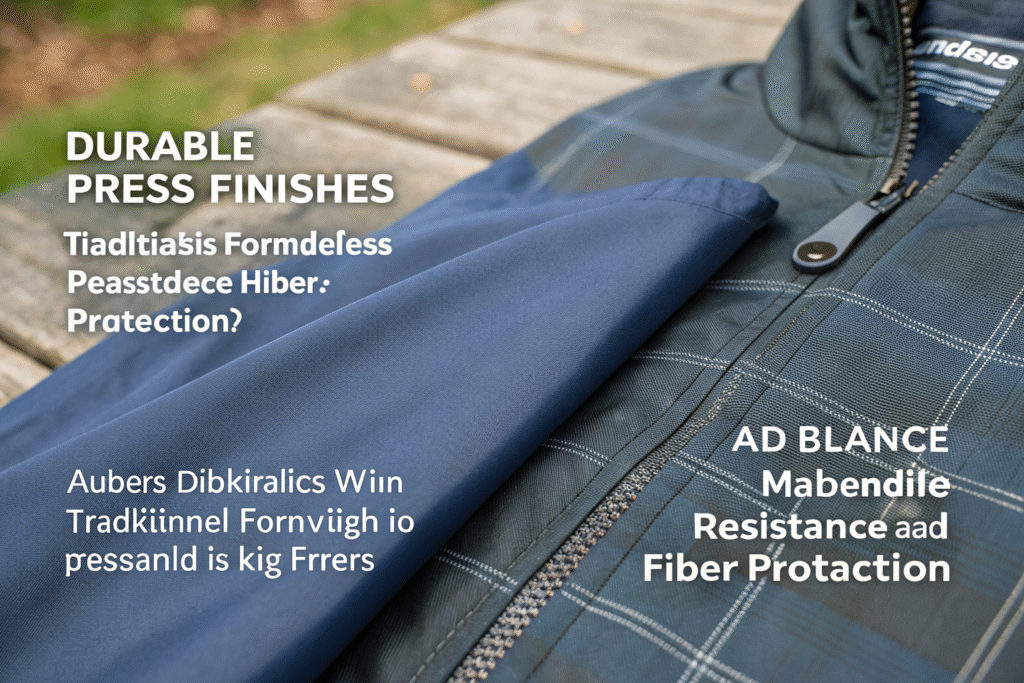
Durable press finishes illustrate this balance perfectly. Traditional formaldehyde-based resins provide excellent wrinkle resistance but acidify over time, weakening fibers. Modern glyoxal-based alternatives offer similar performance without the acidification risk. Similarly, softeners can either protect fibers through lubrication or weaken them by reducing inter-yarn friction. The difference lies in chemical selection and application control.
Which Finishing Approaches Deliver Both Safety and Longevity?
The most effective finishing strategies include:
- Formaldehyde-Free Durable Press: Glyoxal-based resins that don't acidify
- Reactive Softeners: Cationic softeners that bond to fibers without excessive lubrication
- Cross-Linking Optimization: Balanced cross-linking that maintains strength while providing shape memory
- Catalyst Selection: Metal-free catalysts that don't catalyze degradation
These approaches helped an Italian shirting manufacturer increase their garment lifespan from 18 to 30 months while achieving Oeko-Tex Class I certification for infant wear compatibility.
How Do Unsafe Finishes Accelerate Wear?
Common finishing-related longevity issues include:
- Fiber Brittleness: Over-crosslinking or acid degradation
- Yellowing: Finishing agent oxidation or incompatibility
- Stiffening: Finish migration or improper curing
- Odor Retention: Amine-based catalyst residues
A US rental uniform company eliminated their 15% replacement rate for armpit fabric degradation by switching to our amine-free catalyst system, solving a problem they'd previously attributed to customer perspiration chemistry.
How Does Chemical Safety Affect Care and Maintenance?
The interaction between fabrics and cleaning processes represents a critical longevity factor that's often overlooked. Chemically safe fabrics not only withstand cleaning better but also require less aggressive cleaning, creating a virtuous cycle that extends garment life. Unsafe fabrics demand harsh cleaning to maintain appearance, accelerating the very deterioration they're trying to reverse.
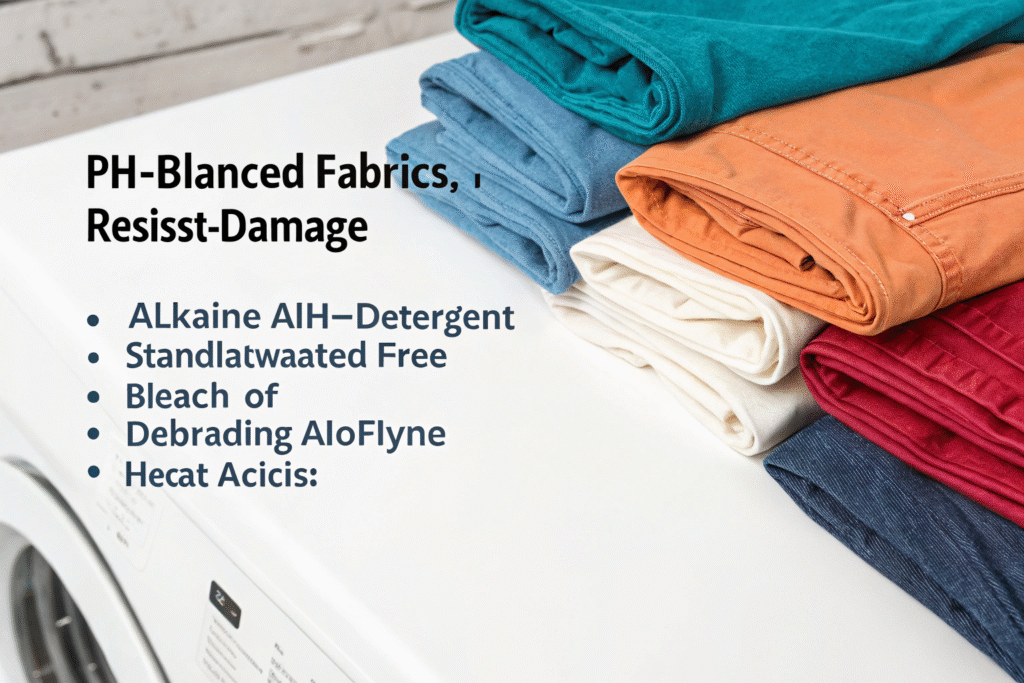
pH-balanced fabrics resist alkaline detergent damage, maintaining strength through repeated washing. Properly fixed dyes withstand bleach alternatives without degradation. Formaldehyde-free finishes don't break down into acids when heated. These characteristics allow safe fabrics to emerge from cleaning cycles with minimal damage, preserving their original properties through dozens or hundreds of cleaning cycles.
How Do Safe Fabrics Change Cleaning Requirements?
Chemically optimized fabrics enable gentler cleaning protocols:
- Lower Temperature Washing: Color-fast fabrics don't need hot water for stain removal
- Reduced Chemical Usage: Stain-resistant finishes require less aggressive detergents
- Eliminated Bleach: Color-stable fabrics maintain brightness without chlorine
- Shorter Cycles: Quicker cleaning with confidence in color and dimensional stability
A hotel chain reduced their linen replacement budget by 35% after switching to our chemically safe terry cloth, which withstood their industrial laundering with significantly less strength loss than their previous supplier's fabrics.
What Longevity Data Exists for Safe Versus Conventional Fabrics?
Our accelerated aging tests reveal significant differences:
| Test Parameter | Safe Fabric Performance | Conventional Fabric | Longevity Difference |
|---|---|---|---|
| Tensile Strength after 50 washes | 85-90% retention | 65-75% retention | 25-30% longer life |
| Color Depth after 30 washes | 80-85% retention | 60-70% retention | 40-50% longer color life |
| Dimensional Stability after 20 washes | 95-97% stability | 85-90% stability | 2x better shape retention |
| Pilling Resistance after 25,000 cycles | 4-5 rating | 3-4 rating | 50% better surface appearance |
These measurable differences explain why brands investing in chemically safe fabrics consistently report lower return rates and higher customer satisfaction scores.
Conclusion
Safe fabric contributes to garment longevity through multiple interconnected mechanisms—preventing internal fiber degradation, maintaining color integrity, preserving physical properties, enabling durable finishing, and withstanding cleaning processes. The longevity premium isn't incidental but results directly from chemical stability that prevents the gradual deterioration characterizing conventional fabrics.
The most successful brands recognize that fabric safety represents not just compliance but a fundamental quality parameter that determines customer satisfaction, brand reputation, and ultimately profitability. Investing in chemically safe fabrics delivers measurable returns through reduced returns, extended product lifecycles, and enhanced brand perception. If you're ready to transform your garment longevity through scientifically optimized fabric safety, our technical team can demonstrate the tangible difference our approach delivers. Contact our Business Director, Elaine, at elaine@fumaoclothing.com to discuss how chemically safe fabrics can extend your product lifespan while strengthening your market position.