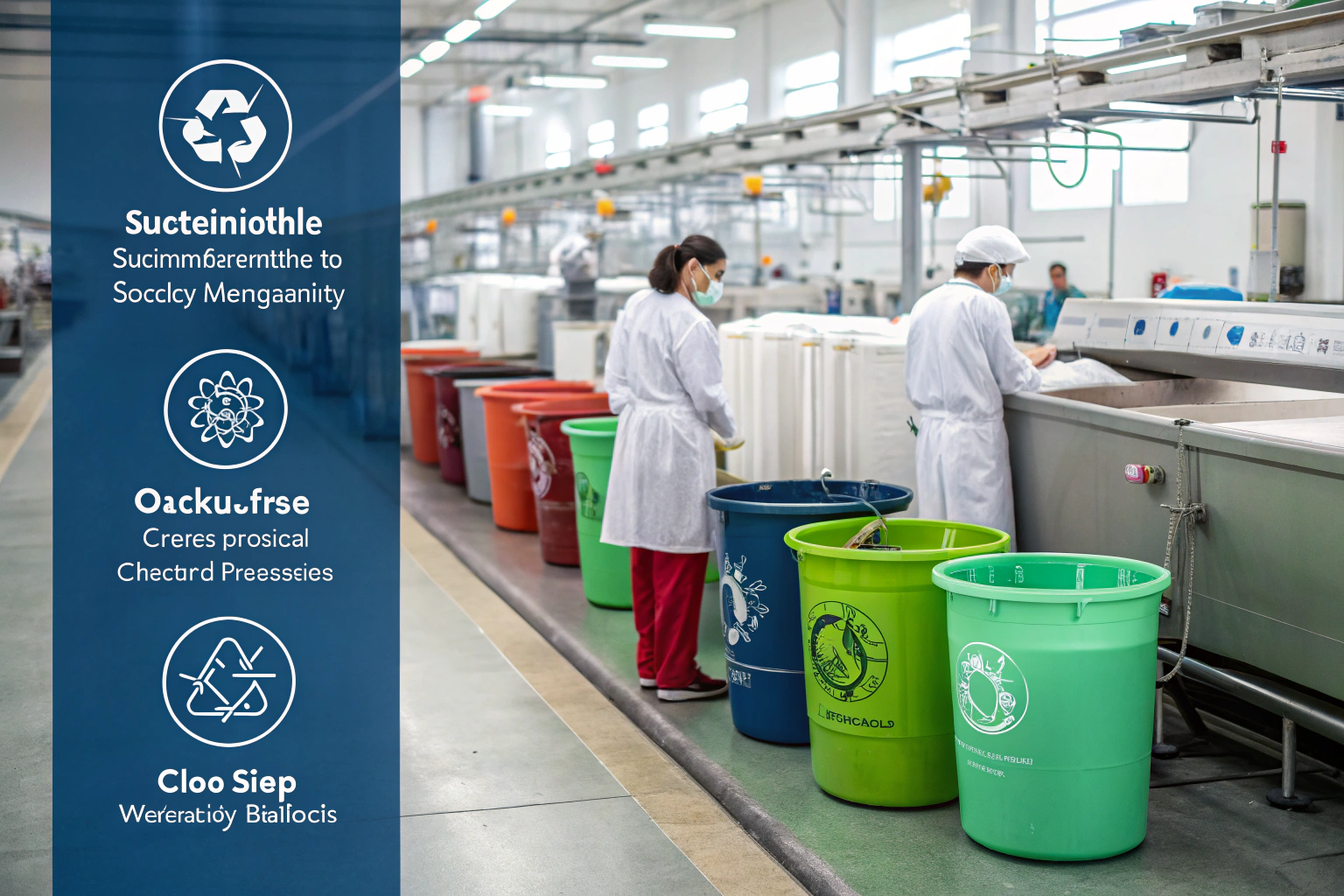
You hear "responsible supply chain," and images of solar panels, fair wages, and recycling bins might come to mind. But what about the chemical cocktail in the dyeing vat, the wastewater leaving the mill, or the invisible residues on the fabric touching a baby's skin? A truly responsible supply chain isn't just about the macro; it's mastered at the micro level—the molecular level. This is where many sustainability narratives fall short. They talk about the "what" (organic cotton) but not the "how" (processed with what chemicals?). OEKO-TEX® certification, particularly the STANDARD 100 and STeP modules, provides the rigorous, technical framework that bridges this gap, turning vague responsibility into verifiable, process-based action.
OEKO-TEX® certification supports a responsible supply chain by enforcing preventative, science-based controls at the production stage, focusing on human-ecological safety and environmentally friendly manufacturing processes. It moves responsibility upstream, requiring factories to manage their chemical inputs, treat their wastewater, ensure safe working conditions, and document everything—creating a transparent, auditable chain of custody that brands can rely on. It’s a system that says, "Don’t just tell us the final product is safe; show us how you made it that way."
Think of it as the difference between checking a car’s emissions at the annual inspection (a product test) versus having real-time monitors in the engine and enforcing clean fuel standards at every refinery (a process control). OEKO-TEX® does the latter for the textile industry. For a brand, this means your "responsible" claim is backed by a system that looks at the factory floor, not just the finished garment. Let’s dissect how this works in practice, from the chemical inventory to the community impact.
How Does OEKO-TEX® Enforce Responsible Chemical Management?
This is the absolute core. A responsible supply chain cannot exist without responsible chemistry. OEKO-TEX® STANDARD 100’s banned substances list is the headline, but the real mechanism is how it controls chemicals before they touch the fiber. It’s a preventative, not just a detective, system.
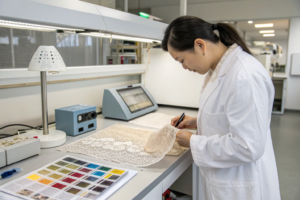
For a production facility to be certified (either for STeP or as a prerequisite for issuing STANDARD 100 certificates), it must implement a Chemical Management System (CMS). This isn't optional. Here’s what that involves on the ground, based on our own annual audits at Shanghai Fumao and our partner mills:
- Maintaining an Approved Chemical List (ACL): The factory can only use dyes, auxiliaries, and finishing agents from suppliers who provide full disclosure and whose products have been screened against the OEKO-TEX® Restricted Substances List (RSL). No mystery chemicals are allowed. We have a digital database for this.
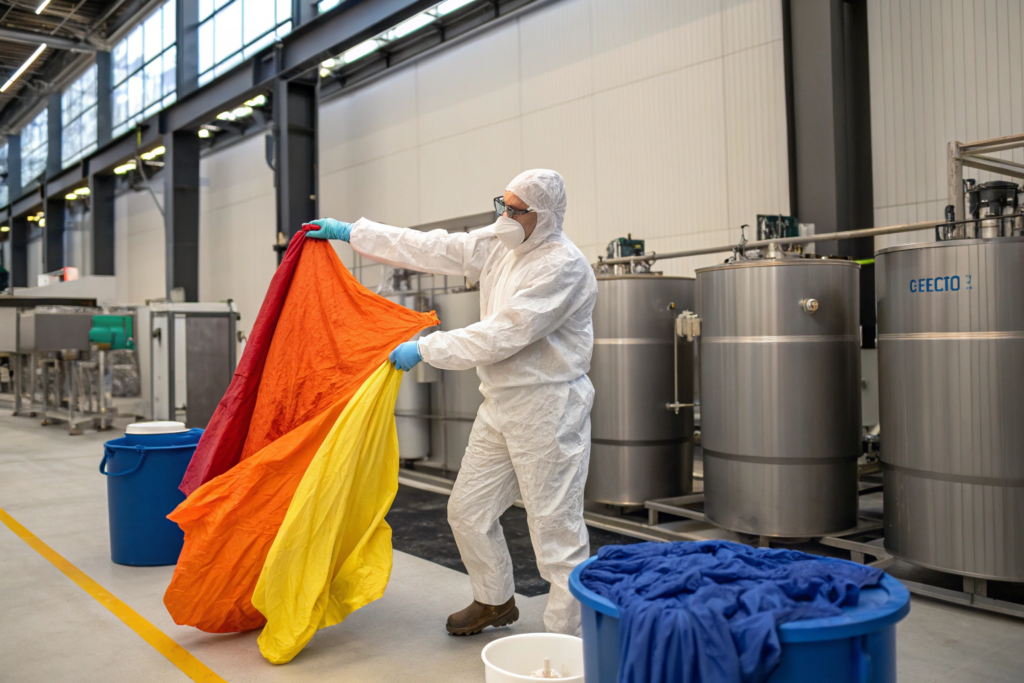
- Safe Storage and Handling: Chemicals must be stored properly (separated, labeled, with spill containment) and workers handling them must have appropriate PPE (personal protective equipment) like gloves, masks, and goggles. The auditor physically checks this.
- Precise Dosage and Process Control: The certification pushes for optimized processes that use the minimum effective amount of chemicals. This reduces both environmental load and cost. For example, our dyeing partners use automated dispensing systems to eliminate human error in weighing dyes.
A concrete example: In early 2024, we worked with a dyeing partner to switch a client’s polyester fabric to a new OEKO-TEX® approved carrier (a chemical used in dyeing). The old carrier, while effective, had a higher environmental impact. The new one achieved the same color depth with 15% less chemical usage and a lower COD (Chemical Oxygen Demand) in the wastewater. This change was driven directly by our commitment to the certified process, not just the final product test. For brands looking to understand chemical management, resources like The ZDHC Foundation's Manufacturing Restricted Substances List (MRSL) provide a complementary, in-depth framework.
What is the impact on wastewater and environmental protection?
Chemical management directly dictates what goes down the drain. OEKO-TEX® STeP certification has strict criteria for wastewater treatment. The factory must monitor key parameters of its effluent (like pH, COD, heavy metals) and treat it to meet local regulations—or stricter internal standards—before discharge. The auditor reviews treatment plant logs and can take samples. This prevents the outsourcing of pollution. It turns the “clean fabric” promise into a “clean process” reality. A study published in the Journal of Cleaner Production often highlights the direct link between chemical input management and wastewater quality in textiles.
How does this create transparency for brands?
It provides a paper trail you can actually follow. When you source a certified fabric from us, you can request (and we can provide) documentation on the chemical suppliers and safety data sheets (SDS) for key processes. This is invaluable for your own due diligence and for responding to deep audits from retailers like Nordstrom or Zalando who are increasingly asking, “What chemicals were used?” It transforms your supply chain from a black box into a glass box.
How Does Certification Improve Social Responsibility and Worker Safety?
Responsibility extends to the people making the materials. While OEKO-TEX® is not a social compliance standard like BCI or Fairtrade, its STeP module directly addresses critical occupational health and safety (OHS) issues that stem from chemical and operational hazards. This is a form of social responsibility grounded in the daily reality of a textile worker.
The STeP audit checks for:
- Health & Safety Training: Are workers who handle chemicals trained on their risks and proper handling? We conduct mandatory quarterly trainings at our partner facilities.
- Workplace Conditions: Is there adequate ventilation in dyeing and printing areas? Are noise and dust levels controlled? Are emergency showers and eyewash stations available near chemical handling zones? These aren't suggestions; they are checkpoints.
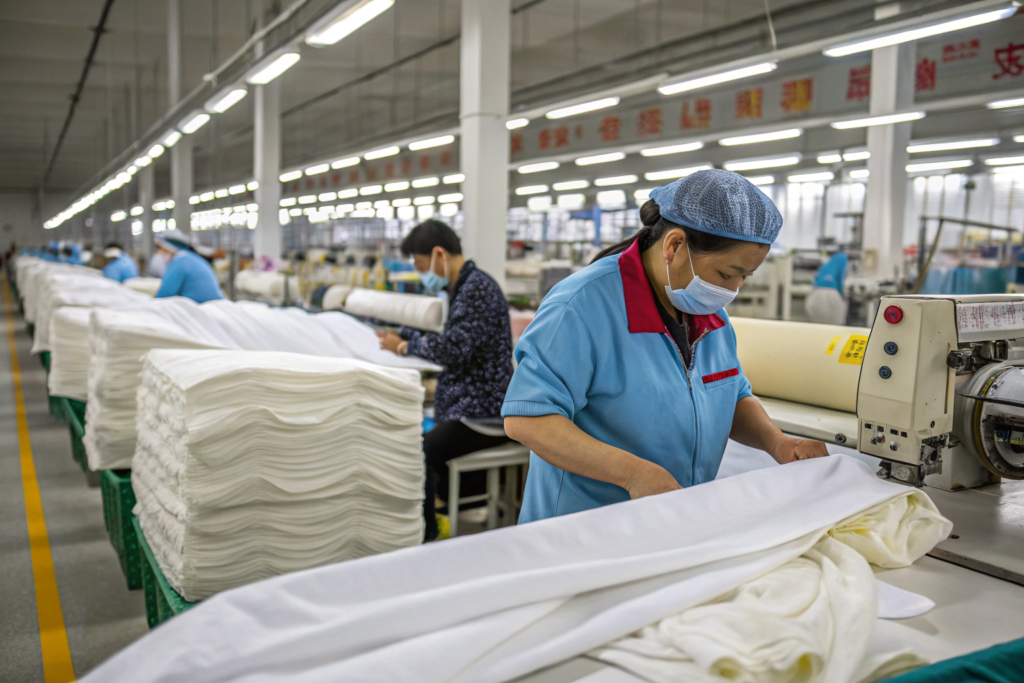
- Use of Personal Protective Equipment (PPE): Is PPE provided, and is its use enforced and monitored? The auditor walks the floor to see this.
- Management of Working Hours: While not regulating wages, STeP requires transparent recording of working hours to help avoid excessive overtime, which can lead to fatigue and accidents.
I’ll share a personal experience from our last STeP audit. The auditor spent an hour in the fabric finishing area. He didn’t just look at the machine; he interviewed the operator. He asked (through our translator): “What chemical is in that spray tank? What do you do if it splashes in your eye? Where is the safety data sheet for it?” The worker pointed to the SDS posted on the wall and then to the eyewash station. The auditor nodded in approval. This is practical, life-protecting responsibility in action. For a broader view of social responsibility in manufacturing, platforms like The Supplier Ethical Data Exchange (SEDEX) offer insights, though OEKO-TEX® focuses intensely on the chemical-to-worker interface.
Does this certification ensure fair wages?
No, it does not directly address wages or collective bargaining. That is outside its scope. Its contribution to social responsibility is hazard prevention and health protection. By ensuring a safer, cleaner, and more regulated workplace, it creates a foundational level of dignity and care. It prevents the most immediate harms. Brands need to pair OEKO-TEX® with social compliance audits for a holistic view, but the health and safety component is non-negotiable and deeply valuable.
How does this benefit the brand's risk profile?
It mitigates a catastrophic risk: a factory accident involving chemicals that is linked to your supply chain. The reputational damage would be immense. By partnering with STeP-certified manufacturers, you significantly lower the probability of such an event. You can demonstrate to stakeholders that you’ve selected partners who prioritize worker safety as a system, not a slogan.
How Does OEKO-TEX® Drive Transparency and Traceability?
“Responsible” is meaningless if you can’t prove where and how something was made. Transparency is the bedrock. OEKO-TEX® builds this through its modular but interconnected system and its mandatory declaration requirements.
- Chain of Custody via Certification Numbers: Every STANDARD 100 certificate has a unique number tied to a specific applicant (manufacturer) and a specific product article. This number can be verified in the public database. For a brand, this means you can trace the certified material back to the actual production facility (like our weaving or partner dyeing factory), not just a trading company.
- STeP Public Database: Factories that achieve STeP certification are listed in a public online directory with a detailed scorecard showing their performance in environmental, social, and management areas. This is radical transparency. You can look up Shanghai Fumao or our partners and see our scores.
- Mandatory Raw Material Declaration: To get a STANDARD 100 certificate, the applicant must declare the full composition of the article and, crucially, provide evidence of the responsibility of the raw materials. For example, to certify a recycled polyester fabric, we must provide proof (transaction certificates) that the recycled chips come from a certified source like GRS (Global Recycled Standard). This prevents “fake” recycled claims.

What is the role of the "Made in Green" label?
The OEKO-TEX® MADE IN GREEN label is the pinnacle of this transparency. It combines STANDARD 100 (product safety) + STeP (responsible production site) + full supply chain traceability. Each MADE IN GREEN label has a unique QR code. When a consumer scans it, they can see which production facilities made the product and in which countries. This is a game-changer. It answers the consumer’s question: “Okay, it’s safe, but was it made in a responsible factory?” We are currently working with several brand partners to pilot this label for their flagship lines. It’s the ultimate storytelling tool because the data does the talking. To understand the consumer demand for this, reports from The Fashion Revolution Transparency Index are essential reading.
How does this combat greenwashing?
It provides third-party, system-level verification. It’s much harder to greenwash a process that is audited by an independent institute checking wastewater logs, chemical inventories, and worker interviews than it is to greenwash a vague “eco-friendly” claim on a hangtag. The transparency tools (databases, QR codes) allow anyone—competing brands, NGOs, journalists—to verify the claims. This creates a high barrier for false responsibility.
What Are the Long-Term Strategic Benefits for a Brand's Supply Chain?
Adopting OEKO-TEX® as a sourcing criterion isn’t just a compliance cost; it’s a strategic investment in supply chain resilience and future-proofing. Here’s how:
- Regulatory Future-Proofing: Global chemical regulations (EU REACH, US CPSIA, California Proposition 65) are constantly expanding. The OEKO-TEX® RSL is updated at least annually, incorporating new scientific findings and regulatory changes. By sourcing from certified partners, you automatically align with these evolving standards, avoiding costly last-minute reformulations or market exclusions.
- Supplier Consolidation and Deepening: It forces you to move away from a fragmented supplier base of unknown mills towards a smaller, deeper partnership with certified, capable manufacturers like us. This reduces complexity and builds mutual investment. We become an extension of your R&D and quality team.
- Enhanced Brand Equity and Consumer Trust: In the long run, trust is the only durable competitive advantage. A supply chain verified for responsibility at the process level allows you to communicate with unprecedented authenticity. This builds brand equity that is resistant to price competition.
- Risk Mitigation for Scaling: As you grow, your supply chain risks scale exponentially. A certified, transparent system scales with you while maintaining control. You can onboard new team members, investors, or retailers with confidence because the system is documented and verifiable, not based on personal relationships with opaque traders.

How does this align with broader ESG (Environmental, Social, Governance) goals?
Perfectly. OEKO-TEX® directly contributes to the E (Environmental) through chemical and wastewater management, and the S (Social) through occupational health and safety. It provides the auditable data and reporting frameworks that ESG investors and corporate boards are demanding. It’s a ready-made, internationally recognized system to demonstrate tangible progress in your supply chain’s ESG performance. Frameworks like the Sustainability Accounting Standards Board (SASB) for the apparel industry specifically call out material issues that OEKO-TEX® addresses.
What is the tangible ROI beyond risk mitigation?
The ROI manifests as brand premium, customer loyalty, and operational efficiency. Brands that credibly communicate their responsible supply chain see higher average order values, lower customer acquisition costs (through advocacy), and fewer costly disruptions from compliance failures or product recalls. They also gain efficiency by working with partners whose processes are standardized and controlled, reducing development time and quality disputes. It’s a shift from cost-center thinking to value-center strategy.
Conclusion
OEKO-TEX® certification supports a responsible supply chain by providing the actionable, technical, and verifiable framework that turns aspiration into operation. It moves the focus from the end product to the entire making process—governing the chemicals, protecting the workers, cleaning the water, and illuminating the entire chain with transparency. For a brand, this isn’t just about having a certificate; it’s about building a supply chain architecture that is inherently safer, cleaner, and more accountable. It’s the difference between claiming responsibility and engineering it into every meter of fabric.
Building this kind of supply chain requires partners who are invested in the system, not just the sale. At Shanghai Fumao, we have built our operations around these principles, not just to pass audits, but because it’s the right and smart way to manufacture for the future. Let us be the foundation of your responsible supply chain. Contact our Business Director, Elaine, to build with certainty: elaine@fumaoclothing.com.