Last year, a children's wear brand we work with faced a nightmare scenario. They received over 200 customer complaints within a week—parents reporting red, itchy rashes where the pajama seams touched their kids' skin. The culprit? Not the main fabric, but the sewing thread treated with a formaldehyde-based resin for smoothness. This invisible, chronic irritant passed right through their general quality checks. The brand's recall cost exceeded $500,000, not counting the reputational damage. This is the harsh reality: skin allergies from apparel are rarely caused by the fabric you see. They're caused by the chemicals you don't.
OEKO-TEX® certification exists to solve this exact problem. It's not a vague promise of "skin-friendly." It's a rigorous, scientific system designed to identify and limit substances known to cause allergic reactions, skin irritation, and sensitization. For anyone with sensitive skin, or for parents dressing their children, this certification is the most reliable signal that a garment has been forensically screened for hidden irritants. It transforms the abstract fear of an allergic reaction into a verifiable guarantee.
Think of your skin as a porous, living organ. It doesn't just sit on your clothes; it interacts with them. Heat, moisture (sweat), and friction can leach chemicals from the textile onto your skin. An OEKO-TEX certified garment means that the chemical cocktail it's allowed to release under these conditions has been tested and deemed safe for prolonged, direct contact. This is the critical difference between a product that simply looks safe and one that is proven safe through independent laboratory analysis.
What Specific Allergy-Triggering Substances Does OEKO-TEX Test For?
The OEKO-TEX STANDARD 100 standard operates like a most-wanted list for skin irritants. It doesn't just test for a few common allergens; it proactively targets over 100 groups of substances based on the latest dermatological and toxicological research. This is crucial because regulations like REACH often lag behind science.
The certification specifically and strictly limits substances known to be:
- Skin Sensitizers: Chemicals that can cause allergic contact dermatitis upon repeated exposure. Once sensitized, an individual can react to even tiny amounts.
- Skin Irritants: Substances that cause inflammation or rashes through direct chemical action on the skin.
- Carcinogens & Mutagens: While their primary risk is systemic, many are also severe skin irritants.
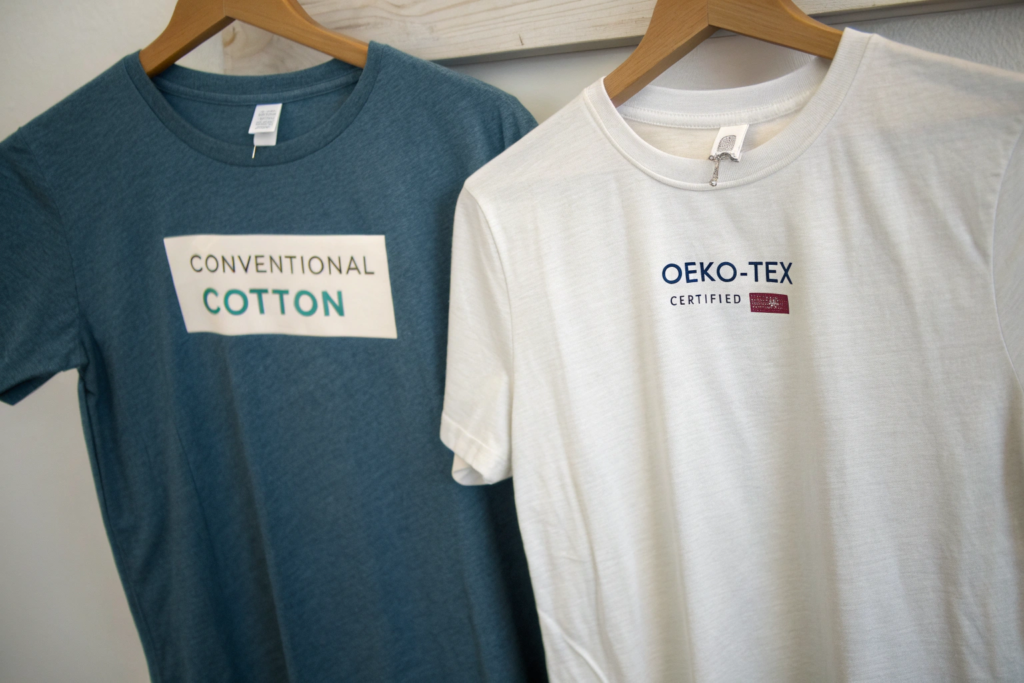
For someone prone to skin allergies, knowing that a garment restricts these groups is the core of its protective value. A common misconception is that "natural" fibers like cotton are inherently hypoallergenic. This is dangerously false. A conventional cotton t-shirt can be loaded with pesticide residues, formaldehyde-based wrinkle-free finishes, and allergenic dyes from the processing stage. OEKO-TEX certification screens for these precisely, making it a more reliable indicator of safety than fiber content alone.
How Does It Regulate Nickel and Metal Accessories?
Nickel allergy is one of the most common contact allergies globally. It's not just about jewelry; zippers, buttons, snaps, rivets, and even metal-threaded embroidery can be sources. OEKO-TEX does not merely suggest nickel-free metals; it enforces it through a migration test. The test simulates prolonged contact with sweat by placing the metal component in an artificial sweat solution for a set period. The amount of nickel that migrates into the solution is then measured. The limit is extremely stringent, effectively requiring suppliers to use high-quality, nickel-free alloys or coatings. For a brand producing denim or activewear with multiple metal components, this test is non-negotiable. We once had to reject a shipment of 50,000 jean buttons because our pre-shipment audit showed their nickel release failed the OEKO-TEX simulated sweat test. Catching that saved our client a potential wave of allergic reactions.
What About Disperse Dyes and Formaldehyde?
These are two of the biggest hidden culprits in textile-related dermatitis.
- Disperse Dyes: These are used primarily to color synthetic fibers like polyester and nylon. Certain disperse dyes are known to be potent skin sensitizers. OEKO-TEX maintains a specific list of banned allergenic disperse dyes (like Disperse Blue 106/124, Red 1, etc.) and tests for their presence. This forces dyers to use safer, more modern dye alternatives.
- Formaldehyde & Formaldehyde Releasers: Used in easy-care, anti-wrinkle, and permanent press finishes on cotton and blends. Formaldehyde is a severe irritant and sensitizer. OEKO-TEX sets very low limits for both free and released formaldehyde (effectively "none detected" for Class I babywear, and very low for Class II adult apparel). This ensures that "wrinkle-free" doesn't mean "rash-inducing."
The practical impact? At Shanghai Fumao, our R&D team formulates all dyeing and finishing recipes using only OEKO-TEX compliant chemicals from the start. We don't try to remove allergens later; we design them out. This is why our OEKO-TEX certified performance fabrics for activewear are trusted by brands whose customers wear them during intense, sweaty workouts where skin sensitivity is highest.
How Does the Testing Simulate Real-World Wear Conditions?
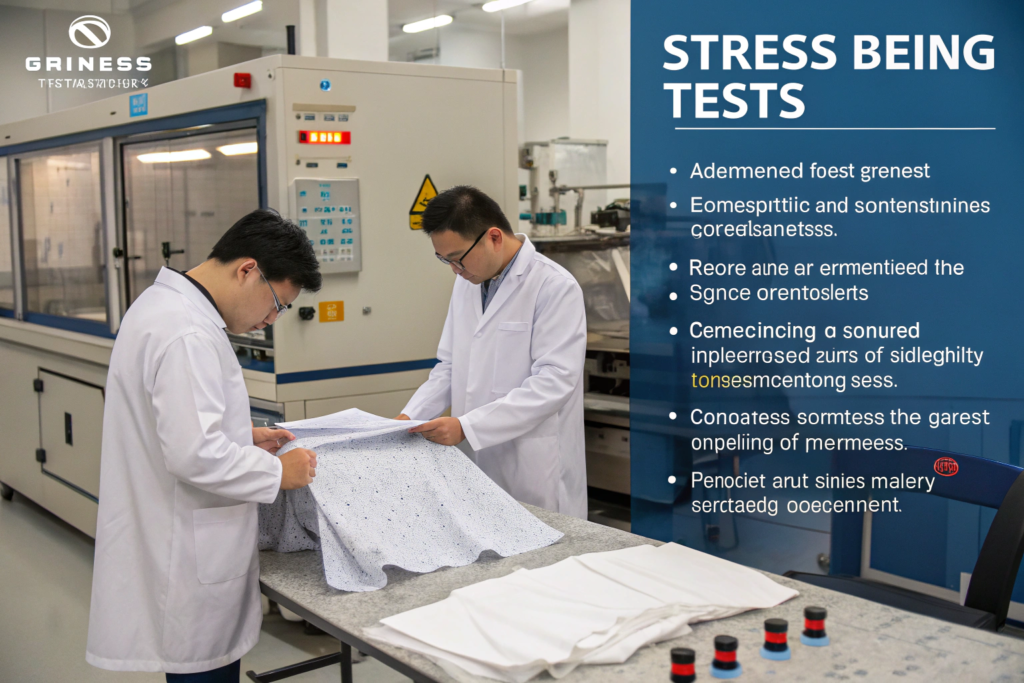
A certificate is only as good as the test's realism. OEKO-TEX tests don't just analyze the fabric in a sterile, dry state. They simulate the exact conditions that increase the risk of allergen transfer: moisture, heat, friction, and saliva (for children's wear).
The most relevant tests for allergy prevention include:
- Perspiration Fastness (Acid & Alkaline): Fabric samples are immersed in artificial acid and alkaline sweat solutions (simulating different skin pH levels) under controlled heat and pressure. The solution is then analyzed to see which chemicals have migrated from the fabric. This directly tests what happens when you sweat in your clothes.
- Saliva Fastness (For Class I): Uses an artificial saliva solution to test for color and substance migration, simulating a baby chewing on fabric.
- Rubbing Fastness (Crocking): Tests dry and wet friction to ensure dyes and finishes don't rub off onto skin.
- Skin pH Value: Tests the pH of an aqueous extract from the fabric. Skin's natural pH is slightly acidic (around 5.5). Fabrics with a highly alkaline pH can disrupt the skin's acid mantle, leading to dryness, irritation, and increased susceptibility to allergens and bacteria.
By simulating these real-life "stress tests," OEKO-TEX provides assurance that the garment won't break down and release irritants under normal use. This is far more meaningful than a simple material composition list. A resource like the International Journal of Dermatology's research on textile dermatitis often cites these migration mechanisms, which OEKO-TEX testing directly addresses.
Why is "Extractable Heavy Metals" Testing Crucial?
Heavy metals like chromium, lead, cadmium, and antimony can be present in textiles from dyes, pigments, or catalysts used in synthetic fiber production. While acute poisoning is rare from garments, chronic exposure through skin contact, especially if the metals become bioavailable through sweat, can cause sensitization and allergic reactions. OEKO-TEX doesn't just test for total metal content; it tests for extractable heavy metals. This means the fabric is treated with an artificial acid sweat solution, and the amount of metal that leaches out is measured. This is the amount potentially available to interact with your skin. The limits are extremely low, ensuring that even trace, leachable amounts are controlled.
How Does Certification Account for Cumulative Exposure from Multiple Garments?
This is an advanced point often overlooked. An individual might wear a certified t-shirt, uncertified underwear, and sleep on uncertified sheets. OEKO-TEX cannot control this. However, its strict limits for each certified article ensure that each component in contact with the skin minimizes its allergenic load. For a manufacturer producing a full garment, it mandates that all components exceeding 1% of total weight (threads, linings, prints, elastics, labels) meet the same standards. This holistic approach prevents a "weakest link" scenario where a single allergenic component (like the elastic in underwear waistband) causes a problem. Our quality control for a German lingerie brand involves testing every single component—lace, elastics, silicone straps, and sewing threads—for compliance, creating a truly safe system, not just a safe fabric.
Can OEKO-TEX Help People with Diagnosed Skin Conditions Like Eczema?
For individuals with compromised skin barriers, such as those with eczema (atopic dermatitis), the choice of clothing is not a matter of comfort but of managing a medical condition. Their skin is more permeable and reactive. OEKO-TEX certification becomes a critical tool for risk reduction.
While no textile can "cure" or completely prevent eczema flare-ups, OEKO-TEX certified garments significantly reduce several key triggers:
- Chemical Irritants: By eliminating or severely limiting formaldehyde, residual pesticides, and allergenic dyes, it removes common chemical aggravators.
- Physical Irritation: Fabrics that pass rubbing fastness tests are less likely to shed dye particles that can physically irritate sensitive skin.
- pH Compatibility: Skin-neutral pH fabrics help maintain the skin's natural protective acid mantle, which is often impaired in eczema sufferers.
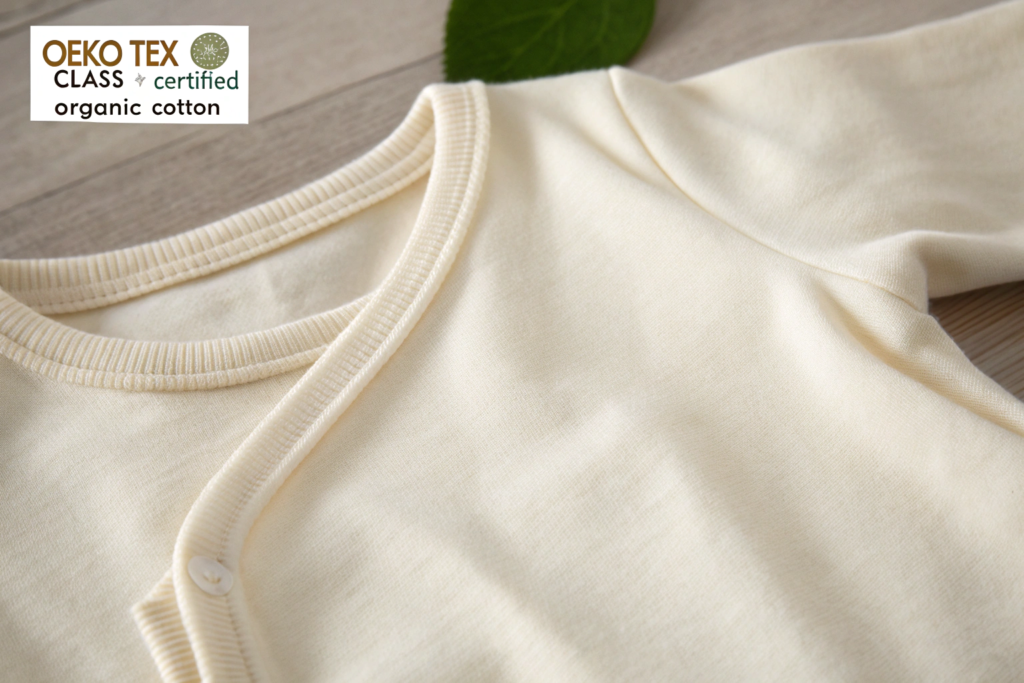
Dermatologists often recommend soft, breathable, untreated cotton for eczema patients. An OEKO-TEX Class I certified organic cotton garment is the gold-standard iteration of this advice. It guarantees the cotton is not only organic but also processed without the very chemicals that defeat the purpose of using a natural fiber. A case study from a Danish client: after switching their baby line to our OEKO-TEX Class I certified interlock cotton, they saw a 40% reduction in customer complaints related to skin irritation within one season. The product didn't change medically, but the verification of its purity addressed parental anxiety and matched clinical recommendations.
What's the Difference Between "Hypoallergenic" Claims and OEKO-TEX?
"Hypoallergenic" is an unregulated marketing term with no legal definition or testing standard. A company can label any product as hypoallergenic based on its own internal criteria, which may be minimal or nonexistent. It's a promise without proof.
OEKO-TEX STANDARD 100 is a verified, third-party certification with published, scientifically-backed test criteria, conducted by independent institutes. It's proof without empty promises. For a consumer with allergies, this distinction is everything. They are moving from trust-based marketing to evidence-based purchasing. Understanding this difference is key, and guides like Consumer Reports' analysis of hypoallergenic labels can empower shoppers to look beyond claims.
Are There Specific Product Classes for Different Sensitivity Levels?
Yes, and this granularity is vital. OEKO-TEX's four Product Classes act as sensitivity tiers:
- Class I (Most Stringent): For babies and toddlers (up to 3 years). Includes saliva resistance test. Ideal for those with the most sensitive skin, regardless of age.
- Class II: For garments with direct skin contact (underwear, t-shirts, dresses). The primary standard for adult apparel and the benchmark for eczema-conscious clothing.
- Class III: For textiles with no or little direct skin contact (jackets, linings). Less stringent than Class II.
- Class IV: For decorative materials (curtains, upholstery).
A person with severe eczema should actively seek out Class I or Class II certified garments for their base layers. This tiered system allows for informed choice based on individual need and garment function.
How Can Brands Communicate This Protection to Allergy-Conscious Consumers?
Having an OEKO-TEX certified product is half the battle. The other half is effectively communicating its protective value to the growing market of health-aware and allergy-prone consumers. This requires moving beyond just slapping a logo on a hangtag.
Effective communication is educational and transparent:
- Explain the "Why": Don't just say "OEKO-TEX certified." Say: "Independently tested to be free from over 100 substances known to harm human health, including allergens and skin irritants."
- Highlight the Tests: Mention specific, relatable tests: "Tested for safe contact with skin, even when sweating," or "Tested for saliva and sweat resistance for peace of mind."
- Target the Audience: Use this messaging prominently in marketing to parents, in product lines for sensitive skin, and on product pages for base-layer garments (underwear, sleepwear, activewear).
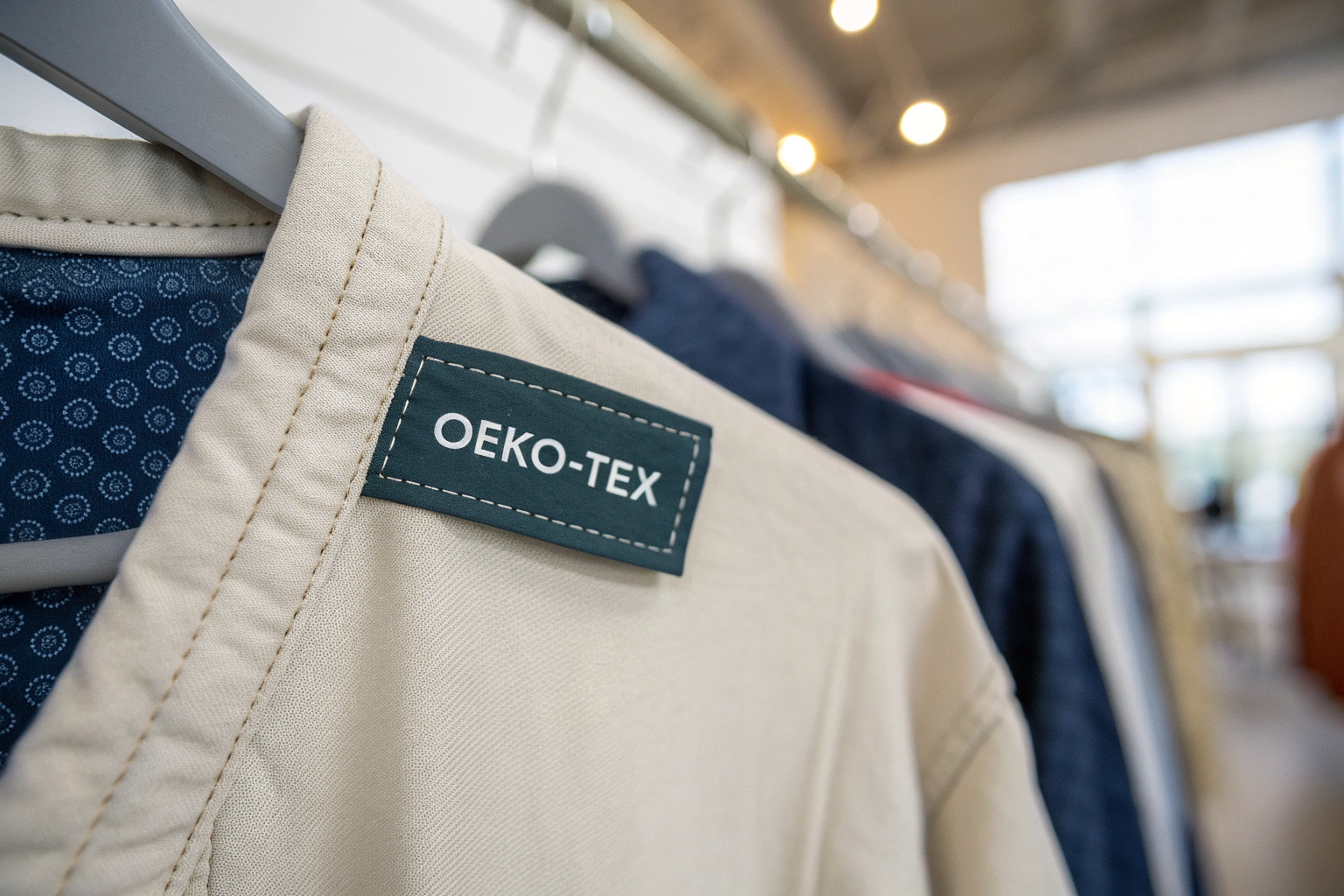
- Leverage the Label: Ensure the OEKO-TEX label is physically on the garment and clearly visible online. The label itself is a recognized symbol of trust.
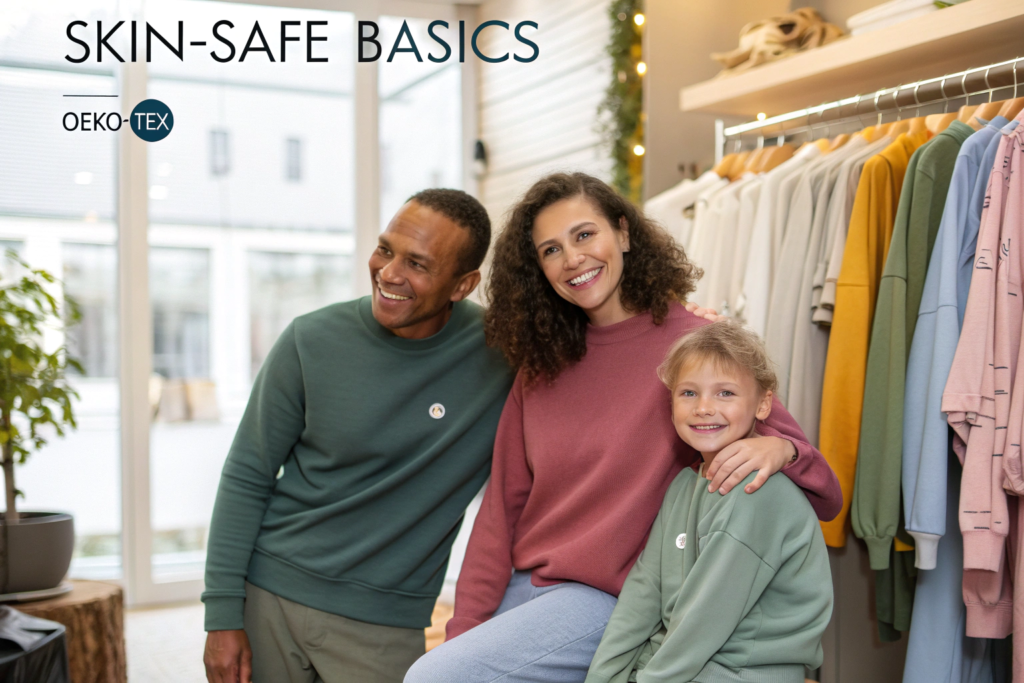
For a brand, this isn't just about selling a feature; it's about building an empathetic connection. You're saying, "We understand your concern for your family's skin health, and we've gone the extra mile to address it." This builds immense loyalty. When we helped a US-based sustainable apparel brand launch a "Skin-Safe Basics" line with clear OEKO-TEX messaging, their conversion rate for that collection was 25% higher than their standard line, and the average order value increased.
What Role Does Digital Traceability (Like MADE IN GREEN) Play?
The OEKO-TEX® MADE IN GREEN label adds a powerful layer: a unique QR code. Scanning this code not only confirms the product's safety certification but can also show the production facilities. For the hyper-vigilant consumer (e.g., a parent of a child with multiple chemical sensitivities), this level of traceability is revolutionary. It provides unprecedented transparency, allowing them to "look behind the label" and see the journey of the product. This deepens trust exponentially and can be a key differentiator in crowded markets. It turns a safety claim into a transparent story.
How Should Retail Staff Be Trained on This Topic?
Empowered retail staff are your best ambassadors. Train them to:
- Understand what OEKO-TEX is in simple terms: "An independent safety test for hidden chemicals."
- Know which products in the store carry the certification.
- Be able to articulate its benefits: "This is especially recommended if you have sensitive skin or are buying for a newborn."
- Physically show the label on the garment.
This turns a potentially technical topic into a helpful, value-added service at the point of sale. Providing staff with simple resources, like those from the International Association for Textile Care Labelling, can bolster their general textile knowledge.
Conclusion
OEKO-TEX certification is the most robust, scientific defense a clothing item can have against causing skin allergies and irritation. It functions as a pre-emptive strike, identifying and restricting known allergens and irritants through simulation of real-world wear conditions. For the millions of people with sensitive skin, eczema, or chemical sensitivities, it provides a clear, trustworthy filter in a confusing marketplace.
For brands and manufacturers, investing in this certification is an act of profound product integrity and consumer care. It moves quality from the visible realm of stitch and seam to the invisible, yet critical, realm of chemical safety. It’s a tangible way to demonstrate that you value your customer's health as much as their style.
In an era where consumers are increasingly vigilant about what touches their bodies, offering OEKO-TEX certified apparel isn't just a competitive advantage—it's becoming a baseline expectation for trust. It’s the definitive answer to the silent question every customer has: "Is this safe for me and my family?"
If you are ready to build or source apparel that offers genuine protection for sensitive skin, you need a partner committed to verifiable safety at every step. At Shanghai Fumao, our integrated supply chain is built around OEKO-TEX compliance from the yarn up. Let us help you create garments that are as safe as they are beautiful. For a detailed consultation, contact our Business Director, Elaine, at elaine@fumaoclothing.com.