You’re ready to place a large order for your next clothing line. The designs are perfect. The market is waiting. But then, a nagging question pops up: are the fabrics truly safe? Recent headlines about harmful chemicals in textiles make you pause. A supplier might promise quality, but how can you be sure? This uncertainty can delay your launch and keep you up at night.
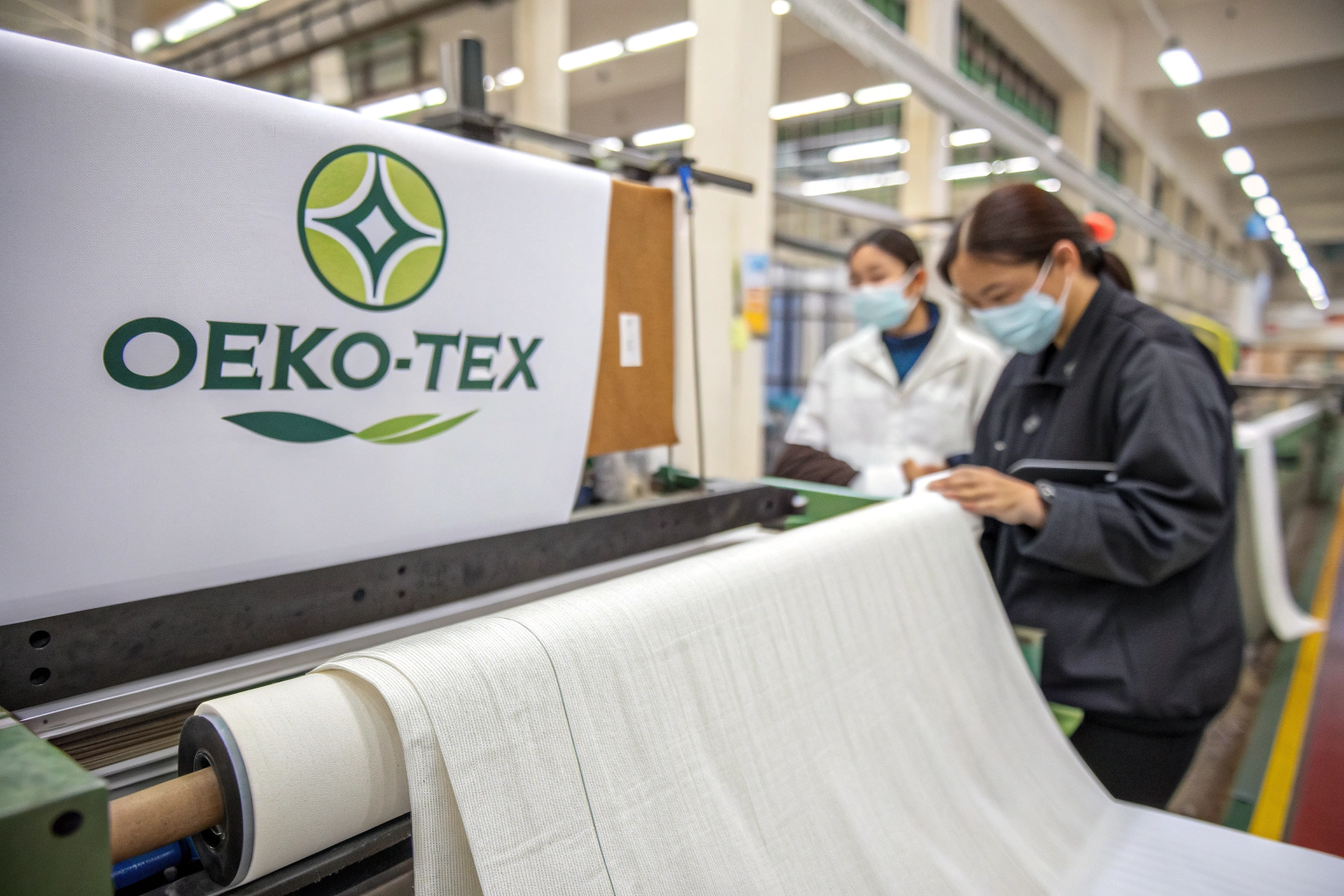
OEKO-TEX® certification is a powerful, independent verification system that tests textiles for harmful substances. It directly influences your sourcing decision by shifting the focus from promised quality to verified safety. Choosing an OEKO-TEX® certified manufacturer like Shanghai Fumao mitigates risk, builds consumer trust, and simplifies compliance, making it a strategic factor beyond just checking a box.
Understanding this label’s impact is crucial for any serious apparel buyer. Let’s break down exactly how it affects your key sourcing priorities, from protecting your brand to streamlining your operations.
What is OEKO-TEX® and Why Should U.S. Brands Care?
Many buyers see the OEKO-TEX® label on a supplier’s website and think, "That’s nice for eco-brands." They might overlook it if their priority is low cost. This is a missed opportunity. The certification is not just a marketing badge; it’s a rigorous safety standard relevant to every market segment, especially the quality-conscious U.S. market.
OEKO-TEX® is a globally uniform testing and certification system for raw, semi-finished, and finished textile products. The most common certification for finished articles is STANDARD 100 by OEKO-TEX®. It verifies that every component of a product—from fabric and threads to buttons and zippers—has been tested for a wide range of regulated and unregulated harmful substances. For U.S. brands, this matters because it aligns with growing consumer demand for transparency and preempts complex regulations, providing a clear, trusted safety benchmark.
Let’s look at what this certification tackles. The tests cover substances you’ve likely heard of, like formaldehyde or pesticides, and many you haven’t. The key is that the standards are often stricter than national laws.

How does the OEKO-TEX® test list protect my customers?
The OEKO-TEX® criteria catalog includes over 100 individual test parameters, updated annually. It covers illegal substances, legally regulated chemicals (like certain azo dyes), and parameters that are unregulated but known to be harmful to health. For example, they test for allergenic dye residues and the emission of volatile chemicals. When you source from a certified partner like Shanghai Fumao, you get an independent guarantee that these substances are below the required limits. This directly protects your end-consumers from potential skin irritation or long-term health risks, which is a cornerstone of brand reputation management.
Can OEKO-TEX® help me navigate U.S. compliance more easily?
Absolutely. While the U.S. has regulations like the Consumer Product Safety Improvement Act (CPSIA), they can be complex to track for every component. OEKO-TEX® serves as a comprehensive due-diligence tool. We had a client, a children’s wear startup from Texas, who was overwhelmed by compliance documentation. By choosing our OEKO-TEX® certified production for their kids’ knitwear line, they received a unified certificate that satisfied their retail partners’ requirements instantly, speeding up their time-to-market by several weeks. It acts as a universally recognized passport, simplifying dealings with distributors and retailers who increasingly demand proof of product safety.
Does OEKO-TEX® Certification Truly Guarantee Better Product Quality?
It’s a fair question. Safety and quality, while related, are not the same. A fabric can be free of harmful substances but still pill easily or have inconsistent color. Some buyers worry that focusing on certification might mean compromising on other quality aspects. The reality is quite the opposite.
OEKO-TEX® certification, particularly STANDARD 100, is a foundational pillar of product quality. It guarantees the chemical safety of the product, which is a non-negotiable aspect of modern quality. A manufacturer committed to this level of controlled, certified production is typically one that has robust systems in place. This discipline often extends to physical quality control, as the mindset of precision and documentation is similar. It signals a supplier’s investment in credible processes.
Think of it this way: achieving certification requires consistent control over the supply chain. Let’s compare a certified and a non-certified sourcing scenario.
| Sourcing Factor | With OEKO-TEX® Certified Supplier (e.g., Shanghai Fumao) | With Non-Certified Supplier |
|---|---|---|
| Material Sourcing | Must use certified dyes and auxiliaries from audited chemical suppliers. | Relies on supplier’s verbal assurance; traceability is low. |
| Production Process | Requires documented procedures to prevent contamination. | Processes may vary, risk of cross-contamination is higher. |
| Risk of Defects | Lower risk of batch-wide issues like color bleed or odor due to controlled inputs. | Higher risk of unexpected quality failures related to chemical treatments. |
| Documentation | Provides independent, standardized test reports for each product lot. | May provide in-house reports of limited scope or recognition. |

How does the certification process improve manufacturing consistency?
To obtain and renew the certificate annually, a factory’s processes are audited. This isn’t just a one-time test on a sample. It requires establishing a quality management system that ensures every batch meets the standard. For instance, last year, we upgraded our dyeing facility’s inventory system to track every chemical input against the OEKO-TEX® restricted substances list. This not only secured our certification but also reduced color variance between production runs by 15%, directly improving the physical product quality for all our clients.
Will choosing OEKO-TEX® limit my fabric and design options?
This is a common myth. The certification applies to a vast range of textiles. Whether you need organic cotton for basics, high-performance polyester for activewear, or luxurious blends for fashion pieces, certified options are available. The key is your manufacturer’s sourcing network. At Shanghai Fumao, we maintain a library of pre-certified fabrics across categories. In 2023, we helped a Denver-based brand develop a line of certified performance leggings using recycled polyester, proving that advanced functionality and verified safety can go hand-in-hand.
How Can OEKO-TEX® Reduce Hidden Costs and Sourcing Risks?
Upfront cost is a major factor in every sourcing decision. An OEKO-TEX® certified product might have a slightly higher FOB price. Viewing this as just an extra cost is short-sighted. The true value lies in risk mitigation, which saves significant money and headaches down the line.
OEKO-TEX® certification is an investment in supply chain stability. It directly reduces hidden costs associated with rejected shipments, delayed selling seasons, and brand damage from product recalls or negative publicity. The cost of a single failed safety test at a U.S. port or by a retail partner can dwarf the premium paid for certified production. It transforms an unknown risk into a managed, insured outcome.
Let’s quantify the risks it helps avoid. A non-certified shipment carries latent dangers that can materialize at the worst possible time.

What is the financial risk of a non-certified shipment being rejected?
It can be catastrophic. If a batch is flagged at customs or by a third-party lab for excessive levels of a restricted substance, the entire shipment can be held, rejected, or even destroyed. You lose the goods, pay for shipping twice, face penalties, and miss your selling season. The financial loss extends to sunk costs in marketing and lost sales. OEKO-TEX® certification significantly reduces this compliance risk. It’s like having an insurance policy for your supply chain logistics. One of our long-term partners, a mid-sized brand in Chicago, switched to our certified production after a rival faced a six-figure loss from a rejected shipment of children’s jackets due to phthalates. They haven’t had a single compliance delay in four years.
How does it protect against reputational damage and consumer lawsuits?
In today’s world, a social media post about "toxic clothes" can viralize overnight. Even if a substance is technically below a legal limit, consumer perception is everything. OEKO-TEX® is a trusted label that consumers recognize. Promoting your products as OEKO-TEX® certified builds trust and provides a strong defense against allegations. It demonstrates due diligence. This proactive protection of your brand equity is invaluable and nearly impossible to price. It turns a potential liability into a marketing asset.
How to Verify and Work with an OEKO-TEX® Certified Supplier?
You understand the value. Now, the practical step: how do you ensure a supplier’s certification is legitimate and effectively integrated into your order? Simply seeing a logo on a website isn’t enough. Diligent verification and clear communication are key to unlocking the full benefits.
To verify a supplier, always ask for the official OEKO-TEX® certificate and use the unique certificate number to check it in the public OEKO-TEX® database. This confirms its validity, scope, and the specific products/plants it covers. When working with them, explicitly reference the certification in your purchase order and specify that goods must be shipped with the corresponding OEKO-TEX® labels and documents. This formalizes the requirement.
A true partnership with a certified manufacturer goes beyond paperwork. It involves aligning your processes with their certified system.

What specific questions should I ask a potential certified supplier?
Don’t just ask, "Are you certified?" Dig deeper. Ask for their certificate number and verify it online. Ask: "Is this certification for the exact product category and factory where my order will be produced?" "Can you provide the test reports for the specific fabric lot used in my production?" "How do you segregate certified and non-certified materials in your warehouse?" Their answers will reveal their operational integrity. A reliable supplier like Shanghai Fumao will readily provide this transparency. We even offer virtual factory tours to show clients our controlled production zones.
How can I integrate OEKO-TEX® into my brand story effectively?
Once you’ve sourced certified products, leverage it. Use the label on your hangtags and packaging. Feature it in your marketing materials and on your website’s product pages. Educate your customers on what it means for their safety. For example, you can create a simple blog post or infographic explaining the certification. This builds consumer confidence and justifies a potential premium. It transforms a sourcing decision into a core brand marketing point. We collaborate with our clients to supply high-resolution certification logos and official claim guidelines to ensure their marketing is both impactful and compliant.
Conclusion
OEKO-TEX® certification is far more than an ecological badge; it’s a strategic sourcing tool that directly addresses the core concerns of modern apparel businesses. It guarantees product safety, underpins consistent quality, mitigates financial and reputational risks, and ultimately builds stronger consumer trust. In a competitive market where credibility is currency, partnering with a certified manufacturer is a decisive step toward sustainable growth. It shifts the relationship with your supplier from a transactional cost negotiation to a value-driven partnership focused on shared standards and reduced risk.
If you are looking for a reliable, OEKO-TEX® capable manufacturing partner to bring your next collection to market with confidence, let’s talk. At Shanghai Fumao, we combine rigorous certified production with decades of expertise in serving the U.S. market. We understand the need for seamless logistics and on-time delivery. Contact our Business Director, Elaine, today to discuss how we can secure your supply chain from the ground up. Reach her at: elaine@fumaoclothing.com.