As a fabric manufacturer and supplier in the heart of Keqiao for over two decades, I have this conversation almost weekly. A buyer, let's call him Ron from the US, sends an inquiry for a sustainable jersey fabric. We quote a competitive price. Then he asks, "Is it OEKO-TEX certified?" We say yes, and send the updated quote. The pause that follows is almost audible through the email. The new number is higher. The inevitable question comes: "Why does the certification make it so much more expensive?"
The truth is, OEKO-TEX certification isn't just a sticker you buy; it's a fundamental overhaul of your supply chain's DNA. It impacts every single step, from the raw material in the warehouse to the finished fabric on the shipping container. For wholesalers and clothing brands, understanding this price impact isn't about cost-cutting—it's about value investing. The premium you pay is your financial commitment to consumer trust, regulatory safety, and market access, especially in stringent markets like the EU and North America. It's the cost of peace of mind, quantified.
So, how exactly does this certification translate into dollars and cents on your invoice? The price increase isn't arbitrary. It's a direct reflection of embedded costs: rigorous third-party testing, certified raw material premiums, segregated production flows, and ongoing audits. But it also reflects avoided risks—the risk of a costly product recall, the risk of border rejection, the risk of brand reputation damage. Let's pull back the curtain on our production floor and break down where your money actually goes when you choose an OEKO-TEX certified partner like us, and more importantly, what you get back in return.
What are the direct testing & certification costs per batch?
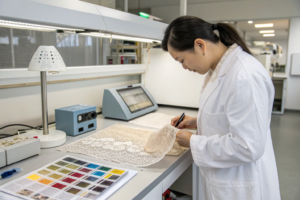
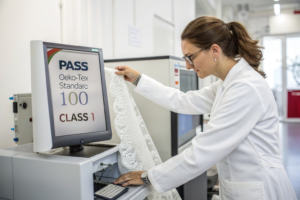
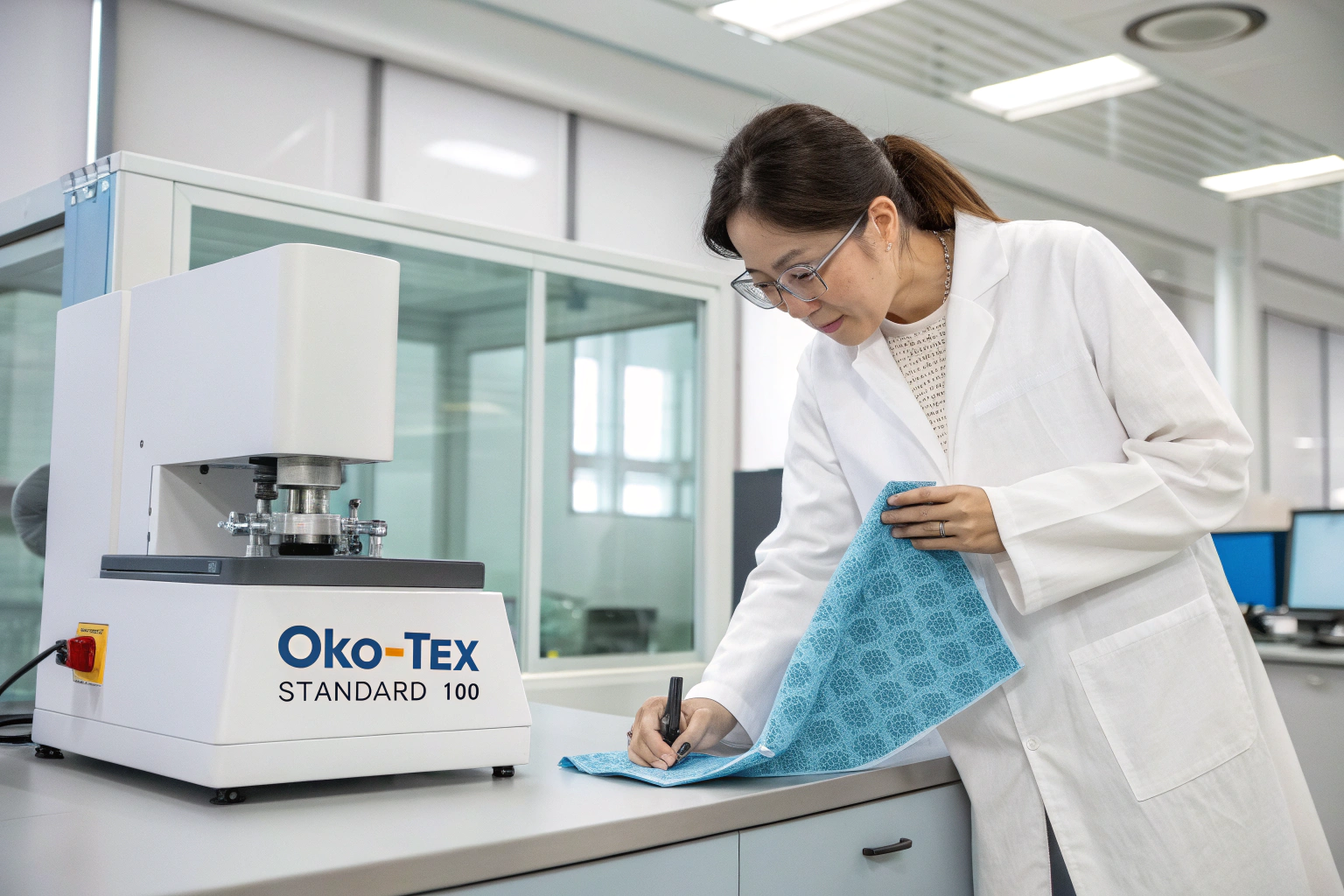
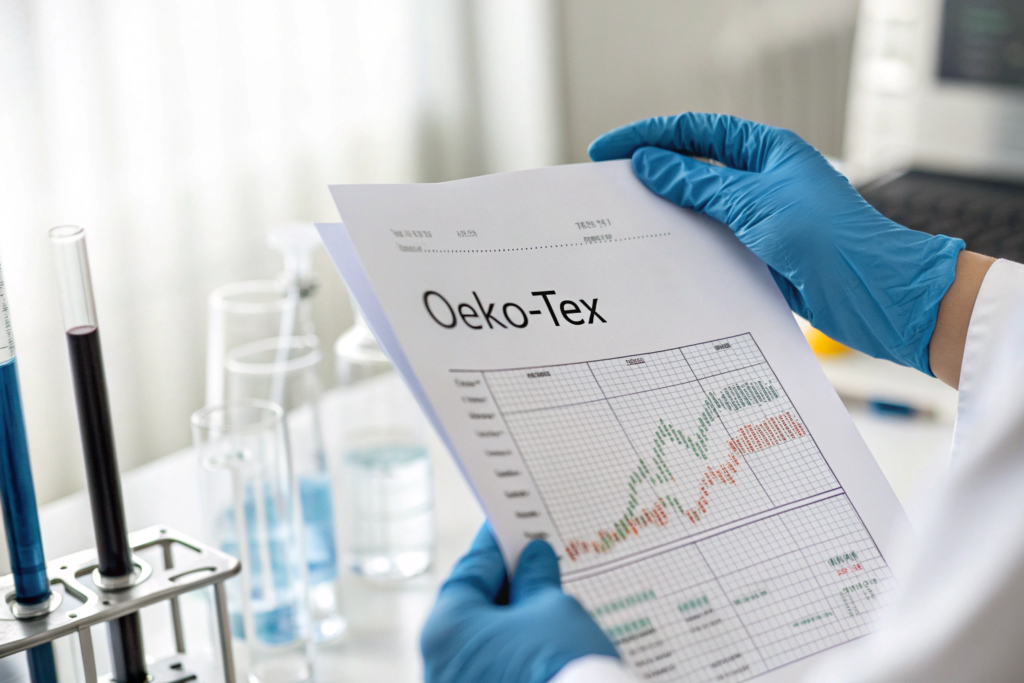
When you order certified fabrics, you're not just paying for the material; you're funding the science behind its safety. The most immediate cost is the laboratory testing fee itself. For a single fabric type (e.g., a polyester-spandex blend), a full OEKO-TEX Standard 100 test suite can cost several hundred to over a thousand dollars, depending on the number of substance classes requiring analysis. This isn't a one-time fee for the factory. Reputable suppliers test every production batch, not just the initial sample, because a new dye lot or a different supplier's auxiliary chemical can change everything. This commitment to batch-by-batch OEKO-TEX verification is non-negotiable for maintaining the certification's integrity.
Think of it like a blood test for your fabric. You wouldn't trust a health certificate based on a test from five years ago. Similarly, we cannot guarantee the safety of batch #B2354 based on tests from batch #A1001. For instance, in early 2023, a European children's wear brand required every shipment of their organic cotton interlock to have a fresh test report. While this added a fixed cost to each order, it provided them with a defensible audit trail for their own marketing claims. The cost of this testing is invariably factored into the per-meter price. It's a direct, transparent pass-through cost from the lab to your invoice.
How do testing scopes and product classes drive cost variation?
Not all tests are created equal. OEKO-TEX classifies products into four categories: Class I (for babies), Class II (for direct skin contact), Class III (for no direct skin contact), and Class IV (for decorative materials). Testing for Class I is the most exhaustive—and expensive—because it includes stricter limits for substances like formaldehyde and pH value. A fabric intended for baby onesies will always cost more to certify than the same fabric intended for a raincoat lining. The scope can also expand. If you want certification for water-repellent finishes with OEKO-TEX compliance, the lab must test for the specific chemicals used in that finish, adding to the cost. It's crucial to define your product's end-use with your supplier to avoid over- or under-testing.
What's the real cost structure behind the certification fee?
Let's break it down into a typical cost-add for a mid-volume order of a common fabric:
| Cost Component | Description | Approx. Cost Impact (Per Meter) | Why It's Necessary |
|---|---|---|---|
| Initial Sample Testing | Full spectrum analysis for certification application. | Higher one-time cost amortized. | Establishes the baseline safety of the product recipe. |
| Batch Conformity Testing | Testing of each production lot against the certified sample. | $0.02 - $0.15 | Ensures consistency; required by OEKO-TEX for license holders. |
| License & Label Fee | Annual fee to use the OEKO-TEX label on your products. | $0.01 - $0.05 | Covers administrative costs and label system management. |
| Audit & Surveillance | Unannounced factory audits by the certification body. | Built into overhead | Verifies that management systems and production controls are in place. |
As you can see, the per-meter cost seems small, but it's persistent and mandatory. For a 50,000-meter order, these cents add up to thousands of dollars in pure certification overhead. Skipping batch testing is the most common "corner cut" by some suppliers to offer a lower price, but it completely invalidates the certification's value. At Shanghai Fumao, our CNAS-accredited lab allows us to perform much of the preparatory testing in-house, which gives us better control over timelines and costs, but the final, authoritative testing still goes to an external OEKO-TEX member institute. This dual-layer approach is part of our investment in reliability.
How do certified raw materials increase upstream costs?
The certification chain starts long before the fabric reaches our weaving machines. OEKO-TEX is a product certification, but it inherently demands control over inputs. This means we must source yarns, dyes, and chemicals that are themselves produced under controlled conditions, often from OEKO-TEX Certified suppliers. A GOTS certified organic cotton yarn supplier inherently has stricter, more traceable processes, which commands a price premium over conventional cotton. Similarly, dyes and auxiliaries from reputable chemical companies that provide comprehensive safety data sheets (SDS) and conformity statements are more expensive than generic alternatives.
Here's a real-world example from last August-October production peak. We were producing a run of OEKO-TEX Class II recycled polyester fleece for an American activewear brand. Our usual dye supplier for black was out of stock. An alternative, non-certified supplier offered a similar dye at a 30% lower cost. Using it would have saved thousands upfront. However, without its full substance list and conformity proof, we could not guarantee the final fabric would pass OEKO-TEX testing for arylamines or heavy metals. The risk of the entire batch failing—costing us in wasted fabric, delayed delivery, and lost trust—was far greater than the initial savings. We waited for the certified dye. This is the daily cost calculus that defines a serious certified supplier.

Why can't you just use cheaper dyes and chemicals?
Technically, you can. But you're playing chemical roulette. Many restricted substances are not in the base fiber but are introduced during dyeing and finishing. A cheaper dye might contain trace amounts of a banned allergenic disperse dye or a chlorinated benzene carrier. These might not affect the fabric's hand feel or color, but they will absolutely cause a test failure. The cost then isn't just the price of the dye; it's the cost of the entire contaminated fabric batch, plus the cost of re-production, plus the cost of a missed shipping deadline. The financial math becomes catastrophic. Using pre-screened, certified chemicals is an insurance policy. (Here I have to interject, this is where our long-term partnerships with dye houses really pay off—they secure better prices on certified chemicals, which we can pass on.)
How does supply chain traceability add operational expense?
True certification requires segregation. You cannot produce OEKO-TEX fabric on the same loom or dyeing vat immediately after running a non-certified, potentially contaminated batch without rigorous cleaning validation. At our facility, we schedule dedicated production runs for certified orders. This means less flexible machine utilization and more frequent changeovers, which reduces overall equipment effectiveness (OEE)—a key cost metric in manufacturing. Furthermore, documenting this segregation—keeping records of which yarn spool went into which loom, which chemical drum was used for which batch—requires dedicated personnel and digital tracking systems. This administrative and logistical overhead is a significant, though often invisible, part of the price premium. Investing in QR code tracking for fabric compliance data is one way we've streamlined this, but the system itself was a major capital investment.
Does certification lead to longer lead times and planning costs?
Yes, unequivocally. Speed and certification often exist in tension. The core manufacturing process might not be slower—a loom weaves at the same speed—but the prerequisite and post-requisite steps add buffer time. Sourcing certified raw materials can take longer, especially during peak seasons like March-May or post-Chinese New Year when demand surges. The laboratory testing itself takes time; while rush services exist, they come with a hefty fee. An order that might have a 30-day turnaround for a non-certified fabric can easily extend to 45-50 days for a certified one when you factor in sample testing approval before bulk production can even begin.
Let me share a case from November-December 2023, a typically "slower" period we try to leverage for complex orders. A Russian sportswear client needed a large quantity of moisture-wicking fabric with OEKO-TEX and antibacterial claims. While our production was ready, the approved antibacterial agent was held up in customs clearance for two weeks. We couldn't substitute it, and we couldn't produce without it, as the finish was integral to the certification. The entire schedule was pushed back, narrowly avoiding a clash with the Chinese New Year shutdown. This kind of dependency on specific, certified inputs introduces nodes of potential delay that must be planned for. Smart partners, like the European brand mentioned in the background, build this buffer into their calendar by completing pre-production 6 weeks before major holidays.

How should you adjust your sourcing calendar for certified goods?
The golden rule is: Plan backwards from your needed delivery date, and add a certification buffer. If your normal sourcing timeline for fabric is 8 weeks, make it 10-12 weeks for certified fabric. This buffer accounts for:
- Sample Approval Loop: Sending a physical sample to your nominated lab (or ours) for testing and receiving the report can take 10-15 business days.
- Raw Material Lock-in: Place deposits early to secure the certified yarns and chemicals for your production slot.
- Bulk Production Testing: Factor in 3-5 days for the lab to test and issue the report for the bulk goods before they can be shipped.
Failing to plan for this is the number one reason for missed deadlines on certified orders. It's not the factory being slow; it's the process being thorough.
Can you expedite certification without compromising it?
There are limited ways to speed up the process, but not the standard. You can pay for priority testing at the lab, which might cut the report time from 14 days to 7. You can work with a vertically integrated supplier like Shanghai Fumao that controls multiple stages (weaving, dyeing, finishing) under one certified umbrella, reducing inter-factory coordination delays. You can also ensure your tech packs are perfectly clear from day one to avoid resampling. However, you cannot skip steps. Any supplier promising OEKO-TEX certification in an unrealistically short timeframe is likely cutting corners, perhaps by issuing a report based on a "similar" fabric rather than your specific batch. This is a huge red flag.
Is the price premium for OEKO-TEX worth it for my business?
This is the million-dollar question. The answer depends entirely on your market, brand positioning, and risk tolerance. For a brand selling baby clothing in the EU, it's not a premium; it's the cost of entry. For a brand selling promotional t-shirts, it might not be necessary. The value of OEKO-TEX extends far beyond a marketing logo. It is a robust risk management strategy for importers. Consider the cost of a single failed Customs and Border Protection (CBP) inspection for harmful substances: detention, testing, possible destruction, and lost sales. That one event could eclipse years of certification premiums.
Furthermore, the certification can be a powerful sales tool that directly increases your wholesale price and margin. Consumers are increasingly willing to pay more for verified safety and sustainability. A 2023 order for a UK-based eco-fashion startup illustrates this. They chose our OEKO-TEX and GRS-certified recycled fabrics despite a 15% higher cost than non-certified options. They built this cost into their story and product pricing. The result? Their pre-order campaign sold out 40% faster than projected, allowing them to place a repeat order with us within four months. The certification wasn't an expense; it was the core of their product's value proposition.
How does certification protect against regulatory and reputational risks?
Global regulations are a moving target. CPSIA in the US, REACH in the EU, and numerous other national standards are constantly updating their restricted substance lists (RSLs). OEKO-TEX updates its standard annually, often in anticipation of these regulations. By using OEKO-TEX certified fabrics, you effectively outsource the complex task of regulatory compliance to the certification system. This proactive protection is invaluable. A reputational scandal involving chemicals in clothing can destroy a brand overnight. The premium you pay is insurance against this existential threat. It's far cheaper to prevent a problem than to manage a crisis.
Can you quantify the return on investment (ROI)?
While hard to pin down to a single percentage, the ROI manifests in several areas:
- Reduced Returns & Complaints: Higher product safety leads to fewer customer returns related to skin irritation or odor issues.
- Streamlined Supplier Approval: Large retailers and brands often require extensive supplier questionnaires and audits. An OEKO-TEX certificate significantly simplifies this process, saving you weeks of administrative work.
- Market Access & Premium Positioning: It opens doors to greener marketplaces, boutique retailers, and conscious consumers who filter products by certification.
- Supply Chain Stability: Working with certified suppliers like us typically means partnering with more professional, systematic, and reliable factories, reducing the risk of quality or ethical scandals.
In essence, you are investing in a more resilient, defensible, and premium supply chain. The partner you choose is critical. A supplier that views certification as a core philosophy, not just a sales tool, will deliver genuine value for that price premium.
Conclusion
The impact of OEKO-TEX certification on the price of wholesale clothing is real, measurable, and multifaceted. It's not a simple markup; it's the accumulation of direct testing fees, premium raw materials, stringent production controls, and necessary time buffers. This investment, however, transforms a commodity fabric into a verified safe, compliant, and market-ready product. It shifts cost from being a passive expense to an active tool for risk mitigation and brand enhancement.
In today's market, where consumers and regulators are more informed than ever, this certification is often the dividing line between a product that is merely "cheap" and one that is truly "valuable." The key is to work with a transparent partner who can clearly articulate these costs and demonstrate their commitment through every step of the process—from the sourcing of low-impact dyes for sustainable textile production to the final batch test report.
If you're evaluating the step into certified production for your line, the conversation shouldn't start with "how much extra?" but with "what value does it bring to my brand and customers?" Once you define that value, the cost becomes a strategic investment.
Ready to explore how OEKO-TEX certified fabrics can strengthen your brand and simplify your compliance? Let's discuss your specific needs. Our team at Shanghai Fumao, led by Business Director Elaine, has helped hundreds of brands navigate this very journey. We can provide transparent cost breakdowns, realistic timelines, and samples you can trust. Contact Elaine directly at elaine@fumaoclothing.com to start a conversation about your next responsible collection.