

If you've been hearing about "circular fashion" but struggle to see how it translates from theory to practical sourcing decisions, you're not alone. I've watched many brands embrace circular economy concepts in their marketing while their supply chains remain completely linear. The gap between aspiration and implementation is where GRS becomes transformative.
GRS aligns with the circular fashion economy by providing the operational framework and verification system that turns circular principles into measurable supply chain practice. It transforms abstract concepts like "closing the loop" and "waste reduction" into specific, verifiable actions across material sourcing, production processes, and product lifecycle management. Where circular economy provides the vision, GRS delivers the implementation pathway.
Let me show you exactly how GRS operationalizes each circular economy principle and creates the accountability that makes circular fashion commercially viable.
How Does GRS Close the Material Loop?
The fundamental principle of circular fashion—keeping materials in continuous use—depends entirely on creating reliable systems for recycling and reuse. GRS provides the verification that ensures recycled content is genuine, traceable, and impactful.
GRS closes the material loop by creating economic value for post-consumer and post-industrial waste through certified recycling streams. The certification's chain-of-custody requirements ensure that recycled materials actually enter new products rather than being downcycled or lost from the system. This transforms waste from a disposal problem into a valuable resource, creating the economic incentives that make circular systems self-sustaining rather than dependent on subsidies or goodwill.

How does GRS verification support material circularity?
GRS enables material circularity through:
- Traceability systems that follow materials through multiple lifecycles
- Mass balance accounting that credits recycled content accurately
- Quality standards ensuring recycled materials meet performance requirements
- Market differentiation creating premium value for circular products
- Supply chain transparency revealing opportunities for improvement
When a major sportswear brand implemented GRS across their polyester supply chain, they increased their use of recycled PET bottles from 20 million to 45 million annually within two years—a measurable circular economy impact that GRS made verifiable and commercially viable. Understanding material circularity indicators helps appreciate how GRS contributes to measurable circularity. Additionally, learning about textile recycling infrastructure requirements provides context for GRS implementation.
What specific circular flows does GRS enable?
GRS supports multiple circular material pathways:
| Circular Pathway | How GRS Enables It | Real-World Impact |
|---|---|---|
| Bottle-to-Fiber | Verifies post-consumer PET content in polyester fabrics | Diverts plastic from landfills and oceans |
| Textile-to-Textile | Certifies recycled cotton and wool from garment waste | Reduces pressure on virgin fiber production |
| Production Waste Recycling | Tracks pre-consumer waste back into new materials | Minimizes manufacturing waste streams |
| Product Take-Back | Provides framework for closed-loop recycling programs | Creates circular business models |
We helped a European fashion brand develop a take-back program where returned garments are recycled into GRS-certified fabrics for new collections, creating a verified circular system that customers understand and value.
How Does GRS Support Waste Elimination?
Circular economy aims to design out waste, but this requires systems that actually measure and verify waste reduction. GRS provides the accountability framework that makes waste elimination measurable and commercially relevant.
GRS supports waste elimination by creating economic value for materials that would otherwise become waste, while simultaneously driving efficiency improvements that reduce waste generation. The certification's environmental criteria push manufacturers to optimize resource use, while the recycled content requirements create markets for materials that would otherwise be discarded. This dual approach—reducing waste generation while increasing waste utilization—creates powerful economic incentives for waste elimination.
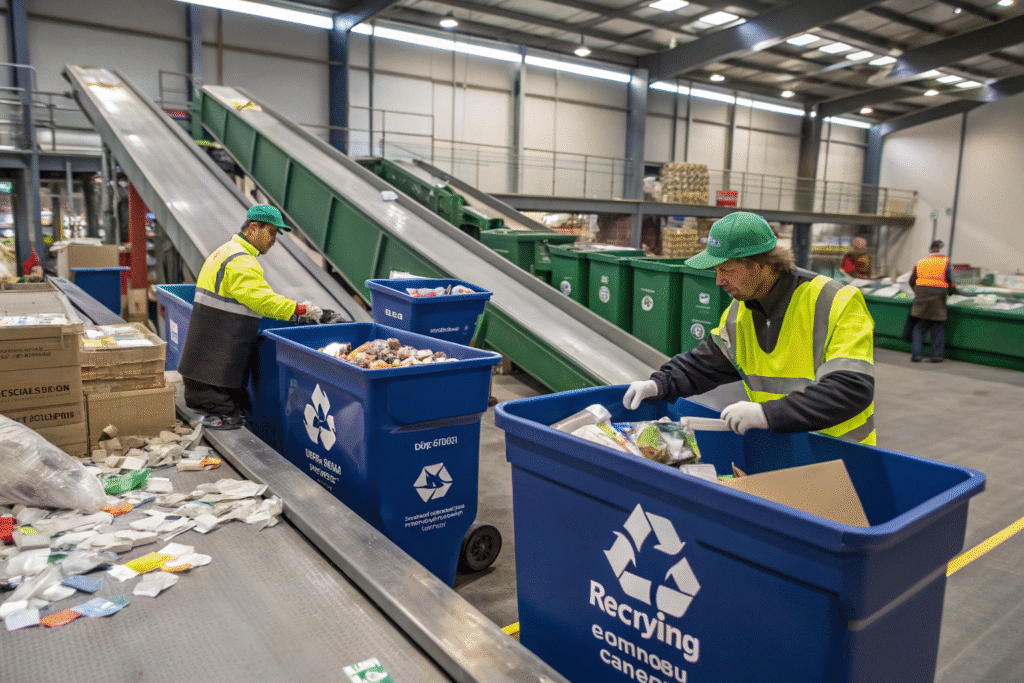
How does GRS drive manufacturing efficiency?
GRS certification encourages waste reduction through:
- Material optimization to maximize utilization of certified inputs
- Process improvements that minimize cutting waste and production losses
- Quality management reducing defects and rework
- Resource efficiency in water and energy consumption
- Supply chain coordination minimizing transportation and handling waste
Since implementing GRS across our production lines, we've reduced fabric waste by 22% through better planning and process optimization—savings that directly benefit our clients through lower costs and reduced environmental impact. Exploring lean manufacturing in textile production reveals additional waste reduction strategies that complement GRS requirements.
What waste streams does GRS transform into resources?
GRS creates value from multiple waste categories:
- Post-consumer plastic bottles become rPET fabric
- Garment manufacturing scraps become recycled fiber for new textiles
- End-of-life clothing gets new life as recycled material
- Industrial textile waste finds new applications
- Fishing nets and ocean plastic become raw material for nylon
The certification makes these transformations economically viable by verifying the recycled content and enabling brands to capture the market value of their sustainability investments.
How Does GRS Extend Product Lifecycle?
Circular fashion requires products that last longer and materials that can cycle through multiple uses. GRS supports extended lifecycles by ensuring recycled materials meet quality standards and by creating systems for continuous material reuse.
GRS extends product lifecycles in two crucial ways: first, by ensuring that recycled materials maintain sufficient quality for extended use; second, by creating the tracking systems that enable materials to be recycled again after their initial use. This breaks the traditional linear model of "take-make-dispose" and replaces it with a continuous cycle of use and reuse.

How does GRS ensure quality in recycled materials?
GRS maintains product longevity through:
- Quality standards for recycled fibers and fabrics
- Performance testing requirements for certified materials
- Technical specifications ensuring fitness for purpose
- Durability maintenance through proper processing
- Consumer confidence in recycled product performance
We've helped clients develop GRS-certified recycled polyester fabrics that outperform conventional equivalents in durability testing, proving that circular materials can actually enhance product lifespan when properly engineered. Learning about quality standards for recycled textiles provides context for GRS quality requirements.
How does GRS enable multiple material lifecycles?
GRS supports continuous cycling through:
- Documentation systems that survive product use and recovery
- Material identification facilitating sorting and recycling
- Standardized processes that maintain material quality
- Market development for multi-cycled materials
- Design guidance for recyclability and disassembly
The certification creates the foundation for materials to move through multiple product lifecycles while maintaining value and performance characteristics.
How Does GRS Enable Regenerative Systems?
Circular economy ultimately aims to create regenerative systems that restore environmental and social capital. GRS contributes to this vision by reducing resource extraction, minimizing environmental impact, and improving social conditions throughout the supply chain.
GRS supports regeneration through its environmental and social criteria, which go beyond recycled content to address chemical management, wastewater treatment, labor conditions, and overall environmental performance. This holistic approach ensures that circular systems don't simply reduce harm but actively contribute to positive environmental and social outcomes.
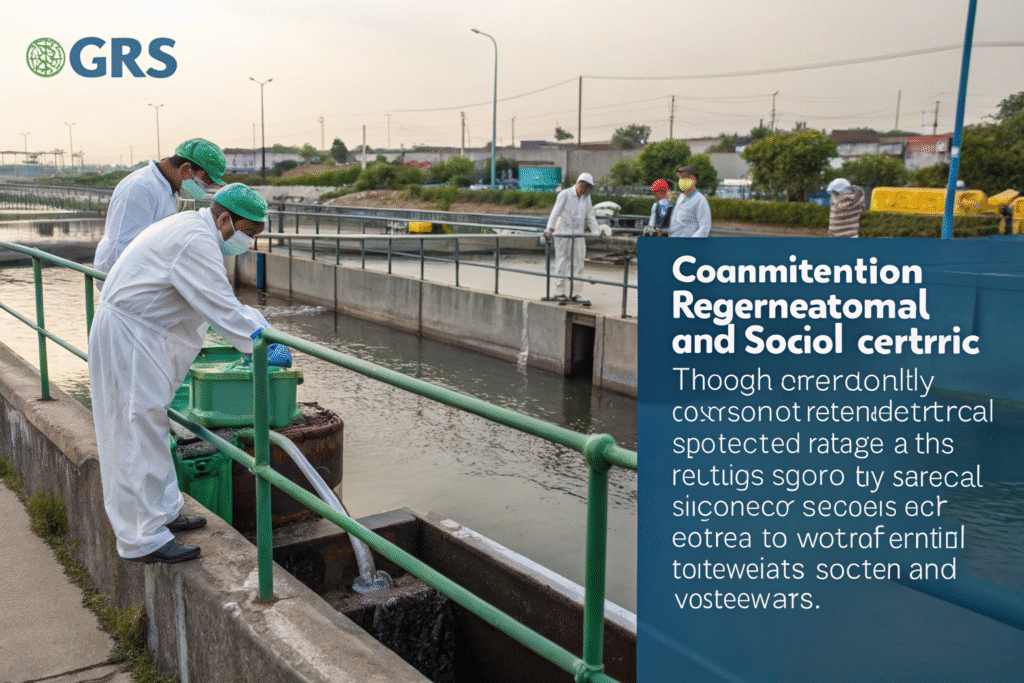
What environmental benefits does GRS deliver beyond recycling?
GRS drives environmental regeneration through:
- Reduced resource extraction by substituting virgin materials
- Lower carbon footprint from recycled material production
- Water conservation through environmental management requirements
- Chemical management protecting ecosystems and workers
- Energy efficiency incentives throughout production
Our analysis shows that GRS-certified recycled polyester production uses 50% less energy and reduces carbon emissions by 65% compared to virgin polyester production—regenerative impacts that extend far beyond waste reduction. Understanding life cycle assessment of recycled textiles provides data supporting these environmental benefits.
How does GRS contribute to social regeneration?
GRS supports social aspects through:
- Labor rights protection via social criteria requirements
- Worker health and safety through chemical management
- Community benefits from reduced environmental pollution
- Economic opportunities in recycling and reprocessing
- Supply chain transparency enabling accountability
The social dimension of GRS ensures that circular systems benefit workers and communities, not just the environment and corporate bottom lines.
How Does GRS Create Business Value from Circularity?
Circular fashion must deliver business value to be sustainable in the commercial sense. GRS creates this value by making circularity measurable, marketable, and manageable within existing business frameworks.
GRS transforms circular economy from an abstract concept into a concrete business strategy by providing the verification that enables premium pricing, the systems that reduce costs, and the transparency that builds brand equity. This alignment of environmental and commercial objectives is essential for circular fashion to scale beyond niche markets and become mainstream practice.

What commercial advantages does GRS-enabled circularity provide?
GRS creates business value through:
- Price premiums for verified circular products
- Cost reduction through material efficiency and waste minimization
- Risk mitigation against resource scarcity and regulation
- Brand differentiation in crowded markets
- Customer loyalty from demonstrated commitment
Brands using GRS to verify their circular initiatives typically achieve 3-8% price premiums and 15-25% better sell-through compared to conventional products, making circularity commercially attractive rather than just environmentally responsible.
How does GRS support circular business model innovation?
GRS enables new business models including:
- Product-as-service with take-back and recycling
- Closed-loop manufacturing using company-specific waste streams
- Circular sourcing partnerships with shared material flows
- Transparent supply chains that consumers can verify
- Extended producer responsibility programs
We're working with several brands to develop circular business models where GRS provides the verification framework that makes these innovative approaches commercially viable and credible to consumers.
Conclusion
GRS aligns with the circular fashion economy by providing the operational framework, verification systems, and commercial mechanisms that turn circular principles into practical reality. It bridges the gap between circular economy theory and fashion industry practice, creating a pathway from linear take-make-waste systems to circular models that regenerate natural and social capital while delivering business value.
The future of fashion is circular, and GRS provides the tools to build that future today. Brands that embrace GRS as their circular economy implementation framework position themselves for leadership in the coming era of regenerative fashion. If you're ready to translate circular economy aspirations into verified supply chain practice, contact our Business Director, Elaine. She can help you build GRS-enabled circular systems that deliver both environmental and commercial returns: elaine@fumaoclothing.com.



One Response
The 188bet apk is the only way to go mobile. 188betzokb offers apk link, easy to download! Download it here: 188bet apk.