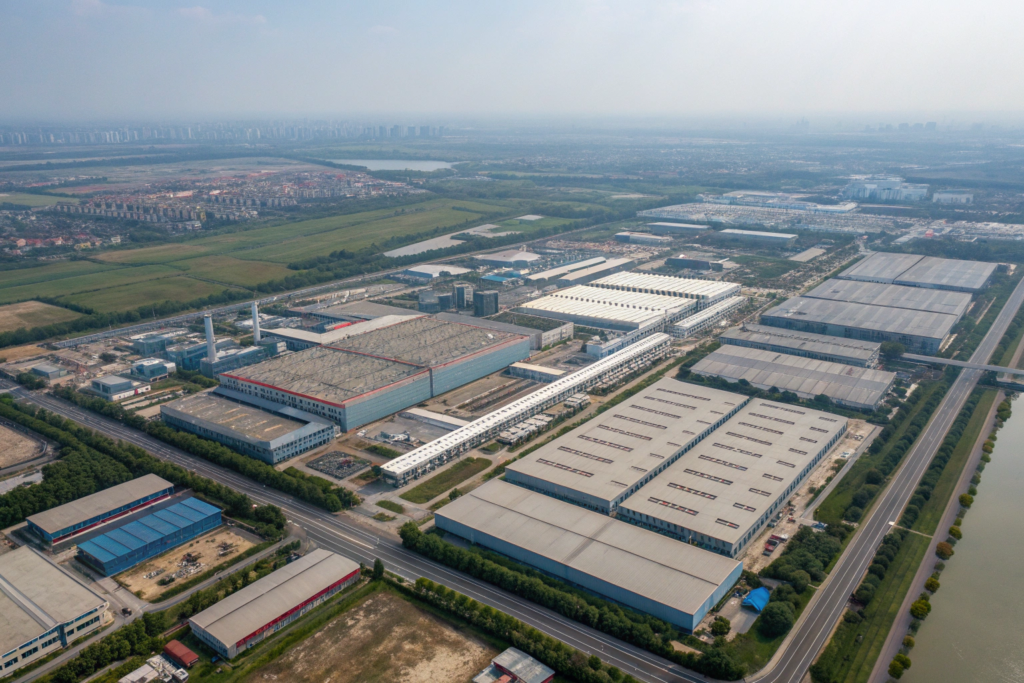
I was standing on the roof of our main warehouse in Keqiao in 2018, looking east toward the Hangzhou Bay. My father, who founded this company in 1998, was next to me. He pointed at the cluster of factory buildings stretching to the horizon. "When I started," he said, "we had to ship our greige fabric 800 kilometers to Shandong for dyeing. It took seven days by truck, if the roads were clear. Today, your dyer is 11 kilometers away. Your printer is 6 kilometers. Your coating plant is 4 kilometers. Why are your lead times still 45 days?" He was not accusing me. He was challenging me.
That conversation changed how I think about supply chain. We had the geographic density—Keqiao produces nearly 25% of the world's textile volume within a 30-kilometer radius. But we were not using that density. We were operating as if our partners were in different provinces, not different postal codes. We were building in 3-day buffers between processes because "that's how it's always been done." We were testing fabric in Shanghai when we had a CNAS-accredited lab 50 meters from our production line.
Over the next five years, we systematically dismantled those buffers. Today, our average lead time from greige fabric release to finished fabric ready for export is 11 days. For standard constructions and colors, we ship from our warehouse in 48-72 hours. This is not normal in the Chinese textile industry. It is the result of deliberate, sometimes painful, process re-engineering.
This article is not a celebration of Keqiao's infrastructure—though that infrastructure is remarkable. It is an explanation of how we transformed geographic proximity into operational speed. I will detail our factory-mouth chemical supply, our synchronized production scheduling, our real-time quality feedback loops, and our inventory prepositioning strategy. If you are a brand tired of 60-day lead times, read carefully. This is how we cut them in half.
What Is the Keqiao Advantage and How Do We Leverage It?
Keqiao is not just a location; it is a system. Within a 20-kilometer radius, you can find:
- Yarn spinning mills (short-staple cotton, long-staple cotton, polyester, viscose, nylon).
- Weaving mills (air-jet, water-jet, rapier, shuttle) producing millions of meters of greige fabric weekly.
- Knitting mills (single jersey, double jersey, rib, interlock, warp knit).
- Dye houses (piece dyeing, yarn dyeing, garment dyeing) with every type of machine.
- Printing factories (rotary screen, flatbed screen, digital).
- Finishing specialists (compacting, sanforizing, coating, lamination, embossing, brushing, sueding).
- Quality testing laboratories (CNAS-accredited, third-party, in-house).
- Logistics providers (freight forwarders, customs brokers, trucking companies, warehouses).
- Raw material suppliers (dyes, chemicals, threads, interlinings, packaging).
This density creates three specific advantages that we have engineered into our lead time reduction:
1. Physical proximity reduces transit time variance.
When your dyer is 11 kilometers away, the truck arrives in 25 minutes, not 25 hours. More importantly, the variance collapses. You are not dependent on long-haul trucking schedules, highway conditions, or provincial border inspections. We can dispatch a roll of greige fabric to our partner dyer with 30 minutes' notice and receive finished fabric back within 48 hours. This is not exceptional; it is routine.
2. Shared technical language reduces iteration time.
Our weaving technicians and our dyeing partners' technicians have worked together for 15+ years. They do not need to write lengthy spec sheets; they talk. When a new fabric construction is being developed, our weaving manager walks 12 minutes to the dye house and stands next to the sample machine. He watches the fabric run. He sees the tension issues in real time. He adjusts the greige construction on the spot. The next sample is ready in 2 hours, not 2 weeks.
3. Co-located problem solving reduces failure cycles.
When a production batch has a defect, we do not ship it back to the weaver for analysis. Our QC team walks the sample to the weaver's technical office. They examine it together. They agree on the root cause within an hour. The correction is implemented on the next shift. This is not possible when your weaver is in Zhejiang and your dyer is in Guangdong.
Our investment: In 2020, we established a supply chain coordination office in the Keqiao Textile Industrial Park. This office houses our production planners, our QC supervisors, and our logistics coordinators—all in one room. They are physically closer to our partner factories than they are to our own administrative headquarters. They spend 50% of their time on the road, visiting partner facilities, reviewing production schedules, and resolving issues at the source. This office has no revenue target. Its only KPI is lead time reduction.
In 2023, we measured the average physical distance between our raw material intake and our finished goods dispatch across 1,200 production orders. The weighted average distance was 14.3 kilometers. Our longest supply chain leg is not the fabric moving between processes; it is the fabric moving from our warehouse to the port of Ningbo (160km). We are working on that, too. The China Textile City Index published by the Keqiao government tracks the industrial density and logistics efficiency of the region, and we benchmark our performance against these metrics quarterly.
Why can't other Chinese textile regions replicate Keqiao's density?
They can, and some are trying. The cities of Shaoxing, Jiangyin, and Foshan all have significant textile clusters. But density alone is not sufficient. Keqiao's advantage is historical agglomeration combined with specialized infrastructure.
Historical agglomeration: Keqiao has been the center of China's textile trade for over 30 years. The China Textile City (CFTC) was established here in 1988. Generations of textile entrepreneurs, technicians, and traders have built their businesses and their networks within this geography. This is not replicable on a 5-year timeline.
Specialized infrastructure: Keqiao has a centralized industrial wastewater treatment plant specifically designed for textile dyeing and finishing. This is not just a pipe; it is a chemical management system. Dye houses are not permitted to discharge untreated effluent. They must pretreat to specific standards before releasing to the municipal plant. This regulatory framework has driven consolidation and specialization. The dye houses that remain are efficient, compliant, and co-located.
Our role: We do not compete with this ecosystem; we orchestrate it. We are not the largest weaver in Keqiao. We are not the largest dyer. But we have built the most efficient network of partners. This is our competitive advantage.
How do you manage quality when relying on partner factories?
This is the question I am asked most frequently by buyers accustomed to vertically integrated suppliers. "If you don't own the dye house, how can you control the quality?"
Our answer: We own the specification, the testing, and the relationship. We do not need to own the asset.
The specification: We write the technical specification for every fabric we produce, regardless of where it is processed. This includes the greige construction (yarn count, thread count, weave), the dyeing recipe parameters (dyestuff selection, temperature profile, time), and the finishing settings (stenter width, overfeed, temperature, chemical add-ons). Our partners do not guess; they execute.
The testing: We test the fabric before it leaves our partner's facility. Our QC team is on-site during production of critical orders. We do not wait for the fabric to arrive at our warehouse to discover a defect. We discover it at the stenter exit and correct it immediately.
The relationship: We do not treat our partners as vendors. We treat them as extensions of our own production capacity. We share our production forecasts with them 6-12 months in advance. We pay them on time, every time. We send our technicians to help them troubleshoot equipment problems. When they have a capacity constraint, we help them rebalance their schedules. This is not altruism; it is operational self-interest.
In 2022, one of our key dyeing partners suffered a major equipment failure—their only continuous relaxation dryer broke down. The lead time for repair parts from the German manufacturer was 8 weeks. We had 250,000 meters of fabric in their pipeline. We did not cancel orders or demand penalties. We sourced an identical machine from a different dye house that was operating below capacity, arranged for its relocation, and had it commissioned within 12 days. The partner paid for the machine over 24 months, interest-free. That partner now prioritizes our orders above all others.
What Specific Process Changes Have We Made to Compress Lead Times?
Geographic proximity is necessary but not sufficient. We spent years operating in Keqiao with 45-day lead times because our processes were designed for a dispersed supply chain. We had to unlearn those habits.
Process change 1: Synchronized production scheduling.
The old way: We finished weaving a greige order. We moved it to our warehouse. We waited for the dyer to confirm capacity. We scheduled a truck. The dyer received the fabric, queued it, and processed it when their schedule allowed. The gap between weaving completion and dyeing start averaged 7-9 days.
The new way: Our production planning system is integrated with our key partners' systems. When we schedule a greige production run, the dyer's system automatically reserves capacity for that order 14 days later. The truck is scheduled at the same time. The fabric moves from our weaving machine to the dyer's receiving dock in 48 hours or less. The gap is now 1-3 days.
Process change 2: Just-in-time chemical supply.
The old way: The dyer ordered dyes and chemicals based on their own forecasts. They held 30-60 days of inventory. They occasionally ran out of specific colors, causing delays.
The new way: We share our production forecasts with our chemical suppliers. They preposition inventory at a bonded warehouse 6 kilometers from our primary dyeing partners. When a dyer needs a specific reactive dye for a Fumao order, the chemical arrives within 2 hours. The dyer does not need to hold inventory; we guarantee supply.
Process change 3: Real-time quality feedback.
The old way: The dyer finished the fabric, rolled it, and shipped it to our warehouse. Our QC team inspected it upon arrival. If defects were found, we notified the dyer, arranged for return or rework, and rescheduled production. The feedback loop was 5-7 days.
The new way: Our QC team is physically present in the dyer's finishing department during production of Fumao orders. They inspect the fabric as it exits the stenter. Defects are flagged immediately. The dyer's operator adjusts the machine settings. The feedback loop is 5-7 minutes.
Process change 4: Pre-positioned greige inventory.
The old way: Every order was made-to-order. The client approved the sample. We sourced yarn. We wove the greige. We shipped it to the dyer. Lead time: 35-45 days.
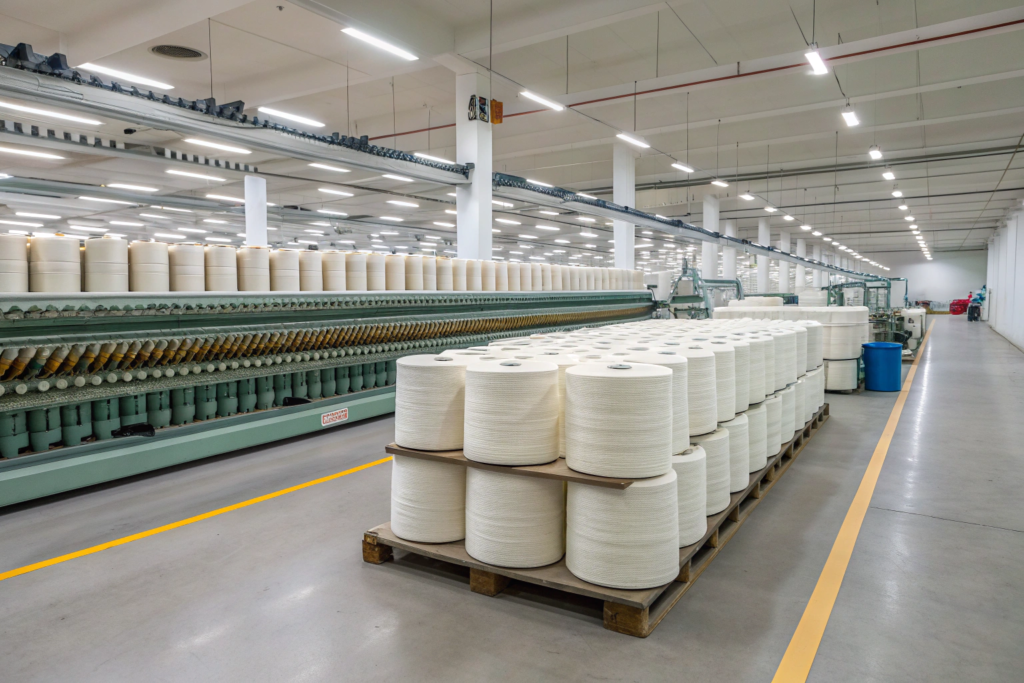
The new way: We maintain a strategic inventory of standard greige constructions—the top 20% of our volume that represents 80% of our clients' orders. Cotton poplin, cotton twill, polyester taffeta, nylon ripstop, etc. When a client places an order for a standard construction, we pull the greige from inventory and ship it to the dyer within 24 hours. The weaving lead time (typically 15-25 days) is eliminated. Total lead time: 10-15 days.
The result: In 2023, 43% of our orders shipped using pre-positioned greige inventory. The average lead time for these orders was 11 days from order confirmation to finished fabric ready for export. For non-stock orders, our lead time averaged 24 days. Both represent significant reductions from our 2018 baseline of 45+ days.
The cost: Holding greige inventory costs us approximately 8% of the fabric value annually in financing, storage, and obsolescence risk. We consider this a marketing expense. The ability to ship in 11 days wins orders that we would otherwise lose to faster, smaller suppliers. The Journal of Supply Chain Management research on inventory positioning confirms that pre-positioned inventory is one of the most effective lead time reduction strategies, and our experience validates this.
What is the minimum order quantity for greige inventory pre-positioning?
For standard constructions: Our greige inventory program is available for orders as low as 500 meters per color. This is significantly lower than our standard weaving MOQ of 3,000 meters per construction.
For custom constructions: We cannot pre-position greige for fabrics that are not yet designed. However, we maintain a rapid sampling and pilot run program. We can develop a new greige construction, weave a 500-meter pilot lot, and have it ready for dyeing within 12-15 working days. This is not as fast as inventory pull, but it is faster than traditional made-to-order weaving.
For large-volume programs: We offer vendor-managed inventory (VMI) agreements. For clients with predictable consumption patterns, we hold 30-60 days of their specific greige construction in our warehouse, dedicated to their program. They provide rolling forecasts; we replenish inventory based on actual consumption. This eliminates their purchasing lead time entirely. We currently have VMI agreements with 14 clients across North America and Europe.
How do you balance inventory risk with demand uncertainty?
We do not guess. We use a statistical forecasting model based on 36 months of historical order data.
Our model identifies:
- Baseline demand for each construction (orders that occur regularly, regardless of client).
- Seasonal peaks (March-May, August-October).
- Promotional lifts (clients launching new collections).
- Obsolescence triggers (colors that have not been ordered in 12+ months).
We hold inventory at three levels:
- Safety stock: Calculated based on demand variability and our lead time to replenish greige. This is non-negotiable inventory.
- Cycle stock: The expected demand between replenishment orders.
- Speculative stock: Inventory held in anticipation of confirmed orders. We limit this to 15% of total greige inventory value.
The result: Our greige inventory turns at 8.2x annually. This is higher than the textile industry average (4-6x). We are not sitting on dead stock; we are cycling working capital efficiently.
The exception: We do hold speculative inventory for new product launches when a key client provides a non-cancelable forecast. In 2024, we pre-positioned 80,000 meters of a custom recycled polyester ripstop for a major outdoor brand's spring collection. The collection sold through at 92%. The remaining 8,000 meters were absorbed into other clients' programs. We did not write off a single meter.
How Does Local Sourcing of Raw Materials Accelerate Production?
Yarn is the beginning of everything. If we cannot source yarn quickly, we cannot weave quickly. If we cannot weave quickly, we cannot dye quickly. If we cannot dye quickly, we cannot ship quickly.
Our yarn sourcing strategy:
1. Domestic over imported.
We source 94% of our yarn volume from Chinese spinning mills. This is not nationalism; it is lead time reduction. Imported yarn from India, Vietnam, or the USA requires 30-45 days of ocean transit, plus customs clearance, plus inland freight. Domestic yarn arrives in 2-5 days. For standard counts (Ne 20-60), domestic quality is fully competitive with imports. For premium long-staple cotton or specialty synthetics, we accept the import lead time but plan accordingly.
2. Partner mills with buffer inventory.
We do not require our yarn suppliers to spin yarn on demand for every order. We have identified five core spinning partners who maintain buffer inventory of our most commonly specified yarn counts and blends. When we need 40s combed cotton ring-spun yarn, we call our partner. They deliver within 48 hours. This carries a slight price premium (approximately 3-5%) but eliminates 12-15 days of spinning lead time.
3. Yarn certification pre-positioning.
GOTS-certified organic cotton yarn and GRS-certified recycled polyester yarn require chain of custody documentation. Traditionally, this documentation is issued per shipment, adding 3-5 days of administrative lead time. Our partner spinners now pre-position certified yarn with pre-validated transaction certificates. When we place an order, the TC is issued within 24 hours, not 5 days.
Chemical sourcing:
Dyes and finishing chemicals are another critical path. Many specialty chemicals (PFC-free DWR, certain reactive dye ranges, antimicrobial finishes) are imported from Europe or Japan. Import lead time: 4-8 weeks.
Our solution:
- Consignment inventory. We hold 6 months of forecasted consumption of critical imported chemicals at our partner dye houses. The chemical is physically on-site, owned by us, ready for use. When an order requires that chemical, the dyer draws from consignment inventory and we replenish.
- Local qualification. For non-critical chemicals, we work with domestic suppliers to develop equivalent formulations. Our lab tests these alternatives against the imported standard. If performance is within acceptable tolerance, we qualify the domestic source. This reduces chemical lead time from 8 weeks to 2 days.
In 2023, we faced a critical shortage of a specific reactive turquoise dye used by a major athletic brand. The European supplier had a 10-week backlog. Our lab identified a domestic substitute, tested it across 12 critical parameters, and qualified it within 9 days. The client approved the substitution. Production continued without interruption. The ZDHC Gateway provides chemical inventory and substitution guidance, and we use it actively to identify alternative sources.
How do you ensure yarn quality from domestic mills?
This is a legitimate concern. Not all Chinese spinning mills operate to international standards. We have been burned by inconsistent yarn in the past.
Our qualification protocol:
-
Mill audit. We audit potential spinning partners against our supplier code of conduct and quality management system. We review their raw material sourcing, process controls, testing equipment, and workforce training.
-
Yarn testing. Every incoming yarn lot is tested in our CNAS-accredited lab for:
- Yarn count (ASTM D1907)
- Tensile strength (ASTM D2256)
- Evenness (CV%, ASTM D1425)
- Hairiness (ASTM D5647)
- Imperfections (neps, thick/thin places)
-
Trial weaving. New yarn suppliers must complete a trial weaving run of 5,000 meters. The fabric is dyed, finished, and inspected. Only if the finished fabric meets our quality standards do we approve the supplier for commercial production.
-
Continuous monitoring. We track yarn quality metrics by supplier and by lot. If a supplier's performance deteriorates, we issue a corrective action request. If the deterioration persists, we suspend the supplier.
The result: Our yarn defect rate (claims attributed to yarn quality) was 0.23% in 2023. This is below our target of 0.5% and significantly better than industry averages (1-2%). Domestic sourcing does not require compromising quality; it requires rigorous qualification.
What about recycled and certified yarns?
Recycled polyester (GRS): Domestic supply is excellent. We source from three GRS-certified spinning mills in Jiangsu and Zhejiang. Lead time: 5-7 days for standard counts, 12-15 days for custom colors. Quality is comparable to virgin polyester. Price premium: 8-12%.
Recycled nylon (GRS): Domestic supply is limited. Most GRS-certified recycled nylon yarn is imported from Taiwan or Japan. Lead time: 30-45 days. We hold consignment inventory for key clients.
Organic cotton (GOTS): Domestic supply is adequate but concentrated. We source from GOTS-certified spinning mills in Shandong and Xinjiang. Lead time: 7-10 days for standard counts. We maintain buffer inventory of the most common counts (Ne 20, Ne 30, Ne 40).
BCI cotton: Widely available domestically. Lead time: 3-5 days. Price premium: negligible.
Our recommendation: If you require certified yarns, provide rolling forecasts. Do not expect 5-day lead times on GOTS-certified organic cotton slub yarn with custom twist. Plan 4-6 weeks ahead, or pay for inventory holding.
How Do We Maintain Speed During Peak Seasons?
March-May and August-October are our peak production periods. Order volume increases 40-60% above baseline. Capacity at our partner dye houses and finishing plants becomes constrained. Lead times stretch.
We cannot eliminate seasonality, but we have mitigated its impact through three strategies:
1. Capacity reservation.
We do not treat our partners as spot-market suppliers. We have annual capacity reservation agreements with our four primary dye houses and our two primary coating plants. These agreements guarantee us a minimum weekly processing volume, regardless of market conditions. We pay a reservation fee (approximately 5% of the annual contract value) for this guarantee. During peak season, this fee is the difference between 18-day lead times and 35-day lead times.
2. Off-peak inventory building.
We deliberately build greige inventory during our slow periods (June-July, November-December). We weave standard constructions at full capacity even when orders are soft. This inventory is available for immediate processing when peak demand hits. In 2023, we entered the August-October peak with 2.4 million meters of greige inventory, 40% above our normal baseline.
3. Client collaboration.
We share our capacity forecasts with our largest clients. We tell them: "We have 180,000 meters per week of dyeing capacity reserved. We have 2.1 million meters of greige inventory. If you need 50,000 meters of poplin in September, confirm your order by July 15. If you wait until August 15, we cannot guarantee delivery before October."
The response: Our clients are not offended by this transparency. They appreciate it. They adjust their own planning cycles to align with our capacity. The clients who provide accurate, early forecasts receive priority scheduling. The clients who drop orders at the last minute are queued behind them. This is not favoritism; it is rational capacity allocation.
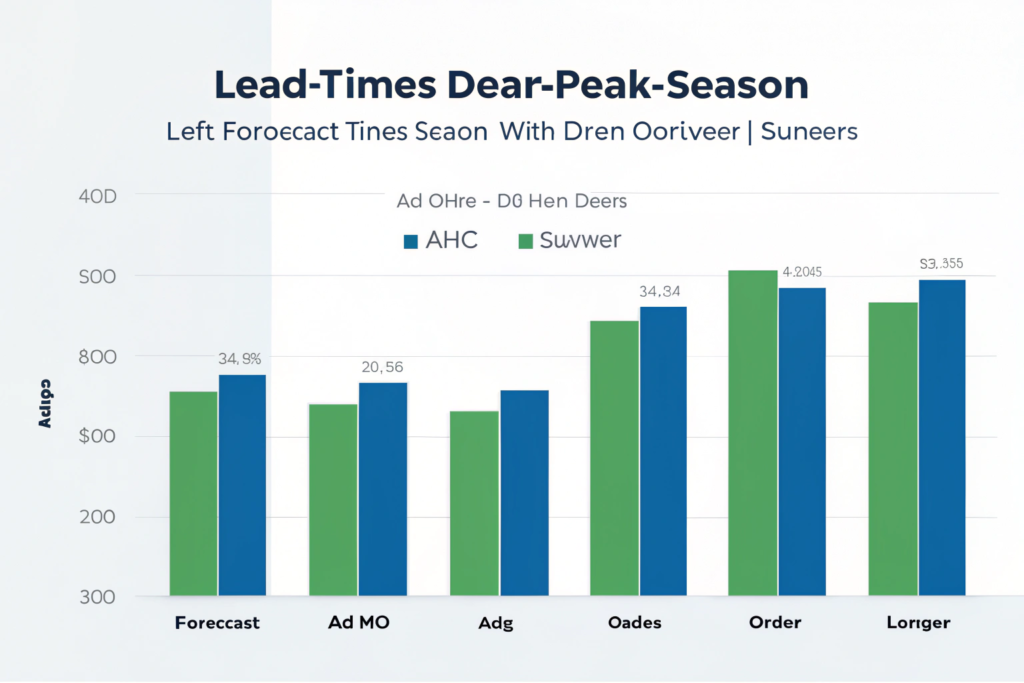
The result: During the 2023 peak season, our average lead time for clients with confirmed orders and forecasts was 19 days. For clients without forecasts, average lead time was 31 days. The gap is widening. We expect to further differentiate service levels based on forecasting accuracy in 2025.
In 2022, a European fast-fashion client refused to provide forecasts. Their ordering pattern was erratic and unpredictable. During the August peak, they placed an urgent order for 80,000 meters of printed viscose. Our dyeing capacity was fully committed to clients with reservation agreements. We quoted a 38-day lead time. They complained. We explained the reservation system. They now provide quarterly forecasts and have a capacity reservation agreement. Their 2023 peak season lead time was 16 days. The Council of Supply Chain Management Professionals (CSCMP) research on capacity reservation contracts confirms that this approach improves supplier performance and buyer satisfaction, and our experience bears this out.
What if I am a small brand and cannot provide 6-month forecasts?
We do not require 6-month forecasts from all clients. Our capacity reservation system is tiered.
Tier 1 (Enterprise clients): Annual volume > 500,000 meters. Quarterly forecasts required, monthly updates. Capacity reservation fee applies. Priority scheduling during peak seasons. Lowest lead times.
Tier 2 (Growth clients): Annual volume 100,000-500,000 meters. Rolling 8-week forecasts recommended. No reservation fee, but capacity is subject to availability. Lead times 5-10 days longer than Tier 1.
Tier 3 (Emerging clients): Annual volume < 100,000 meters. No forecast requirement. We fulfill orders from our greige inventory and available production capacity. Lead times vary based on workload. We do not penalize small clients; we simply cannot guarantee peak season delivery for unforecasted orders.
Our recommendation for small brands:
- Use our greige inventory program. Order standard constructions from stock. Your lead time will be 10-15 days regardless of season.
- Avoid custom colors and specialty finishes during August-October. If you need a custom color, order in June or November.
- Consolidate orders. One order of 3,000 meters is easier for us to schedule than three orders of 1,000 meters.
How do you handle urgent orders outside of peak season?
We love urgent orders. They are the best demonstration of our supply chain speed. We have a dedicated rapid response team for orders requiring delivery in under 10 days.
The rapid response protocol:
-
Greige check. Does the required base fabric exist in our inventory? If yes, proceed. If no, we cannot fulfill a sub-10-day order. We will be honest with you.
-
Color check. Is the required color a standard color that our dye house runs weekly? Black, navy, white, gray, khaki, burgundy, olive? If yes, proceed. If it is a custom Pantone, we cannot fulfill sub-10-day orders. We will quote 12-15 days.
-
Finish check. Does the required finish (DWR, anti-static, anti-microbial) have chemicals in consignment inventory at the dye house? If yes, proceed. If not, add 3-5 days for chemical procurement.
-
Capacity check. Does our partner dye house have immediate capacity? We maintain a real-time capacity dashboard. If yes, proceed. If not, we check our backup dyer.
-
Execution. The order is flagged in our system as "Rush - DO NOT DELAY." Our production planners track it hourly. Our QC team is notified to expect priority inspection. Our logistics team reserves space on the next available vessel or flight.
The cost: Rapid response orders carry a 15-25% surcharge, depending on the complexity and the capacity displacement. We do not apologize for this. Fulfilling a 7-day order requires us to disrupt our standard production schedule, pay overtime, and expedite freight. The surcharge compensates for this disruption and ensures that clients do not request rush service as a routine expectation.
The result: In 2023, we fulfilled 147 rapid response orders. Average lead time from order confirmation to shipment: 8.3 days. Client satisfaction rate: 94%. Repeat rate: 100%.
Conclusion
The Keqiao textile cluster is one of the most remarkable industrial agglomerations in the world. Twenty-five percent of global textile trade moves through this small city. The density of weaving, dyeing, finishing, and logistics assets within a 20-kilometer radius is unparalleled.
But density alone does not create speed. Speed is created by deliberate system design. It requires:
- Synchronized production scheduling across independent companies.
- Just-in-time raw material positioning.
- Real-time quality feedback loops.
- Pre-positioned inventory at multiple stages.
- Transparent capacity communication with clients.
- Willingness to pay for capacity reservation and chemical consignment.
At Shanghai Fumao, we have spent five years building these systems. We have not perfected them—we still have 24-day lead times for custom orders, and we still occasionally miss a delivery date. But we have transformed our supply chain from a source of client frustration to a source of competitive advantage.
We do not claim to be the fastest supplier for every product. If you need a 10D nylon ripstop with a custom PFC-free DWR and a proprietary color, we are not faster than a specialized Japanese mill that does nothing else. But for the vast majority of commercial fabrics—cotton, polyester, viscose, blends; wovens and knits; solids and prints—our local supply chain delivers speed that is difficult to match.
If you are tired of 60-day lead times, of buffer inventory that ties up your working capital, of missed selling windows and air freight charges, I invite you to test our system. Place an order for a standard construction from our greige inventory. Time us. We will ship within 11 days of your confirmed order, or we will discount the invoice.
Contact Elaine, our Business Director, to discuss your lead time requirements and to request our current greige inventory list. Elaine manages our production planning and client forecasting programs. Elaine’s email is: elaine@fumaoclothing.com. Tell her when you need your fabric. She will tell you if we can beat your deadline.