You’re about to place a bulk order for thousands of yards of fabric. The samples felt great, the price is right, but a nagging question remains: “Will this fabric actually hold up in the real world, and is it safe for my customers?” You can’t afford a product recall or a wave of returns because the color faded or the fabric ripped. So, how do you get from hopeful guesswork to absolute certainty?
The answer lies in rigorous, scientific testing. At Fumao Fabric, we don’t ask you to just take our word for it. We prove it in our in-house, CNAS-accredited laboratory. This isn’t just a fancy certificate on the wall; it’s your operational guarantee. This article pulls back the curtain on exactly how our lab operates, detailing the specific machines, methods, and international standards we use to validate every meter of fabric for durability and safety. We’ll show you how this process de-risks your purchase and turns a technical report into your most powerful tool for brand protection and customer trust.
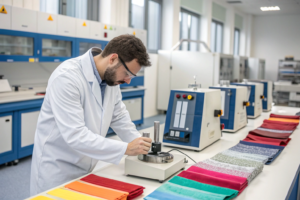
Think of our CNAS lab as your quality control department on this side of the ocean. While you focus on design and marketing, we’re running the fabric through hell to ensure it’s heaven for your end-use. Let’s walk through the tests that separate market-ready fabric from a liability.
What is a CNAS Accreditation and Why Does It Matter for Your Order?
You’ll see lots of suppliers claim they “do testing.” But there’s a universe of difference between an internal check with a ruler and a test performed in a CNAS-accredited lab. CNAS stands for the China National Accreditation Service for Conformity Assessment. It’s China’s official, internationally recognized body that certifies laboratories to the ISO/IEC 17025 standard—the global benchmark for technical competence. In simple terms, it means our lab’s equipment is calibrated, our methods are standardized, our staff is trained, and our results are reliable and accepted worldwide.
Why should this matter to you, the buyer? It boils down to objectivity and authority. A test report from a CNAS lab isn’t just our opinion; it’s an objective third-party-level document. It’s your shield in case of disputes and your passport for crossing borders, as customs and large retailers recognize these reports. For instance, when we ship a container of performance fleece to the EU, the accompanying CNAS test report covering safety standards (like REACH) smoothes the clearance process. It tells your customer, “This supplier invests in proof, not just promises.”
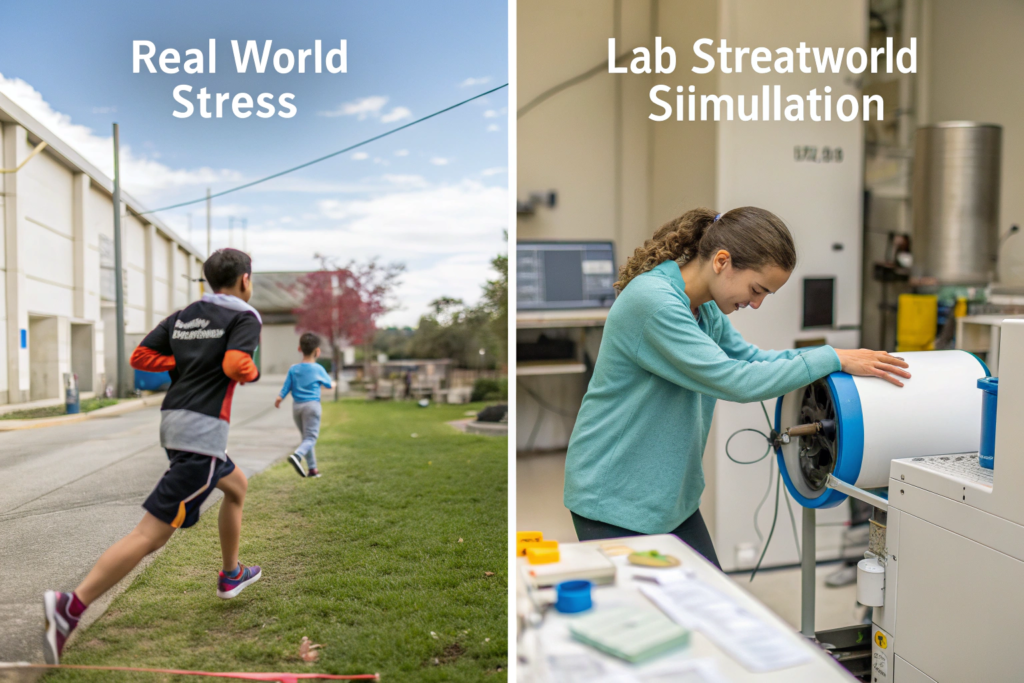
How Does the Lab Simulate Real-World Wear and Tear (Abrasion & Pilling)?
Your customers don’t baby their clothes. Rubbing against backpacks, office chairs, and washing machines—this daily friction is what kills fabric. We simulate this with two key tests:
-
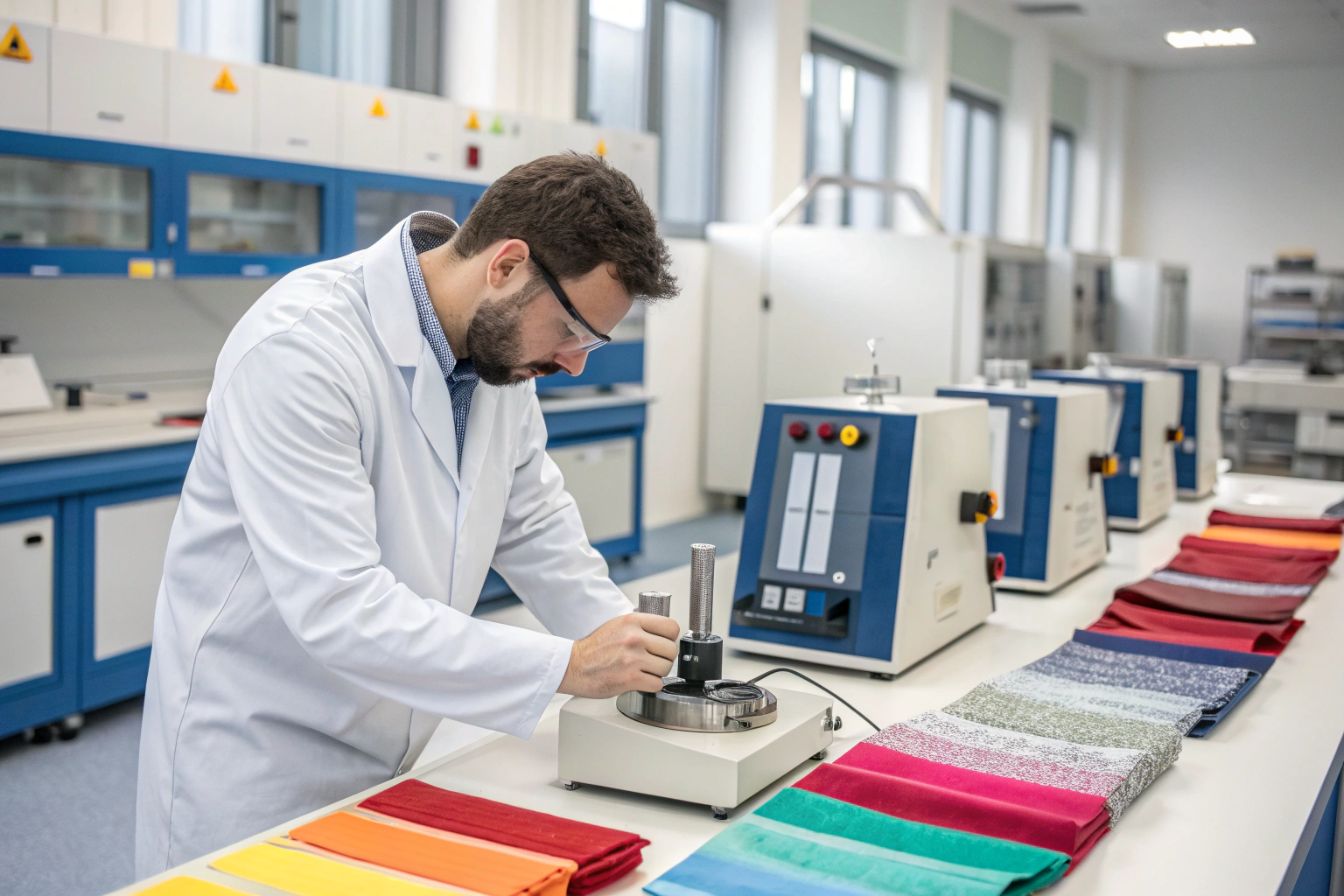
Martindale Abrasion Test: This is the gold standard. We mount fabric samples onto the machine, which rubs them against a standard abrasive fabric in a constant Lissajous figure pattern. The machine counts the cycles. The test continues until the fabric shows a specific number of thread breaks (usually 2 for apparel, 5 for upholstery) or reaches a predetermined cycle count. For a recent order of contract-grade upholstery fabric for a US hotel chain (May 2024), we guaranteed a result of >40,000 Martindale cycles. Our test report, showing 42,500 cycles, gave them the data needed for their 5-year warranty.
-
Pilling Resistance Test: No one likes little balls of fuzz on their sweater. We use a random tumble pilling tester (like the Nu-Martindale). Fabric samples tumble inside a lined chamber with a small amount of abrasive material for a set number of cycles. Afterward, we visually compare the samples to standardized photographic scales (Grade 1-5, with 5 being no pilling). For a popular 100% rPET fleece we produce, we consistently achieve a Grade 4 after 5,000 cycles, which is excellent for its category.
These aren’t just numbers on a page. They’re predictive data. When we say a fabric is suitable for heavy-duty workwear or delicate lingerie, these tests are the scientific basis for that claim. You can learn more about interpreting abrasion test results for different fabric end-uses to make informed decisions.
How is Fabric Strength and Integrity Measured (Tensile & Seam Slippage)?
Durability isn’t just about surface wear; it’s about the fabric’s core strength. A beautiful print is useless if the fabric tears at the seams.
-
Tensile Strength & Elongation: We use a universal strength tester. A strip of fabric is clamped and pulled apart at a constant speed until it breaks. The machine records the maximum force (in Newtons) and how much the fabric stretched (elongation percentage). This is critical for stretch fabrics like spandex blends. In March 2024, a European activewear brand had a specification requiring a specific tensile strength for their 88% polyester / 12% spandex athletic jersey. Our pre-production test confirmed we met the spec, but more importantly, the elongation data ensured the fabric would recover properly, preventing baggy knees.
-
Seam Slippage: This is a hidden killer of garment quality. We sew a standard seam into a fabric sample, cut it, and then pull it apart on the tensile machine in a specific way. We measure how much the seam opens up under a defined force. A high slippage value means the yarns are pulling away from the stitch line, leading to ugly gaps. We catch this before production. For a lightweight satin destined for evening wear, a failed seam slippage test led us to adjust the weave density, saving a client from a potential quality disaster.
These strength tests are your guarantee that the fabric will survive not just wearing, but also the stress of garment construction and pulling on over your head.
How Does Fumao's Lab Ensure Fabric Safety and Compliance?
Durability is about function; safety is non-negotiable. This is where testing gets serious, moving from quality to legal and ethical compliance. Our lab acts as a gatekeeper, ensuring nothing harmful reaches your supply chain.
We test against a comprehensive battery of international safety standards, including but not limited to:
- OEKO-TEX® Standard 100: For harmful substances.
- REACH (EU): For restricted chemicals.
- CPSIA (USA): For children’s products.
- GB Standards (China): For basic safety requirements.
The process is forensic. We take fabric samples, prepare them according to strict protocols, and use instruments like Inductively Coupled Plasma Spectrometers (for heavy metals) and Gas Chromatography-Mass Spectrometers (for banned amines and chemicals) to detect substances at parts-per-million (ppm) levels. Think of it as a high-tech health check-up for your fabric.
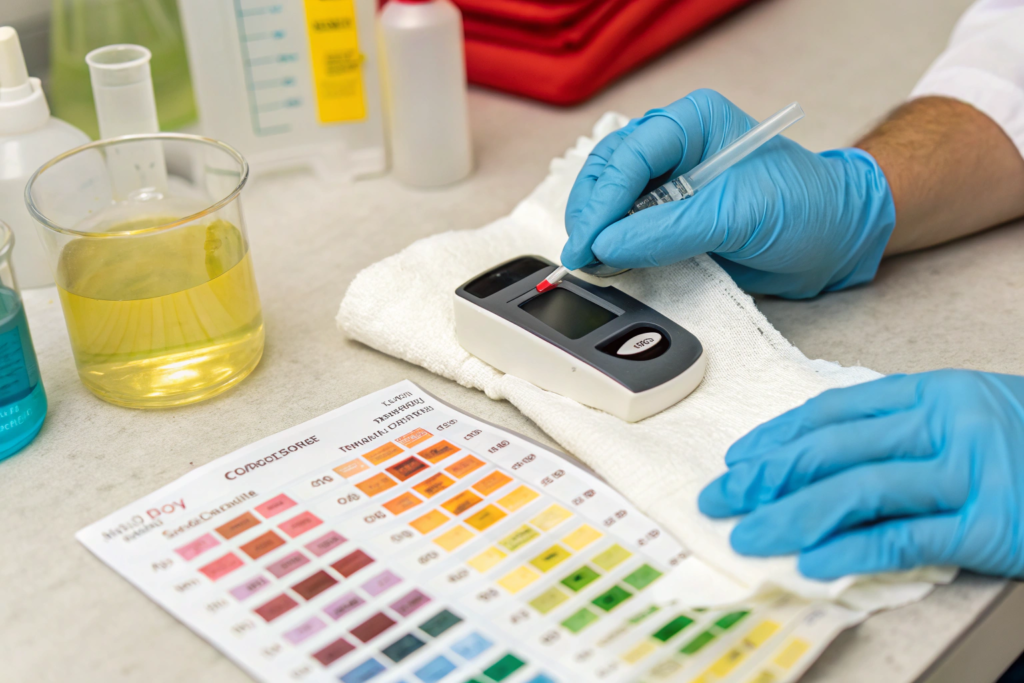
What Tests Guarantee Colorfastness and Dye Safety?
Color issues are a top cause of customer returns. “The red bled onto the white,” or “The sun faded my curtains in months.” We prevent this with a suite of tests:
- Colorfastness to Washing (AATCC 61, ISO 105-C06): Fabric samples are stitched together with multifiber adjacent fabric (to see if dye transfers) and washed in a controlled Launder-Ometer under specific temperature, time, and detergent conditions. After drying, we use a grayscale and chromatic transference scale to rate any color change or staining. A rating of 4-5 is excellent.
- Colorfastness to Rubbing/Crocking (AATCC 8): We use a Crockmeter. A white square of cotton cloth is rubbed against the dyed fabric for a set number of strokes, both dry and wet. We then assess how much color transferred to the white cloth. This is crucial for dark denim or bright prints.
- Colorfastness to Light (AATCC 16): Samples are exposed to intense xenon arc light in a weathering tester, simulating sunlight. We compare them to unexposed samples and blue wool reference standards to determine how many hours of light exposure cause noticeable fading.
Dye safety is paramount. We rigorously test for the presence of banned Azo dyes (which can release carcinogenic amines) and heavy metals (like lead and cadmium). For a line of organic cotton baby clothes we supplied to a Scandinavian brand last year, the CNAS report showing “ND” (Not Detected) for all 24 banned amine compounds was a mandatory deliverable for their PO.
How Are pH, Formaldehyde, and Flammability Risks Checked?
These are the invisible threats our lab makes visible.
- pH Value Test: Human skin has a slightly acidic pH (around 5.5). Fabric with a highly alkaline or acidic pH can cause skin irritation. We dissolve fabric in distilled water and use a precision pH meter to measure. We always ensure the result is in a skin-friendly range (usually 4.0-7.5 for most apparel).
- Formaldehyde Content: Formaldehyde is sometimes used in anti-wrinkle finishes but is strictly regulated. We use the water extraction method and spectrophotometry to measure content. For markets like Japan and the EU, limits are extremely low (<20 ppm for infant wear). We routinely test and adjust finishing recipes to comply.
- Flammability Tests: Depending on the end-use (e.g., children’s sleepwear, curtains), specific flammability standards apply (like 16 CFR Part 1610 in the US). We test the fabric’s burning rate under controlled conditions. For a client making hotel drapes, we confirmed their chosen fabric met the required “Class 1 – Normal Flammability” standard before bulk production.
Navigating this complex web of global regulations is a full-time job. That’s why our lab doesn’t just test; it advises. We help you understand the critical differences between major global textile safety regulations to target your market correctly.
What Does the Testing Process Look Like From Sampling to Report?
It’s one thing to know what we test, but seeing how it integrates into your order timeline is what brings peace of mind. Our testing protocol is a structured workflow, not a random check.
The process kicks off the moment you request a quote or a development sample. For new fabrics, testing is part of our R&D. Once a fabric is approved for bulk order, testing occurs at three critical stages:
- Pre-Production (Greige Fabric): We test the base, un-dyed/un-finished fabric for inherent strength and composition.
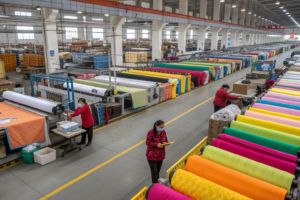
- Production (Lab Dip & Pilot Run): We test the approved lab dip for colorfastness and chemistry. A pilot run sample undergoes a full battery of tests.
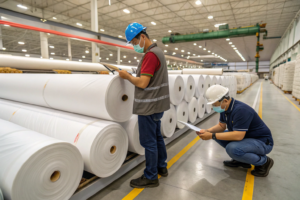
- Pre-Shipment (Bulk Goods): Random samples are taken from each dyelot or production batch and tested against the key agreed specifications.
This staged approach catches issues early when they are cheap to fix, not in a finished container. Our system is fully traceable. Every test sample is linked to a specific batch number. When you get a roll of fabric from Fumao Fabric, it often comes with a QR code. Scan it, and you can access the digital test report for that specific batch—real-time transparency.
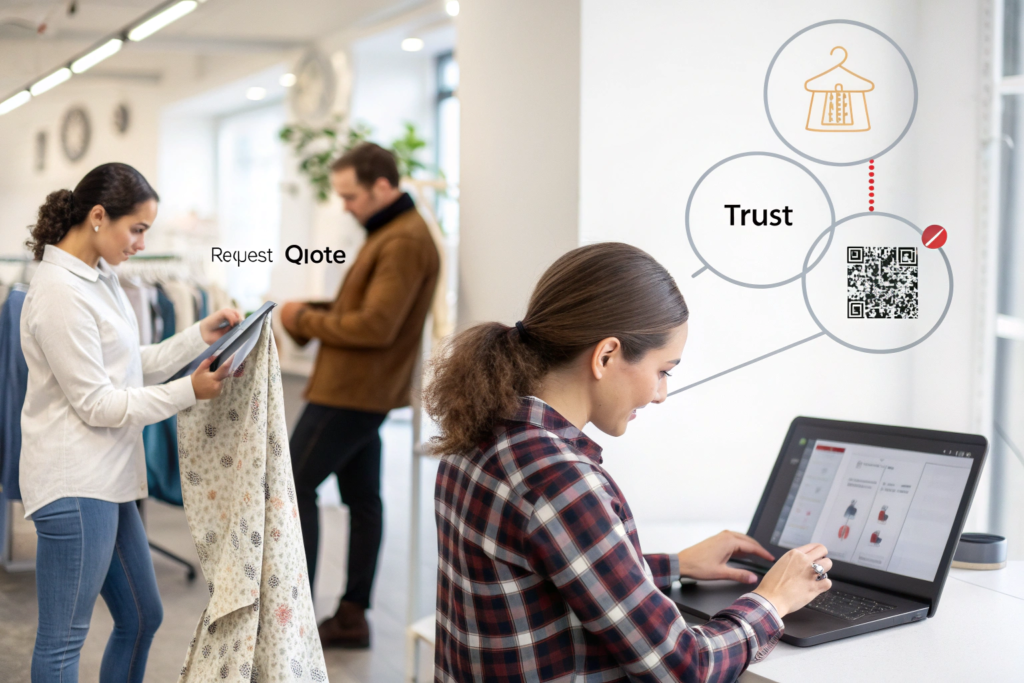
How Can Buyers Access and Interpret Test Reports?
We believe data should empower, not confuse. When you work with us, you don’t just get a stack of paper; you get a clear, digital report (usually PDF) that follows a standard format:
- Header: Our lab info, your info, sample description, and batch number.
- Test Summary: A clear table listing each test performed, the standard used, the result, and a PASS/FAIL against the specification limit.
- Detailed Data: The raw numbers and observations from each test.
- Signatures & Stamp: Authorized sign-off and the official CNAS lab stamp.
Interpreting it is straightforward. First, check the PASS/FAIL column—it gives you an instant status. Then, look at key metrics for your needs: Martindale cycles for durability, pH value for safety, colorfastness ratings for performance. We’re always available to walk you through any report line by line. For a new entrepreneur launching a sustainable activewear line, we held a 30-minute video call explaining every line of their first report, turning a complex document into a marketing asset they used to secure crowdfunding.
What Happens If a Test Fails? What's the Correction Process?
A test failure isn’t a crisis; it’s our early warning system, and it’s why we test before shipping. Our process is transparent:
- Immediate Notification: We inform you the moment a failure is confirmed, explaining which parameter failed and why.
- Root Cause Analysis: Our technical team investigates. Was it a dyeing parameter? A finishing chemical? A yarn inconsistency?
- Corrective Action & Re-testing: We correct the issue in the production process—this could mean re-dyeing, adjusting the finish, or in rare cases, rejecting a batch of raw material. The corrected fabric is then re-tested.
- Resolution: Only after the re-test passes do we approve the batch for shipment. You receive the updated “PASS” report.
This process protects you. In one instance, a pre-shipment test for a large order of printed canvas for tote bags showed lower-than-specified rubbing fastness. The failure stopped the shipment. Our team traced it to an issue with the fixing process after printing. We corrected it, re-ran the entire batch, re-tested, and shipped with a 2-day delay but with guaranteed quality. The cost and time were on us, not the client. This is the real value of an integrated, accountable supplier.
Conclusion
Fabric testing at Fumao Fabric is not a cost center; it’s the core of your risk management strategy. Our CNAS-accredited lab transforms subjective assurances into objective, internationally recognized data. From simulating years of wear in a machine to hunting down trace chemicals, we proactively solve problems you should never have to face.
This rigorous process does more than just ensure compliance—it builds the foundation of trust that allows for smooth, long-term partnerships. You gain the confidence to market your products aggressively, knowing the performance and safety claims are backed by science. In a world where brand reputation is everything, this isn’t an optional extra; it’s your baseline.
Stop wondering if your fabric is good enough. Start knowing. Let Fumao Fabric be your partner where quality is measured, proven, and delivered. To discuss your specific fabric needs and receive a sample with its comprehensive test profile, reach out to our team. Contact our Business Director Elaine to begin: elaine@fumaoclothing.com.