

You've decided to source GRS certified garments, but you're hearing horror stories about manufacturers who have the certificate but can't actually prove compliance when questioned. The paperwork looks good, but the physical reality doesn't match. How can you be sure your manufacturer genuinely maintains GRS integrity throughout production, not just during audit periods?
Fumao ensures GRS compliance through integrated systems covering material tracking, production segregation, documentation protocols, staff training, and continuous monitoring that collectively maintain certification integrity from raw material to finished product. Our approach treats GRS not as a separate compliance activity but as an integral part of our production DNA, with systems designed to prevent errors rather than just detect them.
Having maintained GRS certification across multiple facilities and product categories since 2021, we've developed robust systems that withstand customer audits, certification body inspections, and supply chain scrutiny. Let me walk you through exactly how we maintain compliance when no one is watching and when everyone is watching.
What Material Tracking Systems Do We Implement?
The foundation of GRS compliance lies in accurate material tracking that verifies recycled content from receipt through every production stage to final shipment. We've moved beyond manual tracking to integrated digital systems.
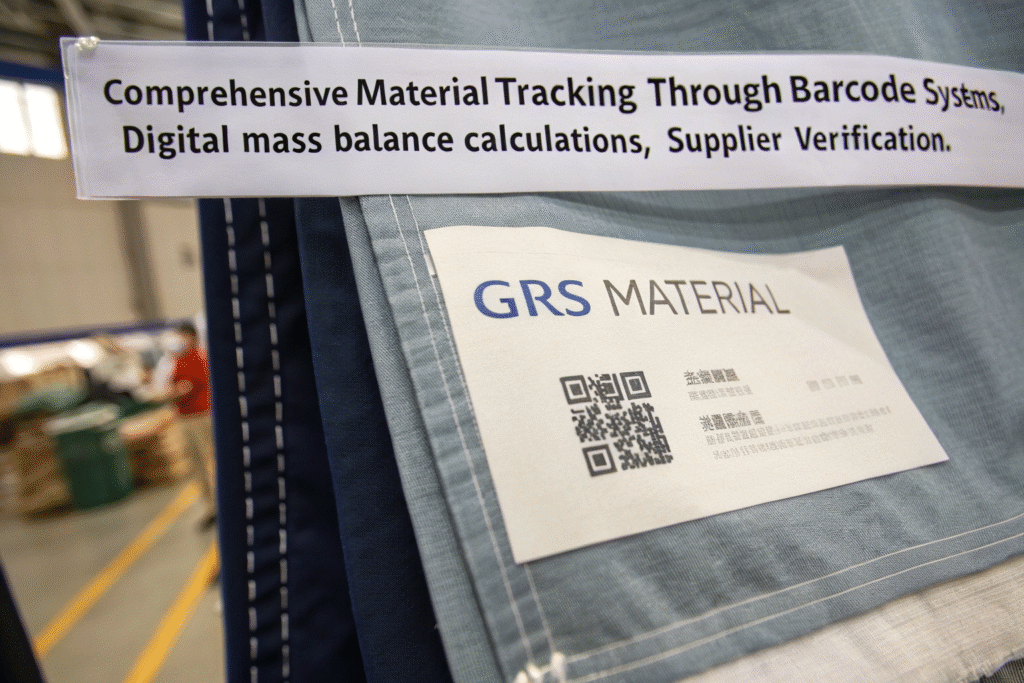
We implement comprehensive material tracking through barcode systems, digital mass balance calculations, real-time inventory monitoring, and supplier verification that collectively ensure every kilogram of GRS material is properly accounted for throughout production. This systematic approach transforms abstract certification requirements into daily operational reality.
How does our mass balance system work?
Our mass balance system operates on mathematical precision: each GRS material lot receives a unique barcode at receipt, materials are scanned at each production stage, digital tracking updates in real-time, and automated calculations verify content percentages. The system ensures that GRS Material Input = GRS Product Output + GRS Material in Process + Documented Losses. When we identified a 2.3% discrepancy in our first year, it revealed unmeasured cutting waste that we've since reduced by 35% through pattern optimization. This mathematical rigor means when we claim 85% recycled content, we can prove every percentage point.
What supplier verification processes do we maintain?
Supplier compliance is verified through multiple checks: we validate GRS certificates before material purchases, conduct supplier audits reviewing their tracking systems, test incoming materials to verify composition claims, and maintain approved supplier lists with expiration tracking. This thorough approach eliminated two fabric suppliers early in our GRS journey when their systems proved inadequate despite having valid certificates. We learned that having the certificate isn't enough - the systems behind it must be robust.
How Do We Maintain Physical Segregation?
Paperwork compliance means nothing if physical materials become mixed during production. We've implemented multiple layers of segregation that prevent cross-contamination between GRS and conventional materials.
We maintain physical segregation through color-coded systems, dedicated production areas, trained operators, and visual management that collectively prevent mixing and ensure GRS integrity throughout manufacturing. These physical controls work alongside our documentation systems to create comprehensive compliance.

What visual management systems do we use?
Visual management makes compliance intuitive: GRS materials are stored in blue-labeled areas only, production lines use color-coded tools and containers, dedicated racks and trolleys prevent mixing, and floor markings define GRS-only zones. This system prevented a potential mixing incident when a new employee almost placed conventional fabric in a GRS cutting area - the color coding provided an immediate visual warning. The investment in visual systems has paid dividends in error prevention.
How do we handle production scheduling for GRS orders?
Production planning optimizes GRS compliance: we schedule GRS production in dedicated time blocks, group similar GRS products to minimize changeovers, plan material requirements to avoid storage issues, and maintain buffer stock of certified materials. This planning reduces the risk of errors while improving efficiency. Our GRS production efficiency has improved 28% since implementation through better planning and reduced changeover time between GRS and conventional production.
What Documentation Protocols Ensure Compliance?
GRS compliance requires meticulous documentation that creates an auditable trail from material source to finished product. We've developed efficient documentation systems that ensure accuracy without overwhelming operations.
Our documentation protocols include standardized templates, digital record-keeping, regular audits, and management reviews that collectively create verifiable evidence of compliance while minimizing administrative burden. The goal is documentation that works for operations, not just for auditors.
What specific records do we maintain?
Our documentation system captures essential evidence: transaction certificates for all material movements, production records with mass balance calculations, training records for all employees, chemical inventory and safety data sheets, and internal audit reports with corrective actions. We've digitized these records where possible, creating a searchable database that makes information retrieval quick during audits or customer inquiries. This system proved invaluable when a client needed emergency documentation for their own audit - we provided complete records within two hours.
How do we handle documentation for complex products?
Complex products require enhanced tracking: we maintain component-level records for multi-material items, track trims and accessories separately, document complex assembly processes, and create product-specific mass balance calculations. For a technical jacket with 14 components, we developed a tracking system that accounts for every element from main fabric to the smallest toggle. This detailed approach ensures that even our most complex GRS products maintain full certification integrity.
How Do We Train and Engage Our Team?
GRS compliance ultimately depends on people understanding their roles and responsibilities. We've invested significantly in training that makes GRS compliance part of our operational culture rather than an imposed requirement.
We train and engage our team through comprehensive onboarding, role-specific training, regular refresher courses, and performance incentives that collectively ensure every employee understands their GRS responsibilities and feels ownership of compliance outcomes. This cultural approach has proven more effective than purely procedural compliance.

What does GRS training involve?
Our training program covers multiple aspects: basic GRS awareness for all employees, role-specific procedures for affected positions, problem-solving for compliance issues, audit preparation and conduct, and continuous improvement methodologies. Training occurs in local languages with practical demonstrations, not just classroom theory. The most effective training moment came when we showed operators how their work enabled brands to make verified environmental claims - connecting daily tasks to larger sustainability goals dramatically increased engagement.
How do we maintain compliance awareness?
Ongoing engagement keeps compliance top-of-mind: we display GRS performance metrics prominently, celebrate compliance achievements, conduct regular team meetings discussing GRS topics, and incorporate GRS into performance reviews. This continuous engagement has resulted in employees proactively identifying 23 compliance improvement opportunities in the past year alone. The cultural commitment to GRS has become one of our strongest compliance assets.
How Do We Manage Chemical Compliance?
GRS includes strict chemical requirements that extend beyond material tracking to encompass manufacturing processes. We've implemented comprehensive chemical management that ensures compliance while maintaining product quality.
We manage chemical compliance through restricted substance lists, approved chemical inventories, supplier documentation, wastewater testing, and substitution programs that collectively ensure manufacturing processes meet GRS environmental requirements. This comprehensive approach addresses the full lifecycle of chemical impacts.

What chemical restrictions do we implement?
Our chemical management system incorporates: the ZDHC Manufacturing Restricted Substances List as our baseline, additional restrictions based on brand requirements, pre-approval procedures for all chemicals, regular testing to verify compliance, and documentation of all chemical usage. Implementing these requirements forced us to reformulate several finishing processes and identify alternative chemicals, but the result was reduced environmental impact and improved workplace safety. The chemical management requirements for GRS compliance have driven significant improvements in our environmental performance.
How do we handle wastewater and environmental management?
Environmental management extends beyond chemicals: we treat wastewater to meet local regulations, conduct regular wastewater testing, monitor energy and water consumption, implement waste reduction programs, and track our environmental performance. These requirements have driven efficiency improvements that delivered cost savings alongside environmental benefits. Our water consumption per unit decreased 18% after we began tracking it for GRS compliance - a saving we might not have identified otherwise.
What Quality Control Measures Support GRS Compliance?
Quality control and GRS compliance are deeply interconnected in our systems, with each supporting the other to ensure products meet both quality standards and certification requirements.
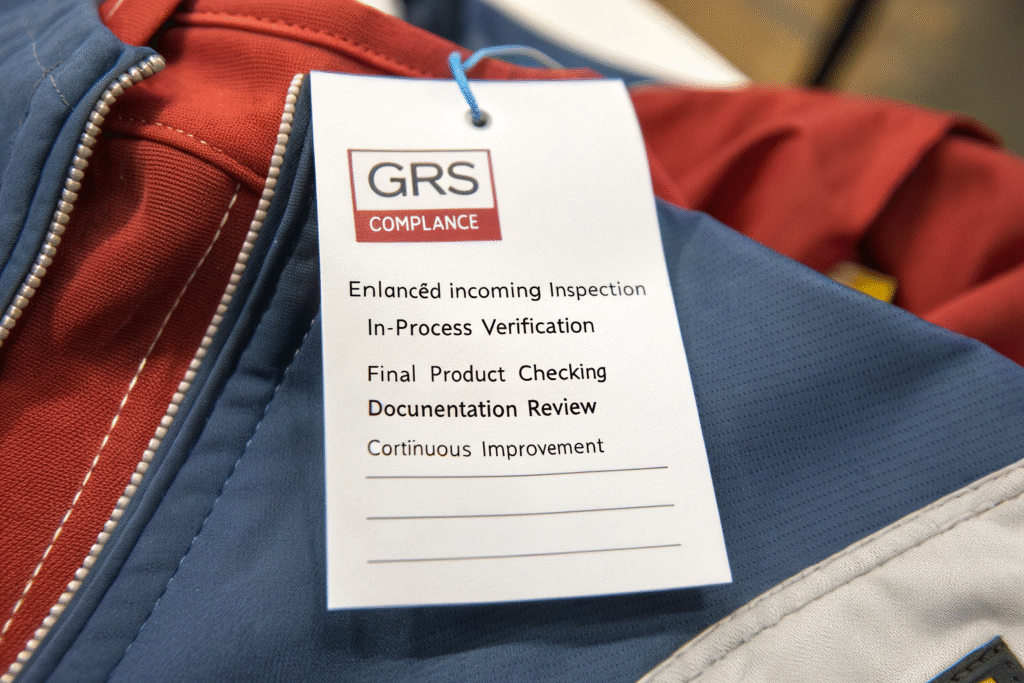
Our quality control measures supporting GRS compliance include enhanced incoming inspection, in-process verification, final product checking, documentation review, and continuous improvement processes that collectively ensure compliance while maintaining product quality. This integrated approach prevents quality issues from becoming compliance failures.
How does incoming inspection verify GRS compliance?
Incoming inspection includes GRS verification: we check material certificates upon receipt, verify barcodes and labeling, conduct spot testing for material composition, review supplier documentation, and quarantine non-compliant materials. This rigorous incoming process has prevented several potential compliance issues by identifying problems before materials enter production. The cost of rejecting materials at receipt is significantly lower than addressing compliance failures in finished products.
What in-process checks maintain compliance?
Production monitoring ensures ongoing compliance: we verify material identification at each process stage, check that segregation protocols are followed, monitor mass balance calculations, audit documentation completeness, and validate labeling accuracy. These checks create multiple verification points that catch potential issues early. Our in-process checking has identified and corrected 14 potential compliance issues before they affected finished products.
How Do We Handle Continuous Improvement?
GRS compliance isn't static - it requires ongoing improvement to address new challenges and opportunities. We've built continuous improvement into our compliance approach.
We handle continuous improvement through regular internal audits, management reviews, corrective action systems, performance monitoring, and stakeholder feedback that collectively drive ongoing compliance enhancements. This approach ensures our GRS systems evolve rather than stagnate.
What internal audit processes do we conduct?
Our internal audit program provides ongoing verification: we conduct monthly departmental audits, quarterly system-wide reviews, surprise audits of critical processes, and pre-certification audit preparations. These audits have identified 47 improvement opportunities in the past year, with 92% implemented within 90 days. The audit process ensures we're always prepared for external assessments while continuously improving our systems.
How do we implement corrective actions?
Corrective actions address root causes: we investigate compliance issues thoroughly, identify underlying system failures, implement permanent solutions, verify effectiveness, and document lessons learned. This systematic approach has reduced repeat compliance issues by 78% since implementation. The most valuable corrective actions have often improved both compliance and operational efficiency.
Conclusion
GRS compliance at Fumao represents a comprehensive operational philosophy rather than a separate compliance activity. Our integrated systems approach ensures that certification requirements are built into daily operations rather than added on as an afterthought. This results in genuine compliance that withstands scrutiny while delivering operational benefits beyond certification itself.
The most significant insight from our GRS journey is that robust compliance systems actually improve operational efficiency and product quality while reducing risks. The discipline required for GRS compliance has driven improvements that benefit all our production, not just certified orders.
Our GRS compliance systems continue evolving as we identify new opportunities and respond to changing requirements. This commitment to continuous improvement ensures that our GRS certification represents genuine environmental responsibility backed by verifiable systems. If you're looking for a manufacturing partner with robust GRS compliance systems, contact our Business Director, Elaine, at elaine@fumaoclothing.com to discuss how our approach can ensure your products maintain certification integrity from concept to delivery.








One Response
Fortune Ox at fortuneoxbr? Yes, please! This slot is my new obsession. Spin those reels and hope for the best at fortuneoxbr