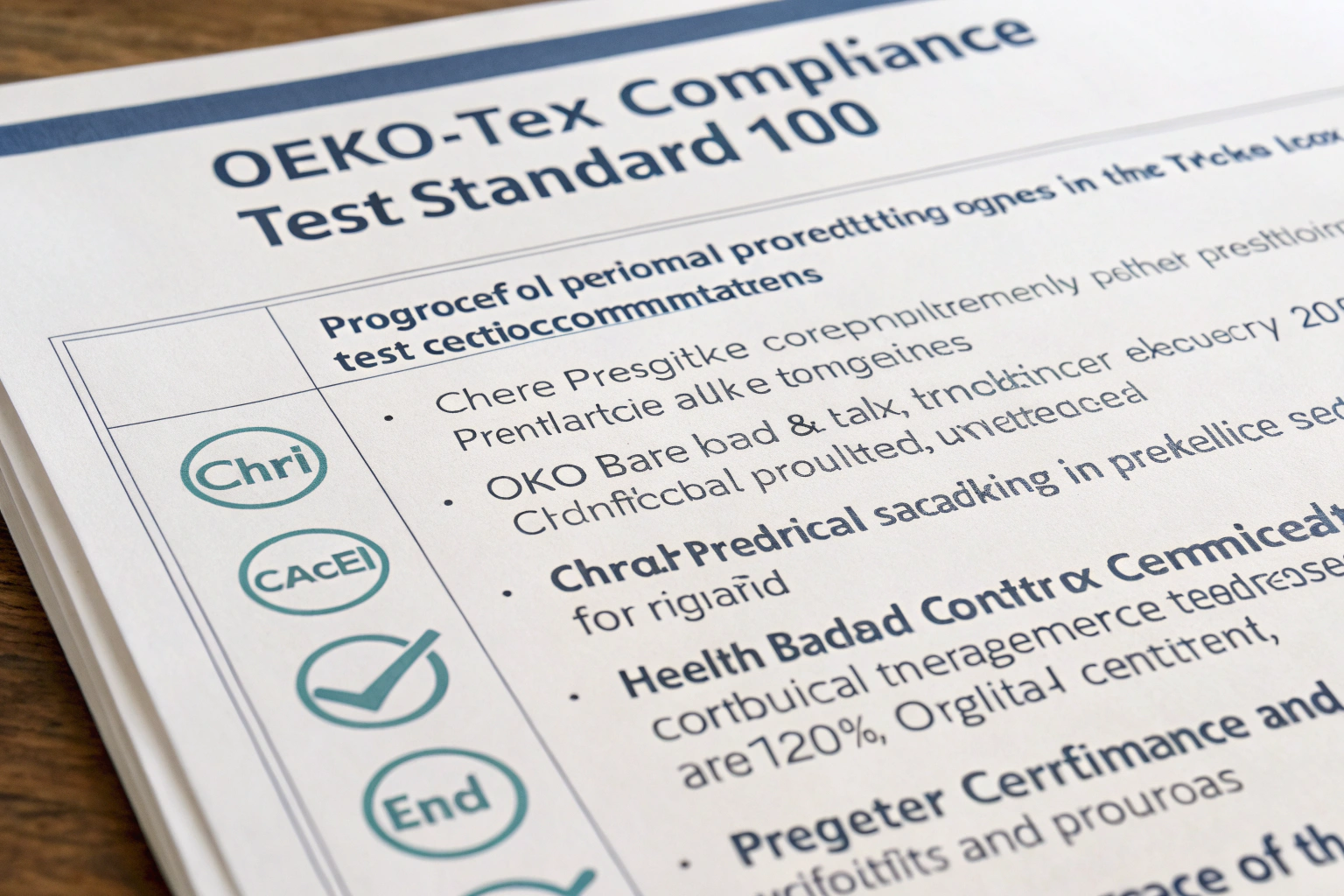
Let’s be real: getting an OEKO-TEX certificate isn’t easy. It’s not a participation trophy. The testing is rigorous, the standards are updated yearly, and the pass/fail limits—especially for Class I (babywear) and Class II (adult apparel)—are unforgiving. For many fabric suppliers, passing is a stressful, last-minute gamble: send a sample to the lab and pray. At Fumao Clothing, our approach is fundamentally different. We don’t hope to pass; we engineer our entire production ecosystem to guarantee compliance from the first molecule to the final meter. Passing isn’t an event; it’s the predictable outcome of a controlled, vertically-integrated system built on prevention, not correction.
The OEKO-TEX Standard 100 sets the bar high with over 100 test parameters covering illegal substances, regulated chemicals, known hazards (even if unregulated), and health-based parameters. Passing isn’t about hiding problems; it’s about never creating them in the first place. Our strategy is built on three core pillars: Proactive Chemical Sourcing & Management, In-Process Control via Our CNAS Lab, and End-to-End Digital Traceability. This system ensures that by the time a fabric sample is officially submitted for OEKO-TEX certification, it has already passed a more stringent internal gauntlet of checks. We’ve turned a high-stakes external test into a routine internal quality confirmation.
I’ll give you a real example from last month. A potential client, a US brand, challenged us with a “problem fabric.” Their previous supplier’s organic cotton jersey kept failing OEKO-TEX Class II for pH variability and formaldehyde content. They sent us the specs. Our lab first analyzed a sample of the failing fabric and pinpointed the issue: inconsistent rinsing and a cheap, volatile formaldehyde-based crosslinker in the finish. For our production, we switched to a formaldehyde-free softener and implemented a locked, automated pH adjustment cycle in our partner dye house. The first bulk lot passed our internal pre-tests. The official OEKO-TEX sample sailed through. The difference wasn’t luck; it was control. For us at Shanghai Fumao, passing is simply the output of a system designed for it.
What is Our Proactive Chemical Management Protocol?
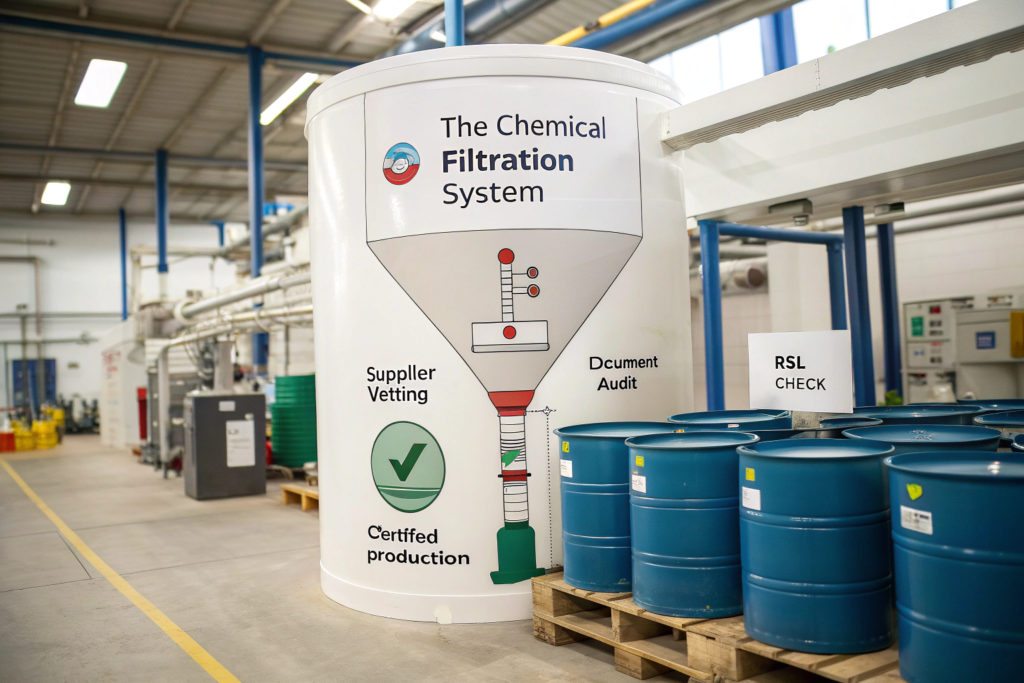
The single biggest determinant of OEKO-TEX success is what you don’t put into the fabric. You cannot test out contamination that’s already baked in. Therefore, our first and most critical line of defense is controlling every chemical input that touches our yarns and fabrics. We treat our supply chain like a pharmaceutical company, not a commodity trader.
Our protocol is non-negotiable:
- Vetted Chemical Suppliers Only: We source dyes, auxiliaries, softeners, and finishes exclusively from a shortlist of major chemical companies that provide OEKO-TEX Conformity Statements for their products. These suppliers are themselves audited.
- Incoming Raw Material Screening: Even before weaving or knitting, we test incoming yarn batches for residual pesticides (on natural fibers) or heavy metal contaminants. This catches issues at the source.
- Restricted Substance List (RSL) Enforcement: Our internal RSL is often stricter than the OEKO-TEX standard. We cross-reference every Safety Data Sheet (SDS) and Technical Data Sheet (TDS) against this list before any chemical is approved for use in production.
How Do We Eliminate High-Risk Substances Like Formaldehyde and APEOs Before Production?
For specific, notorious OEKO-TEX red-flag substances, we implement absolute bans at the procurement stage.
- Formaldehyde: We mandate the use of formaldehyde-free crosslinking agents for easy-care or anti-shrink finishes. For fabrics where some formaldehyde is chemically inherent (e.g., certain resin finishes), we select ultra-low emission agents and optimize curing processes to ensure the final content is far below the Class II limit of 75 mg/kg (and near-zero for Class I). Our lab’s in-process test can detect formaldehyde at 20 mg/kg, allowing for immediate adjustment.
- APEOs (Alkylphenol Ethoxylates): These are toxic to aquatic life and restricted. We prohibit them entirely. We use alternative, safer surfactants and detergents in scouring and dyeing processes. This isn’t just for OEKO-TEX; it aligns with brands’ own sustainability RSLs.
- Allergenic Disperse Dyes: For our polyester and synthetic blends, we provide dyers with a positive list of approved, compliant dye stocks. They are contractually bound not to substitute with non-compliant alternatives.
This proactive elimination means these substances are never present in our production environment, removing the possibility of a test failure. It’s why we maintain a near-100% first-time pass rate on official certifications. Resources like the ZDHC Manufacturing Restricted Substances List (MRSL) guide our chemical selection, but our enforcement is absolute.
How Does Our System Prevent Cross-Contamination in Shared Facilities?
This is a hidden risk. Our weaving factory is our own, but we partner with specialized dyeing and finishing mills. How do we ensure the equipment processing our OEKO-TEX fabric isn’t contaminated from a previous non-compliant order? We enforce a strict cleaning and flushing protocol before our production runs.
Before our fabric enters a dyeing machine or finishing range, we require our partners to perform a documented “clean run” with hot water and neutral detergents. We may even request a swatch test from the first meter of our production to check for any carry-over. This level of detail is part of our partnership agreements and is verified during our technical team’s regular site audits. It’s this granular control over the process, not just the materials, that sets us apart.
How Does Our In-House CNAS Lab Act as a Real-Time Compliance Engine?
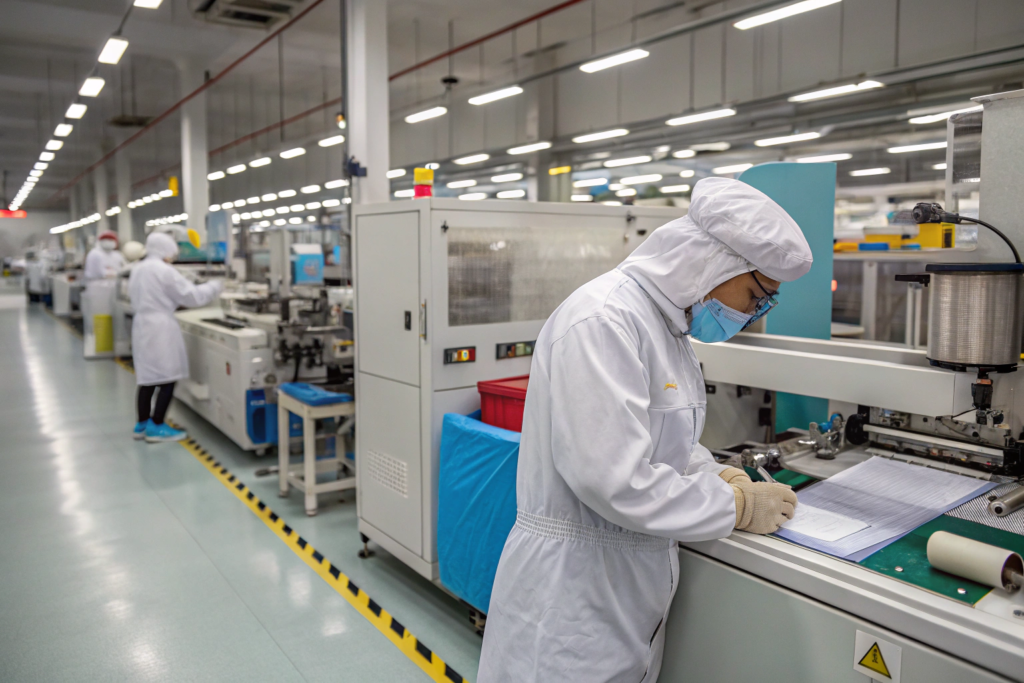
This is our superpower. Many factories rely solely on annual third-party lab tests. We have a CNAS-accredited in-house laboratory that allows us to perform critical OEKO-TEX-aligned tests during production, not after. This is the difference between inspecting quality at the end of the line versus controlling it at every workstation.
Our lab is equipped to run tests that map directly to OEKO-TEX parameters:
- pH Value: Measured electronically to ensure a skin-friendly range (4.0-7.5).
- Formaldehyde Content: Using spectrophotometric methods.
- Colorfastness: To washing, rubbing (dry/wet), and perspiration.
- Heavy Metal Screening: Using ICP-MS for precise detection.
Having this capability in-house turns compliance from a weeks-long waiting game into a hours-long feedback loop.
What is the “Pre-Compliance” Batch Testing Procedure?
Here’s our secret sauce. Before any bulk fabric is considered finished, we pull a sample and run it through a pre-compliance checklist in our lab. Let’s walk through a recent batch of 10,000 meters of recycled polyester jersey for activewear:
- After Dyeing: A sample is taken. Lab checks pH and does a quick colorfastness to rubbing test. Result: pH is 8.5 (too alkaline). The dyeing master is immediately alerted.
- Corrective Action: An additional rinsing cycle with a mild acid is added to the process.
- Re-test: One hour later, a new sample shows pH of 6.8. PASS.
- After Finishing: Another sample is taken. Lab tests for formaldehyde (even though not expected) and colorfastness to washing. Both pass.
- Green Light: Only after these internal pre-tests pass is the bulk fabric released for final inspection and packing. Then a representative sample is sent to the external OEKO-TEX institute (e.g., TESTEX) for the official certification.
This procedure catches over 95% of potential non-conformities before they become costly bulk failures. It’s the embodiment of “measure twice, cut once.”
How Do We Handle the Most Challenging Test: Colorfastness to Perspiration/Saliva?
This is a critical test, especially for Class I (babies) and activewear (Class II). It simulates whether dyes will migrate under acidic/alkaline sweat or saliva. Failure here often points to poor dye selection or inadequate fixing.
We tackle this upstream. Our lab technicians work with dyers to pre-select dyes with high wet-fastness properties. During development, we run this test internally. If a new color shows a rating below 4 (on a 1-5 scale), we reject that dye recipe and go back to the chemical supplier for alternatives. For a babywear client in 2023, we developed a new pastel color palette. Two colors initially tested at 3-4 for saliva fastness. We reformulated, and the final bulk achieved a consistent 4-5 rating, ensuring a smooth path to Class I certification. This deep technical collaboration is what we mean by engineered compliance.
How Does Digital Traceability Lock in Compliance from Warehouse to Client?
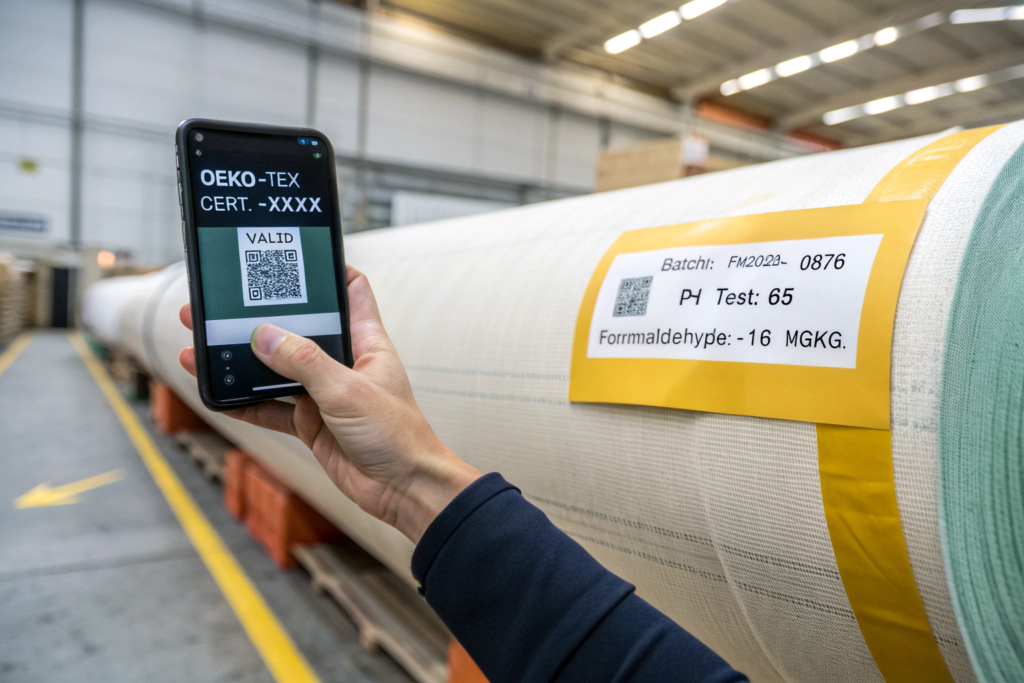
A certificate is a snapshot. But what about the 10,000 meters of fabric behind that sample? How can you, the buyer, be sure every meter you receive is as compliant as the certified sample? Our answer is Digital Product Passporting via QR Code.
Every roll of OEKO-TEX certified fabric from Fumao is tagged with a unique QR code. When scanned with a smartphone, it doesn’t just show a PDF of the certificate. It opens a live digital dossier that includes:
- The valid OEKO-TEX certificate number and link to verification.
- Internal pre-compliance test reports for that specific batch (pH, etc.).
- Batch number, production date, and composition.
- Even links to certificates for compliant threads or components if supplied.
This creates an unbroken, verifiable chain of custody. It makes compliance dynamic, transparent, and accessible.
How Does This System Prevent Certificate Fraud or Misuse?
Sadly, certificate fraud exists in the market—using an old certificate, a certificate for a different product, or even a forged document. Our digital traceability system kills this risk.
Since the QR code links to our central database, the information is always current and cannot be altered. A buyer or auditor can instantly verify:
- That the certificate number is valid and issued to Shanghai Fumao.
- That the specific article number and color on the roll match the certified range.
- That the certificate has not expired.
This gives our clients bulletproof evidence for their own due diligence with retailers or customs officials. It’s a key part of building what we call supply chain integrity for apparel brands.
What is Our Process for Annual Renewal and Managing Changes?
OEKO-TEX certificates expire yearly. Our quality management system automatically flags renewals 4 months in advance. The renewal isn’t just paperwork; it involves:
- Submitting new samples for testing.
- Updating the institute on any process changes.
- Hosting the annual surveillance audit.
More importantly, if we make any change to a certified article—a new dye source, a different finishing agent—we are obligated to inform the certifying body and may need to re-test. Our change control procedure ensures this is never overlooked. This disciplined, ongoing maintenance is why our certifications are robust and reliable year after year, providing long-term OEKO-TEX compliance partnership for our clients.
Conclusion
Passing stringent OEKO-TEX fabric tests isn’t a mystery or a matter of chance when you work with Fumao Clothing. It is the direct result of a deeply integrated, prevention-oriented operational model. We pass because we design our processes to eliminate the possibility of failure. From chemically-vetted inputs and real-time in-house laboratory control to full digital traceability, every step is engineered to meet and exceed the standard.
For you, the brand owner or buyer, this translates to unparalleled confidence. It means you receive fabric that is not only certified but is backed by a transparent, auditable system that guarantees consistency roll after roll, season after season. It means you spend less time worrying about compliance nightmares and more time building your collection.
Don’t leave the most critical aspect of your product’s safety to a hope and a prayer. Partner with a supplier whose entire system is the answer to “How do you pass?” Choose Shanghai Fumao. To see our certifications and discuss how our engineered compliance can secure your next line, contact our Business Director, Elaine, at elaine@fumaoclothing.com. Let’s build safety in, from the ground up.