If you’re ordering custom apparel, you focus on the logo placement, the fabric feel, and the perfect fit. You might think the cotton certification is just a paperwork issue—something for the marketing team. But what if the very process that makes cotton "better" also makes your final garment better?
For custom apparel buyers, BCI (Better Cotton Initiative) certification directly and positively impacts product quality by ensuring the raw cotton is grown under more controlled, sustainable conditions. This leads to longer, stronger, and more consistent cotton fibers, which translate into fabrics with superior durability, color vibrancy, and pilling resistance for your branded garments. It’s a hidden quality upgrade that starts at the farm.
Many believe sustainable cotton means compromising on performance or hand feel. The opposite is true. BCI principles promote farmer training on optimal harvest timing and careful ginning, which reduces fiber damage. Better fibers mean better yarns, which mean better fabrics. Last year, a corporate client ordered custom polo shirts for their nationwide sales team. They initially sourced a cheaper, non-certified pique fabric. After one season, the shirts looked faded and fuzzy. For their refresh, we at Shanghai Fumao recommended a BCI-certified cotton pique. Eight months later, the client reported that the new shirts maintained their color depth and surface texture significantly better despite frequent washing, directly linking the longevity to their choice of certified base material.
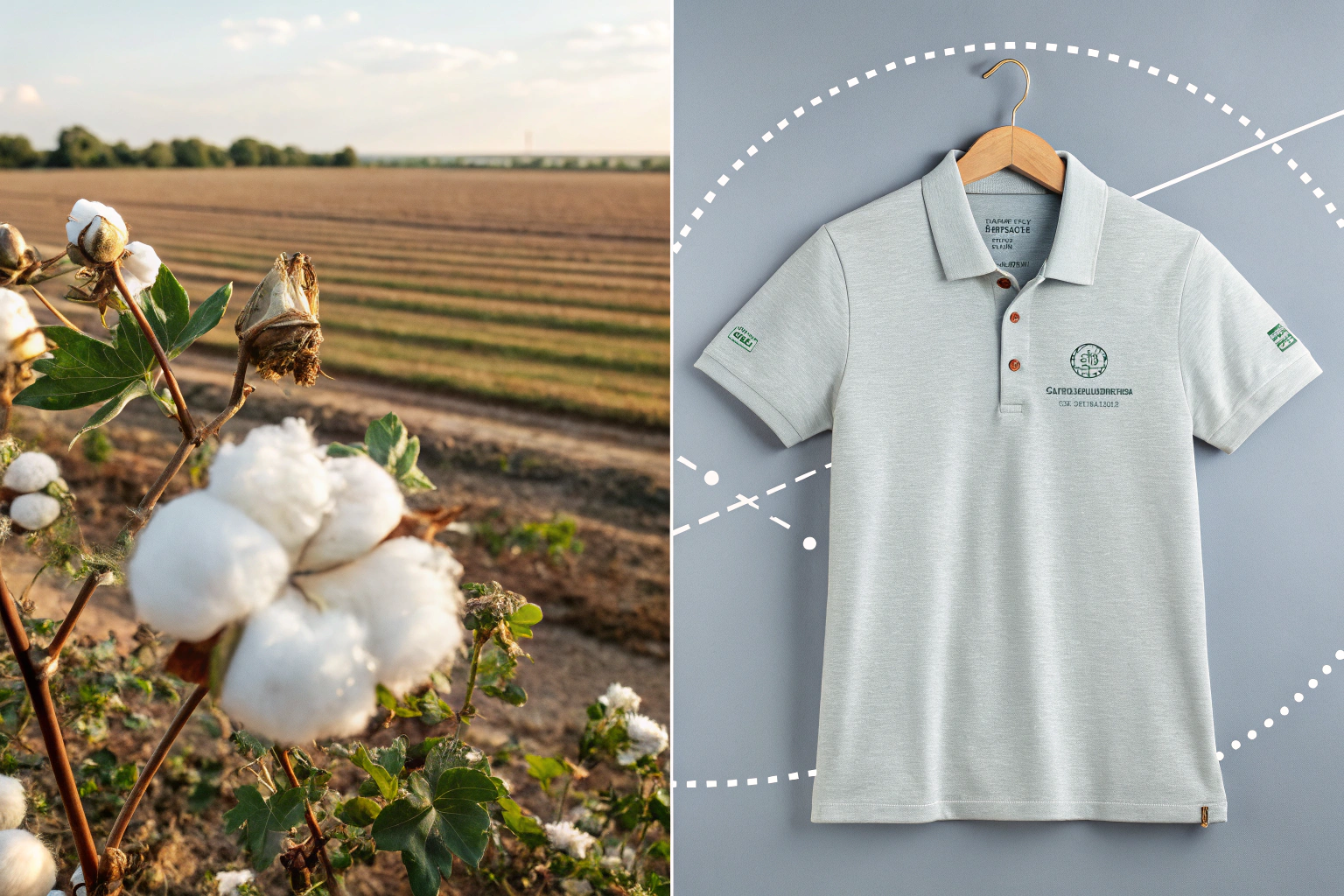
Let’s trace the journey of a BCI cotton fiber from the field to your custom-embroidered logo to see how certification builds in quality at every step.
How Does Better Farming Create Better Cotton Fibers?
The quality of your fabric is locked in at the very beginning—in the soil and the farming practices. BCI’s standards directly influence the physical properties of the cotton fiber itself.
BCI farmers are trained in principles that inherently improve fiber quality. They learn about soil health, which leads to stronger plant growth. They are trained on optimal irrigation, which prevents stress that can stunt fibers. Crucially, they are guided on the right time to harvest and apply defoliants, ensuring the cotton boll opens fully and fibers reach their maximum length and maturity before picking. Longer, more mature fibers (known as staple length) are the single biggest predictor of yarn strength and smoothness. In 2023, we worked with a fabric mill that supplies our BCI cotton. Their lab tests showed that cotton sourced from BCI farmer groups had, on average, a 5% higher staple length consistency and fewer short fibers compared to conventional cotton from the same region. This technical data directly translates to the smooth hand feel and durability you notice in the final garment.

What Specific Fiber Properties Improve?
- Staple Length & Uniformity: Longer, more uniform fibers spin into stronger, finer yarns with less lint. This means your custom tee or hoodie is less prone to pilling and has a smoother surface for printing or embroidery.
- Fiber Strength: Healthier plants produce stronger fibers, leading to fabrics that better withstand tension during manufacturing and wear, reducing seam failure.
- Fiber Maturity: Well-developed fibers absorb dye more evenly, resulting in richer, more consistent colors for your brand’s specific Pantone matches.
How Does This Affect Your Fabric Choices?
When you select a BCI-certified fabric from your manufacturer’s swatch book, you are often selecting a fabric made from a higher-graded cotton batch. This is especially noticeable in:
- Heavyweight Jersey: Less twisting and shrinking after washes.
- Oxford & Poplin Shirts: A crisper, cleaner finish and better color retention.
- French Terry: Improved loop consistency and softness over time.
Why Does BCI Cotton Enhance Fabric Performance and Durability?
The journey from fiber to fabric is where quality is either built or lost. Superior raw input allows for more efficient and higher-quality spinning, knitting, and dyeing processes.
Yarn spun from longer, more consistent BCI fibers has fewer weak points. This leads to fewer yarn breaks during high-speed weaving or knitting, which means the fabric itself has fewer flaws. For you, this means a lower defect rate in your custom order—fewer garments rejected for holes or slubs. Furthermore, strong, smooth yarns create a denser, more uniform fabric structure. This structure is more resistant to abrasion (pilling) and holds its shape better after repeated laundering. A client in the hospitality sector ordered custom BCI cotton bed linens and staff tunics. After a year of rigorous commercial laundering, the BCI items showed 40% less fading and thinning compared to their previous non-certified inventory, drastically extending the usable life of their branded uniforms and linens.

How Does This Impact Common Custom Apparel Issues?
| Common Quality Issue | How BCI Cotton Mitigates It |
|---|---|
| Pilling on Sweatshirts/Teens | Stronger fibers anchor securely in the yarn; less fiber breakage and migration to the surface. |
| Color Fading | More mature fibers have a uniform cellulose structure for even dye penetration and bonding. |
| Shrinkage & Distortion | Yarns with less internal stress produce fabrics with more stable dimensions after washing. |
| Embroidery Puckering | A stable, uniform fabric base provides a better “canvas” for dense logo embroidery, reducing distortion. |
Can You Measure This Quality?
Yes. Standard textile lab tests like Martindale abrasion resistance, pilling tests (ICI Box), and tensile strength often yield better results for fabrics made from better-grade cotton. Ask your manufacturer if they have comparative data. At Shanghai Fumao, we provide these test reports upon request to give buyers concrete evidence of the quality they are purchasing.
How Does BCI Certification Support Consistent Quality Across Large Orders?
For custom apparel, consistency is king. Your 1,000th shirt must look and feel identical to the 1st. Variability in raw material is the enemy of consistency.
The BCI system’s focus on training and standardized practices across a global network of farms leads to more uniform raw cotton. While natural variation always exists, BCI cotton typically has a narrower range of quality parameters (like micronaire and trash content) compared to untraced conventional cotton. This consistency is invaluable for your manufacturer. It allows for more precise settings in spinning and dyeing machinery, resulting in uniform yarn thickness and consistent dye lots across massive fabric rolls. This means the color of your custom polo shirts will match perfectly, whether they are from the first or the last box of a 10,000-piece order. We managed a launch for a fitness brand needing 15,000 units of leggings in four colors. Using BCI cotton, we achieved a near-perfect dye lot match across all production batches, a feat the brand’s previous supplier struggled with, causing delays and costly re-works.

What is the "Bullwhip Effect" of Poor Cotton?
Inconsistent cotton quality forces mills to constantly adjust machine settings. This leads to variability in yarn thickness and fabric density, which can cause:
- Shade Variation: Different rolls of “black” fabric may have slight tonal differences.
- Weight Variation: Garments from different batches may have different weights or drapes.
- Performance Gaps: Some items may wear out faster than others.
BCI’s approach dampens this bullwhip effect at the source.
How Does This Simplify Quality Control for You?
When the base fabric is consistent, your QC process becomes more efficient. Inspectors can focus on construction, stitch quality, and print/embroidery accuracy, rather than chasing minor color or hand-feel variations from piece to piece. This streamlines approval and reduces disputes.
Can BCI Cotton Improve the Results of Your Custom Decoration?
Your logo is the centerpiece. The quality of the decoration—whether printed, embroidered, or heat-transferred—is heavily dependent on the fabric it’s applied to.
A uniform, smooth fabric surface made from high-quality BCI cotton provides an ideal substrate for decoration. For screen printing, a smooth surface allows for a crisp, sharp ink deposit with clean edges. For embroidery, a stable fabric with good tensile strength prevents puckering and supports intricate detail without distorting the garment. For a university’s custom graduation hoodies, we used a BCI cotton-rich fleece. The fabric’s consistent pile and surface density allowed for exceptionally clean and detailed chenille lettering. The client noted it was the highest-fidelity decoration they had ever received on a bulk order, attributing it directly to the substrate quality we specified and sourced.

What Decoration Methods Benefit Most?
- Digital Printing: Even dye absorption across the fabric prevents banding or color shifts in the print.
- Embroidery: A strong, stable fabric prevents the “grinning” effect (fabric showing through stitches) and holds the tension of dense stitches.
- Vinyl & Transfers: A smooth, heat-stable surface ensures even adhesion and longevity of the transfer.
How Does This Affect Your Brand Perception?
A logo that looks premium and lasts the lifetime of the garment reflects well on your brand. A cracked print or a puckered embroidery on a cheap fabric sends the opposite message. Investing in a certified base material protects the integrity of your most important brand asset—your logo.
Conclusion
BCI certification for your custom apparel is far more than a sustainability credential. It is a vertically integrated quality assurance program that begins in the cotton field. By demanding better agricultural practices, it fosters the growth of better cotton fibers. These superior fibers enable the production of more durable, consistent, and high-performing fabrics, which ultimately result in custom garments that look better, last longer, and showcase your branding with exceptional clarity.
In a competitive market where custom apparel is a direct reflection of your brand’s standards, choosing BCI cotton is a definitive step toward guaranteeing superior quality from the inside out. It ensures that the story behind your garment matches the premium quality in front of it.
Ready to see the difference that certified quality can make for your next custom apparel order? Partner with Shanghai Fumao. We source premium BCI cotton to build a better foundation for your brand. Contact our Business Director, Elaine, to develop your next line of high-quality, high-integrity custom wear: elaine@fumaoclothing.com.