Waiting weeks for fabric samples used to be the norm. But now, AI is changing everything. Fashion brands can reduce sampling time from weeks to days. That means faster launches, lower costs, and fewer delays in production.
AI speeds up textile sampling by automating fabric pattern design, simulating textures digitally, predicting fashion trends, and enabling virtual prototyping. This allows fashion brands to iterate quickly and reduce sample waste while maintaining high accuracy.
If you're still sampling the old way, you're losing precious time. Here's how AI helps us—and our clients—stay ahead.
How Does AI Reduce Textile Sample Development Time?
Traditional sample development is slow and wasteful. From design to strike-off, it often takes 10–20 days. What if you could cut that in half?
AI reduces textile sample development time by using digital design tools, automated weaving simulations, and instant pattern rendering. This shortens the process from concept to first sample to under 72 hours.

Why is textile sampling traditionally so slow?
- Manual pattern drawing takes days
- Weaving simulation and approval require test looms
- Color matching takes multiple rounds
- Shipping strike-offs adds 7–10 days
At Fumao, we now run fabric concepts through AI-based pattern engines and digital color-matching software. This allows us to develop a printable or simulated version within hours.
What does our AI-powered workflow look like?
- Client sends reference images or mood board
- AI generates pattern variants instantly (usually 10+)
- Color palettes are rendered using Pantone library
- Clients select digitally, then we generate a real sample via thermal or rotary print
This workflow reduces sampling turnaround to just 48–72 hours—especially helpful for clients in the U.S. running fast fashion calendars.
AI-Powered Tools for Fabric Pattern Design.
Designing a fabric pattern can be the most time-consuming part of the process. AI tools are changing that by automating creativity.
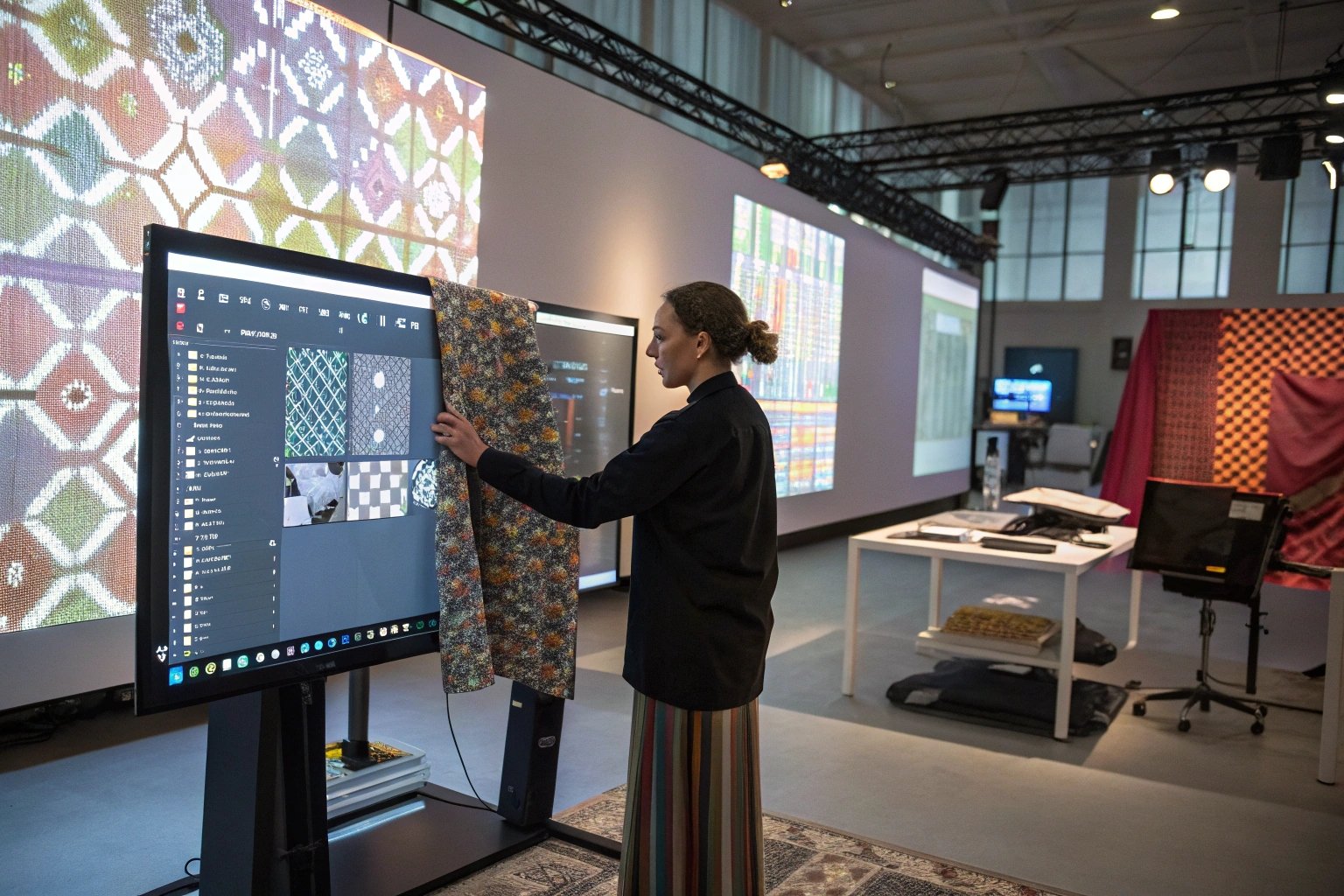
AI-powered tools like Adobe Firefly, Midjourney, and proprietary textile software generate high-resolution, seamless fabric patterns in seconds. These tools allow brands to rapidly test colors, repeats, and scales before sampling.

What kind of tools are commonly used?
| Tool | Function | Use Case Example |
|---|---|---|
| Adobe Firefly | AI image and texture generation | Create floral satin print |
| Midjourney | Visual AI prompt-based design | Abstract linen pattern |
| Clo3D / Browzwear | Simulation on virtual garments | Visualize fabric drape |
| Fumao’s own AI | Proprietary pattern generator | Generate exclusive jacquards |
We worked with a Los Angeles client who needed a unique jacquard pattern in earth tones. Using our AI generator, we delivered 15 seamless options overnight and a woven simulation within 2 days.
How does this impact MOQ?
Because patterns are digital-first, we can offer small-batch print runs (as low as 50 meters) for testing—perfect for capsule launches or influencer collabs.
Can AI Help Improve Accuracy in Fabric Prototyping?
Many samples look different in reality than they did on screen. This leads to wasted material, missed timelines, and client frustration. Can AI fix that?
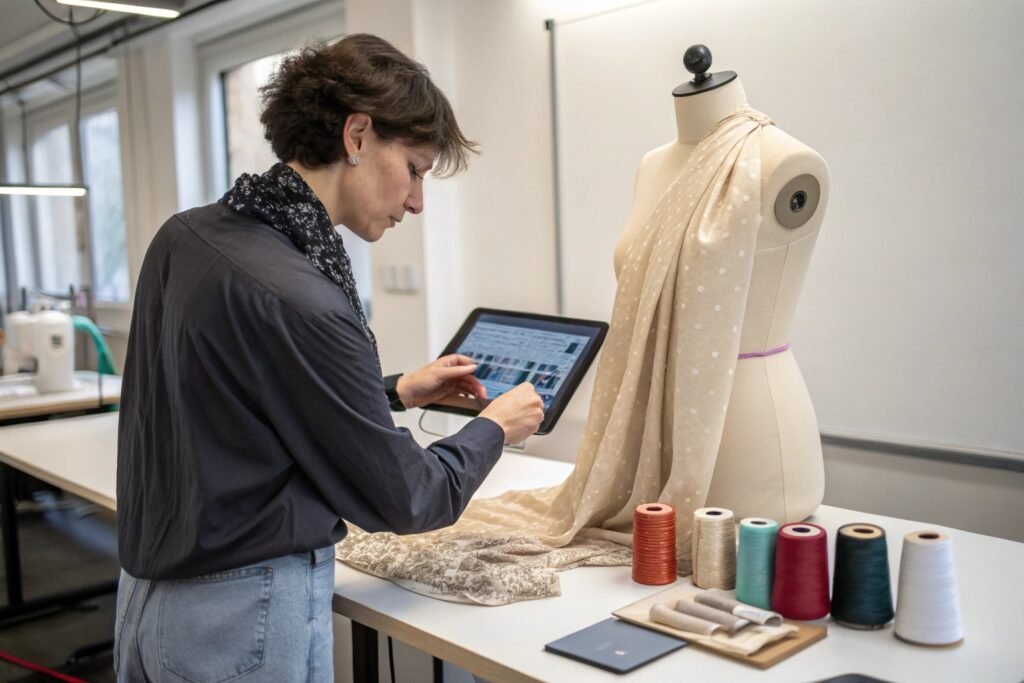
Yes. AI improves accuracy in fabric prototyping by simulating weave structure, texture, and drape digitally. These simulations use real fiber physics, helping brands preview how a fabric will behave before it’s made.
What exactly can AI simulate?
- Drape: How a fabric falls on the body
- Stretch: Accurate elasticity ranges
- Surface texture: Velvet vs canvas visual accuracy
- Color shifts: How colors appear under daylight vs LED
We use AI-integrated CAD tools tied to our loom specs. When a client previews a new twill fabric, they see a 3D rendering with movement simulation on their selected garment.
Does this eliminate physical samples?
Not completely—but it dramatically reduces iterations. For example, a German sportswear brand cut down from 6 sample rounds to just 2. That’s thousands saved in material, freight, and time.
How AI Predicts Fashion Trends for Faster Sampling?
Guessing trends is risky. Getting it wrong means unsold inventory. What if AI could tell you what’s coming?
AI predicts fashion trends by analyzing millions of data points from social media, runway shows, search queries, and retail performance. Tools like Heuritech, WGSN, and internal AI systems help manufacturers create pre-aligned sample libraries.

How does trend forecasting work?
- Scrapes Instagram and TikTok for viral looks
- Analyzes color trends from street photos
- Cross-maps style cycles with global market behavior
- Feeds into pattern + color generation systems
We use these insights to build ready-to-view sample packs each season. In Spring 2025, “butter yellow” and “washed teal” were flagged early. We pre-produced 50+ rPET and cotton-linen samples in these shades. Our EU clients got a head start.
What’s the business benefit?
- Less guessing, more selling
- Early mover advantage
- Lower sampling cost across collections
- More alignment with buyers' real-time demand
By aligning AI forecasts with our in-house development, we help brands skip the trend-guessing phase and sample what’s already in demand.
Conclusion
AI transforms textile sampling from a slow, manual task into a smart, fast, and data-driven system. From pattern design and prototyping to trend prediction and delivery, we’ve adopted AI at every step. That’s why Fumao delivers more than fabric—we deliver speed, accuracy, and readiness for your next launch.