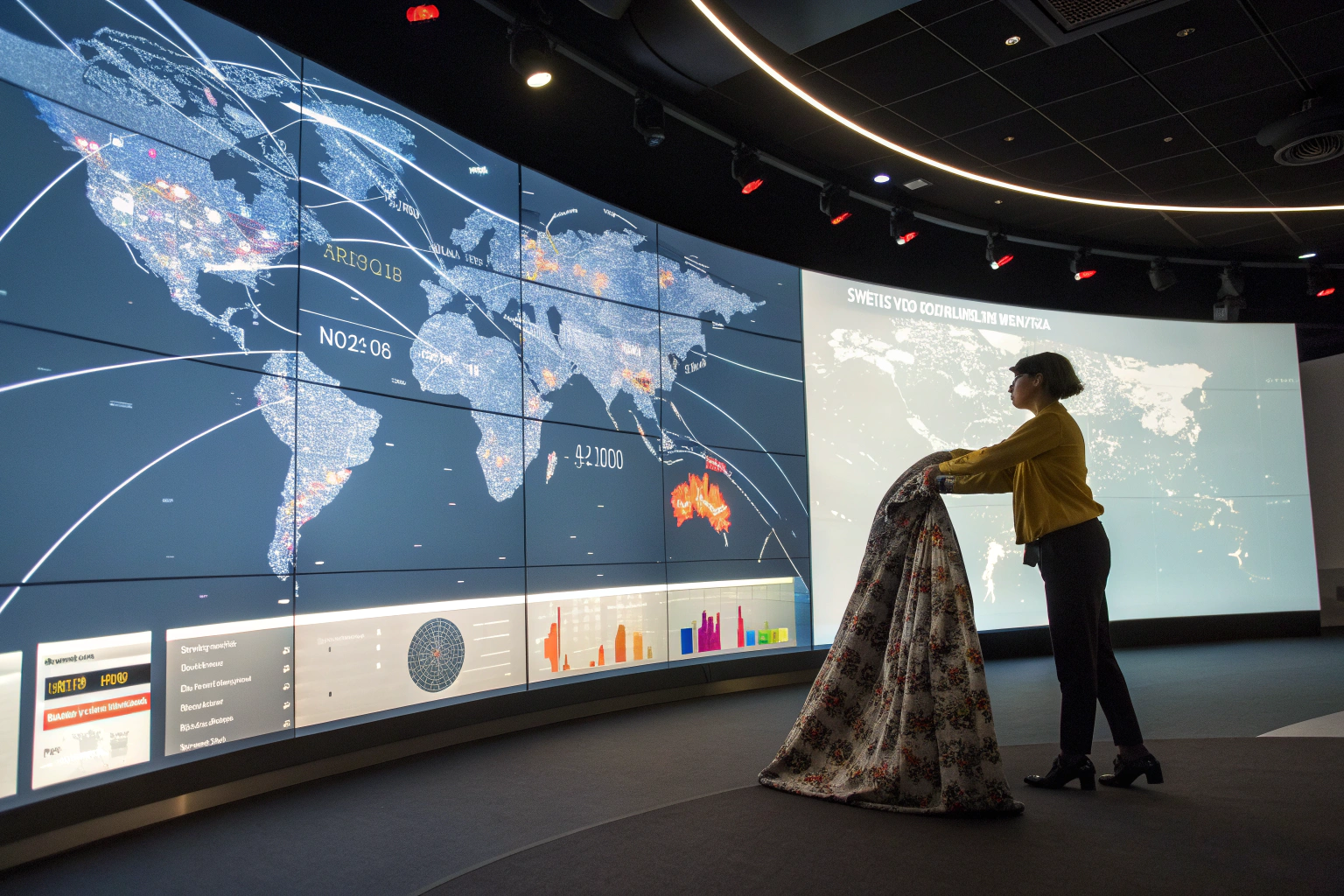
You're sitting on last season's inventory—piles of crinkled chiffon and neon polyester that nobody wants anymore. The colors are wrong, the textures feel dated, and your cash flow is stuck in fabric purgatory. Meanwhile, your competitors are launching viral styles that seem to read customers' minds. What do they know that you don't? The secret isn't a psychic buyer—it's artificial intelligence. But how does a machine actually predict something as fluid and emotional as fashion?
AI predicts fabric trends for fast fashion by analyzing billions of data points from social media, search engines, e-commerce sites, and even street style images to identify emerging patterns in colors, textures, silhouettes, and materials months before they peak. It moves beyond human intuition by processing global, real-time data to forecast what specific fabrics—like "glazed vegan leather" or "reflective taffeta"—will drive sales in the next 3-6 months. This transforms trend forecasting from an art into a data-driven science, directly influencing fabric development and procurement.
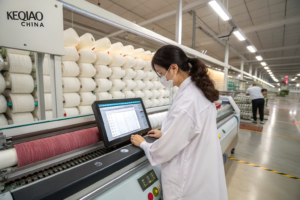
For over two decades in Keqiao, we've seen trend cycles go from years to weeks. The old method—attending Première Vision and guessing—is obsolete. Now, our R&D team works alongside AI dashboards that flag, for example, a 300% surge in Pinterest saves for "crocodile-embossed velvet" in Milan and Seoul. Last season, this signal led us to develop a more affordable polyurethane-coated knit with that exact embossing three months before the trend hit mass retail. Let's unravel how this technology actually works and how you can leverage it.
What Data Does AI Actually Analyze to Spot Trends?
The power of AI in trend prediction lies in its ability to consume and find meaning in vast, unstructured datasets that would overwhelm any human team. It's not reading Vogue—it's reading the world. The key data sources form a multi-layered intelligence network.
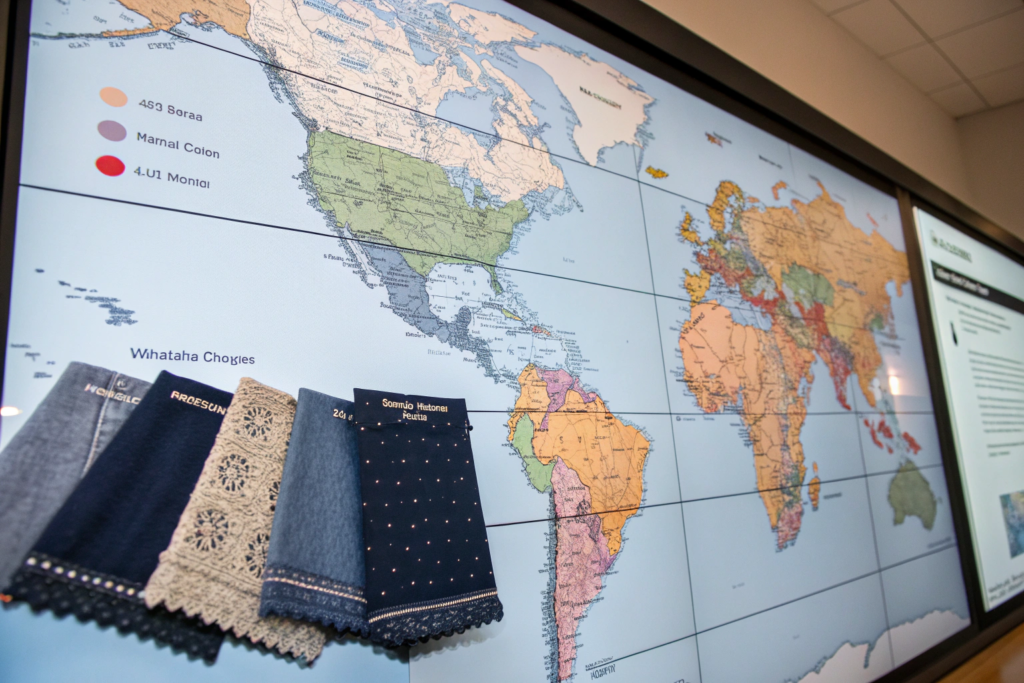
First, Visual Social Media Platforms (Instagram, TikTok, Pinterest) are mined for images and videos. Advanced computer vision algorithms don't just see a "dress"; they identify specific attributes: fabric drape (fluid vs. structured), surface texture (brushed, pleated, embroidered), color combinations, and garment construction details. They track how often these attributes appear, who posts them (influencers vs. everyday users), and the engagement they receive. Second, Search Engine & E-Commerce Data from Google and platforms like Amazon/Shein reveal intent. What are people searching for? ("strawberry girl aesthetic outfits," "office siren fabric"). What products are being clicked, saved, and purchased? AI correlates rising search volumes for terms like "ballet core wrap top" with the underlying fabric characteristics—in this case, soft ribbed knits and satin finishes. Third, Street Style Imagery & Online Fashion Shows are analyzed in near real-time. AI can scan thousands of looks from Fashion Weeks globally, immediately categorizing the fabrics showcased—from the prevalence of tech nylon at Nike to the resurgence of lace at Valentino.
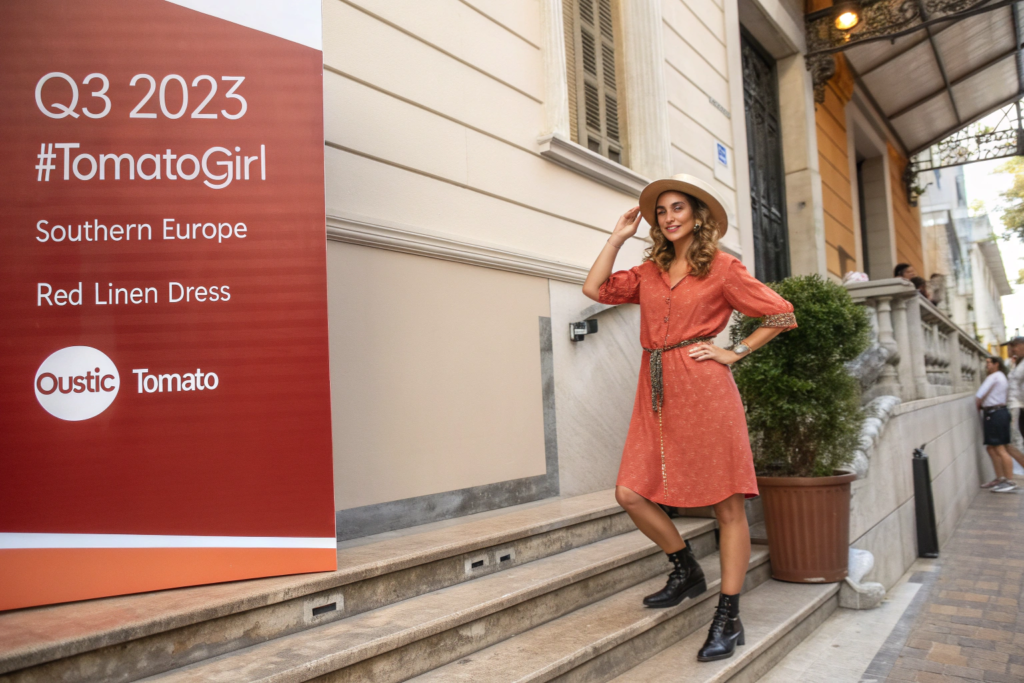
For a practical example, in Q3 2023, our AI tools flagged a consistent spike in social media mentions and image uploads tagged #TomatoGirl in Southern Europe, paired with increased searches for "red linen dress." The AI didn't just see a color; it connected the cultural moment (a summer aesthetic) to a specific fabric (washed, non-crisp linen) and a color palette (warm reds, oranges, browns). We accelerated production of our stone-washed, medium-weight linen in a "Rustic Tomato" shade. By the time the trend was named by mainstream media, our fabric was already on the cutting tables of Spanish and Italian brands.
How Does Computer Vision "Understand" Fabric from Images?
This is where the magic gets technical. Computer vision models are trained on millions of labeled fabric images. They learn to distinguish a jacquard from a brocade, a wet-look coating from a true gloss weave, and virgin wool's halo from a polyester mimic. They analyze:
- Texture Patterns: The algorithm detects repetitive visual patterns indicative of a specific weave or knit structure.
- Surface Reflectivity: It assesses how light interacts with the surface to classify finishes (matte, satin, high-gloss, metallic).
- Drape and Movement: By analyzing videos, it can infer the weight and stiffness of a fabric based on how it flows on a moving body.
- Color and Print Analysis: It goes beyond "blue" to identify specific Pantone-adjacent shades and can deconstruct complex prints into their core elements.
A major streetwear brand we work with uses this to track the emergence of "gorpcore" (outdoor aesthetics). Their AI scours hiking and camping forums and influencer posts, not for garments, but for close-up images of gear—identifying the specific ripstop patterns, bonded seams, and technical finishes of high-end jackets. This intelligence is fed back to us to develop affordable, fashion-forward interpretations of these technical fabrics. Resources like research papers on arXiv about fashion AI detail these methodologies.
Can AI Predict Regional Fabric Preference Variations?
Absolutely, and this is a game-changer for localized collections. AI models can be geo-fenced. They might identify that lightweight, floral-printed voile is trending in Southeast Asia for summer, while in parallel, heavyweight, recycled polyester fleece is seeing early adoption in Scandinavia for the upcoming fall. This allows for smarter, region-specific fabric inventory planning.
We used this capability for a global retailer with lines in both the US and Japan. The AI showed that "cottagecore" aesthetics in the US favored crisp, embroidered cotton lawns, while in Japan, the same trend leaned towards softer, brushed cotton gauzes with smocking details. We advised them to split their fabric order accordingly, preventing potential markdowns on a one-size-fits-all material. Discussions on data analytics forums for retail often highlight the value of such granular localization.
How Do AI Predictions Directly Influence Fabric Development?
The transition from data insight to physical fabric roll is where the real business impact happens. AI doesn't just hand us a report; it integrates into the material innovation pipeline, shortening the time from trend identification to sample delivery from 6 months to as little as 6 weeks.
The process is a loop: AI Detection -> Material Brief -> Rapid Prototyping -> Feedback Integration. When our system identifies a strong signal—say, growing interest in "bioluminescent aesthetics" linked to rave culture—it generates a material brief. This brief specifies desired attributes: likely a synthetic base (for durability), a translucent or iridescent quality, and potential for UV-reactive prints or coatings. Our R&D and design team then uses this brief to create physical expressions. We might explore transfer prints on sheer nylon, silicone-based glossy coatings on polyester, or embedded reflective yarns. We then produce small-run "prove-of-concept" samples. Critically, we can feed images of these new samples back into the AI model to test against the original trend data, asking, "Which of these three prototypes best matches the visual language of the emerging trend?" This creates a hyper-efficient development cycle.
What is AI-Driven "Hyper-Targeted" Sampling?
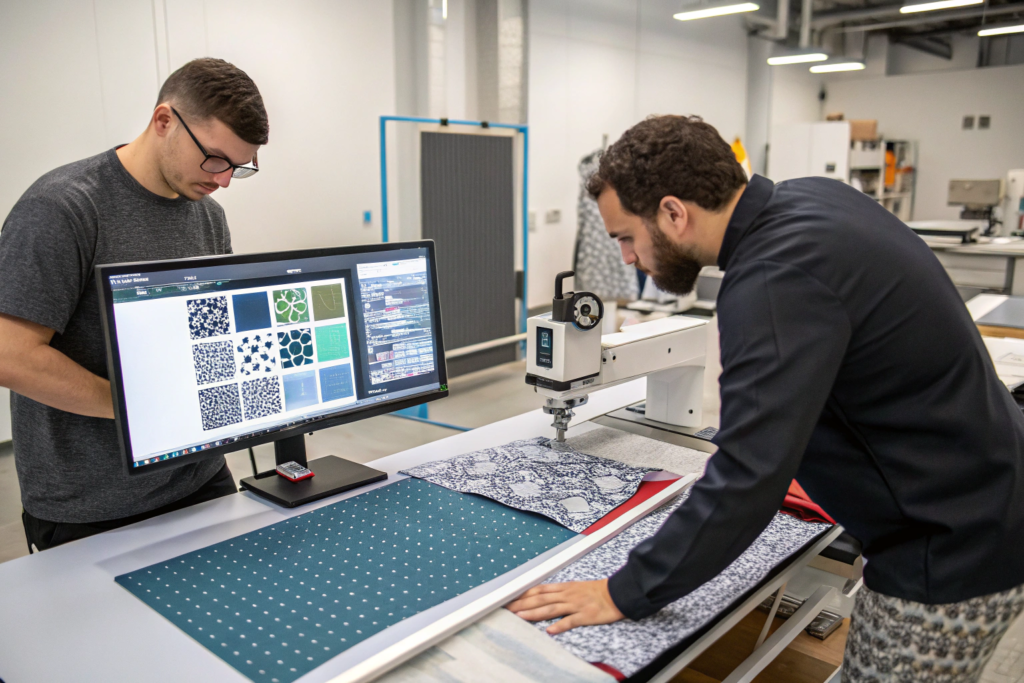
Gone are the days of creating 50 random samples hoping one sticks. AI enables hyper-targeted sampling. We use generative AI tools not to design the fabric per se, but to generate thousands of potential visual variations of a trend direction. For instance, if the trend is "Romantic Goth," the AI might generate patterns that mix lace motifs with cyberpunk grids. Our designers select the most commercially viable and technically feasible options. We then produce only those selected samples. For a UK-based e-commerce brand, this process reduced their sampling cost by 60% and increased their "sample-to-bulk" conversion rate because every sample was already data-validated against a clear demand signal. Insights into this are often shared in digital fashion startup communities.
How Does AI Optimize Fiber and Finish Selection?
AI can predict not just the look, but the performance expectations tied to a trend. If the data shows a trend emerging from hiking influencers ("gorpcore"), the AI understands that the associated fabrics must have functional properties: water resistance, breathability, and durability. It will therefore prioritize fabric briefs that include polyester or nylon bases, DWR (Durable Water Repellent) finishes, and mechanical stretch.
A concrete case: Early 2024 data showed a micro-trend around "office-to-gym" versatility. AI linked this to searches for "wrinkle-resistant," "stretch," and "moisture-wicking" in conjunction with tailored silhouettes. This led us to develop a new fabric: a micro-ribbed weave using T400 polyester (inherent stretch) with a proprietary anti-wrinkle and quick-dry finish. The fabric looked like a sophisticated wool crepe but performed like activewear. It became a top seller for brands targeting professional women. This level of functional foresight is impossible with traditional forecasting.
What Are the Practical Limits and Risks of AI Forecasting?
While powerful, AI is not a crystal ball. Its predictions are only as good as the data it's fed, and it lacks human context, creativity, and ethical judgment. Blindly following AI can lead to catastrophic homogenization, missed opportunities, and even ethical breaches.
The major limits include:
- Echo Chamber Effect: AI trained on popular social media can simply reinforce existing trends, missing underground shifts that start in niche communities before hitting the mainstream.
- Lack of Cultural & Tactile Intelligence: AI can see a "shiny red fabric," but it doesn't understand the cultural significance of red in different societies, nor can it feel if that fabric is unpleasantly sticky or has a luxurious hand-feel. The "halo effect" of fine wool versus acrylic is lost on it.
- Overlooking Practicality: AI might identify a dramatic, ultra-sheer chiffon as trending, but it won't factor in the commercial limitations of producing it at scale or the modestly concerns in certain markets.
- Data Bias: If the training data over-represents Western, youthful fashion, it will fail to accurately predict trends for other demographics or regions.
We learned this lesson in 2022. Our AI strongly indicated a rise in "liquid metal" finishes. We produced a significant volume of PVC-laminated silvers and golds. However, the AI missed a concurrent, quieter shift in consumer sentiment towards natural, tactile materials due to sustainability concerns. The "liquid metal" trend fizzled quickly, leaving us with inventory. We now always pair AI insights with human analysis from our trend scouts who attend subculture events and art exhibitions, providing the "why" behind the "what." Ethical discussions on algorithmic bias in fashion are crucial to follow.
Can AI Accurately Forecast Long-Term "Macro" Trends?
This is its weak spot. AI excels at short-to-mid-term forecasting (3-12 months out) by extrapolating from current data patterns. Predicting a major, decade-defining shift (like the rise of athleisure or sustainability) is much harder, as these are driven by complex socio-economic, technological, and environmental factors that aren't always visible in social media chatter.
For long-term fabric strategy, we use AI to monitor signals related to raw material innovation (e.g., lab-grown leather), regulatory changes (EU eco-design laws), and consumer sentiment shifts on sustainability. It's less about predicting a specific fabric and more about identifying the direction of travel—e.g., "growing aversion to virgin polyester" or "increased openness to lab-made materials." This informs our multi-year R&D investments. For instance, sustained AI signals around plastic pollution led us to invest early in rPET and ocean-bound plastic supply chains years before they became a baseline requirement.
How Do You Balance AI Data with Human Designer Creativity?
The optimal model is "AI-Human Symbiosis." AI acts as the radar, scanning the horizon for signals. The human designer is the captain, interpreting those signals, adding cultural and emotional context, and making the final creative leap. In our studio, we hold weekly meetings where the AI dashboard is presented alongside mood boards from our human scouts. The debate between data and intuition is where the best ideas are born.
For a collaboration with an avant-garde New York designer, the AI showed zero demand for "fabric that changes color with heat." A pure data play would have killed it. But our head designer saw the potential for artistic expression and viral marketing. We developed a small batch of thermochromic-coated cotton. The collection sold out because it was unexpectedly novel—the AI couldn't predict the desire for the new, only the amplification of the existing. Platforms like Behance or Dezeen often showcase this type of innovation that data can't foresee.
How Can Small Brands Access AI Trend Tools?
You don't need Zara's billion-dollar budget to leverage AI. The ecosystem has democratized. Small brands can access powerful insights through affordable, scalable tools and smart partnerships.
| Tiered Access to AI Tools: | Tool Type | Examples | Best For | Approximate Cost |
|---|---|---|---|---|
| Integrated PLM with AI | K3 Fashion PLM, YuniquePLM | Brands wanting trend data woven into product lifecycle management. | High (Enterprise) | |
| Dedicated Trend Forecasting SaaS | Heuritech, WGSN's Insight (AI-powered), Trendalytics | Brands needing deep, ready-made fabric & color trend reports. | Medium (Subscription) | |
| Social Listening & Visual AI Tools | Brandwatch, Talkwalker, Clarifai | Tech-savvy brands that want to build custom dashboards. | Medium-High | |
| Supplier-Provided AI Insights | (What we offer at Shanghai Fumao) | Brands that want trend intelligence directly translated into fabric development options. | Often included in service |
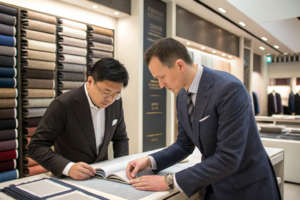
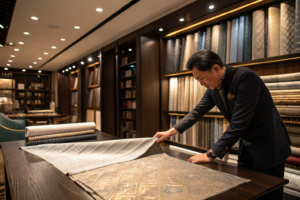
For most small to mid-sized brands, the most practical and impactful path is leveraging a supplier's AI capabilities. This is where we've focused our investment. When a client comes to us for a new season, we don't just show a static catalog. We share a curated "Trend Intelligence Pack" based on our AI analysis, highlighting 3-4 key fabric directions with the highest predicted commercial potential for their segment. This transforms the sourcing meeting from a shopping trip into a strategic session.

What Are the First Steps to Implement AI Forecasting?
- Define Your "Trend Vocabulary": What specific attributes matter to you? (e.g., "pastel colors," "crinkled texture," "biodegradable"). This helps in configuring tools.
- Start with Social Listening: Use affordable tools like Meltwater or even customized Google Alerts to track mentions of your target fabrics and aesthetics.
- Partner with a Tech-Forward Supplier: Choose a fabric supplier who invests in trend intelligence. Ask them: "How do you identify emerging fabric trends? Can you share data-driven recommendations for my next line?"
- Run a Pilot Project: Dedicate one capsule collection to be guided by AI insights. Compare its performance against intuition-led collections.
An Australian swimwear startup we partnered with did exactly this. With a limited budget, they relied on our AI-driven fabric preview. We highlighted a rising trend for "graphic retro prints on high-compression recycled nylon." They launched a capsule line using our suggested fabric and print direction. It became their best-performing collection in two years, proving the ROI of data-informed sourcing. Communities for independent fashion brands often share reviews of these tools.
How Does AI Impact Speed from Trend to Shelf?
This is the ultimate competitive advantage of fast fashion. AI compresses the timeline dramatically. The traditional cycle (Trend Show -> Fabric Sourcing -> Sampling -> Production) took 9-12 months. The AI-driven cycle is continuous and parallel:
- Trend Identified in Real-Time: AI spots a fabric trend on social media today.
- Instant Material Matching: Our system cross-references the trend attributes with our existing fabric library or similar past developments.
- Rapid Sampling: If a match exists, we can ship existing fabric samples within 48 hours. If not, targeted R&D begins immediately.
- Agile Production: With digital proofs and pre-vetted materials, bulk production can be approved and started in weeks.
For a European retailer, we used this system to go from detecting a spike in "cable knit aesthetics" to delivering bulk fabric for a machine-knit interpretation in 7 weeks, allowing them to capture the trend within the same season it emerged. This speed is only possible with an integrated AI and supply chain system.
Conclusion
AI has irrevocably changed the fabric of fast fashion—literally. It is no longer a speculative technology but an operational core that predicts, validates, and accelerates material innovation. By translating global digital behavior into actionable fabric intelligence, AI allows brands to move with unprecedented speed and precision, reducing waste from misaligned inventory and capturing emerging demand.
However, the most successful applications marry the scale of machine intelligence with the nuance of human creativity and ethical consideration. The future belongs not to those replaced by AI, but to those who know how to partner with it.
If you're ready to move beyond guesswork and equip your brand with fabric intelligence that keeps you ahead of the curve, let's talk. At Shanghai Fumao, our AI-driven trend forecasting is integrated directly into our fabric development and sourcing service. We provide our partners with curated, data-backed fabric directions that balance what's trending with what's producible. Contact our Business Director, Elaine, to explore how we can bring predictive intelligence to your next collection.
You can contact Elaine at: elaine@fumaoclothing.com.