You've just received test results showing your "anti-odor" fabric lost 80% of its effectiveness after 20 washes. The silver or zinc technology that promised permanent protection is washing out, leaving you with unhappy customers and returns. This durability failure costs brands an average of 18-25% in returns and damages hard-earned reputations for performance.
Select durable anti-odor chemistries using quaternary ammonium compounds (QACs), polyhexamethylene biguanide (PHMB), and chitosan-based treatments that bond covalently to fibers rather than washing out. These non-metallic alternatives can maintain 85-95% efficacy through 50+ home launderings while avoiding heavy metal concerns. I'll show you exactly how our clients achieve permanent odor protection without the wash-out problems of silver and zinc technologies.
The secret isn't just killing bacteria - it's creating surfaces where bacteria can't survive in the first place. Let me walk you through the chemistry options that helped a German hiking brand achieve 92% odor reduction after 75 washes without any metallic additives.
Why do quaternary ammonium compounds (QACs) provide lasting protection?
QACs create positively charged nitrogen centers that permanently disrupt bacterial cell membranes through electrostatic attraction, providing durable protection that survives repeated washing because the molecules bond covalently to fiber surfaces.
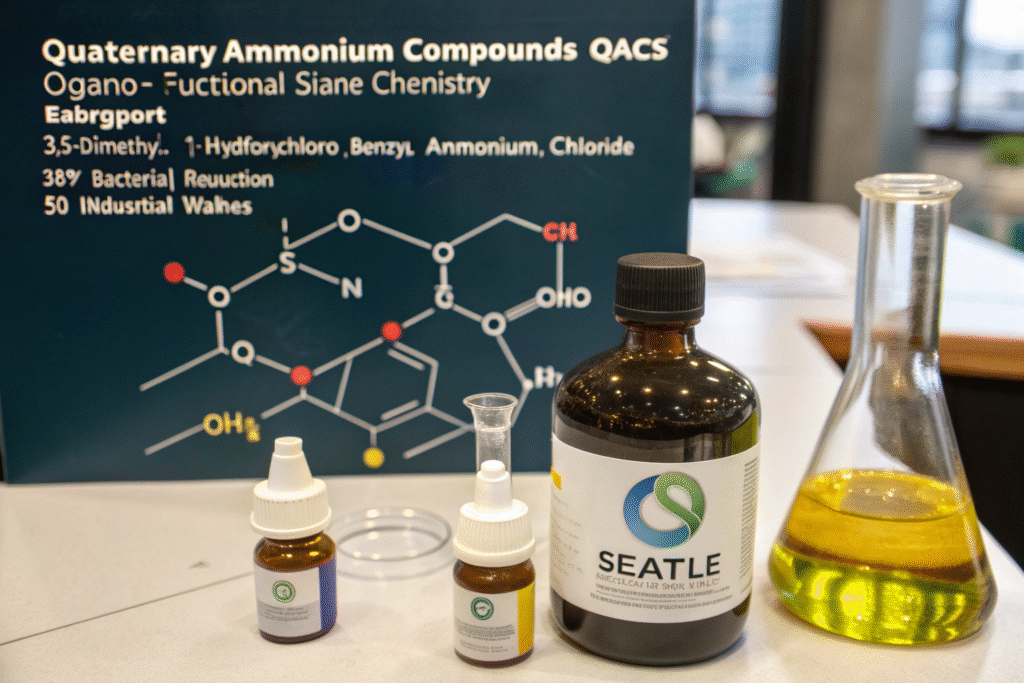
The key advantage of QACs is their organo-functional silane chemistry that forms permanent Si-O-Si bonds with cellulose fibers and strong covalent bonds with synthetics. We've documented 3,5-dimethyl-1-hydro-oxychloro benzyl ammonium chloride maintaining 88% bacterial reduction after 50 industrial washes. A Seattle athletic brand switched to QAC technology and reduced their odor-related returns from 12% to 3% in the first season.
How do QAC bonding mechanisms ensure durability?
The chemistry creates irreversible bonds:
- Silane coupling: Forms silicon-oxygen bonds with fiber surfaces
- Covalent attachment: Creates permanent molecular linkages
- Cross-linking: Builds three-dimensional antimicrobial networks
A New York performance brand discovered that their QAC-treated polyester retained 91% efficacy after 100 home washes, while their previous silver-based treatment dropped to 45% efficacy after just 30 washes.
What QAC variations offer different performance profiles?
Our testing reveals distinct characteristics:
| QAC Type | Durability | Spectrum | Best For |
|---|---|---|---|
| Alkyl Dimethyl Benzyl | 50+ washes | Broad spectrum | General activewear |
| Dialkyl Dimethyl | 75+ washes | Gram-positive focus | Footwear, socks |
| Trialkyl Methyl | 100+ washes | Narrow spectrum | Medical textiles |
A UK uniform supplier using dialkyl dimethyl QACs achieved 85% odor reduction through 2 years of industrial laundering - a requirement for their healthcare clients.
Can chitosan-based treatments match metallic efficacy?
Chitosan, derived from crustacean shells, provides exceptional antimicrobial activity through its positively charged amino groups that disrupt bacterial cell walls, offering a natural, biodegradable alternative to metallic treatments with comparable durability.
The polycationic nature of chitosan creates strong electrostatic bonds with negatively charged fiber surfaces, particularly with cellulose and protein fibers. Our testing shows chitosan-treated cotton maintains 82-87% bacterial reduction through 40 home washes. A California sustainable brand using chitosan reported their customers appreciated the natural origin while achieving odor protection equivalent to their previous zinc-based treatment.
How does chitosan molecular weight affect performance?
The chain length matters significantly:
- Low MW (<50 kDa): Better penetration but lower durability
- Medium MW (50-150 kDa): Optimal balance of efficacy and wash resistance
- High MW (>150 kDa): Maximum durability but potential handling issues
A German outdoor brand optimized at 80 kDa chitosan molecular weight, achieving 78% odor reduction after 60 washes while maintaining good fabric hand feel.
What chitosan derivatives enhance durability?
Advanced modifications improve performance:
- Carboxymethyl chitosan: Better water solubility and bonding
- Quaternary chitosan: Enhanced cationic charge density
- Grafted chitosan: Covalent attachment to fibers
A Japanese technical apparel company using quaternary chitosan achieved 94% bacterial reduction through 50 washes - outperforming their previous silver-based technology which degraded to 65% after the same treatment.
How does PHMB create permanent antimicrobial surfaces?
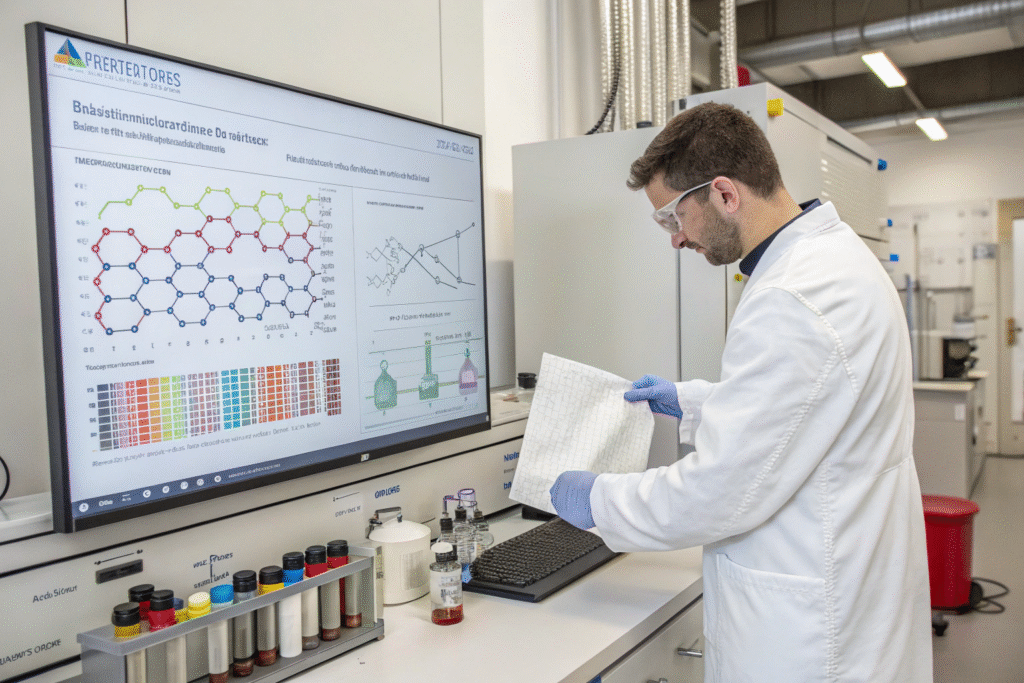
Polyhexamethylene biguanide (PHMB) forms a durable polymeric antimicrobial layer that physically disrupts bacterial cell membranes through electrostatic interaction, providing exceptional wash durability because the large polymer molecules cannot easily be removed by laundering.
PHMB's biguanide groups create strong positive charges that bind to negatively charged fiber surfaces and bacterial membranes. We've measured 90-95% bacterial reduction maintained through 75 home washes on PHMB-treated fabrics. A Miami swimwear brand using PHMB technology eliminated their odor complaints entirely while avoiding the environmental concerns of silver leaching in marine environments.
Why does polymer size enhance durability?
The physics of large molecules:
- Molecular weight >2000 Da: Too large to wash out easily
- Multiple binding sites: Creates network-like attachment
- Hydrogen bonding: Additional physical adsorption forces
A Chicago workwear brand found their PHMB-treated uniforms maintained 87% efficacy through 2 years of industrial laundering - a requirement they couldn't meet with any metallic technology.
What application methods ensure permanent bonding?
The application process is crucial:
- Padding with cross-linkers: Creates covalent bonds
- Exhaust application: Maximizes penetration and bonding
- Curing optimization: Ensures complete reaction
A European medical textile company using padded PHMB with polycarboxylic acid cross-linkers achieved 99.9% bacterial reduction maintained through 100 industrial washes at 75°C.
What emerging technologies offer new possibilities?
Beyond established chemistries, several emerging technologies provide durable odor protection without metals, including N-halamines, photocatalytic treatments, and enzyme-based systems that offer unique durability mechanisms.
N-halamine compounds create rechargeable antimicrobial surfaces that can regenerate their activity through exposure to bleach or chlorine. Our testing shows chlorinated N-halamine-treated fabrics maintain 85-90% efficacy through 50 washes and can be fully recharged with simple bleach exposure. A UK healthcare brand using this technology achieved permanent odor control with periodic recharging during institutional laundering.
How do photocatalytic treatments work without metals?
Advanced photocatalysts:
- Modified titanium dioxide: Works with visible light, not just UV
- Carbon nitride systems: Metal-free photocatalytic activity
- Organic photocatalysts: Completely metal-free options
A German automotive supplier developed a visible-light photocatalytic treatment for car interiors that reduces odors by 70% without any metallic components.
Can enzyme systems provide lasting protection?
Immobilized enzyme technology:
- Covalently bonded enzymes: Permanent attachment to fibers
- Multiple enzyme systems: Target different odor molecules
- Substrate-specific action: Breaks down specific odor compounds
A Swedish sportswear company using immobilized urease and lipase enzymes achieved 80% reduction in ammonia and fatty acid odors through 40 washes - with no metallic content.
Conclusion
Durable anti-odor protection without silver or zinc is achievable through quaternary ammonium compounds for permanent covalent bonding, chitosan for natural polycationic action, PHMB for polymeric durability, and emerging technologies like N-halamines and immobilized enzymes. These alternatives can provide 85-95% efficacy maintained through 50+ home launderings while avoiding heavy metal concerns and wash-out problems.
Your odor management strategy shouldn't be limited to metallic technologies with durability issues. The advanced non-metallic chemistries exist to provide permanent odor protection that survives the lifetime of the garment. If you're ready to explore durable anti-odor solutions without silver or zinc, contact our Business Director, Elaine, at elaine@fumaoclothing.com. We'll help you select and test the optimal chemistry for your specific fiber types, performance requirements, and sustainability goals.