As a fabric importer, you're likely always looking for ways to improve your bottom line because unexpectedly high duty rates can quickly erase your profit margins. Consequently, what begins as a promising shipment can turn into a financial headache. This is particularly relevant for our American clients like Ron, who consistently express concern about managing costs associated with importing textiles from China to the U.S. market.
The fundamental solution lies not in finding loopholes but in implementing strategic planning and leveraging expert knowledge. Specifically, by understanding the U.S. Harmonized Tariff Schedule (HTS), utilizing special trade programs, and partnering with a supplier who has deep logistical expertise, you can significantly lower your import duties. Therefore, a knowledgeable supplier acts as your first line of defense by ensuring your products are classified and sourced in the most cost-effective way possible from the very beginning.
With this foundation in mind, let's explore the practical steps you can take throughout the entire process—from product classification to final shipment—to maintain control over your fabric import costs.
How does product classification affect fabric tariffs?
Accurate product classification represents the most critical step in controlling your import costs because the U.S. Harmonized Tariff Schedule (HTS) contains thousands of codes where each specific code determines your fabric's duty rate. Even minor errors can lead to significant consequences including overpayment, fines, or customs delays. For example, I've witnessed clients accidentally use generic codes and pay 10-12% duty on fabrics that should have been taxed at 7.5%, simply because they didn't specify exact fiber composition and weight.
The solution requires precision beyond broad categories like "synthetic fabric." Instead, customs demands detailed specifications including specific fiber type, weight per square meter, and construction method (woven or knitted). For instance, the duty for a woven 100% polyester fabric over 170 g/m² differs significantly from one below that weight threshold. As your supplier, we provide precise technical specifications and suggested HTS codes for every material, with verification from our expert QC team. This comprehensive documentation subsequently forms the foundation for accurate and legally sound customs declarations.

What are the most common classification mistakes?
Many importers mistakenly apply one-size-fits-all HTS codes, which inevitably leads to compliance issues. A typical example involves using a code for "cotton fabric" when the actual product is a "55% cotton, 45% polyester blend." This error frequently triggers customs reviews because blends are treated differently, with the primary fiber by weight dictating the classification. Similarly, misclassifying finished fabrics creates problems since greige (unfinished) fabric carries a different duty rate than the same fabric after dyeing, printing, or special finishing like waterproofing.
To prevent these issues, we maintain a detailed database of HTS codes across our extensive product range. When you order materials like our BAMSILK bamboo blend, we don't simply label it "bamboo fabric." Instead, we provide detailed breakdowns specifying it as a regenerated cellulose fiber with exact blend ratios, thereby ensuring you receive the correct code for smooth customs clearance. This meticulous approach ultimately protects your profit margins through compliance assurance.
How can your supplier help with correct classification?
A proactive supplier serves as a compliance partner rather than merely a shipping vendor. Beginning at the initial sampling stage, we document everything comprehensively. Our technical packages include complete material breakdowns, weights, and construction details (woven/knitted), which are essential for your customs broker to assign correct HTS codes. Furthermore, our location in Keqiao—a hub with extensive global export experience—provides familiarity with specific U.S. customs requirements and common contention points.
We extend this support to new and functional fabrics as well. For example, when importing moisture-wicking polyester with UV-resistant finishes, we help delineate the product beyond the basic "polyester" classification. We specify the woven construction, exact weight, and functional coating details, thereby guiding you toward more accurate and often more favorable tariff classifications. This collaborative methodology consistently minimizes risks while maximizing cost efficiency throughout the import process.
Are you using preferential trade agreements?
Beyond correct classification, preferential trade programs offer the most powerful mechanism for reducing or eliminating tariffs, though many importers either overlook them or consider them too bureaucratic. However, the financial savings justify the effort, particularly through programs like Section 321, which allows duty-free entry for shipments valued under $800. For larger shipments, understanding nuanced trade policies becomes essential for cost management.
While Section 301 tariffs on Chinese goods have impacted the industry, mitigation strategies exist. Chief among these is ensuring accurate product origin and valuation documentation. We provide all necessary documentation—including commercial invoices and packing lists—with complete transparency, thus preventing discrepancies that could increase duty assessments. For entrepreneurs and smaller brands, strategically leveraging the de minimis rule proves particularly valuable for sample orders and restocking best-sellers.

What is the de minimis rule for fabric imports?
The de minimis rule (Section 321) permits duty-free and tax-free importation of goods with retail values under $800, representing a legally recognized provision rather than a loophole. For small business owners and e-commerce stores among our clients, this enables a strategic approach where multiple smaller shipments replace single large, high-duty consignments.
We facilitate this strategy through flexible order splitting and consolidated shipping services from our Keqiao hub. You can order diverse fabric samples or small-batch materials, and we manage logistics to ensure each consolidated package stays within the $800 threshold. Consequently, this approach dramatically reduces entry costs for new product development while enabling more agile inventory management that insulates you from standard tariff rates.
How does product origin impact my costs?
"Country of origin" constitutes a legal determination based where the most significant manufacturing process occurs—typically weaving or knitting for textiles—rather than simply the shipping point. Our fabrics maintain unequivocal Chinese origin, and we provide all required origin declarations, which is crucial for proper application of Section 301 tariffs.
Nevertheless, our deep supply chain integration allows us to recommend alternative sourcing when beneficial. If certain cotton fabrics face high tariffs, we might suggest comparable linen fabrics from our inventory with lower duty rates, or recycled materials qualifying for different treatment. Ultimately, we present options that align your creative vision with the most cost-effective and compliant sourcing path available.
Can sourcing strategy lower my import duties?
Your supplier selection and fabric choices directly impact landed costs beyond mere FOB pricing. An integrated supplier with compliance expertise can implement production-stage strategies that generate substantial customs savings. Specifically, strategic consideration of fiber content and fabric function reveals cost-reduction opportunities many importers miss.
We regularly advise clients how slight specification modifications can improve duty rates without compromising quality or aesthetics. For instance, fabrics with high spandex content often carry significantly higher duties than those with lower percentages. Sometimes, minimal blend ratio adjustments maintain desired stretch and hand-feel while qualifying for more favorable tariff brackets. This represents the value-added R&D we provide to optimize your sourcing decisions.

Why choose eco-friendly fabrics for cost savings?
Powerful financial incentives complement the environmental benefits of sustainable fabrics. Many eco-friendly options like certified organic cotton or recycled polyester (rPET) qualify for lower duty rates under U.S. trade programs encouraging sustainable products. Beyond tariff advantages, these materials enhance brand marketability while aligning with global trends. Our ¥550M investment in green technologies ensures wide availability of cost-competitive, sustainable options.
We've assisted clients transitioning from conventional to GOTS-certified organic cotton, resulting not only in positive brand stories but also net landed cost reductions through preferential tariff treatment. Our CNAS-certified lab provides all necessary certifications to verify eco-content, satisfying both customs authorities and end consumers simultaneously.
How does fabric function change the duty rate?
The U.S. HTS system contains specific categories for "made-up" articles and advanced technical textiles where functional differences trigger classification variations. For example, simple woven polyester carries one duty rate, while the same polyester laminated with waterproof breathable membrane may classify differently—sometimes at lower rates. Similarly, fabrics with specialized finishes like antimicrobial or UV protection receive scrutiny based on primary function.
We help navigate this complexity through detailed documentation of properties and intended uses for our R&D-developed performance fabrics. This ensures that fabrics engineered for athleisure wear avoid mistaken classification as general-use materials, potentially saving money while preventing legal complications. Our guidance thus bridges the gap between innovation and compliance.
What logistics choices minimize overall cost?
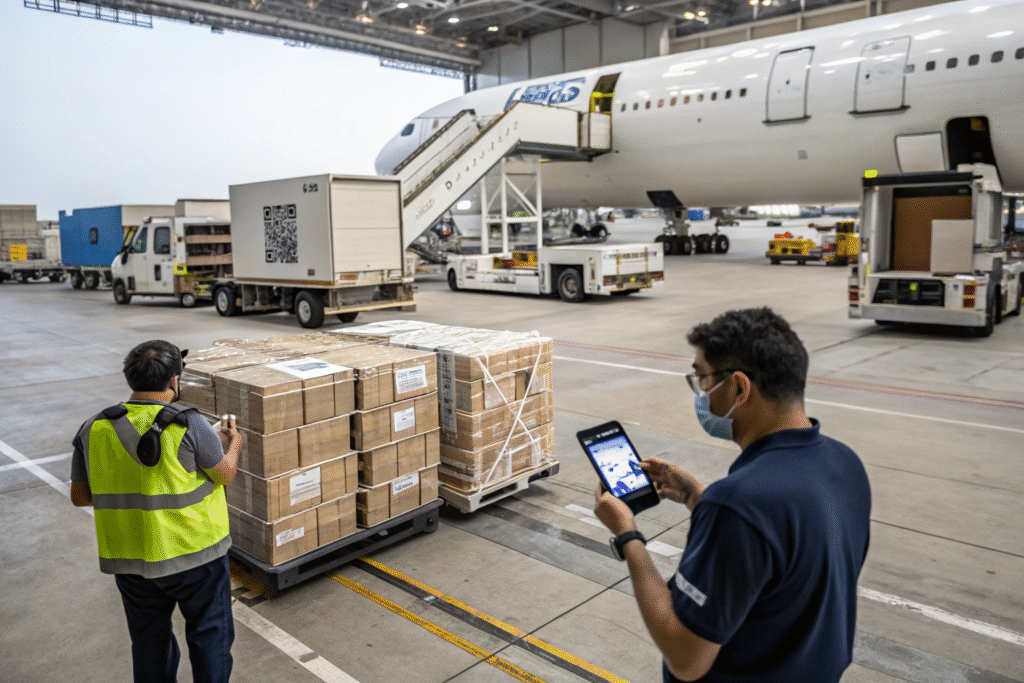
Logistics partnerships critically influence total import costs beyond mere freight quotes. Experienced freight forwarders and customs brokers, combined with suppliers providing flawless documentation, create operational efficiency that prevents hidden expenses. Conversely, shipping and customs clearance inefficiencies generate demurrage, storage fees, and other charges that erase front-end savings.
Our longstanding relationships with major global logistics providers enable bundled services covering inland transportation, ocean/air freight, and pre-clearance support. We provide meticulously accurate packing lists and commercial invoices that form the foundation for smooth customs processes. Additionally, our QR code tracking system offers real-time shipment visibility, enabling better planning and reducing unexpected port fee risks.
How does supplier consolidation save money?
Consolidating sourcing with a comprehensive supplier like Fumao generates substantial logistical advantages by transforming multiple shipments from different factories into single, seamlessly integrated consignments. Rather than managing separate documentation and potential customs delays for weaving, dyeing, and printing processes, you maintain one contact point and one unified shipment.
This consolidation simplifies your import process, reduces total customs transactions, and often lowers overall freight costs through volume discounts. You consequently manage one document set, one communication channel, and one predictable logistics timeline as promised in our agile supply chain commitment.
Why is accurate documentation non-negotiable?
Incorrect or incomplete documentation primarily causes customs holds that can cost hundreds of dollars daily in port fees. Our professional QC team extends beyond fabric inspection to verify every roll, carton, and pallet matches purchase order documentation precisely. This meticulous attention prevents discrepancies that typically flag customs inspections.
We exceed basic requirements by preparing supporting certificates for specially treated fabrics. Our digital documentation remains clear and accessible, simplifying accurate entry filing upon shipment arrival for you and your broker. This comprehensive approach consistently avoids costly delays while ensuring fabrics reach your production line according to schedule.
Conclusion
Successfully navigating fabric import tariffs requires a multifaceted yet manageable approach centered on partnership with a supplier possessing both manufacturing excellence and international trade compliance expertise. Through precise product classification, strategic use of preferential trade agreements like the de minimis rule, informed sourcing decisions, and seamless logistics with accurate documentation, you can transform tariff management from an unpredictable variable into an optimized supply chain component.
Your competitive position in the apparel market fundamentally depends on controlling costs without sacrificing quality or speed. The strategies detailed here reflect our daily implementation for clients, delivering distinct competitive advantages through reliable cost management. If you're prepared to streamline your fabric sourcing and importation processes, we invite you to experience the Fumao difference firsthand.
To discuss optimizing cost and efficiency for your next clothing order, please contact our Business Director, Elaine. She and her team await the opportunity to provide comprehensive solutions tailored to your needs. Reach Elaine at elaine@fumaoclothing.com, and let's weave your success story together.