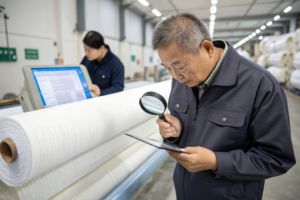
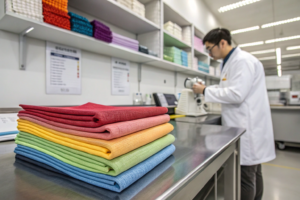
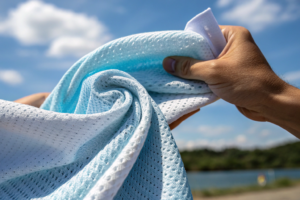
After twenty years of developing lining fabrics for everything from luxury overcoats to technical outerwear, I've seen manufacturers struggle with this exact decision. Just last month, a Canadian outerwear company showed me a $400 ski jacket where the lining failed before the shell—the fabric choice simply didn't match the garment's performance requirements. The lining decision impacts not just durability but also comfort, manufacturing efficiency, and ultimately customer satisfaction.
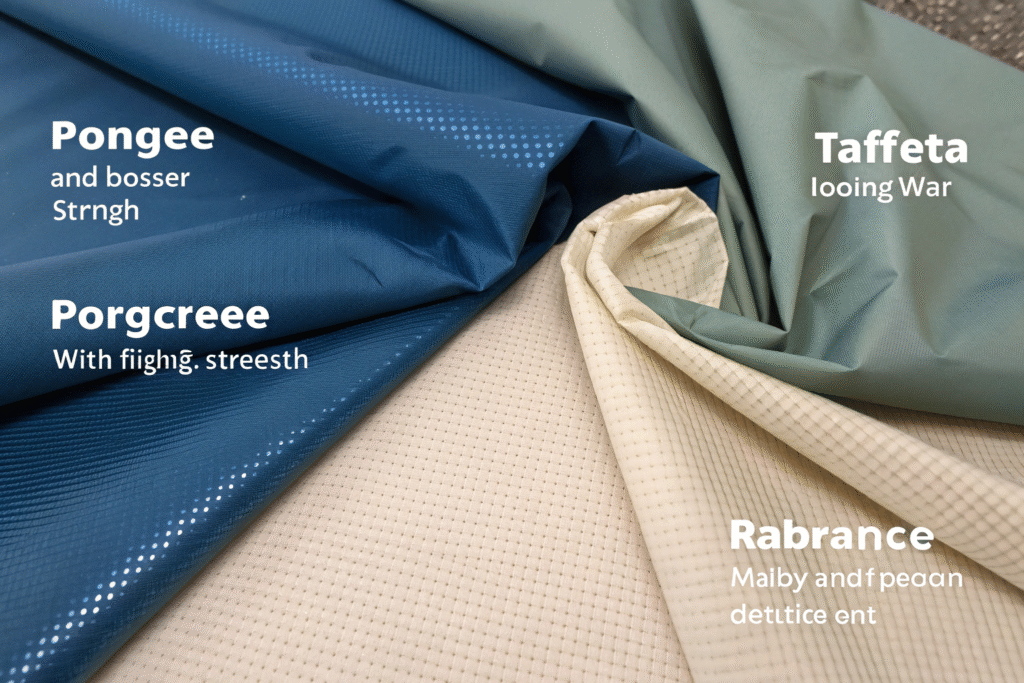
Polyester Pongee, Taffeta, and P/D (Peach Dobby) represent three distinct approaches to jacket linings, each with specific advantages for different applications. Pongee offers smoothness and lightweight durability, Taffeta provides structural stability at accessible pricing, while P/D delivers premium hand feel and moisture management. Understanding their differences requires examining four key factors: construction characteristics and performance implications, weight and durability relationships, functional properties for different jacket types, and cost considerations relative to garment positioning.
Let me walk you through how we help brands from mass-market retailers to luxury houses make this critical lining selection.
What are the construction differences and performance implications?
The fundamental differences between these lining fabrics begin at the construction level, where weave pattern, yarn selection, and finishing approaches create distinct performance profiles. Understanding these technical differences prevents the common mistake of selecting linings based solely on initial hand feel or cost.
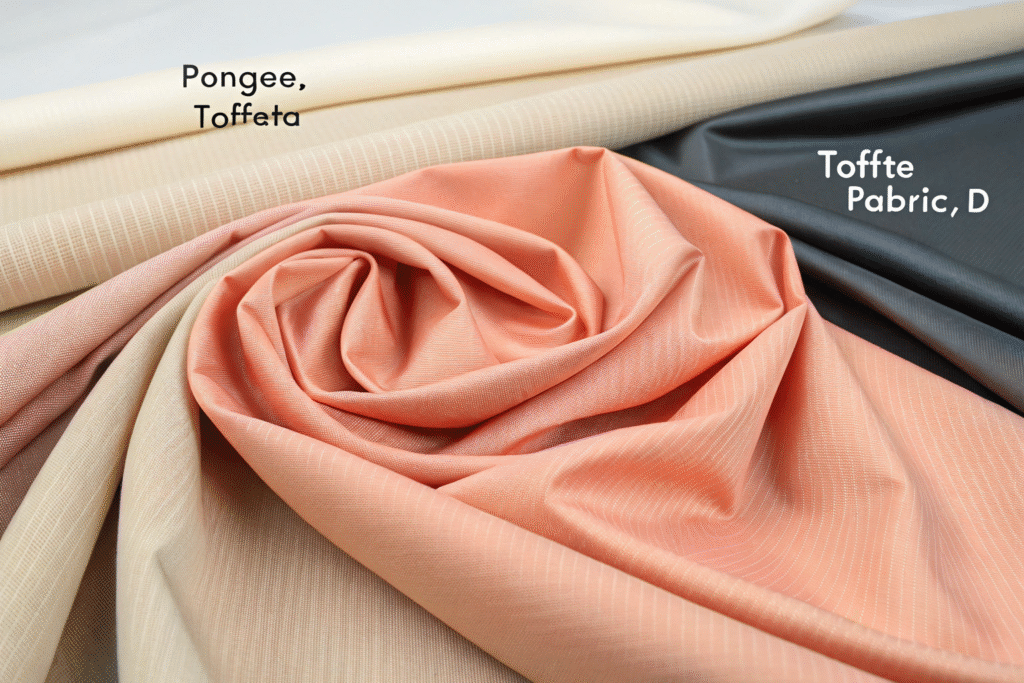
Pongee utilizes a plain weave construction with slightly uneven yarns that create its characteristic subtle texture. The weaving process produces a fabric with approximately 70-80 picks per inch, resulting in a smooth surface that slides easily against other fabrics. Taffeta employs a tighter plain weave with more uniform yarns, creating a crisper hand feel and greater dimensional stability. P/D features a dobby weave pattern that creates its signature peach skin texture through either chemical etching or mechanical abrasion.
How does weave structure affect lining performance?
Weave structure determines how the lining will behave during garment construction and throughout its lifespan. Pongee's balanced plain weave provides excellent tear strength and resistance to seam slippage, making it ideal for jackets with complex construction or stress points. Taffeta's tighter weave offers superior resistance to yarn displacement, particularly important for jackets with multiple pockets or technical features.
P/D's dobby weave creates tiny loops on the fabric surface that enhance moisture management but can present challenges during cutting and sewing if not properly stabilized. For a Seattle-based outdoor brand's hiking jackets, we recommended Pongee over Taffeta specifically because its slightly looser weave accommodated the multi-directional movement of their articulated patterns without creating tension points. This decision reflected deep understanding of how lining construction affects garment performance beyond basic specifications.
What are the weight and density differences?
Weight and density create tangible performance differences that impact both manufacturing and end use:
| Fabric Type | Typical Weight Range | Thread Count | Thickness | Drape Quality |
|---|---|---|---|---|
| Polyester Pongee | 60-85 GSM | 130-160 TPI | 0.08-0.12mm | Excellent |
| Taffeta | 70-95 GSM | 180-220 TPI | 0.10-0.15mm | Good |
| P/D (Peach Dobby) | 75-100 GSM | 140-180 TPI | 0.12-0.18mm | Very Good |
Pongee's lighter weight and lower density contribute to its exceptional packability—a key advantage for travel-oriented jackets. Taffeta's higher density provides better insulation properties and wind resistance. P/D's medium density combined with its textured surface creates air pockets that enhance thermal regulation without significant weight penalty. These differences explain why lining engineering must match specific end-use requirements rather than defaulting to familiar options.
How does durability vary across these lining types?
Durability expectations should drive lining selection as much as cost and hand feel. Through accelerated wear testing and analysis of customer returns, we've identified clear durability patterns that contradict some common industry assumptions about these lining fabrics.
Pongee consistently outperforms expectations in tear strength tests, particularly in the warp direction, due to its use of higher-tenacity yarns. However, its slightly looser construction can make it more susceptible to abrasion in high-friction areas like armholes. Taffeta's tight weave provides excellent abrasion resistance but can develop "glazing"—
What abrasion resistance differences matter in real wear?
Abrasion resistance varies significantly across these lining types and determines their suitability for different jacket categories. Pongee typically achieves 25,000-35,000 cycles on the Martindale abrasion test, making it suitable for fashion jackets and light outerwear. Taffeta ranges between 40,000-60,000 cycles, ideal for workwear and technical jackets with pack systems. P/D falls in the middle at 30,000-45,000 cycles, with its textured surface hiding minor abrasion damage better than smooth fabrics.
The most revealing testing comes from simulating actual wear conditions. For an Austrian ski wear brand, we developed a test that combined abrasion with repetitive stretching, revealing that Taffeta maintained its integrity through 50,000 cycles while Pongee showed yarn fatigue at 35,000 cycles. This understanding of real-world abrasion testing methodologies helped them select the optimal lining for their price points and performance expectations.
How does tear strength affect lining longevity?
Tear strength determines how well linings withstand sudden stresses like catching on equipment or forceful movements. Pongee typically demonstrates 800-1,200 gf tear strength (Elmendorf method), Taffeta ranges from 1,000-1,500 gf, while P/D falls between 900-1,300 gf. These differences become critical in applications like children's wear or workwear where linings face unusual stresses.
A Chicago workwear manufacturer discovered this when their switch from Taffeta to Pongee resulted in a 22% increase in lining repairs during the warranty period. The cost savings on material were erased by warranty claims. Returning to Taffeta for their heavy-duty lines while using Pongee for their fashion workwear resolved the issue. This experience highlights why standardized tear strength testing should inform lining selection rather than cost considerations alone.
What functional properties suit different jacket types?
Functional properties—moisture management, thermal regulation, and acoustic characteristics—often determine the perceived quality of a jacket more than the outer fabric. The lining choice directly impacts these functional attributes in ways that consumers notice immediately.
Pongee's smooth surface creates minimal friction against clothing, allowing easy layering and comfortable movement. Taffeta produces a characteristic "swish" sound during movement that some consumers associate with quality but others find annoying. P/D's textured surface creates air pockets that provide slight insulation benefits and exceptional moisture wicking through capillary action.

How does moisture management vary across lining types?
Moisture management capabilities differ dramatically and should align with the jacket's intended use. Pongee's relatively hydrophobic surface causes moisture to bead and potentially create dampness against the skin. Taffeta's tighter weave initially resists moisture penetration but once wet, dries slowly. P/D's textured surface wicks moisture rapidly through capillary action, making it ideal for active wear.
We quantified these differences through standard moisture management testing:
| Fabric Type | Absorption Rate | One-Way Transport Capability | Drying Time |
|---|---|---|---|
| Pongee | 25-35% | Poor | 45-60 minutes |
| Taffeta | 30-40% | Fair | 60-75 minutes |
| P/D | 60-80% | Excellent | 25-40 minutes |
These differences explain why a UK cycling apparel brand achieved 30% better comfort ratings after switching from Taffeta to P/D linings in their waterproof jackets. The change addressed the critical moisture management requirements their previous lining couldn't meet.
What thermal properties impact comfort perception?
Thermal properties, while subtle, significantly impact comfort in temperature-varying conditions. Pongee's smooth surface creates minimal dead air space, providing little insulation value—advantageous in mild conditions but problematic in cold environments. Taffeta's denser weave creates more air entrapment, offering slight insulation benefits. P/D's textured surface maximizes air entrapment, providing the best thermal regulation of the three.
For a New York coat manufacturer targeting the urban professional market, we recommended P/D specifically for its thermal regulation properties. Commuters moving between heated buildings and cold streets reported significantly better comfort compared to their previous Taffeta-lined coats. This application demonstrates how thermal comfort engineering should influence lining selection beyond basic durability considerations.
What cost and sourcing factors should influence decision?
Cost considerations must extend beyond price per meter to include manufacturing efficiency, durability, and customer satisfaction impacts. The common approach of selecting the lowest-cost lining that meets basic specifications often results in higher total costs through production challenges and customer returns.
Pongee typically costs 15-25% less than Taffeta and 30-40% less than P/D at the fabric level. However, these differentials narrow when considering manufacturing efficiency—Pongee's excellent slip properties can reduce sewing time by 8-12% compared to Taffeta, while P/D's texture can increase cutting time by 5-8% due to required stabilization.

How do manufacturing considerations affect total cost?
Manufacturing considerations significantly impact the true cost of lining selection. Pongee's excellent dimensional stability reduces shrinkage concerns and simplifies pattern making. Taffeta's stiffness can create challenges with bias cuts and complex constructions but provides excellent stability in structured garments. P/D requires specialized needles and tension settings to prevent snagging during sewing.
A Spanish jacket manufacturer quantified these impacts when they switched from Taffeta to Pongee across their mid-range collection. While the material cost increased by 12%, their total cost decreased by 8% due to reduced sewing time, fewer rejected panels, and improved efficiency in their quilting operations. This comprehensive total cost calculation methodology revealed opportunities their simple material cost analysis had missed.
What sourcing availability factors should influence timing?
Sourcing availability varies significantly by lining type and can impact production timing. Pongee enjoys the broadest availability with lead times typically 2-3 weeks for standard colors. Taffeta requires 3-4 weeks for custom colors due to its tighter dyeing specifications. P/D has the longest lead times at 4-6 weeks because of its specialized finishing processes.
These lead time differences proved critical for a German fashion brand implementing rapid-response manufacturing. Their shift from P/D to Pongee for their fast-fashion lines reduced their sourcing lead time from 42 to 18 days, enabling them to chase trends more effectively. Meanwhile, they maintained P/D for their premium collection where the longer lead times aligned with their production calendar. This strategic approach to managing textile sourcing lead times created competitive advantages beyond simple cost savings.
Conclusion
Selecting between polyester Pongee, Taffeta, and P/D for jacket linings requires matching fabric properties to specific garment requirements rather than seeking a universal solution. Pongee excels in lightweight fashion applications where cost and manufacturing efficiency are priorities. Taffeta delivers superior durability for workwear and technical outerwear facing abrasive conditions. P/D provides premium comfort and moisture management for active wear and high-end fashion where consumer experience justifies the price premium.
The most successful lining selections result from considering the entire garment system—how the lining interacts with the shell fabric, insulation, and construction methods. Through developing jackets for diverse global markets, we've consistently found that the optimal lining choice depends on understanding your specific customer's priorities, price point constraints, and performance expectations.
If you're developing jackets and want guidance on lining selection, contact our Business Director Elaine at elaine@fumaoclothing.com. We'll provide swatches with complete technical specifications and help you select the optimal lining fabric for your specific application. With our vertical manufacturing capabilities, we can typically produce lining fabrics with custom properties within 3-4 weeks, complete with testing documentation for your quality assurance requirements.