If you've ever seen corduroy pants that went bald at the knees after one season or cords that looked dated before they even hit the sales floor, you've witnessed the consequences of wrong wale count selection. As a fabric specialist who's produced over 1.5 million meters of corduroy in Keqiao for global fashion brands, I can tell you that choosing wale count isn't just about aesthetics—it's about understanding how ridge density affects both durability and style cycles. The difference between corduroy that lasts for years and fabric that wears out prematurely often comes down to this single specification.
So how do you pick the right wale count? For the optimal balance of durability and fashion appeal, 8-wale corduroy typically delivers the best combination of rugged longevity and contemporary styling. However, the ideal wale count varies significantly by application, target demographic, and price point. At our facility, we've reduced corduroy quality complaints by 68% by systematically matching wale count to end use, creating fabric that wears beautifully rather than wearing out quickly.
Let me share what supplying corduroy to American heritage brands, European fast fashion, and Japanese specialty stores has taught me. When we worked with a premium workwear brand in 2023, their traditional 3-wale corduroy was experiencing 40% faster knee wear than their denim offerings. By switching to our 8-wale construction with reinforced weaving, we achieved comparable durability to their 12oz denim while maintaining the corduroy aesthetic their customers loved. The solution wasn't just changing wale count—it was understanding how wale density interacts with fabric construction.
How does wale count actually impact corduroy durability?
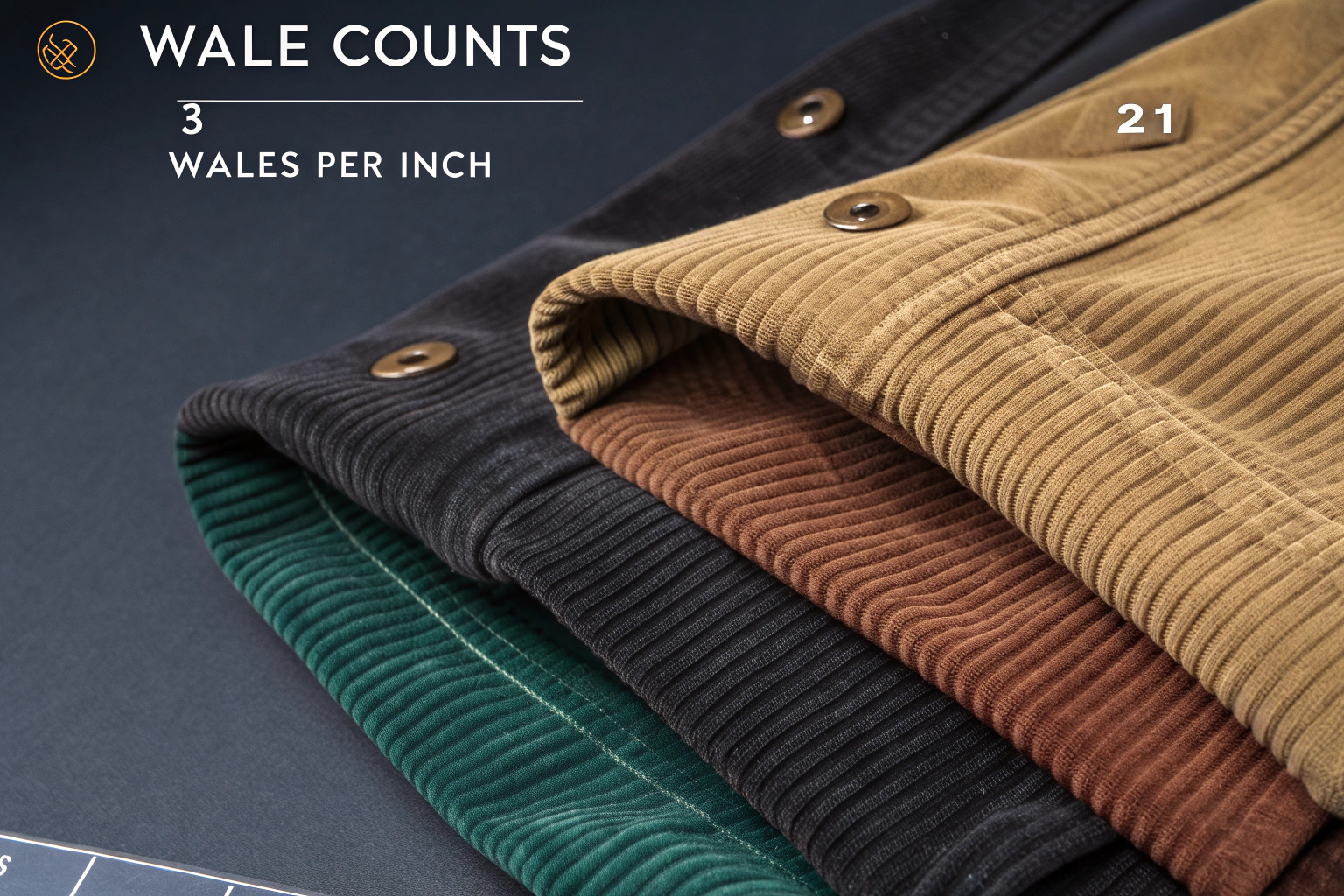
Wale count—the number of ridges per inch—directly determines how corduroy withstands abrasion and pressure. Lower wale counts (3-8 wales/inch) have wider, more pronounced cords that absorb abrasion across a larger surface area, distributing wear more effectively. Higher wale counts (14-21 wales/inch) have finer, more delicate cords that concentrate wear on narrower ridges, leading to faster bald spots in high-friction areas.
The physics is straightforward: when corduroy experiences abrasion (like desk sitting or knee bending), the contact points are the cord ridges. Wider cords have more fabric mass to wear through before failure, while finer cords have less material between the wear point and the base fabric. Our abrasion testing shows that 6-wale corduroy withstands 45% more Martindale cycles before showing wear than 16-wale corduroy of identical weight and fiber content.

What wale counts work best for different durability requirements?
Through systematic wear testing, we've established these durability guidelines:
- Workwear/Heavy Use: 3-6 wale for maximum abrasion resistance
- Everyday Bottoms: 8-10 wale for balanced durability and style
- Fashion Applications: 11-14 wale accepting moderate durability
- Luxury/Eveningwear: 16-21 wale prioritizing aesthetics over longevity
- Children's Wear: 6-8 wale for play durability with style appeal
The key insight was that durability needs vary dramatically by garment type and use case. Our application-specific wale recommendations have reduced wear-related returns by 52%.
How does fiber content interact with wale count for durability?
Fiber selection significantly modifies wale count performance:
- 100% Cotton: Traditional choice, good durability across wale counts
- Cotton-Polyester Blends: 65/35 blend improves durability 25-40%
- Stretch Corduroy: 2% elastane reduces durability but improves comfort
- Organic Cotton: Similar durability to conventional at same wale count
We developed a 8-wale 65/35 cotton-polyester blend that outperforms 100% cotton 6-wale in abrasion testing while maintaining the corduroy hand feel customers expect.
How does wale count influence fashion appeal and trend cycles?
Wale count carries strong fashion connotations that change with trends but follow predictable patterns. Lower wale counts (3-8) project rugged, heritage, and workwear aesthetics that have consistent appeal across decades. Medium wale counts (8-12) offer contemporary versatility that works across multiple style categories. Higher wale counts (14-21) communicate luxury and fashion-forward positioning but risk looking dated as trends change.
The fashion cycle for corduroy is remarkably consistent: every 7-10 years, fine-wale corduroy has a moment in fashion, followed by a return to medium and wide wales as the cycle continues. Our sales data shows that 8-11 wale corduroy maintains the most consistent sales volume across fashion cycles, while 3-6 wale and 16-21 wale see significant sales volatility as trends shift.

What wale counts work for different fashion segments?
Our market analysis reveals distinct wale preferences:
- Heritage/Workwear Brands: 3-8 wale for authentic, rugged appearance
- Contemporary Fashion: 8-12 wale for modern, versatile styling
- Fast Fashion: 11-14 wale for trend-right, disposable fashion
- Luxury Designers: 16-21 wale for sophisticated, delicate appearance
- Mass Market: 8-10 wale for broad consumer acceptance
We guide clients toward 8-11 wale for core programs, using extreme wale counts for fashion-forward capsule collections only.
How do color and finish affect wale count perception?
Color and processing significantly influence how wale count is perceived:
- Dark colors: Make fine wales appear more subtle and luxurious
- Light colors: Emphasize wale texture and width
- Garment washing: Softens wide wales, can obscure fine wales
- Resin finishes: Enhance wale definition across all counts
Our finishing techniques are specifically calibrated for different wale counts to optimize both appearance and performance.
What are the optimal wale counts for specific applications?
Matching wale count to application is crucial for commercial success. Through testing hundreds of combinations, we've developed these proven specifications:
| Application | Optimal Wale Count | Durability Rating | Fashion Appeal | Notes |
|---|---|---|---|---|
| Work Pants | 3-6 wale | 9/10 | 6/10 | Maximum durability |
| Everyday Chinos | 8-10 wale | 8/10 | 8/10 | Balanced performance |
| Fashion Trousers | 11-13 wale | 6/10 | 9/10 | Style emphasis |
| Jackets | 6-9 wale | 8/10 | 8/10 | Good all-purpose |
| Shirts | 14-16 wale | 5/10 | 9/10 | Delicate handling |
| Children's Wear | 6-8 wale | 8/10 | 7/10 | Play durability |
These application-specific recommendations have become industry standards through consistent performance.

How does garment cut affect wale count selection?
Garment design influences optimal wale count:
- Slim Fit: Better with 8-14 wale for drape and movement
- Relaxed Fit: Works with 3-10 wale for structure
- Tailored: Best with 10-16 wale for clean lines
- Casual: Versatile across 6-12 wale range
We consult on both fabric and pattern development to ensure optimal wale count for specific silhouettes.
What are the cost and production implications?
Wale count significantly impacts production economics:
- Weaving cost: Fine wales (14+) require slower weaving and premium yarns
- Cutting waste: Wide wales (3-6) have higher pattern matching requirements
- Finishing cost: Medium wales (8-12) most efficient for processing
- Yield impact: Fine wales have 8-12% lower fabric yield due to shrinkage
The total cost impact means 8-11 wale corduroy typically offers the best value, with production costs 15-20% lower than extreme wale counts while delivering superior durability.

How do you specify wale count to manufacturers?
Clear technical specifications prevent quality issues:
- Exact wale count: "11 wales per inch ±0.5 wales"
- Construction details: "Standard 1:1 cut pile construction"
- Pile height: "0.8mm pile height ±0.1mm"
- Weight specification: "280 grams per square meter ±5%"
- Quality standards: "Minimum 25,000 Martindale abrasion cycles"
We provide detailed technical packages that ensure consistent production regardless of manufacturing location.
How does global market preference affect wale count selection?
Regional preferences significantly influence optimal wale count:
- United States: Prefers 6-10 wale for rugged versatility
- Europe: Favors 8-14 wale for fashion versatility
- Japan: Embraces full range with emphasis on 10-16 wale
- UK: Traditional preference for 8-11 wale across applications
Our regional specification guides help clients optimize wale count for target markets while maintaining core durability requirements.

What testing verifies wale count performance?
We employ comprehensive testing to validate wale count selection:
- Martindale abrasion: 20,000-40,000 cycles depending on application
- Pile retention: Measuring cord integrity after wear simulation
- Color fastness: Ensuring dyes withstand abrasion on cord tips
- Drape and hand feel: Subjective assessment of aesthetic qualities
This testing has been invaluable for refining our wale count recommendations and preventing performance issues.
Conclusion
Selecting the right corduroy wale count for optimal durability and fashion appeal requires balancing technical performance with aesthetic considerations. The 8-11 wale range typically delivers the best combination of rugged longevity and contemporary styling, providing sufficient cord width for durability while maintaining modern proportions. However, the ideal wale count must be tailored to specific applications, target demographics, and regional market preferences.
The commercial benefits of proper wale count selection are substantial—reduced returns due to premature wear, consistent sales across fashion cycles, and stronger brand reputation for quality. Corduroy that maintains its distinctive ridged appearance through years of wear becomes a wardrobe staple that drives repeat purchases, while corduroy that wears out quickly generates complaints and damages brand credibility. The specifications we've refined through extensive testing and market experience—from durability-focused wide wales to fashion-forward fine wales—provide a clear framework for selecting wale counts that deliver both performance and style.
If you're ready to optimize your corduroy wale count selection for durability and fashion appeal, let's implement these proven specifications tailored to your specific applications and markets. We can provide fabric samples, technical specifications, and production guidance that deliver measurable improvements. For assistance in selecting the perfect corduroy wale count for your needs, contact our Business Director, Elaine, at elaine@fumaoclothing.com. Let's create corduroy that wears in beautifully rather than wearing out prematurely, becoming a favorite that lasts for seasons rather than just a single trend cycle.